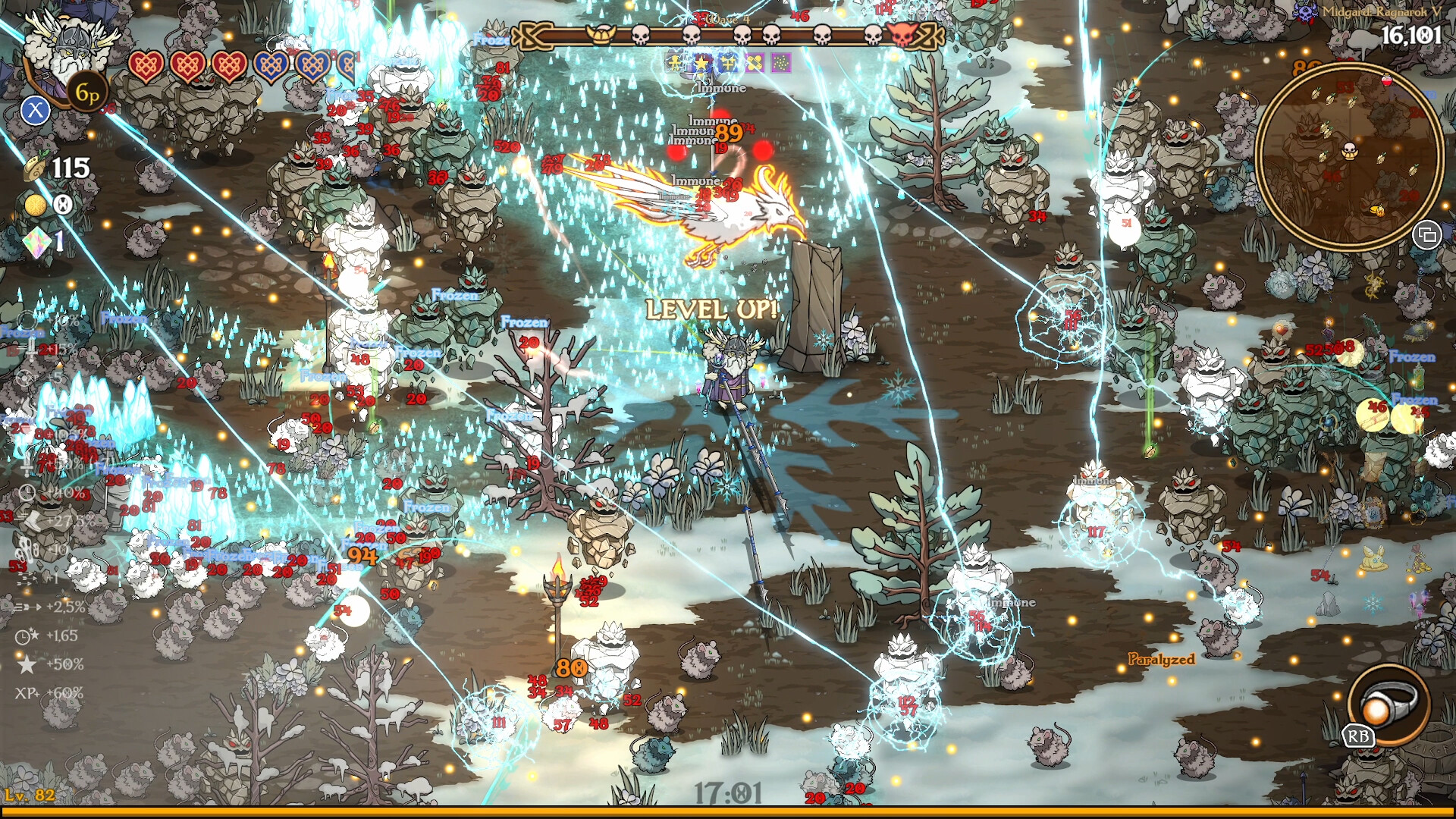
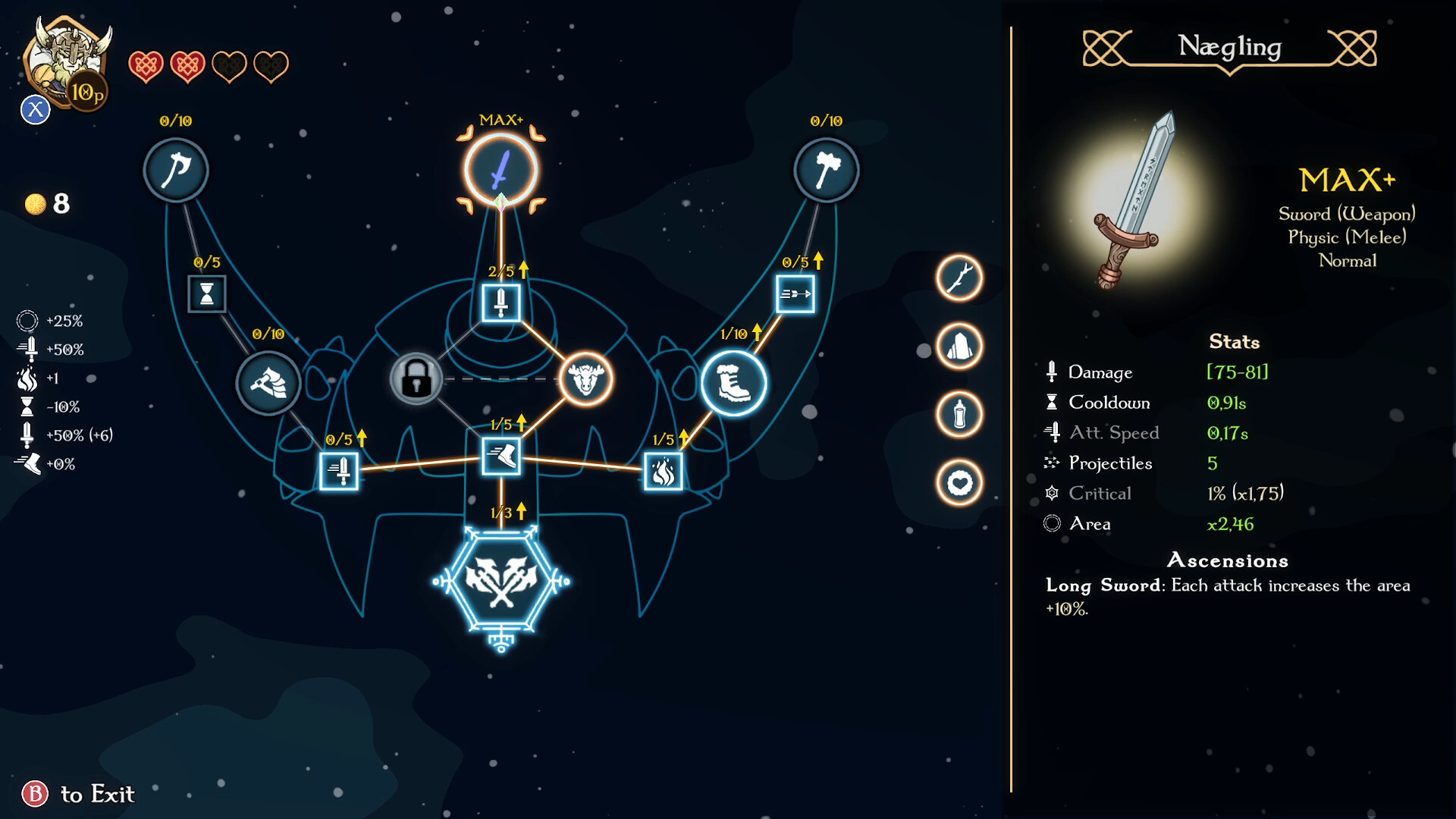
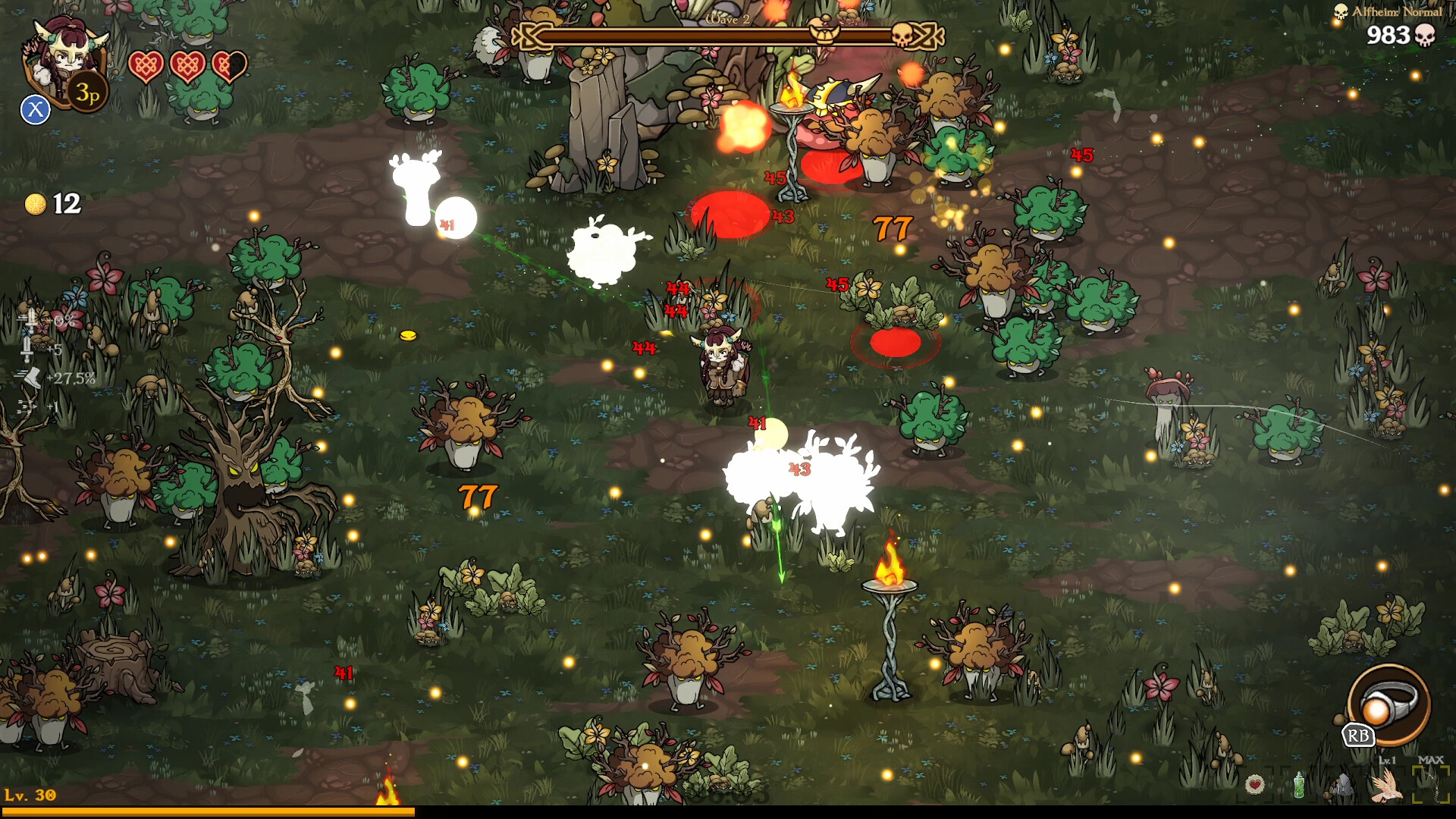
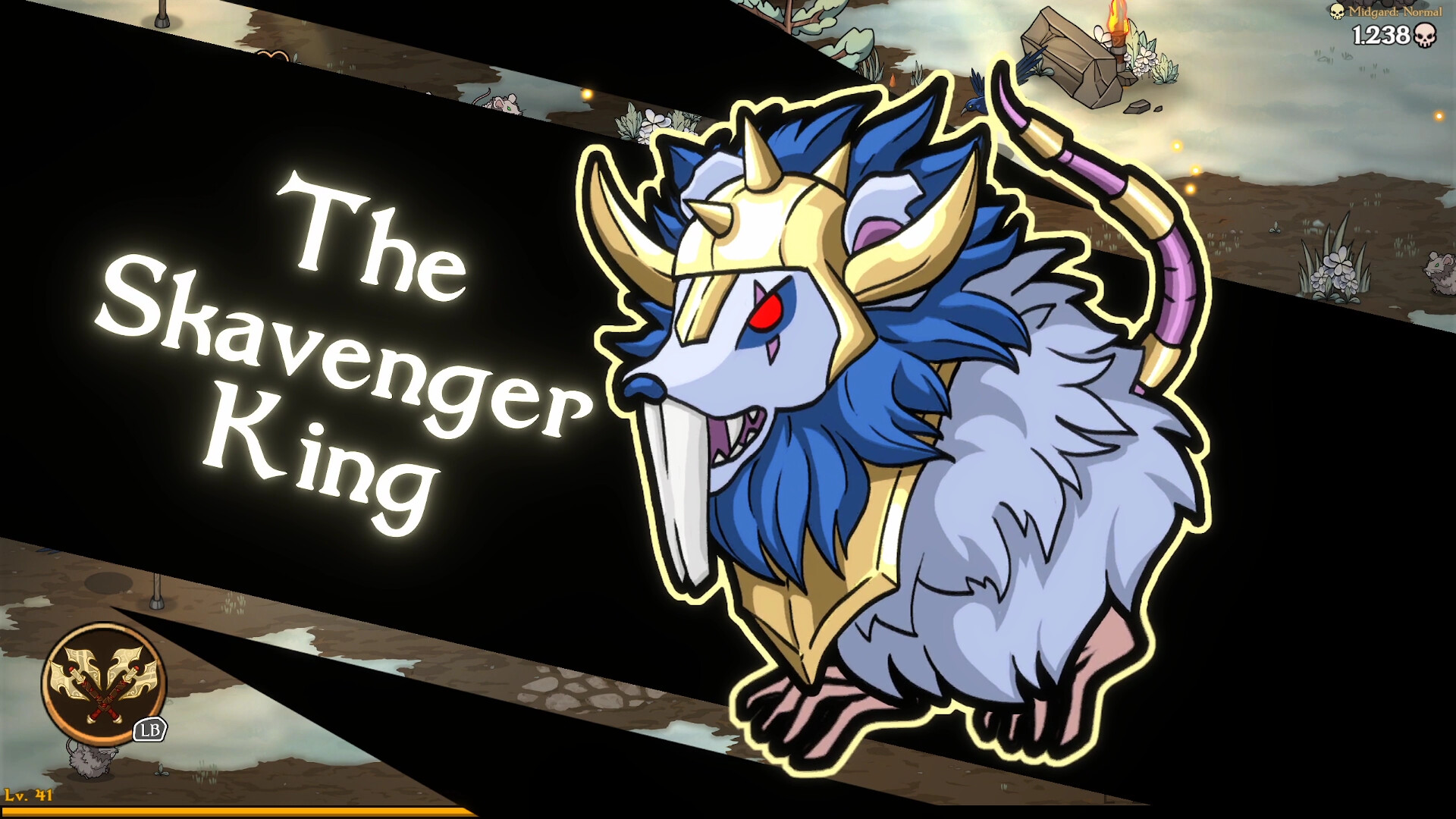
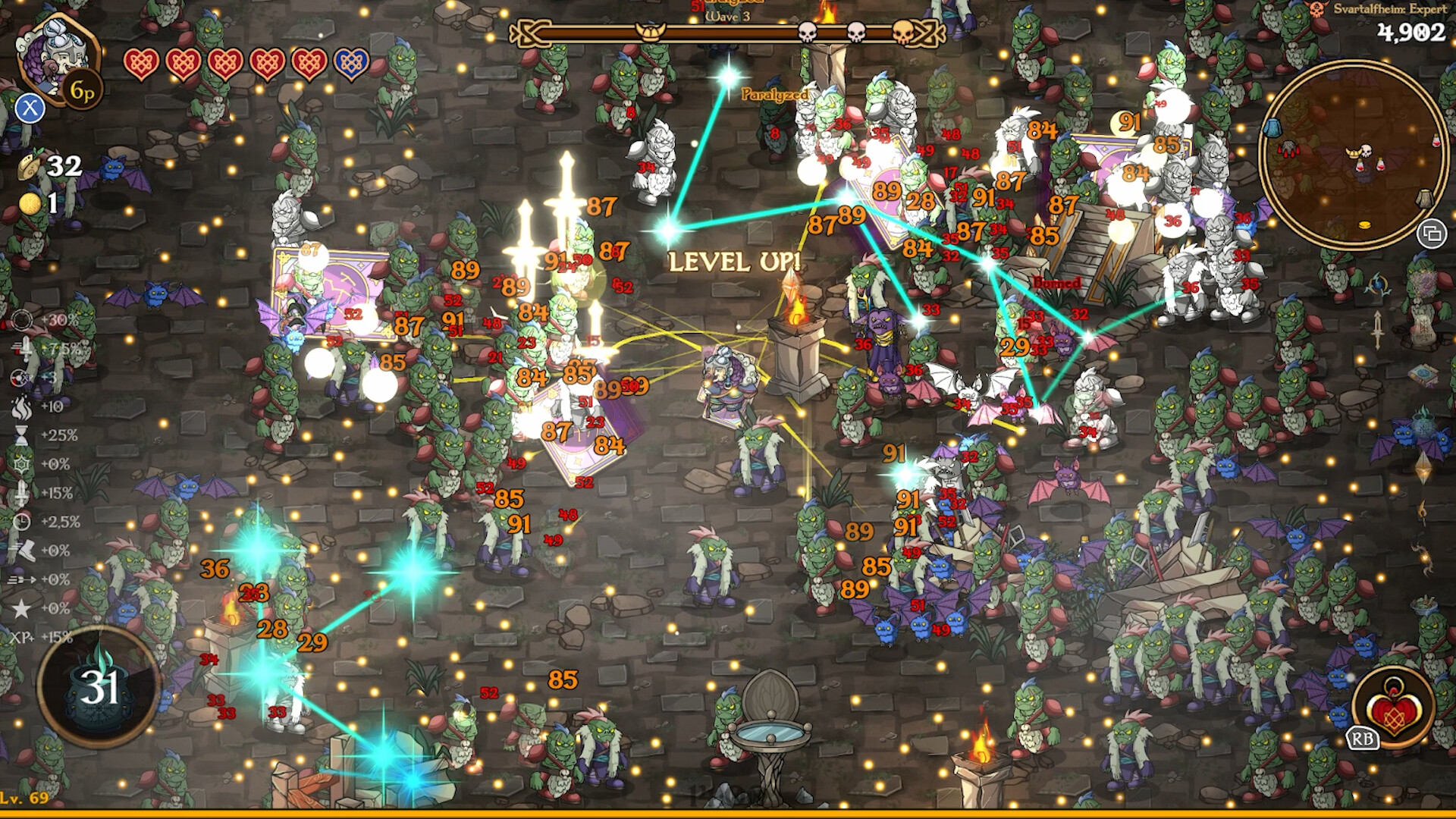
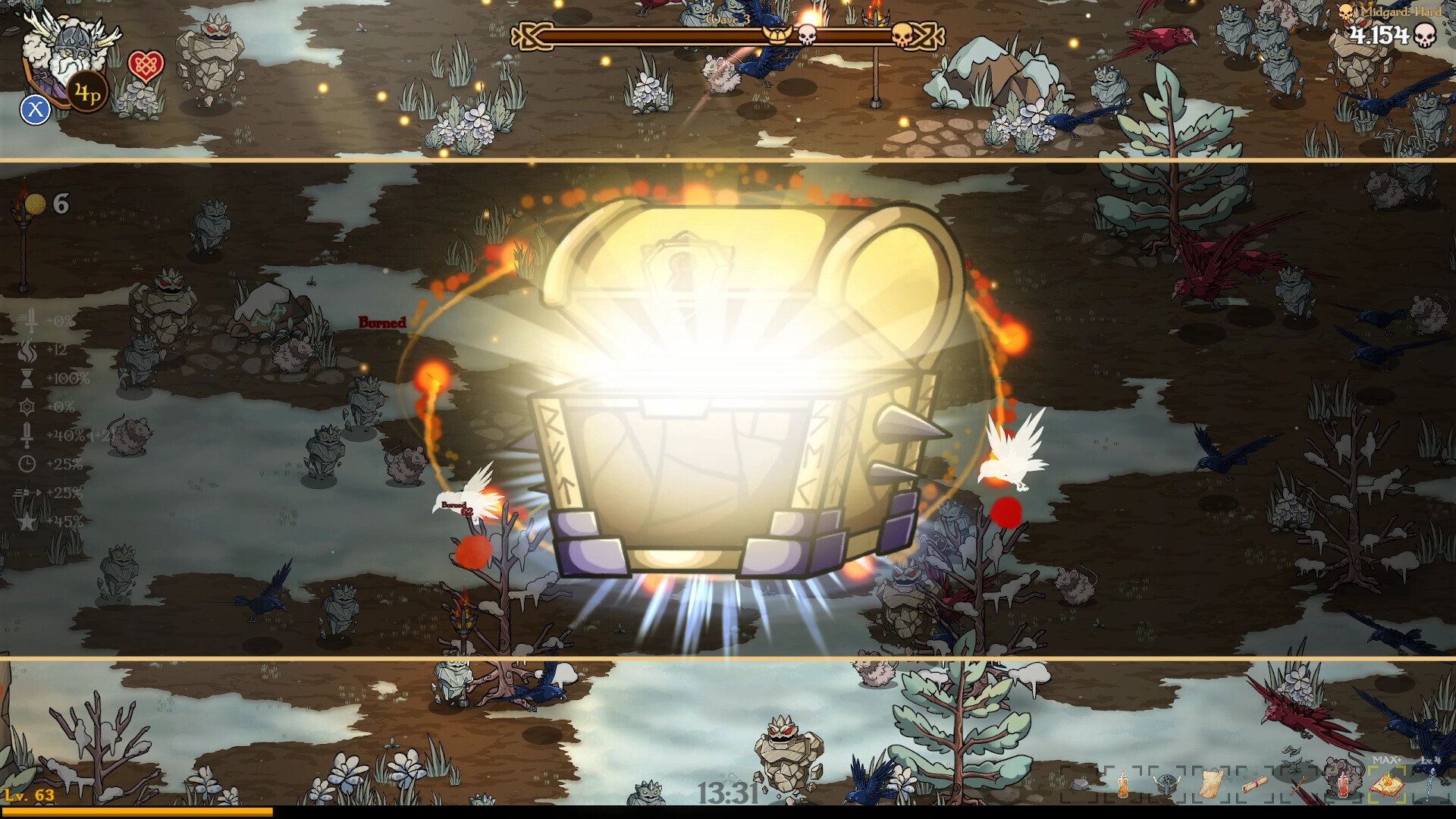
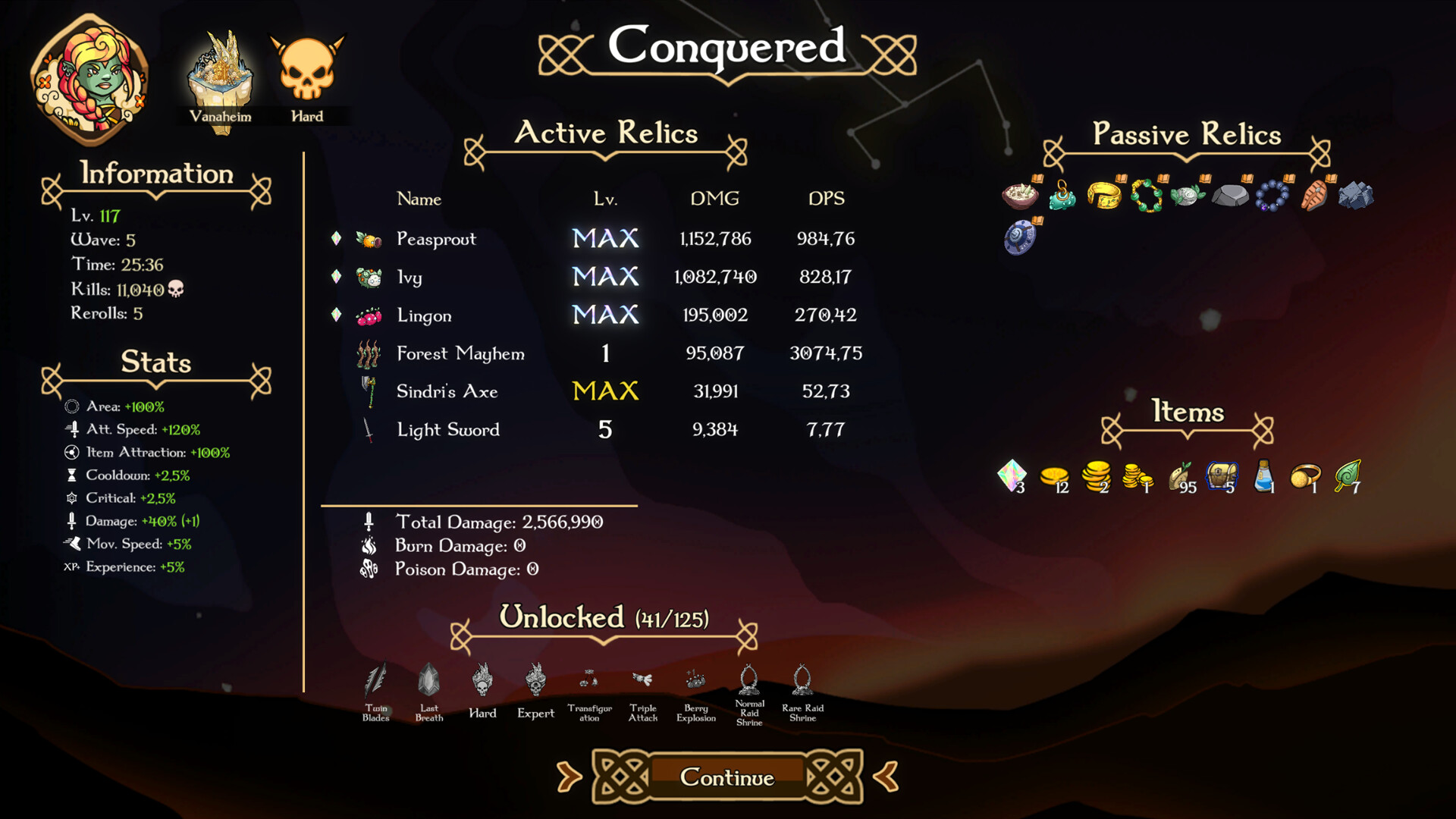
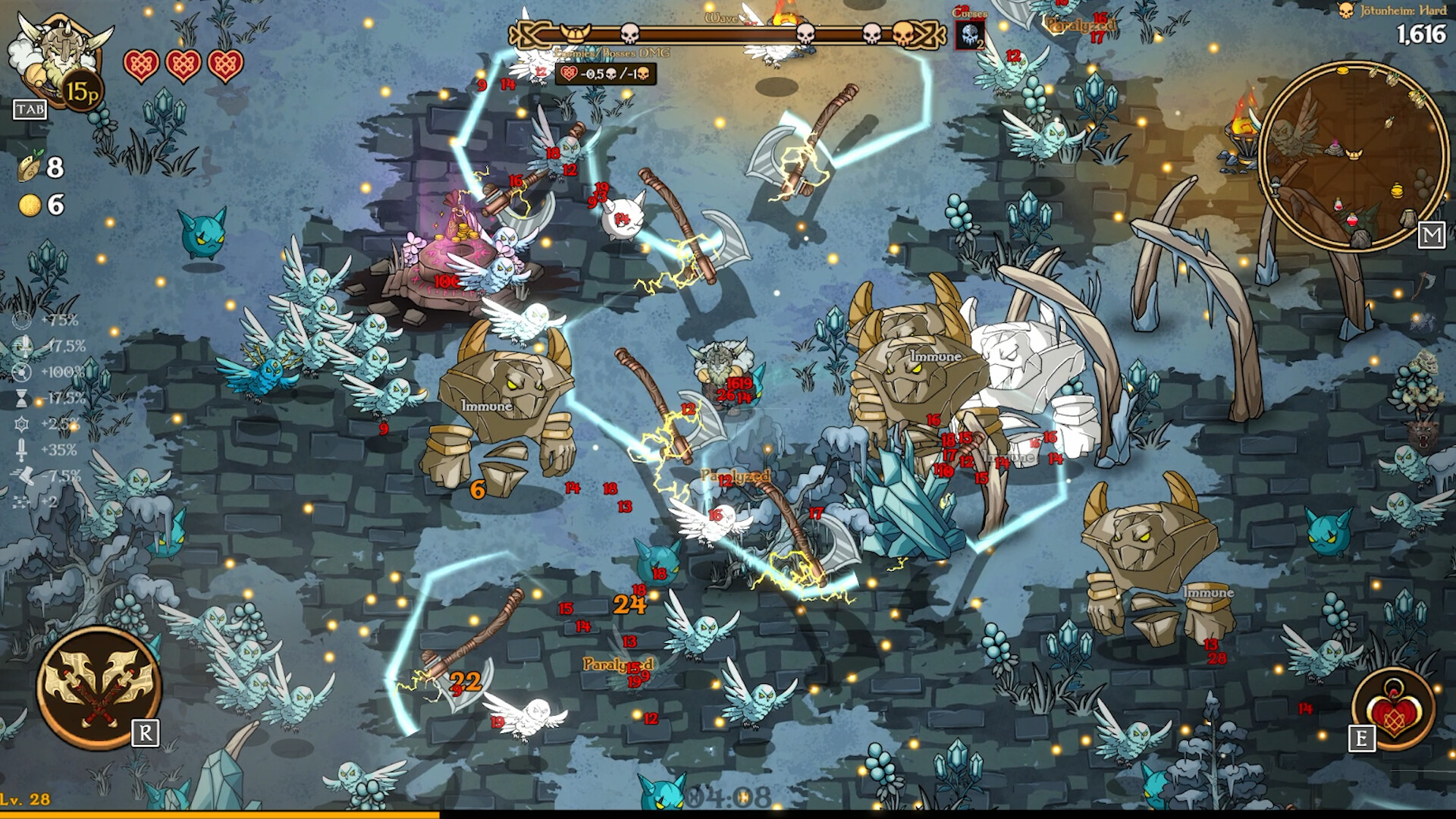
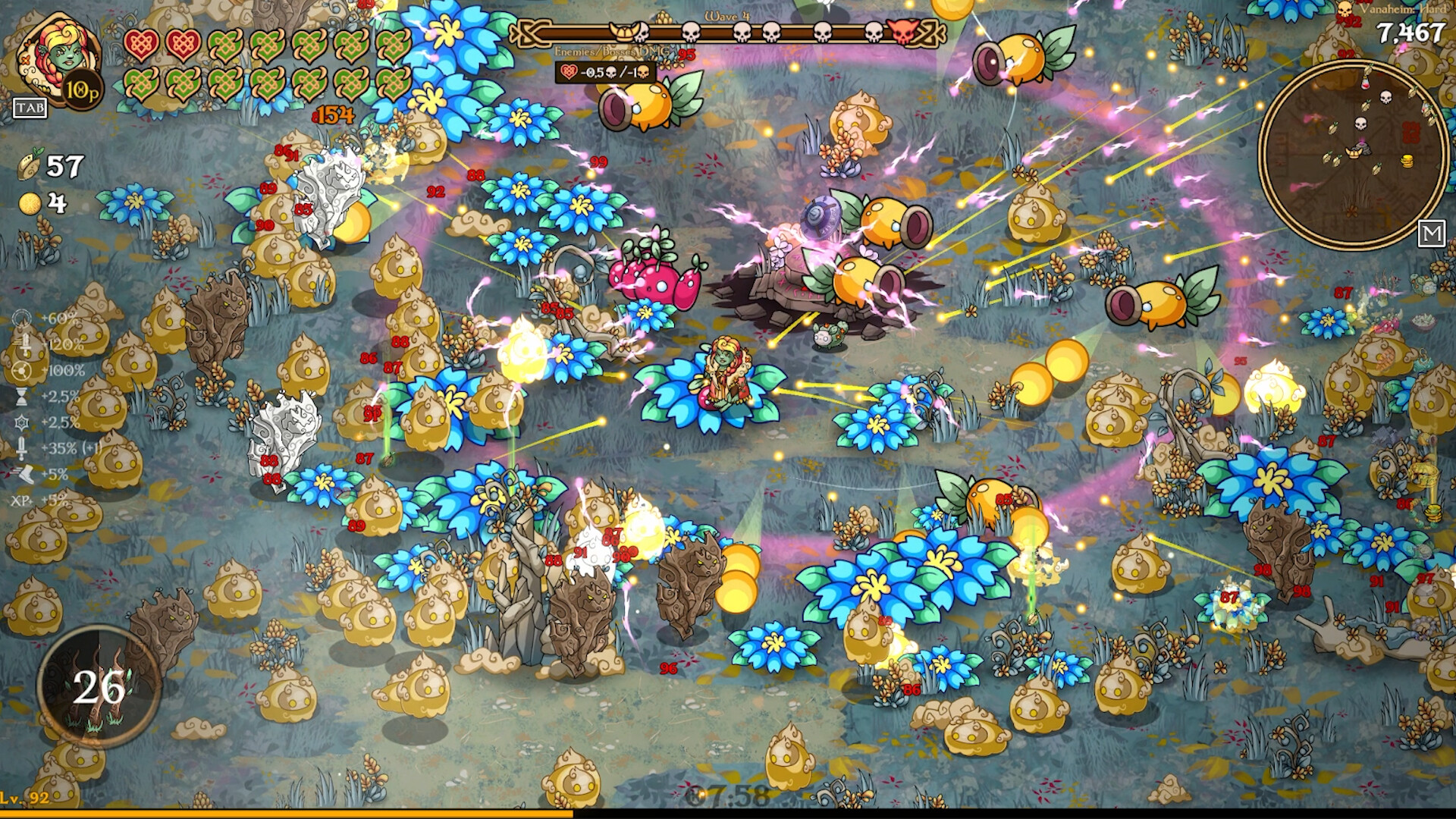
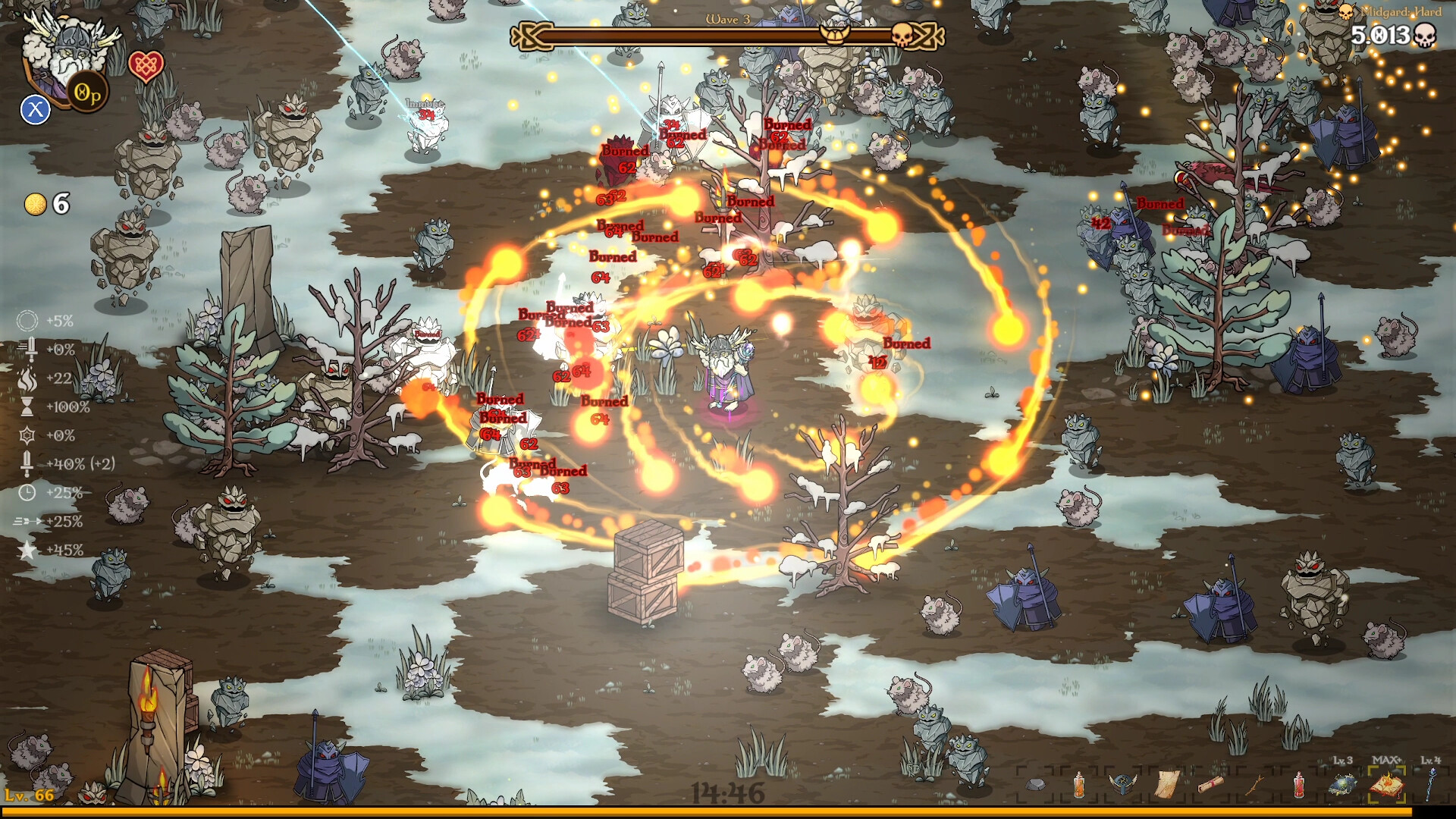
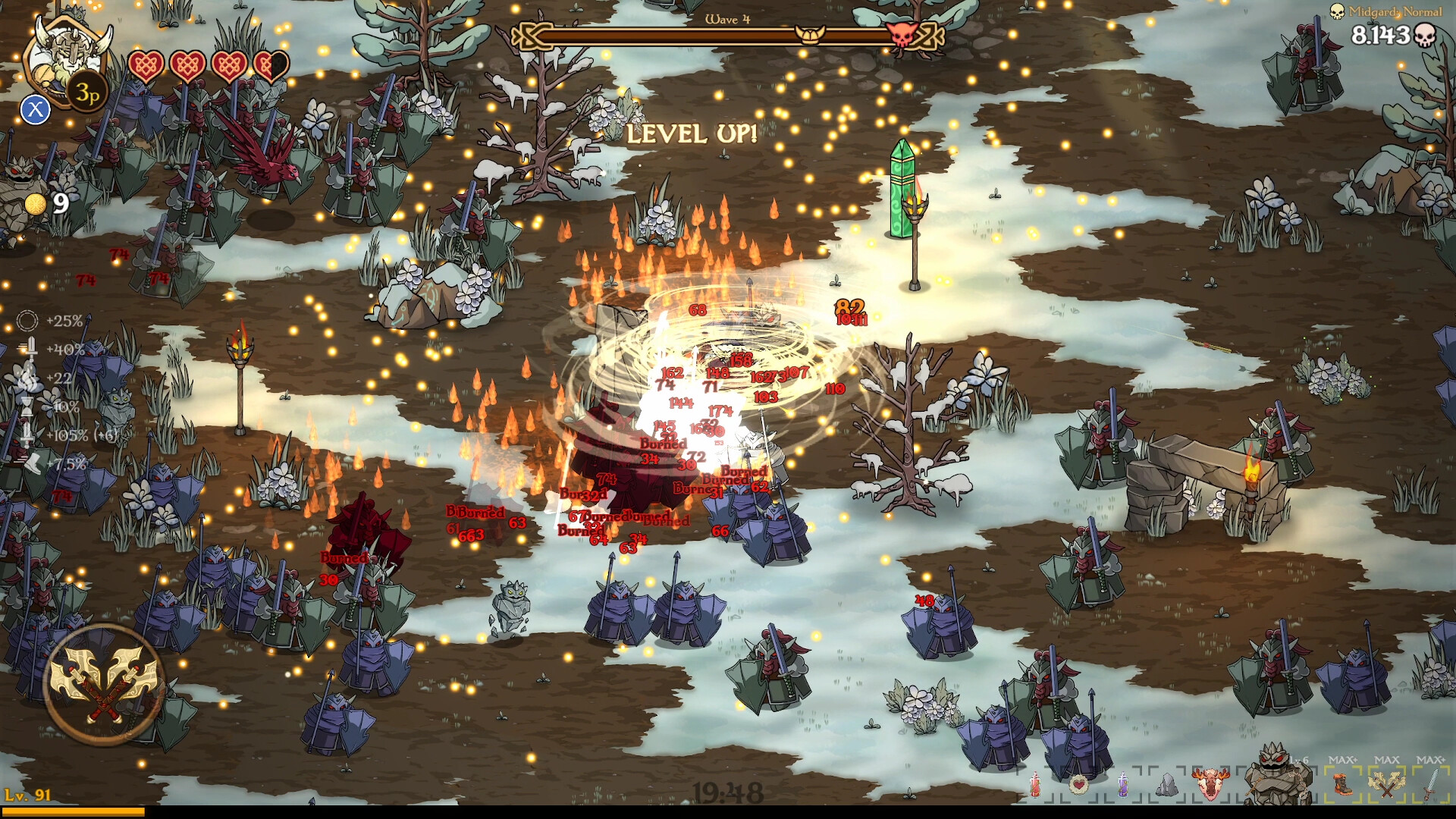
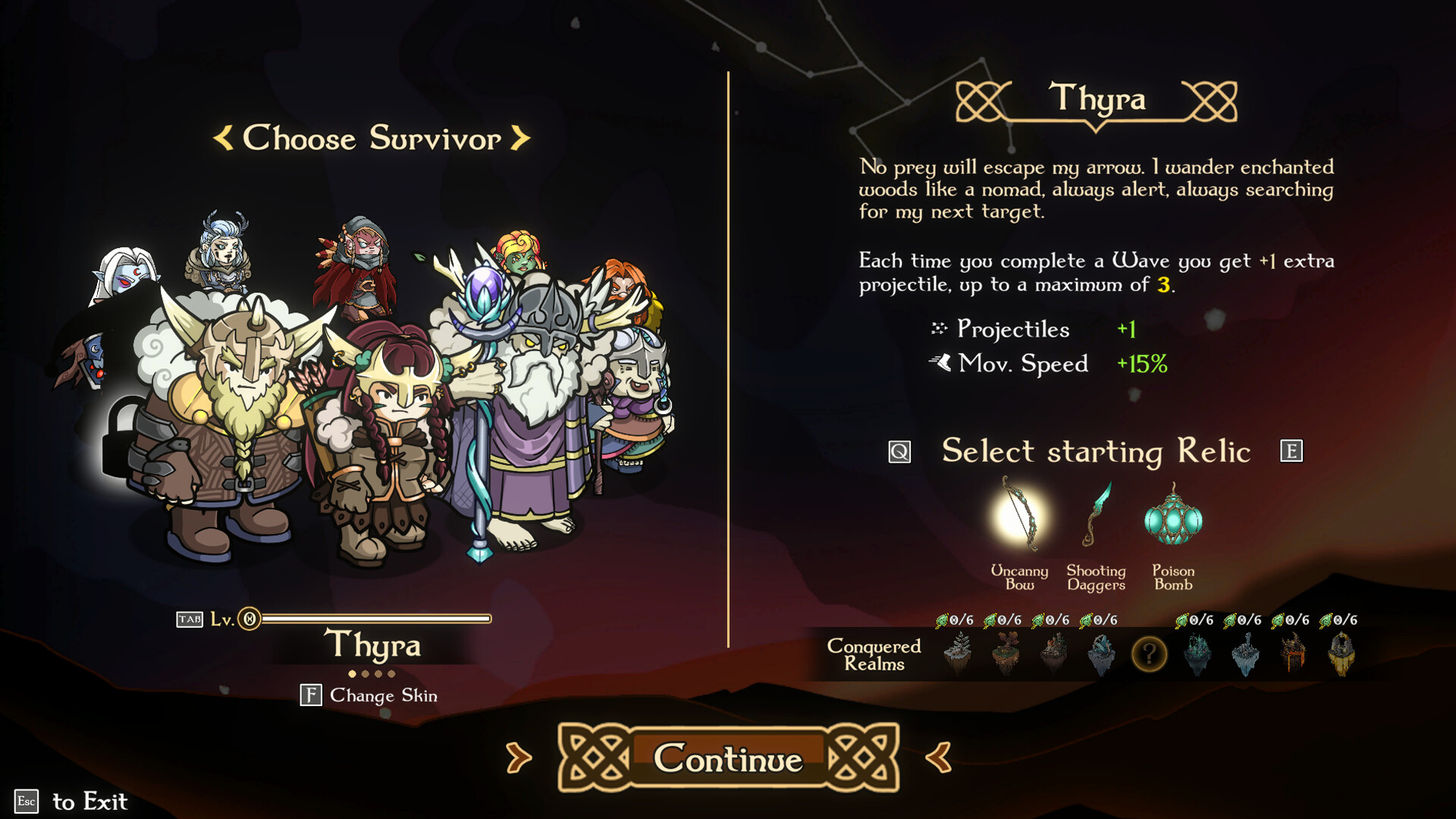
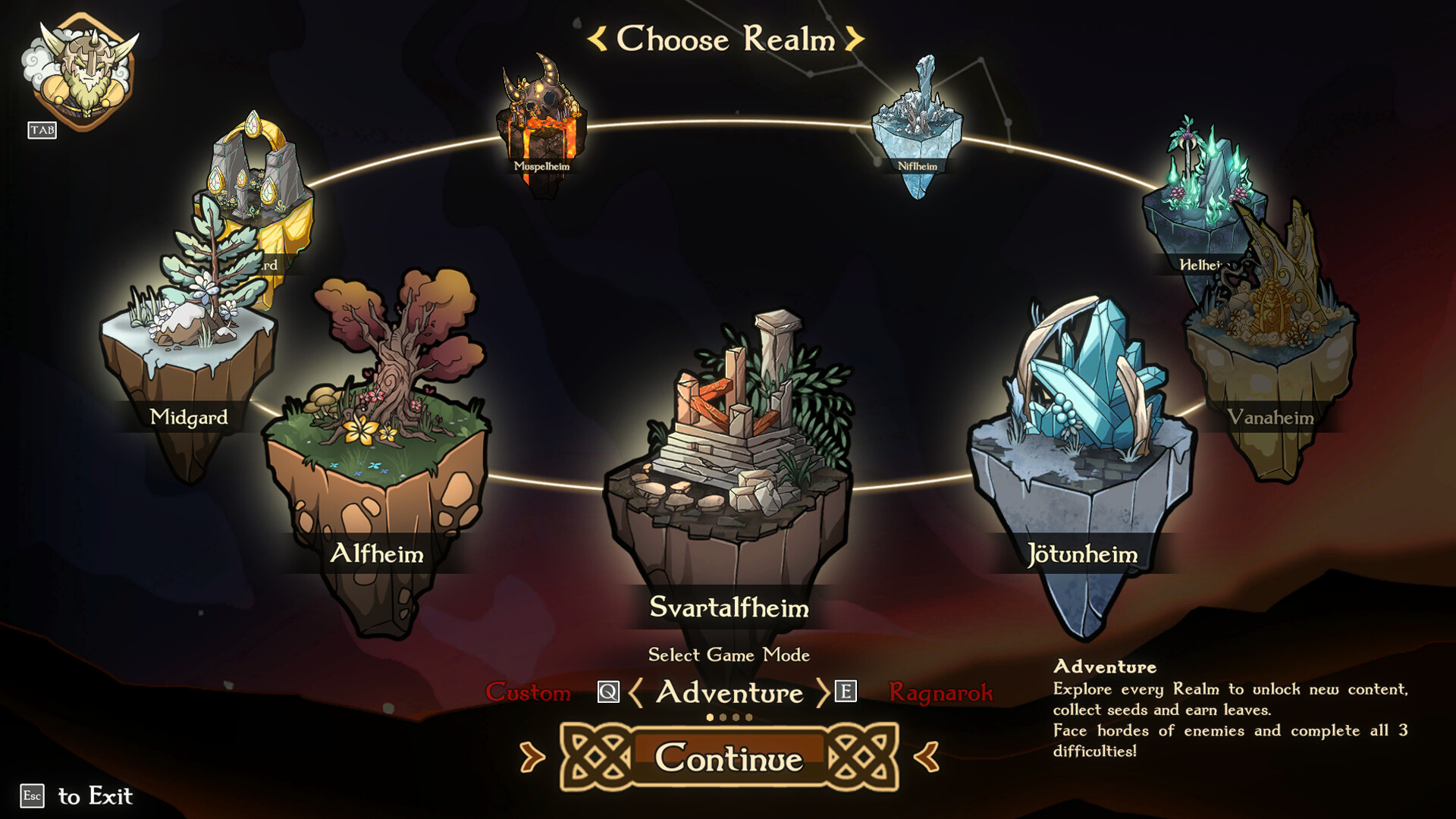
TLDR: Nordic Ashes is an action roguelite with heavy bullet hell elements. How much the player likes the game will depend on how much they enjoy the incremental progression. GAMEPLAY OVERVIEW: Nordic Ashes (NA) starts off with a survivor of Ragnarok getting ready to challenge the gods to avenge his destroyed world. To do so, the player must work through the nine realms, from Midgard (Earth) all the way up to Asgard (home of the gods), and leave a trail of slain enemies in their wake. The player starts with Viking warrior Axeldor, though Thyra (a hunter) and Halfgrim (a warlock) quickly become available. In all, there are about a dozen playable characters that can be unlocked in the base game. Some of those unlocks are easy and others are difficult or time-consuming. I found the characters relatively unique in their abilities and utility. Each character has a "constellation" of skills, with the general pattern of their skill tree matching their theme. For example, Thyra the hunter's constellation (shown below) is laid out in the rough outline of a bow. https://steamcommunity.com/sharedfiles/filedetails/?id=3566773940 Once the player selects their avatar, they launch into the realm of Midgard. Each run through a realm consists of three waves, with a boss mob at the end of each wave. Conquering a realm will open up the next one in the chain, as well as the next level of difficulty. In other words, beating Midgard on normal difficulty unlocks the next realm (Alfheim) and Midgard's hard difficulty, and so on. Right from the opening, the mobs start coming after the player, with harder difficulties and more advanced realms sending more baddies faster. Contact with a foe equals damage, so staying on the move and avoiding the swarms is the way to survive. To fight back, each character has one or more basic attacks that pulse at set intervals. Some attacks must be aimed, while others target enemies on their own. For example, Thyra's starting base attack can be a barrage of arrows the player can aim, an arc of knives that shoot in the direction she's facing, or poison bombs which lob directly at distant foes. As mobs are defeated, the character gains experience that can be used to upgrade their abilities for that run. Many abilities are passive, giving bonuses and stat upgrades, such as more damage, more health, faster movement speed, shorter pauses between auto attacks, and so on. The only consistent ability that is player-triggered is the character's ultimate attack. The ultimate attack varies between characters, but for most, it does a massive amount of damage and likely clears the board of bad guys for a few seconds. Incremental progression is achieved between runs through the main ability tree, known as Yggdrasil. Each branch of the tree contains passive buffs and abilities that permanently apply to all characters. The bonuses here are purchased via Yggdrasil leaves and seeds; completing realms and hitting slayer milestones award the former, and the latter are collected during individual runs. The progression is relatively steady, and happily, the bonuses make a substantial difference. Regardless of character, I could feel the impact after a few rounds of upgrades. Unfortunately, the characters of NA are not created equal. From the outset, regular foes are cannon fodder and easily massacred by barely-upgraded character attacks, presenting a threat only in their numbers. This was my first “survivor” type of game and I am told this is a fairly standard feature of the genre. But some combinations of character skills and abilities—in conjunction with the Yggdrasil tree upgrades—are highly overpowered, making the clearing of scrub mobs in each wave downright laughable compared to other characters. With a few of these combos, one could almost go AFK and complete the wave, if not for elites and bosses, which are the only foes with ranged attacks and really the only threat to an upgraded character. Even those enemies have a very brief learning curve before being easily defeated. The degree to which some of these character/skill combinations trivialize difficulty, even on the hardest settings, basically makes those characters “easy-mode” and robs the game of much of its challenge. With one such character, I beat the hardest realm on Expert difficulty without being injured and it just felt ... boring. And ultimately, the gameplay loop is pretty repetitive. By the time one has blasted through a realm a few dozen times on multiple characters, they may be fighting to keep their eyes open. The player's enjoyment will really come down to how much they enjoy the progression through the Yggdrasil bonus tree, notching off completion of individual realms, and racking up achievements. STORY / WORLDBUILDING: There's a thin story behind the setting—that the characters are the survivors of an apocalyptic Ragnarok event—but it really doesn't matter to the gameplay. Same with the character backstories. I did appreciate that the nine realms of the game match the established real-world mythology of the nine realms supported by the world-tree Yggdrassil. The cannon-fodder opponents feel appropriate to each of their realms, such as Jotunheim being filled with giants and Musphelheim being overrun with flame demons. Many of the boss fights are drawn directly from Norse mythology, though you won't see the well-known heavy-hitting gods until close to the end. DLC: The game has one DLC as of this writing, titled Remnants of Corruption, which finds the player's chosen character fighting their way through a multi-floored tower. RoC features new enemies and bosses, and new characters to unlock. It also has its own progression tree and none of the progression from the base game carries over, so the player is essentially starting from scratch and building an all-new foundation of bonuses for the characters, which was annoying. Unlike the base game, where the player can choose which abilities to level up during each run, completing each floor in RoC offers random rewards of relics or skill advancements. This places the player at the mercy of the RNG as to what abilities are even offered. I much prefer to build my character's skills deliberately, so I didn't find RoC as appealing or enjoyable as the base game. TECHNICAL ASPECTS: The graphics, sound, and music are all basic, and the system specs are pretty undemanding, so NA should run well even on old computers—which is a plus. I think the simple nature of the graphics works for the game; the bright colors and plain backgrounds make it easy to keep track of threats. NA ran smoothly, without any bugs or glitches. On-screen control cues shift smoothly between controller or keyboard, depending on which input the player uses. Both work well but I found the controller much more intuitive. Steam achievements are all reachable by an average-skilled player and this is a relatively easy—if grindy—game to reach one-hundred percent completion. Follow our Curator page, [url=https://store.steampowered.com/curator/41449676/]Summit Reviews , to see more high quality reviews regularly.
Expand the review