
Fatum Betula
Placed in a world without change, you must create fate by watering an ancient plant. Determine a future and live with it.
Sync your Steam wishlist to find the lowest game prices instantly. No login required, just paste your Steam profile URL!
⚡ Try Wishlist Radar!
Sync your Steam wishlist to find the lowest game prices instantly. No login required!
⚡ Try Wishlist Radar!
Close

Rewind Or Die on Steam
Quick menu
There's a serial killer stalking your video store, and you just got called into work on your day off! Stock shelves, deal with customers and RUN FOR YOUR LIFE!
Rewind Or Die is a adventure, retro and survival horror game
developed by Comp-3 Interactive
and published by Torture Star Video.
Released on April 14th 2023 is available on Windows, MacOS, Steam Deck and Steam Machine.
It has received 373 reviews of which 350 were positive and 23 were negative resulting in a rating of 8.7 out of 10. 😎
The game is currently priced at 8.84€ on Steam with a 25% discount.
The Steam community has classified Rewind Or Die into these genres:
Media & Screenshots
Get an in-depth look at Rewind Or Die through various videos and screenshots.


System requirements
These are the minimum specifications needed to play the game. For the best experience, we recommend that you verify them.
Windows
- OS *: Windows 7
- Processor: x86 32 bit
- Memory: 4 GB RAM
- Graphics: Graphics card with DX10 (shader model 4.0) capabilities
- Storage: 400 MB available space
MacOS
- OS: Mac OSX 10.13+
- Processor: 2 Ghz
- Memory: 4 GB RAM
- Graphics: 256 mb video memory, OpenGL 2
- Storage: 400 MB available space
Steam Price & Best Deals
User reviews & Ratings
Explore reviews from Steam users sharing their experiences and what they love about the game.
Rewind Or Die takes the familiar slasher formula and places it somewhere unexpectedly effective: a miserable late-night shift at a VHS rental store. Developed by Comp-3 Interactive and published by Torture Star Video, it is a deliberately grimy retro horror game that combines mundane workplace duties, dark comedy, exploration, puzzles, and graphic violence. Its greatest strength is the way an ordinary night at work slowly collapses into a grotesque fight for survival, capturing the atmosphere of a forgotten low-budget horror movie from the VHS era. The opening establishes that tone particularly well. The protagonist is forced to cover a shift after an unreliable co-worker fails to show up, leaving the player to handle customers, clean the store, and deal with an unpleasant boss. These tasks initially seem almost too ordinary for a horror game, but that normality gives the later events considerably more impact. Strange calls, suspicious activity outside the store, and the uncomfortable feeling of being watched gradually undermine the routine. Instead of immediately flooding the screen with monsters and gore, the game gives players enough time to become familiar with their surroundings before making those surroundings feel unsafe. Eventually the retail-store frustrations give way to a much more traditional survival-horror situation. Slaw, the game's murderous antagonist, is suitably grotesque and memorable, fitting comfortably into the exaggerated slasher aesthetic. The threat he presents changes the player's priorities from finishing a shift to escaping alive. Exploration becomes more important, environmental clues need to be examined, and puzzles provide obstacles between encounters. The game rewards observation, particularly when searching environments for useful information or attempting to determine how different objects and locations fit together. The puzzles are generally appropriate for the game's compact structure. They add enough problem solving to prevent the experience from becoming a simple chase simulator without overwhelming the horror elements. There are also secrets to uncover and two endings to discover, providing some replay value after the initial completion. A character viewer serves as another unlockable extra. None of these additions transform it into a massive game, but they give curious players reasons to explore more carefully instead of simply rushing toward the conclusion. Visually, Rewind Or Die intentionally favors roughness over realism. Its retro graphics, dark environments, dirty interiors, harsh lighting, and exaggerated character designs contribute heavily to its identity. The presentation feels closer to an obscure horror tape than a polished modern production, which suits the story extremely well. The VHS rental setting is especially effective because it provides an immediate connection to the period being imitated. Rather than simply applying a retro filter to a conventional environment, the game builds its premise around technology and culture associated with that era. The horror is frequently mixed with comedy, and this prevents the experience from becoming relentlessly bleak. Awkward customers, workplace frustrations, ridiculous situations, and exaggerated personalities create an intentionally absurd undertone. However, the comedy should not be mistaken for restraint when it comes to violence. The game contains substantial blood and gore, disturbing imagery, corpses, mutilation and other mature material alongside strong language and sexual references. Its violence is purposefully excessive and contributes to the exploitation-style slasher atmosphere, so players sensitive to graphic material should keep that in mind. Another advantage is its focused pacing. The relatively ordinary beginning provides contrast for the increasingly dangerous situations that follow. Because the experience is deliberately compact, it does not need complicated progression systems or an enormous interconnected map to maintain momentum. Players looking for a lengthy survival-horror campaign may find its scope limited, but those who appreciate shorter indie horror games are more likely to enjoy how quickly the scenario develops once the introductory routine has established the setting. Steam Deck compatibility is officially categorized as Playable rather than fully Verified. Performance with the default graphics configuration is considered suitable, and the game can run successfully on SteamOS. However, handheld players should expect compromises. Some functionality is not fully accessible through the default controller configuration, touchscreen interaction or a community controller layout may occasionally be useful, and text entry can require manually opening the virtual keyboard. Some interface text may also appear small, while certain prompts can display keyboard, mouse, or non-Steam Deck controller icons. It is therefore functional on the Deck, but the experience is less seamless than a fully optimized handheld release. Rewind Or Die ultimately succeeds through personality rather than complexity. The combination of a VHS store, an awful work shift, a threatening serial killer, puzzles, dark humor, secrets, and deliberately excessive gore creates something more distinctive than its relatively small scale might suggest. Its rough visual presentation will not appeal to everyone, and players expecting a sophisticated modern survival-horror production may find it mechanically simple. For fans of retro indie horror and deliberately trashy slasher movies, however, those rough edges are part of the attraction. It understands its inspiration and commits to it enthusiastically, delivering a memorable nightmare in which surviving retail work becomes considerably more literal than expected. Rating: 8/10
Found this one to just be okay. It's far cheesier than similar games like Murder House, Stay Out of the House, and Skinfreak, but the gameplay is much more linear like Bloodwash. There isn't much in the way of a challenge other than a few tedious puzzles. Also, why are sewer sections in horror games so often not fun at all? It was easily the most convoluted and annoying section of the game to play. That being said, the retro aesthetic is fun, albeit the humor and tone isn't really my thing. The killer is pretty cool though and I found the protagonist to be an entertainingly goofy character. It mostly just feels like a watered down version of similar games like the aforementioned Murder House and Stay Out of the House. Still not terrible by any means, though. I think it's a good entry point to get a feel for this kind of gameplay before hopping into something more difficult and intricate.
It was way more fun than I expected. The game is definitely more on the trashy side and feels more like a funny horror game than a serious horror experience, but I honestly didn't mind that at all. I really liked the PS1 style visuals and the story was decent enough to keep me interested. I was also surprised by how many different locations the game had for such a small indie game. The killer stays present throughout the game without constantly chasing you, which helped keep the pacing enjoyable. Overall I ended up enjoying it a lot more than I expected and I'm definitely looking forward to playing more games from Torture Star.
Similar games
View all


Cannibal Abduction
The family is hungry and he must provide, VHS slasher survival horror.

Rise of Insanity
In Rise of Insanity, as a doctor of psychology you will explore the darkest recesses of the human mind. Overcome your fear to find the truth behind the tragedy that has befallen your family.

The Coma 2: Vicious Sisters
The Coma 2: Vicious Sisters is a Korean survival horror-adventure. Venture from your deserted school to survive the horrors of the night. Explore the surrounding Sehwa district and uncover the shadow realm's dark secrets. Use everything at your disposal to avoid a demoness hellbent on killing you!
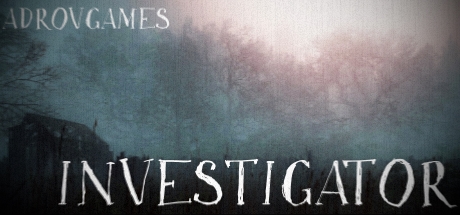
Investigator
Investigator is a first-person exploration game with horror elements, where the events take place in a world of extreme weather cataclysms.

No one lives under the lighthouse Director's cut
A slow burn retro horror game, in which you arrive at the old lighthouse on a small island near the coast of the United States. After the previous keeper has gone missing, you need to take over his duties and watch after the light.

Stay Out of the House
Can you escape the home of a cannibal serial killer? It's only a matter of time until you're dinner!


ShadowSide
ShadowSide is a First Person Exploration game. A policeman Alex Carter has been watching over the tranquility in the town for many years. He protects the people from robbery and crime. Nothing but a routine.

Paws - A Shelter 2 Game
Traverse a vast world as a young lynx cub. Paws – A Shelter 2 Game is a standalone, single player, adventure game with loss and friendship as its central themes. Venture out in the world and make your way home.

SIMULACRA: Pipe Dreams
A spin-off of the critically acclaimed SIMULACRA, Pipe Dreams tells a brand new story, with a new interface, live-action cast and horrors to unravel. Follow the story of Teddy as he tries desperately to break free from the hold of a cursed video game.
Frequently Asked Questions
Rewind Or Die is currently priced at 8.84€ on Steam.
Yes, Rewind Or Die is currently available at a 25% discount. You can purchase it for 8.84€ on Steam.
Yes, Rewind Or Die received 350 positive votes out of a total of 373 achieving a rating of 8.65.
😎
Rewind Or Die was developed by Comp-3 Interactive and published by Torture Star Video.
Yes, Rewind Or Die is playable and fully supported on Windows.
Yes, Rewind Or Die is playable and fully supported on MacOS.
No, Rewind Or Die is not playable on Linux.
Yes, Rewind Or Die is playable on Steam Deck, though it might require a few minor tweaks. Make sure to check the Steam store page and community feedback on ProtonDB for exact compatibility details.
Yes, Rewind Or Die is playable on Steam Machine, though it might require a few minor tweaks. Make sure to check the Steam store page and community feedback on ProtonDB for exact compatibility details.
No, Rewind Or Die does not support VR.
Rewind Or Die is a single-player game.
No, Rewind Or Die does not currently offer any DLC.
No, Rewind Or Die does not support mods via Steam Workshop.
No, Rewind Or Die does not support Steam Remote Play.
Yes, Rewind Or Die is enabled for Steam Family Sharing. This means you can share the game with authorized users from your Steam Library, allowing them to play it on their own accounts. For more details on how the feature works, you can read the original Steam Family Sharing announcement or visit the Steam Family Sharing user guide and FAQ page.
You can find solutions or submit a support ticket by visiting the Steam Support page for Rewind Or Die.
Data sources
The information presented on this page is sourced from reliable APIs to ensure accuracy and relevance. We utilize the Steam API to gather data on game details, including titles, descriptions, prices, and user reviews. This allows us to provide you with the most up-to-date information directly from the Steam platform.
Additionally, we incorporate data from the SteamSpy API, which offers insights into game sales and player statistics. This helps us present a comprehensive view of each game's popularity and performance within the gaming community.
Last Updates| Steam data | 16 September 2026 12:09 UTC |
|---|---|
| SteamSpy data | 21 October 2026 02:19 UTC |
| Steam price | 26 October 2026 19:53 UTC |
| Steam reviews | 20 October 2026 05:53 UTC |
If you'd like to dive deeper into the details about Rewind Or Die, we invite you to check out a few dedicated websites that offer extensive information and insights. These platforms provide valuable data, analysis, and user-generated reports to enhance your understanding of the game and its performance.
- SteamDB - A comprehensive database of everything on Steam about Rewind Or Die
- SteamCharts - Analysis of Rewind Or Die concurrent players on Steam
- ProtonDB - Crowdsourced reports on Linux and Steam Deck Rewind Or Die compatibility

Game modes
Features
Online players
1
Developer
Comp-3 Interactive
Publisher
Torture Star Video
Release
14 Apr 2023
Platforms