
Minimalism
Minimalism - platformer with a lot of levels, made in minimalist style - which is a cube protogonist. The game is a kind of labyrinth consisting of levels, to go between them you need to open the doors with collected keys.
Sync your Steam wishlist to find the lowest game prices instantly. No login required, just paste your Steam profile URL!
⚡ Try Wishlist Radar!
Sync your Steam wishlist to find the lowest game prices instantly. No login required!
⚡ Try Wishlist Radar!
Close

Shio on Steam
Quick menu
“Shio” is a challenging platformer game in which you deep and moving story by jumping from lantern to lantern. If you are big fan of Super Meat Boy, you will like Shio as well!
Shio is a indie, action and difficult game
developed by Coconut Island Studio
and published by Coconut Island Games.
Released on May 04th 2017 is available on Windows and MacOS.
It has received 1,535 reviews of which 1,212 were positive and 323 were negative resulting in a rating of 7.6 out of 10. 😊
The game is currently priced at 11.99€ on Steam.
The Steam community has classified Shio into these genres:
Media & Screenshots
Get an in-depth look at Shio through various videos and screenshots.





Load More



System requirements
These are the minimum specifications needed to play the game. For the best experience, we recommend that you verify them.
Windows
- OS *: Windows 7, Windows 8, 8.1, Windows 10
- Processor: Intel core i5 2557M
- Graphics: GeForce GT440 or HD5570
- DirectX: Version 9.0c
- Storage: 4 GB available space
MacOS
- OS: OSX 10.7
- Processor: Intel i5
- Graphics: Intel hd 4000
- Storage: 5 GB available space
Steam Price & Best Deals
User reviews & Ratings
Explore reviews from Steam users sharing their experiences and what they love about the game.
Shio is a precision platformer that takes a relatively simple movement concept and develops it into a demanding journey built around timing, momentum, and persistence. Developed by Coconut Island Studio and published by Coconut Island Games, it puts players in control of a mysterious masked character traveling through a beautiful but dangerous world. Rather than relying on combat or complicated abilities, the game concentrates heavily on movement, making every successful sequence of jumps feel like a small victory earned through practice. The most distinctive element is its lantern-based platforming. Lanterns scattered throughout the stages allow the protagonist to gain additional height and momentum while airborne, essentially turning them into stepping stones suspended in dangerous spaces. Early encounters introduce the mechanic gently enough, but the level design soon expects players to chain several lantern interactions together while simultaneously avoiding environmental hazards. Timing a jump slightly too early or approaching a lantern from the wrong position can ruin an entire sequence, so learning how movement behaves is essential. This creates a satisfying rhythm once the mechanics begin to click. Difficult sections initially feel like puzzles that need to be understood before they can be executed properly. Each failure reveals something useful, whether it is the correct moment to jump, the direction momentum should carry the character, or the safest route between hazards. Repeated attempts can certainly become frustrating, particularly during longer sequences where one small mistake sends the player back, but overcoming these obstacles provides the kind of satisfaction that defines a good precision platformer. The world is divided into four chapters, and changes in scenery and weather help prevent the journey from feeling visually repetitive. Environmental conditions can also contribute to the challenges rather than existing purely for decoration. The stages steadily introduce more elaborate combinations of hazards, demanding increasingly accurate movement as progress continues. Shio does not need conventional enemies to maintain pressure because the environment itself effectively becomes the antagonist. Dangerous surfaces, traps, gaps, and difficult lantern arrangements provide more than enough opposition. There is also a surprisingly mysterious narrative beneath the platforming. The masked protagonist is not immediately explained, and much of his background is deliberately left for the player to uncover. Hidden rooms scattered around the world provide additional pieces of information, rewarding players who explore instead of focusing exclusively on reaching the next checkpoint. This approach works well because it keeps storytelling from constantly interrupting the platforming. Players primarily interested in mechanical challenges can continue forward, while those curious about the character and world have an incentive to investigate less obvious areas. The presentation gives the experience much of its personality. Its environments can appear calm and almost dreamlike even when they contain extremely punishing obstacles. That contrast between peaceful scenery and demanding gameplay creates a distinctive atmosphere. Music also changes between chapters and complements the mood of each environment. Since difficult sections may require numerous attempts, having an appealing visual and musical backdrop makes repetition easier to tolerate. Shio is nevertheless designed for players who are comfortable with failure. Anyone expecting a relaxed platforming adventure may be surprised by how quickly the difficulty escalates. There are moments when completing a sequence requires several precise inputs in succession, leaving very little room for improvisation. Players who dislike repeating sections could find this exhausting. Conversely, those who enjoy learning a difficult route and eventually performing it almost perfectly will find the challenge much more rewarding. The controls are understandable, but mastering their application is the real test. Additional secrets and achievements give completion-focused players reasons to thoroughly explore the stages and revisit challenges. The game works particularly well for players who enjoy improving their execution because returning to an earlier area after developing better movement skills can make previously intimidating sections feel dramatically easier. That visible improvement provides a satisfying sense of progression even without traditional character upgrades. Steam Deck compatibility is officially listed as Unknown or Unverified rather than carrying a formal Verified or Playable rating. The game's platforming-oriented design and controller-friendly nature make it conceptually suited to handheld play, but the absence of an official compatibility rating means players should not assume that every aspect of the experience has been validated specifically for Steam Deck. Overall, Shio is an impressive example of how a focused mechanic can support an entire platforming adventure when the levels are constructed around it carefully. Lantern-assisted movement gives the game its identity, while environmental hazards, hidden areas, atmospheric scenery, changing conditions, and understated storytelling keep the experience from becoming a straightforward collection of jumping challenges. Its unforgiving nature will not suit everyone, but players who appreciate precision, repetition, and the satisfaction of finally conquering a seemingly impossible sequence should find plenty to enjoy. Shio combines challenging precision platforming with atmospheric presentation and an inventive lantern mechanic, creating a rewarding adventure for patient players willing to learn from repeated failure. Rating: 8/10
Similar games
View all



Cube Runner
Cube Runner is a 3d action platformer that's simple to learn, exciting to play, and deep enough to challenge even the greatest gamers.
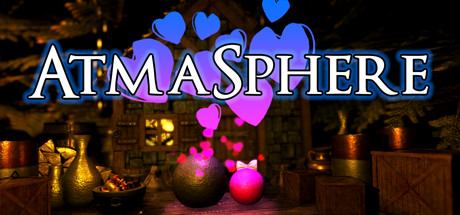
AtmaSphere
AtmaSphere is roll-a-ball game set in a medieval world which is full of dangerous traps and uncertain paths! Roll all you want, but don't fall off! Collect all diamonds to impress Ballerina, and get Ballard safely to her house!


Jelly Killer
Jelly Killer - Retro Platformer The Adventures Of A Young Bioweapon. In this game you will act like the young bioweapon. You will encounter lots of traps and puzzles. You will have to possess human bodies to pass the game to the end. Good luck!


Super Fancy Pants Adventure
Super Fancy Pants Adventure is a wild free-running adventure with buttery smooth platforming and a slick fountain pen!

A Walk in the Dark
In this action platformer you play as a cat, Bast, running through a dark fantasy world. You’ll be running, jumping and sliding with smooth and precise controls designed to make you feel like a cat. But it wont be easy. In the dark you never know what lies in the shadows.

Upside Down
Upside Down will immerse you in an incredible adventure. Sharpen your reflexes for this fast-paced, precise puzzle-platformer.

Angry Video Game Nerd Adventures
"The most rewarding game of 2013!" Influenced by retro classics Mega Man and Castlevania, Angry Video Game Nerd Adventures features the AVGN and friends as they blast their way through 10 levels of fun, fast paced 2D action based on the AVGN's adventures in his online series.
Frequently Asked Questions
Shio is currently priced at 11.99€ on Steam.
No, Shio is currently not on sale. You can purchase it for 11.99€ on Steam.
Yes, Shio received 1,212 positive votes out of a total of 1,535 achieving a rating of 7.58.
😊
Shio was developed by Coconut Island Studio and published by Coconut Island Games.
Yes, Shio is playable and fully supported on Windows.
Yes, Shio is playable and fully supported on MacOS.
No, Shio is not playable on Linux.
This information about Shio is not available yet.
This information about Shio is not available yet.
No, Shio does not support VR.
Shio is a single-player game.
Yes, there is a DLC available for Shio. Explore additional content available for Shio on Steam.
No, Shio does not support mods via Steam Workshop.
No, Shio does not support Steam Remote Play.
Yes, Shio is enabled for Steam Family Sharing. This means you can share the game with authorized users from your Steam Library, allowing them to play it on their own accounts. For more details on how the feature works, you can read the original Steam Family Sharing announcement or visit the Steam Family Sharing user guide and FAQ page.
You can find solutions or submit a support ticket by visiting the Steam Support page for Shio.
Data sources
The information presented on this page is sourced from reliable APIs to ensure accuracy and relevance. We utilize the Steam API to gather data on game details, including titles, descriptions, prices, and user reviews. This allows us to provide you with the most up-to-date information directly from the Steam platform.
Additionally, we incorporate data from the SteamSpy API, which offers insights into game sales and player statistics. This helps us present a comprehensive view of each game's popularity and performance within the gaming community.
Last Updates| Steam data | 19 September 2026 21:15 UTC |
|---|---|
| SteamSpy data | 27 October 2026 12:07 UTC |
| Steam price | 27 October 2026 15:03 UTC |
| Steam reviews | 21 October 2026 07:51 UTC |
If you'd like to dive deeper into the details about Shio, we invite you to check out a few dedicated websites that offer extensive information and insights. These platforms provide valuable data, analysis, and user-generated reports to enhance your understanding of the game and its performance.
- SteamDB - A comprehensive database of everything on Steam about Shio
- SteamCharts - Analysis of Shio concurrent players on Steam
- ProtonDB - Crowdsourced reports on Linux and Steam Deck Shio compatibility

Game modes
Features
Online players
1
Developer
Coconut Island Studio
Publisher
Coconut Island Games
Release
04 May 2017
Platforms