

Junk Jack
Make the world truly yours in Junk Jack, a relaxing sandbox experience focused on building and improving your home. Discover new planets, tame and breed creatures, cook foods, collect animal companions, farm exotic plants, collect fish, grow flowers, play with your friends!
Sync your Steam wishlist to track the lowest game prices instantly. No login required, just paste your Steam profile URL!
⚡ Try Wishlist Radar!
Sync your Steam wishlist to track the lowest game prices instantly. No login required!
⚡ Try Wishlist Radar!
Close

Signs of Life on Steam - User reviews, Price & Information
Quick menu
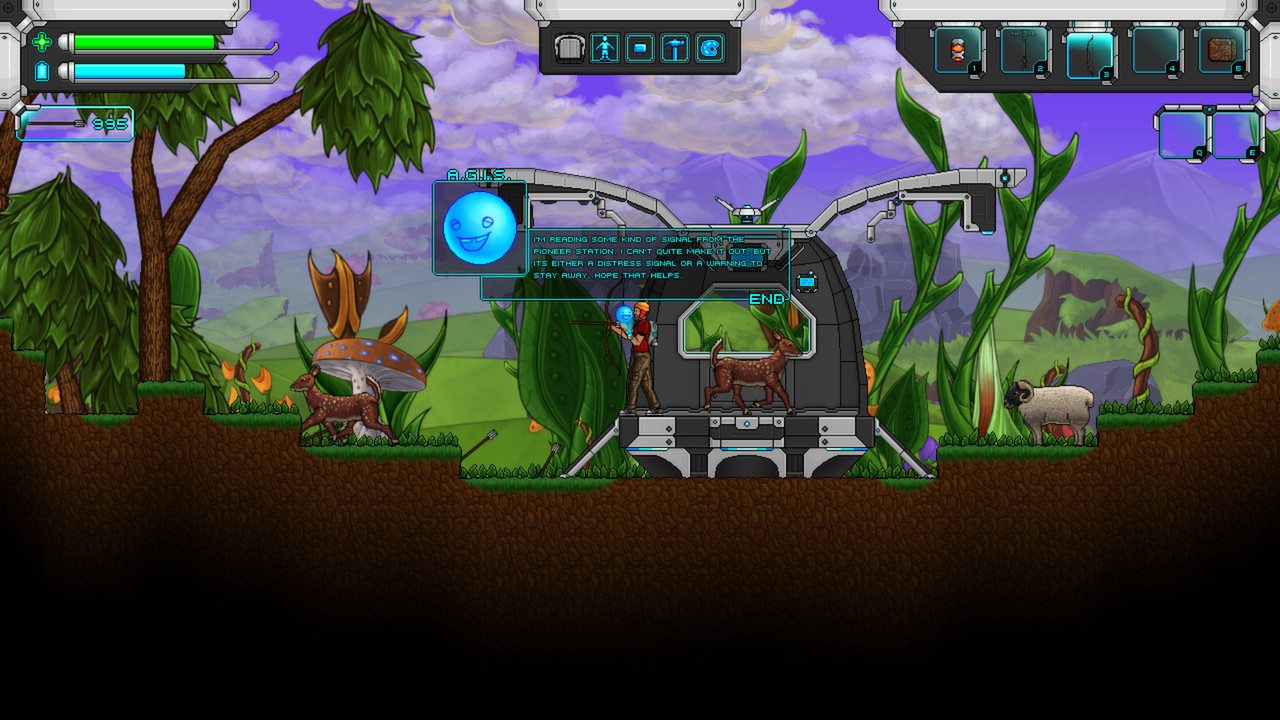
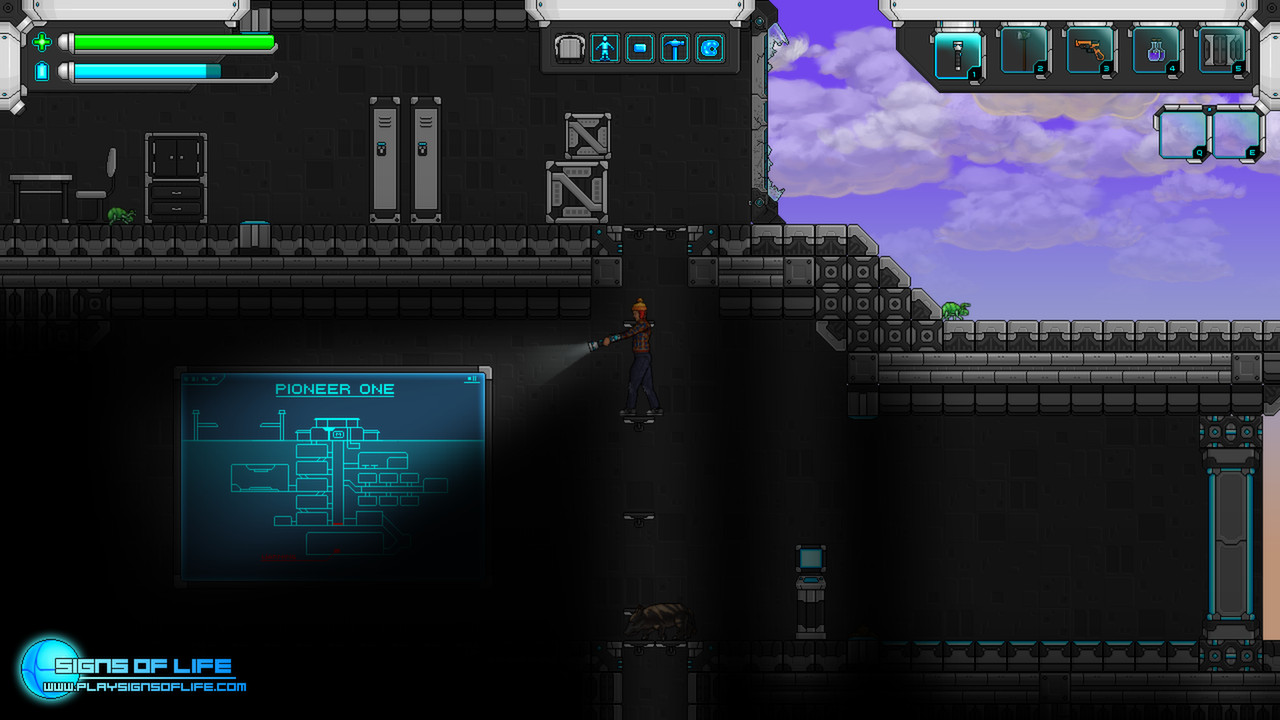
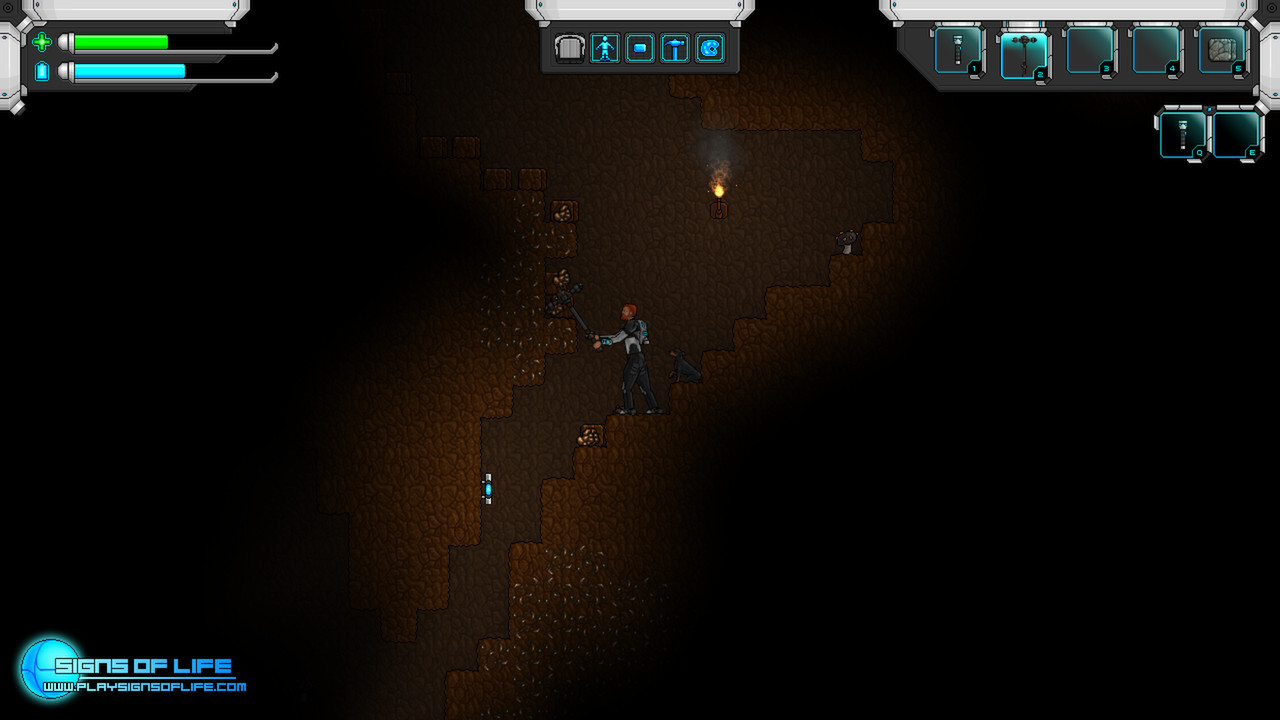
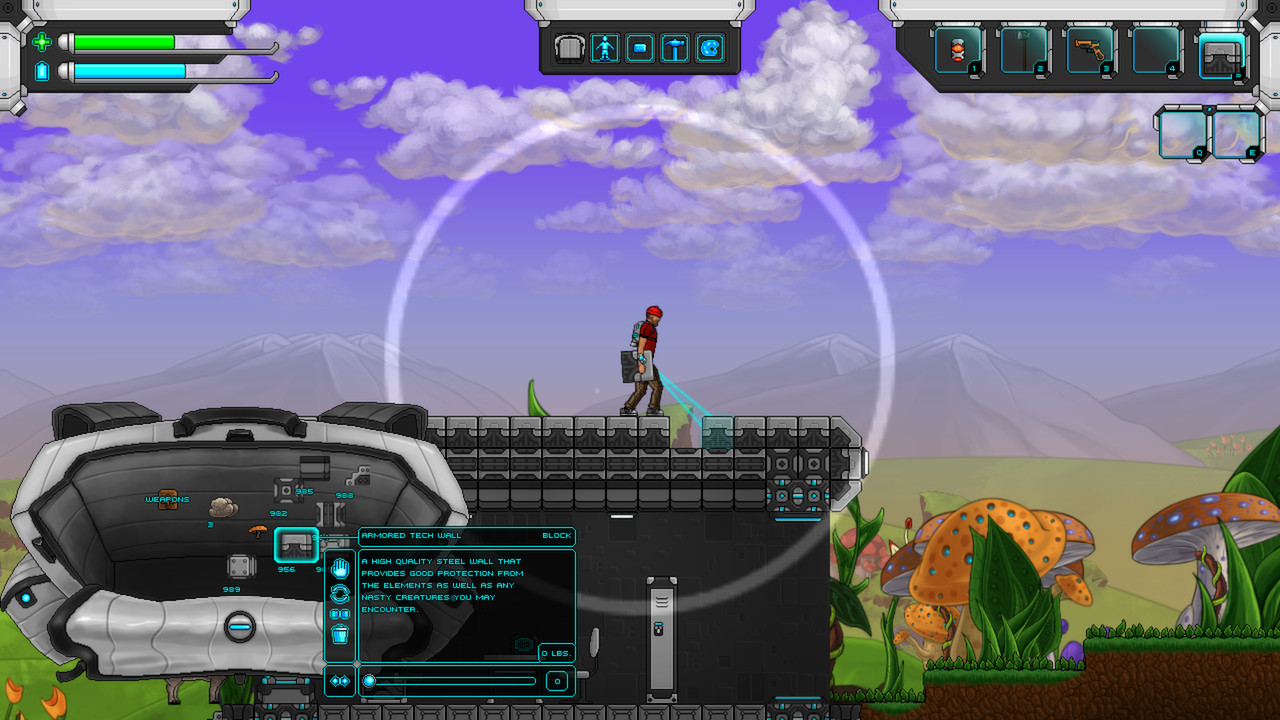
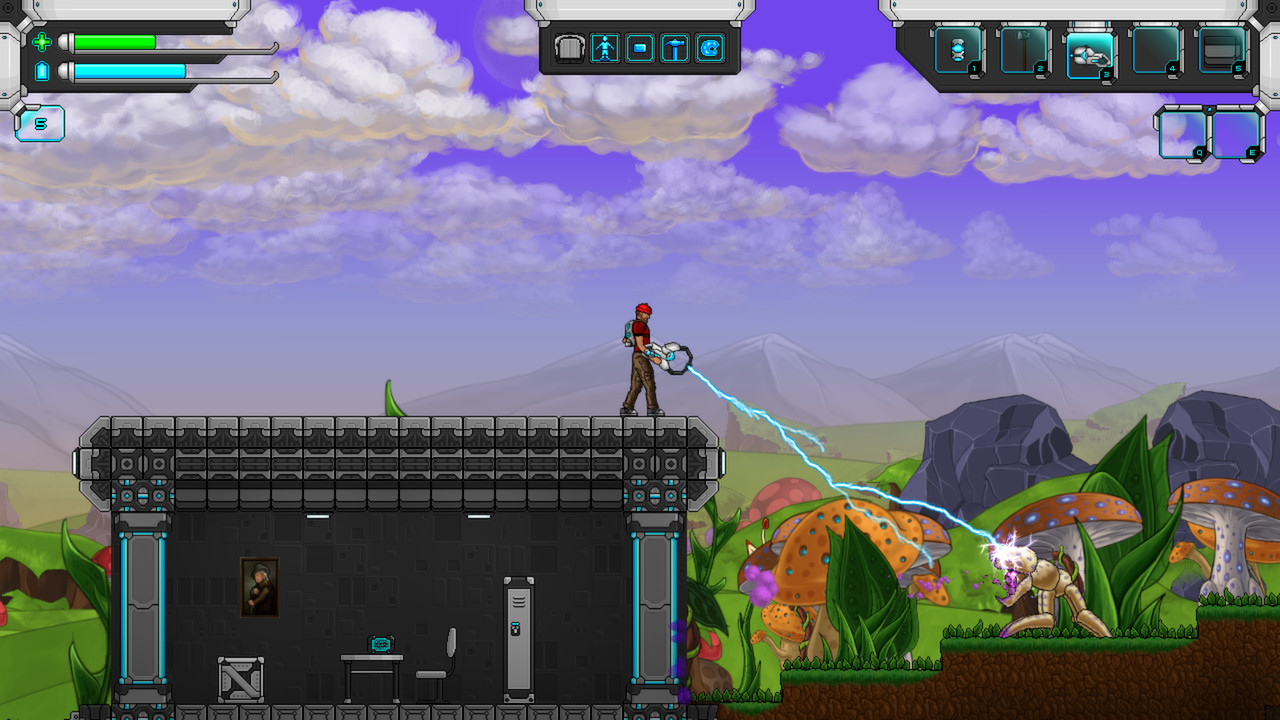
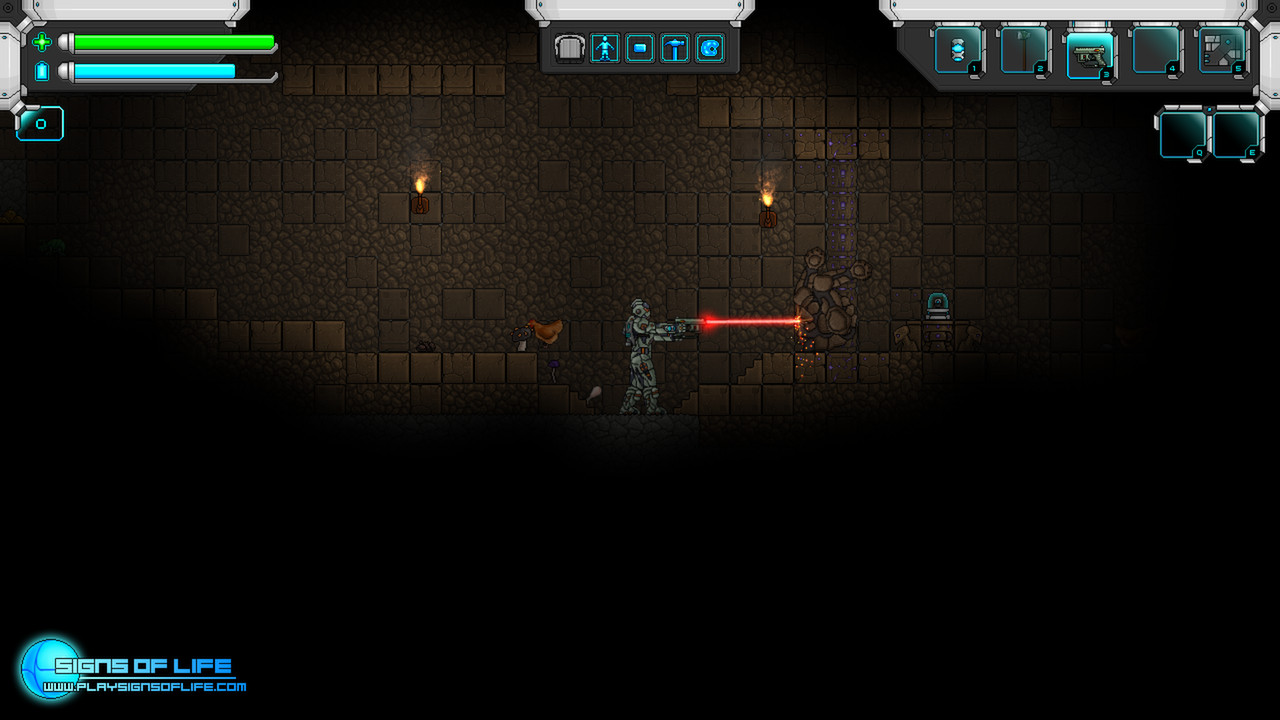
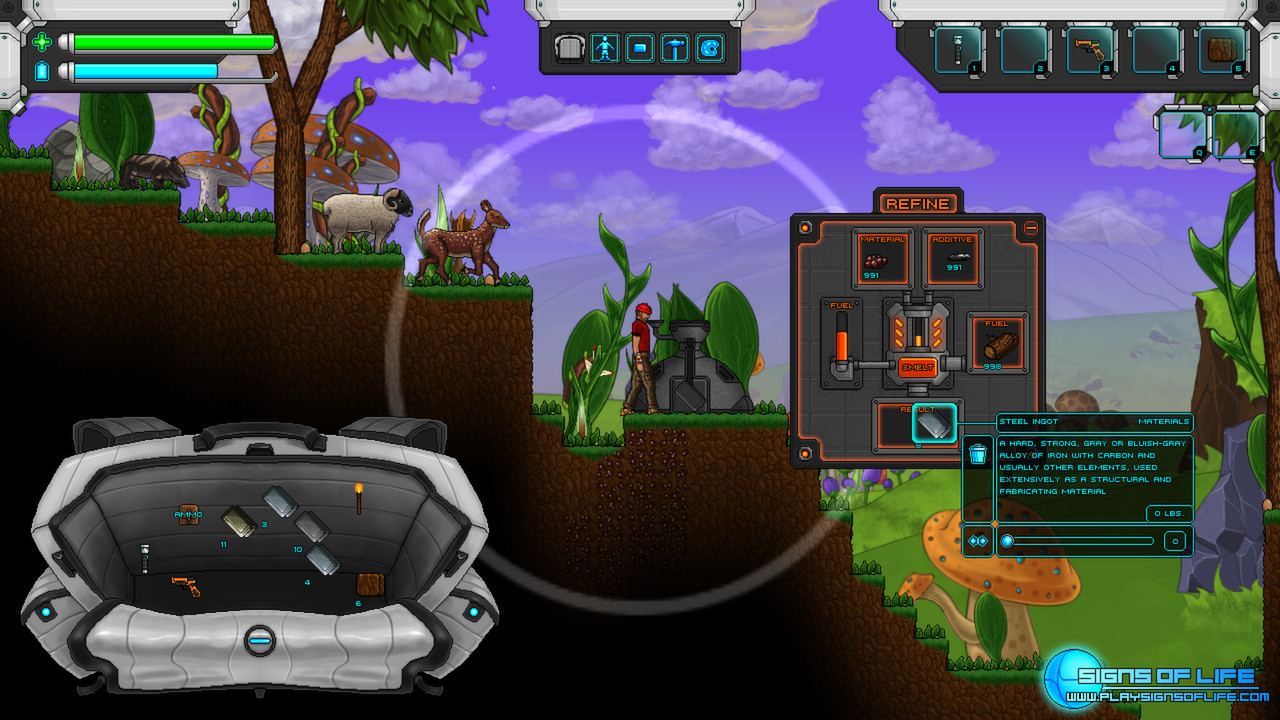
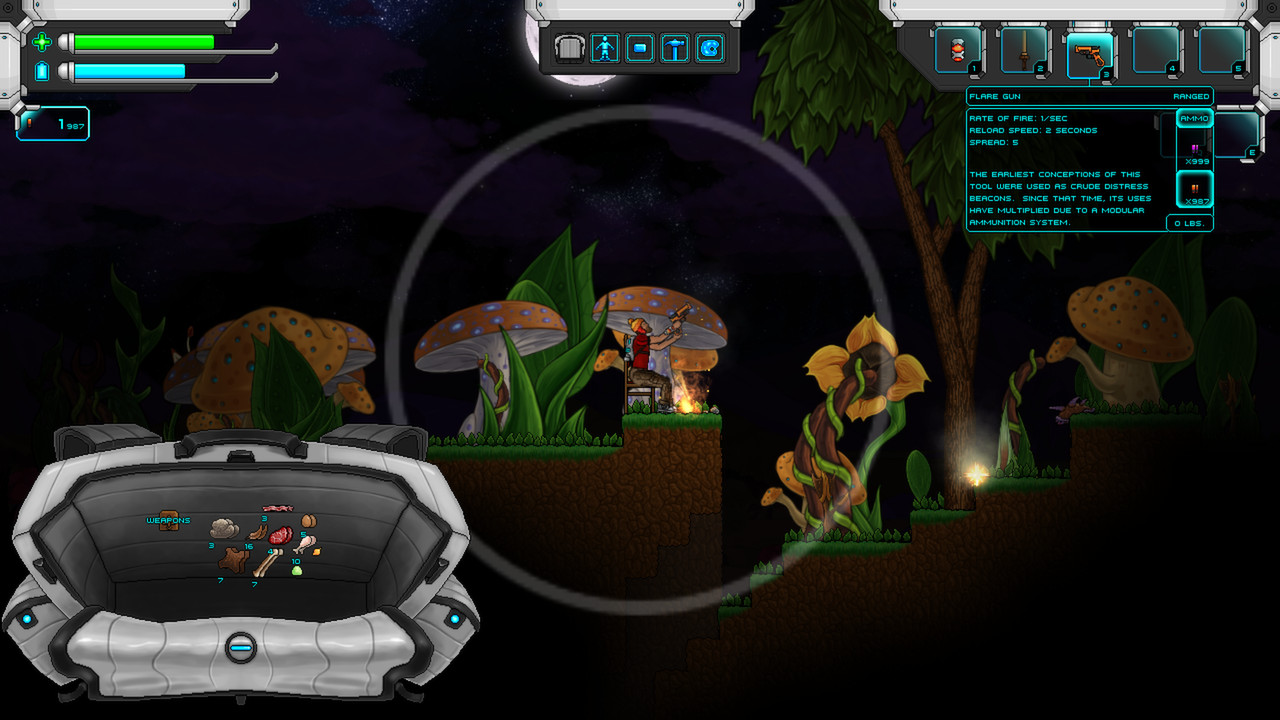
Signs of Life is a sci-fi survival sandbox platformer with a combination of procedurally generated and hand-crafted content. You'll explore mysterious locations, mine blocks for resources, and meet strange (and some familiar) creatures, some of which don't even want to kill you and eat your corpse.
Signs of Life is a open world survival craft, sandbox and adventure game
developed and published by Sweet Dog Studios.
Released on January 27th 2014 is available in English on Windows and Linux.
It has received 821 reviews of which 625 were positive and 196 were negative resulting in a rating of 7.3 out of 10. 😊
The game is currently priced at 15.49€ on Steam, but you can find it for 8.91€ on G2A.
The Steam community has classified Signs of Life into these genres:
Media & Screenshots
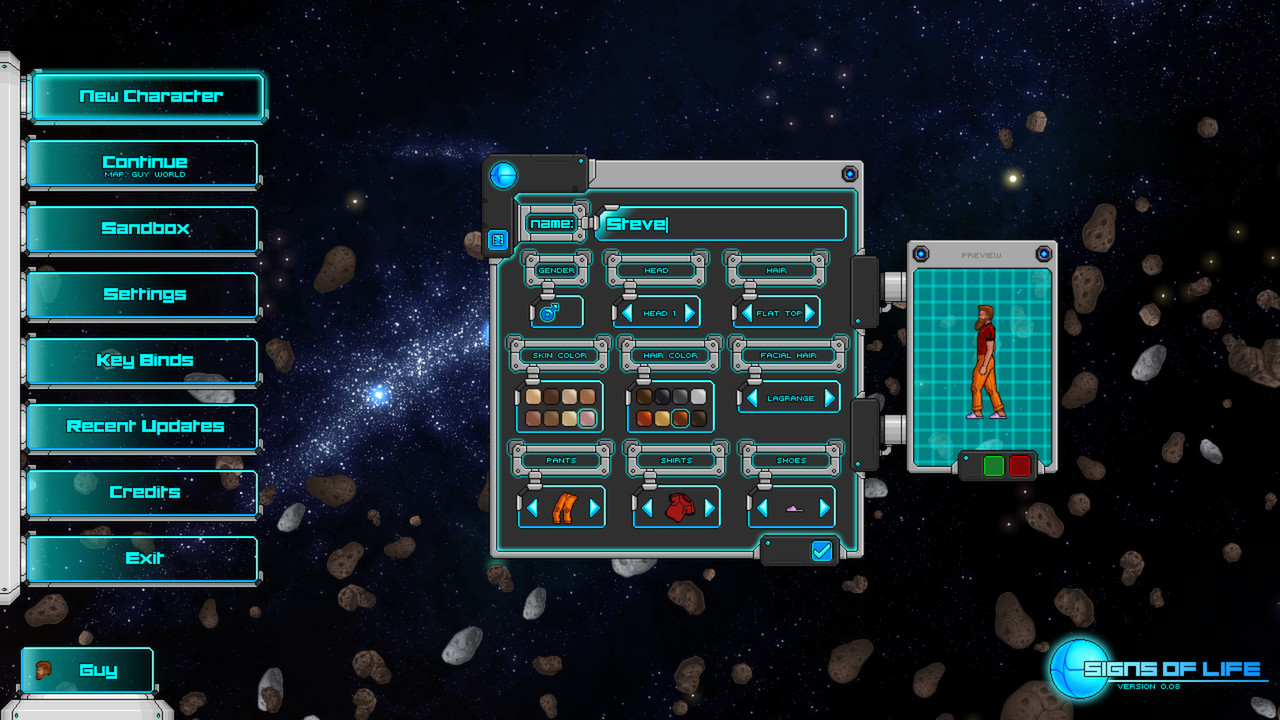
Get an in-depth look at Signs of Life through various videos and screenshots.
Load More
System requirements
These are the minimum specifications needed to play the game. For the best experience, we recommend that you verify them.
Windows
- OS: Windows 10
- Processor: Dual-Core 2 GHz
- Memory: 2 GB RAM
- Graphics: OpenGL 3.0 Compatible Graphics Device
- Storage: 1 GB available space
Linux
- Processor: Dual-Core 2 GHz
- Memory: 2 GB RAM
- Graphics: OpenGL 3.0 Compatible Graphics Device
- Storage: 1 GB available space
Steam Price & Best Deals
User reviews & Ratings
Explore reviews from Steam users sharing their experiences and what they love about the game.
The chillest 2D open world block digger survival crafting game I had the pleasure to play. I found it to be easy, relaxing, carefree and fun to play multiple time with self-imposed rules. The game admittedly always has the same main things that I must do in each playthrough, but I can choose to: - ignore the crafting system and simply win the game using the loot found in the story locations - ignore the story locations and work via crafting to get everything I customize my character - play only using rifles, pistols, smgs, explosives or energy weapon - play using only bows and arrow or crossbows or throwables - play only using swords, axes, maces, daggers or some other focused strategy - get cyber augmentations and play as a cyborg with built-in arm-guns Negatives: - the story is somewhat mid - the world is nonsense - theres giant random mushrooms in the background that the player will not encounter on the foreground - the game has block digging mechanics but prevents me from using them 50% of the time - story locations are linear with no different ways to approach them - its always the same thing - it mixes tile-based worlds with objects/decorations that don't want to exist on a grid or are able to handle situations where the surrounding or underneath tiles have been removed from them - many inconsistent mechanics of how something interacts with another thing or doesn't - descriptions are missing everywhere - balancing of armors, weapons, items, crafting recipes, set bonuses, accessories are a mess - many items are so tiny that you won't know they're there unless you happen to use a tractor beam in that location - said tiny items in inventory are hard to tell apart what is what without highlighting them - most underground is empty, enemy encounters are sparse, most things/creatures spawn in randomly and not via nests or origin points - many interesting locations do not have map markers - player has to manually search the entire underground to find them methodically and tediously - most of the early tier content is outright forgotten or useless - usually acquiring mid-game Steel-tier equipment will cover the rest of the game's challenges - bosses are fun, but they are few just like the enemies, I tend to not have enough targets to fight to actually use the weapons I crafted - some technologies are impossible to discover by the player through manually crafting progression, requiring the player to visit story locations to get the needed piece to access it - enemy armor and damage resistances are arbitrary and cannot be eventually whittled down or stripped/peeled away with low power weapons, making only heavy-hitting weapons actually useful against them - many of the items, decorations and other element either lack a crafting recipe, cannot be recycled, do nothing, or lack descriptions - most story progression is vague and requires doing something that is not easy to decipher, not properly telegraphed or has a very real risk of causing a soft lock - there are unkillable turrets that can sometimes spawn in weird places that can actually block certain things unintentionally - the "magic" weapons and alien artifacts pale in comparison to some of the things that the player can craft - not enough accessory slots Despite all the negatives, which I hope will be fixed, the game is still really awesome and fun to play. It has a potential for post-ending randomized disposable planet realms to visit (reusing the existing content to create endless randomized playground world to visit and do stuff in) if the devs could streamline/reduce the cost of creating content for this game, since currently the player will grind to get everything the game has to offer but then has no outlet to direct it towards. I'm hopeful they'll properly polish and continue improving this game to reach v1.0.0.
Signs of Life is a science-fiction survival sandbox developed and published by Sweet Dog Studios that blends 2D platforming, open-ended exploration, and deep crafting systems into a slow-burn adventure defined by isolation and discovery. Set on a distant alien world following the catastrophic failure of a human expedition, the game drops you into an unforgiving environment with little guidance and few comforts, asking you to learn its rules through observation, experimentation, and persistence. Rather than pushing a tightly scripted experience, it leans heavily into player-driven progression, where survival itself becomes the narrative thread that binds everything together. The premise is simple but effective: after escaping a doomed mission via emergency pod, you awaken alone on an unknown planet with minimal equipment and a damaged AI companion. From the very beginning, the game establishes a sense of vulnerability and scale. The world stretches far beyond the initial landing zone, layered vertically with surface biomes, underground caverns, abandoned facilities, and hostile ecosystems that gradually reveal themselves as you push deeper. Storytelling is largely environmental, conveyed through derelict structures, scattered logs, strange alien technology, and the gradual realization that this planet is far more complex—and dangerous—than it first appears. Gameplay revolves around a tightly interwoven loop of exploration, resource gathering, crafting, and combat. Mining ores, harvesting plants, and scavenging remnants of past expeditions provide the raw materials needed to craft tools, weapons, armor, and survival equipment. Progression is not gated by traditional experience levels but by knowledge and preparation; reaching new areas often requires crafting the right gear to withstand environmental hazards such as extreme temperatures, toxic zones, or heavily fortified alien structures. This creates a strong sense of purpose behind crafting, as every new item directly expands your ability to explore further and survive longer. Combat in Signs of Life is deliberate and sometimes punishing, emphasizing preparation over reflexes. Alien creatures range from passive wildlife to aggressive predators and mechanical threats, each demanding different approaches. Early encounters can feel harsh, especially for new players still learning movement and weapon behavior, but success gradually comes from understanding enemy patterns, using terrain intelligently, and ensuring you are properly equipped before venturing into more dangerous zones. While the physics and movement can occasionally feel imprecise, especially in tight underground spaces, the tension this creates often reinforces the survival theme rather than undermining it. One of the game’s most compelling strengths is the depth and flexibility of its crafting systems. The crafting interface supports a wide range of recipes that unlock progressively as you discover new materials and technologies. From basic tools and melee weapons to advanced firearms, drones, scanners, and utility devices, the game encourages experimentation and long-term planning. Base-building elements further deepen this sandbox appeal, allowing players to establish safe zones, storage hubs, and crafting stations that serve as anchors in an otherwise hostile world. Over time, the satisfaction of turning a fragile survivor into a well-equipped explorer becomes one of the game’s most rewarding arcs. Visually, Signs of Life balances functional pixel-art characters with more detailed, atmospheric backgrounds that give the planet a sense of scale and mystery. Environments feel distinct and purposefully designed, whether you are navigating dense surface terrain or descending into dimly lit caverns filled with unfamiliar technology. The art direction prioritizes mood over spectacle, and while animations and effects may lack the polish of higher-budget titles, they effectively convey danger, isolation, and discovery. Sound design reinforces this atmosphere, using ambient audio and subtle musical cues to heighten the feeling of being alone on a distant world. The game’s Early Access roots are still apparent in its pacing and onboarding. Direction can be sparse, and progression is sometimes opaque, with players expected to learn through trial, error, and community knowledge rather than explicit tutorials. For some, this lack of hand-holding is a defining strength, enhancing immersion and reinforcing the survival fantasy. For others, it can lead to moments of frustration, particularly when essential mechanics or progression paths are not clearly communicated. Patience is very much a requirement, and those willing to invest time into understanding the systems tend to find the experience far more rewarding. Community reception reflects this duality. Players who enjoy slow, system-driven survival games often praise Signs of Life for its depth, freedom, and sense of discovery, highlighting the satisfaction of mastering its mechanics and gradually uncovering the planet’s secrets. Criticism most often targets uneven difficulty spikes, unclear objectives, and occasional technical roughness, but even detractors frequently acknowledge the ambition behind the design. The game’s continued updates and expansions over time have steadily broadened its content and refined its systems, reinforcing its identity as a long-term sandbox experience rather than a tightly paced campaign. In the end, Signs of Life is a game defined by curiosity, patience, and self-directed problem-solving. It does not chase instant gratification or cinematic storytelling, instead offering a dense survival sandbox where progress is earned through understanding the world and adapting to its dangers. For players drawn to sci-fi survival games that reward exploration, crafting depth, and emergent storytelling, it stands as a compelling and often absorbing journey into an alien wilderness that feels genuinely hostile, mysterious, and alive. Rating: 7/10
The game is basically done from what I can tell. It's not anywhere near as deep as many others of its genre (like Terraria), but it's fun and has some... Interesting choices in humor. I spent about 40-60 hours on it overall, and enjoyed my experience. It'd be nice if it had more to it, but honestly in hindsight I think that more just shows it has parts about it I wanted to enjoy more.
had this in my steam library for yeeeaaaaarrrrssss, just recently started it and i have no idea why i waited this long but it was probably for a reason. regardless this game is amazing, very in depth for crafting and the style is perfect. every step feels like a big accomplishment. although food is stupid easy to get lol. highly reccomend
Similar games
View all

Block Story
There isn’t much better than a wide open game world in which you have essentially no limits and can alter the very landscape in which you play – that is, unless you add dragons, of course…

Realms of Magic
Embark on a journey through the Old Kingdom in Realms of Magic - a sandbox RPG where you customize your character, choose your path, and immerse yourself in the fantasy world as a knight, wizard, miner, lumberjack, farmer, and more. After all, this is YOUR adventure.

Planet Explorers
Planet Explorers is an open world sandbox adventure RPG game set on a distant planet. The game uses a new OpenCL calculated voxel system to allow players to change the terrain in any way, create new objects such as weapons, vehicles, objects, and do it anywhere.

Wonderia
Wonderia's an open-world, manga-art adventure just waiting to be explored. It's got sci-fi sim elements, deep dungeons, and you can even morph into alien form! Grab up to 7 friends to mine, craft, battle, and level—or farm and fish the day away, if that's more your tempo. There's so much to do!

Don't Starve
Don’t Starve is an uncompromising wilderness survival game full of science and magic. Enter a strange and unexplored world full of strange creatures, dangers, and surprises. Gather resources to craft items and structures that match your survival style.
Wurm Unlimited
Wurm Unlimited is the standalone version of the fantasy sandbox world Wurm Online, the MMORPG where the players are in charge! A pioneer in the ideas of player influence, crafting and adventure, it is now one of the most deep and feature packed true sandbox experiences available.
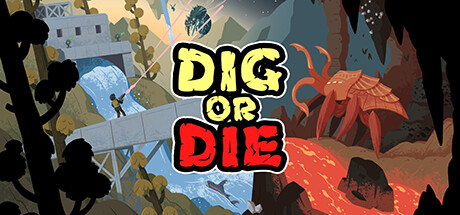
Dig or Die
Crash land on a hostile planet where you'll have to build the strongest defenses if you wish to live to escape from it. But be warned... this planet is merciless. Build strong, and smart; else physics may flood or destroy your only hopes of survival.

Nighthold: Number 1
Investigate a starship crash, explore a hostile world, build shelters and survive nightly attacks of the Rot. Tear down any structure and experience total freedom of action.

Frequently Asked Questions
Signs of Life is currently priced at 15.49€ on Steam.
No, Signs of Life is currently not on sale. You can purchase it for 15.49€ on Steam.
Yes, Signs of Life received 625 positive votes out of a total of 821 achieving a rating of 7.27.
😊
Signs of Life was developed and published by Sweet Dog Studios.
Yes, Signs of Life is playable and fully supported on Windows.
No, Signs of Life is not playable on MacOS.
Yes, Signs of Life is playable and fully supported on Linux.
This information about Signs of Life is not available yet.
This information about Signs of Life is not available yet.
No, Signs of Life does not support VR.
Signs of Life offers both single-player and multi-player modes.
Signs of Life offers both Co-op and PvP modes.
No, Signs of Life does not currently offer any DLC.
No, Signs of Life does not support mods via Steam Workshop.
No, Signs of Life does not support Steam Remote Play.
Yes, Signs of Life is enabled for Steam Family Sharing. This means you can share the game with authorized users from your Steam Library, allowing them to play it on their own accounts. For more details on how the feature works, you can read the original Steam Family Sharing announcement or visit the Steam Family Sharing user guide and FAQ page.
You can find solutions or submit a support ticket by visiting the Steam Support page for Signs of Life.
Data sources
The information presented on this page is sourced from reliable APIs to ensure accuracy and relevance. We utilize the Steam API to gather data on game details, including titles, descriptions, prices, and user reviews. This allows us to provide you with the most up-to-date information directly from the Steam platform.
Additionally, we incorporate data from the SteamSpy API, which offers insights into game sales and player statistics. This helps us present a comprehensive view of each game's popularity and performance within the gaming community.
Last Updates| Steam data | 30 August 2026 22:30 UTC |
|---|---|
| SteamSpy data | 03 September 2026 05:01 UTC |
| Steam price | 13 September 2026 10:42 UTC |
| Steam reviews | 10 September 2026 22:07 UTC |
If you'd like to dive deeper into the details about Signs of Life, we invite you to check out a few dedicated websites that offer extensive information and insights. These platforms provide valuable data, analysis, and user-generated reports to enhance your understanding of the game and its performance.
- SteamDB - A comprehensive database of everything on Steam about Signs of Life
- SteamCharts - Analysis of Signs of Life concurrent players on Steam
- ProtonDB - Crowdsourced reports on Linux and Steam Deck Signs of Life compatibility
Game modes
Multiplayer
Features
Online players
2
Developer
Sweet Dog Studios
Publisher
Sweet Dog Studios
Release
27 Jan 2014
Platforms
Clicking and buying through these links helps us earn a commission to maintain our services.