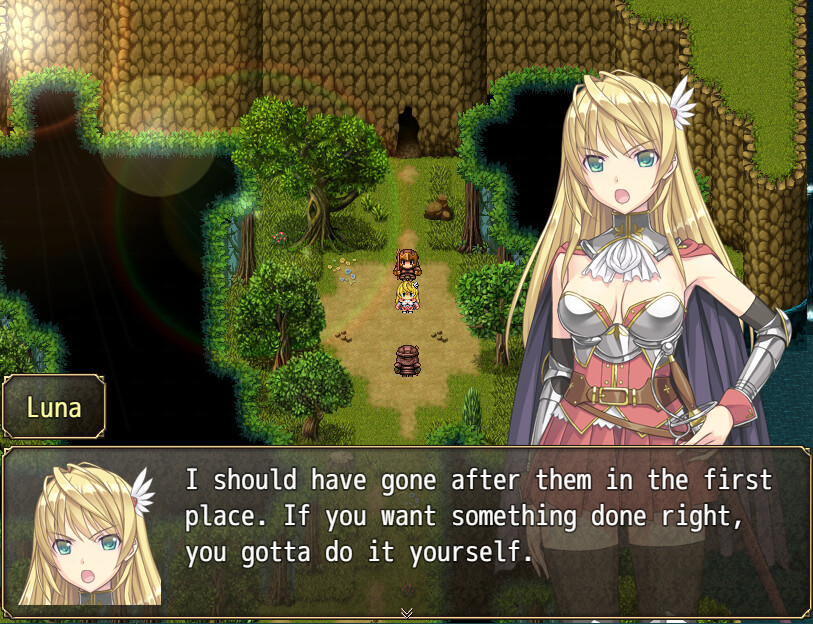
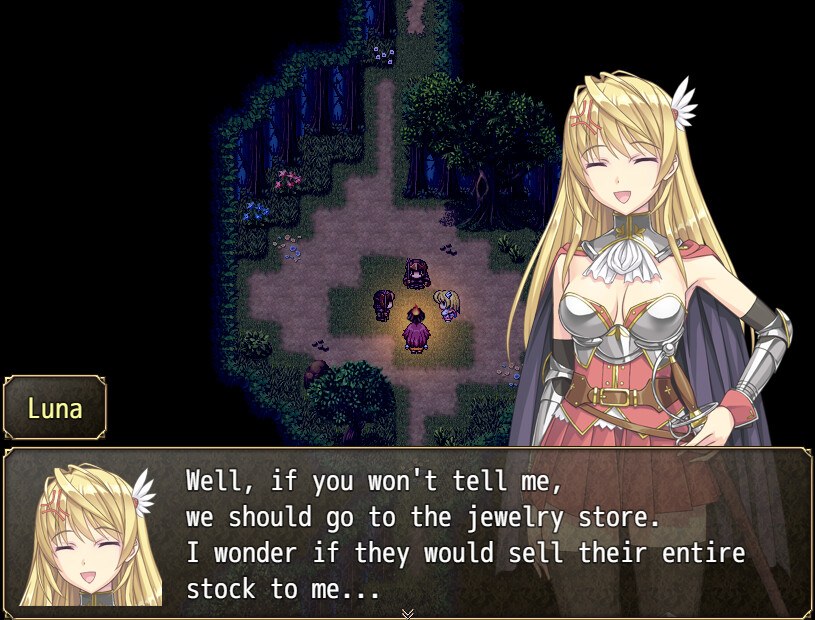
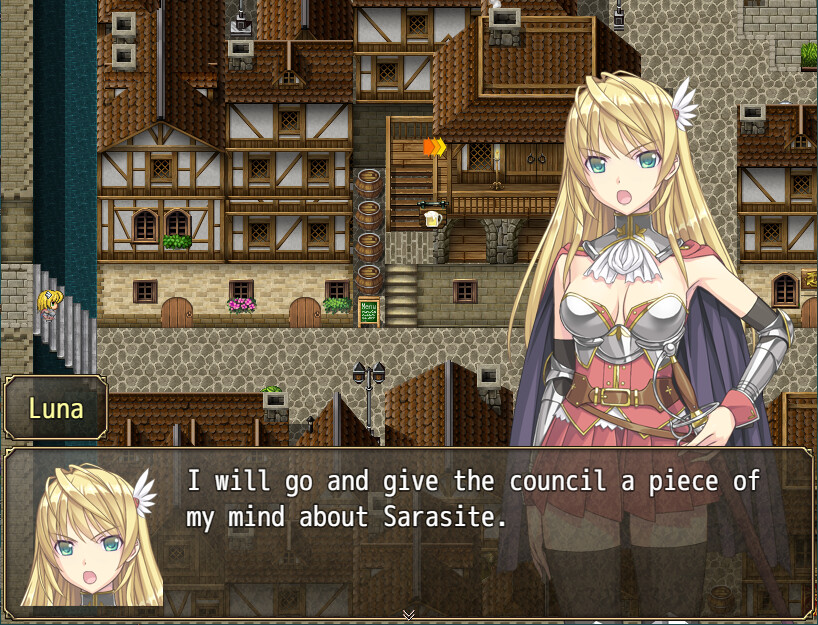
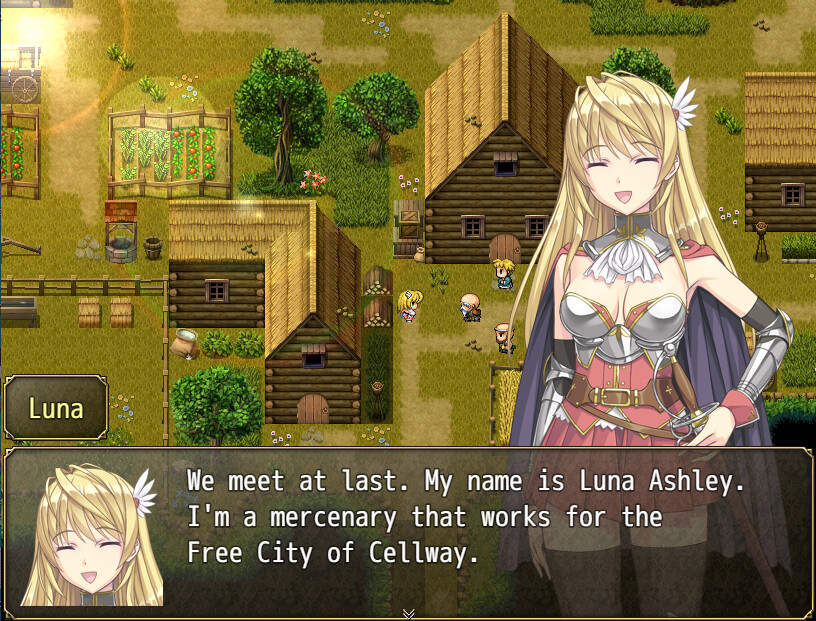
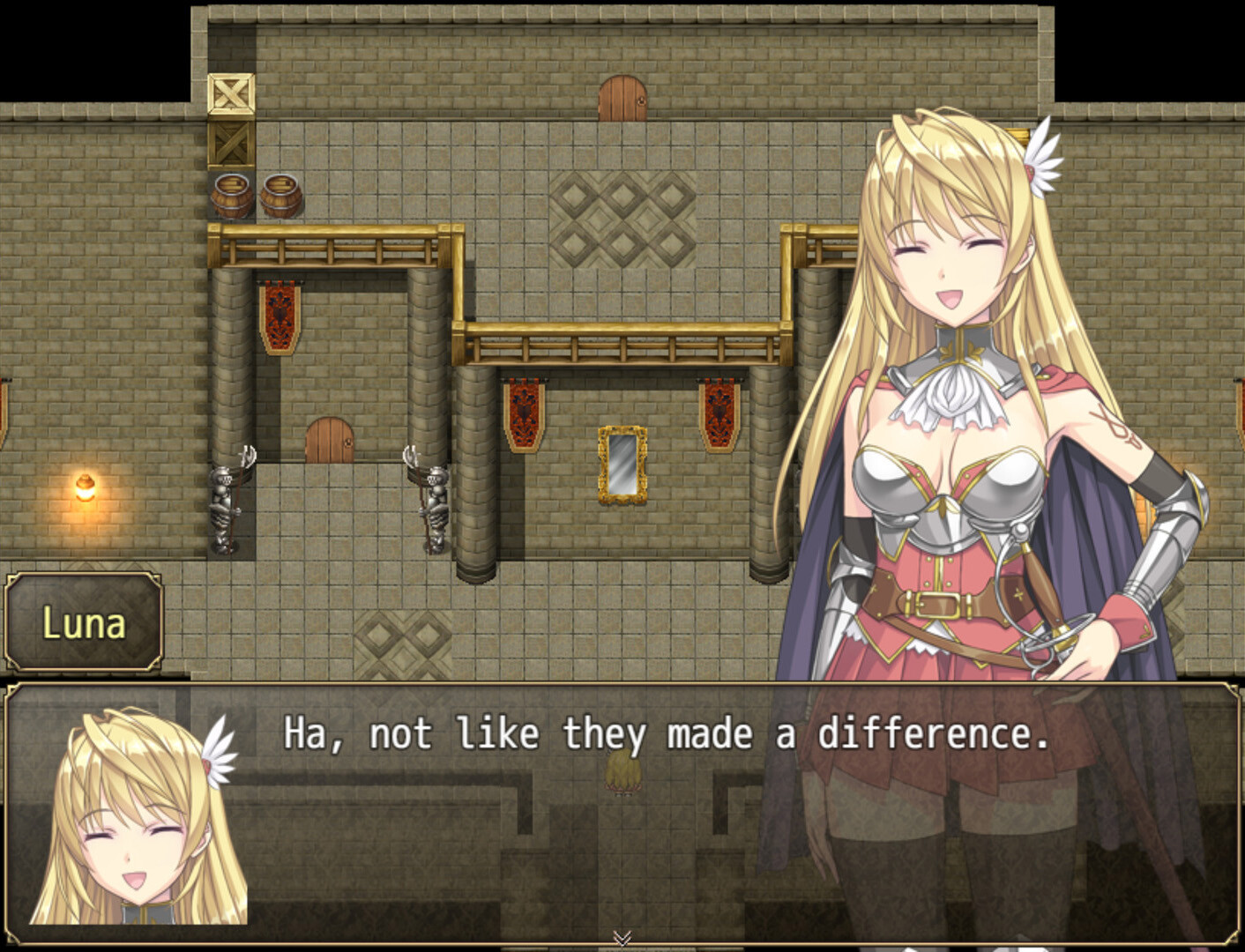
Slave’s Sword is a fantasy role-playing game developed by Circle Poison and published by Kagura Games, built using the RPG Maker engine and designed as a story-driven adventure with traditional JRPG mechanics. While it shares many gameplay foundations with classic RPG Maker titles—such as top-down exploration, turn-based combat, and equipment progression—the game stands out primarily for its darker narrative themes and character-focused storytelling. Instead of presenting a lighthearted fantasy quest, Slave’s Sword tells a grim tale about the fall of a once-honorable knight and her struggle to survive and reclaim control over her life after betrayal and enslavement. The story centers on Luna, a former imperial knight who once served the Empire with pride and distinction. Known for her strength and skill with a blade, Luna held a respected position within the empire’s military hierarchy. However, disillusionment gradually sets in as she witnesses the corruption and injustice spreading throughout the government she once defended. Unable to tolerate the cruelty and political manipulation surrounding her, Luna eventually abandons her noble position and retreats to a quieter life in the Free City, hoping to escape the power struggles that dominate imperial society. For a brief period, she manages to live peacefully as a wandering mercenary, taking on small contracts and avoiding the political chaos she once left behind. That fragile peace is shattered when Luna becomes entangled in a conspiracy that leads to her capture and forced enslavement. Branded as property and stripped of her independence, she is thrust into a harsh environment where survival becomes her primary objective. From this point onward, the story focuses on Luna’s determination to endure the humiliations and hardships imposed upon her while seeking opportunities to escape captivity. As the narrative unfolds, she gradually uncovers deeper layers of corruption and hidden forces that contributed to her downfall. The journey is not only about regaining freedom but also about confronting the injustices that plague the world she once tried to protect. Gameplay follows the traditional structure familiar to fans of RPG Maker titles. Players guide Luna through towns, wilderness regions, and underground dungeons while interacting with non-player characters and uncovering story events that move the narrative forward. Exploration is a major component of the experience, as players search for resources, complete side quests, and uncover hidden areas scattered throughout the world. Many locations contain optional events that provide additional context about the world and its inhabitants, encouraging players to explore beyond the main storyline. Combat occurs through a turn-based battle system typical of classic Japanese role-playing games. During encounters with monsters or hostile characters, players select commands that allow Luna to attack, defend, use items, or unleash special abilities. Enemies range from common creatures found in forests and caves to stronger adversaries guarding important story locations. As Luna gains experience from these encounters, she gradually becomes stronger and more capable of surviving the increasingly dangerous threats encountered later in the adventure. Equipment upgrades such as new swords, armor, and accessories also play an important role in improving her effectiveness during battles. Although the combat mechanics are relatively straightforward, the game occasionally introduces additional gameplay elements to keep the experience varied. Certain story segments incorporate stealth sequences where Luna must avoid detection while escaping dangerous environments. Other moments involve puzzle-like exploration within dungeons where players must navigate traps, locked passages, or hidden pathways. These sections help break up the routine of combat and exploration by introducing moments of tension that require careful movement and observation rather than direct confrontation. Another interesting aspect of the game is the presence of a day-and-night cycle that affects certain events and interactions. Some characters only appear at specific times, while certain story events can only be triggered during particular hours. This system encourages players to revisit locations and pay attention to the passage of time while progressing through the story. While the mechanic is relatively simple, it adds a small layer of world immersion by making the environment feel more dynamic. Progression in Slave’s Sword revolves around gradually strengthening Luna through equipment upgrades and combat experience. As players explore new areas and defeat stronger enemies, they gain access to improved weapons and armor that enhance her combat abilities. However, the pace of progression can sometimes feel slow, requiring players to spend time battling enemies repeatedly in order to gain enough experience for the next major challenge. This design reflects the structure of many traditional RPG Maker games, though it may feel repetitive for players who prefer faster-paced progression systems. Visually, the game uses a pixel-art style typical of RPG Maker titles, presenting environments through tile-based maps filled with medieval towns, forests, castles, and underground caverns. The world design relies on colorful sprite work and detailed background tiles that evoke the aesthetic of classic Japanese role-playing games from earlier console generations. Character portraits and illustrated scenes appear during important story moments, helping convey the emotional intensity of Luna’s journey and providing visual context for key events. The sound design complements the visual presentation with fantasy-themed music tracks that accompany exploration and combat. Calm melodies play while traveling through peaceful towns or quiet landscapes, while more dramatic compositions appear during battles and tense story sequences. Luna also features partial voice acting in certain scenes, which helps bring additional personality to the protagonist and reinforces the emotional weight of her struggles. A defining feature of Slave’s Sword is its mature narrative content. The story frequently places Luna in situations that highlight her vulnerability as a slave within a cruel and exploitative world. These themes are presented through both scripted story events and consequences that occur after defeat in battle. For some players, this darker storytelling approach adds emotional depth to the narrative by emphasizing the harsh realities of the protagonist’s situation. For others, the mature subject matter may feel uncomfortable or controversial. Regardless, it is clear that the game’s identity is strongly tied to its willingness to explore these themes. Overall, Slave’s Sword offers a traditional RPG adventure built around a dark and personal narrative about survival, resilience, and the struggle for freedom. While its gameplay mechanics remain relatively simple compared to larger role-playing titles, its emphasis on character-driven storytelling gives the experience a distinct tone. For players who enjoy classic JRPG-style exploration combined with a mature narrative and emotional stakes, Slave’s Sword provides a compelling journey through a harsh fantasy world where reclaiming one’s dignity can be as challenging as defeating any monster. Rating: 7/10
Expand the review