

HEART of CROWN Online
The great emperor's untimely death... Seven princesses are candidates for his succession! Who will save the empire from chaos? An online deck-growing card game where you grow your deck and fight for the Princess.
Sync your Steam wishlist to find the lowest game prices instantly. No login required, just paste your Steam profile URL!
⚡ Try Wishlist Radar!
Sync your Steam wishlist to find the lowest game prices instantly. No login required!
⚡ Try Wishlist Radar!
Close

Spirit Island on Steam
Quick menu
Become the spirits of the land, and defend the island from colonizing Invaders spreading blight and destruction! Your spirits work with the native islanders to increase your power and drive the invading colonists from your island in this strategic area-control game.
Spirit Island is a board game, nature and turn-based tactics game
developed and published by Handelabra Games Inc..
Released on July 29th 2020 is available on Windows, MacOS, Linux, Steam Deck and Steam Machine.
It has received 1,552 reviews of which 1,412 were positive and 140 were negative resulting in a rating of 8.7 out of 10. 😎
The game is currently priced at 24.50€ on Steam, but you can find it for 16.80€ on G2A.
The Steam community has classified Spirit Island into these genres:
Board Game
Nature
Turn-Based Tactics
Destruction
Strategy
Indie
Grand Strategy
Tabletop
Card Game
Local Co-Op
Deckbuilding
Co-op
2D
Fantasy
Local Multiplayer
Singleplayer
Multiplayer
Magic
Early Access
Psychological Horror
Here is the detailed breakdown of supported languages for Spirit Island:
| UI | Subtitle | Audio | |
|---|---|---|---|
| English |
Media & Screenshots
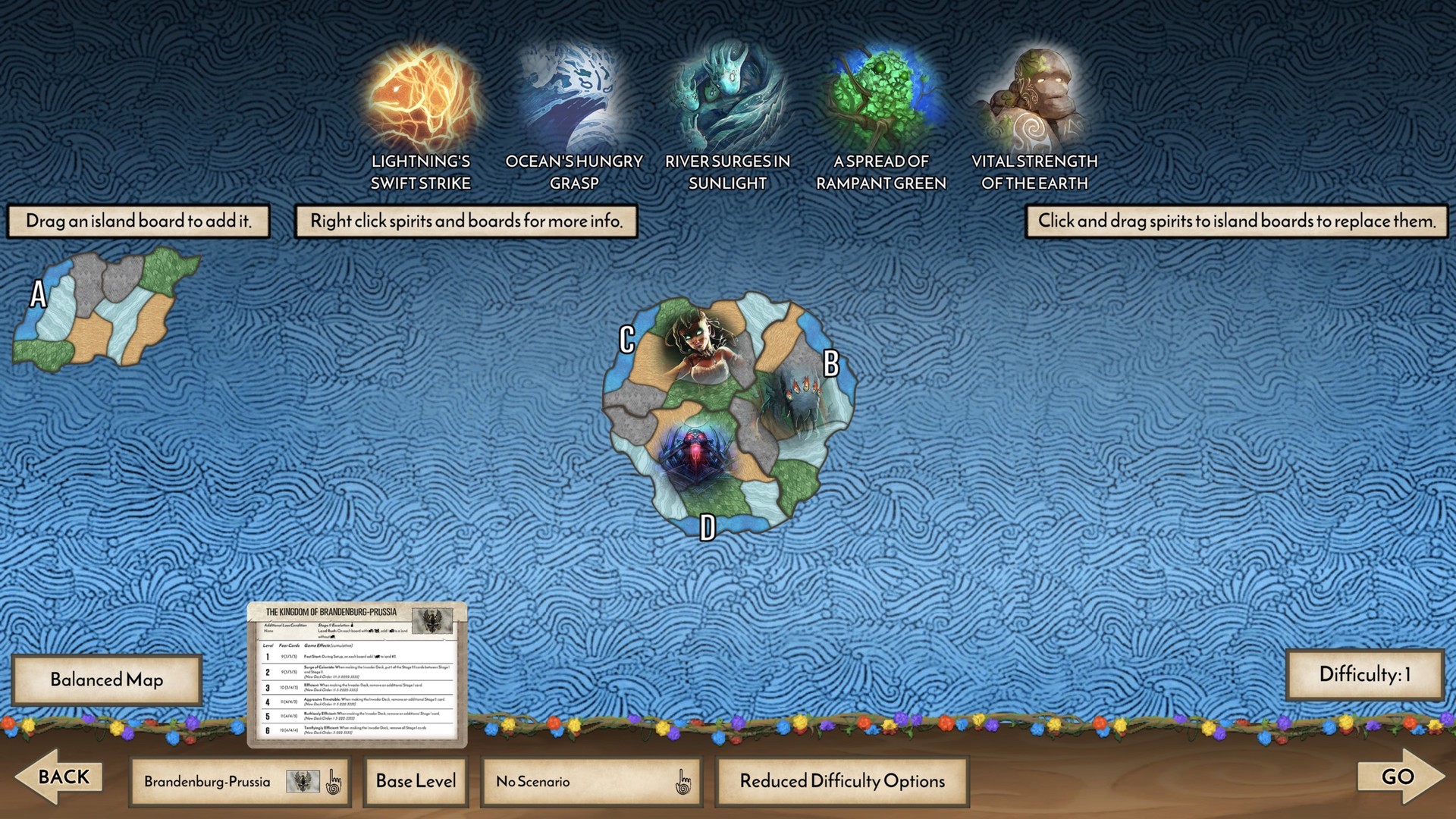
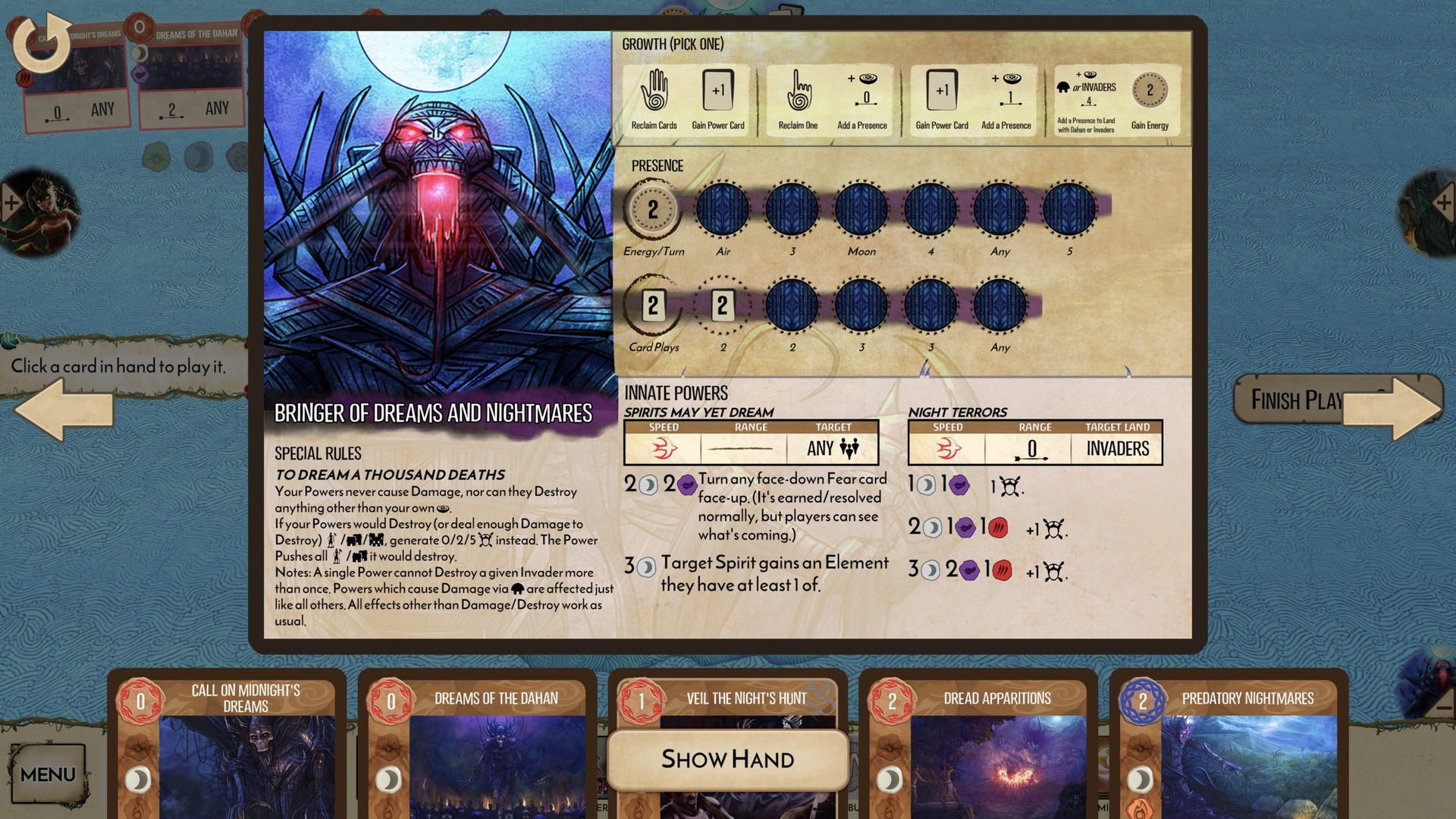
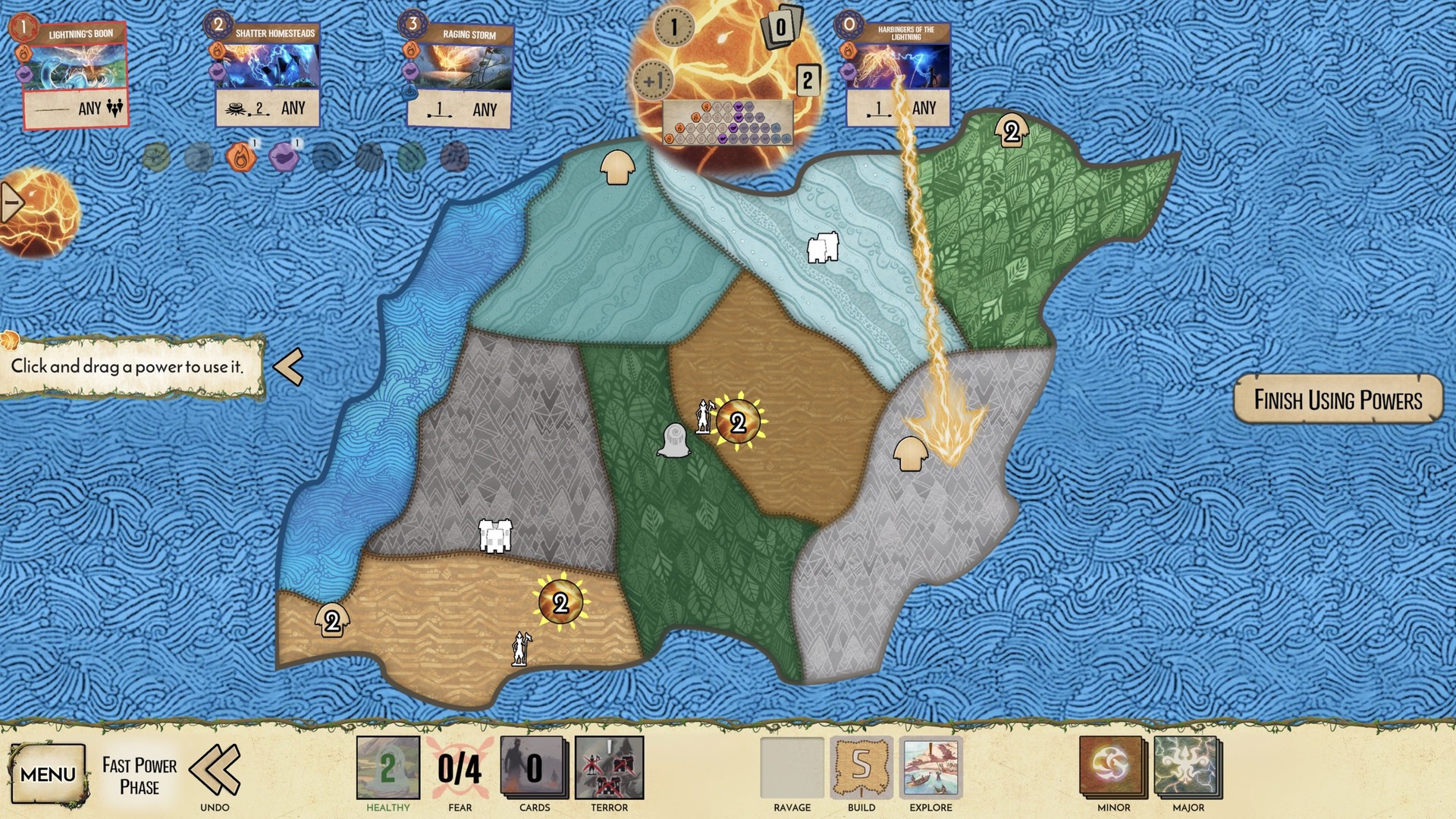
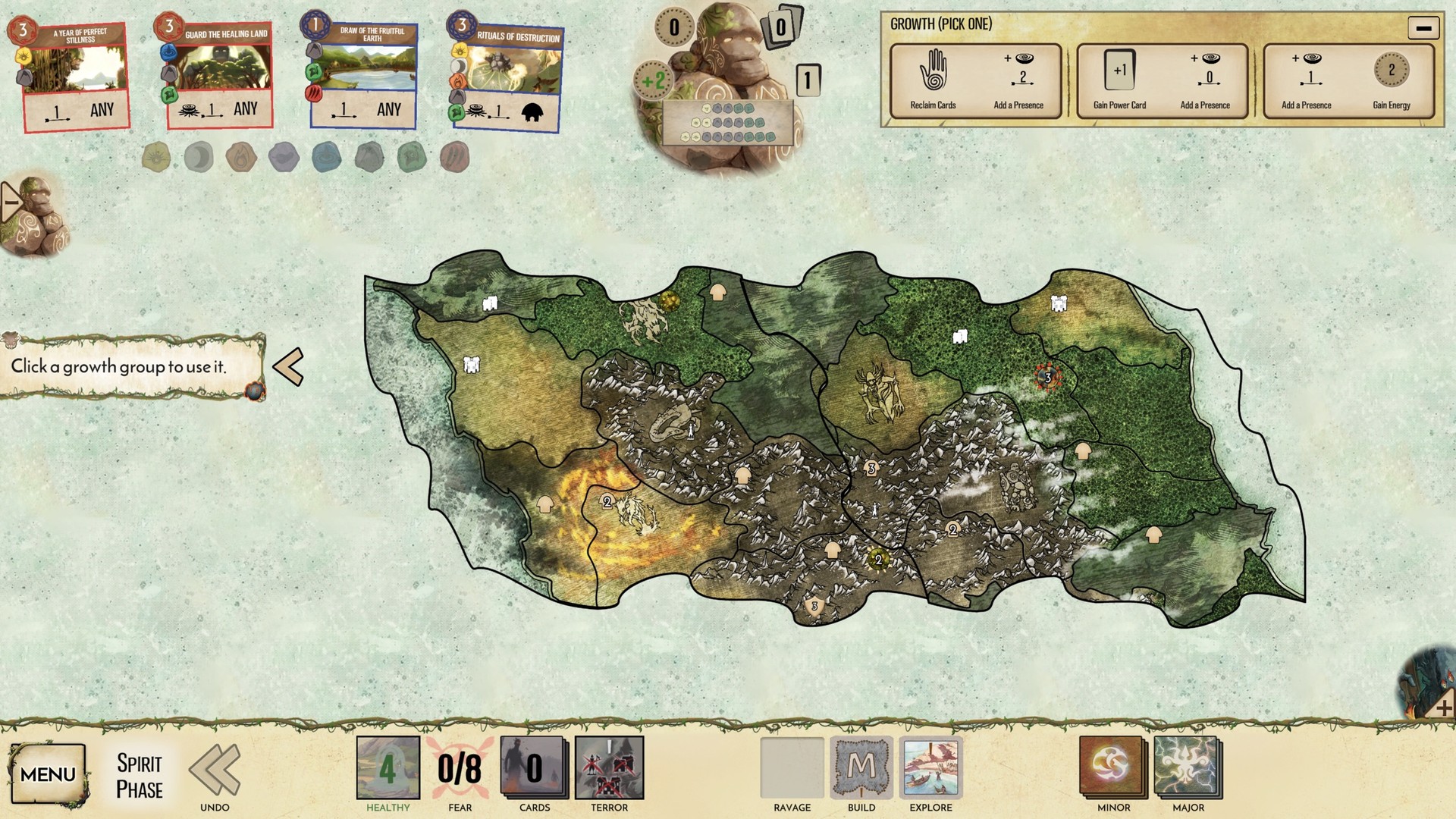
Get an in-depth look at Spirit Island through various videos and screenshots.



Load More


System requirements
These are the minimum specifications needed to play the game. For the best experience, we recommend that you verify them.
Windows
- Requires a 64-bit processor and operating system
- OS *: Windows 7 SP1+
- Processor: x64 architecture with SSE2 instruction set support
- Graphics: DX10, DX11, DX12 Capable
- DirectX: Version 10
- Storage: 1 GB available space
- Additional Notes: Hardware vendor officially supported drivers
MacOS
- OS: Mojave 10.14+
- Processor: Apple Silicon or Intel x64 architecture with SSE2
- Graphics: Metal capable Intel and AMD GPUs
- Storage: 1 GB available space
- Additional Notes: Apple officially supported drivers
Linux
- OS: Ubuntu 20.04, Ubuntu 18.04, and CentOS 7
- Processor: x64 architecture with SSE2 instruction set support
- Graphics: OpenGL 3.2+ / Vulkan capable
- Storage: 1 GB available space
- Additional Notes: Gnome desktop environment running on top of X11 windowing system
Steam Price & Best Deals
User reviews & Ratings
Explore reviews from Steam users sharing their experiences and what they love about the game.
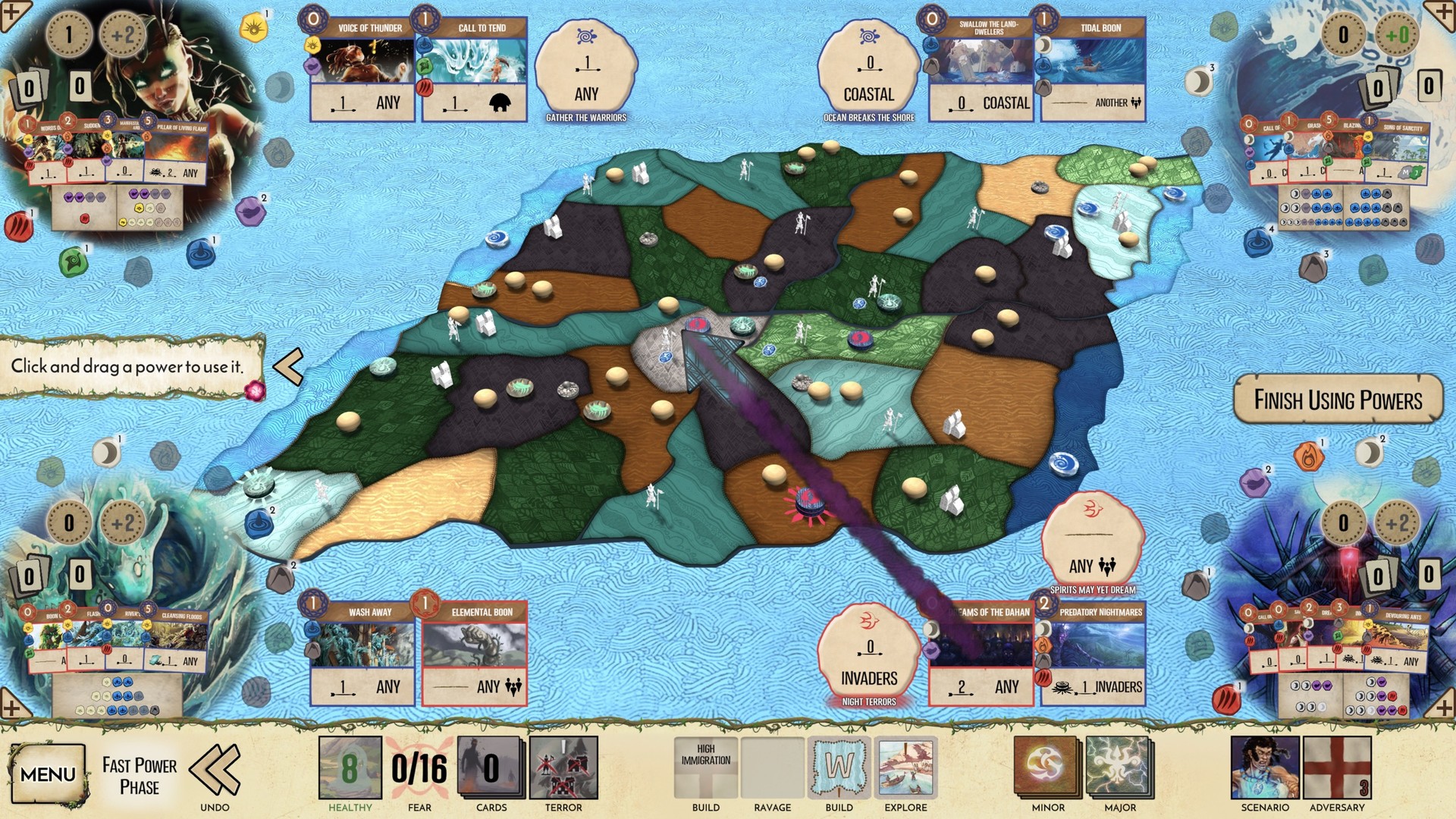
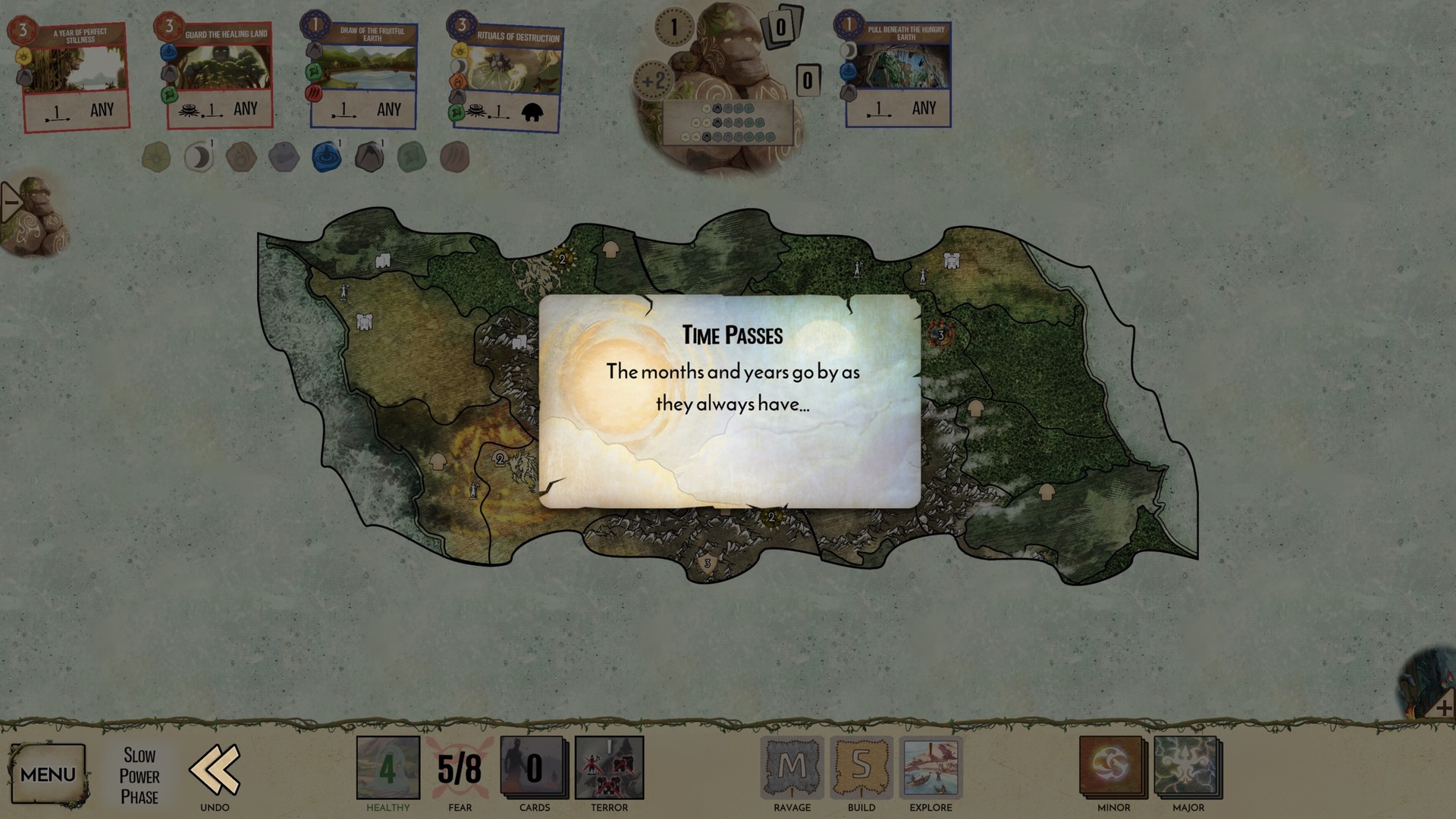
It took me some time to get comfortable with Spirit Island. It isn't a game that's easy to understand for new players, there are alot of moving mechanics that players have to understand not to mention that it isn't entirely clear what you should do to play well. If you have played the board game already, you will love to hear that the digital daption is great. All of the visual elements are made clear and most of the stuff that players have to handle themselves is handled by the game itself instead. You don't have to spend 10 minutes after each step to make sure that you didn't forget anything. If you haven't played Spirit Island before, let me help you to understand it better so your first time playing it is easier than my own. The goal and theme of the game is about an island that is inhabited by powerful spirits that have to defend their land from european invaders that set their foot on the island. The invaders on the other hand will explore the land, build structures, first villages, later large cities. Because the invaders don't care for nature, their way of living will damage the land as well as the natioves and the spirits that live there. If the island becomes too blighted you loose the game. Winning on the other hand can be done by driving the invaders out of the land. Either by removing every single invador or by inflicting enough terror on them. Powers and destruction will cause fear and if enough fear has been inflicted, you will gain something called a "terror card" which has a negative effect for the invaders. These will make it easier for you to control and remove invaders and if you gather enough terror you will also eventually unlock easier victory conditions that require you to remove only part of the invaders to win. If the terror deck ever runs out you automatically win which is a powerful way to end a game even during a losing situation. Spirits are very distinct and all have their own unique powers and cards they start with. Each spirit has a bunch of "growth" options that allow the spirit to grow in power over time. The player chooses one of these options which includes gaining a new power card, adding presence on the island, reclaiming used cards or simply gaining more energy to play more expensive cards. The most important one is adding presence. Each spirit has two tracks, one for energy, one for the number of cards you can play per turn. If you remove one presence from that track you gain that extra effect for the spirit. The removed presence is added on the island and defines the range of your abilities and where you can use them. Having two presence in the same land coutns as a holy sire which allows you to play more powerful abilities in that area. Since this is different for every card, the player has to make sure where he wants to place their presence. Each spirit has one or two innate powers as well as four power cards. Let's go over power cards first because these are simpler. A power card has an energy cost (although some are free), can be quick or slow (more on that later) and might have limitations like the range of the power from your presence, what type of land it can be played in and if the land has specific tokens in it like natives, invaders or blight. These cards also have different colored symbols on the left side which are called elements. By combining enough elements you activate the innate power of the spirit. This power is free to use but the requirement makes it difficult and requires the player to play specific cards to activat it which sometimes can be detrimental. Innate powers are usually very powerful and define the general concept of the spirit, for example a spirit who is more about control will push invaders out of land and gather them where they cannot do harm while a more destructive spirits simply will damage invaders to destroy them. Spirits also have a special ability that is always active, usually that provides some extra benefits or change the rules of the game in some way to make the gameplay more interesting. The general flow of the game is like this: Invaders first draw a card from their deck that shows a land type. Now they will send an explorer, a single, mostly harmless unit in every land that matches the type if possible. After that the card is moved to the "build" field which shows where invaders will build next. Now spirits decide their growth action and after that their powers. One of the best aspects of the digital adaption is that it outright tells you if the cards you play will activate your innate power before you hit the "end turn" button. This makes it easier to see and manage your innate power and sometimes you might want to change a power to activate it. After each player selected their cards, the actual meat of the gameplay now starts. Spirits that used fast powers might now use them. In a game with multiple players, the order doesn't matter, this is a cooperative game so you can discuss and decide on your own who uses which power first. Slow powers have to wait however until the invaders made their next turn which happens right after all players hit end turn. Since the exploration card moved to the build action, all explorers will now build in the land that is shown on the card. This starts with villages and becomes cities if there are already more villages than cities there. Usually this means an explorer will build a village on a tile he just explored, although tiles that already had villages will now provide cities that are harder to destroy and deal more damage. Which brings me to the ravage step. The card from the last round (so the first round doesn't have one) will now be used to decide where invaders hurt the attack the land. Each invader does one damage per tier (so explorers one, villages two, cities three), If the ravagers do at least two damage to the land it will create blight and remove one presence from each spirit there. It also damages and kill natives on the land but if they survive they will fight back, possibly killing invaders in the process. It obviously is best avoided that invaders damage the land since you lose presence and it counts for your lose condition. Sometimes however you cannot avoid it, especially in the early game, so your best option is to do damage control. Keep in mind, you always win once your victory condition is somehow triggered, so even a blighted island might still win. Aftet the ravage happened, the card is discarded and the build card now moves over to it for the next round. Now the spirits may play their slow powers. Because of the interaction between fast and slow powers as well as invader actions, players have to plan ahead in time and decide when is th ebest tiem to strike. Your fast powers are usually designed to prevent ravages and builds when possible while your slow powers have more impactful effects but you have to keep the next round in mind. After all spirits are done the round is finished and the whole ordeal begins again. I simplified some elements to kep it easy to understand, the actual rules in effect behave a bit different but you'll see this for yourself once you play. The core game has 8 different spirits to choose from as well as three adversaries, special invaders that change the rules of the game and add extra challenges depending on the chosen difficulty level. This provides a good amount of replayability, either alone or with others. The last thing I can say is, don't give up. Check some youtube tutorials if you get stuck on how to play the game efficiently and you will get better.
it is honestly quite a fun great, though one word of caution - all of the DLC are FAR too expensvie, in my personal opinion. my understanding is that this game already exists as a board game, and while the base game is only 25 bucks (often reduced to just 5) all the DLC are similarly priced to the base game BUT never reduced to such a low level as the base game is. it is (in my opinion) very difficult and you might (like me) struggle to win even without an adversary
i play the tabletop vers with my frinds and we though why not own the pc version as well. BOY IS IT HARDER we realised IRL we skipped over rules by accidents or skiped over explorations or even misread some cards! the games does the thinking for us and it leaves 0 space for accidental cheating or even 0 wiggle room for error. god we are glad the undo button exist, the amount of time we went through a growth phase misreading our cards and realising ''woops i can't play that.'' is ALOT. we also found it was a shame the best cards are in the DLCs....
The game is in a great place now. I will still pull out the board game to play with friends, but for solo play I'll be sticking with the digital version and my steam deck. For anyone looking to play on the steam deck. Raise the resolution to 1080p for text clarity, and bind one of the back buttons to the magnifier tool through the controller settings. Battery life is good, but you can extend it by limiting your FPS. I'm very happy with the outcome so far.
Similar games
View all
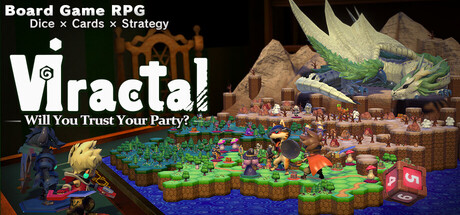
Viractal: Will You Trust Your Party?
Form a party of up to three characters in this board game-style RPG, where every member joins the fight! Level up each character, develop their abilities, collect items, and build individual decks. Combine skill cards as dice rolls and strategy create a new adventure every time you play!

Just Xiangqi
This is a refreshing Chinese chess game with realistic graphics and a detailed audio tutorial that will keep you entertained, even as a novice. A variety of well-designed challenges will test your tactics. Sit back and relax, as you transform into a master of strategy.

Lock 'n Load Tactical Digital: Core Game
Lock 'n Load Tactical is fast and Furious tactical combat that is fast to learn. In LnLT you get squads, weapon teams, armored vehicles, fixed-wing aircraft, and, in the modern-era games, helicopters. Individuals such as Leaders, Medics, Snipers, Chaplains, Advisors, and, of course, Heroes.

Warbands: Bushido
Warbands:Bushido is a miniatures board game arena with cards, miniatures, dice and beautiful terrains to fight on, with both multiplayer battles boardgamers are used to, and challenging single-player scenarios.

Mystic Vale
Are you ready to lead your druidic clan and cleanse the Valley of Life? Mystic Vale is a stunning digital version of the Origins award-winning AEG card game. Debuting the unique Card Crafting System, players take turns building powerful combos in order to stop the curse. Play online or local hotseat.

Trizon
Trizon is a roguelike deck-building game. Fuse any two cards together to play crazy combos. The game combines auto-battler mechanics, where creatures attack on their own, with instant-effect spell cards. Battles are fast-paced and dynamic, set against a simple and restrained art style.


Race for the Galaxy
Explore, Settle, Develop, Trade, Consume, or Produce? Which do you need most? Which of Earth's former colonies will be most successful at settling the galaxy, now that JumpDrive exists? Who will discover the secrets of the mysteriously vanished Alien Overlords? Your goal: to build the most prosperous and powerful space empire!
Frequently Asked Questions
Spirit Island is currently priced at 24.50€ on Steam.
No, Spirit Island is currently not on sale. You can purchase it for 24.50€ on Steam.
Yes, Spirit Island received 1,412 positive votes out of a total of 1,552 achieving a rating of 8.65.
😎
Spirit Island was developed and published by Handelabra Games Inc..
Yes, Spirit Island is playable and fully supported on Windows.
Yes, Spirit Island is playable and fully supported on MacOS.
Yes, Spirit Island is playable and fully supported on Linux.
Yes, Spirit Island is playable on Steam Deck, though it might require a few minor tweaks. Make sure to check the Steam store page and community feedback on ProtonDB for exact compatibility details.
Yes, Spirit Island is playable on Steam Machine, though it might require a few minor tweaks. Make sure to check the Steam store page and community feedback on ProtonDB for exact compatibility details.
No, Spirit Island does not support VR.
Spirit Island offers both single-player and multi-player modes.
Spirit Island includes Co-op mode where you can team up with friends.
Yes, there are 9 DLCs available for Spirit Island. Explore additional content available for Spirit Island on Steam.
No, Spirit Island does not support mods via Steam Workshop.
Yes, Spirit Island supports Remote Play Together. Discover more about Steam Remote Play.
Yes, Spirit Island is enabled for Steam Family Sharing. This means you can share the game with authorized users from your Steam Library, allowing them to play it on their own accounts. For more details on how the feature works, you can read the original Steam Family Sharing announcement or visit the Steam Family Sharing user guide and FAQ page.
You can find solutions or submit a support ticket by visiting the Steam Support page for Spirit Island.
Data sources
The information presented on this page is sourced from reliable APIs to ensure accuracy and relevance. We utilize the Steam API to gather data on game details, including titles, descriptions, prices, and user reviews. This allows us to provide you with the most up-to-date information directly from the Steam platform.
Additionally, we incorporate data from the SteamSpy API, which offers insights into game sales and player statistics. This helps us present a comprehensive view of each game's popularity and performance within the gaming community.
Last Updates| Steam data | 02 October 2026 21:32 UTC |
|---|---|
| SteamSpy data | 16 October 2026 02:44 UTC |
| Steam price | 27 October 2026 15:10 UTC |
| Steam reviews | 18 October 2026 07:45 UTC |
If you'd like to dive deeper into the details about Spirit Island, we invite you to check out a few dedicated websites that offer extensive information and insights. These platforms provide valuable data, analysis, and user-generated reports to enhance your understanding of the game and its performance.
- SteamDB - A comprehensive database of everything on Steam about Spirit Island
- SteamCharts - Analysis of Spirit Island concurrent players on Steam
- ProtonDB - Crowdsourced reports on Linux and Steam Deck Spirit Island compatibility
Game modes
Multiplayer
Features
Online players
136
Developer
Handelabra Games Inc.
Publisher
Handelabra Games Inc.
Release
29 Jul 2020
Platforms
Remote Play
Clicking and buying through these links helps us earn a commission to maintain our services.