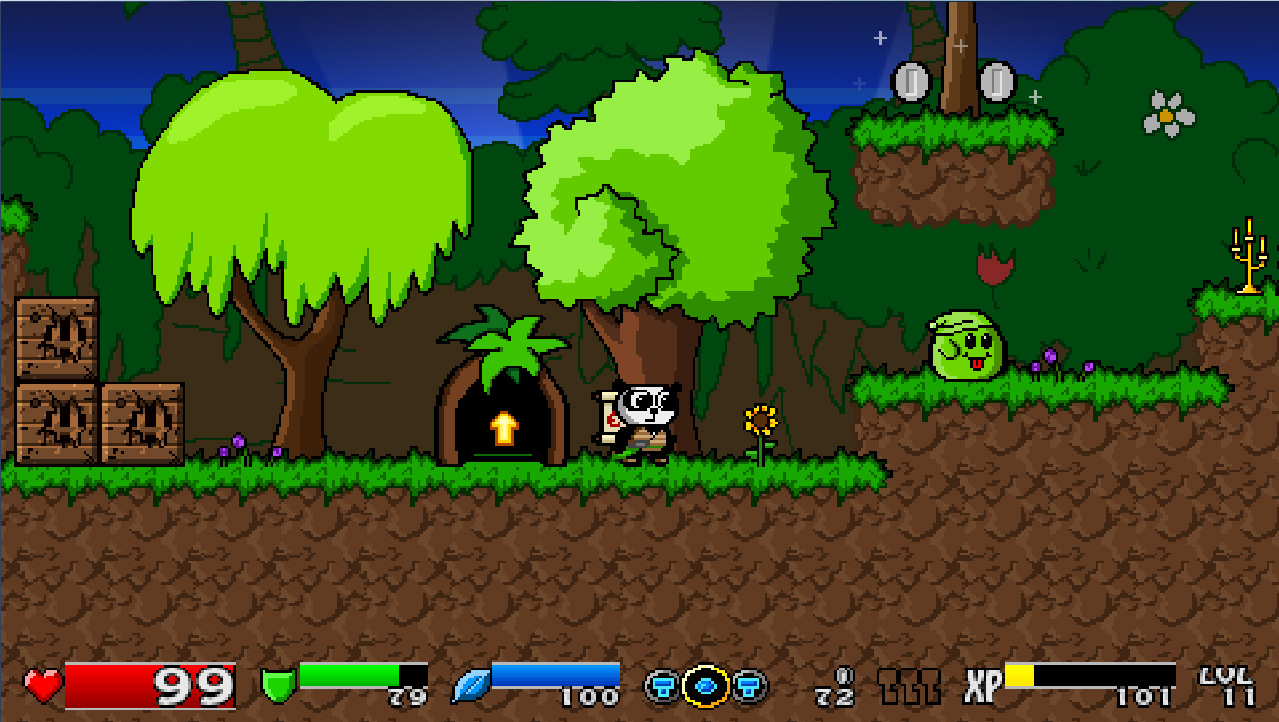
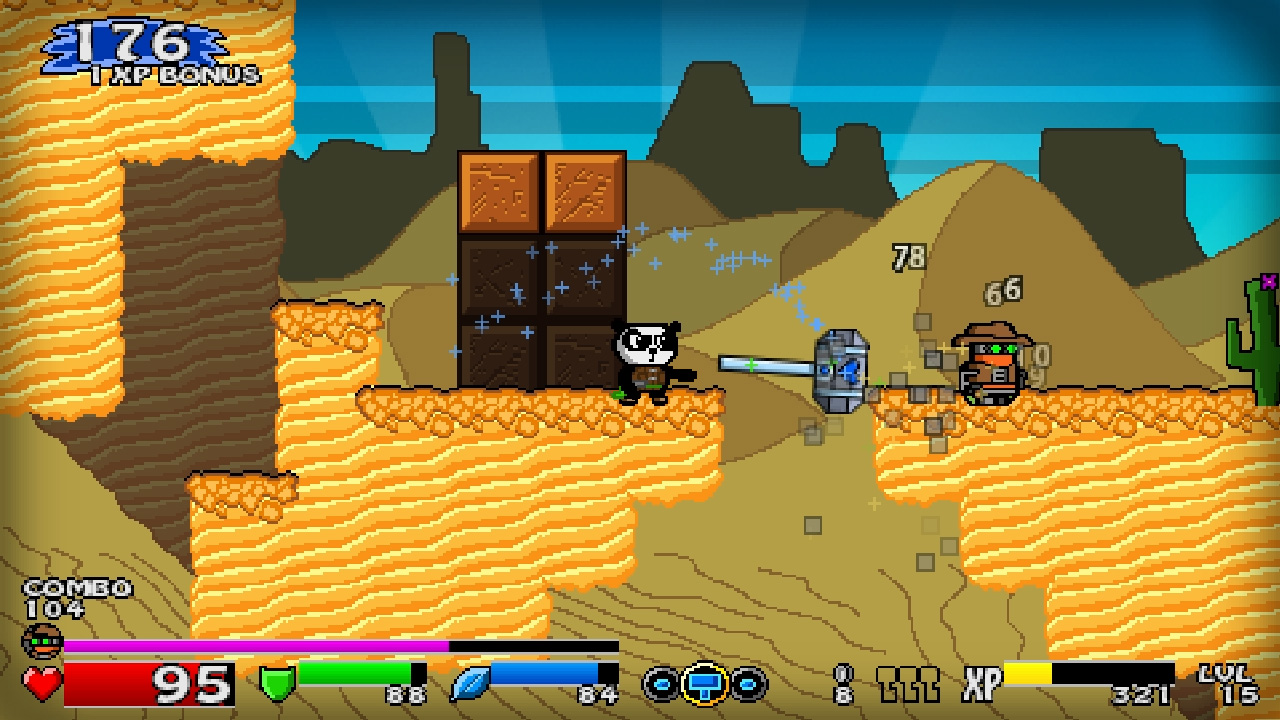
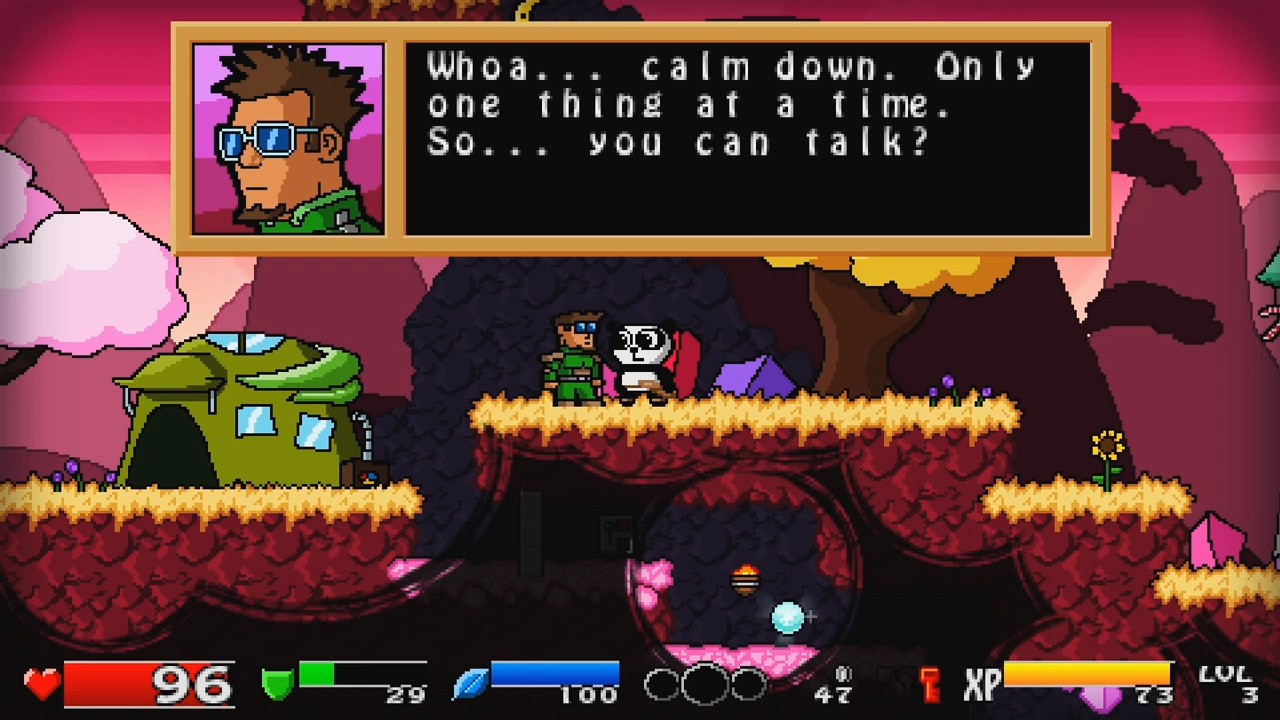
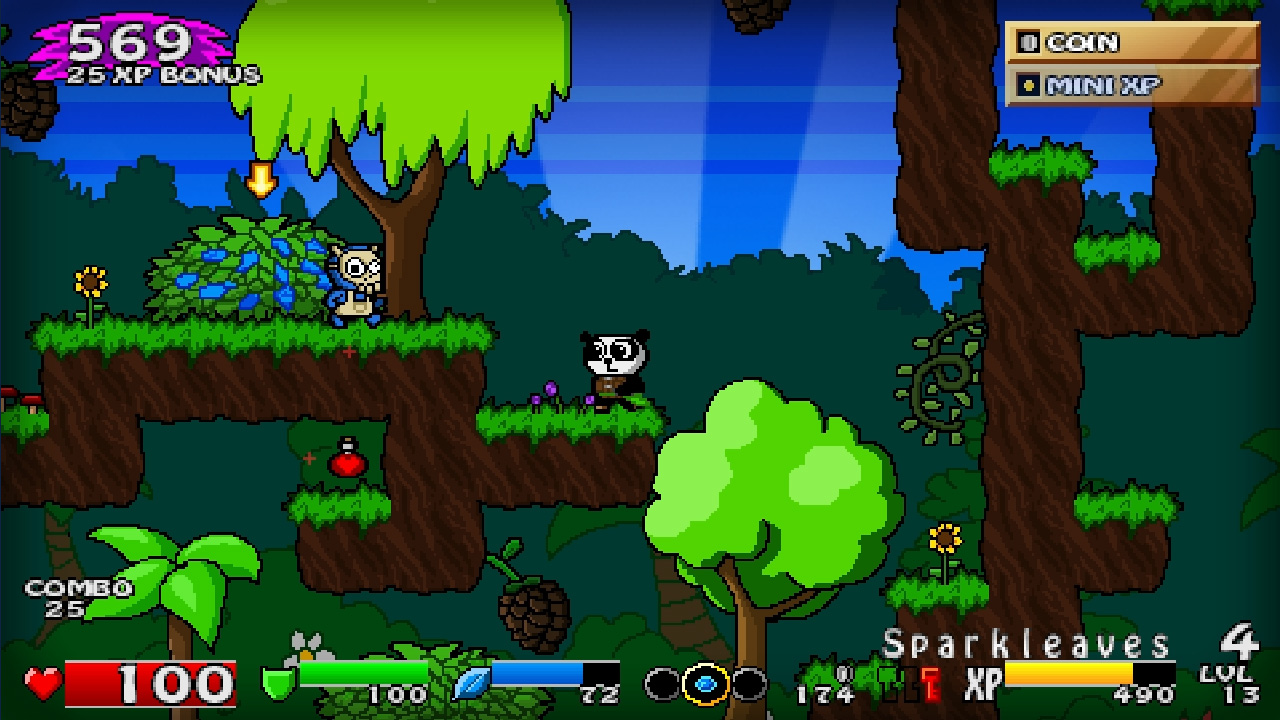
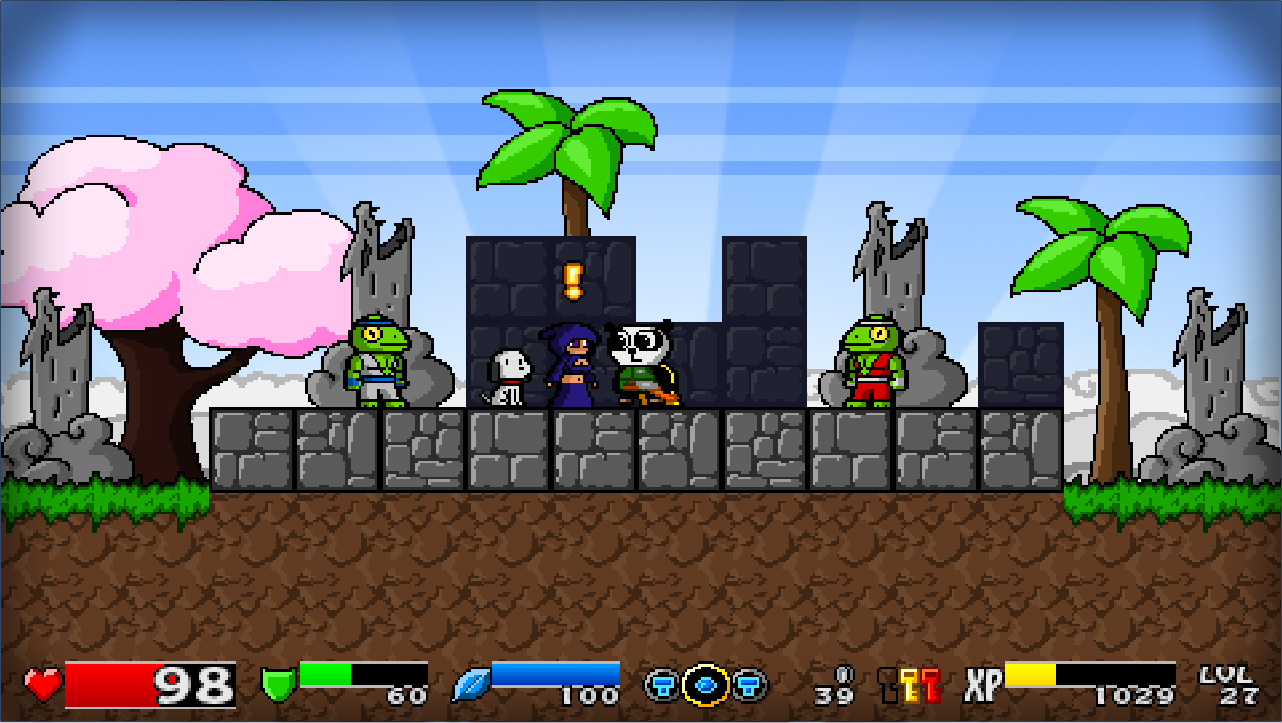
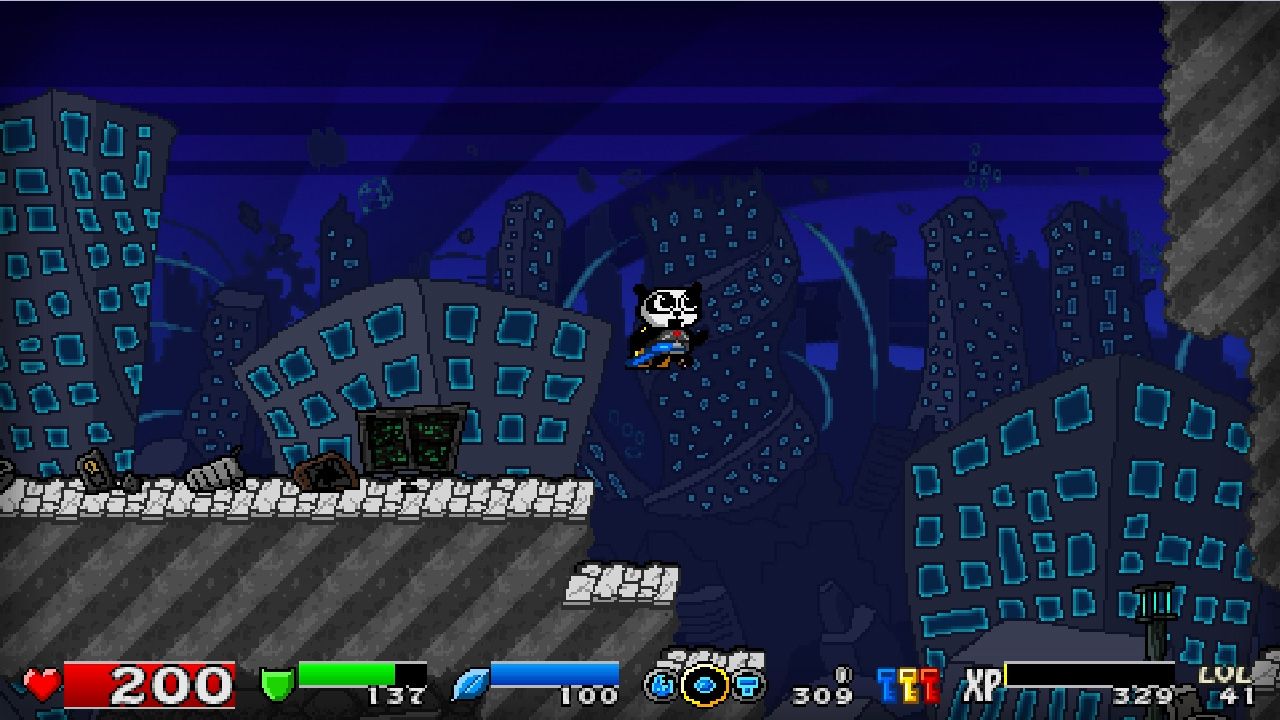
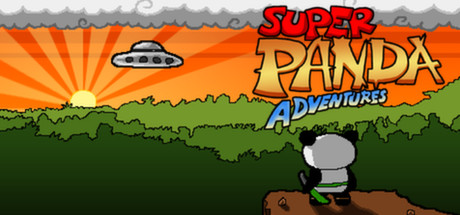
Super Panda Adventures, developed by BlueEagle Productions and published by Paul Schneider, is one of those rare indie platformers that surprises with its heart, charm, and depth despite its humble appearance. At first glance, it looks like a simple side-scrolling action game with cartoonish graphics and a lighthearted premise, but beneath that surface lies a thoughtfully constructed Metroidvania experience filled with engaging combat, exploration, and a touch of RPG customization. Released in 2014, it quickly built a devoted following among players who discovered that its pixelated panda protagonist was more than just a cute gimmick. What the game lacks in visual polish or narrative complexity, it makes up for in sincerity and mechanical precision, offering a rewarding blend of classic 2D action and modern design sensibilities. The story begins with Fu, a panda knight-in-training, whose peaceful life as the guardian of Princess Maya is shattered when an army of alien robots invades the kingdom. The once serene world becomes a chaotic battleground, forcing Fu to take up his sword and embark on a quest to rescue the princess and repel the extraterrestrial threat. The setup is straightforward, and the dialogue is intentionally quirky, infused with light humor and playful references to video game tropes. What makes the writing work is its self-awareness; it never tries to take itself too seriously, allowing the player to enjoy the absurdity of a panda wielding a sword against robots while still rooting for his noble mission. The narrative serves as a comfortable framework that supports the gameplay rather than overshadowing it, acting as a series of excuses to explore diverse, colorful environments and uncover the world’s many secrets. Where Super Panda Adventures truly shines is in its gameplay. It combines fast-paced action with exploration-driven progression, allowing players to revisit earlier stages as they acquire new abilities and upgrades. Each level is filled with hidden passages, secret items, and optional challenges that reward curiosity. Combat is fluid and satisfying, relying on precise timing and a combination of melee and ranged attacks. Fu’s sword strikes are responsive, and his boomerang-like shuriken adds a layer of tactical variety, enabling players to attack from a distance or chain combos between enemies. Magic abilities are gradually unlocked, adding yet another layer to the combat system. There’s also a blocking mechanic that, while simple, encourages defensive play and timing, especially during tougher encounters. The enemies themselves are well-varied, from robotic foot soldiers to larger mechanical bosses that test reflexes and positioning. The mix of mobility, offense, and defense keeps the gameplay dynamic and continually rewarding throughout the adventure. Exploration plays an equally important role. The game’s world is structured in a way that recalls classic Metroidvania design, divided into large, interconnected areas that slowly open up as you acquire new tools and powers. Players are encouraged to revisit previous zones to discover hidden items, complete side quests, or access previously unreachable areas. The level layouts are cleverly constructed, with just enough platforming challenge to keep players on their toes without descending into frustration. The pacing between exploration, combat, and discovery feels carefully balanced, creating a satisfying loop that keeps the experience engaging from start to finish. The inclusion of experience points and skill upgrades gives players control over Fu’s progression, allowing them to tailor the hero’s stats and abilities to their preferred playstyle. It’s a simple system, but it adds just enough depth to make each level-up feel meaningful. Visually, Super Panda Adventures embraces a deliberately simple art style reminiscent of old-school PC shareware games, with bold colors, clean sprites, and bright backdrops that emphasize clarity over realism. The environments, though not graphically complex, are diverse and lively—from grassy plains and underground caves to futuristic fortresses filled with lasers and traps. Each area has its own personality, supported by a cheerful, chip-tune-inspired soundtrack that perfectly captures the game’s upbeat and adventurous tone. Despite its minimalist approach, the game has a warmth that many visually grander titles lack. It feels handmade and genuine, a love letter to the 2D platformers of the 1990s built with care and attention to pacing, balance, and playability. Of course, the game is not without its rough edges. Some boss battles spike sharply in difficulty, requiring mastery of the combat system and precise dodging that might frustrate casual players. A few stages can feel repetitive in structure, and while the level design is functional, it sometimes reuses visual assets a bit too often. The story, though charming, never evolves beyond its straightforward rescue premise. Yet these are minor blemishes on an otherwise well-constructed experience. What Super Panda Adventures lacks in polish, it compensates for with charm and sincerity. Every part of the game—from its witty dialogue to its snappy combat—feels like the work of someone who genuinely loves the genre and understands what makes it fun. What stands out most about Super Panda Adventures is how confidently it delivers a complete, cohesive experience despite its modest scale. It’s a game that knows exactly what it wants to be: a classic-style action-platformer infused with RPG elements and personality. It doesn’t overreach or burden itself with unnecessary systems; instead, it focuses on doing the essentials exceptionally well. The tight controls, clever level design, and enjoyable upgrade system all come together to create a sense of progression that feels earned rather than handed out. It’s the kind of game that may surprise players who stumble upon it expecting something simple, only to find themselves drawn into an unexpectedly engaging and satisfying adventure. Super Panda Adventures stands as a testament to the idea that passion and craftsmanship can outshine budget and spectacle. It’s an unassuming gem that manages to deliver an experience far greater than its modest presentation would suggest. For fans of classic platformers and indie Metroidvanias, it’s a must-play—a reminder that heart, humor, and good design can make even the smallest adventures feel grand. Rating: 9/10
Expand the review