
Nightmare Knight ~Sacred Maiden & Fallen Magic~
The young girl Rayne, who became the sacred knight of the kingdom, was entrusted by Jas, the leader of the sacred knights and her lover, to investigate the disturbances occurring in a distant town named "Hakudeti".
Sync your Steam wishlist to find the lowest game prices instantly. No login required, just paste your Steam profile URL!
⚡ Try Wishlist Radar!
Sync your Steam wishlist to find the lowest game prices instantly. No login required!
⚡ Try Wishlist Radar!
Close

UndercoverAgent on Steam
Quick menu
Undercover agent Saki has been given a new mission. She has to locate the headquarters of a criminal organization, steal their secret data, and destroy their facilities.
UndercoverAgent is a jrpg, adventure and rpg game
developed by AleCubicSoft
and published by OTAKU Plan.
Released on July 09th 2021 is available on Windows, Steam Deck and Steam Machine
in 5 languages: Japanese, English, Simplified Chinese, Traditional Chinese and Korean.
It has received 941 reviews of which 762 were positive and 179 were negative resulting in a rating of 7.7 out of 10. 😊
The game is currently priced at 6.59€ on Steam.
The Steam community has classified UndercoverAgent into these genres:
JRPG
Adventure
RPG
Turn-Based Tactics
2D
Colorful
Third Person
Indie
Turn-Based Combat
Singleplayer
Anime
Card Battler
Female Protagonist
FPS
Dating Sim
3D
World War II
Here is the detailed breakdown of supported languages for UndercoverAgent:
| UI | Subtitle | Audio | |
|---|---|---|---|
| English | |||
| Korean | |||
| Simplified Chinese | |||
| Traditional Chinese | |||
| Japanese |
Media & Screenshots
Get an in-depth look at UndercoverAgent through various videos and screenshots.


System requirements
These are the minimum specifications needed to play the game. For the best experience, we recommend that you verify them.
Windows
- OS: 7 / 8 / 8.1 / 10
- Processor: 2+ GHz Processor
- Memory: 4 GB RAM
- Graphics: DirectX 9/OpenGL 4.1 capable GPU
- Storage: 1 GB available space
Steam Price & Best Deals
User reviews & Ratings
Explore reviews from Steam users sharing their experiences and what they love about the game.
Generic lite card battler with H scenes on loss. 6/10 I can barely recommend it. Pros: High quality Non consent H scenes on loss with a full gallery. Decent position variety. Simple per enemy deck build with losing being required to gain strength (and fit the theme). Cons: Short 1 hr. Generic worldbuilding. Not worth the $4 sale price. Too easy their older game was a better challenge. Their newer games are much better.
UndercoverAgent is a surprisingly engaging combination of visual novel storytelling, tactical card battles, and undercover espionage that manages to create a tense and entertaining experience despite its relatively modest scale. Developed by AleCubicSoft and published by OTAKU Plan, the game mixes anime-inspired presentation with deck-building mechanics and infiltration themes to deliver a focused RPG adventure centered around survival deep inside enemy territory. While the game clearly caters to a niche audience because of its mature themes and visual style, it also contains enough strategic gameplay and narrative tension to remain genuinely enjoyable beyond its surface appeal. The story follows agent Saki, a skilled operative assigned to infiltrate a criminal syndicate involved in human trafficking and illegal operations. In order to locate the organization’s hidden headquarters, Saki intentionally allows herself to be captured so she can enter the enemy’s inner territory without raising suspicion. The mission quickly spirals out of control after she loses communication with her allies and becomes trapped inside hostile territory with limited resources and no reliable backup. From that point forward, the game builds much of its tension around Saki’s isolation as she attempts to survive while secretly dismantling the organization from within. The undercover premise works surprisingly well because the game constantly reminds players that Saki is operating alone in an extremely dangerous environment. Every encounter feels more threatening because failure could expose her identity and end the mission completely. This atmosphere of vulnerability helps give the adventure a sense of urgency that keeps the pacing engaging from beginning to end. Even during quieter dialogue scenes, the game maintains a lingering feeling that Saki is only one mistake away from disaster. The gameplay revolves around one-on-one card-based battles where players build and manage decks to determine Saki’s combat options. Instead of relying on traditional turn-based RPG mechanics, UndercoverAgent uses cards for attacks, defenses, and tactical maneuvers, creating a system that feels easy to understand while still requiring careful planning. Battles are not overwhelmingly complex, but they demand enough strategy to keep players actively thinking about resource management and move timing during encounters. One of the strongest aspects of the combat system is how naturally it fits the story’s themes. Since Saki is isolated and lacks direct support, every battle feels personal and dangerous. Players must carefully balance aggression and defense while adapting to different enemy attack patterns. Winning fights often depends less on raw power and more on understanding how to use the available cards efficiently. As the game progresses and players unlock stronger cards and better combinations, the deck-building aspect becomes increasingly satisfying. Progression throughout the adventure feels rewarding because the game steadily introduces stronger enemies, new combat options, and more difficult situations without overwhelming the player too quickly. Building more effective decks gradually becomes addictive, especially as players discover combinations that fit their preferred playstyle. The progression system may not be especially deep compared to larger deck-building RPGs, but it succeeds at maintaining a consistent sense of improvement throughout the campaign. Visually, the game embraces a colorful anime-inspired style that suits both the espionage themes and mature storytelling elements. Character artwork is polished and expressive, helping dialogue scenes feel energetic despite the game’s relatively simple presentation. Saki herself is a strong lead character whose determination and professionalism help carry the story even during some of its more exaggerated moments. The environments are not especially detailed, but the overall visual direction remains appealing because of its clean art design and strong character illustrations. Voice acting and music also contribute significantly to the atmosphere. Dialogue scenes benefit from energetic vocal performances that add personality to both allies and enemies, while the soundtrack helps reinforce the tension during infiltration sequences and combat encounters. Action scenes feel more intense because of the fast-paced battle music, while quieter moments use softer tracks to emphasize uncertainty and isolation. The audio presentation helps elevate the experience beyond what its smaller production scale might initially suggest. One of the game’s most appealing qualities is its pacing. UndercoverAgent rarely drags itself down with unnecessary filler or overly complicated systems. The story moves steadily forward, alternating between battles, narrative scenes, and progression upgrades at a pace that keeps the experience engaging throughout its runtime. The relatively compact structure works to the game’s advantage because it allows the card-based combat to remain entertaining without becoming overly repetitive before the story concludes. That said, the game does have noticeable limitations. The combat system, while satisfying, lacks the deeper strategic complexity found in larger deck-building titles. After several hours, players may begin relying on the same successful strategies repeatedly, reducing the excitement of encounters. Enemy variety is also somewhat limited, and some battles eventually start to feel predictable once players fully understand the mechanics. The story itself is entertaining but relatively straightforward. The undercover mission premise creates consistent tension, but the narrative rarely explores its themes in significant depth. Much of the focus remains on atmosphere, progression, and character interactions rather than complicated political intrigue or emotional storytelling. Players expecting a heavily branching espionage thriller may find the narrative more linear than anticipated. The mature content and fanservice elements are also central to the game’s identity. These aspects are deeply integrated into both the presentation and narrative structure, clearly targeting fans of anime-inspired adult RPGs. Fortunately, the game balances these themes with enough genuine gameplay and strategic mechanics to avoid feeling completely dependent on visual appeal alone. The card battles and infiltration atmosphere provide enough substance to support the overall experience. Accessibility is another area where the game performs well. The deck-building mechanics are easy to learn, menus are intuitive, and the game explains its systems clearly enough for newcomers to understand quickly. Players unfamiliar with card battlers or tactical RPGs should still be able to enjoy the experience without feeling overwhelmed by unnecessary complexity. This simplicity helps make the game approachable while still leaving enough room for experimentation and strategy. UndercoverAgent ultimately succeeds because it understands its own scope and focuses on delivering a focused, entertaining adventure rather than attempting to become an enormous tactical RPG. The combination of infiltration storytelling, card-based combat, anime-inspired visuals, and satisfying progression creates an experience that remains consistently enjoyable throughout its runtime. While it may not reach the depth or polish of larger strategy RPGs, the game’s strong atmosphere, accessible mechanics, and engaging combat system allow it to stand out within its niche. For players interested in anime-style card battlers with espionage themes and story-driven progression, UndercoverAgent offers a surprisingly solid and memorable experience. Rating: 8/10
Similar games
View all
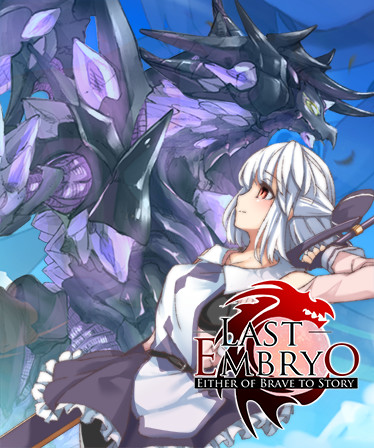
LAST EMBRYO -EITHER OF BRAVE TO STORY-
The young girl "Sill", who longed to become an adventurer, came to the Developing City Aletia. However, shadows came quietly... No one had expected what kind of crisis Sill would encounter. But every footprint left by her will soon become mythology...
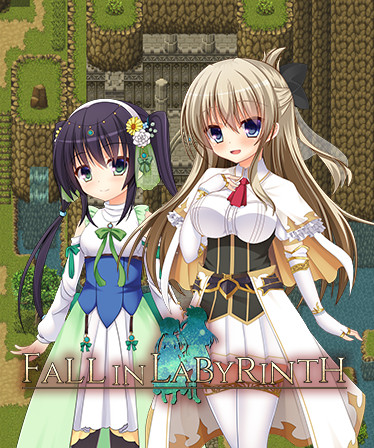
FALL IN LABYRINTH
Accidentally, you obtained a legendary sword and traveled to the "Labyrinth City of Veria-pool". What awaits you, is not only the wonderful dungeon "Labyrinthos", which can obtain unlimited treasure, but also the encounters with beautiful and mysterious heroines.

Succubus Farm
A dungeon escape, action game. Play as a captured human forced to work for demons, but one day you decide to make a mad dash for freedom!

Scars of Summer
A slice of life RPG. Due to family circumstances, Keita finds himself living with his childhood friend Ryoka for the summer. Explore a contemporary Japanese setting, and enjoy spending time with Ryoka.

Dungeon's Legion
You have been reincarnated as the Demon Lord in another world! Can you lead your forces to victory?
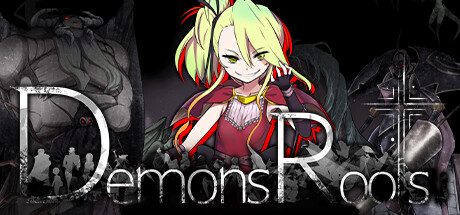
Demons Roots
In a final struggle for survival, demonkind again invaded the human world. However, the world they return to after years in the darkness isn't the same as it once was...

Treasure Hunter Claire
Treasure Hunter Claire is the story of the titular protagonist, Claire, and her adventure through the fabled land of Alstroemeria. What treasures and riches await her as she navigates the world?

Tear and the Library of Labyrinths
The twin sisters Tear and Lumiere enjoy a happy life running their clinic. But when a demon abducts her sister, Tear must summon her courage to venture through worlds within magical tomes to bring her sister home safe.

The Chosen RPG
The Chosen is a heroic RPG. Will you be able to unravel the mysterious plot against you and become the Chosen?

That Time I Got Reincarnated as an Orc
Okubo Tatsuya is a 35-year-old convenience store clerk. He is an introvert, has no friends. One day, he received a text message signed "The Goddess": "Do you want to be a hero in another world?" Accidentally, he reincarnated in another world and became an orc—

Island SAGA
It's time for an adventure!! Legends have it that there are mythical treasures lying deep within Valentine Island. Together with your four beautiful and well-stacked companions, will you be able to find it in this lighthearted and sometimes heart-pounding RPG?!
Frequently Asked Questions
UndercoverAgent is currently priced at 6.59€ on Steam.
No, UndercoverAgent is currently not on sale. You can purchase it for 6.59€ on Steam.
Yes, UndercoverAgent received 762 positive votes out of a total of 941 achieving a rating of 7.70.
😊
UndercoverAgent was developed by AleCubicSoft and published by OTAKU Plan.
Yes, UndercoverAgent is playable and fully supported on Windows.
No, UndercoverAgent is not playable on MacOS.
No, UndercoverAgent is not playable on Linux.
Yes, UndercoverAgent is playable and fully supported on Steam Deck.
Yes, UndercoverAgent is playable and fully supported on Steam Machine.
No, UndercoverAgent does not support VR.
UndercoverAgent is a single-player game.
Yes, there is a DLC available for UndercoverAgent. Explore additional content available for UndercoverAgent on Steam.
No, UndercoverAgent does not support mods via Steam Workshop.
No, UndercoverAgent does not support Steam Remote Play.
Yes, UndercoverAgent is enabled for Steam Family Sharing. This means you can share the game with authorized users from your Steam Library, allowing them to play it on their own accounts. For more details on how the feature works, you can read the original Steam Family Sharing announcement or visit the Steam Family Sharing user guide and FAQ page.
You can find solutions or submit a support ticket by visiting the Steam Support page for UndercoverAgent.
Data sources
The information presented on this page is sourced from reliable APIs to ensure accuracy and relevance. We utilize the Steam API to gather data on game details, including titles, descriptions, prices, and user reviews. This allows us to provide you with the most up-to-date information directly from the Steam platform.
Additionally, we incorporate data from the SteamSpy API, which offers insights into game sales and player statistics. This helps us present a comprehensive view of each game's popularity and performance within the gaming community.
Last Updates| Steam data | 07 October 2026 07:08 UTC |
|---|---|
| SteamSpy data | 17 October 2026 18:13 UTC |
| Steam price | 27 October 2026 03:42 UTC |
| Steam reviews | 19 October 2026 17:49 UTC |
If you'd like to dive deeper into the details about UndercoverAgent, we invite you to check out a few dedicated websites that offer extensive information and insights. These platforms provide valuable data, analysis, and user-generated reports to enhance your understanding of the game and its performance.
- SteamDB - A comprehensive database of everything on Steam about UndercoverAgent
- SteamCharts - Analysis of UndercoverAgent concurrent players on Steam
- ProtonDB - Crowdsourced reports on Linux and Steam Deck UndercoverAgent compatibility

Game modes
Features
Online players
0
Developer
AleCubicSoft
Publisher
OTAKU Plan
Release
09 Jul 2021
Platforms