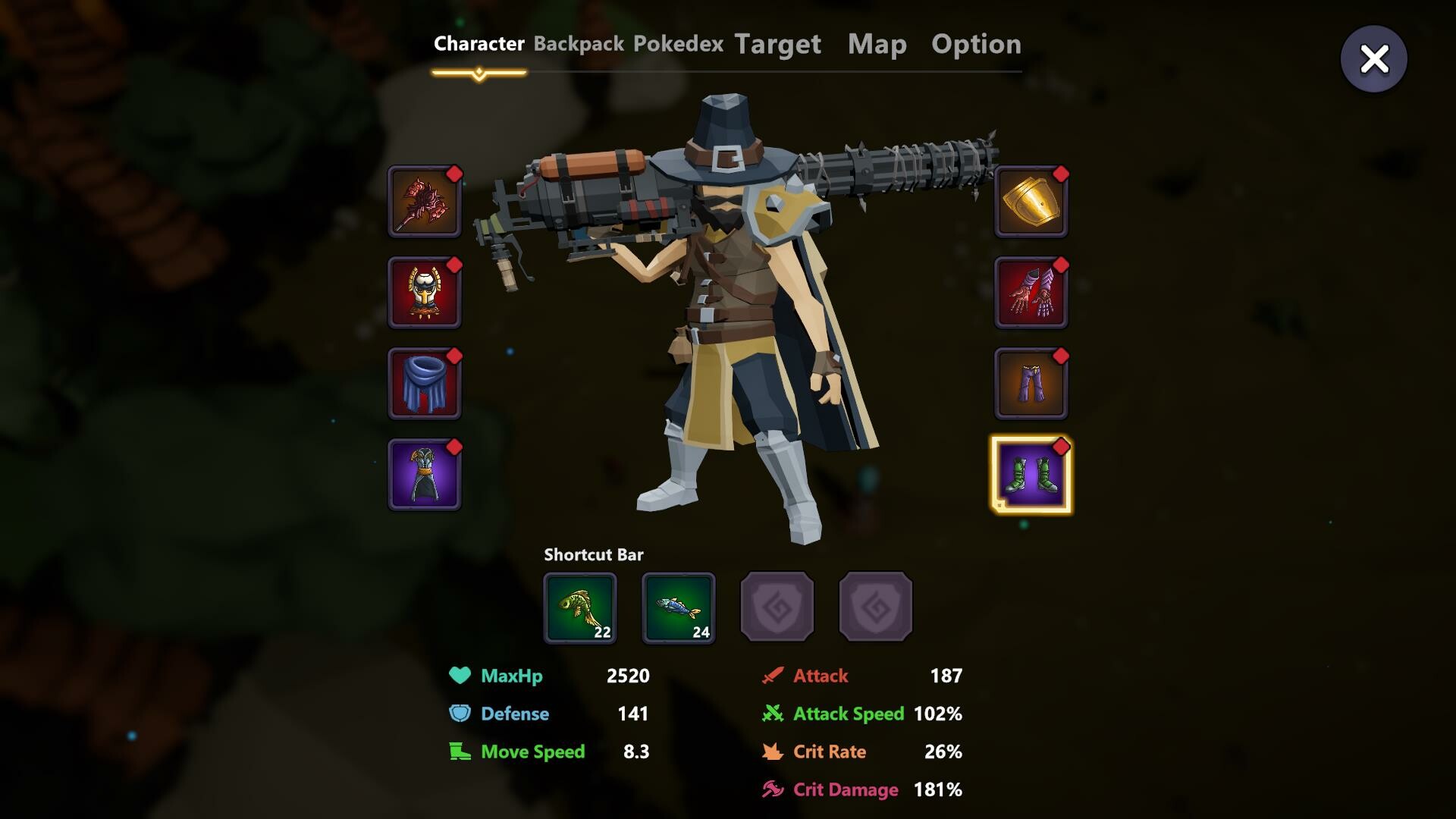
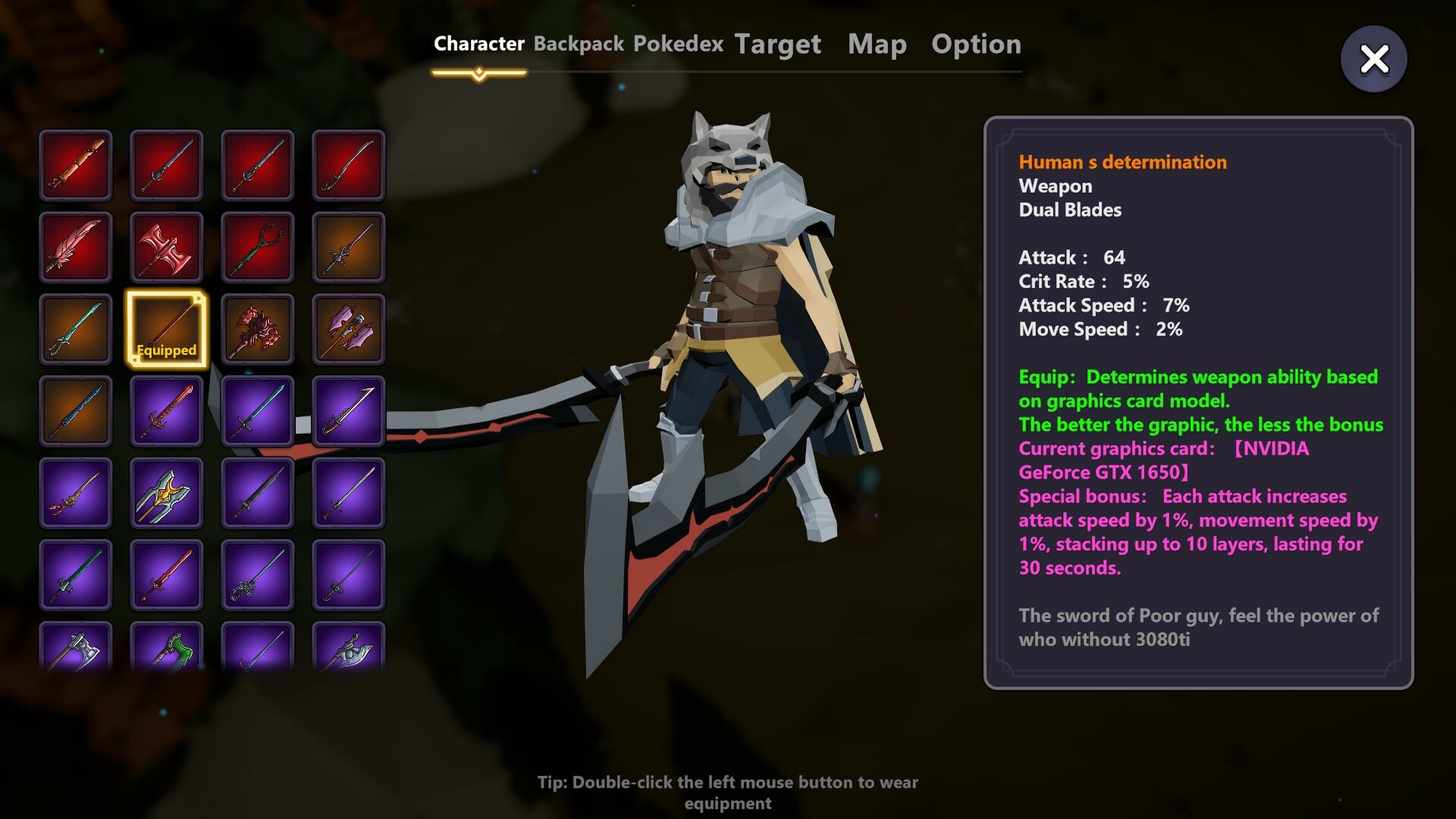
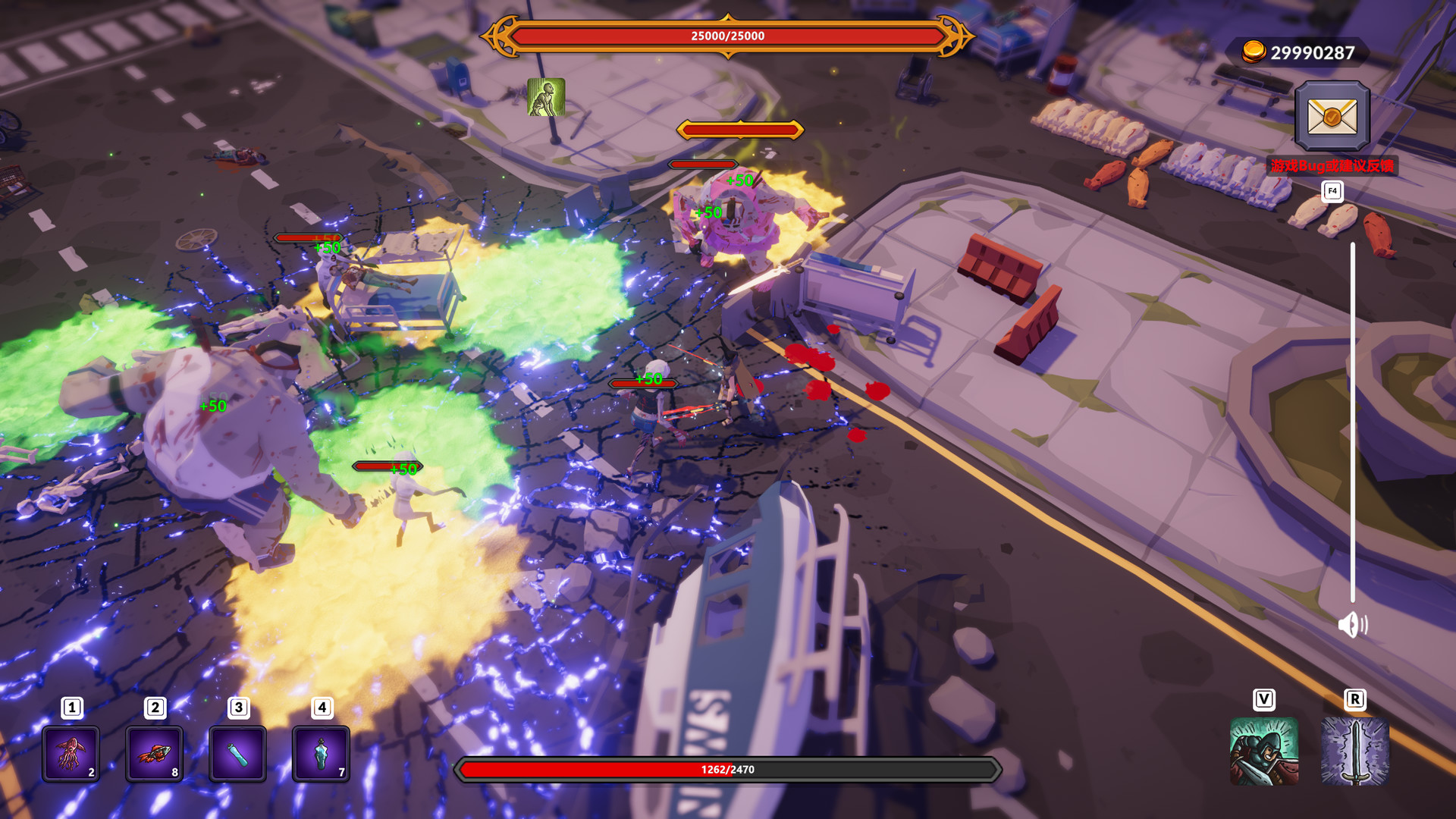
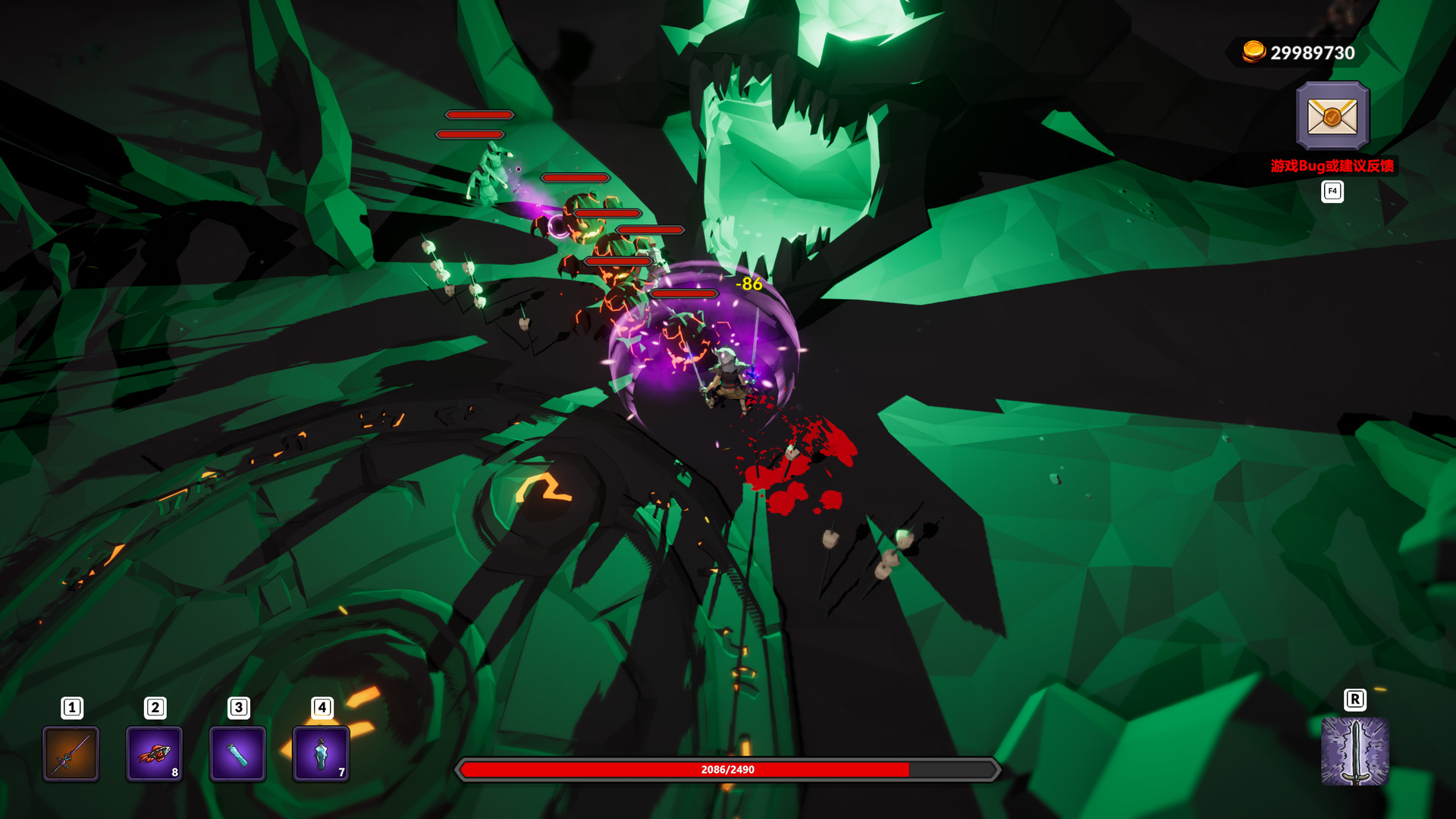
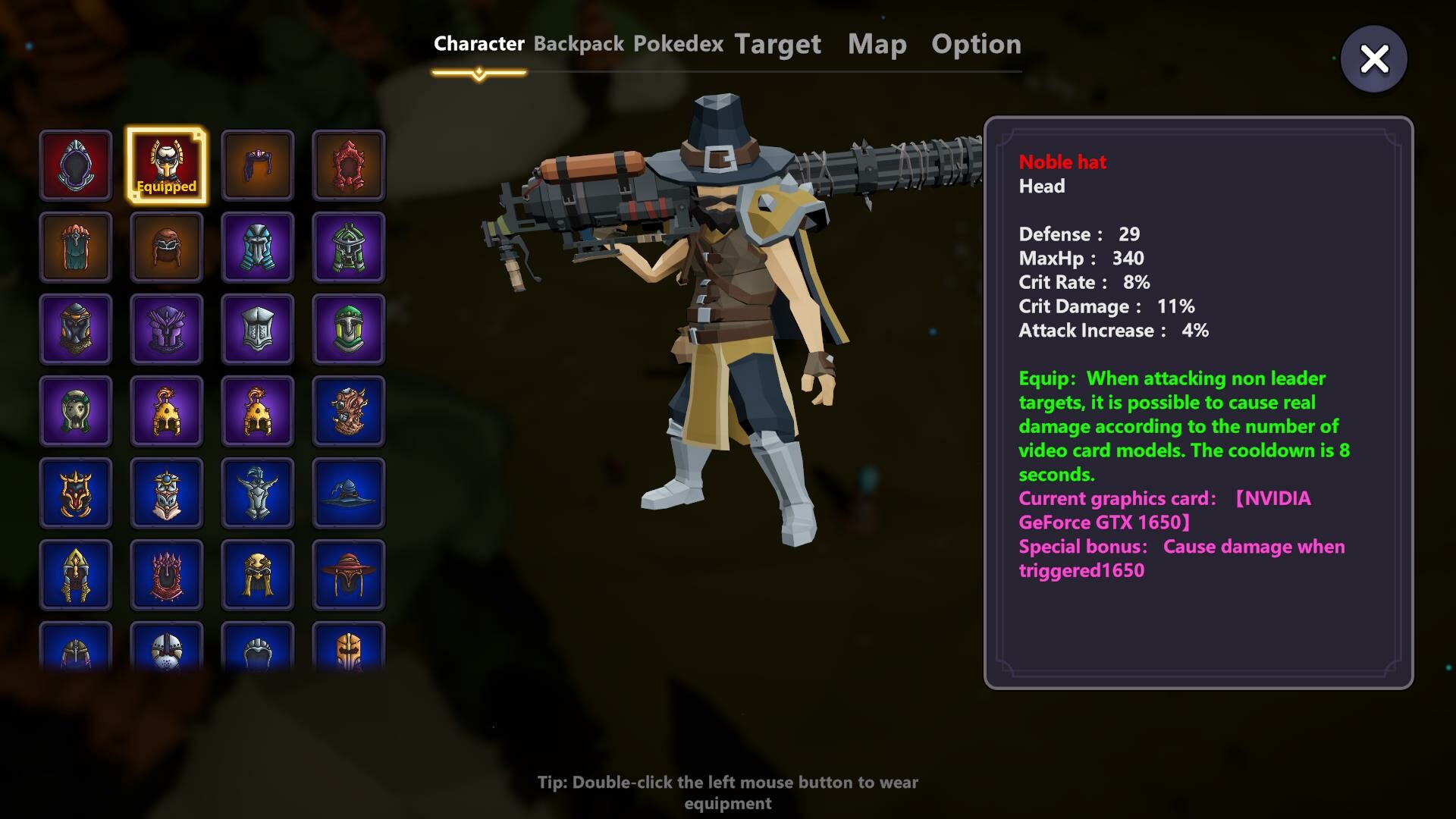
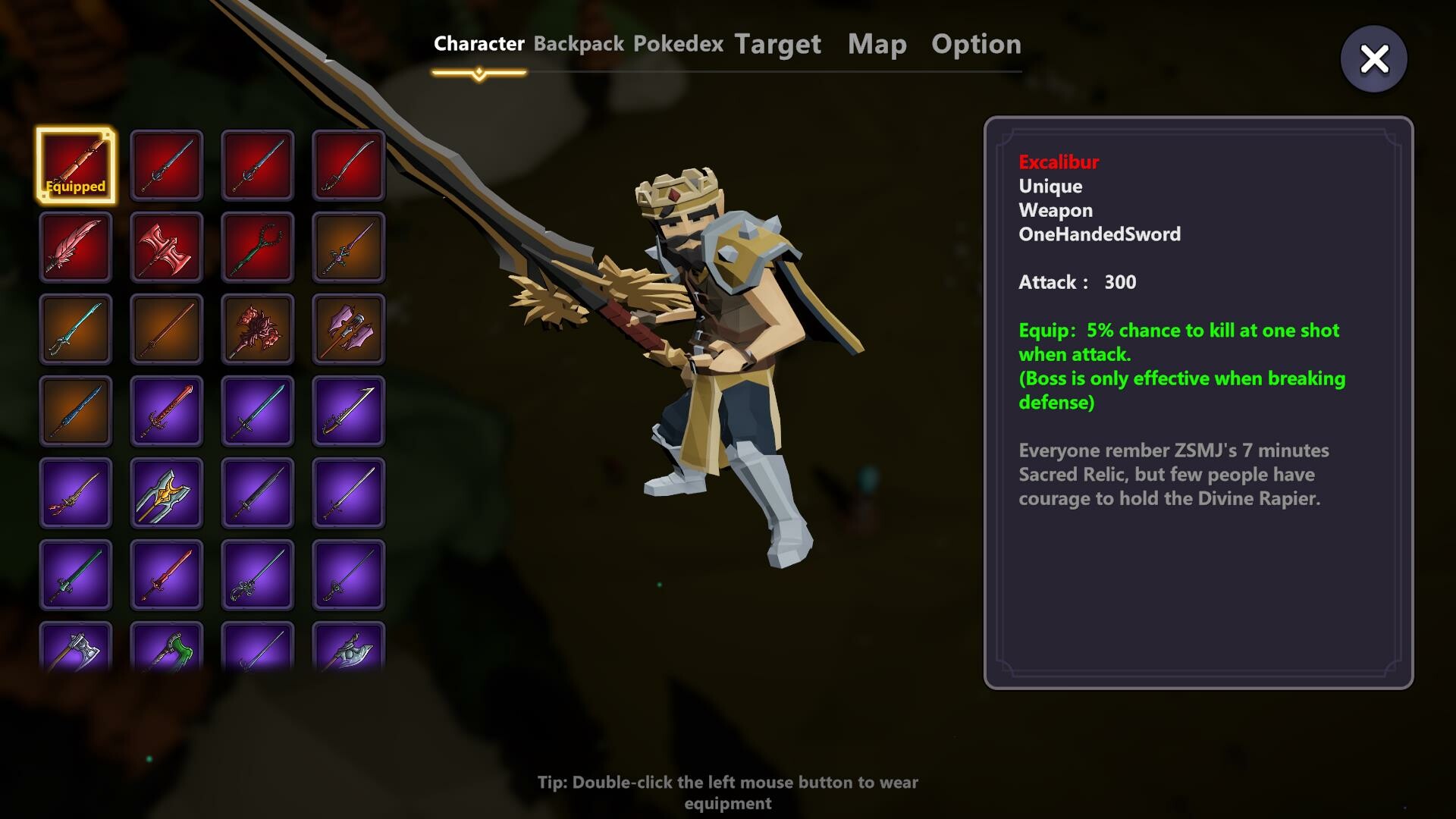
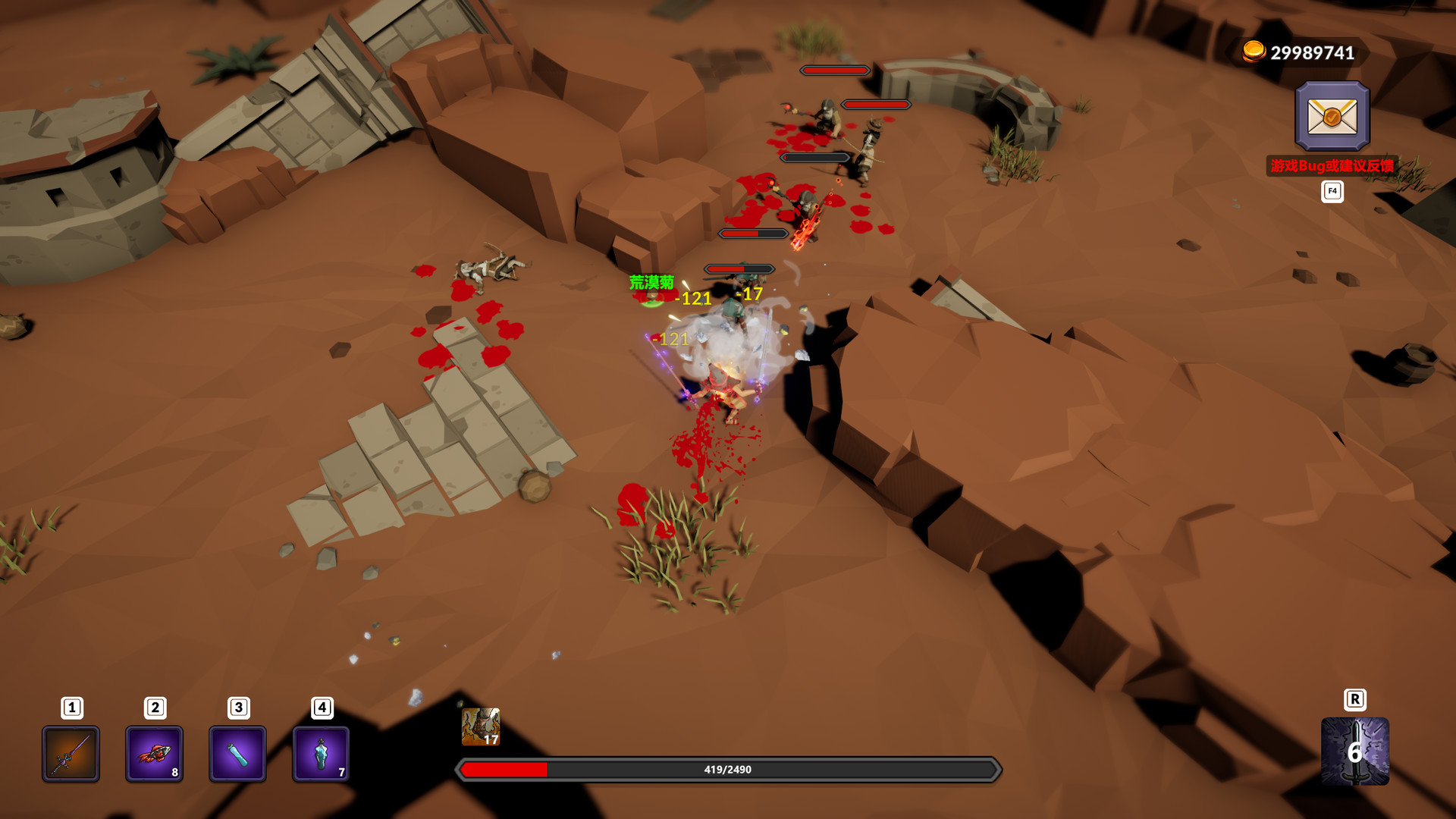
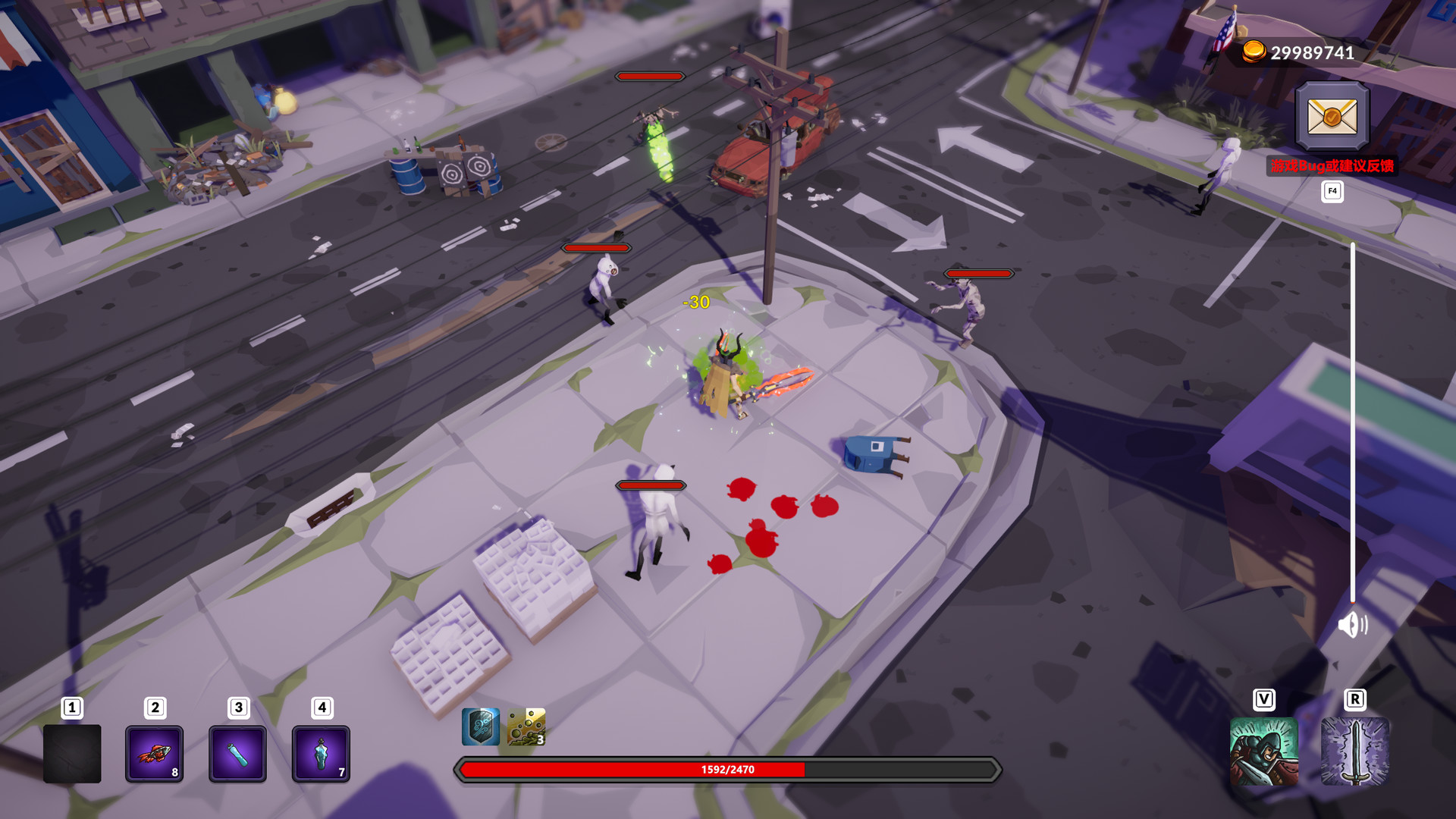
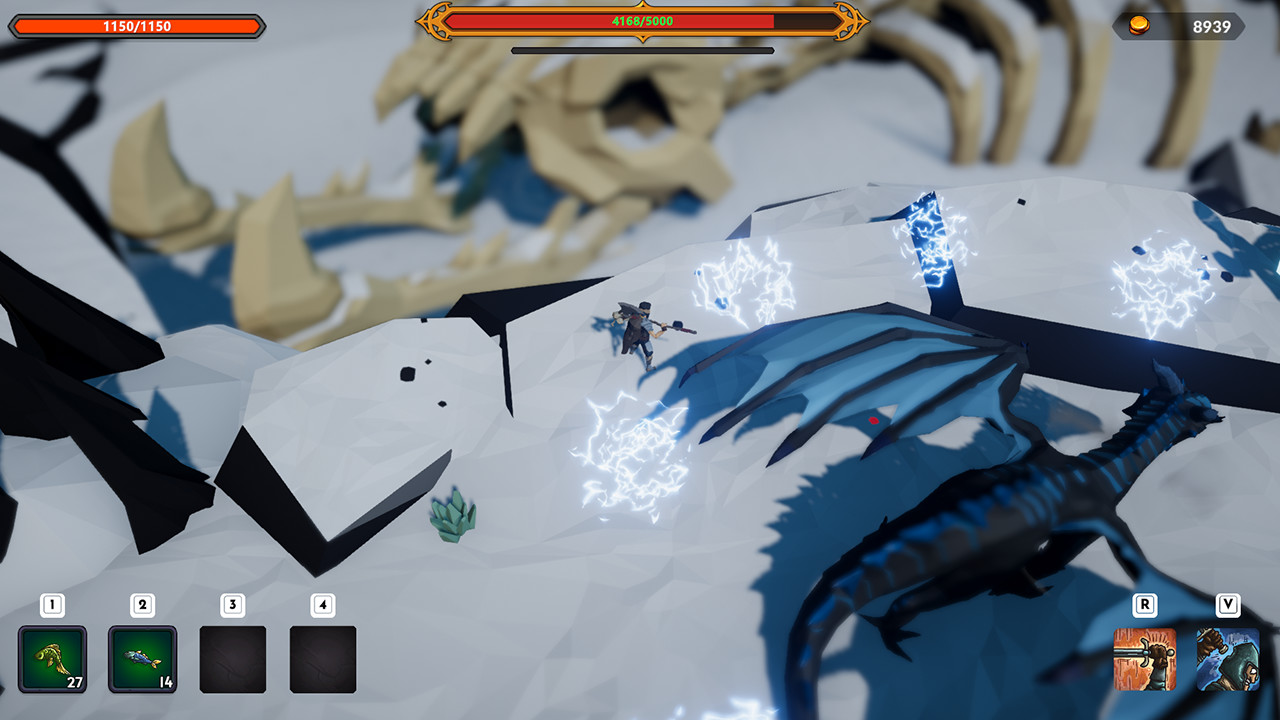
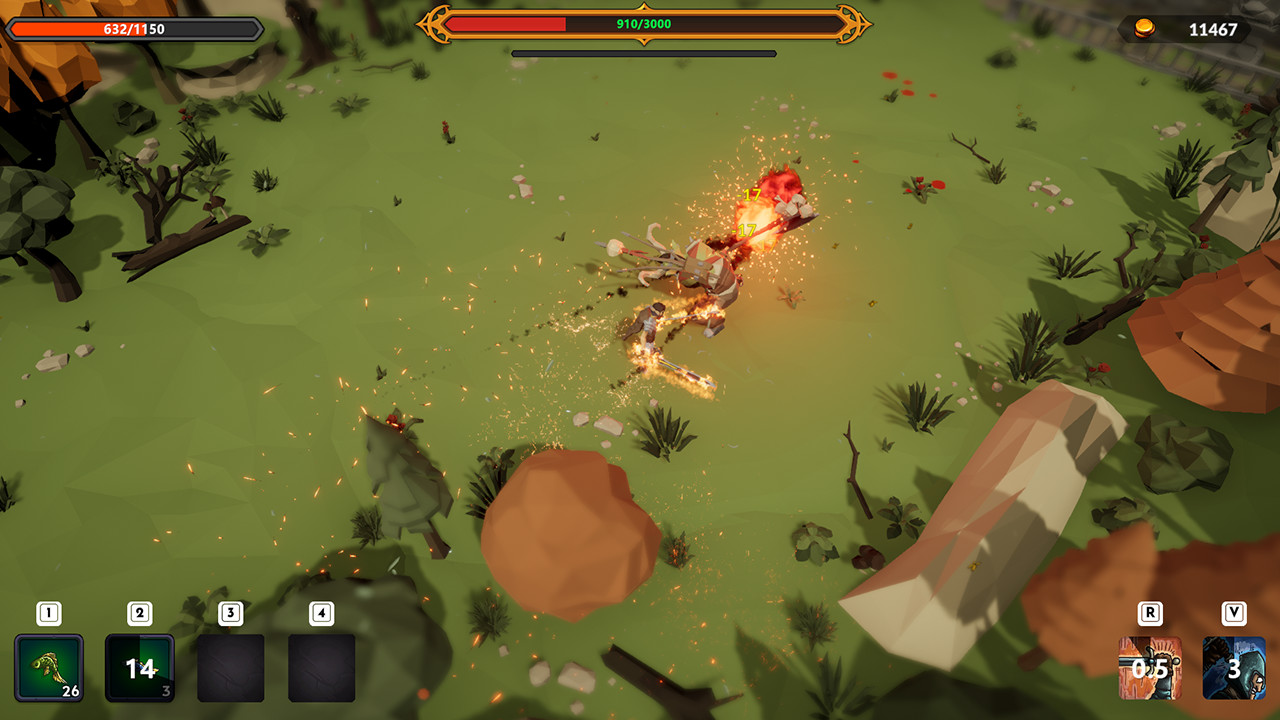
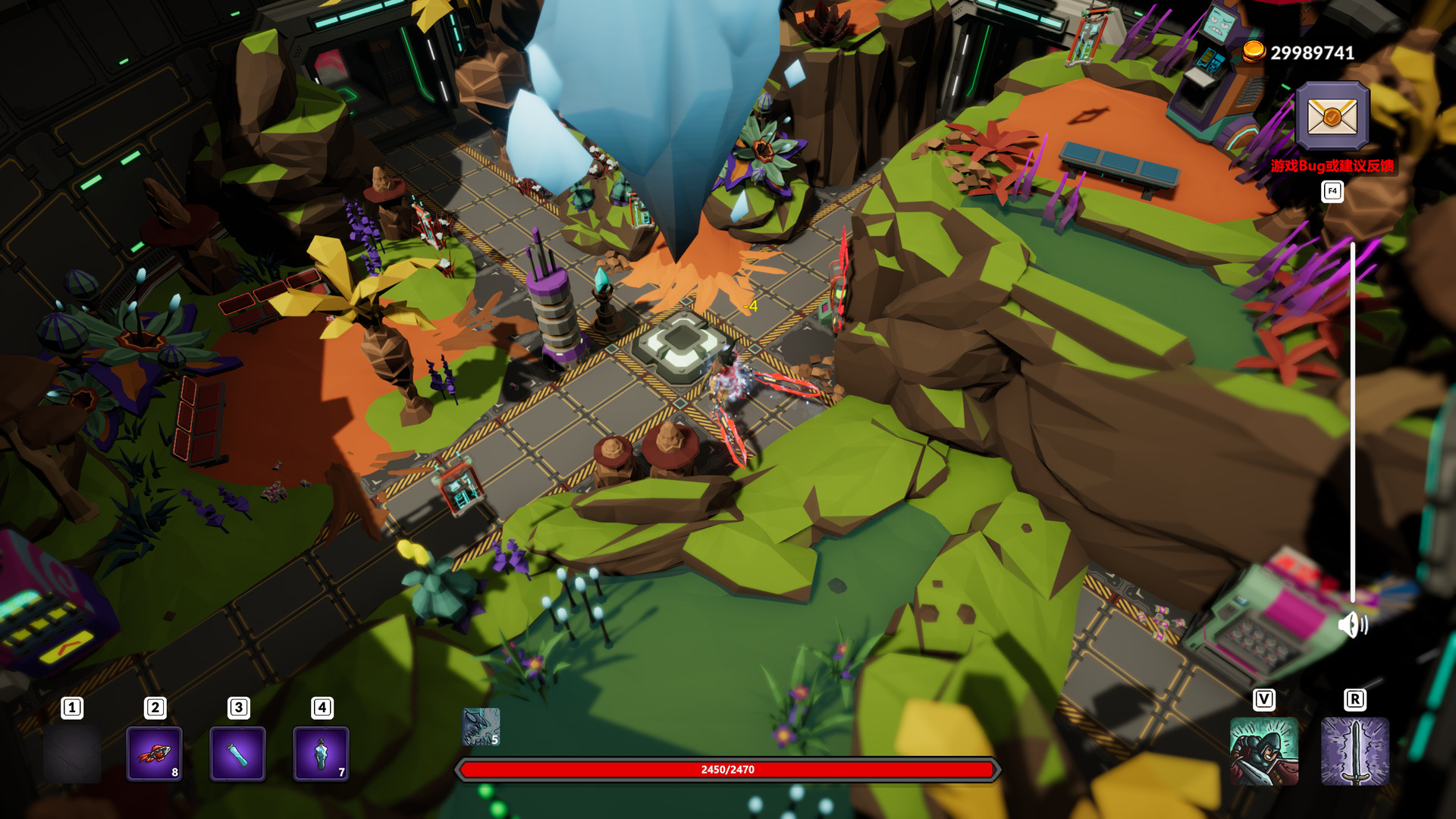
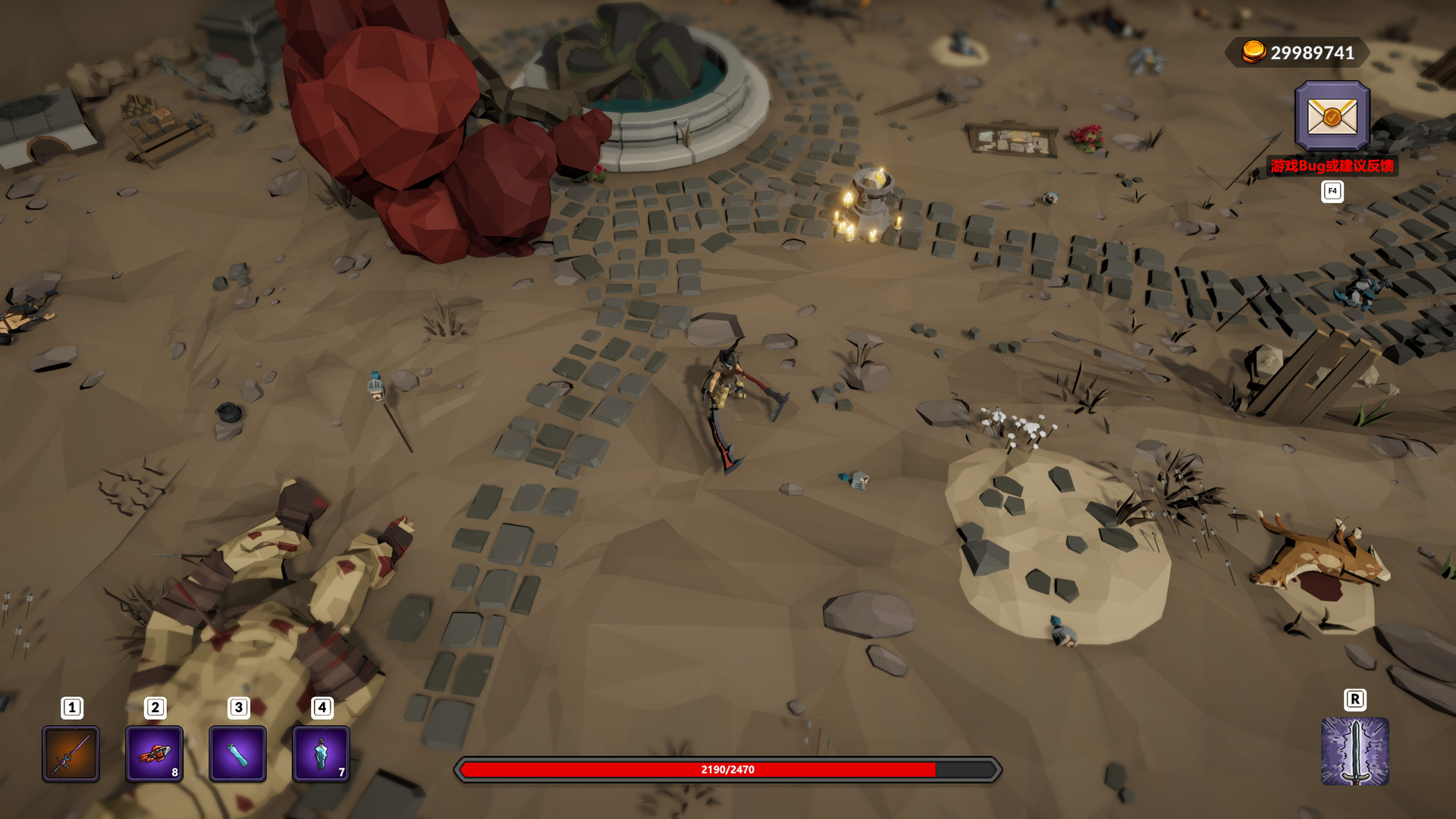
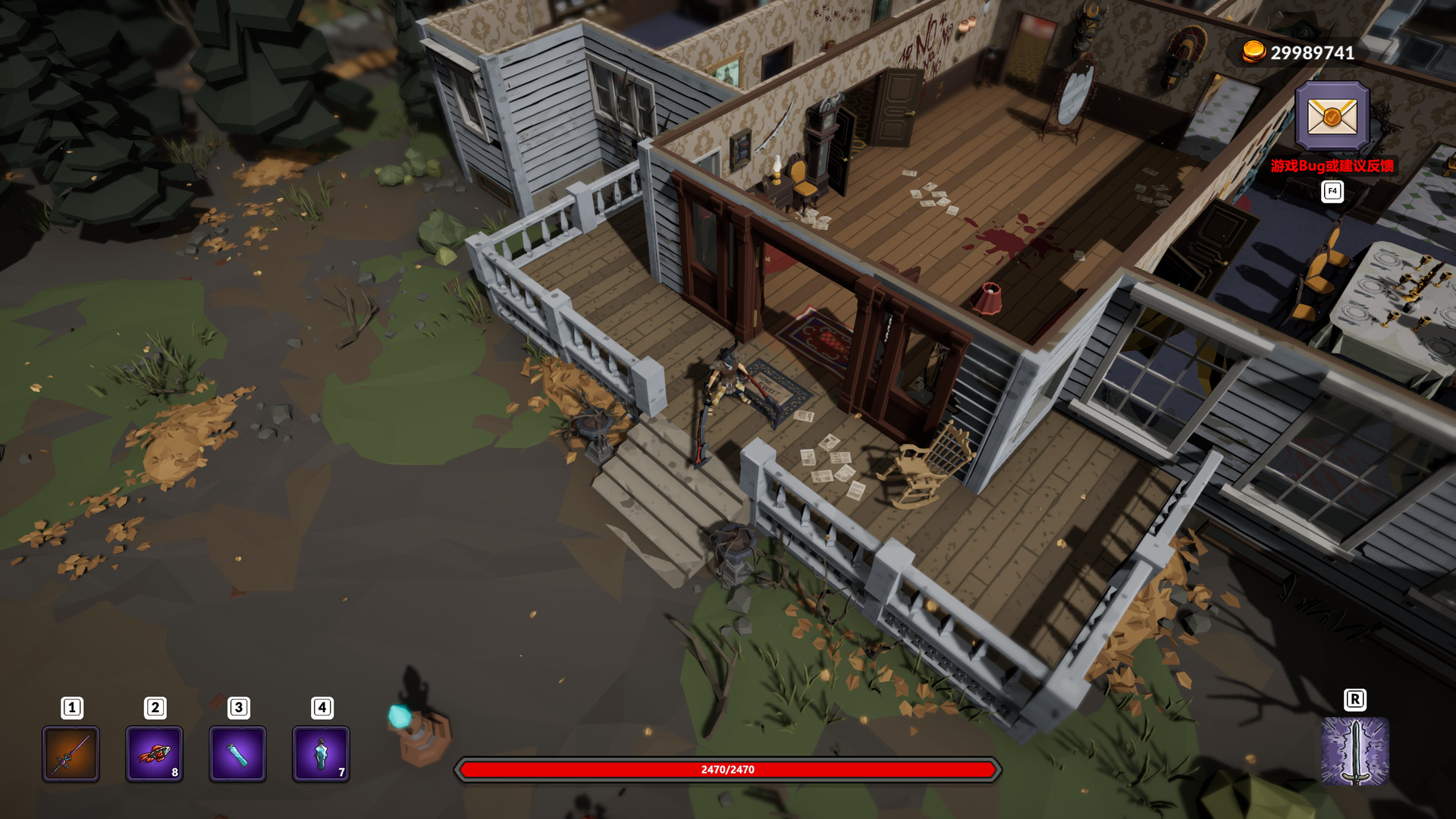
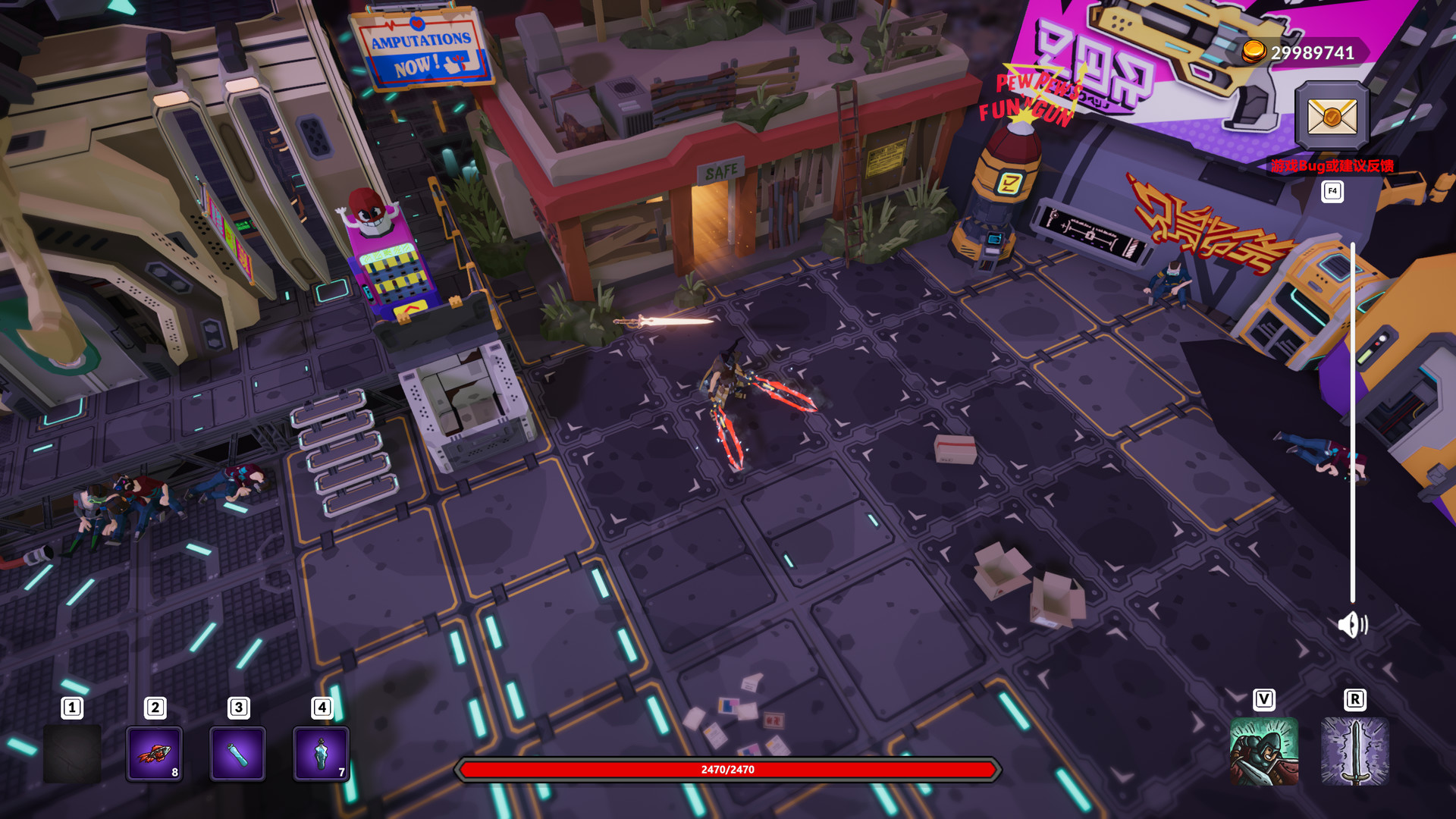
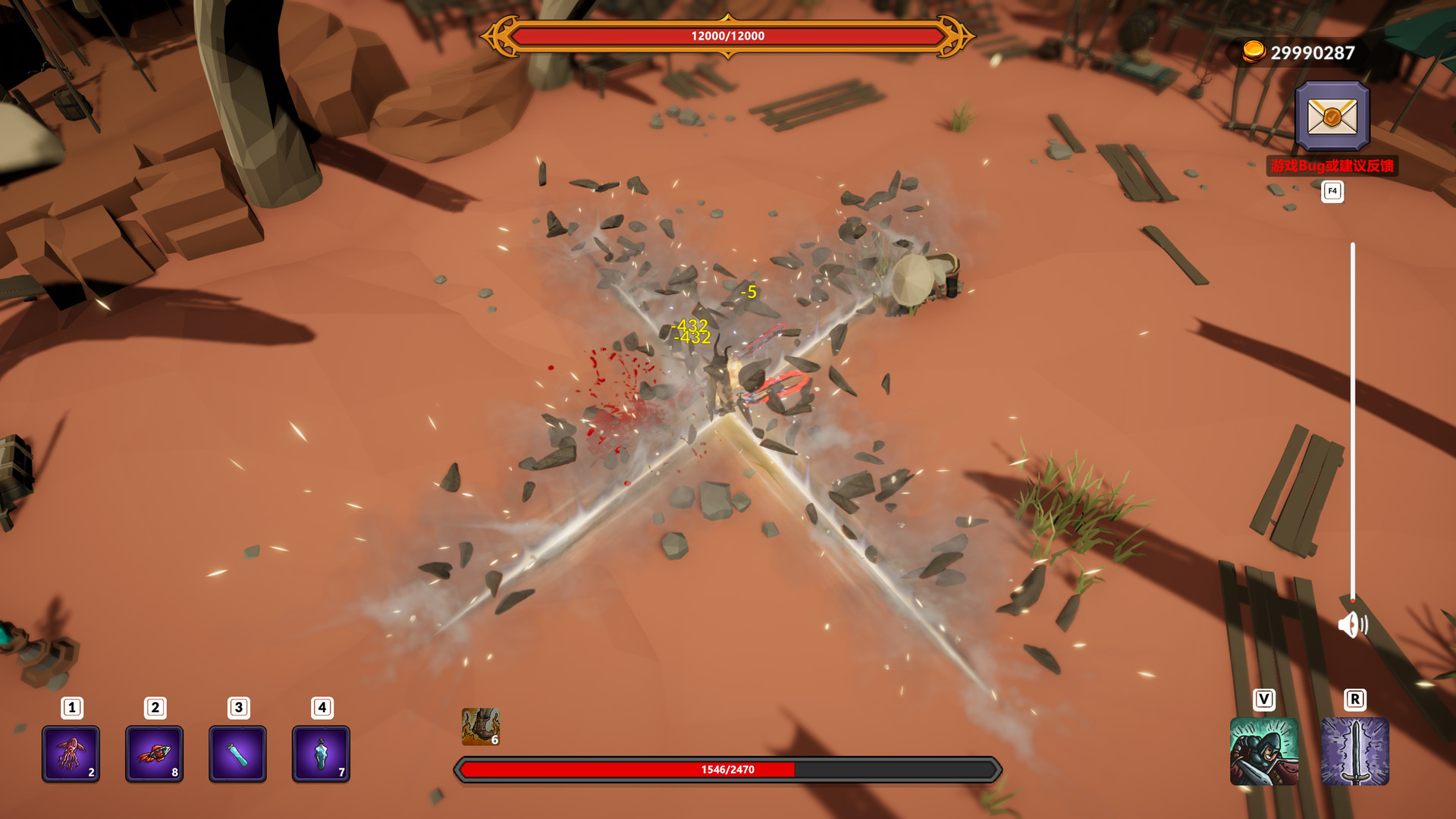
Weird RPG, developed by yuzhen and published by INDIECN, is an unapologetically challenging action RPG that focuses almost entirely on intense, skill-based combat and fast-paced boss battles. It is a title that strips the genre down to its most essential components, discarding heavy storytelling and open-world exploration in favor of tightly designed encounters that test reflexes, timing, and patience. From the first moments, it becomes clear that Weird RPG’s ambition lies not in cinematic presentation but in pure gameplay rhythm. Every encounter is built around reading enemy patterns, rolling and dodging with precision, and striking only when opportunity allows. It is a game that rewards mastery rather than leniency, reminiscent of old-school difficulty philosophies where persistence and observation are the only paths to victory. The combat system serves as the lifeblood of the game, and it is where the developer’s passion truly shines. Every weapon in Weird RPG carries its own distinctive properties and attack patterns, ensuring that experimenting with loadouts feels exciting and strategic rather than repetitive. Some weapons unleash wide-reaching elemental attacks, others channel rapid strikes or deal powerful bursts at the cost of mobility. This variety ensures that combat remains fresh even after multiple retries against the same boss. The player’s reliance on evasion and positioning also introduces an underlying layer of tactical thought—one must watch for subtle tells in the enemies’ animations and decide whether to commit to offense or fall back defensively. It’s a dance of precision, where a single mistake can undo minutes of progress, but victory delivers immense satisfaction. Visually, the game embraces a minimalist but functional aesthetic. The isometric view, sharp particle effects, and deliberate color contrasts work together to create clarity in the chaos of combat. Each attack, dodge, and hit is easy to read, a design necessity for a game that demands split-second reactions. Although the environments are not sprawling or rich with lore, they are distinct enough to create atmosphere, and their simplicity keeps the focus on combat without unnecessary distractions. The soundtrack reinforces the tension with pulsating electronic beats and ambient tracks that rise and fall with the tempo of the fight. This tight integration of sound and motion makes every battle feel kinetic and alive, amplifying the rush that comes with narrowly avoiding a fatal blow. While the narrative is largely secondary, Weird RPG hints at a broader mythos through environmental clues and cryptic flavor text. The player is said to travel through different worlds filled with powerful beings and hidden secrets, suggesting a universe with cyclical combat as both punishment and progression. Yet the storytelling remains sparse, leaving interpretation up to the player’s imagination. This decision aligns with the game’s minimalist philosophy—storytelling exists only to frame the action, not to interrupt it. For those accustomed to traditional RPG exposition or dialogue-driven plots, the absence of deep character arcs may feel like a shortcoming, but for others it becomes a strength, maintaining momentum and mystery throughout the experience. From a gameplay standpoint, Weird RPG excels in its focus on boss encounters. Each boss presents a distinct set of abilities and attack phases, often requiring multiple attempts to fully understand. The learning curve is steep, and each new fight builds on lessons from the last, encouraging adaptation and precise execution. The satisfaction of finally defeating a particularly brutal opponent is amplified by the game’s design, which emphasizes fair challenge rather than artificial difficulty spikes. The developers clearly understand the balance between frustration and reward, ensuring that each failure teaches the player something useful. With that said, newcomers may find the difficulty curve intimidating, especially in early stages when timing and positioning still feel foreign. The technical performance is smooth and stable, particularly for an indie title. Built in Unity, the game runs efficiently on most systems and is fully compatible with Steam Deck, offering responsive controls whether played with a keyboard or controller. The user interface is simple, clean, and unobtrusive, allowing players to focus entirely on action. The translation and localization are solid, with both English and Simplified Chinese supported, broadening accessibility without sacrificing clarity. The game’s optimization ensures that framerate dips are rare, even during visually intense boss phases, which is crucial in a title where every second matters. Weird RPG’s major limitation lies in its brevity and repetition. The core content can be completed within several hours, depending on skill level, and while replay value exists through weapon experimentation and revisiting bosses, the overall scope remains limited. The worlds, though visually distinct, lack interactivity beyond combat arenas, and players seeking exploration or side quests may find the experience too linear. Still, the game’s intensity and replay loop make it rewarding for those who thrive on mechanical challenge rather than narrative expansion. The compactness of its design, rather than being a flaw, can be viewed as an intentional focus—every minute is dedicated to combat and progression, with no filler to dilute its purpose. Ultimately, Weird RPG is a focused and uncompromising indie action experience that thrives on skill mastery and player determination. It distills the essence of boss-based combat into a pure, fast-paced format that demands attention and rewards persistence. Though it offers little in terms of narrative or world-building, its combat system, weapon diversity, and rhythmic flow create a level of intensity that few indie RPGs achieve. For players who enjoy precise, punishing encounters and the satisfaction of conquering formidable foes, Weird RPG delivers exactly what its title implies—a strange, exhilarating journey defined by its own rules and relentless energy. Rating: 8/10
Expand the review