


UFO 50
UFO 50 is a collection of 50 single and multiplayer games that span a variety of genres, from platformers and shoot 'em ups to puzzle games, roguelites, and RPGs. Our goal is to combine a familiar 8-bit aesthetic with new ideas and modern game design.
Sync your Steam wishlist to find the lowest game prices instantly. No login required, just paste your Steam profile URL!
⚡ Try Wishlist Radar!
Sync your Steam wishlist to find the lowest game prices instantly. No login required!
⚡ Try Wishlist Radar!
Close

Wizorb on Steam
Quick menu
The once peaceful Kingdom of Gorudo is threatened by an evil presence. The only hope for salvation is Cyrus!
Wizorb is a indie, arcade and pixel graphics game
developed and published by Tribute Games Inc..
Released on March 14th 2012 is available on Windows, MacOS and Linux.
It has received 983 reviews of which 685 were positive and 298 were negative resulting in a rating of 6.7 out of 10. 😐
The game is currently priced at 2.99€ on Steam, but you can find it for 0.83€ on G2A.
The Steam community has classified Wizorb into these genres:
Media & Screenshots
Get an in-depth look at Wizorb through various videos and screenshots.


Load More


System requirements
These are the minimum specifications needed to play the game. For the best experience, we recommend that you verify them.
Windows
- OS *:Windows XP or later
- Processor:Dual-core processor (Intel Dual Core 2.0 GHz or AMD Athlon X2 5200+ 2.6 GHz)
- Memory:1 GB RAM
- DirectX®:9.0c
- Hard Drive:250 MB HD space
- Sound: DirectX 9.0c compatible sound card
MacOS
- OS:Mac OS X v10.6 or later
- Processor:Intel Core™ Duo or faster
- Memory:1 GB RAM
- Hard Drive:250 MB HD space
- Graphics:128 MB space
Linux
- OS:glibc 2.15+, 32/64-bit. S3TC support is NOT required.
- Processor:Dual-core processor (Intel Dual Core 2.0 GHz or AMD Athlon X2 5200+ 2.6 GHz)
- Memory:1 GB RAM
- Graphics:OpenGL 3.0+ support (2.1 with ARB extensions acceptable)
- Hard Drive:250 MB HD space
Steam Price & Best Deals
User reviews & Ratings
Explore reviews from Steam users sharing their experiences and what they love about the game.
--- I migrated my copy of Wizorb from Desura, where I made the purchase almost right at the release date (November 11th 2011). The Steam-version is somewhat enhanced, though at core it is pretty much the exact same game as it was +15-years ago. Unfortunately, Wizorb is extremely difficult to recommend nowadays primarily due to technological maintenance debt alongside some very questionable or otherwise asinine gameplay implementations. The very only reason for not giving thumbs-down is due Wizorb still being a functional game, provided one is able to workaround at least these following more notable “aneurysm”-sources: - Wizorb boots up first in an "exclusive fullscreen"-mode which can severely mess up multi-monitor setups, especially while actively multitasking: I've had to "reset" my main-monitor several times due to this game disrupting the (mini-)DisplayPort signal while having Youtube-videos (on Microsoft Edge-browser) playing on my secondary monitor. The game-client will eventually switch into proper windowed-mode afterwards. But each boot-up is a matter of hopes & dreams of the system not crashing (at least in my case). - Achievement-hunting-wise many of the mechanics can be both counterintuitive and downright detrimental / progression halting. Nevermind at least one achievement having incorrect description / requirement. -- The "Filthy Rich"-achievement in actuality requires 50K being held in the inventory / counter; earning the gold is not enough. --- The gold-collecting progress also is only saved after completion of a world; exiting an in-progress world simply resets the gold-count back to count before starting a run. - The "charms / power-ups" can only be bought from specific shops. And very annoyingly they function exactly like "yee-olde" retro-game artifacts that should have been abandoned decades ago, as these will only last each "life". Losing these power-ups can be avoided by "save-scumming" back to the main-menu, with only drawbacks being having to start the level again and losing the world-score. -- Of the charms, the "Magnet" unfortunately in reality removes the "bounce" of the magic wand / paddle -> cannot rechange magic through non-breaks especially for Telekinesis-spell / manual-control of the ball. And perhaps most importantly the last boss who can only be damaged by Fireball-spell -> -> cannot earn "Fragile".achievement. This being very unfortunate since otherwise Magnet power-up really favours the "whipping / fanning"-save moves since in Wizorb the paddle can catch the orb / ball even from underside and then launch it upwards. Primarily due not wanting to lose the charms once obtained, it is quite baffling why they simply didn’t make the power-ups to be togglable... - The in-game “How To Play”-glossary for the most part offers all the info needed, except images of the “Curses / Debuffs”: Only pictures of “Drain Magic” and “Glue (/Slime)” are featured. This makes the “Fast Orb”-curse to be an annoying encounter primarily due to finding out the curse in question being semi-transparent (reminiscent of either crystal-ball or blazing round mirror). And this specific Curse also being physic-engine breaking since the speed of orbs often rises to clip through walls thus losing a life. Wizorb really is only worth trying out to experience the earlier production of Tribute Games. But especially achievement-hunting-wise this game simply feels too much a hassle (at least in the current state). ---
Steam has offered a lot of classic indies over the past couple of decades, giving way to some especially fantastic experiences by indie developers who otherwise would never have been given the same spotlight back in the early 2000s and before. Wizorb is one of many early indies in this regards, recreating one of Atari's most famed games from the ancient era of the 70s, this being the iconic 'Breakout' that released almost half a century ago on the 13th of May 1976 in the arcade scene as the concept of video games was beginning to become a household name in the growing entertainment industry. Naturally then we have to ask what this game brings to the table as far as improving on the original that it is based upon. I should note here that I have enjoyed my time with it overall, but I've also came to recognize certain faults of trying to work with a game concept that, at its core, is too rigid in its gaming mechanics and arcadey in its general premise to expand the concept much further. This much I aim to explore in this review here though before I cover the gameplay of Wizorb, the first thing that most people glancing at this indie for the first time will notice is the artstyle that the developers behind Tribute Games Inc have chosen to go with as it is quite pleasing to the eye whilst also being faithful to the older games by keeping the graphics to 16-bit in order to maintain that pixelated 'look' which many retro-inspired indies seek to replicate in their own worlds. Now to delve into how the gameplay works here, since you would be correct in assuming that the core gameplay of Breakout is carefully maintained here in that you have a paddle in the form of a wand that guides a ball (this being a magical orb) which is used to destroy the various coloured blocks that inhibit each of the game's sixty levels spread across five themed worlds. Wizorb expands upon this by introducing new threats via enemies that slowly wander the map and engage with the player in different ways (some are harder to hit due to smaller hitboxes or faster mobility, others can teleport out of the way or even deflect the ball from the front!) to make the gameplay more engaging where obstacles are concerned alongside the inclusion of bigger blocks and stone blocks requiring multiple hits to destroy as well as gem blocks which only shatter when all of them match the same colour when hit to change said colour of the gem block. To balance this out in the player's favour, one can make full use of the wizard's abilities that they control via the usage of black and white magic. These spells have different uses on the playing field that can aid you in clearing a level quicker, the four spells being separated into two tiers of offensive and supportive sorcery although these will cost a certain amount of magic to use. For the basic tier of spells that cost just 10% of your magic bar to use when the orb is bouncing away from the wand, one can either summon a whirlwind to redirect the orb in a preferred direction to keep it bouncing on blocks longer or cast a fireball to directly destroy or harm blocks/enemies ahead of the wand. As for the advanced tier of spells which require 40% of the magic bar that can only be triggered right as the orb is about to hit the wand, the player can directly control the orb briefly to shimmy it into tight spots on the level or coat it in fire that will instantly destroy any enemies or blocks it comes in contact with for the several seconds it is active. Alongside this the player can gain several items that are dropped by specific blocks, these include potions to refill magic and coins/gems which grant the player money that can be spent in shops and at the main hub to rebuild a broken village for progress. Although not all of these are good as several blocks hold traps or 'curses' which will inflict the player with debilitating effects if collected, including having your magic/money drained and speeding up the ball on the field among other things. Though this can be offset with a careful building of 'charms' that the player can buy in the shops I spoke of earlier, which require a key to unlock that almost always can be gained in the same level itself, as these are little bonuses that range from a bigger wand and having three orbs at once to dealing double damage and even starting off at slower speeds to make the traditional 'Breakout' gameplay much more manageable for new players! These charms disappear when you lose a life, however skilled players can build up these charms and become not just good at the game but also have a mighty wand at their disposal if they can acquire all five charms together. With the inclusion of 'boss battles' that have you dealing with a powerful foe requiring multiple hits and avoiding deadly attacks of their own alongside secret levels available upon revisiting older worlds, I'd certainly say that there is a decent amount of content on offer for veterans of the genre alongside casual fans who'd like to see the classic arcade brought back with newer mechanics and other fancy additions seen in modern indies here on Steam. However one key issue that I have seen others raise that I can relate to here is how long some of the levels can take as far as clearing out all of the blocks, this largely stemming from how a standard wand with no charm upgrades can result in needing to 'lock in' at times just to survive. Considering the limited lives the player has before needing to start from the beginning of the world again on top of not receiving any gold should they run out of continues, I can see why this would pose a significant issue for those not familiar with the Breakout style of gameplay. If I may offer some words of advice on how to make this more enjoyable, asides from playing on the easy difficulty to reduce the starting ball speed alongside providing a 'rampart' that acts as a barrier at the bottom which can take several hits from the orb if your wand misses it, playing with the mouse is the best way of quickly catching a speedy ball as each level progresses since using a keyboard is fairly sluggish even at the 'paddle 2' speed that I tested with for the first several hours. Also worth noting is that one can restart a level, not by going onto the menu and backing out or saving and quitting but by instead force closing the game and then going back into it to resume gameplay. This preserves the player's lives alongside any charms they have up until that point but doing so will reset the score for that current run, however this can also serve as a reliable crutch for newer players to hang onto as well as for more experienced players, should they test their skills on the hard difficulty for that prestigious achievement! Outside of knowing how to guide the orb via careful positioning of the wand to keep it hitting forward or pushing it at a steeper angle on the side, it is quite possible to learn how to clear the levels quicker though it is still a valid criticism that some levels are more tedious to clear through than others. Another problem that I had personally is the lack of things to spend money on past a certain point in this game, this easily could have been solved with several expensive upgrades to both the wizard's four spells and the ability to expand the magic bar that players could choose to save up for early on or wait until later on to begin improving the wizard's skills as they also improve their own 'breakout' skills during gameplay whilst also speeding up the flow of gameplay too. No doubt there are things that could have been worked on and improved upon here although, given the fairly low price point of just £1.99, I would argue that this is one indie that can be enjoyed when going into it with the right expectations as Wizorb does a good job at faithfully adapting the Breakout formula whilst improving upon it in certain aspects without changing too much of what made it a classic to begin with.
Similar games
View all
Broken Armor
A knight exiled from his kingdom must find the holy grail if he is to return.
Exit the Gungeon
Exit the Gungeon is a small, spin-off 'dungeon climber' immediately following the adventures of the misfit Gungeoneers.

Tribal Pass
A genre-twisting tactical runner where you maneuver, fight, think, sacrifice and evolve – all ON THE RUN.

Kung Fury: Street Rage - Ultimate Edition
The original epic introduction to the eternal KUNG FURY beat ‘em up saga. New stages, and the Hackademy. Both THE ARCADE STRIKES BACK and the A DAY AT THE BEACH campaign.

Squidlit
Every day is a wonderful day for invertebrates! Come join the Squidlits of Blipston for a squishy adventure of spoopy castles, muffins, and wiggles! Made with classic handheld technology in mind, Squidlit strives to be the closest modern recreation of GameBoy game-design methods on the market.
Shovel Knight: Specter of Torment
Take control of Specter Knight, servant to the Enchantress, in a quest to recruit a cadre of knights and create the Order of No Quarter. Experience perfect platforming, world-class visuals, impeccable stage design, incredible music, and even meet a friend or two in Shovel Knight: Specter of Torment!

Death's Hangover
Death's Hangover is a ball and bat game, featuring horror elements, mature comedy and themes.

LUFTRAUSERS
The skies are aflame and the seas will overflow with wreckage in Vlambeer’s stylish arcade shooter LUFTRAUSERS! Take to the skies in customized fighter planes to battle battleships, submarines, and rival aces for glory, honor, and high scores.

UBERMOSH:OMEGA
UBERMOSH:OMEGA, the apex of Walter Machado's Cult Classic series UBERMOSH.
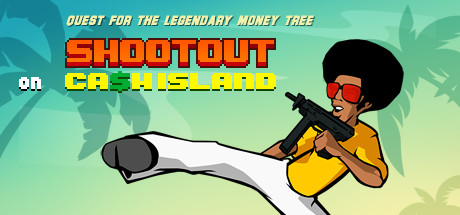
Shootout on Cash Island
Bobby from Team HOT GUNS has a job to locate and secure the legendary Money Tree.
Frequently Asked Questions
Wizorb is currently priced at 2.99€ on Steam.
No, Wizorb is currently not on sale. You can purchase it for 2.99€ on Steam.
Yes, Wizorb received 685 positive votes out of a total of 983 achieving a rating of 6.72.
😐
Wizorb was developed and published by Tribute Games Inc..
Yes, Wizorb is playable and fully supported on Windows.
Yes, Wizorb is playable and fully supported on MacOS.
Yes, Wizorb is playable and fully supported on Linux.
This information about Wizorb is not available yet.
This information about Wizorb is not available yet.
No, Wizorb does not support VR.
Wizorb is a single-player game.
No, Wizorb does not currently offer any DLC.
No, Wizorb does not support mods via Steam Workshop.
No, Wizorb does not support Steam Remote Play.
Yes, Wizorb is enabled for Steam Family Sharing. This means you can share the game with authorized users from your Steam Library, allowing them to play it on their own accounts. For more details on how the feature works, you can read the original Steam Family Sharing announcement or visit the Steam Family Sharing user guide and FAQ page.
You can find solutions or submit a support ticket by visiting the Steam Support page for Wizorb.
Data sources
The information presented on this page is sourced from reliable APIs to ensure accuracy and relevance. We utilize the Steam API to gather data on game details, including titles, descriptions, prices, and user reviews. This allows us to provide you with the most up-to-date information directly from the Steam platform.
Additionally, we incorporate data from the SteamSpy API, which offers insights into game sales and player statistics. This helps us present a comprehensive view of each game's popularity and performance within the gaming community.
Last Updates| Steam data | 01 October 2026 14:04 UTC |
|---|---|
| SteamSpy data | 13 October 2026 14:32 UTC |
| Steam price | 26 October 2026 20:04 UTC |
| Steam reviews | 21 October 2026 17:48 UTC |
If you'd like to dive deeper into the details about Wizorb, we invite you to check out a few dedicated websites that offer extensive information and insights. These platforms provide valuable data, analysis, and user-generated reports to enhance your understanding of the game and its performance.
- SteamDB - A comprehensive database of everything on Steam about Wizorb
- SteamCharts - Analysis of Wizorb concurrent players on Steam
- ProtonDB - Crowdsourced reports on Linux and Steam Deck Wizorb compatibility

Game modes
Features
Online players
1
Developer
Tribute Games Inc.
Publisher
Tribute Games Inc.
Release
14 Mar 2012
Platforms
Clicking and buying through these links helps us earn a commission to maintain our services.