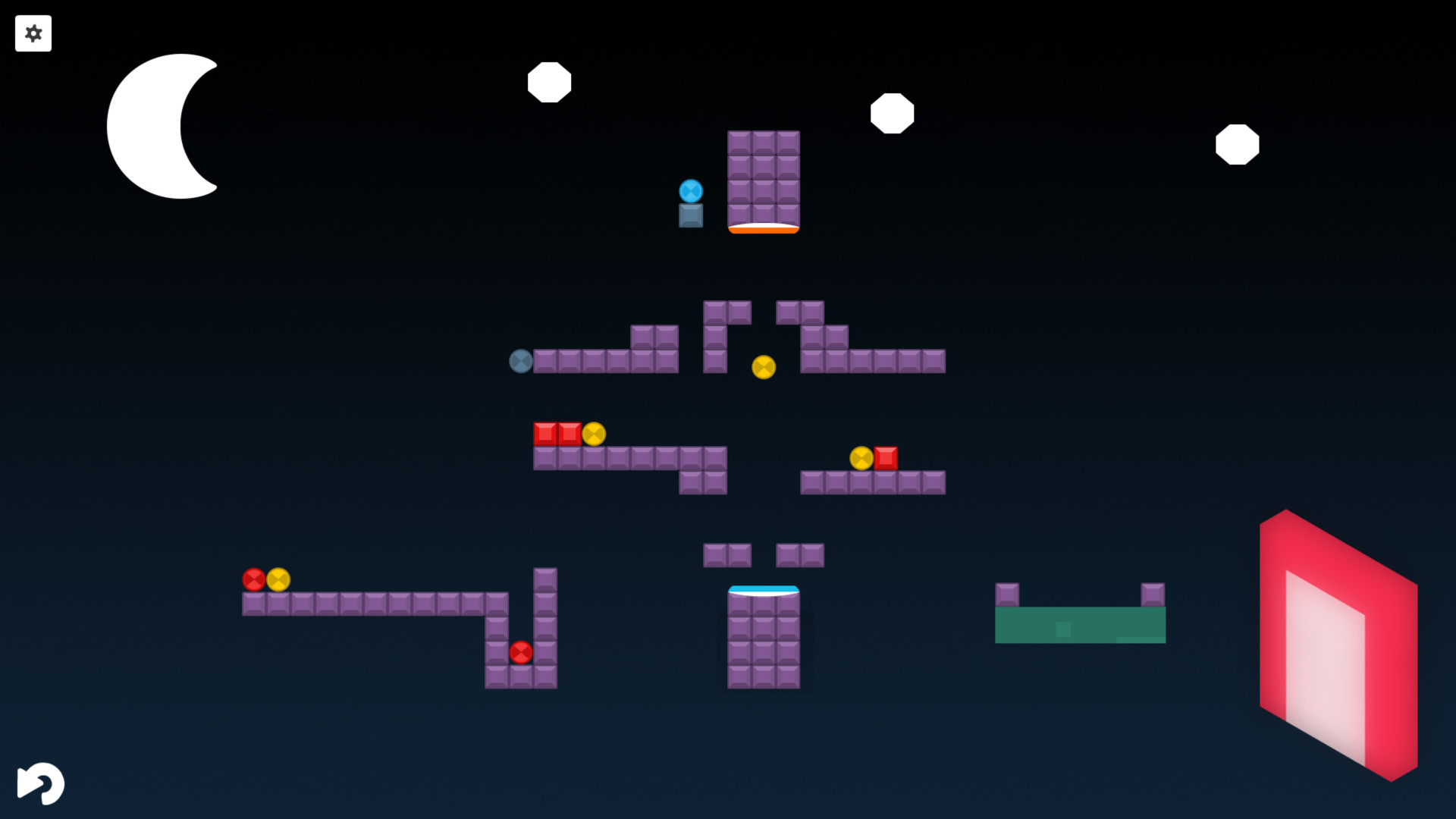
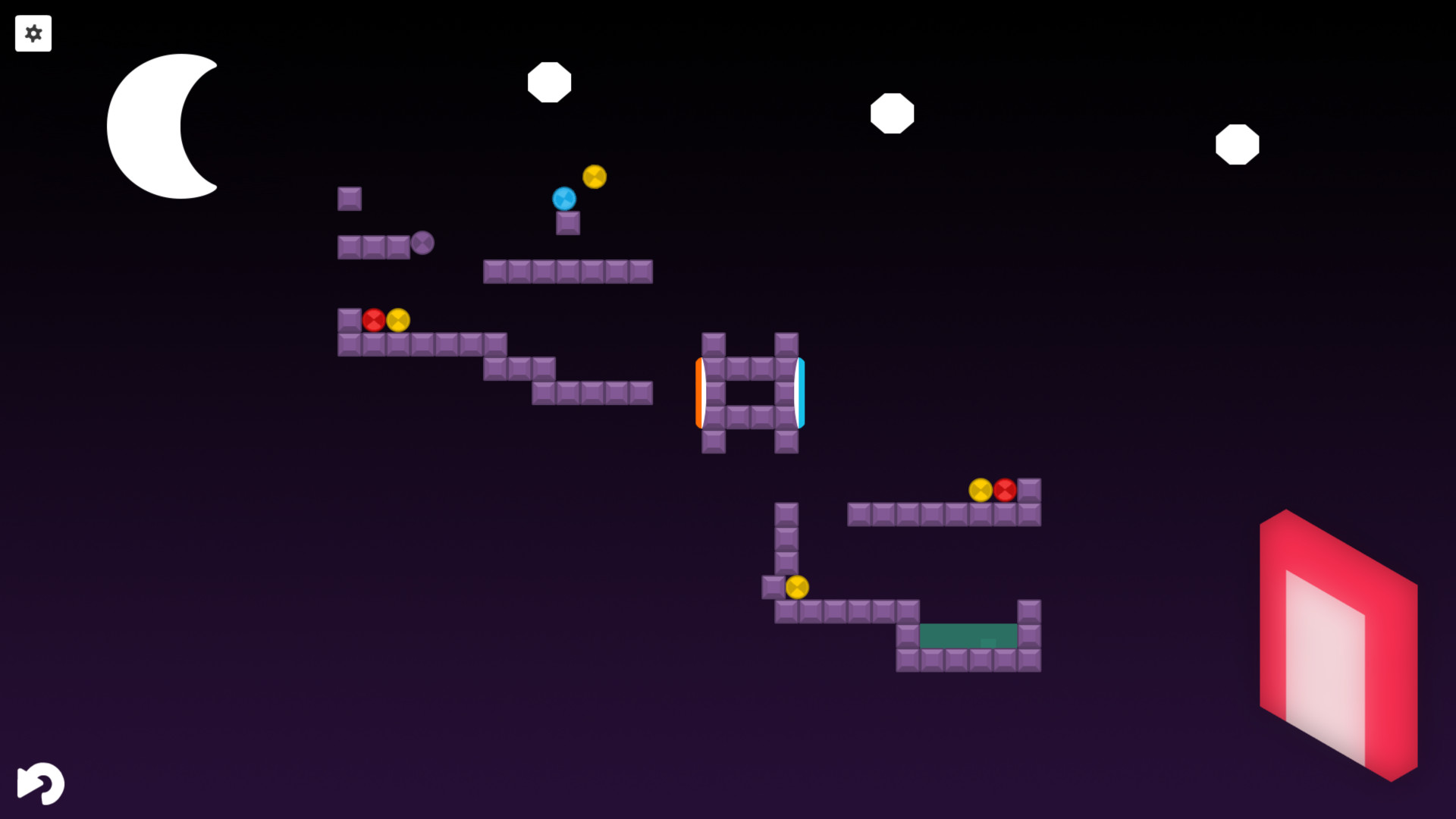
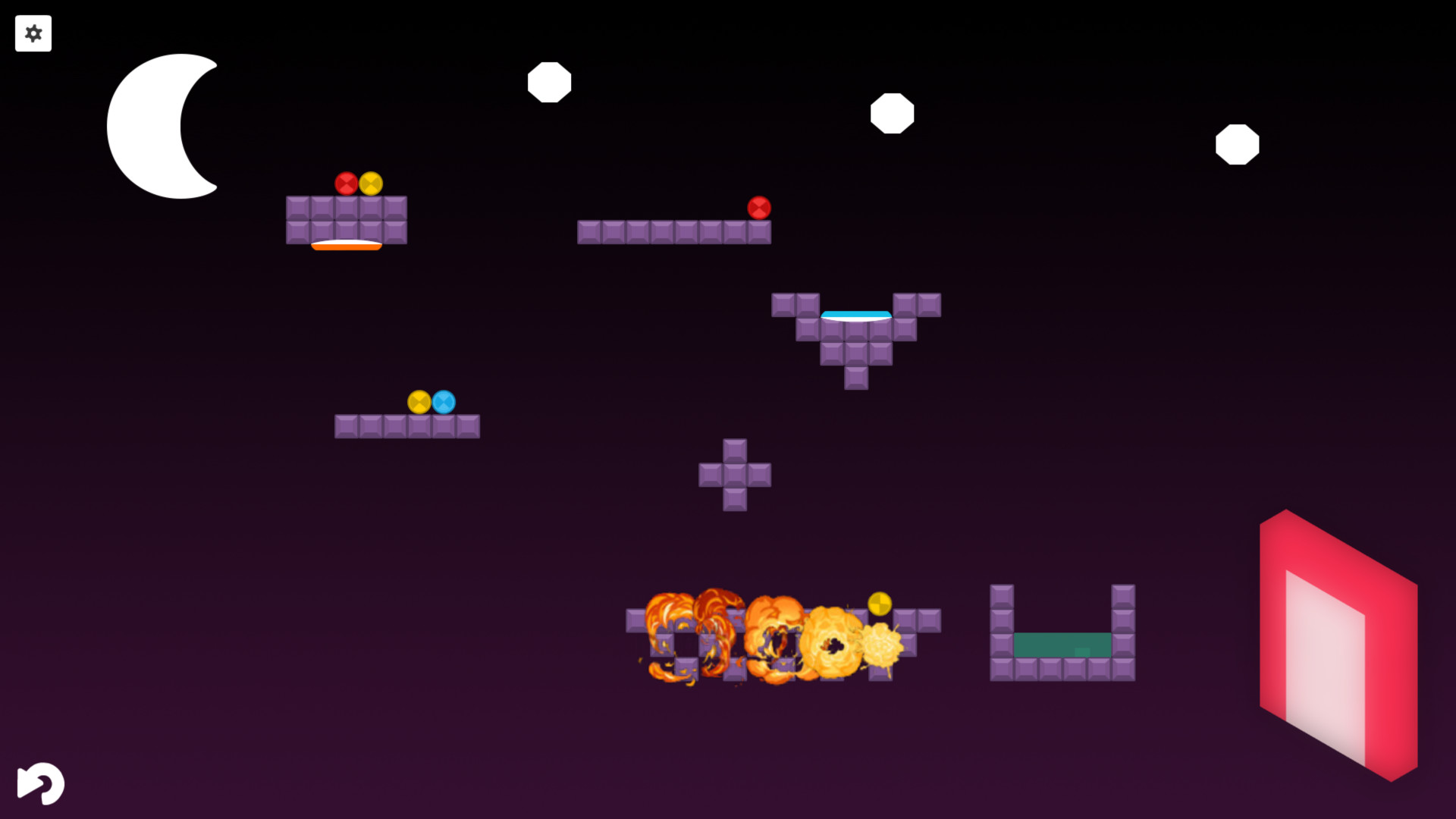
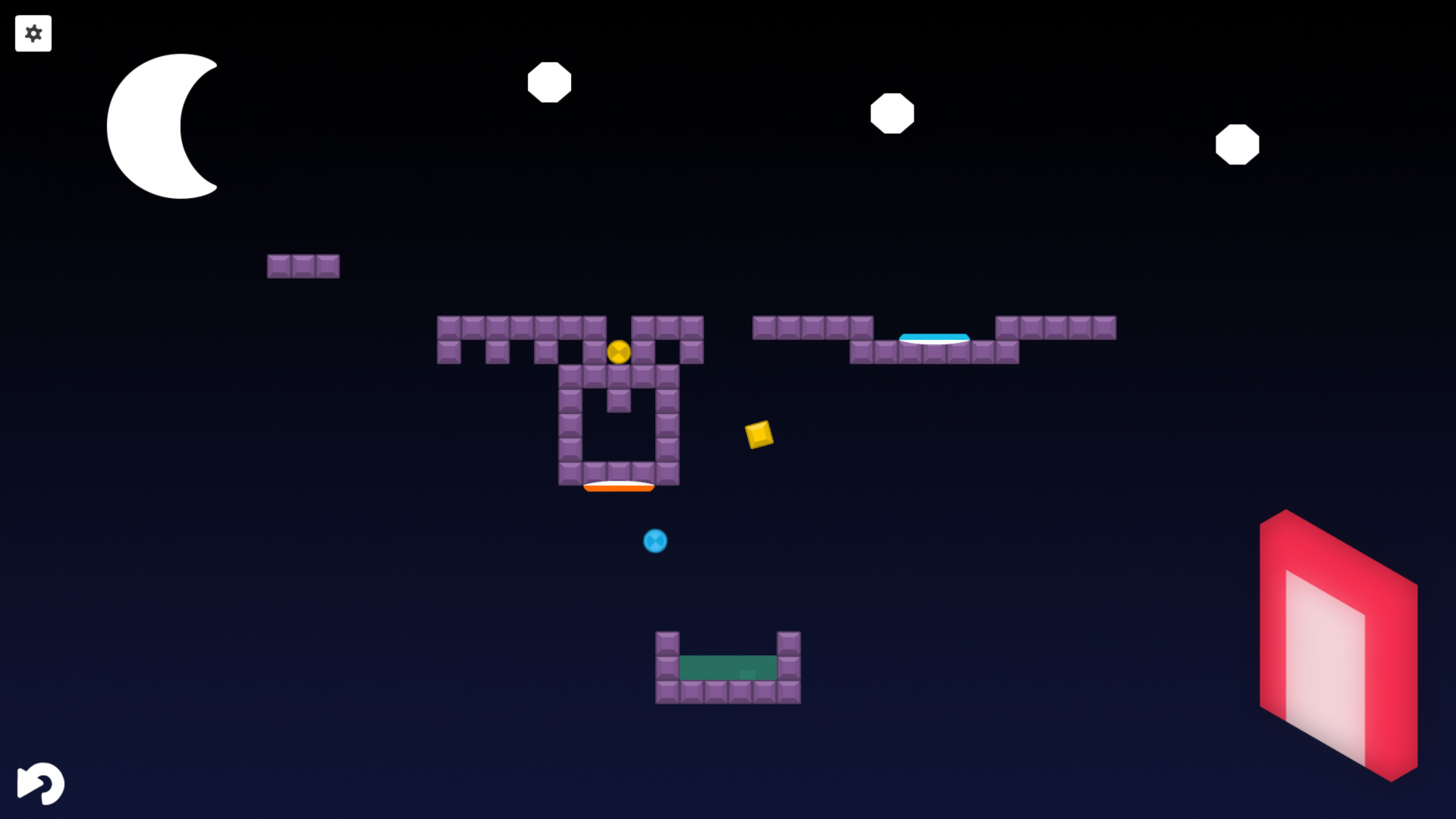
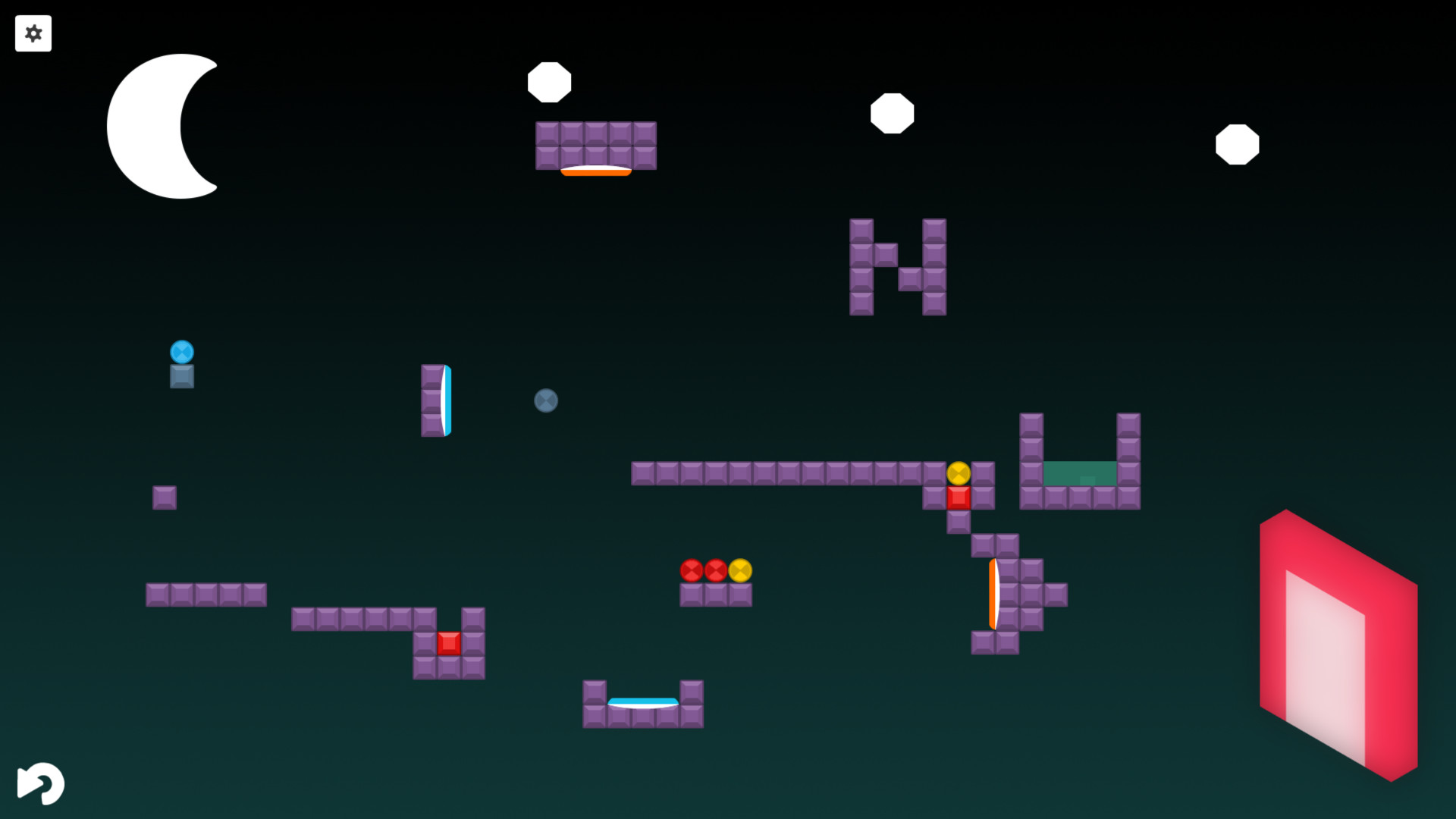
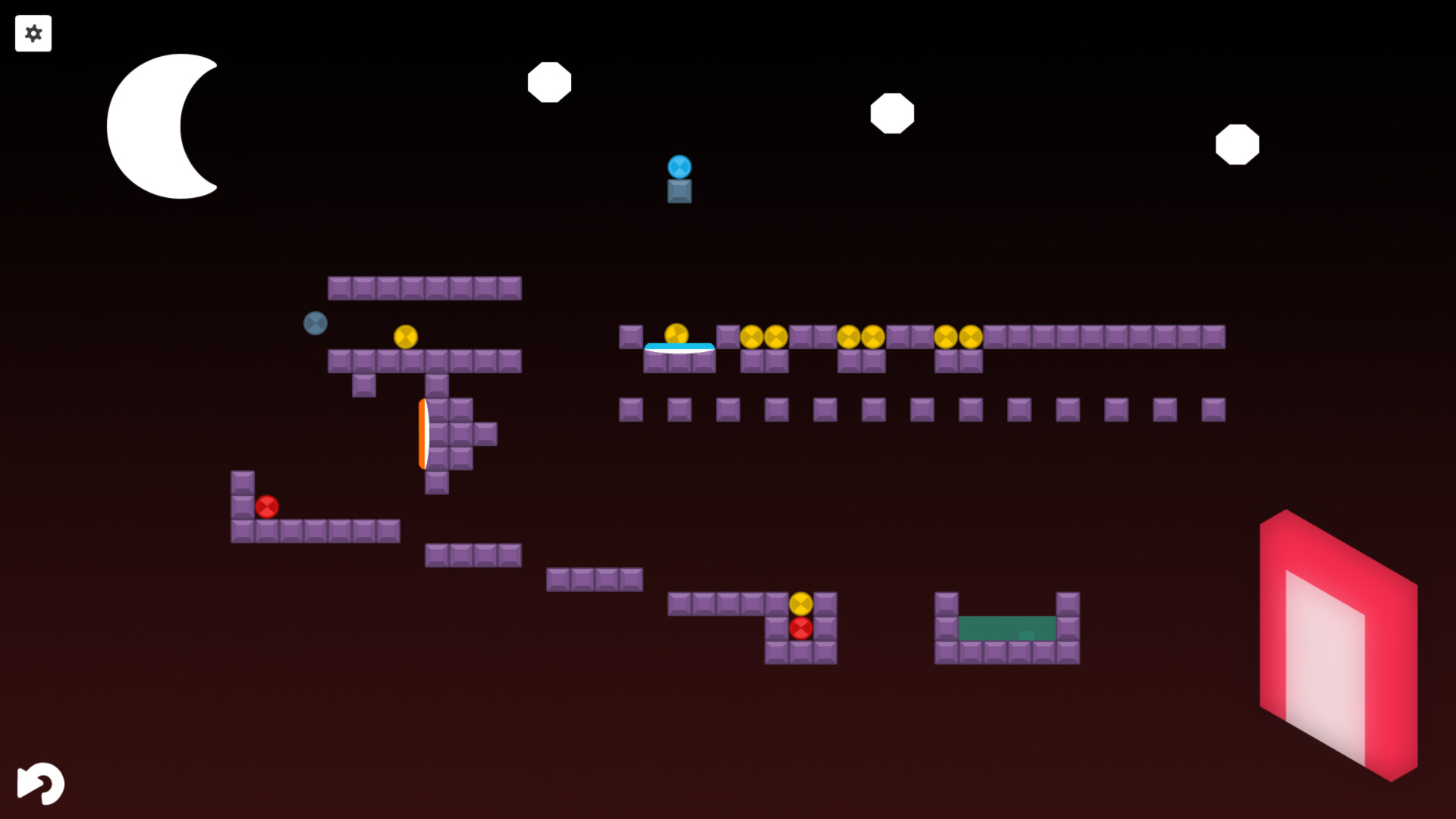
Zup! 5, developed and published by Quiet River, continues the minimalist design philosophy and simple yet kinetic puzzle gameplay that has become the hallmark of the Zup! series. Like its predecessors, it revolves around short, physics-based challenges built on the idea of controlled explosions and precision timing. The goal remains the same—use red explosive blocks and other interactive objects to propel a blue cube or ball onto a designated platform. The game’s premise is easy to grasp, but the satisfaction comes from mastering the subtle mechanics of momentum, positioning, and timing. In Zup! 5, Quiet River refines the formula once again, introducing small yet meaningful tweaks that freshen the experience while preserving the core appeal of the series. What makes Zup! 5 stand out within its series is the introduction of portals, a mechanic that expands the game’s spatial possibilities. These portals allow objects and the player’s blue cube to teleport between points, creating more complex chain reactions and new forms of problem-solving. While the basic idea—trigger an explosion to launch the cube to its goal—remains unchanged, the addition of teleportation layers adds new depth to the spatial logic of each puzzle. The result is a game that feels familiar yet subtly more sophisticated. The level design takes advantage of these new tools by introducing scenarios that require careful sequencing of explosions, precise trajectory planning, and sometimes simultaneous activation of multiple triggers. This expansion gives the puzzles a bit more variety than before, even if the simplicity of the overall formula still dominates the experience. Visually, Zup! 5 retains the same stark and clean aesthetic that has defined the series since its inception. The screen is dominated by simple geometric shapes, bright primary colors, and crisp outlines against neutral backdrops. There is no clutter or distraction—every object on the screen serves a purpose, and clarity is prioritized over visual flair. The minimalist approach is not just a stylistic choice but also a mechanical one; it helps players focus on the physics and logic of each level without unnecessary embellishment. The use of small particle effects and controlled bursts of motion when explosions occur gives the game a satisfying tactile quality despite its simplicity. The combination of clean design and sharp feedback makes every completed level feel rewarding, even if it only lasts a few seconds. The soundtrack and sound effects contribute subtly to this sense of focus. The soft, ambient background music contrasts with the sharp “pop” and “bang” of explosions, giving the game a rhythmic energy. Each click, bounce, and detonation feels responsive, reinforcing the player’s control over the puzzle’s physical world. While the music never takes center stage, it complements the minimalist aesthetic perfectly—it is meditative rather than intrusive, helping the player settle into a rhythm of trial and error, experimentation, and success. The simplicity of the audio design mirrors the gameplay: concise, functional, and quietly addictive. From a gameplay perspective, Zup! 5 remains extremely accessible. Its early levels introduce concepts gradually, easing players into the logic of the game’s physics. Before long, the puzzles begin demanding more precision, requiring players to predict the direction and intensity of explosions or chain multiple reactions together to achieve success. Despite this gradual difficulty curve, the game never becomes punishing. Each level can be retried instantly, making failure feel like part of the process rather than a setback. The short, self-contained nature of the puzzles makes Zup! 5 ideal for quick sessions, allowing players to progress at their own pace without any sense of pressure. It’s a design philosophy that encourages relaxation and focus simultaneously, much like solving small logic puzzles or building chain reactions in a sandbox. However, much like its predecessors, Zup! 5 faces the challenge of maintaining novelty over time. The basic mechanics, while satisfying, do not evolve dramatically after the introduction of portals. Once you’ve internalized the rhythm of triggering explosions and manipulating momentum, most levels begin to blend together. The simplicity that makes the game accessible also limits its long-term depth, and players seeking complex problem-solving or a strong sense of progression may find it repetitive after a while. This repetition is mitigated somewhat by the fast pacing—each puzzle can be completed in under a minute—but it also means that the entire game can be finished quickly. Depending on your expectations, that brevity can feel like either an asset or a weakness. Another defining feature of Zup! 5, as with all titles in the series, is its enormous collection of Steam achievements. The game offers well over two thousand unlockable achievements, a figure so exaggerated that it has become a signature trait of Quiet River’s releases. For some, this adds a quirky layer of meta-game satisfaction; for others, it trivializes the experience, reducing it to a novelty for achievement hunters rather than puzzle enthusiasts. It’s hard to deny that part of Zup! 5’s identity is tied to its achievement culture—many players buy it specifically for the easy rewards rather than the puzzles themselves. While this doesn’t detract from the game’s mechanical integrity, it does shift the perception of what kind of experience it is offering. Rather than being purely about problem-solving, Zup! 5 has become part of a larger Steam phenomenon—games designed as much for completion as for play. In terms of value, Zup! 5 remains consistent with Quiet River’s philosophy of offering inexpensive, compact entertainment. It is lightweight, optimized for all systems, and perfectly suited for short bursts of play. The addition of free downloadable content, which includes extra levels, shows a continued commitment to supporting the game even after release. While the DLC doesn’t reinvent the experience, it adds enough content to justify revisiting it for a few more minutes of fun. The performance is smooth, the interface is intuitive, and the restart-friendly structure makes it an excellent choice for casual players looking for quick mental stimulation. Ultimately, Zup! 5 embodies the spirit of minimalist game design—small in scale, simple in purpose, and focused on the pure mechanics of interaction and cause-and-effect. It doesn’t pretend to be anything more than what it is: a short, polished, and satisfying series of physics-based puzzles wrapped in a clean aesthetic. Its appeal lies in its immediacy—the instant feedback of an explosion perfectly timed, the neat bounce of the blue cube landing where it should, the quiet sense of order restored through controlled chaos. While its brevity and achievement-centric identity might limit its broader appeal, it remains a solid entry in the Zup! line, a testament to how simplicity and refinement can create a quietly engaging experience when executed with clarity and care. Rating: 9/10
Expand the review