
The Witch's Cauldron
The Witch's Cauldron is a narrative roguelike game about being a medieval witch. Grab your cauldron and get brewing. Love, curses, laughter, wisdom for sale! Do what thou wilt shall be the whole of the Law. At least before the inquisitors come around.
Sync your Steam wishlist to find the lowest game prices instantly. No login required, just paste your Steam profile URL!
⚡ Try Wishlist Radar!
Sync your Steam wishlist to find the lowest game prices instantly. No login required!
⚡ Try Wishlist Radar!
Close

A guard walks into a tavern on Steam
Quick menu
You are a guard whose job is to post bounties. Try your best to deal with various matters and make money to raise your family. But remember, when various factions come to you, you will have to make choices!
A guard walks into a tavern is a choices matter, medieval and simulation game
developed and published by SuQing.
Released on November 30th 2023 is available on Windows, Steam Deck and Steam Machine
in 2 languages: Simplified Chinese and English.
It has received 418 reviews of which 347 were positive and 71 were negative resulting in a rating of 7.8 out of 10. 😊
The game is currently priced at 1.64€ on Steam with a 75% discount.
The Steam community has classified A guard walks into a tavern into these genres:
Choices Matter
Medieval
Simulation
Dark Humor
Story Rich
Fantasy
Interactive Fiction
Life Sim
Multiple Endings
Adventure
3D Platformer
Idler
Time Management
Immersive Sim
Minimalist
Dark Comedy
Dialogue Heavy
Text-Based
Strategy RPG
RPG
Here is the detailed breakdown of supported languages for A guard walks into a tavern:
| UI | Subtitle | Audio | |
|---|---|---|---|
| English | |||
| Simplified Chinese |
Media & Screenshots
Get an in-depth look at A guard walks into a tavern through various videos and screenshots.


Load More


System requirements
These are the minimum specifications needed to play the game. For the best experience, we recommend that you verify them.
Windows
- Requires a 64-bit processor and operating system
- OS: Windows 10
- Memory: 8 GB RAM
- Graphics: gtx960
- DirectX: Version 11
- Storage: 1 GB available space
Steam Price & Best Deals
User reviews & Ratings
Explore reviews from Steam users sharing their experiences and what they love about the game.
A guard walks into a tavern is a surprisingly layered fantasy simulation game that manages to blend management mechanics, political intrigue, role-playing systems, and everyday survival into a single experience that feels both unconventional and deeply immersive. Developed by SuQing, the game initially presents itself as a simple tavern-themed management title, but it gradually evolves into something much more ambitious. Beneath the modest visuals lies a dark fantasy world driven by corruption, faction conflict, economic struggle, and difficult personal choices. It is a game where even the smallest decisions can ripple outward and shape an entire playthrough in unexpected ways. Players step into the role of a city guard assigned to manage monster requests and bounty operations alongside an imp companion. At first, the gameplay appears relatively straightforward. Adventurers arrive looking for work, contracts need to be posted, and resources must be managed carefully to keep operations running smoothly. However, the deeper players progress, the more the game reveals its true complexity. Political factions begin competing for influence, underground organizations emerge from the shadows, and personal obligations start interfering with professional responsibilities. The game constantly pushes players into uncomfortable situations where survival often depends on compromise rather than heroism. One of the strongest elements of the experience is its branching narrative structure. Instead of delivering a single linear campaign, the game uses multiple storylines, randomized events, and numerous endings to create a highly replayable experience. Every playthrough feels slightly different because relationships, faction alignments, and choices significantly alter how events unfold. Some decisions may strengthen alliances while others create dangerous enemies, and the game rarely makes it obvious which path is truly safe. This uncertainty creates genuine tension because players constantly feel the consequences of their actions shaping the world around them. The management mechanics are surprisingly engaging and form the foundation of the gameplay loop. Players spend much of their time assigning heroes to dangerous missions, managing equipment, controlling finances, and balancing the needs of different groups within the city. Choosing the right adventurers for specific tasks becomes increasingly important as missions grow more dangerous. Poor preparation can lead to disastrous outcomes, while careful planning often produces valuable rewards and stronger reputations. The economic systems are also satisfying because players are forced to think strategically about spending, resource allocation, and long-term survival rather than simply chasing profits. What separates the game from many other management simulators is the inclusion of personal and family responsibilities. Outside the workplace, players must support their household, maintain relationships, and find ways to survive within a society filled with instability and corruption. This combination of public duties and private struggles gives the game a surprising emotional weight. Players are not simply controlling systems from a detached perspective; they are trying to keep themselves and their loved ones alive in a dangerous environment where every mistake can have lasting consequences. The constant balancing act between morality, ambition, and survival becomes one of the game’s most compelling features. The fantasy world itself feels remarkably alive despite the game’s minimalist presentation. Beyond the tavern and bounty office, players can visit black markets, arenas, underground districts, gambling establishments, and hidden locations scattered throughout the city. These areas add variety to the gameplay while reinforcing the sense that the player exists within a functioning society filled with secrets and conflicting interests. Small side activities such as fishing, illegal dealings, and additional jobs further enrich the experience by making the world feel unpredictable and reactive rather than static. The writing plays a major role in making the game memorable. Dialogue often combines dark humor with morally gray situations that force players to think carefully about their choices. The fantasy setting avoids the traditional heroic tone found in many RPGs and instead focuses on corruption, desperation, greed, and survival. Very few characters feel entirely trustworthy, and many interactions carry an underlying sense of danger even during seemingly ordinary conversations. This grounded approach to fantasy storytelling gives the world a unique atmosphere that feels more cynical and realistic than typical adventure games. Another major strength is the replay value. Multiple story paths, randomized scenarios, unlockable bonuses, and numerous endings encourage players to experiment with different decisions across repeated playthroughs. No single run reveals everything the game has to offer, and discovering alternative outcomes becomes part of the appeal. Some players may align themselves with powerful factions, while others pursue independence or embrace morally questionable methods to survive. The flexibility of the narrative systems ensures that each playthrough develops its own identity. Despite its many strengths, the game is not without flaws. The interface can occasionally feel clunky, and some systems are not explained particularly well during the early hours. Because much of the gameplay revolves around reading dialogue, navigating menus, and making decisions, players expecting fast-paced action may find the pacing slow at times. Certain mechanics also become repetitive during longer sessions, particularly when managing resources and repeatedly handling contracts. In addition, the game’s visuals are functional rather than impressive, and some rough edges remain noticeable due to the project’s indie development scale. However, many of these shortcomings become easier to overlook because of the game’s ambition and originality. A guard walks into a tavern succeeds by offering an experience unlike most fantasy simulators currently available. It combines management gameplay, narrative role-playing, political strategy, and life simulation into a cohesive world where choices consistently matter. The game does not rely on flashy graphics or large-scale combat to remain engaging. Instead, it builds immersion through atmosphere, writing, and the constant pressure of surviving within a dangerous society. The result is a deeply absorbing fantasy management RPG that rewards patience, careful decision-making, and experimentation. Players who enjoy story-driven simulators, morally complex narratives, and systems-heavy gameplay will likely find themselves completely absorbed by its world. While the game may not appeal to everyone due to its slower pace and menu-focused design, those willing to invest time into its mechanics will discover a uniquely rewarding experience filled with tension, unpredictability, and meaningful consequences. A guard walks into a tavern proves that strong writing and intelligent design can create immersion even without massive production values. It stands out as a creative and highly replayable indie RPG that successfully blends fantasy politics, survival mechanics, and management gameplay into something genuinely memorable. Rating: 8/10
Similar games
View all

Growing Up
This is the story of your life. Experience the entire journey from toddler to adulthood. Go to schools, learn new things, meet new friends, and have wild adventures! Every choice you make will influence your future career, and decide who your romantic partner will be. Who will you become?
The Confession
Ever wondered how much of a kinky pervert you are? Ever wanted to know what your fate entails for being such a kinky pervert? Answer a series of disgustingly hilarious, immoral questions to reveal ridiculous scenarios & unlock the answers you seek...

Death and Taxes
In this 2D, short narrative-based game, you assume the role of the Grim Reaper... on an office job. Your job is to decide which people are going to live or die. The consequences of your choices are yours to bear, while the mystery of your incarnation awaits revelation!
Teller's Duty
In 1980, you land a teller job at Kertasia Bank thanks to your distant uncle. But the bank follows bizarre rules set by a foolish government. Face strict policies, tough customers, and moral choices while saving for your mom’s medical bills. Your fate is in your hands.
The Life and Suffering of Sir Brante
A narrative-driven hardcore RPG set in a gritty world ruled by real but unrelenting gods. Set out on a challenging lifetime journey, where every choice has a price and entails consequences. Will you become an inquisitor, a judge, or conspire against the old order? Dare to decide!

Six Ages: Ride Like the Wind
Life between myths. Lead the Riders clan into legend or obscurity as you explore an ancient world. Plan ahead as you navigate this challenging storybook strategy game, immersing you in the land of old gods and magic also seen in King of Dragon Pass.

Galvatein : Adventurers' Guild
"Welcome, adventurer! What quest have you completed today?” A classic fantasy guild reception simulation — 『Galvatein: Adventurer’s Guild』
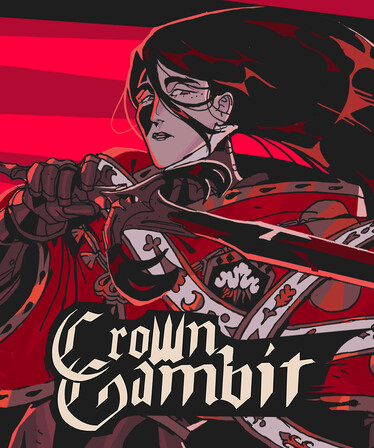
Crown Gambit
Play as three intrepid paladins through a terrible war of succession to save a sinister medieval kingdom from political turmoil. Pick a side amongst noble families to choose the future monarch and crush those who stand in your way through board-shattering tactical card combat!
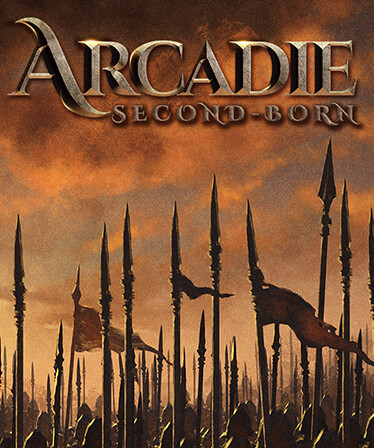
Arcadie: Second-Born
In this interactive tale of love and war, be the force of reason that your kingdom needs, or perpetuate its reputation as a force of destruction. Find love and weave friendships, or cast it all away for the sake of retribution.

Do Not Feed the Monkeys 2099
Spy on strangers through security cameras, invade their privacy and discover their secrets in this digital voyeur simulator. Welcome to the future of The Primate Observation Club. Even in 2099 the rule about messing with your unlucky subjects still remains in this sequel: DO NOT feed the monkeys!

Ken Follett's The Pillars of the Earth
12th century, England: In a time of poverty and war, a small town begins the construction of a cathedral to claim wealth and safety for its people. In their struggle to survive, lives and destinies intertwine. Based on Ken Follett's world-bestseller ‘The Pillars of the Earth’.
Frequently Asked Questions
A guard walks into a tavern is currently priced at 1.64€ on Steam.
Yes, A guard walks into a tavern is currently available at a 75% discount. You can purchase it for 1.64€ on Steam.
Yes, A guard walks into a tavern received 347 positive votes out of a total of 418 achieving a rating of 7.77.
😊
A guard walks into a tavern was developed and published by SuQing.
Yes, A guard walks into a tavern is playable and fully supported on Windows.
No, A guard walks into a tavern is not playable on MacOS.
No, A guard walks into a tavern is not playable on Linux.
Yes, A guard walks into a tavern is playable on Steam Deck, though it might require a few minor tweaks. Make sure to check the Steam store page and community feedback on ProtonDB for exact compatibility details.
Yes, A guard walks into a tavern is playable on Steam Machine, though it might require a few minor tweaks. Make sure to check the Steam store page and community feedback on ProtonDB for exact compatibility details.
No, A guard walks into a tavern does not support VR.
A guard walks into a tavern is a single-player game.
No, A guard walks into a tavern does not currently offer any DLC.
No, A guard walks into a tavern does not support mods via Steam Workshop.
No, A guard walks into a tavern does not support Steam Remote Play.
Yes, A guard walks into a tavern is enabled for Steam Family Sharing. This means you can share the game with authorized users from your Steam Library, allowing them to play it on their own accounts. For more details on how the feature works, you can read the original Steam Family Sharing announcement or visit the Steam Family Sharing user guide and FAQ page.
You can find solutions or submit a support ticket by visiting the Steam Support page for A guard walks into a tavern.
Data sources
The information presented on this page is sourced from reliable APIs to ensure accuracy and relevance. We utilize the Steam API to gather data on game details, including titles, descriptions, prices, and user reviews. This allows us to provide you with the most up-to-date information directly from the Steam platform.
Additionally, we incorporate data from the SteamSpy API, which offers insights into game sales and player statistics. This helps us present a comprehensive view of each game's popularity and performance within the gaming community.
Last Updates| Steam data | 30 September 2026 21:14 UTC |
|---|---|
| SteamSpy data | 18 October 2026 10:38 UTC |
| Steam price | 26 October 2026 19:46 UTC |
| Steam reviews | 19 October 2026 21:47 UTC |
If you'd like to dive deeper into the details about A guard walks into a tavern, we invite you to check out a few dedicated websites that offer extensive information and insights. These platforms provide valuable data, analysis, and user-generated reports to enhance your understanding of the game and its performance.
- SteamDB - A comprehensive database of everything on Steam about A guard walks into a tavern
- SteamCharts - Analysis of A guard walks into a tavern concurrent players on Steam
- ProtonDB - Crowdsourced reports on Linux and Steam Deck A guard walks into a tavern compatibility

Game modes
Features
Online players
1
Developer
SuQing
Publisher
SuQing
Release
30 Nov 2023
Platforms