
Major\Minor
A highly engaging visual novel, with memorable characters and multiple endings. Traverse worlds, solve a murder mystery -- and partake in political revolution. Inspired by greats such as Steins;Gate, Tales of Symphonia, Persona 4 and Future Diary. An unforgettable science-fiction/fantasy adventure!
Sync your Steam wishlist to find the lowest game prices instantly. No login required, just paste your Steam profile URL!
⚡ Try Wishlist Radar!
Sync your Steam wishlist to find the lowest game prices instantly. No login required!
⚡ Try Wishlist Radar!
Close

Angels with Scaly Wings™ / 鱗羽の天使 on Steam
Quick menu
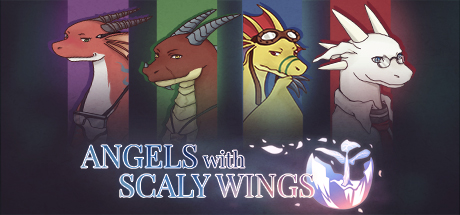
You, the player, are an ambassador for Earth sent through a mysterious portal into the world of dragons. Explore a town full of secrets and the people who keep them in this compelling sci-fi visual novel with slice of life and dating sim elements.
Angels with Scaly Wings™ / 鱗羽の天使 is a dragons, visual novel and dating sim game
developed and published by Radical Phi.
Released on January 31st 2017 is available on Windows, MacOS and Linux.
It has received 1,689 reviews of which 1,631 were positive and 58 were negative resulting in an impressive rating of 9.2 out of 10. 😍
The game is currently priced at 9.99€ on Steam.
The Steam community has classified Angels with Scaly Wings™ / 鱗羽の天使 into these genres:
Media & Screenshots
Get an in-depth look at Angels with Scaly Wings™ / 鱗羽の天使 through various videos and screenshots.


Load More


System requirements
These are the minimum specifications needed to play the game. For the best experience, we recommend that you verify them.
Windows
- OS *: Windows XP
- Processor: 2 GHz
- Memory: 1 GB RAM
- Graphics: DirectX Compatible Card
- Storage: 2 GB available space
MacOS
- OS: Mac OS X 10.6
- Processor: 2 GHz
- Memory: 1 GB RAM
- Graphics: DirectX Compatible Card
- Storage: 2 GB available space
Linux
- OS: Linux x86/x86_64
- Processor: 2 GHz
- Memory: 1 GB RAM
- Graphics: DirectX Compatible Card
- Storage: 2 GB available space
Steam Price & Best Deals
User reviews & Ratings
Explore reviews from Steam users sharing their experiences and what they love about the game.
its actually a pretty damn good game, i like the writing and the choices, characters are interesting too and their lore is deeper than i'd have imagined, i was expecting just a furry game but story has a very good fundation and art style is actually pretty good, the skip system makes it a lot less tedious to get all the different endings only thing i wish "pre-cognition" was togglable, meaning, after you get the good ending with some character, you can't get the bad endings with them anymore, make sure you do some of the bad endings, at least one or two, else you will not be able to access the secret true ending
Excellent, I dont even like VN's theyre frustrating. Most coices are "haha funny" or "haha relatable" and rarely have real impacts on the levels of BG3 or disco elysium. While this game doesnt suffer so much from it its still sometimes pulls stuff out of nowhere, altought that might be due to the nature of the game u know, timelines n ♥♥♥♥ Anyways i love dragons and i love the lightweight but unexpectedly deep/relatable characters this game has
One of the few graphic novel games I really enjoyed. Plenty of choices and options for friendship/romance and for moving the main plots along. You can get fairly well invested in any relationship you choose to progress and feel it should you help them out or have a less then ideal end. I strongly suggest a blind playthrough for your first run before going to any walkthroughs as well as holding off on any mods. Speaking of there seems to be a good amount of mods in the workshop to expand the storylines of the characters or the world overall. Haven't had the chance to examine too many but the options are plenty. It is hard to describe certain details without spoiling so I'll just note that you can replay a fair amount and doing so can also end in some interesting outcomes too. I ponder if the announced second game would have a save file tie in to the first game as some older titles once did? There is certainly room for that. Time will tell, and even if not the stories told here would make the second game all the better to enjoy once released.
A surprisingly good visual novel that has dragon/dinosaur people as the main chracters to interact with. At first I thought it was going to be hard to swallow, but the story does a good job of establishing how the society works and even uses it in the narrative. While I felt the main story was short, most of the meat of this game is playing through each character's "routes" and getting additional context for future playthroughs. In this way, it felt very similar in structure to other Visual Novels like Steins Gate, Zero Escape and CLANNAD. I don't consider this game to be as good as those story-wise, but I appreciate what was here and how well it was told. Hopefully the main plot in the next game gets a bit more focus and time. The game has a good amount of quality of life features that make the replays not as grindy as they could be. Skipping dialogue only skips text you've seen before, so you'll know when you find something new pretty easily. The game also prompts skipping scenes if it has no gameplay purpose (though for Bryce especially I still liked going through the scenes again). All the characters were great, with deep, interesting and sometimes tragic pasts, and I was glad they handled the subjects they did with care. Even, or perhaps because, it was done with these dragon characters.
Similar games
View all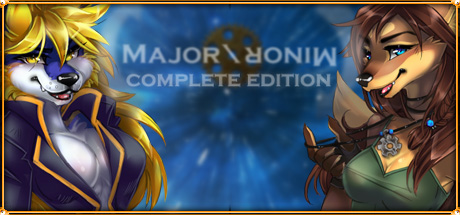
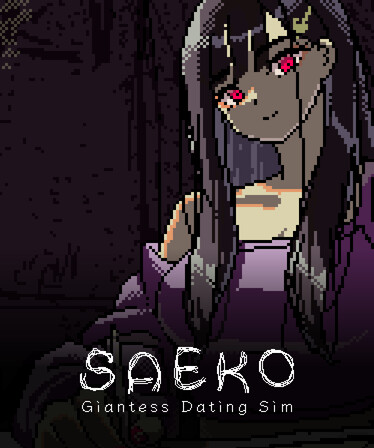
SAEKO: Giantess Dating Sim
You opened your eyes to find a giant girl looking down at you. Experience the fate of Saeko and the little people in this cruel yet captivating story with avant-garde art.

ghostpia Season One
"In my dreams, I can get out. In my dreams, I can fit in." 'ghostpia' mixes the adorable art style of an illustrated book with glitches-and-noise effects. There are no choices to be made. There's only a lonely girl in a ghost town and her story full of mystery, friendhood...and a bit of violence.
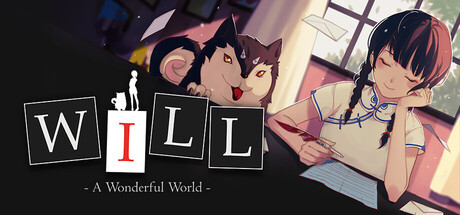
WILL: A Wonderful World / WILL:美好世界
“God, please help me…” Become a god and rewrite fate with words. Drag and reorder sentences from pleading letters to twist cause and effect, changing the lives of those who wrote them. When countless joys and sorrows collide, what kind of “Wonderful World” will you create?
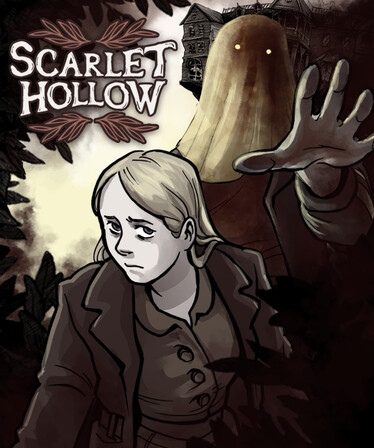
Scarlet Hollow
Your aunt’s dead, your cousin hates you, and you’re stuck in the dead-end town of Scarlet Hollow. Choose your path through a branching narrative so dense that you'll see less than 1/5 of the game on a single playthrough. You won't be able to save everyone. Good luck, and welcome home.

Along the Edge
Following the loss of a baby, a breakup, and a surprise heritage, Daphné decides to leave everything behind to start a new life in the French countryside. There, she discovers she's the last descendant of a line of witches. Will she embrace the family tradition?

Zero Escape: Zero Time Dilemma
Nine participants awaken, trapped in an underground facility. To escape, they must play a game with deadly consequences. Who will live, and who will die? The choice is yours. Let the Decision Game begin…

Departed Away
Discover 'Departed Away,' a captivating visual novel where friendship intertwines with mystery. Uncover secrets, engage in verbal duels, and make choices that shape your story. Delve into emotional depth and intricate connections in this unique story.

Girls on Campus, from Freshmen to Faculty, All Fall for Me!
In this exciting love interaction game, players act as a photography-loving sophomore who, after being knocked out during a shoot, finds themselves entangled in various indescribable scenarios with female seniors, juniors, and a married teacher!

428: Shibuya Scramble
A kidnapping on the streets of Shibuya brings together a hot-blooded detective, hard-hitting journalist, former gang leader, the head researcher of a big pharma manufacturer and a part-timer stuck in cat costume for a series of events each more unexpected and outrageous than the last.

The Letter - Horror Visual Novel
When seven people fall prey to a vicious curse, they will discover that horror rests not from the shadows lurking about, but within themselves. To what ends will one go in order to survive?
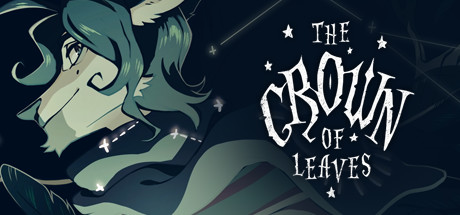
The Crown of Leaves
Roui, a resilient city dandy, a half-educated jeweler and the author of scientific magic articles, was met with a colossal failure and must return to his homeland Latori.
Frequently Asked Questions
Angels with Scaly Wings™ / 鱗羽の天使 is currently priced at 9.99€ on Steam.
No, Angels with Scaly Wings™ / 鱗羽の天使 is currently not on sale. You can purchase it for 9.99€ on Steam.
Yes, Angels with Scaly Wings™ / 鱗羽の天使 received 1,631 positive votes out of a total of 1,689 achieving an impressive rating of 9.16.
😍
Angels with Scaly Wings™ / 鱗羽の天使 was developed and published by Radical Phi.
Yes, Angels with Scaly Wings™ / 鱗羽の天使 is playable and fully supported on Windows.
Yes, Angels with Scaly Wings™ / 鱗羽の天使 is playable and fully supported on MacOS.
Yes, Angels with Scaly Wings™ / 鱗羽の天使 is playable and fully supported on Linux.
This information about Angels with Scaly Wings™ / 鱗羽の天使 is not available yet.
This information about Angels with Scaly Wings™ / 鱗羽の天使 is not available yet.
No, Angels with Scaly Wings™ / 鱗羽の天使 does not support VR.
Angels with Scaly Wings™ / 鱗羽の天使 is a single-player game.
Yes, there is a DLC available for Angels with Scaly Wings™ / 鱗羽の天使. Explore additional content available for Angels with Scaly Wings™ / 鱗羽の天使 on Steam.
Yes, Angels with Scaly Wings™ / 鱗羽の天使 is fully integrated with Steam Workshop. Visit Steam Workshop.
No, Angels with Scaly Wings™ / 鱗羽の天使 does not support Steam Remote Play.
Yes, Angels with Scaly Wings™ / 鱗羽の天使 is enabled for Steam Family Sharing. This means you can share the game with authorized users from your Steam Library, allowing them to play it on their own accounts. For more details on how the feature works, you can read the original Steam Family Sharing announcement or visit the Steam Family Sharing user guide and FAQ page.
You can find solutions or submit a support ticket by visiting the Steam Support page for Angels with Scaly Wings™ / 鱗羽の天使.
Data sources
The information presented on this page is sourced from reliable APIs to ensure accuracy and relevance. We utilize the Steam API to gather data on game details, including titles, descriptions, prices, and user reviews. This allows us to provide you with the most up-to-date information directly from the Steam platform.
Additionally, we incorporate data from the SteamSpy API, which offers insights into game sales and player statistics. This helps us present a comprehensive view of each game's popularity and performance within the gaming community.
Last Updates| Steam data | 19 September 2026 20:22 UTC |
|---|---|
| SteamSpy data | 23 October 2026 11:13 UTC |
| Steam price | 27 October 2026 14:59 UTC |
| Steam reviews | 20 October 2026 15:52 UTC |
If you'd like to dive deeper into the details about Angels with Scaly Wings™ / 鱗羽の天使, we invite you to check out a few dedicated websites that offer extensive information and insights. These platforms provide valuable data, analysis, and user-generated reports to enhance your understanding of the game and its performance.
- SteamDB - A comprehensive database of everything on Steam about Angels with Scaly Wings™ / 鱗羽の天使
- SteamCharts - Analysis of Angels with Scaly Wings™ / 鱗羽の天使 concurrent players on Steam
- ProtonDB - Crowdsourced reports on Linux and Steam Deck Angels with Scaly Wings™ / 鱗羽の天使 compatibility
Game modes
Features
Online players
2
Developer
Radical Phi
Publisher
Radical Phi
Release
31 Jan 2017
Platforms