

TIEBREAK GRAND SLAM EDITION
TIEBREAK - GRAND SLAM EDITION Compete in more than 100 official tournaments against over 150 officially licensed professionals. Take on the complete ATP and WTA Tours, including the Australian Open, Roland-Garros, Wimbledon and the US Open.
Sync your Steam wishlist to find the lowest game prices instantly. No login required, just paste your Steam profile URL!
⚡ Try Wishlist Radar!
Sync your Steam wishlist to find the lowest game prices instantly. No login required!
⚡ Try Wishlist Radar!
Close

AO Tennis 2 on Steam
Quick menu
AO Tennis 2 is the only tennis experience designed for and by its community. Create your own players, stadiums and legendary matches. Enter the competition to reach the top of world tennis in Career Mode.
AO Tennis 2 is a sports, tennis and multiplayer game
developed by Big Ant Studios
and published by Nacon.
Released on January 09th 2020 is available on Windows, Steam Deck and Steam Machine.
It has received 1,576 reviews of which 1,105 were positive and 471 were negative resulting in a rating of 6.8 out of 10. 😐
The game is currently priced at 7.49€ on Steam with a 85% discount, but you can find it for 4.27€ on G2A.
The Steam community has classified AO Tennis 2 into these genres:
Media & Screenshots
Get an in-depth look at AO Tennis 2 through various videos and screenshots.


System requirements
These are the minimum specifications needed to play the game. For the best experience, we recommend that you verify them.
Windows
- Requires a 64-bit processor and operating system
- OS: Windows 10 x64
- Processor: Intel Core i3-3210 / AMD Athlon II X4 555
- Memory: 4 GB RAM
- Graphics: Radeon HD 6670 or NVIDIA Geforce GT710 with Min 2GB Memory
- DirectX: Version 11
- Network: Broadband Internet connection
- Storage: 15 GB available space
Steam Price & Best Deals
User reviews & Ratings
Explore reviews from Steam users sharing their experiences and what they love about the game.
AO Tennis 2 approaches professional tennis with an emphasis on player freedom, customization, and long-term career development. Developed by Big Ant Studios and published by Nacon, it aims to provide a simulation-oriented experience without making the sport unnecessarily difficult to understand. Its combination of competitive matches, professional players, extensive creation tools, and community content gives it more longevity than a straightforward collection of tennis tournaments. The gameplay rewards controlled shot placement and intelligent positioning. Simply attempting powerful winners on every return is rarely the best strategy, since poorly timed attacks can easily result in errors. Successful rallies involve moving opponents around the court, changing shot direction, selecting appropriate strokes, and recognizing opportunities to approach the net. Serving also requires attention to placement and timing. There is a learning curve to mastering these mechanics, but matches become considerably more satisfying once the relationship between movement, timing, and shot selection becomes familiar. Career Mode provides much of the game's long-term appeal. Instead of treating every match as an isolated event, players can develop a professional competitor and attempt to climb the rankings. Singles and doubles competition provide some variety, while elements involving reputation, performance, and sponsorships help create the impression of building an actual sporting career. The management systems are not exceptionally deep, but they add enough context to victories and defeats that progression feels more meaningful than repeatedly playing exhibition matches. Customization is one of AO Tennis 2's strongest qualities. The Academy provides tools for creating players and courts, while community sharing greatly increases the amount of available material. This is especially important because the officially licensed roster cannot represent every significant professional competitor. Players interested in realism can use community creations to expand their experience, while more imaginative users can design fictional athletes and personalized venues. The creation tools effectively extend the game's lifespan beyond its original collection of content. There are recognizable professional players represented as well, helping major matches feel more authentic. Facing established stars during competitive play strengthens the professional atmosphere, even though licensing limitations prevent the game from providing a completely exhaustive recreation of world tennis. The scenario editor adds another interesting option by allowing memorable situations and custom challenges to be recreated. It is a useful alternative when players want something more focused than continuing a lengthy career. Multiplayer contributes additional replay value. Local competition works naturally for tennis, while online matches provide an opportunity to test learned techniques against human opponents rather than artificial intelligence. Cooperative and competitive options, leaderboards, achievements, cloud functionality, and Remote Play Together broaden the ways the game can be enjoyed. Having both solo and multiplayer activities makes the overall package considerably more versatile. Visually, AO Tennis 2 is respectable but clearly has limitations. Courts and stadium environments establish the right sporting atmosphere, and animations usually communicate player movement effectively, but transitions can sometimes appear stiff or unnatural. Character models and likenesses vary in quality, and occasional awkward movement prevents the presentation from reaching the standard of the most polished sports games. Sound effects perform their role effectively, particularly the impact of shots and general court ambience, although the audio presentation is rarely spectacular. Artificial intelligence can generate lengthy and entertaining exchanges, especially as difficulty increases, but opponents sometimes demonstrate predictable or unnatural behavior. Player movement can similarly take time to understand, particularly when positioning for difficult returns. These weaknesses make the game feel rough around the edges, yet they do not erase the tactical satisfaction of constructing a point correctly and finishing it with a well-placed winner. Steam Deck compatibility is officially categorized as Playable rather than fully Verified. Performance with the default graphics configuration is considered suitable, and the game can run successfully on SteamOS. However, handheld players should expect compromises. Some functionality is not fully accessible through the default controller configuration, touchscreen interaction or a community controller layout may occasionally be useful, and text entry can require manually opening the virtual keyboard. Some interface text may also appear small, while certain prompts can display keyboard, mouse, or non-Steam Deck controller icons. It is therefore functional on the Deck, but the experience is less seamless than a fully optimized handheld release. Overall, AO Tennis 2 is most successful when viewed as a flexible tennis simulation rather than a perfectly authentic reproduction of the professional tour. Its presentation and artificial intelligence have noticeable imperfections, but the enjoyable match mechanics, career progression, extensive creation tools, community content, scenario editor, and multiplayer support provide substantial value. Tennis enthusiasts willing to learn its controls and explore its customization systems will find considerably more depth than its occasionally uneven presentation initially suggests. Rating: 7/10
Similar games
View all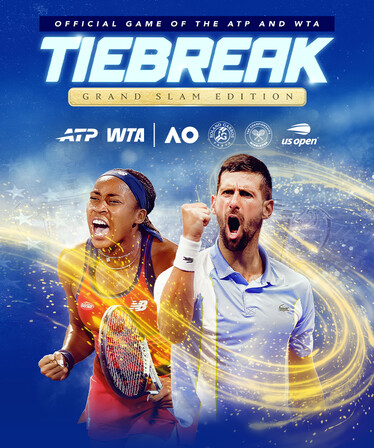

Tennis Elbow 2013
Created by and for tennis fans, Tennis Elbow 2013 is a tennis simulation with an easy and intuitive learning curve, but with exceptional gameplay depth.

AO International Tennis
AO International Tennis is the most authentic, community-focused tennis game ever. Make use of comprehensive PlayFace™, Stadium Creator, and other customisation features to put a photo-realistic version of yourself in your local tennis competition, up against the greats, including Rafael Nadal.

Full Ace Tennis Simulator
Full Ace Tennis Simulator is for those seeking unequaled tennis depth and fun.

Tennis Elbow 4
Created by and for tennis fans, Tennis Elbow 4 is a true tennis simulation built around anticipation, positioning and risk management. Easy to start, demanding to master, it delivers exceptional gameplay depth and long-term progression.
Pro Cycling Manager 2023
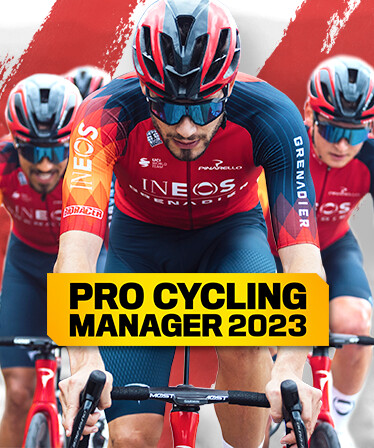
Manage a team of professional cyclists: control the budget, recruit young talent, train riders and devise race strategies. Jostle for position to reach the top of the world rankings!

PGA TOUR 2K25
Take your best shot at glory in PGA TOUR 2K25! In a 2K-first, compete in three prestigious major tournaments. Personalize your game with expanded MyCAREER, MyPLAYER and Course Designer options. Challenge friends across ranked, casual, and cross-platform multiplayer.

Fire Pro Wrestling World
The greatest grappling game returns to take on the world! Customize every aspect of the match, from your wrestler to the ring itself, in your fight for the championship belt.

Engine Evolution 2021
Engine Evolution is a multiplayer racing game that uses principles similar to those of the World of Tanks. With each PvP race against 11 other players, you gain experience and credits, which you can use to buy various upgrades or unlock the next motorbike.

Disc Jam
A fast-paced action-sports game that pits 2-4 players against each other in a frantic combination of air hockey and tennis. Players scramble to retrieve and throw a glowing disc while unleashing devastating abilities and defending their end zone.

Mount Your Friends 3D: A Hard Man is Good to Climb
Join in the great simulated sportslike experience of friend mounting! Assemble a team and climb your way to the top! Mount Your Friends 3D brings mounting to the third dimension, with the same classic innuendo that made you slightly uncomfortable back in the day.

NBA 2K26
Bragging rights are on the line in MyCAREER, MyTEAM, MyNBA, The W, and Play Now. Showcase your bag of moves with hyper realism, Powered by ProPLAY™, and challenge your friends, or rivals, in NBA 2K26’s competitive modes—and leave no doubt that you wear the crown.
Frequently Asked Questions
AO Tennis 2 is currently priced at 7.49€ on Steam.
Yes, AO Tennis 2 is currently available at a 85% discount. You can purchase it for 7.49€ on Steam.
Yes, AO Tennis 2 received 1,105 positive votes out of a total of 1,576 achieving a rating of 6.79.
😐
AO Tennis 2 was developed by Big Ant Studios and published by Nacon.
Yes, AO Tennis 2 is playable and fully supported on Windows.
No, AO Tennis 2 is not playable on MacOS.
No, AO Tennis 2 is not playable on Linux.
Yes, AO Tennis 2 is playable on Steam Deck, though it might require a few minor tweaks. Make sure to check the Steam store page and community feedback on ProtonDB for exact compatibility details.
Yes, AO Tennis 2 is playable on Steam Machine, though it might require a few minor tweaks. Make sure to check the Steam store page and community feedback on ProtonDB for exact compatibility details.
No, AO Tennis 2 does not support VR.
AO Tennis 2 offers both single-player and multi-player modes.
AO Tennis 2 offers both Co-op and PvP modes.
No, AO Tennis 2 does not currently offer any DLC.
No, AO Tennis 2 does not support mods via Steam Workshop.
Yes, AO Tennis 2 supports Remote Play Together. Discover more about Steam Remote Play.
Yes, AO Tennis 2 is enabled for Steam Family Sharing. This means you can share the game with authorized users from your Steam Library, allowing them to play it on their own accounts. For more details on how the feature works, you can read the original Steam Family Sharing announcement or visit the Steam Family Sharing user guide and FAQ page.
You can find solutions or submit a support ticket by visiting the Steam Support page for AO Tennis 2.
Data sources
The information presented on this page is sourced from reliable APIs to ensure accuracy and relevance. We utilize the Steam API to gather data on game details, including titles, descriptions, prices, and user reviews. This allows us to provide you with the most up-to-date information directly from the Steam platform.
Additionally, we incorporate data from the SteamSpy API, which offers insights into game sales and player statistics. This helps us present a comprehensive view of each game's popularity and performance within the gaming community.
Last Updates| Steam data | 19 September 2026 20:13 UTC |
|---|---|
| SteamSpy data | 13 October 2026 13:39 UTC |
| Steam price | 26 October 2026 19:35 UTC |
| Steam reviews | 19 October 2026 09:53 UTC |
If you'd like to dive deeper into the details about AO Tennis 2, we invite you to check out a few dedicated websites that offer extensive information and insights. These platforms provide valuable data, analysis, and user-generated reports to enhance your understanding of the game and its performance.
- SteamDB - A comprehensive database of everything on Steam about AO Tennis 2
- SteamCharts - Analysis of AO Tennis 2 concurrent players on Steam
- ProtonDB - Crowdsourced reports on Linux and Steam Deck AO Tennis 2 compatibility


Game modes
Multiplayer
Features
Online players
13
Developer
Big Ant Studios
Publisher
Nacon
Release
09 Jan 2020
Platforms
Remote Play
Clicking and buying through these links helps us earn a commission to maintain our services.