
Wild West Pioneers
Wild West Pioneers is a city-builder adventure about leading settlers into the untamed frontier. Build and manage growing settlements, establish production chains, and explore the world. Follow a story of gold rush dreams, dangerous encounters, and the search for your family.
Sync your Steam wishlist to find the lowest game prices instantly. No login required, just paste your Steam profile URL!
⚡ Try Wishlist Radar!
Sync your Steam wishlist to find the lowest game prices instantly. No login required!
⚡ Try Wishlist Radar!
Close

Ark of Charon on Steam
Quick menu
Build a mobile fortress on the back of a giant and mysterious walking Tree and embark on a journey in this merge of tower defense and colony simulation.
Ark of Charon is a simulation, strategy and colony sim game
developed by Angoo Inc. and SUNSOFT
and published by SUNSOFT.
Released on November 06th 2024 is available on Windows, Steam Deck and Steam Machine
in 11 languages: English, Japanese, Thai, Traditional Chinese, Korean, Simplified Chinese, French, German, Portuguese - Brazil, Russian and Spanish - Latin America.
It has received 390 reviews of which 292 were positive and 98 were negative resulting in a rating of 7.1 out of 10. 😊
The game is currently priced at 25.99€ on Steam.
The Steam community has classified Ark of Charon into these genres:
Simulation
Strategy
Colony Sim
Tower Defense
Sandbox
Farming Sim
Exploration
Time Management
Side Scroller
2.5D
Cute
Anime
Survival
Dark Fantasy
Dystopian
Fantasy
Relaxing
Building
Mining
Tutorial
Here is the detailed breakdown of supported languages for Ark of Charon:
| UI | Subtitle | Audio | |
|---|---|---|---|
| English | |||
| German | |||
| French | |||
| Korean | |||
| Simplified Chinese | |||
| Traditional Chinese | |||
| Russian | |||
| Thai | |||
| Japanese | |||
| Portuguese - Brazil | |||
| Spanish - Latin America |
Media & Screenshots
Get an in-depth look at Ark of Charon through various videos and screenshots.


Load More


System requirements
These are the minimum specifications needed to play the game. For the best experience, we recommend that you verify them.
Windows
- Requires a 64-bit processor and operating system
- OS: Windows 10 or later (64-Bit)
- Processor: Intel Core i7-4790
- Memory: 8 GB RAM
- Graphics: GeForce GTX 1060 (3GB)
- DirectX: Version 11
- Storage: 2 GB available space
Steam Price & Best Deals
User reviews & Ratings
Explore reviews from Steam users sharing their experiences and what they love about the game.
Entertaining mobile base / tower defense game that has some minor flaws. Work station priority, storage management, and UI tooltips on structures could be better. Weapon balance is a bit hit or miss and enemy variety is a bit low. Structure weight is determined by height not width so you're much better off building as far as you can horizontally (especially on the base's backside) which is a little counterintuitive. Higher tier food isn't worth making until you get the automated crafter due to the poor duration of the buffs. Notably you can go backwards on the map with no penalty which is extremely unusual for branching node maps (like FTL or Slay the Spire). In fact backtracking is basically mandatory to stock up on resources and build up for harder fights. Still it's a lot of fun building up a walking fortress. There's a nice tech progression and the weapons and combat feel rewarding. Mining is a little tedious but not terrible. Overall I had a lot of fun with it even if it was a little more grindy than I would have liked. Recommended if you're interested.
Cool game! A very light-weight resource management/colony sim, with tower defense. The game of this type desperately need copy/paste recipes for production though. And performance takes a very heavy nosedive late-game. Has satisfying progression once you learn to navigate the game's quirks. Worth a buy on sale!
It's really hard to find a good tower defense game but although this was i did enjoy quite a bit it does have its flaws the devs really had something with this game but dropped it as soon as they finished it its still good but its like one of those things that could easily be improved having to keep ammo stocked for turrets is a nice challenge because in this game you need to balance your resources because you will never know what you will be able to keep in stock especially if you play the roguelite mode which is much harder
Similar games
View all

Imperium Romanum Gold Edition
The city builder strategy game Imperium Romanum is set in the time-honoured Roman Empire. As governor of a Roman province, you will devise a strategy to build a well organised, prosperous and commanding settlement. Its fortune very much lies in your own hands.
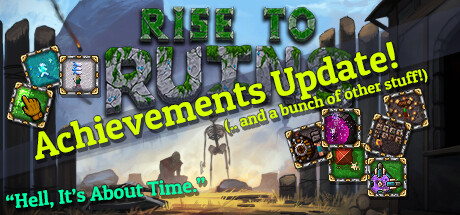
Rise to Ruins
A brutal godlike village sim that melds the god game, management, and tower defense genres! Fight off hoards of monsters at night, and expand your village in the day time. Inspired by games like Black and White, Rimworld, and Dwarf Fortress but not quite like any of them.

Demon Castle Story
Demon Castle Building Dungeon Management Simulation

Creeper World 2: Anniversary Edition
Deceptively simple... amazingly deep. Creeper World 2 thrusts you into the 14th millennium fighting and enemy that flows and oozes through the terrain. Employ advanced weapons,gravity manipulating repulsors, wormhole like rifts, and your own wit against this never yielding enemy.

Cafe Master Story
Serve up food, drinks, and smiles in this retro cafe management sim!

Highrise City
Highrise City offers a new spin on City Simulations & Tycoon games expanding the economy and resource management aspect. Experience a modern take on the genre enriched with a complex resource based economy system.

Lessaria: Fantasy Kingdom Sim
Lessaria is an RTS inspired by Majesty 👑 where you guide heroes with indirect control. Play through the campaign or relax in sandbox mode as you build your magical kingdom.

Empires of the Undergrowth
Command swarms of warriors at an unprecedented scale of warfare in this blend of RTS and base-building. Lead ant colonies against the many fearsome threats of the insect world, while building intricate nests, developing pheromone-based tactics, and evolving to meet growing dangers.


Galimulator
Galimulator is a galactic empire simulation and sandbox game. See how Empires rise and fall, and how the people in them climb through the ranks to bring prestige to their Dynasty. Then throw in an invasion of self replicating Smatter monsters if you want to spice things up.

Frequently Asked Questions
Ark of Charon is currently priced at 25.99€ on Steam.
No, Ark of Charon is currently not on sale. You can purchase it for 25.99€ on Steam.
Yes, Ark of Charon received 292 positive votes out of a total of 390 achieving a rating of 7.07.
😊
Ark of Charon was developed by Angoo Inc. and SUNSOFT and published by SUNSOFT.
Yes, Ark of Charon is playable and fully supported on Windows.
No, Ark of Charon is not playable on MacOS.
No, Ark of Charon is not playable on Linux.
Yes, Ark of Charon is playable on Steam Deck, though it might require a few minor tweaks. Make sure to check the Steam store page and community feedback on ProtonDB for exact compatibility details.
Yes, Ark of Charon is playable on Steam Machine, though it might require a few minor tweaks. Make sure to check the Steam store page and community feedback on ProtonDB for exact compatibility details.
No, Ark of Charon does not support VR.
Ark of Charon is a single-player game.
No, Ark of Charon does not currently offer any DLC.
No, Ark of Charon does not support mods via Steam Workshop.
No, Ark of Charon does not support Steam Remote Play.
Yes, Ark of Charon is enabled for Steam Family Sharing. This means you can share the game with authorized users from your Steam Library, allowing them to play it on their own accounts. For more details on how the feature works, you can read the original Steam Family Sharing announcement or visit the Steam Family Sharing user guide and FAQ page.
You can find solutions or submit a support ticket by visiting the Steam Support page for Ark of Charon.
Data sources
The information presented on this page is sourced from reliable APIs to ensure accuracy and relevance. We utilize the Steam API to gather data on game details, including titles, descriptions, prices, and user reviews. This allows us to provide you with the most up-to-date information directly from the Steam platform.
Additionally, we incorporate data from the SteamSpy API, which offers insights into game sales and player statistics. This helps us present a comprehensive view of each game's popularity and performance within the gaming community.
Last Updates| Steam data | 25 October 2026 22:15 UTC |
|---|---|
| SteamSpy data | 16 October 2026 23:29 UTC |
| Steam price | 27 October 2026 03:21 UTC |
| Steam reviews | 22 October 2026 07:55 UTC |
If you'd like to dive deeper into the details about Ark of Charon, we invite you to check out a few dedicated websites that offer extensive information and insights. These platforms provide valuable data, analysis, and user-generated reports to enhance your understanding of the game and its performance.
- SteamDB - A comprehensive database of everything on Steam about Ark of Charon
- SteamCharts - Analysis of Ark of Charon concurrent players on Steam
- ProtonDB - Crowdsourced reports on Linux and Steam Deck Ark of Charon compatibility

Game modes
Features
Online players
3
Developer
Angoo Inc.,
SUNSOFT
Publisher
SUNSOFT
Release
06 Nov 2024
Platforms