


Sengoku Dynasty
Sengoku Dynasty is the ultimate feudal Japan experience: build villages, grow your community, and shape the open world through combat or economy. The choice is yours alone - or that of up to 4 players in multiplayer co-op!
Sync your Steam wishlist to find the lowest game prices instantly. No login required, just paste your Steam profile URL!
⚡ Try Wishlist Radar!
Sync your Steam wishlist to find the lowest game prices instantly. No login required!
⚡ Try Wishlist Radar!
Close

Bellwright on Steam
Quick menu
Establish and expand your own settlements, liberate the land and assist its villagers, and recruit others to your cause while learning more about a life you had to leave behind. Command your forces, prove your valor through combat, and cement yourself as the hero of your people.
Bellwright is a survival, open world and crafting game
developed by Donkey Crew
and published by Donkey Crew and Snail Games USA.
Released on April 23rd 2024 is available only on Windows.
It has received 11,996 reviews of which 9,666 were positive and 2,330 were negative resulting in a rating of 7.9 out of 10. 😊
The game is currently priced at 28.99€ on Steam.
The Steam community has classified Bellwright into these genres:
Media & Screenshots
Get an in-depth look at Bellwright through various videos and screenshots.


Load More


System requirements
These are the minimum specifications needed to play the game. For the best experience, we recommend that you verify them.
Windows
- Requires a 64-bit processor and operating system
- OS: Windows 10 / Windows 11
- Processor: Intel Core i5-8600 / AMD Ryzen 5 3600
- Memory: 16 GB RAM
- Graphics: NVIDIA GeForce GTX 1070 8GB / AMD Radeon RX 580 8GB / Intel ARC A580 8GB
- DirectX: Version 12
- Storage: 24 GB available space
Steam Price & Best Deals
User reviews & Ratings
Explore reviews from Steam users sharing their experiences and what they love about the game.
I've been looking for a game where I could build the world (sim style) but also live in it and this game is the closest I have ever felt to that feeling. This game is way deeper than I expected it to be. There is an entire living economy among the entire world that you can choose how to insert yourself into, or you can run around with a warband you have built from the ground up and become the protector of the land, or anywhere in-between. I haven't felt rushed to do anything in this game and it is very relaxing. The raids aren't even that stressful and the resources from taking out the bandits are very welcome. The villager AI is surprisingly well done, you can specialize their tasks or leave it as is and let them decide what needs to be done in your settlement and they take care of it. The inventory system seems like a mess at the start, but once you start setting rules for what gets stored where, then it is very carefree and you can just dump all the resources you pick up in a chest and the villagers will sort it for you. Eventually, most resource collection will be done by your villagers anyways. Setting up outposts isn't 100% intuitive but there are a lot of guides out there to help you figure it out and it is very easy to set up once you understand it... I will say beware of any guides out there that are 2 years old as the resource transport system has gone through a major overhaul since then. Namely, resources don't transport between outposts and the main settlement automatically at midnight anymore, you need to set up your own transport caravans to move them between outposts and your main settlement. While this is less convenient than the old system, it really enhances the immersion and realism and it is very satisfying once you have it working. A word of warning to touch on some of the negative reviews, this game is not a sprint, it is a marathon. At the beginning, everything is going to take longer than you would like, but once you start getting your settlement built up and recruit more villagers and let them take care of the mundane tasks, it feels very satisfying and you get this sense that the world you are building isn't just filled with NPCs, but feels like a living breathing organism that you are cultivating. You aren't meant to be the one doing all the mining, your villagers are much more efficient miners than you are, but at the beginning, you will be in charge of the mining and it's going to feel grindy, but the payoff of getting your mining outposts up and running just feels that much more satisfying. If something feels like it is taking too much of your time, then chances are it is a task you can get your villagers to do for you. This game is probably not for everyone and I encourage you to make sure that it is what you are looking for, but for the intended audience, it is an absolute gem.
Bellwright: an actual sandbox, not a roadmap with WASD support Bellwright entered Early Access with broken pathfinding, rough combat and NPCs occasionally sharing one communal brain cell. It also entered Early Access as an actual game. The core loop already worked: survive, recruit villagers, build production chains, equip an army and liberate the region village by village. Since then, Donkey Crew has kept expanding and repairing that machine instead of disappearing into the Early Access fog. THE GOOD Bellwright lets you decide what kind of game you are playing today. In co-op, one player can chase quests while another hunts, gathers, plans the settlement or handles logistics. Solo, you simply change jobs whenever the mood strikes. You can: [*]Rush progression or turtle for fifty hours. [*]Build an efficient production network or live like a forest goblin. [*]Fight honourably or commit crimes against pathfinding from the nearest rock. [*]Win through melee, archery, fortifications, logistics, numbers or industrial-scale cheese. [*]Follow the campaign or spend the evening discovering why nobody is making flour. That is actual freedom. Not a dialogue wheel offering three flavours of the same outcome, but a game that lets the player decide what the evening is about. Bellwright also understands something many sandbox developers eventually forget: An overpowered strategy in a single-player game is not a public-health emergency. Weapons, armour, progression and encounters do get rebalanced, but balance is treated as a default rather than holy scripture. Difficulty settings cover raids, damage, hunger, spoilage, learning speed, durability and most other sources of suffering. There is also an official Modkit and Steam Workshop support. Some games notice that players are enjoying turrets, animals, farming or defensive engineering and immediately call the balance police. Bellwright usually fixes the machine and leaves you in the driver's seat. Want a serious medieval campaign? Fight clean and raise the difficulty. Want to build trenches, abuse terrain and establish a logistics-powered murder economy before advancing the story? Also valid. The game is not constantly leaning over your shoulder like an anxious dungeon master asking whether you are having fun correctly. The developers also kept working after the launch money arrived. Since release, Bellwright has received major settlement-management improvements, prosperity systems, animal husbandry, official modding, caravans, automated trade, fortifications, new regions and factions, planning tools, player-built roads, better army control, performance work and a frankly indecent pile of smaller fixes. Large updates are followed by hotfix trains for crashes, co-op, quests, navigation, interfaces and late-game settlements. That does not guarantee the future. It does prove that the studio has spent more than two years shipping features instead of merely announcing its intention to develop a game. Valheim found enormous success and then began developing at the speed of continental drift: months of silence followed by news that somebody had invented a new roof angle. Bellwright's cadence comes from another universe. The ownership model is refreshingly boring: [*]Buy the game. [*]Play offline. [*]Host co-op from your existing world. [*]No mandatory publisher account. [*]No microtransaction bazaar. [*]No paid gameplay-DLC staircase attached to the main menu. The AI voices are clearly disclosed placeholders. They add more than silence would, and I am not performing a toolchain exorcism over temporary voice acting in an unfinished game. THE BAD Freedom is not polish. The map is broad rather than densely authored. There is plenty of walking, repeated ambient dialogue and downtime where the simulation matters more than handcrafted discovery. The early game can also feel brutally grindy before villagers, priorities, outposts and logistics begin carrying their share of the workload. NPC automation still requires supervision. Workers ignore obvious solutions, choose scenic routes through danger or halt an entire production chain because one basket is in the wrong emotional state. Much of the game is about designing systems, watching them fail and determining whether the cause was poor planning, missing resources, bad priorities or an NPC who has silently decided to abandon material reality. If diagnosing why your settlement stopped producing food sounds like unpaid technical support, this may not be your game. THE UGLY Combat becomes good only after you personally reverse-engineer it. There is directional blocking, stamina management, spacing, equipment progression, army commands and plenty of room for preparation. The problem is that the game explains far too little. I wasted hours studying timings, testing weapons, separating bugs from mechanics and learning which encounters were simply not meant to be fought in the obvious way. There is no reliably current developer wiki, no useful public bug tracker and no definitive combat tutorial that explains the whole system without mixing current mechanics, old information, guesses and half-obsolete advice. Before that knowledge clicks, combat can resemble a medieval washing-machine accident. Group fights become chaotic. Hit detection can feel questionable. Enemies crowd together. Allies block attacks. Archery and terrain can trivialise encounters, while direct melee against several bandits can turn into a public execution within seconds. The game also does a poor job of communicating whether you lost because of your timing, equipment, stamina, positioning, army composition or some current mechanical defect. Once equipment, preparation, positioning and commands come together, battles can be satisfying. But the learning process is not elegant. It is field research conducted on your own corpse. WHO SHOULD PLAY IT? Play Bellwright if you enjoy: RimWorld, Necesse, Abiotic Factor, Cataclysm: Dark Days Ahead, Valheim, Terraria, Factorio or Mount & Blade. Not because Bellwright perfectly copies any of them, but because it occupies the same dangerous intersection of survival, logistics, construction, strategy, combat and "I will just reorganise this one production chain before bed." Its best moments come from solving problems the game did not explicitly script for you: turning a weak settlement into an industrial base, preparing a campaign, reorganising supply lines, fortifying a position or finding a completely unreasonable solution that somehow works. Study it first, or wait for 1.0, if you primarily want: [*]Kingdom Come-style tactile combat. [*]The Witcher's authored quest density. [*]Baldur's Gate 3's characters and campaign. [*]Skyrim's skill-and-magic toybox. [*]A small, polished loop that explains itself properly. Bellwright is unfinished, sprawling, grindy, occasionally stupid and unusually generous with player agency. The developers have also given UE5 enough attention to resurrect performance from the grave, although results still depend heavily on hardware, settlement size and current patch quality. It has bugs. It has cheese. It has workers who occasionally behave like medieval printers. It also has something increasingly rare: developers who keep building the game without trying to confiscate the player's fun. I would rather have this unruly machine than another polished corridor pretending to be a sandbox.
After 50 hours, I think I've experienced enough of Bellwright to give a fair review. The early game is outstanding. Building your first village, recruiting settlers, unlocking new technology, crafting, and watching your settlement slowly grow is some of the most enjoyable survival gameplay I've played in years. The world is beautiful, the atmosphere is excellent, and the progression feels rewarding. Unfortunately, the game eventually changes into something I simply didn't enjoy. Progression slows dramatically, and many essential resources become locked behind increasingly tedious systems. Iron is the biggest offender. Instead of discovering iron and expanding naturally, you're expected to unlock villages one by one across the map until you finally reach the iron region, then establish another settlement, build duplicate infrastructure, manage caravans, assign workers, and configure logistics just to produce one of the most important resources in the game. Yes, you can simply travel across the map yourself, mine some iron, and haul it home. But that's tedious too. You have to recruit NPCs to accompany you for protection, travel long distances through hostile territory, avoid or fight enemy patrols, mine the ore, and then make the entire trip back. The problem is that iron is required in large quantities while carry capacity is limited, so what should feel like an exciting expedition quickly becomes a repetitive chore. And it doesn't stop with iron. Moss, peat, granite, cotton, hardwood, fur, and other key resources are scattered across distant regions, often deep in hostile territory. Having to venture out for a rare resource once in a while can be exciting. Having nearly every new crafting tier depend on another long-distance logistics problem isn't. Instead of rewarding exploration, the game repeatedly asks you to solve progression by creating more settlements, more caravans, and more administrative work. That isn't fun. It's work. Questing also becomes repetitive, with constant travel back and forth across the map while progression slows to a crawl. Eventually I found myself spending more time managing villagers, settlements, and caravans than actually exploring, fighting, or building. I understand this is the developers' vision, and I know some players love kingdom management. But for me, Bellwright starts as an immersive survival RPG and gradually turns into a logistics simulator. That's where it lost me. I don't regret my 50 hours. The early game is genuinely fantastic and kept me completely hooked. But once the focus shifted from playing the game to managing supply chains and multiple settlements, I stopped having fun. If the late game emphasized adventure, exploration, and meaningful progression instead of expanding logistics and administration, this could have been one of my favorite games in years. **Overall: 6.5/10** Bellwright has one of the best survival and settlement-building foundations I've played in years. Unfortunately, its late game buries that foundation under repetitive travel, slow progression, and logistics systems that feel more like a second job than a rewarding gameplay loop.
I dont recall the last time I reviewed a game. I am 41 and have been playing PC games since I was 12. I got Bellwright to play a game with my 10 year old son, as I am stationed remotely from him. We had a lot of fun. His interests diverged but I kept playing solo. I now have a complex economy that I find endless relaxation in fine tuning and turn to it at the end of long days or when I have some free time here and there. It successfully combines so many elements of similar games that I enjoy. The building, crafting, leveling up, combat, co-op capabilities, economy, detail and organization. I want to offer this review to say it is a fantastic game, well conceived and well-realized. I want the creators to keep developing it. I understand that there is access to an island, which I have not done yet as I am still completing the storyline quests and having too much fun setting up trade-routes and customizing my army of peasants. The developer's roadmap includes improvements and enhancements along the lines of what I would like to see added. I would like to see some refinements to the database of people/buildings/storage to include easier filtering. I would like NPC combat intelligence to improve so I actually need to use my peasant army instead of doing all combat solo. I would like more lands, more resources, more complexity. I am sure that once I do everything that is available now I will take a break (154 hours in so far), let them add a bunch of content and return a little later to enjoy again. I will eagerly purchase any DLC. I want them to keep working on this game! It is already awesome and one of my favorite steam experiences ever. I have never been
Similar games
View all

Life is Feudal: Your Own
Hardcore and realistic; LiF is a Medieval multiplayer sandbox RPG, with free terraforming, a rich crafting system and preset and modular building construction. With engaging survival aspects, no target physics-based combat and a unique formation system - along with numerous other features - LiF is not for the faint of heart!

KINGDOMS
KINGDOMS is a procedural medieval RPG in a randomly generated open world. The main feature of KINGDOMS is a smart AI system that completely controls NPC behavior. As the player, you can fully interact with this massive world and become any person you want to be.
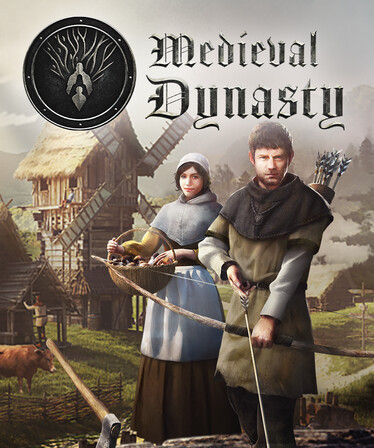
Medieval Dynasty
Hunt, survive, build and lead in the harsh Middle Ages: Create your own Medieval Dynasty and ensure its long-lasting prosperity or die trying! Play alone or team up with friends to enjoy the ultimate medieval experience.
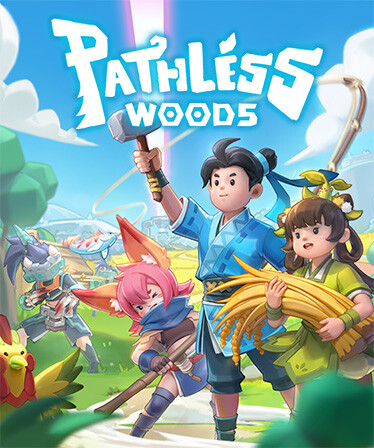
Pathless Woods
Embark on a cozy open-world survival journey inspired by ancient China's heritage. Gather resources, cultivate crops, build your dream home, and defend it from marauders. Team up with friends to explore and uncover a world where adventure meets serenity.

Enshrouded
Enshrouded is a solo and co-op survival action RPG where your freedom and creativity come first. Conquer the Shroud, a corrupting fog devouring the kingdom of Embervale: explore a handcrafted world full of secrets, forge your hero your way, and build anything, anywhere in a fully terraformable land.
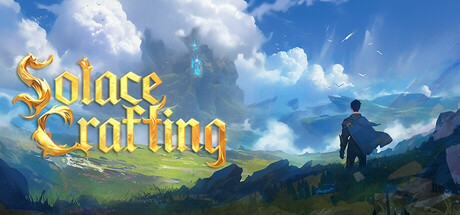
Solace Crafting
Embark on an adventure set in a fantasy survival RPG. Visit a borderless, open world where you manage resources to construct your base and new types of equipment to support your conquest.

Force of Nature
Force of Nature is a Sandbox game that combines Action, Adventure, RPG, Strategy and Management genres
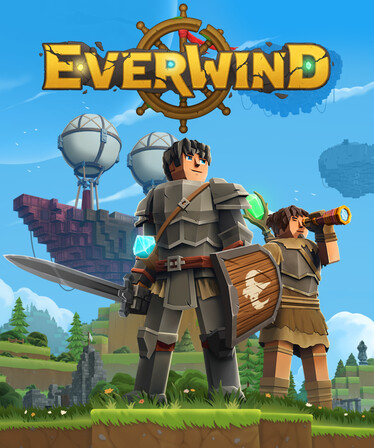
Everwind
Everwind is a novel take on RPG and Sandbox Survival genre in First-Person-Perspective. Embark on the adventure with your friends - Build a base on a flying island-ship, gather resources, craft, loot, and fight while you rise above the clouds to uncover the mysteries of this world!


Frequently Asked Questions
Bellwright is currently priced at 28.99€ on Steam.
No, Bellwright is currently not on sale. You can purchase it for 28.99€ on Steam.
Yes, Bellwright received 9,666 positive votes out of a total of 11,996 achieving a rating of 7.88.
😊
Bellwright was developed by Donkey Crew and published by Donkey Crew and Snail Games USA.
Yes, Bellwright is playable and fully supported on Windows.
No, Bellwright is not playable on MacOS.
No, Bellwright is not playable on Linux.
This information about Bellwright is not available yet.
This information about Bellwright is not available yet.
No, Bellwright does not support VR.
Bellwright offers both single-player and multi-player modes.
Bellwright includes Co-op mode where you can team up with friends.
Yes, there is a DLC available for Bellwright. Explore additional content available for Bellwright on Steam.
Yes, Bellwright is fully integrated with Steam Workshop. Visit Steam Workshop.
No, Bellwright does not support Steam Remote Play.
Yes, Bellwright is enabled for Steam Family Sharing. This means you can share the game with authorized users from your Steam Library, allowing them to play it on their own accounts. For more details on how the feature works, you can read the original Steam Family Sharing announcement or visit the Steam Family Sharing user guide and FAQ page.
You can find solutions or submit a support ticket by visiting the Steam Support page for Bellwright.
Data sources
The information presented on this page is sourced from reliable APIs to ensure accuracy and relevance. We utilize the Steam API to gather data on game details, including titles, descriptions, prices, and user reviews. This allows us to provide you with the most up-to-date information directly from the Steam platform.
Additionally, we incorporate data from the SteamSpy API, which offers insights into game sales and player statistics. This helps us present a comprehensive view of each game's popularity and performance within the gaming community.
Last Updates| Steam data | 22 September 2026 22:25 UTC |
|---|---|
| SteamSpy data | 18 October 2026 08:42 UTC |
| Steam price | 26 October 2026 20:11 UTC |
| Steam reviews | 18 October 2026 09:47 UTC |
If you'd like to dive deeper into the details about Bellwright, we invite you to check out a few dedicated websites that offer extensive information and insights. These platforms provide valuable data, analysis, and user-generated reports to enhance your understanding of the game and its performance.
- SteamDB - A comprehensive database of everything on Steam about Bellwright
- SteamCharts - Analysis of Bellwright concurrent players on Steam
- ProtonDB - Crowdsourced reports on Linux and Steam Deck Bellwright compatibility

Game modes
Multiplayer
Features
Online players
1,070
Developer
Donkey Crew
Publisher
Donkey Crew,
Snail Games USA
Release
23 Apr 2024
Platforms
Clicking and buying through these links helps us earn a commission to maintain our services.