
Impostor Factory
A bonkers time-loop tragicomedy murder mystery thriller featuring multiple casualties and a suspicious cat, from the creator of To the Moon & Finding Paradise.
Sync your Steam wishlist to find the lowest game prices instantly. No login required, just paste your Steam profile URL!
⚡ Try Wishlist Radar!
Sync your Steam wishlist to find the lowest game prices instantly. No login required!
⚡ Try Wishlist Radar!
Close

Boyhood's End on Steam
Quick menu
Boyhood's End is an adventure horror game following Giovanni, the boy with the lowest human score in the universe, and Campenella, the delinquent genius, and their journey on the galactic railroad regarding the "human" and "inhuman".
Boyhood's End is a adventure, pixel graphics and story rich game
developed by WSS playground and buriki clock
and published by WSS playground and Alliance Arts.
Released on September 05th 2024 is available on Windows, Steam Deck and Steam Machine.
It has received 628 reviews of which 533 were positive and 95 were negative resulting in a rating of 8.0 out of 10. 😊
The game is currently priced at 8.63€ on Steam with a 20% discount.
The Steam community has classified Boyhood's End into these genres:
Media & Screenshots
Get an in-depth look at Boyhood's End through various videos and screenshots.
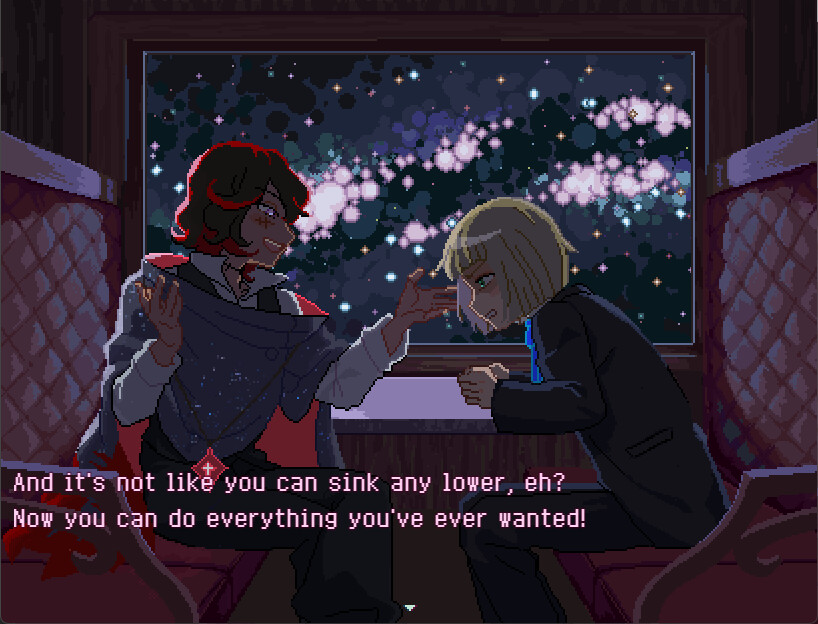

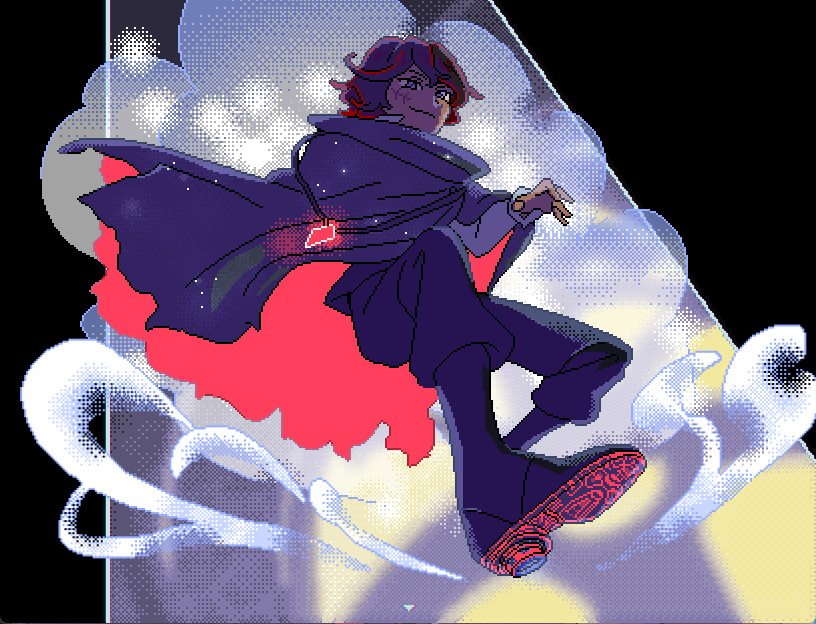

Load More
System requirements
These are the minimum specifications needed to play the game. For the best experience, we recommend that you verify them.
Windows
- OS: Windows 10
- Processor: Intel Core2 Duo or higher
- Graphics: Open GL compliant video card
Steam Price & Best Deals
User reviews & Ratings
Explore reviews from Steam users sharing their experiences and what they love about the game.
Okay, so, this is almost definitely the best VM i have ever played/seen. The style is very unique, with gameplay looking similar to Undertale or OneShot, while also keeping the visual novel status. The gameplay itself is also a very cool addition, as most of the VMs i have seen are just story-centered, but in this game you actually have to try to beat it (even if the obstacles are generally easy) When it comes to the story, i actually have mixed feelings about it. I loved chapter 1, for me it was a great start point, but chapter 2 in my opinion had quite too many, well, "specific" moments. Don't get me wrong, even with all of that it's still a good chapter and i completely understand why they used it for that part of the story, but these are just types of stuff I could get questioned for and personally don't like. Now I could add my opinion on chapter 3, but its still in beta, so I don't want to really write my opinion about it just yet, but so far it has been the best out of the 3 in terms of story and gameplay. One other thing to point out is the soundtrack and omg it's amazing. I was really dissapointed when I couldn't find it on spotify, because some of these OSTs would be on my playlist and I could listen to them on repeat without needing to be paid. One last thing I can also point out are the achievements, and there are a lot of those. They for me also add a little bit of extra fun to beating the game, as some of those things are tricky to get, so you would need to beat the game twice and/or reload your saves multiple times, because every decision can be and probably is another achievement So all in all, I really, really recommend this game, even for the people who hate or have never played visual novels before.
This game will change your life. I went in at first completely blind, drawn in by the cute bobbed boy (personal proclivity) and ended up having spent 3 sleepless nights in a row losing my mind over the insanely interesting story, fun and frustrating minigames, hilarious dialogue and depressingly apt satire of the age of AI we're heading into. The PC layout is similar to their other game, Needy Girl Overdose, so in my head it's like NGO if it were made for twisted fujoshi shotacon perverts. You can learn a lot about different characters by the contents of their PC, and it's really cute to me that you collect files and photos from your journey along the way. The game is absolutely chock full of both classic and contemporary references, from Arthur C. Clarke to Walt Disney, from Night on The Galactic Railroad to "I, Robot" to Yume Nikki and 1984. Some references are VERY in your face (R-codes) while others are more subtle. Giovanni and Wi might be my favourite characters ever. Kate is great too. God I ♥♥♥♥♥♥♥ love this game. IT'S KINO! BUY IT!! NEVER GIVE UP!!! WE'RE GMI !!!!!! ps. please bully Giovanni more.
THIS GAME IS SOOOOOOOOOO GOOOOOOOODDDDDD PLEASE DON'T GIVE UP ON IT.... the worldbuilding the characters the art direction it is all fantastic ... if you love adv games and unforgiving sci-fi narratives this will be like crack. playing the chap 3 beta there were a lot of translation errors but i'm sure they'll be fixed when chap 3 is released officially
Boyhood’s End is a narrative-driven science-fiction adventure that combines dystopian worldbuilding, psychological tension, and a deeply personal coming-of-age story into a memorable experience. Developed by WSS playground and buriki clock, and published by WSS playground and Alliance Arts, the game presents a future where human value is quantified through a rigid scoring system controlled by an all-powerful artificial intelligence known as R. Karellen. Every aspect of society is shaped by this measurement, creating a world where individuality is suppressed and a person’s worth is reduced to a numerical rating. This premise immediately establishes a fascinating setting that serves as the backdrop for an emotionally charged journey. The story centers on Giovanni, a young boy who possesses the lowest human score imaginable. As a result, he is treated as an outcast by both society and the institutions that govern everyday life. The game explores the emotional consequences of exclusion, discrimination, and social pressure through Giovanni’s perspective, allowing players to experience the frustrations and insecurities of someone trapped at the bottom of a deeply flawed system. Rather than relying solely on large-scale science-fiction concepts, the narrative succeeds because it remains focused on its characters and their personal struggles. A major highlight is Giovanni’s relationship with Campanella, a gifted student whose exceptionally high score grants him privileges and admiration from others. Despite their contrasting social positions, the two form an unusual friendship that becomes the heart of the story. Campanella’s curiosity, intelligence, and unconventional outlook challenge the values of the society around him, creating an engaging dynamic with Giovanni. Their conversations often touch on themes of freedom, identity, and the meaning of humanity, giving the story a thoughtful and philosophical edge that elevates it beyond a standard adventure game. The game's journey begins when the protagonists escape aboard a stolen autonomous train that travels across a vast galactic railway. This premise allows the adventure to continually introduce new locations, mysteries, and encounters while maintaining a strong sense of momentum. Each stop along the journey reveals more about the world’s history, the nature of the oppressive system governing humanity, and the secrets hidden beyond the boundaries of ordinary society. The constant sense of discovery helps keep the narrative fresh while gradually expanding the game's lore and themes. Visually, Boyhood’s End embraces a detailed pixel-art style that successfully blends retro aesthetics with futuristic imagination. The environments are richly designed and filled with distinctive details that make every location feel unique. Character portraits and expressive animations bring important scenes to life, allowing emotional moments to resonate despite the minimalist visual approach. The contrast between charming pixel art and the darker subject matter creates a unique atmosphere that strengthens the overall presentation. Gameplay focuses primarily on exploration, investigation, and puzzle-solving. Players interact with characters, gather information, examine environments, and overcome various obstacles that stand in the way of progress. The puzzles are generally designed to complement the story rather than overshadow it, ensuring that the narrative remains the main attraction. This structure makes the game accessible to players who enjoy story-heavy experiences while still providing enough interactivity to maintain engagement throughout the adventure. The horror elements are subtle yet effective. Instead of depending on constant jump scares, the game creates unease through its themes and worldbuilding. The concept of a society where humanity itself is measured and controlled becomes increasingly disturbing as more details are revealed. Feelings of paranoia, isolation, and existential uncertainty permeate many scenes, creating a psychological horror experience that lingers long after individual moments have passed. The darker aspects of the story are balanced with humor, wonder, and emotional character interactions, preventing the tone from becoming overwhelmingly bleak. The soundtrack further enhances the experience by providing a fitting emotional backdrop to the journey. Quiet, reflective tracks accompany character-driven moments, while more dramatic compositions emphasize major revelations and tense encounters. Combined with the visual presentation, the music helps establish a strong atmosphere that supports both the science-fiction adventure and the psychological themes running throughout the story. What makes Boyhood’s End particularly compelling is its willingness to explore complex ideas through a personal lens. The game examines social hierarchy, artificial control, self-worth, and the transition from childhood into maturity without losing sight of its characters. Its world is imaginative, its narrative is emotionally engaging, and its themes remain relevant throughout the adventure. While its serialized structure means the complete story continues to unfold over time, the existing content already showcases a remarkable level of ambition and creativity. For players who appreciate narrative-focused games with strong worldbuilding, memorable characters, and thought-provoking themes, Boyhood’s End offers an experience that is both emotionally resonant and intellectually engaging. It stands out among indie adventure titles by combining heartfelt storytelling with ambitious science-fiction concepts, creating a journey that feels unique from beginning to end. Rating: 8/10
Similar games
View all
Finding Paradise
Two doctors traverse backwards through a dying man's memories to fulfill his last wish. This is To the Moon's standalone sequel, but can also be played first.
Eastward
Welcome to the charming world of Eastward - population declining! Journey through a society on the brink of collapse. Discover delightful towns, strange creatures and even stranger people! Wield a trusty frying pan and mystic powers on an adventure into the unknown…

Mondealy: Day One
Mondealy: Day One is a prologue for the 2D adventure game Mondealy. You can see how adventures in the magical kingdom of Dargratt begin.

Viviette
Exploration, puzzles and a touch of classic horror awaits you! Uncover the secrets and mysteries of Neuville's Mansion. Test your logic against diverse puzzles, locate and use a variety of items, and don't lose your sense of direction, as navigation itself becomes an obstacle in your path!
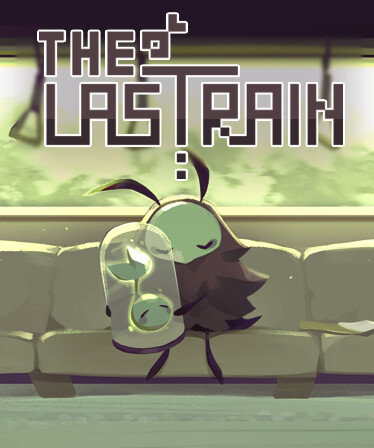
The Last Train
In the barren wasteland on the brink of extinction, the last Train departs, supposedly carrying its passengers in search of a place where they can survive. A creature named Eilf boards the Train, determined to travel to Spring - the station that has been said to have vanished.

Mr. Saitou
A short game about an average white-collar worker who struggles to find meaning in a life full of constant overtime and isolation. After an accident lands him in the hospital, Mr. Saitou is spirited away to a strange fantasy world where an unexpected friend takes him on a life-changing adventure.

Cleo - a pirate's tale
Cleo is a solo-developed, top-down, pixel-art, retro, pirate adventure with a lot of nostalgic flair, humor and a linear story, inspired by the old Zelda games and the classic LucasArts adventure games.

Paper Lily - Chapter 1
Paper Lily is an RPG horror game in which you can solve puzzles in different ways. Explore a hidden world, meet strange characters, and guide Lacie as she attempts to find answers about her unusual condition.

UNREAL LIFE
And now, for today's story.

Crossing Souls
California, 1986: A group of friends discover a mysterious pink stone that allows travel between two realms. This gang will live the summer of their lives in an adventure that will get them involved in a government conspiracy. Control five kids with special skills while fighting and solving puzzles.

Frequently Asked Questions
Boyhood's End is currently priced at 8.63€ on Steam.
Yes, Boyhood's End is currently available at a 20% discount. You can purchase it for 8.63€ on Steam.
Yes, Boyhood's End received 533 positive votes out of a total of 628 achieving a rating of 7.99.
😊
Boyhood's End was developed by WSS playground and buriki clock and published by WSS playground and Alliance Arts.
Yes, Boyhood's End is playable and fully supported on Windows.
No, Boyhood's End is not playable on MacOS.
No, Boyhood's End is not playable on Linux.
Yes, Boyhood's End is playable on Steam Deck, though it might require a few minor tweaks. Make sure to check the Steam store page and community feedback on ProtonDB for exact compatibility details.
Yes, Boyhood's End is playable on Steam Machine, though it might require a few minor tweaks. Make sure to check the Steam store page and community feedback on ProtonDB for exact compatibility details.
No, Boyhood's End does not support VR.
Boyhood's End is a single-player game.
Yes, there are 2 DLCs available for Boyhood's End. Explore additional content available for Boyhood's End on Steam.
No, Boyhood's End does not support mods via Steam Workshop.
No, Boyhood's End does not support Steam Remote Play.
Yes, Boyhood's End is enabled for Steam Family Sharing. This means you can share the game with authorized users from your Steam Library, allowing them to play it on their own accounts. For more details on how the feature works, you can read the original Steam Family Sharing announcement or visit the Steam Family Sharing user guide and FAQ page.
You can find solutions or submit a support ticket by visiting the Steam Support page for Boyhood's End.
Data sources
The information presented on this page is sourced from reliable APIs to ensure accuracy and relevance. We utilize the Steam API to gather data on game details, including titles, descriptions, prices, and user reviews. This allows us to provide you with the most up-to-date information directly from the Steam platform.
Additionally, we incorporate data from the SteamSpy API, which offers insights into game sales and player statistics. This helps us present a comprehensive view of each game's popularity and performance within the gaming community.
Last Updates| Steam data | 28 September 2026 10:06 UTC |
|---|---|
| SteamSpy data | 13 October 2026 18:01 UTC |
| Steam price | 26 October 2026 19:18 UTC |
| Steam reviews | 18 October 2026 16:09 UTC |
If you'd like to dive deeper into the details about Boyhood's End, we invite you to check out a few dedicated websites that offer extensive information and insights. These platforms provide valuable data, analysis, and user-generated reports to enhance your understanding of the game and its performance.
- SteamDB - A comprehensive database of everything on Steam about Boyhood's End
- SteamCharts - Analysis of Boyhood's End concurrent players on Steam
- ProtonDB - Crowdsourced reports on Linux and Steam Deck Boyhood's End compatibility

Game modes
Features
Online players
2
Developer
WSS playground,
buriki clock
Publisher
WSS playground,
Alliance Arts
Release
05 Sep 2024
Platforms