
X2: The Threat
X²: The Threat is of a new generation of space simulator games, you play the role of Julian Gardna who continues the story set by X: Beyond The Frontier. The updated graphics engine gives the universe a fresher feel with newly designed ships and stations adding to the complexity of the universe.
Sync your Steam wishlist to find the lowest game prices instantly. No login required, just paste your Steam profile URL!
⚡ Try Wishlist Radar!
Sync your Steam wishlist to find the lowest game prices instantly. No login required!
⚡ Try Wishlist Radar!
Close

Children of a Dead Earth on Steam
Quick menu
The most scientifically accurate space warfare simulator ever made. Now with Steam Workshop!
Children of a Dead Earth is a simulation, strategy and space game
developed and published by Q Switched Productions and LLC.
Released on September 23rd 2016 is available on Windows, MacOS, Steam Deck and Steam Machine.
It has received 843 reviews of which 756 were positive and 87 were negative resulting in a rating of 8.5 out of 10. 😎
The game is currently priced at 19.50€ on Steam.
The Steam community has classified Children of a Dead Earth into these genres:
Media & Screenshots
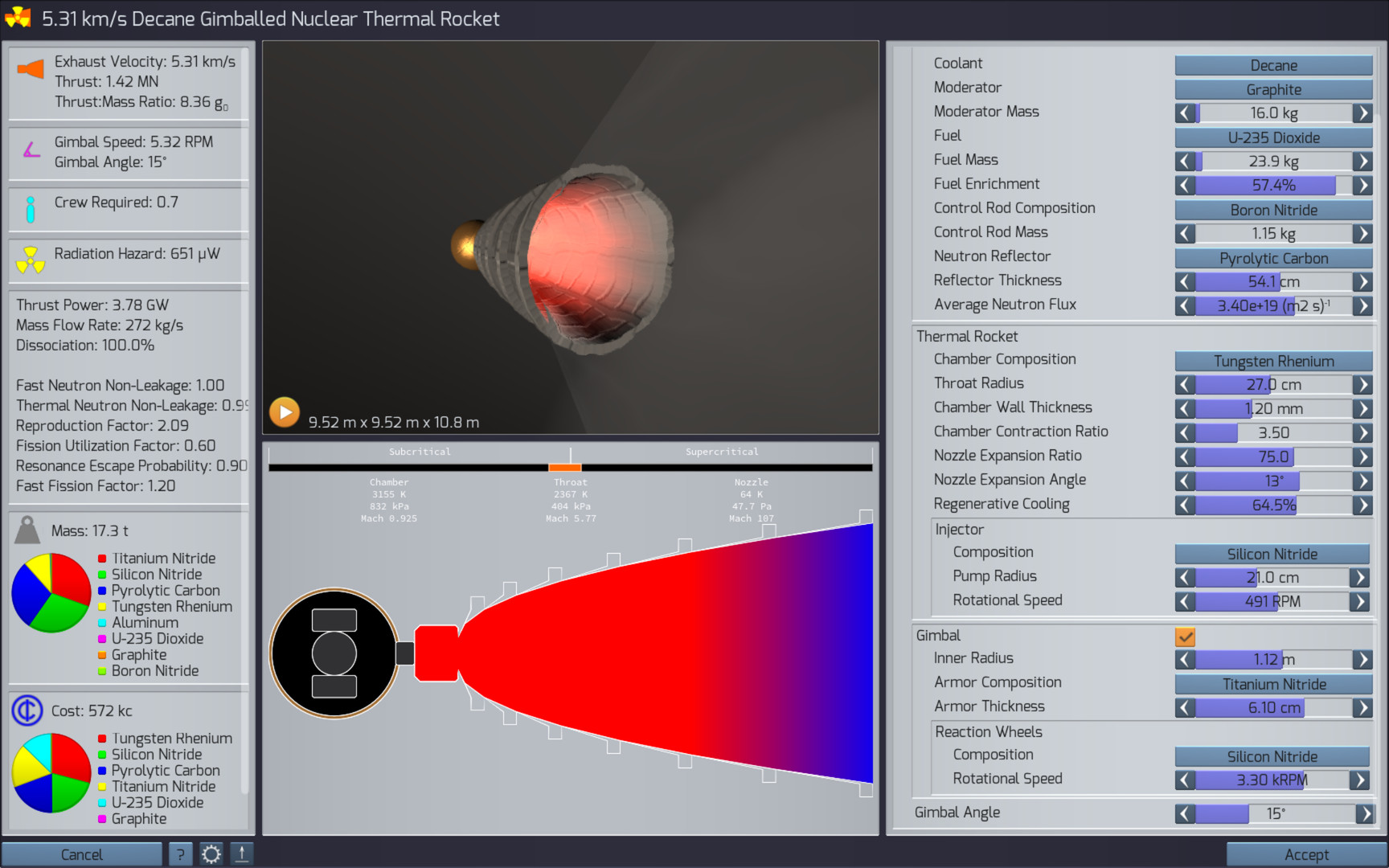
Get an in-depth look at Children of a Dead Earth through various videos and screenshots.


Load More


System requirements
These are the minimum specifications needed to play the game. For the best experience, we recommend that you verify them.
Windows
- OS *: Windows 7+
- Processor: Intel Core i5 @ 1.70 GHz processor
- Memory: 2 GB RAM
- Graphics: Intel HD Graphics 3000
- Storage: 200 MB available space
MacOS
- OS: Mac OS X 10.7+
- Processor: Intel Core i5 @ 1.70 GHz processor
- Memory: 2 GB RAM
- Graphics: Intel HD Graphics 3000
- Storage: 200 MB available space
Steam Price & Best Deals
User reviews & Ratings
Explore reviews from Steam users sharing their experiences and what they love about the game.
Brilliant game, tickles my autism in all the right ways. I've seen nothing else like it, and I need more of this kind of game someday. Although it can seem a bit technical, the in-game documentation is good at explaining most concepts and i've had a lot of fun designing modules and spacecraft. Would highly reccomend if you like space or engineering. Runs out-of-the-box via Proton Experimental.
20 bucks is crazy for this broken ass janky ass video game but there's nothing like it. if you're one of the losers this game was made for you already know it and you'll probably like it. no promises though dont blame me or whatever. 760 hours wellish spent eternal glory to amorphous carbon turbopumps and graphite aerogel bulk armor
To be clear this game has not received updates since 2018. It is very much dead. However if you are a hard scifi nerd or engineer, you will probably enjoy trying out all kinds of realistic spacecraft in this game. Though the component simulations make many assumptions which may or may not reflect reality individually, I believe that overall, Children of a Dead Earth is the best approximation of how real life orbital warfare would be conducted. PROS N-body orbital motion Detailed module designer with physics-based models for all components (engines, fuel tanks, radiators, guns, nukes, etc.) Electromagnetic railguns and coilguns with physics based models for muzzle velocity and power consumption Chemical and nuclear thermal rocket propulsion with realistic specific impulse and many propellant choices Best-available high energy laser damage model Nuclear weapon flash effect simulation (No prompt radiation effects sadly) Detailed armor penetration and degradation simulation Unlimited nesting of projectiles (e.g. you can shoot a nuclear missile out of a railgun, shoot flares off of your drones, release smart submunitions from a cluster bomb, even shoot crewed warships out of missile launchers) CONS Limited to only 2GB of RAM by default (community EXE binary patch available to boost to 4GB though) Overall poor CPU performance on single thread, cant handle more than several hundred missiles at once Lasers are very CPU heavy Orbital UI is not super intuitive, although KSP players will find the maneuver tools easy enough to understand Limited control over ships, missiles, drones, etc. in the "combat scene"; only high-level RTS commands are available and they are somewhat buggy (e.g. commanding a specific attitude is very tricky) Ship, missile and drone AI are typically lackluster (although can be improved somewhat with mods) Physics based component models aren't perfect and allow for physically-impossible "exploits" such as extreme velocity railguns (>500km/s in some cases) Heat radiators (one of the main limiting factors in real spacecraft) are FAR more performant than they should be due to the assumption of constant temperature on the whole panel. E.g. reactor coolant outlet is 1500 K and inlet is 300 K. The entire radiator surface is assumed to be at 1500 K. This massively and unrealistically reduces the required radiator area, especially due to radiative heat transfer being proportional to the fourth power of temperature. Missile guidance is practically limited to turning the whole missile and using a single rocket engine, as opposed to multiple thrusters firing laterally (which is the case with all real-life exoatmospheric missiles) Missile seekers are limited to very basic IR which can easily be flared off. Sadly there's no game which has both good sensor warfare AND proper orbital mechanics, but if you want good sensor warfare Nebulous Fleet Command is a good start. Missile damage, both with fragmentation/shrapnel and nuclear warheads can be very inconsistent due to some code bugs (e.g. "flak bug" where fragments do not persist more than 1 frame, and nukes failing to properly detonate if the impact frame comes before entering-proximity fuze range frame). This is surmountable by some trial and error, however
Children of a Dead Earth is one of the most technically ambitious space strategy games ever made, and it immediately becomes clear that the game was designed for players who are deeply interested in realistic physics, orbital mechanics, engineering, and hard science fiction. Unlike most space combat games that rely on cinematic explosions, arcade-style dogfights, and simplified systems, this game treats space warfare with near-obsessive realism. Every ship movement, weapon system, heat signature, and orbital maneuver is governed by believable scientific principles. The result is less like a traditional video game and more like a complex military simulation exploring what actual combat in space could realistically look like in the distant future. The setting establishes a bleak vision of humanity after the destruction of Earth. Civilization has spread across the solar system, where isolated factions now compete over resources, territory, and survival. While the narrative itself remains fairly minimal, the atmosphere created by the worldbuilding is extremely effective. Space feels cold, hostile, and militarized, with every conflict carrying a sense of desperation rather than heroism. The game avoids flashy science-fiction fantasy and instead presents a future where technology still obeys harsh physical limitations. This grounded approach gives the entire experience a very distinctive tone compared to more traditional sci-fi strategy games. What truly separates Children of a Dead Earth from nearly every other space combat title is its dedication to realism. Ships are not agile starfighters making impossible turns or firing endless energy weapons without consequence. They are fragile machines built around realistic propulsion systems, fuel limitations, thermal management, and vulnerable internal components. Weapons such as railguns, lasers, missiles, and nuclear devices behave according to believable scientific rules. Lasers generate massive heat, projectiles require predictive calculations over huge distances, and missiles must deal with realistic acceleration and interception problems. Even something as simple as radiator placement or reactor output can determine whether a ship survives battle or destroys itself through overheating. Ship construction becomes one of the most rewarding and intellectually engaging parts of the game. Players can design spacecraft almost entirely from scratch by selecting engines, reactors, radiators, armor thickness, fuel storage, weapons, ammunition types, and support systems. Every design decision has advantages and drawbacks. Heavier armor increases survivability but reduces maneuverability and acceleration. More powerful engines improve tactical flexibility but create enormous heat-management problems. Weapon choices drastically affect engagement ranges and combat doctrine. Designing ships feels closer to aerospace engineering than traditional game customization, and players who enjoy experimentation and optimization will likely become completely absorbed by the possibilities. Combat itself is unlike almost any other strategy game. Battles unfold slowly and methodically, often beginning long before ships are even within visible range of each other. Orbital positioning, intercept calculations, fuel reserves, and detection systems all matter before the first shot is fired. Once combat begins, players must manage weapon firing solutions, acceleration vectors, heat buildup, ammunition conservation, and defensive positioning simultaneously. The game uses a hybrid pause-and-command system that allows players to carefully analyze situations while still maintaining tension during engagements. Victories feel genuinely satisfying because success comes from planning, engineering, and tactical foresight rather than quick reflexes. One of the game’s most fascinating achievements is how effectively it communicates the terrifying reality of realistic space warfare. Ships are incredibly fragile, and a single successful strike can cripple engines, destroy reactors, or kill entire crews instantly. Battles are often decided by detection ranges, maneuver planning, and resource management rather than dramatic exchanges of fire. Heat becomes just as dangerous as enemy weapons because managing thermal buildup is essential for keeping systems operational. The game constantly reinforces the idea that space combat would likely be brutally unforgiving and heavily dependent on physics rather than cinematic heroics. The atmosphere is strengthened further by the audio design and presentation style. Music remains subtle and restrained, creating a cold and isolated mood rather than relying on dramatic orchestral themes. Sound effects are minimal but effective, helping reinforce the sterile and mechanical nature of the setting. The lack of exaggerated spectacle actually works in the game’s favor because it keeps the focus entirely on tension, calculation, and realism. Combined with the scientific approach to gameplay, the atmosphere becomes uniquely immersive for players interested in hard science fiction. However, the same realism that makes the game fascinating also creates its biggest weakness. Children of a Dead Earth has an extremely steep learning curve that can easily overwhelm new players. Understanding orbital mechanics, propulsion systems, thermal control, targeting solutions, and realistic combat strategies requires patience and genuine interest in the science behind the systems. Tutorials exist, but the game still expects players to invest significant time learning its mechanics. Players looking for accessible strategy gameplay or fast-paced action will likely struggle during the early hours. The interface can also feel intimidating and overly technical. Menus are filled with engineering data, numerical readouts, and detailed ship statistics that often resemble professional simulation software more than a traditional game interface. Battles can occasionally become difficult to visually interpret because so much of the complexity happens beneath the surface through calculations and invisible systems. Some players may appreciate this depth, while others may feel disconnected from the action because the simulation prioritizes realism over spectacle. Pacing will also divide players heavily. Combat is slow, deliberate, and heavily focused on preparation. Long stretches of planning and maneuvering are common, which may feel exhausting for players expecting constant action or cinematic battles. The game intentionally sacrifices excitement for authenticity, and that design choice will not appeal to everyone. Despite these flaws, Children of a Dead Earth succeeds because of how completely committed it is to its vision. It refuses to simplify its systems into conventional arcade mechanics and instead delivers one of the most scientifically grounded portrayals of space warfare ever attempted in gaming. Very few games are willing to embrace realism this deeply, and the result is a genuinely unique experience. For players fascinated by hard science fiction, realistic military simulations, and highly technical strategy games, Children of a Dead Earth offers an experience unlike almost anything else available. It is difficult, demanding, and occasionally overwhelming, but beneath the intimidating complexity lies one of the most intellectually rewarding space combat simulations ever created. Rating: 8/10
Several clones of the hard-scifi space combat simulator are coming out now (and, chances are, I will buy several of them), with thermonuclear engines, Delta-V management, and radiators, but this is, as far as I can tell, the father of them all. I played this when it first came out, and it completely changed the way I view the prospect of warfare in space.
Similar games
View all
X: Beyond the Frontier
The Human Race had advanced to the point where we could travel among the stars, we developed giant automated machines to help us colonise other worlds, but there was a fault in their programming and they turned and attacked. Forcing us to lay a trap to protect Earth and exiling the Human race to stay on Earth once again.

X3: Reunion
X3: Reunion continues the epic space saga, blending deep space trading and intense real-time combat. Explore a vast universe, establish your empire, and shape the new frontier. With enhanced graphics and intricate economies, it's a journey of strategy, simulation, and interstellar intrigue.
Nexus - The Jupiter Incident
Ambitious megacorporations monopolize the conquest of space and the colonization of the solar system. At the very edge of the solar system, the companies make a discovery that will shift the technological advantage and upset the balance. And so a new conflict is born: "The Jupiter Incident."
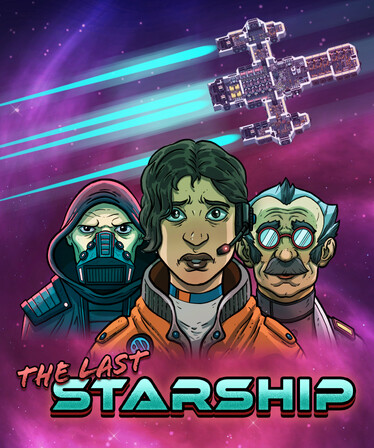
The Last Starship
The Last Starship is a 2D space construction game where you design and upgrade your starship. Choose your path: pirate hunter, miner, engineer, spacebus driver, and more, whilst exploring vibrant star systems. Enjoy a growing sandbox world, with regular free updates. Your cosmic adventure awaits!
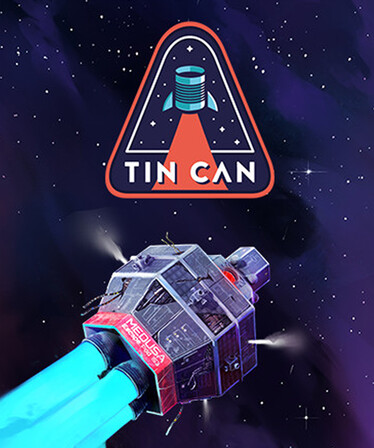
Tin Can
You've barely managed to escape your exploding spaceship. Now in an old escape pod, you hurtle through space at the mercy of the cosmos. With no knowledge of the pod’s complex systems, your life depends on a technical manual and your own wits. How long can you survive?

Emergency 2014
You have command of paramedics, fire brigades, police and disaster relief. Send your teams out on tense real-time missions to deal with disasters in Europe's major centres.
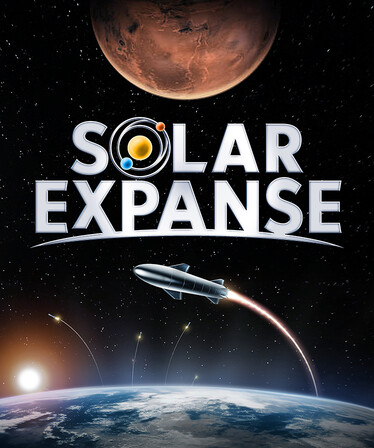
Solar Expanse - Space Exploration Manager
Explore the Solar System. Mine and drop asteroids. Colonize and terraform. Lead the space race and compete with other corporations on your way to profit. Watch the expansion of human race over the centuries.
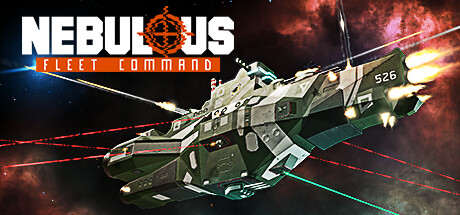
NEBULOUS: Fleet Command
Take command of your hand-tailored fleet of space warships and use realistic radar, electronic warfare, advanced movement controls in 3D space, and precision targeting to outmaneuver and outwit your opponents in a simulation-heavy tactical space game like no other.
X3: Terran Conflict
It is the year 2938. The long wished-for encounter of the X Universe and the Earth holds both joy and sorrow for the people. Despite flourishing trade, the clash of the diverse races, cultures and life forms creates new tensions, mistrust and open conflict that need to be overcome!

Distant Worlds 2
Distant Worlds 2 is a vast, pausable real-time 4X space strategy game.
Distant Worlds: Universe
Distant Worlds is a vast, pausable real-time 4X space strategy game. Experience the full depth and detail of turn-based strategy, but with the simplicity and ease of real-time, and on the scale of a massively-multiplayer online game.
Frequently Asked Questions
Children of a Dead Earth is currently priced at 19.50€ on Steam.
No, Children of a Dead Earth is currently not on sale. You can purchase it for 19.50€ on Steam.
Yes, Children of a Dead Earth received 756 positive votes out of a total of 843 achieving a rating of 8.45.
😎
Children of a Dead Earth was developed and published by Q Switched Productions and LLC.
Yes, Children of a Dead Earth is playable and fully supported on Windows.
Yes, Children of a Dead Earth is playable and fully supported on MacOS.
No, Children of a Dead Earth is not playable on Linux.
Yes, Children of a Dead Earth is playable on Steam Deck, though it might require a few minor tweaks. Make sure to check the Steam store page and community feedback on ProtonDB for exact compatibility details.
Yes, Children of a Dead Earth is playable on Steam Machine, though it might require a few minor tweaks. Make sure to check the Steam store page and community feedback on ProtonDB for exact compatibility details.
No, Children of a Dead Earth does not support VR.
Children of a Dead Earth is a single-player game.
No, Children of a Dead Earth does not currently offer any DLC.
Yes, Children of a Dead Earth is fully integrated with Steam Workshop. Visit Steam Workshop.
No, Children of a Dead Earth does not support Steam Remote Play.
Yes, Children of a Dead Earth is enabled for Steam Family Sharing. This means you can share the game with authorized users from your Steam Library, allowing them to play it on their own accounts. For more details on how the feature works, you can read the original Steam Family Sharing announcement or visit the Steam Family Sharing user guide and FAQ page.
You can find solutions or submit a support ticket by visiting the Steam Support page for Children of a Dead Earth.
Data sources
The information presented on this page is sourced from reliable APIs to ensure accuracy and relevance. We utilize the Steam API to gather data on game details, including titles, descriptions, prices, and user reviews. This allows us to provide you with the most up-to-date information directly from the Steam platform.
Additionally, we incorporate data from the SteamSpy API, which offers insights into game sales and player statistics. This helps us present a comprehensive view of each game's popularity and performance within the gaming community.
Last Updates| Steam data | 17 September 2026 05:02 UTC |
|---|---|
| SteamSpy data | 27 October 2026 11:33 UTC |
| Steam price | 27 October 2026 04:03 UTC |
| Steam reviews | 21 October 2026 17:57 UTC |
If you'd like to dive deeper into the details about Children of a Dead Earth, we invite you to check out a few dedicated websites that offer extensive information and insights. These platforms provide valuable data, analysis, and user-generated reports to enhance your understanding of the game and its performance.
- SteamDB - A comprehensive database of everything on Steam about Children of a Dead Earth
- SteamCharts - Analysis of Children of a Dead Earth concurrent players on Steam
- ProtonDB - Crowdsourced reports on Linux and Steam Deck Children of a Dead Earth compatibility

Game modes
Features
Online players
5
Developer
Q Switched Productions, LLC
Publisher
Q Switched Productions, LLC
Release
23 Sep 2016
Platforms