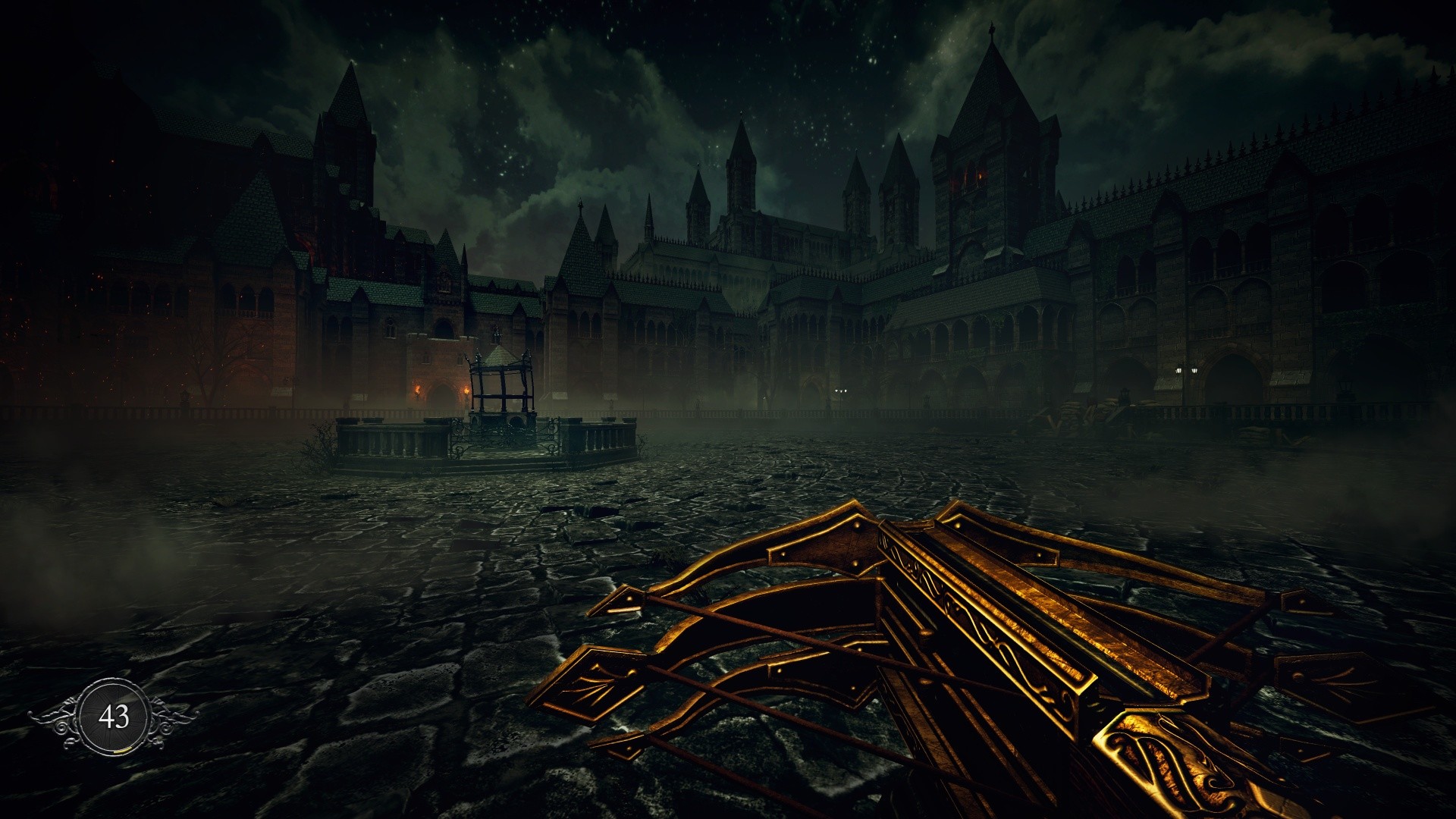
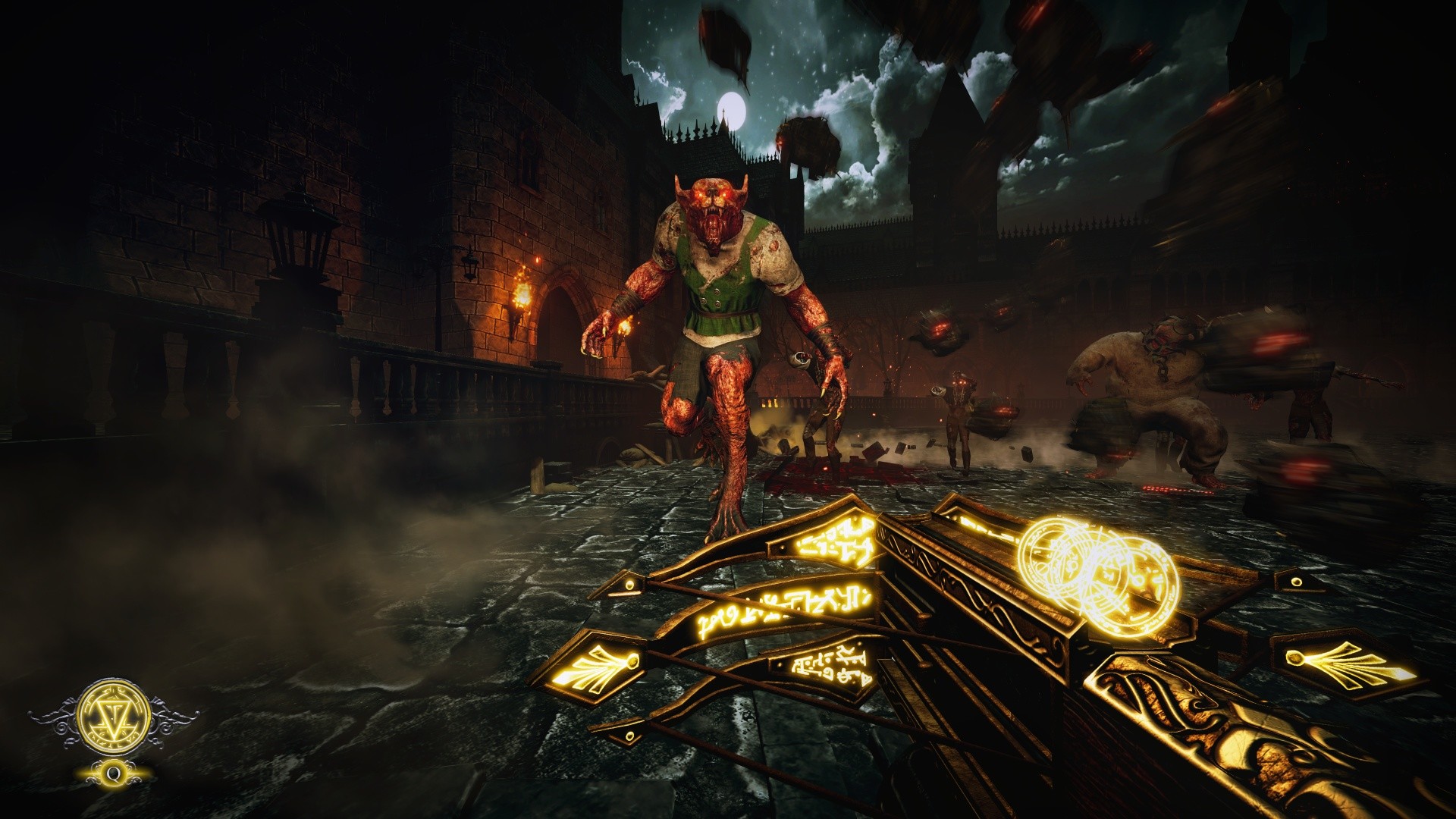
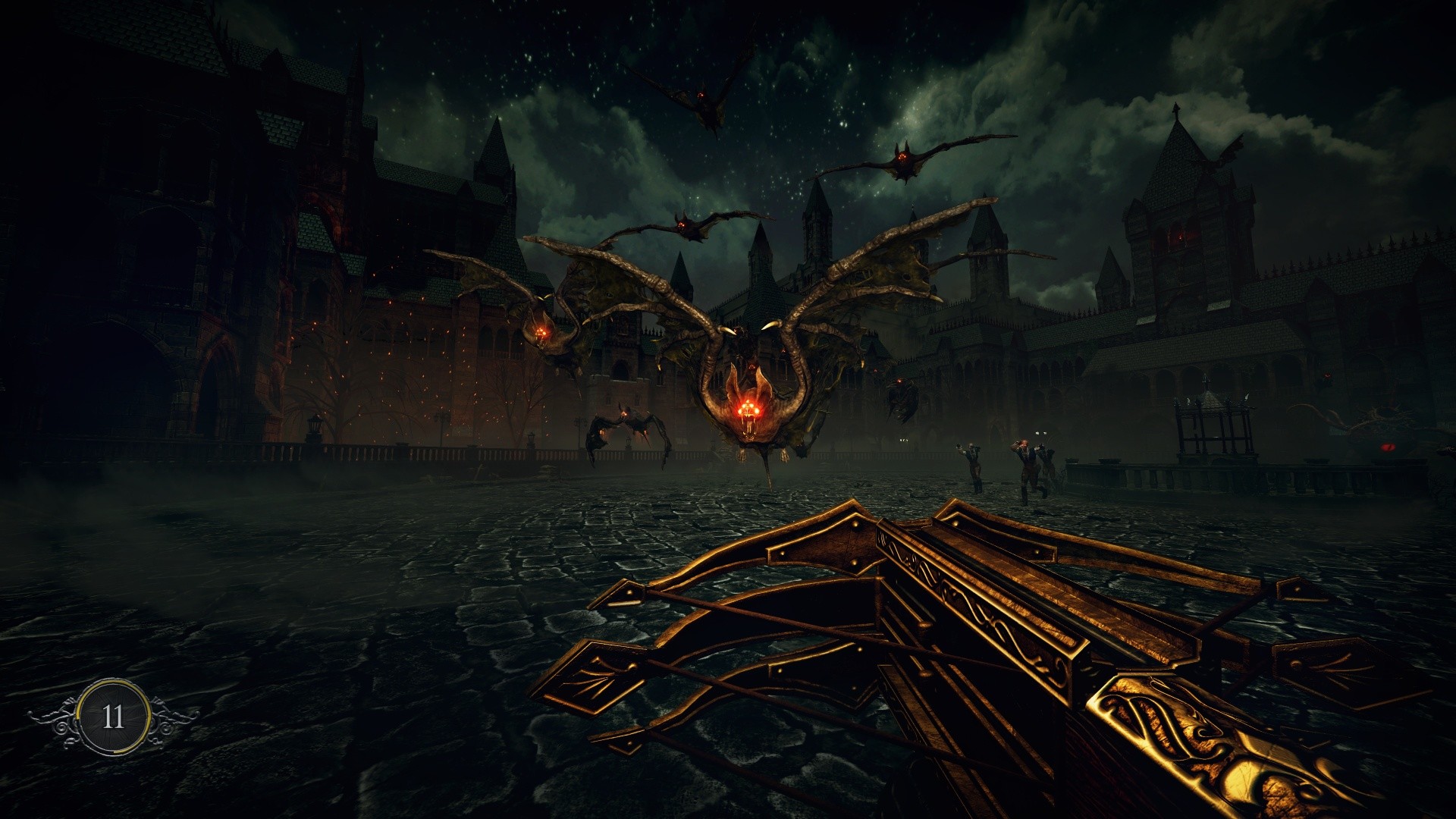
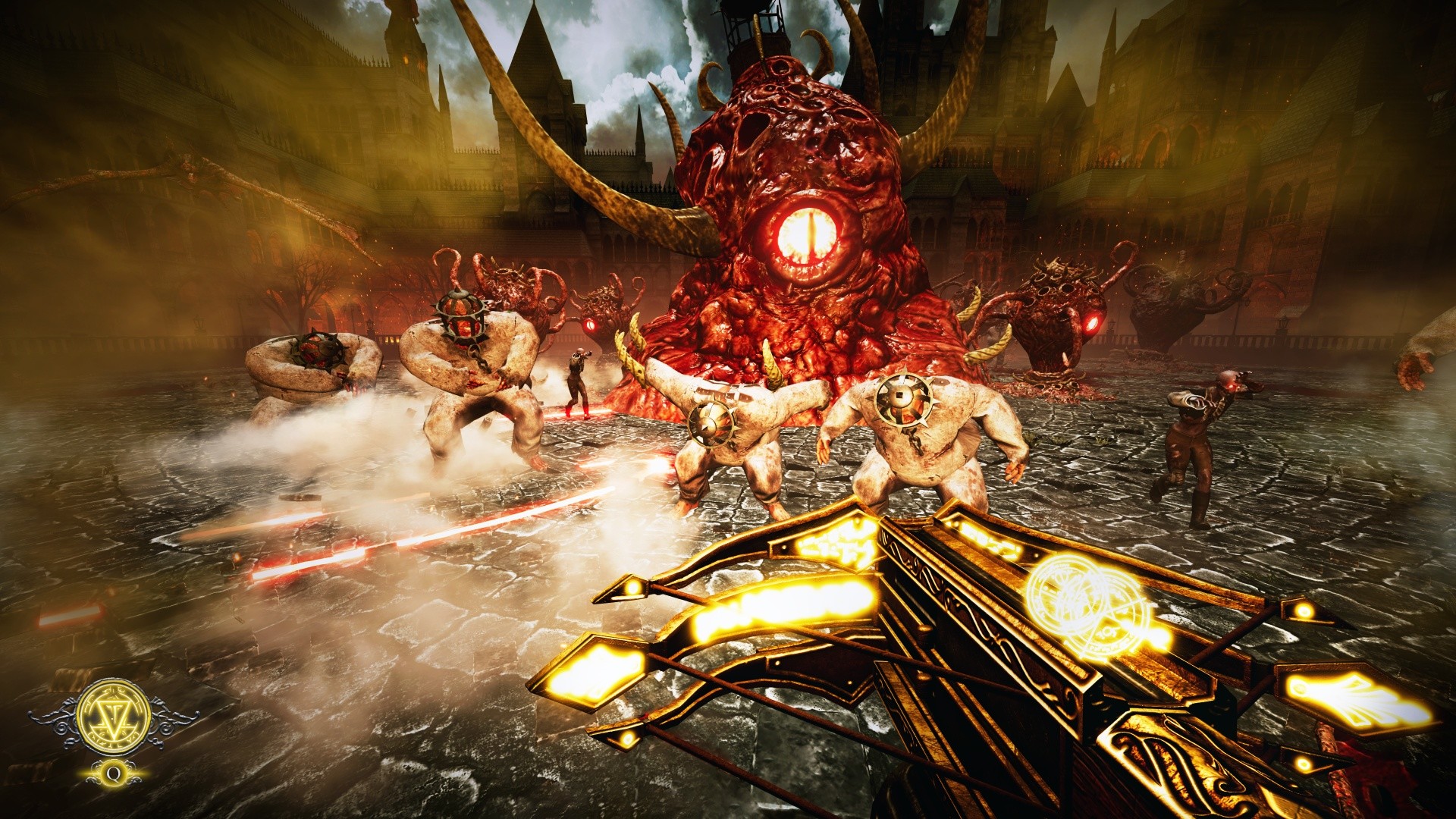
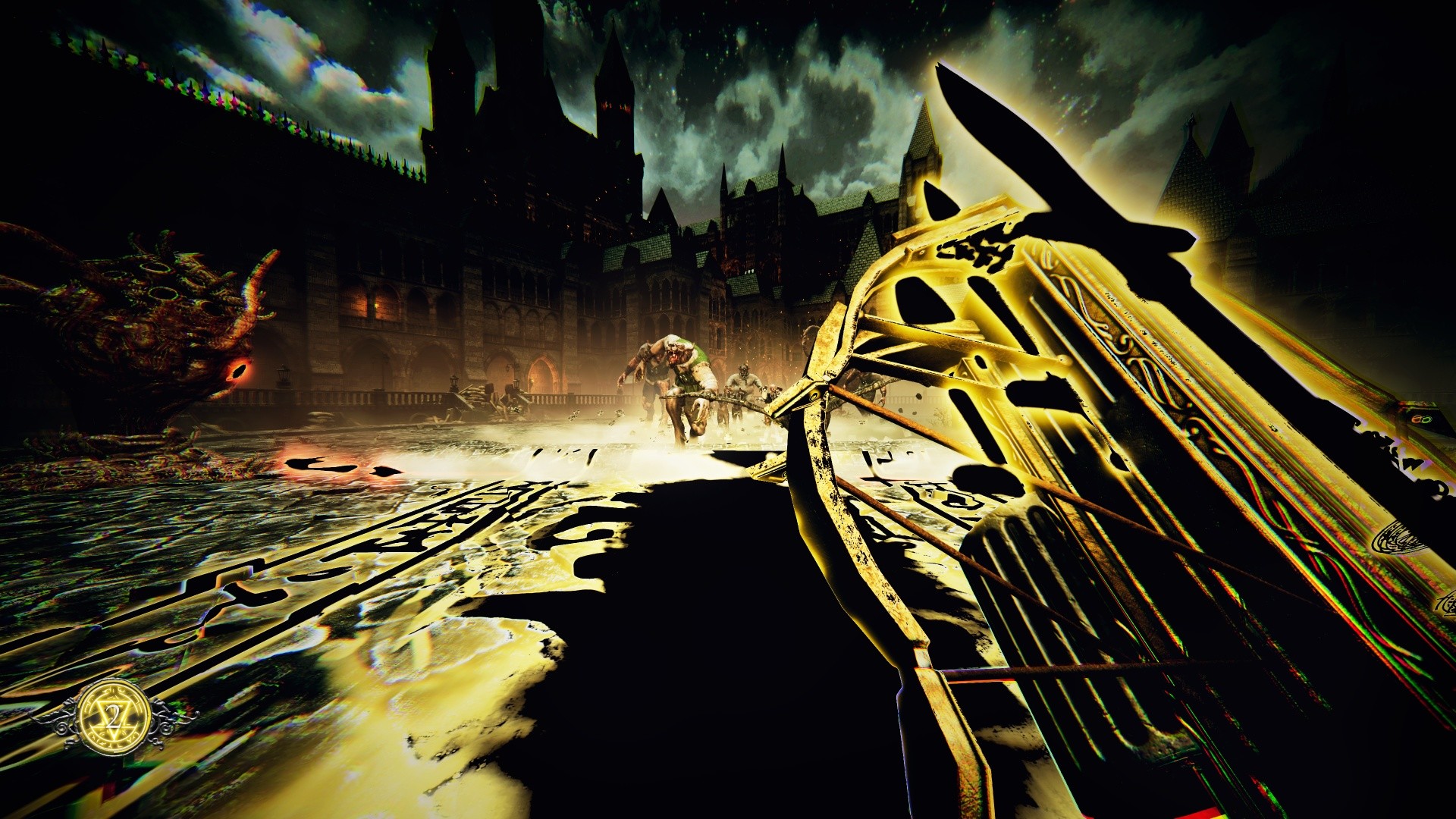
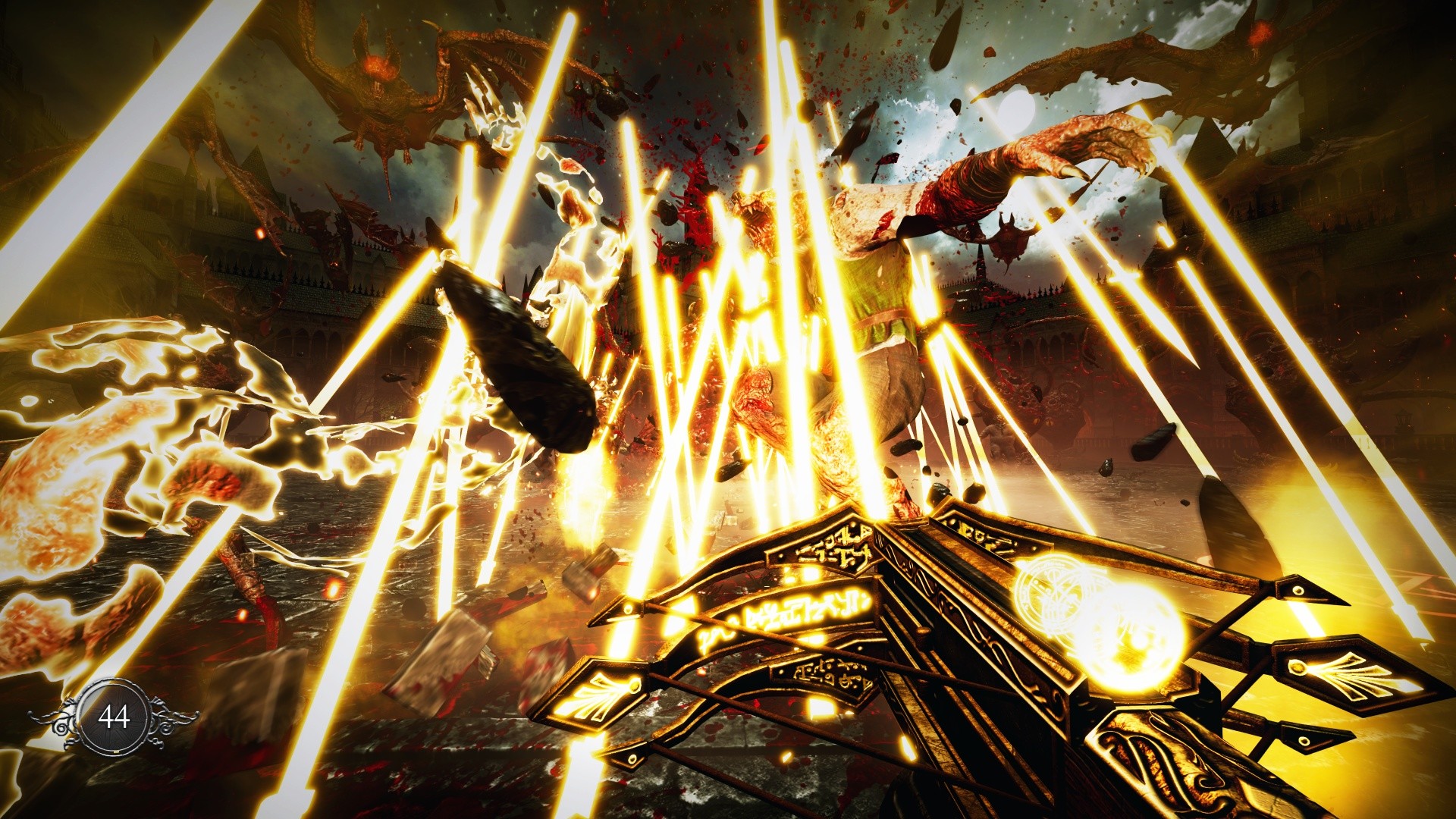
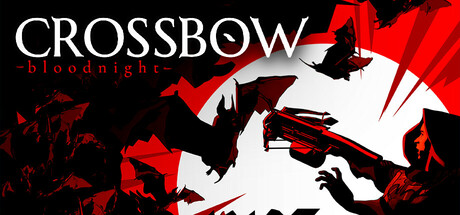
CROSSBOW: Bloodnight, developed and published by Hyperstrange, is a compact but ferocious arena shooter that distills the essence of gothic horror and fast-paced arcade combat into a short, intense experience. Rather than sprawling campaigns or complex narratives, it delivers pure gameplay momentum—one player, one weapon, one haunted arena, and endless waves of monstrous enemies. It’s a game designed for precision and repetition, thriving on quick deaths, instant respawns, and the irresistible urge to try one more time. What it lacks in size and narrative depth, it makes up for with atmosphere, speed, and the kind of elegant simplicity that harks back to the days of classic arena shooters and score-chasing arcade games. Set in a cursed version of 17th-century London, CROSSBOW: Bloodnight places players in the boots of an ancient guardian, a member of the Coven of Crossbow, sworn to fight the supernatural horrors unleashed during the Great Plague. The premise is minimal, but the atmosphere does most of the storytelling. The lone environment—an eerie cathedral courtyard illuminated by torchlight—becomes the stage for a desperate fight against unending waves of demonic creatures. The sense of place is powerful despite the limited setting; heavy stone architecture, foggy lighting, and grotesque silhouettes lend a sense of gothic grandeur. The tone feels like a love letter to dark fantasy shooters, borrowing from the aesthetics of Painkiller and the urgency of classic Doom. The lore may be sparse, but the setting communicates everything it needs to: this is a world where blood-soaked faith collides with unrelenting evil. The gameplay revolves around one central mechanic: mastering your crossbow. It’s a deceptively versatile weapon that can switch between powerful single shots, rapid-fire bursts, and devastating explosive blasts once its energy meter fills. Each attack feels weighty and satisfying, and learning when to alternate between precision and speed becomes the key to survival. Mobility plays an equally critical role—players can dash, strafe, and bunny-hop across the arena, avoiding attacks while lining up shots. The controls are smooth and responsive, evoking the fluidity of classic arena shooters but with the deliberate pacing of a modern score-attack design. Every second demands attention; standing still for even a moment can mean instant death, but moving too fast risks losing accuracy. The game strikes a sharp balance between chaos and control, rewarding both reflexes and rhythm. The enemies come in waves, each introducing new threats and attack patterns. Some lunge directly at you, while others bombard you from afar, forcing constant repositioning. The AI isn’t complex, but the sheer speed and variety of attacks ensure that no run feels completely safe. One hit can end a promising streak, which makes every movement and shot carry real tension. The result is an experience that feels brutally punishing at first but increasingly addictive as you learn the patterns and develop muscle memory. Once you start surviving longer and chaining kills together, the gameplay transforms from frantic panic into a smooth dance of movement and precision. The leaderboard system enhances this feeling, offering a global stage for competition and pushing players to refine their skills run after run. Visually, CROSSBOW: Bloodnight thrives on its dark, gothic presentation. The single arena may be small, but it’s drenched in atmosphere—cracked stone floors glistening with blood, flickering torches casting uneven shadows, and a brooding crimson sky that looms over the chaos. The visual design embraces a grim aesthetic that perfectly complements the game’s theme of supernatural warfare. The audio work is equally effective, with echoing crossbow bolts, demonic shrieks, and pounding percussive beats driving the action forward. The sound design doesn’t rely on cinematic flourishes; instead, it sustains tension through immediacy and rhythm, giving the combat a visceral energy. When combined, the visuals and audio produce an immersive sense of dread and urgency that elevates the simplicity of the gameplay loop. Despite its intensity, the game’s biggest limitation lies in its scope. There is only one main arena, and once you’ve learned its layout, much of the challenge comes from endurance and reflex rather than discovery. The mechanics, while polished, don’t evolve much over time; there are no new weapons to unlock, no progression systems, and no additional levels to explore. This narrow focus makes CROSSBOW: Bloodnight feel more like a score-based challenge mode than a full-fledged campaign experience. For some players, that purity of design will be its greatest strength—a game stripped down to its essentials. For others, the lack of variety and content might limit its longevity. It’s the kind of game best played in short bursts, a satisfying dose of adrenaline rather than a long-term commitment. Nevertheless, what Hyperstrange has achieved here is admirable. The studio understands what makes arcade shooters timeless: tight controls, clear feedback, and a constant cycle of risk and reward. Each run, no matter how brief, teaches something new—when to fire, when to dodge, when to unleash your special shot to wipe out the mob closing in around you. The difficulty curve is steep but fair, and the satisfaction of improving your survival time or climbing the leaderboard is real. It’s a game that rewards skill, precision, and perseverance without overcomplicating its premise. The absence of extraneous systems keeps it focused, and that focus is what makes it addictive. In the end, CROSSBOW: Bloodnight is a distilled burst of gothic shooter energy—ten minutes of pulse-pounding action condensed into an endlessly replayable format. It doesn’t aspire to be a sprawling narrative experience or a deep progression-based shooter; instead, it thrives on immediacy and flow. Its haunting atmosphere, finely tuned controls, and relentless pacing make it an excellent choice for anyone craving an old-school challenge wrapped in modern presentation. While it may be small in scale, its execution is sharp and confident, proving that a game doesn’t need complexity to deliver intensity. For players who miss the elegance of pure arcade design, CROSSBOW: Bloodnight is a blood-soaked reminder that sometimes the simplest battles are the most thrilling. Rating: 7/10
Expand the review