
Purrfect Apawcalypse: Patches' Infurno
Patches is dragged to school for the first ever cat-and-dog school day! All he needs to do is get this damn collar off and wreck some havoc! Will he prove cats and dogs can get along, or will he make this the Purrfect Apawcalypse?
Sync your Steam wishlist to track the lowest game prices instantly. No login required, just paste your Steam profile URL!
⚡ Try Wishlist Radar!
Sync your Steam wishlist to track the lowest game prices instantly. No login required!
⚡ Try Wishlist Radar!
Close

Dissolution of My Self on Steam - User reviews, Price & Information
Quick menu
A prince who has lost his kingdom and everything else. His uncle and aide-de-camp, unable to leave him. In a cramped rented room abroad, click on objects and piece together a codependent relationship filled with brutality and endurance. Watch helplessness turn into violence, tenderness into torture.
Dissolution of My Self is a visual novel, interactive fiction and point & click game
developed and published by Pop Elephant Studio.
Released on September 03rd 2026 is available only on Windows
in 3 languages: Simplified Chinese, English and Japanese.
It has received 300 reviews of which 283 were positive and 17 were negative resulting in a rating of 8.6 out of 10. 😎
The game is currently priced at 5.53€ on Steam with a 10% discount.
The Steam community has classified Dissolution of My Self into these genres:
Media & Screenshots
Get an in-depth look at Dissolution of My Self through various videos and screenshots.


Load More


System requirements
These are the minimum specifications needed to play the game. For the best experience, we recommend that you verify them.
Windows
- OS: Windows 10 (64-bit)
- Processor: Intel Core i3-3220 / AMD FX-4300 or equivalent
- Memory: 4 GB RAM
- Graphics: Intel HD Graphics 4000 / AMD Radeon HD 7730 / NVIDIA GeForce GT 630 (OpenGL 3.3 or DirectX 11)
- DirectX: Version 11
- Storage: 1 GB available space
- Additional Notes: 1280×720 or higher
Steam Price & Best Deals
User reviews & Ratings
Explore reviews from Steam users sharing their experiences and what they love about the game.
"I sometimes still forget that he is a living, breathing person. You can't blame me. If someone were covered head to toe in usefulness, you'd forget they were a person too." Incredible writing and great art direction. The characters are convincing to a horrifying degree. I wish the text box UI, where your eyes are trained for the longest portion of the game, were more centered rather than to the far right of the screen. Still, it's a minor discomfort and hardly enough to take away from the experience. Do not be fooled by the short playtime, this game is a very complete experience and more than worth it.
Dissolution of My Self is a psychologically heavy point-and-click horror experience built around memory, identity, dependency, and the gradual destruction of a person's sense of self. Developed and published by Pop Elephant Studio, it favors intimate storytelling over conventional horror mechanics. There are no elaborate combat systems or constant monsters pursuing the protagonist. Instead, the game places much of its emotional weight inside a confined rented room, transforming everyday objects into reminders of a complicated past. This small-scale approach gives the experience a claustrophobic atmosphere in which personal history becomes more frightening than anything supernatural. The story follows Hector, an exiled prince who has lost his homeland, political standing, security, and much of the identity that once defined him. He now shares a modest room with Matvey, his uncle and former aide-de-camp. Matvey works as an unlicensed electrician to support them, creating a striking reversal in their relationship. Hector may have once possessed considerable authority, yet his current circumstances leave him heavily dependent on the very person he continues to treat with remnants of aristocratic superiority. Their relationship becomes the emotional center of the game, mixing family ties, loyalty, resentment, affection, control, vulnerability, and unhealthy dependency. Rather than presenting Hector's history in a straightforward sequence, the game encourages players to reconstruct it by examining objects scattered throughout the room. Items such as medicine bottles, furniture, windows, and the television can trigger fragments of memory. The order in which these objects are investigated influences how the player encounters Hector's past, allowing the story to feel fragmented and personal without becoming a traditional branching narrative. There is ultimately one ending, so the emphasis is less about changing Hector's destiny and more about deciding how his damaged history is uncovered. This structure works particularly well because Hector's perspective cannot always be accepted as objective truth. Memories are filtered through his unstable emotional condition, forcing the player to consider how much of what appears on screen is accurate and how much may have been distorted by trauma, denial, medication, or his own interpretation of events. The resulting uncertainty makes seemingly simple interactions meaningful. Instead of solving elaborate mechanical puzzles, players are essentially solving the protagonist himself, gradually assembling a portrait of someone whose understanding of reality and identity has become increasingly fragile. One of the game's most effective ideas is the way the environment changes alongside Hector's psychological deterioration. Objects connected to awakened memories can become blurred and increasingly unusable as pieces of his identity are relinquished. This creates a tangible representation of self-erasure. Discovering memories would normally suggest recovery or enlightenment, but here the process carries a darker implication. Every revelation potentially moves Hector closer to abandoning another part of himself, giving progression an intentionally uncomfortable quality. The relationship between Hector and Matvey adds another layer of unease. Their connection cannot easily be classified as purely familial, romantic, hierarchical, or dependent because aspects of all these dynamics overlap. Hector needs Matvey for practical and emotional survival while simultaneously directing cruelty and resentment toward him. Matvey's continued loyalty complicates matters further. The narrative examines how devotion can become unhealthy when affection, responsibility, power, guilt, and dependency are allowed to merge. Players should not expect a comforting relationship drama, as the game deliberately explores disturbing and morally difficult territory. Its horror is therefore primarily psychological. Traditional jump scares and physical threats are not the main attraction. The tension comes from discovering what happened between the characters and recognizing how deeply their identities have become intertwined. The confined setting reinforces the feeling that there is nowhere for Hector to escape from his memories. Occasional dark humor provides brief changes in tone, but these moments rarely eliminate the underlying discomfort. The presentation complements this approach through hand-drawn artwork with surreal and noir-inspired qualities. The visual style helps distinguish reality from emotionally distorted recollections without making those boundaries completely obvious. Japanese voice acting adds personality to the character interactions, while the combination of visual-novel storytelling and point-and-click exploration gives players enough participation to keep the experience from feeling entirely passive. The mechanics remain deliberately straightforward because narrative interpretation is clearly the priority. Content is considerably darker than the relatively simple gameplay might initially suggest. Themes include psychological manipulation, self-harm, violence, substance misuse, trauma, regression, disturbing intimacy, and an intensely dysfunctional relationship between relatives. Some scenes and descriptions may be uncomfortable for sensitive players, and stronger screen-shaking effects appear later in the experience. Anyone considering the game should understand that its disturbing material is fundamental to the story rather than incidental background content. Steam Deck compatibility is currently best treated as unverified rather than officially confirmed as Verified or Playable. The point-and-click and visual-novel structure is mechanically suitable for portable play, but players should not assume complete controller optimization, ideal text readability, or flawless compatibility without an official Steam Deck rating. Touchscreen or trackpad input may make interaction more convenient if conventional controller support proves limited. The game's main weakness is that its mechanical scope is intentionally narrow. Players expecting substantial puzzles, multiple endings, combat, extensive exploration, or major choice-driven consequences may find it restrictive. However, those limitations also allow the narrative to remain concentrated. Every important object and memory contributes to the central themes rather than distracting the player with unnecessary systems. Dissolution of My Self succeeds most strongly as an unsettling character study disguised as a small point-and-click horror game. Its fractured memories, unreliable perspective, deteriorating environment, and deeply unhealthy central relationship create an experience designed to provoke interpretation rather than deliver conventional scares. It will not appeal to everyone, especially given its provocative themes and limited mechanical variety, but players interested in experimental psychological storytelling may discover something unusually intimate and memorable. Rating: 8/10
i'm glad to see purity culture people on twitter having a hissy fit haven't found the steam reviews yet. everyone is appreciating this for what it is, which is an amazingly well-written and appalling psychological horror. there's been such an influx of people believing that simply writing a story about a topic means that you support it or are romanticizing it, and i feel as though that limits art and what you can create so much. anyways ! getting off of my soapbox now, this game was great ! very short, especially if you are a fast reader, but it's going to stick with me for ages. the art is amazing, the character writing is fantastic, and it explores a lot of meaningful topics in a very morbid way. i don't want to give too much away - please play it for yourself ! PLEASE PLEASE READ THE CONTENT WARNINGS.
this is one of those games that REALLY hit the mark for disturbing queer horror. i cant recc anyone this game without feeling inherently guilty due to the contents; but i think thats what made it so fantastic to me. its been a long time since a game made me think this hard. however, to anyone interested, DEFINITELY make sure you read the description and appropriate content warnings. this game is not ♥♥♥♥♥♥♥ around with its content warnings. voice actors honestly knocked it out of the park and quite frankly, it disturbs me just how much energy they put into it. like im genuinely impressed. im not going to spoil anything in this review, as i think this game needs to be experienced for it to have the same impact on you as it did myself, but wow very fascinating premise if you can stomach it, left me on the edge of my seat with my face contorted. only 'negative' thing is that this game is pretty short; if you're a fast reader like i am you can get every achievement in under 3 hours, but i hardly consider that an actual criticism as i think its still worth your time. :9c
The premise of the story reeled me in and while looking at the store page, I thought to myself "Huh... I've never heard of this developer before... Am I really going to gamble my time and try this story because it just came out yesterday and the idea is cool?". I'm now jaw slack. Eyes bugging. My hand was covering my mouth most of the game and I was flabbergasted beyond belief at the audacity of this yaoi. I love you, Pop Elephant Studio and I hope you become a big name. My heart and wallet are yours, please continue making content I will personally recommend you to my pals.
Similar games
View all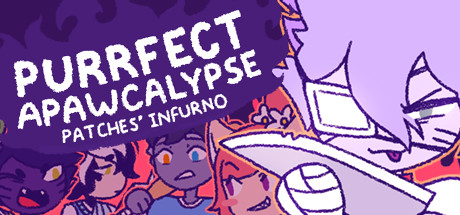

Roman's Christmas / 罗曼圣诞探案集
Roman, the wolf detective plans to spend his Christmas vacation in his favorite tavern, but murder cases happened in the tavern put him to work again.

Mesmalie
MESMALIE is an occult adventure game. A magickal incident in your personal life brings you to a small witches' coven in the middle of nowhere. Here, you'll learn to tame your ability... though, not without some bumps along the way.
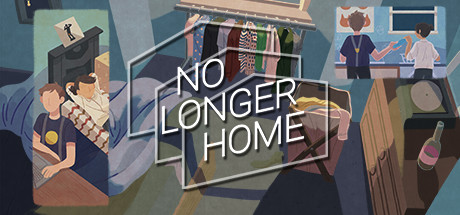
No Longer Home
No Longer Home is a game about letting go of the life you've built due to circumstances beyond your control. Immerse yourself in the lives of Bo and Ao and learn about their dreams, frustrations and fears. Welcome the magic of the everyday and somewhat extraordinary.

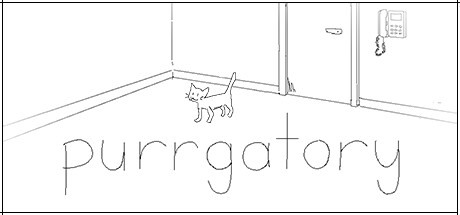
Purrgatory
A slice-of-death visual novel about making friends, cracking cat puns, and waiting for eternity to pass.

The NOexistenceN of you AND me
Use "game" as a medium to showcase the world of "you/girl". Explore the truth of "you/girl/world" through the form of a "visual novel".
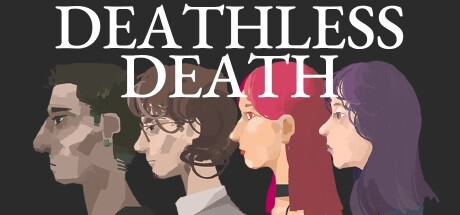
Deathless Death
In the quiet of conscience and shadows of sin, four souls find themselves entwined in crimes involving a woman. In this narrative puzzle game, you don the sacred robe of a priest, hear the confessions of sinners, uncover secrets, seek the truth behind their crimes and deliver the final judgment.

this game will end in 205 clicks.
What does a SUPERVILLAIN do, when he is forbidden from doing anything evil for the day? WARNING: This is not the type of game where you can make meaningful choices.

2064: Read Only Memories
2064: Read Only Memories is a cyberpunk point-and-click adventure set in Neo-San Francisco. Team up with Turing, the world's first sapient machine, to unravel a conspiracy that threatens to shake an entire society

Neo Cab
A visual novel about emotional survival in an automated world. Play as Lina, the last human cab driver. It’s your first night driving the lonely streets of Los Ojos, and your best friend has just disappeared. Stay on the road. Stay on the search. Stay human.
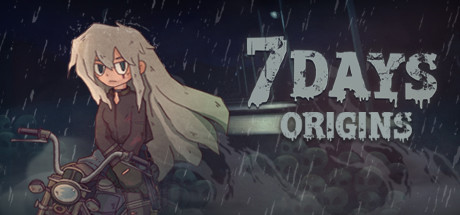
7Days Origins
7Days Origins is a single-player story game where the storyline changes based on the player's choices. For 7 days, you will meet various characters in the world of the dead. You may become allies and embark on adventures together or become enemies and fight.
Frequently Asked Questions
Dissolution of My Self is currently priced at 5.53€ on Steam.
Yes, Dissolution of My Self is currently available at a 10% discount. You can purchase it for 5.53€ on Steam.
Yes, Dissolution of My Self received 283 positive votes out of a total of 300 achieving a rating of 8.64.
😎
Dissolution of My Self was developed and published by Pop Elephant Studio.
Yes, Dissolution of My Self is playable and fully supported on Windows.
No, Dissolution of My Self is not playable on MacOS.
No, Dissolution of My Self is not playable on Linux.
This information about Dissolution of My Self is not available yet.
This information about Dissolution of My Self is not available yet.
No, Dissolution of My Self does not support VR.
Dissolution of My Self is a single-player game.
No, Dissolution of My Self does not currently offer any DLC.
No, Dissolution of My Self does not support mods via Steam Workshop.
No, Dissolution of My Self does not support Steam Remote Play.
Yes, Dissolution of My Self is enabled for Steam Family Sharing. This means you can share the game with authorized users from your Steam Library, allowing them to play it on their own accounts. For more details on how the feature works, you can read the original Steam Family Sharing announcement or visit the Steam Family Sharing user guide and FAQ page.
You can find solutions or submit a support ticket by visiting the Steam Support page for Dissolution of My Self.
Data sources
The information presented on this page is sourced from reliable APIs to ensure accuracy and relevance. We utilize the Steam API to gather data on game details, including titles, descriptions, prices, and user reviews. This allows us to provide you with the most up-to-date information directly from the Steam platform.
Additionally, we incorporate data from the SteamSpy API, which offers insights into game sales and player statistics. This helps us present a comprehensive view of each game's popularity and performance within the gaming community.
Last Updates| Steam data | 15 September 2026 04:14 UTC |
|---|---|
| SteamSpy data | 16 September 2026 02:14 UTC |
| Steam price | 16 September 2026 19:10 UTC |
| Steam reviews | 16 September 2026 09:45 UTC |
If you'd like to dive deeper into the details about Dissolution of My Self, we invite you to check out a few dedicated websites that offer extensive information and insights. These platforms provide valuable data, analysis, and user-generated reports to enhance your understanding of the game and its performance.
- SteamDB - A comprehensive database of everything on Steam about Dissolution of My Self
- SteamCharts - Analysis of Dissolution of My Self concurrent players on Steam
- ProtonDB - Crowdsourced reports on Linux and Steam Deck Dissolution of My Self compatibility

Game modes
Features
Online players
9
Developer
Pop Elephant Studio
Publisher
Pop Elephant Studio
Release
03 Sep 2026
Platforms