

Awesome Metal Detecting
The best treasure hunter game.
Sync your Steam wishlist to find the lowest game prices instantly. No login required, just paste your Steam profile URL!
⚡ Try Wishlist Radar!
Sync your Steam wishlist to find the lowest game prices instantly. No login required!
⚡ Try Wishlist Radar!
Close

Fingerdance on Steam
Quick menu
The game that simply confuses your fingers.
Fingerdance is a typing, action and simulation game
developed by zniq
and published by PsychoFlux Entertainment.
Released on June 20th 2025 is available on Windows, Steam Deck and Steam Machine
in 4 languages: English, Japanese, Korean and Simplified Chinese.
It has received 374 reviews of which 363 were positive and 11 were negative resulting in a rating of 8.9 out of 10. 😎
The game is currently priced at 3.15€ on Steam, but you can find it for 1.49€ on Eneba.
The Steam community has classified Fingerdance into these genres:
Typing
Action
Simulation
Difficult
Rhythm
Tutorial
Indie
3D
Funny
Abstract
Minimalist
Singleplayer
Experimental
Intentionally Awkward Controls
Here is the detailed breakdown of supported languages for Fingerdance:
| UI | Subtitle | Audio | |
|---|---|---|---|
| English | |||
| Korean | |||
| Simplified Chinese | |||
| Japanese |
Media & Screenshots
Get an in-depth look at Fingerdance through various videos and screenshots.


System requirements
These are the minimum specifications needed to play the game. For the best experience, we recommend that you verify them.
Windows
- Requires a 64-bit processor and operating system
- OS: Windows 10 / 11
- Processor: Any processor w/ a clock rate of 2 GHz
- Memory: 4 GB RAM
- Graphics: CPU-integrated or on-board graphics
- Storage: 200 MB available space
Steam Price & Best Deals
User reviews & Ratings
Explore reviews from Steam users sharing their experiences and what they love about the game.
Fingerdance is a fun and unique rhythm game that challenged my coordination far more than I expected. The concept is simple: assign one key to each finger and hit the correct notes as they appear. It took me a while to find a comfortable keybind layout, but once I did, the controls felt responsive and satisfying. Most of the difficulty came from getting my brain and fingers to communicate properly rather than from the game itself. The difficulty is well balanced throughout the levels. It can be challenging at times, but it always felt fair and rewarding as I improved. The presentation is clean and minimal, which fits the game perfectly. The UI is easy to read, and the notes are clear and easy to follow. The game is quite short, only taking a couple of hours to complete. Because of that, it never overstays its welcome or becomes repetitive. However, I don't see much replay value, and I found myself needing regular breaks since the gameplay can be surprisingly mentally demanding. Overall, I'd recommend Fingerdance if you're looking for a short, unique rhythm game. It's a fun experience, although I think the price could be slightly lower considering the limited amount of content.
Very simple premise, yet very hard. Five fingers. Replicate the pattern of holding down certain keys. Don't do anything else: don't press/release a key that shouldn't be, don't hesitate in making a transition. It's insane how this simple premise ends up being a very difficult game. Part of it is your body: a finger might tremble, accidentally double-pressing or briefly releasing a key. Part of it is coordination, trying to hold and release the exact keys you need simultaneously. The game is very short. It comes with 14 levels (+ tutorial). You can theoretically finish each one in like 10 seconds if you do it first try. But you probably aren't going to do it first try, or second try, or even the 100th try. The game has ranks; I think the ranks go S, A, B, C, and the S rank is very strict, although fortunately Steam achievements only need you to get A. (The game tracks two hands; you can play with either left hand or right hand, and the records for each hand are stored separately.) The game has very little else. No options whatsoever. No music, so I guess you mute sound by muting your whole computer. No windowed mode. No level editor; I think that would have been interesting. So yeah, no nothing. It's just the game. Do I recommend it? I think the game is fascinating enough to try. Having no demo and having such a short amount of content is unfortunate, but I think the price is low enough that it all sums up okay.
Similar games
View all

Shark Simulator
Shark Simulator is a WTF physics sandbox. Play as Ed the shark, and give those tourists a vacation they will remember!

The Textorcist: The Story of Ray Bibbia
Dodge bullets while typing exorcisms at the very same time: Get ready for an electrifying mix between bullet hell and typing game! Turn on both sides of your brain and jump into the adventure of private exorcist Ray Bibbia!

Rhythm Fighter
This is a Roguelike Horizontal Action game that players need to follow the beat to defeat opponents. Beat to follow, fist to the bone. Face the foe, and dance to kill!

AX:EL - Air XenoDawn
Combining the very best of sci-fi and aerial dogfighting gameplay, AX:EL delivers a totally new gaming experience. Create your very own shape-shifting vehicle and dominate both the sky and the ocean.

Murderous Pursuits
Murderous Pursuits is a kill-or-be-killed Victorian stealth-em-up for 1-8 players in which you must hunt and kill your quarry before your hunters do the same to you, all while avoiding witnesses.

Stilt Fella
Become the fella. Walk on the stilts.

The Drone Racing League Simulator
The DRL Simulator is the premier FPV racing game and simulator. The DRL Sim offers a robust, evolving feature set, including high-intensity drone racing. It packs tracks that DRL's real world pilots compete on, with more added every season. And, it's the only place to fly DRL's exclusive drone, the Racer4!
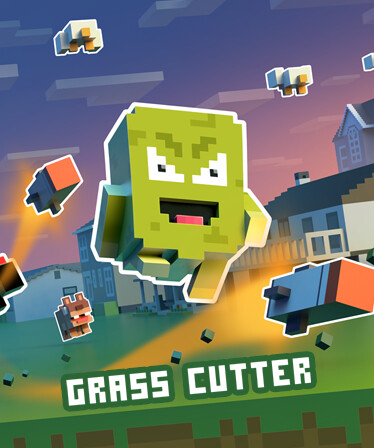
Grass Cutter - Mutated Lawns
Challenge lawn monsters!
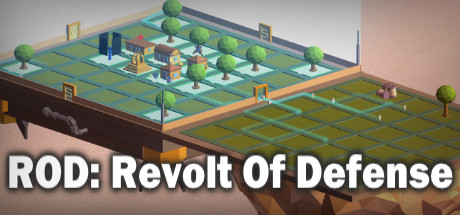
ROD: Revolt Of Defense
Explore a random generated space. Find artifacts and treasure maps. Build and develop your base on a flying platform. Attack or defend against enemies and save the universe!

Artemis Spaceship Bridge Simulator
Artemis is designed for anyone who watched Star Trek and dreamed of what it would be like to sit on the bridge of a star ship. Artemis simulates a spaceship bridge by networking several computers together. You cannot play Artemis single-player!
Frequently Asked Questions
Fingerdance is currently priced at 3.15€ on Steam.
No, Fingerdance is currently not on sale. You can purchase it for 3.15€ on Steam.
Yes, Fingerdance received 363 positive votes out of a total of 374 achieving a rating of 8.92.
😎
Fingerdance was developed by zniq and published by PsychoFlux Entertainment.
Yes, Fingerdance is playable and fully supported on Windows.
No, Fingerdance is not playable on MacOS.
No, Fingerdance is not playable on Linux.
Yes, Fingerdance is playable on Steam Deck, though it might require a few minor tweaks. Make sure to check the Steam store page and community feedback on ProtonDB for exact compatibility details.
Yes, Fingerdance is playable on Steam Machine, though it might require a few minor tweaks. Make sure to check the Steam store page and community feedback on ProtonDB for exact compatibility details.
No, Fingerdance does not support VR.
Fingerdance is a single-player game.
No, Fingerdance does not currently offer any DLC.
No, Fingerdance does not support mods via Steam Workshop.
No, Fingerdance does not support Steam Remote Play.
Yes, Fingerdance is enabled for Steam Family Sharing. This means you can share the game with authorized users from your Steam Library, allowing them to play it on their own accounts. For more details on how the feature works, you can read the original Steam Family Sharing announcement or visit the Steam Family Sharing user guide and FAQ page.
You can find solutions or submit a support ticket by visiting the Steam Support page for Fingerdance.
Data sources
The information presented on this page is sourced from reliable APIs to ensure accuracy and relevance. We utilize the Steam API to gather data on game details, including titles, descriptions, prices, and user reviews. This allows us to provide you with the most up-to-date information directly from the Steam platform.
Additionally, we incorporate data from the SteamSpy API, which offers insights into game sales and player statistics. This helps us present a comprehensive view of each game's popularity and performance within the gaming community.
Last Updates| Steam data | 06 October 2026 05:20 UTC |
|---|---|
| SteamSpy data | 22 October 2026 04:23 UTC |
| Steam price | 26 October 2026 20:29 UTC |
| Steam reviews | 22 October 2026 07:51 UTC |
If you'd like to dive deeper into the details about Fingerdance, we invite you to check out a few dedicated websites that offer extensive information and insights. These platforms provide valuable data, analysis, and user-generated reports to enhance your understanding of the game and its performance.
- SteamDB - A comprehensive database of everything on Steam about Fingerdance
- SteamCharts - Analysis of Fingerdance concurrent players on Steam
- ProtonDB - Crowdsourced reports on Linux and Steam Deck Fingerdance compatibility

Game modes
Features
Online players
2
Developer
zniq
Publisher
PsychoFlux Entertainment
Release
20 Jun 2025
Platforms
Clicking and buying through these links helps us earn a commission to maintain our services.