
Zavix Tower
Zavix Tower is an old-school, party-based, first-person CRPG with rogue-like elements, an upgrade-able and persistent town, and turn-based combat.
Sync your Steam wishlist to find the lowest game prices instantly. No login required, just paste your Steam profile URL!
⚡ Try Wishlist Radar!
Sync your Steam wishlist to find the lowest game prices instantly. No login required!
⚡ Try Wishlist Radar!
Close

Grimoire : Heralds of the Winged Exemplar (V2) on Steam
Quick menu
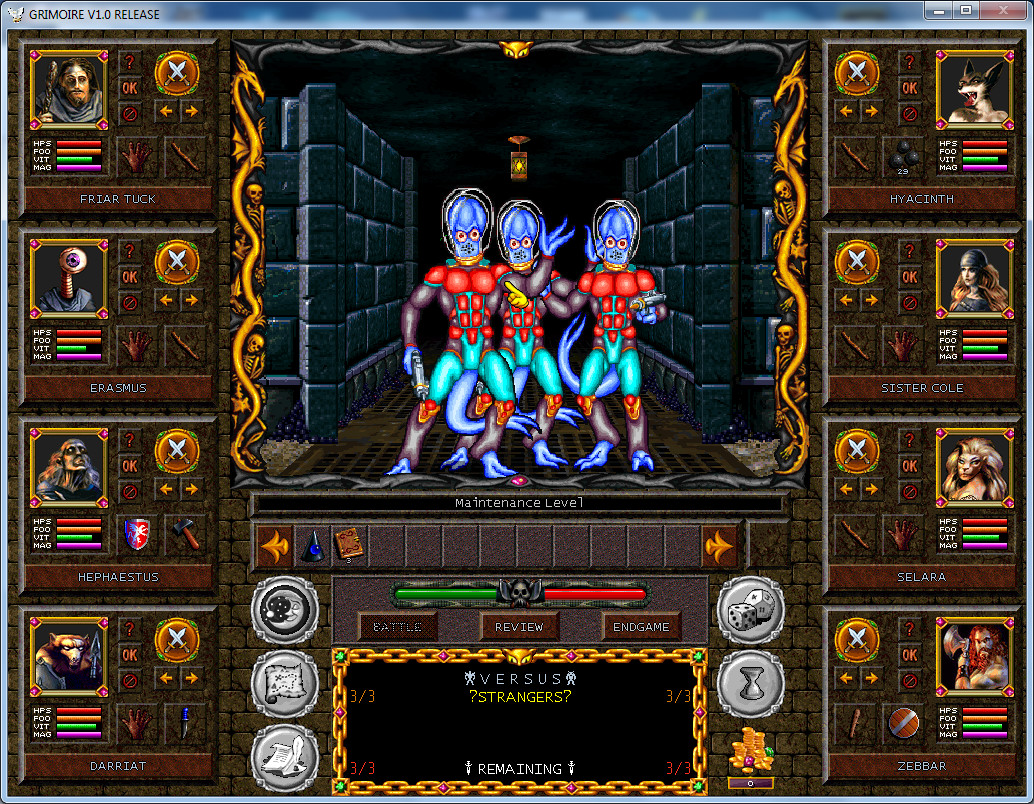
Cleveland Mark Blakemore's Magnum Opus! The ultimate classic style turn-based roleplaying game in the tradition of Wizardry, Might&Magic, Lands Of Lore and Eye of the Beholder! 600+ hours of play with hand-painted graphics and old skool goodness!
Grimoire : Heralds of the Winged Exemplar (V2) is a rpg, dungeon crawler and memes game
developed by Cleveland Mark Blakemore
and published by Golden Era Games.
Released on August 04th 2017 is available only on Windows.
It has received 612 reviews of which 424 were positive and 188 were negative resulting in a rating of 6.7 out of 10. 😐
The game is currently priced at 8.19€ on Steam.
The Steam community has classified Grimoire : Heralds of the Winged Exemplar (V2) into these genres:
Media & Screenshots
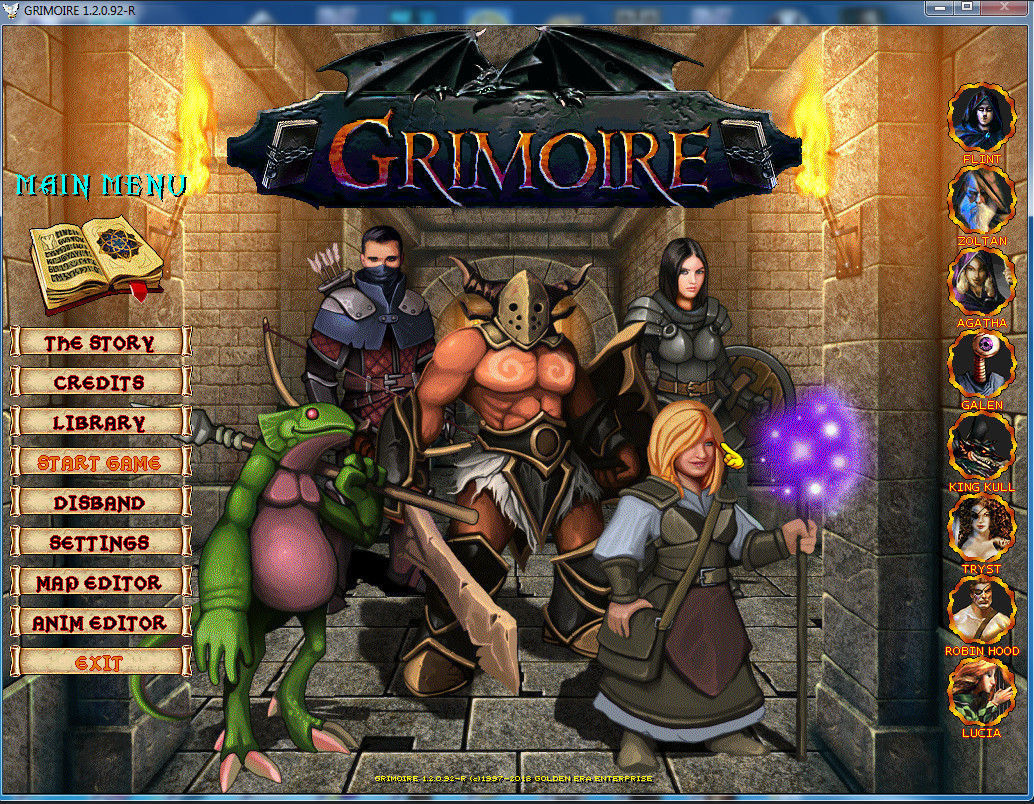
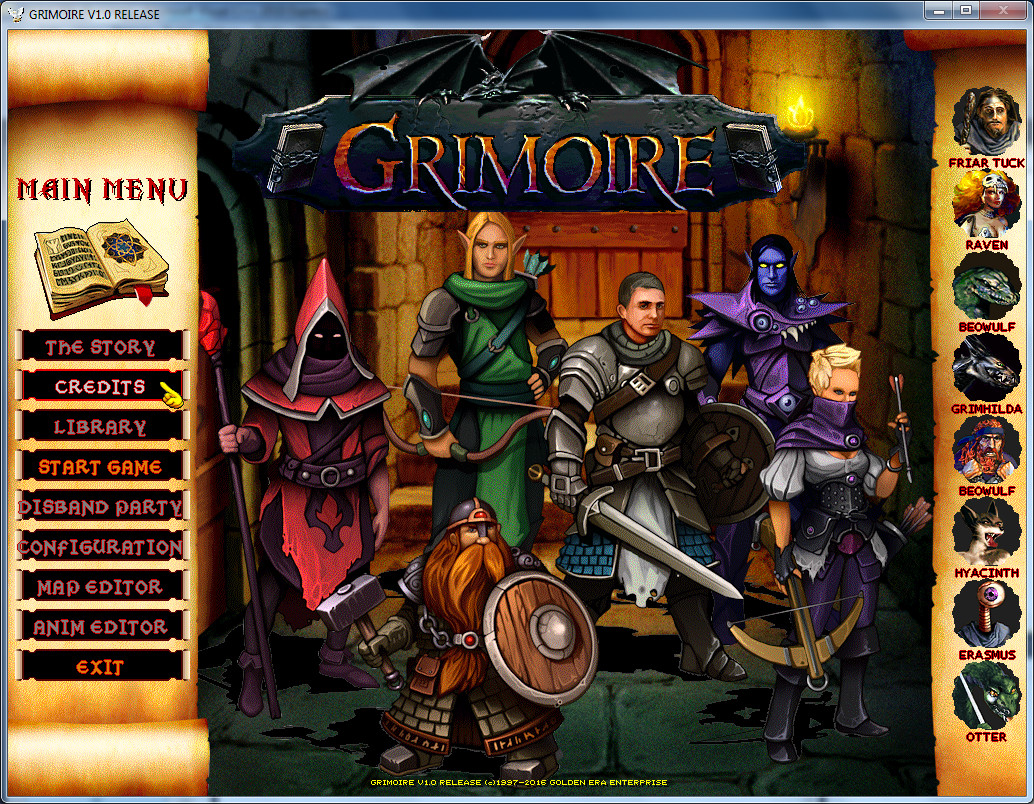
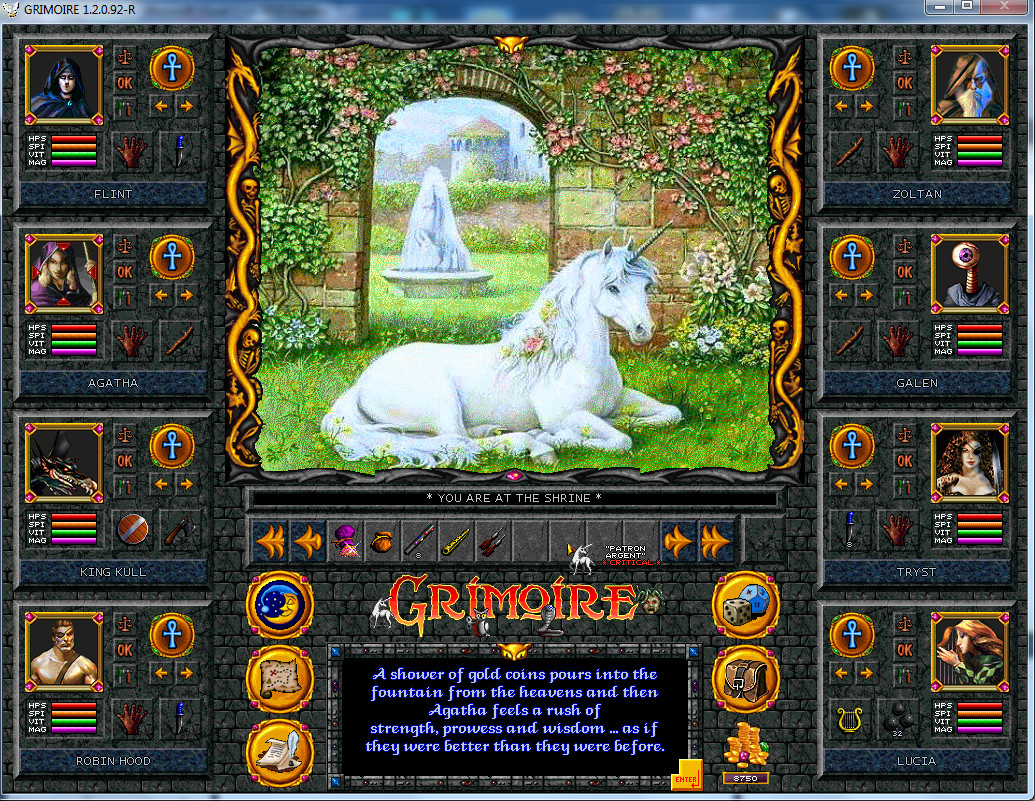
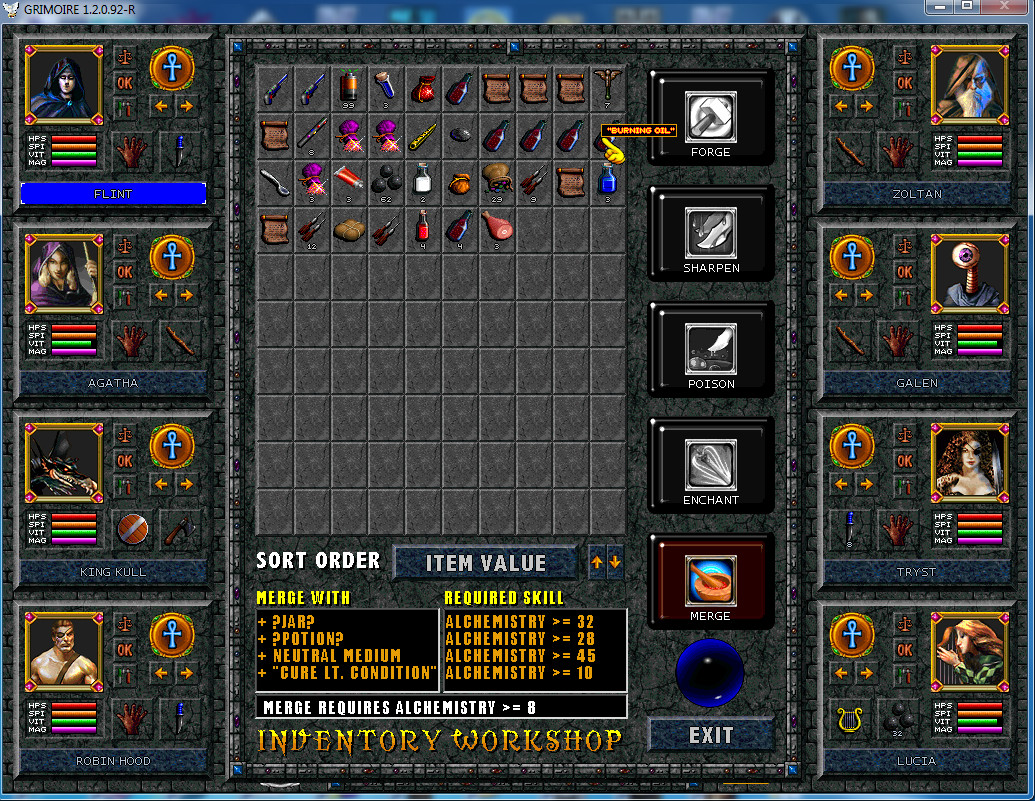
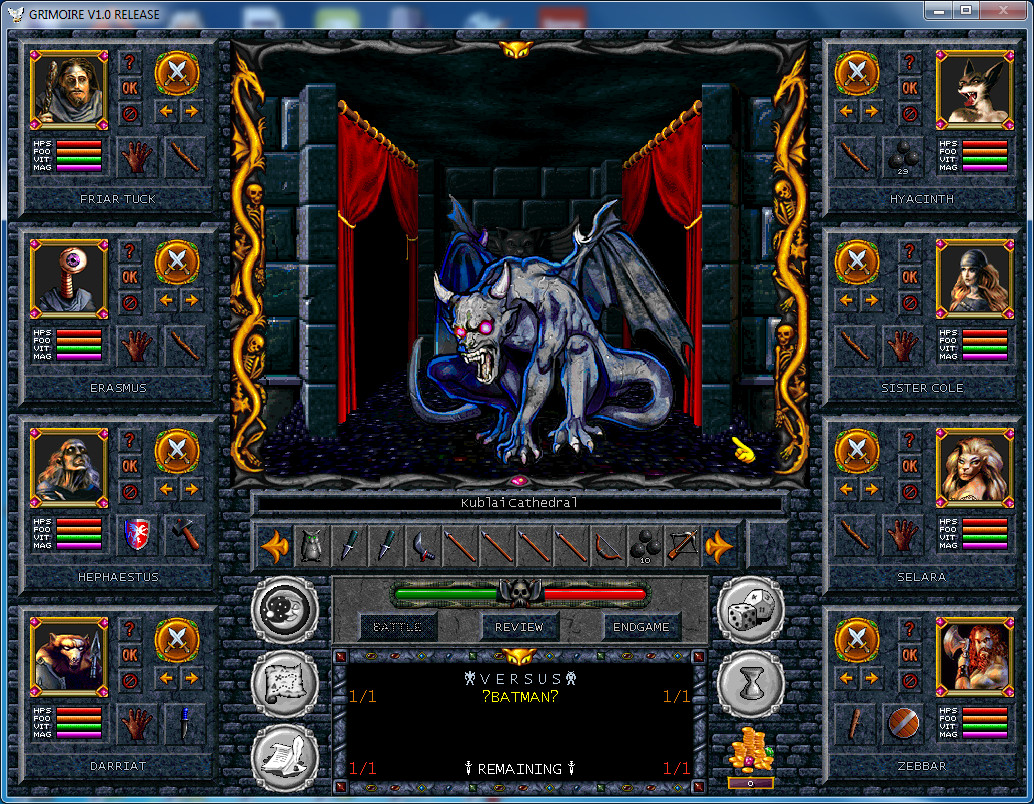
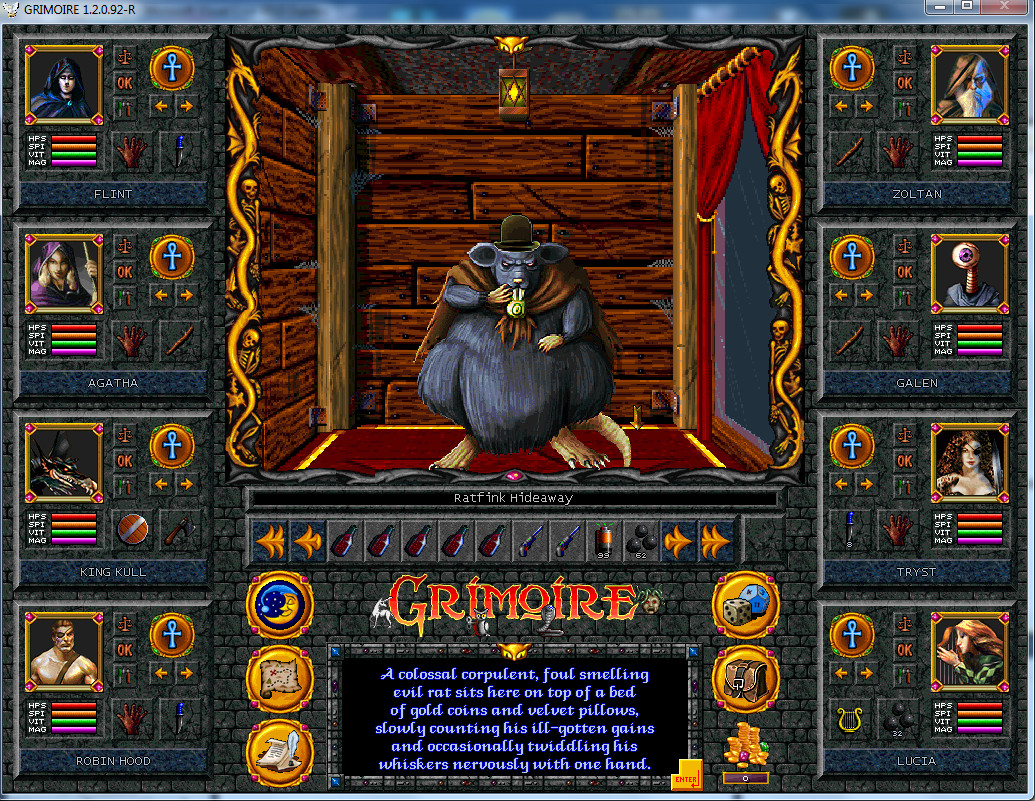
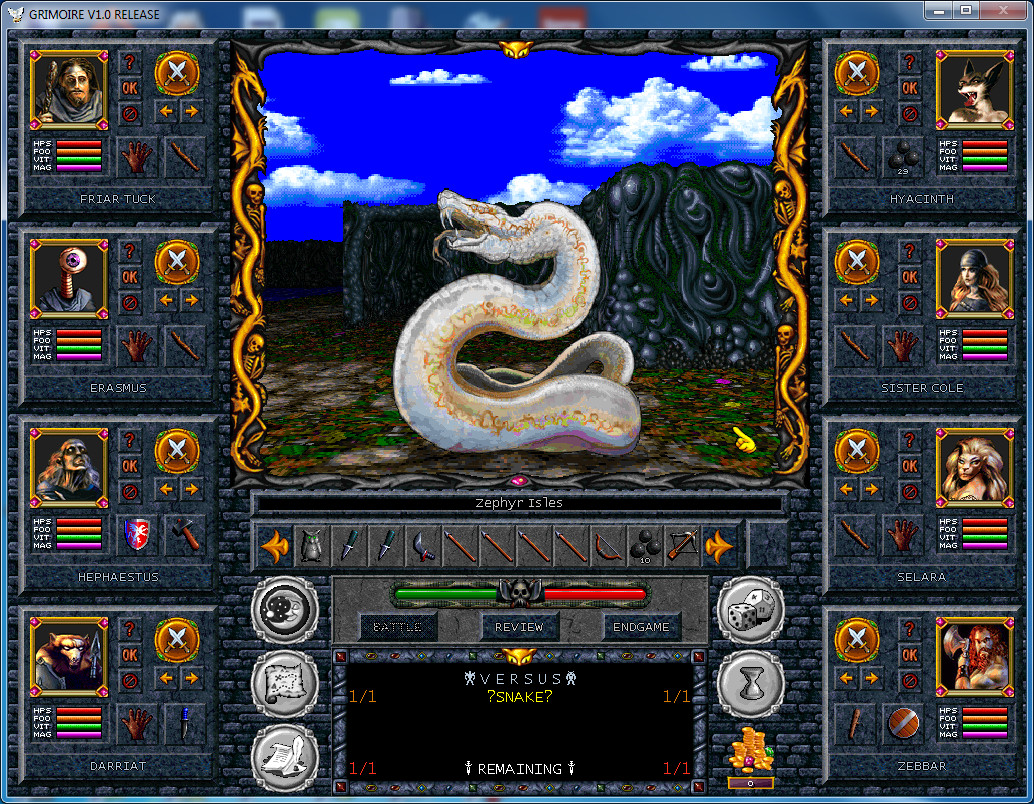
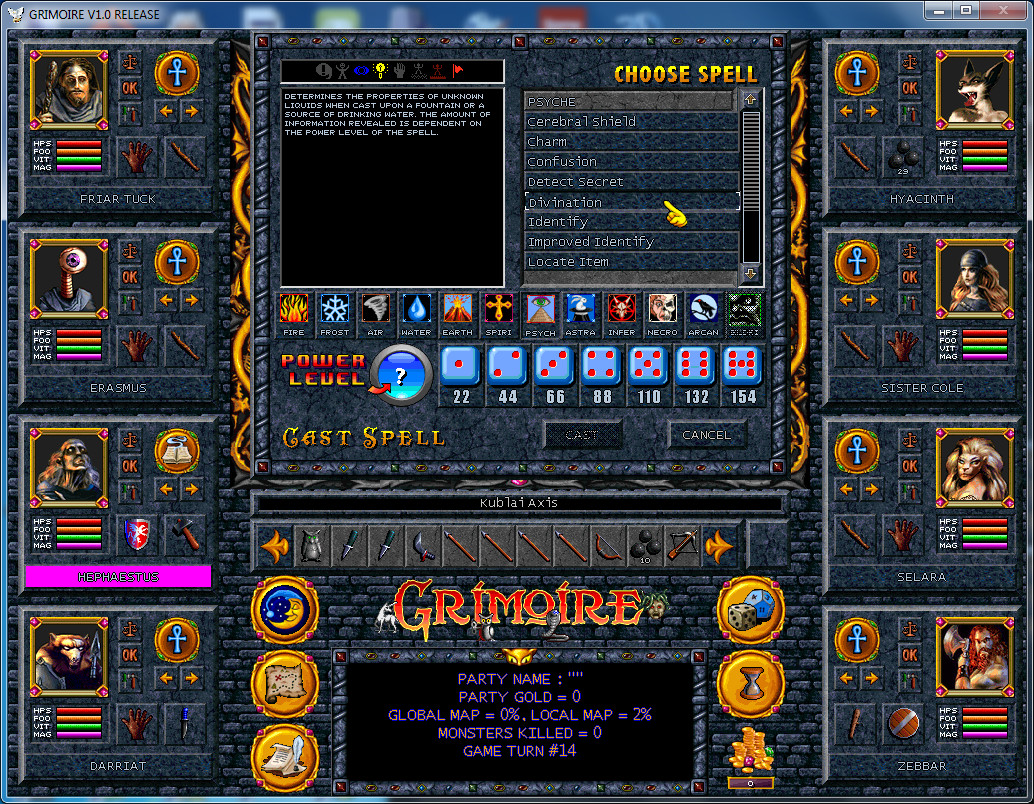
Get an in-depth look at Grimoire : Heralds of the Winged Exemplar (V2) through various videos and screenshots.



Load More






System requirements
These are the minimum specifications needed to play the game. For the best experience, we recommend that you verify them.
Windows
- OS *: Windows XP
- Memory: 256 MB RAM
- Graphics: Windows GDI
- Storage: 100 MB available space
- Sound Card: Windows Media Compatible
Steam Price & Best Deals
User reviews & Ratings
Explore reviews from Steam users sharing their experiences and what they love about the game.
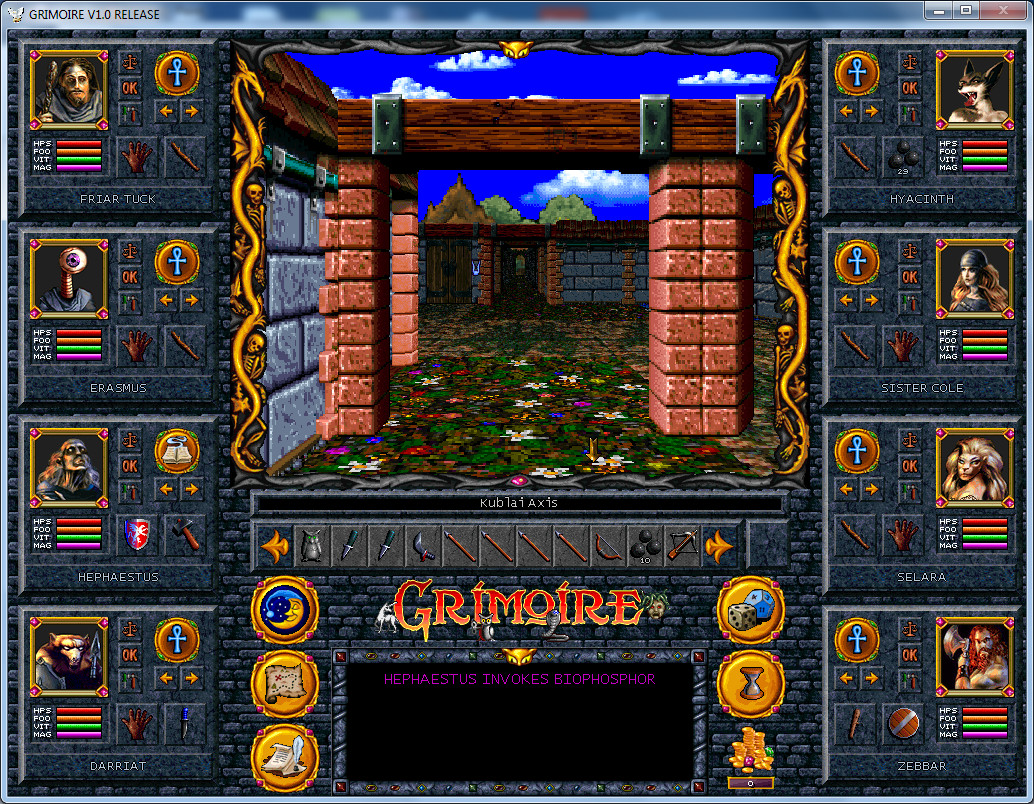
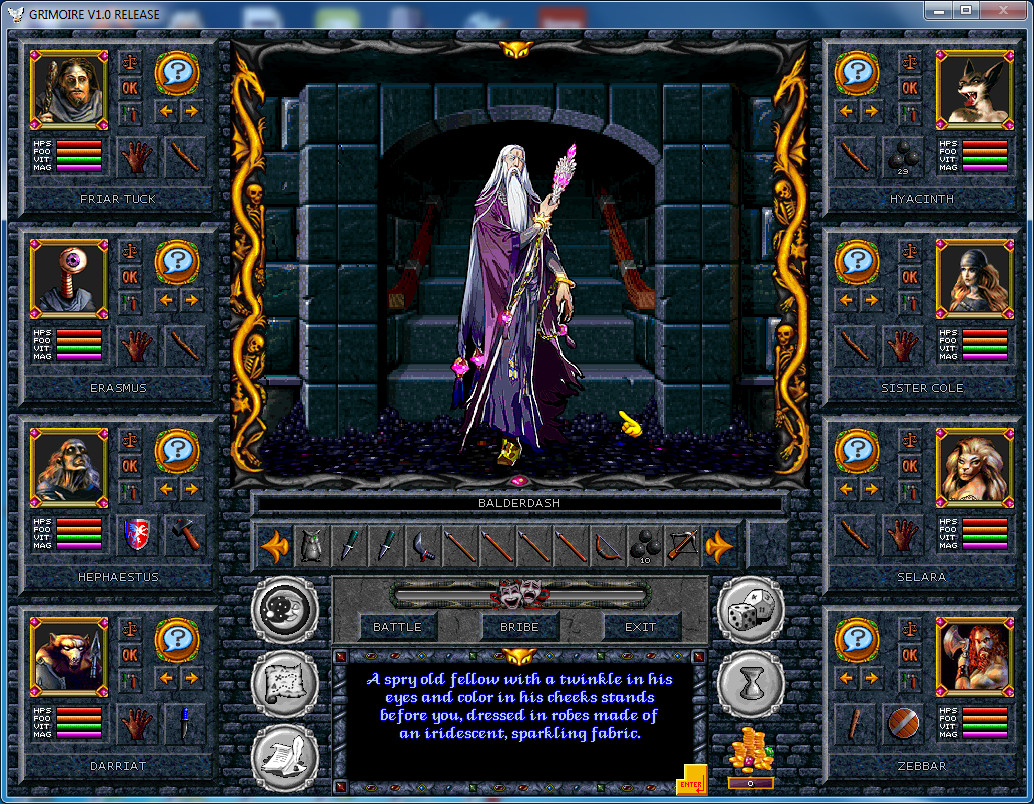
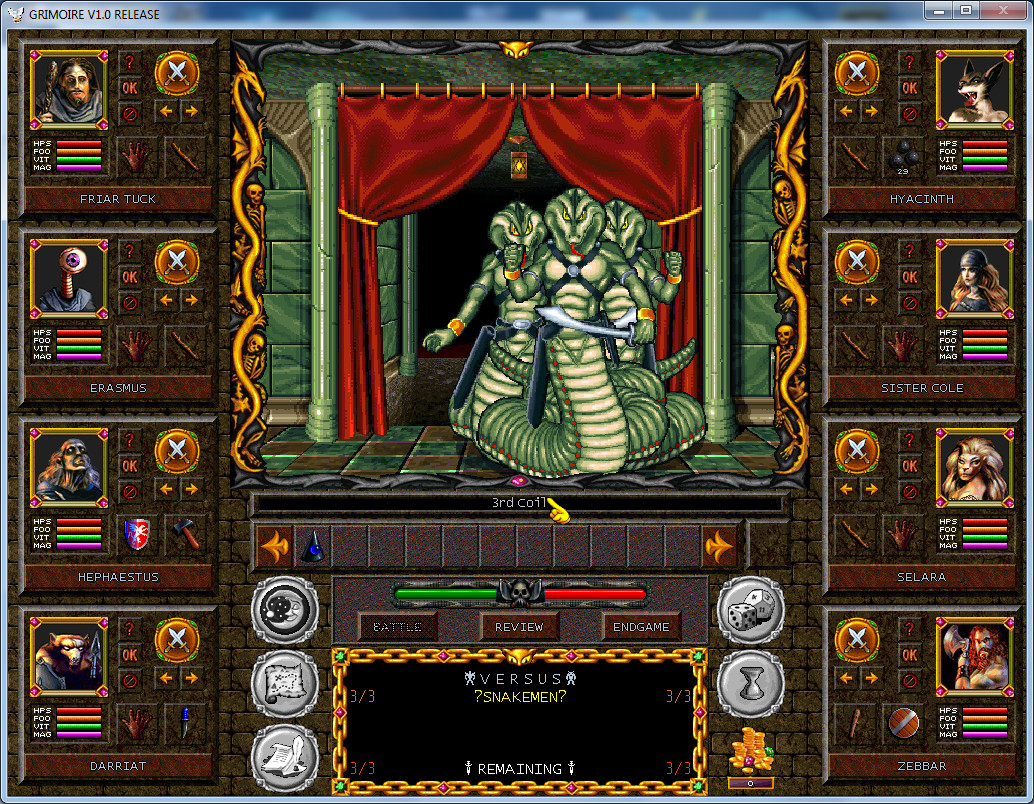
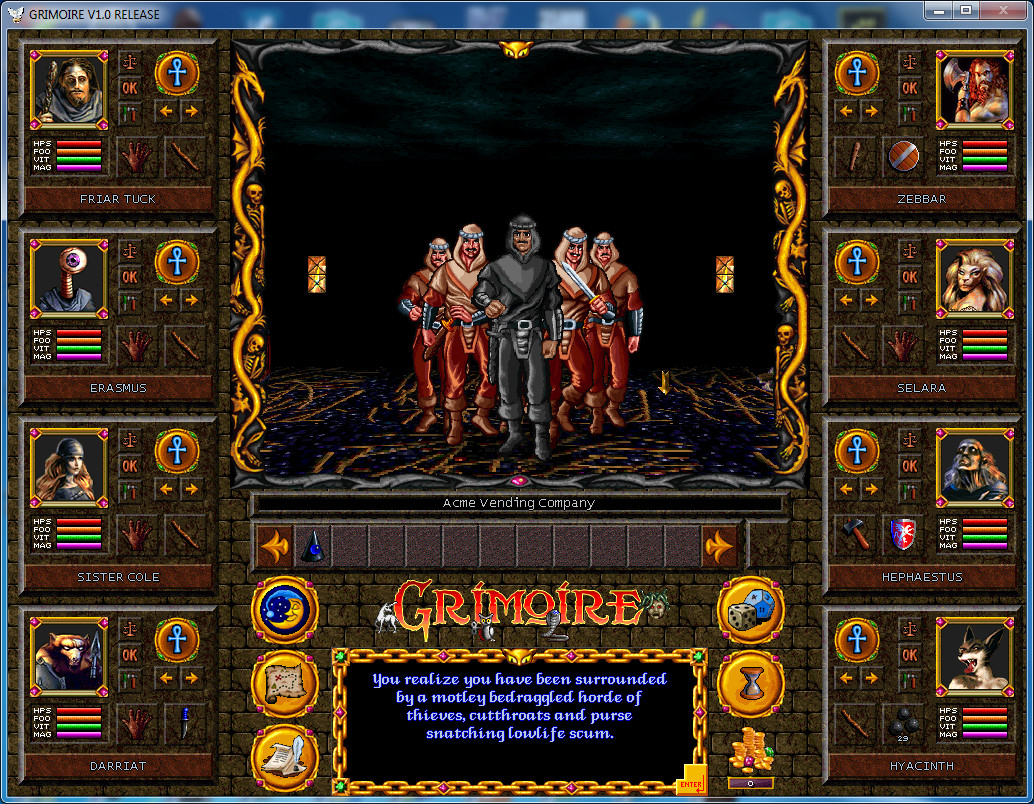
Grimoire: Heralds of the Winged Exemplar (V2) is an enormous, mechanically intricate fantasy RPG that proudly embraces the demanding traditions of classic dungeon crawlers. Developed by Cleveland Mark Blakemore and published by Golden Era Games, it offers an experience built around exploration, party management, tactical combat, and character progression rather than cinematic storytelling or streamlined accessibility. Drawing inspiration from Wizardry, Might and Magic, and other legendary role-playing adventures, the game delivers an unusually ambitious journey filled with dangerous creatures, mysterious locations, and complicated systems. Its greatest attraction is the freedom to explore and experiment, although this same uncompromising philosophy creates a substantial barrier for newcomers. The sheer size of the adventure is immediately impressive. With more than 244 maps and a claimed potential playtime exceeding 600 hours, the game presents a sprawling fantasy world that rewards curiosity and persistence. Dungeons contain hidden passages, environmental puzzles, dangerous encounters, and valuable discoveries that encourage thorough investigation. Exploration follows a traditional first-person, grid-based structure, requiring players to navigate carefully and understand their surroundings. Unlike modern RPGs that constantly direct players toward their next objective, progression often depends on observation, experimentation, and remembering previously discovered information. This freedom creates a satisfying sense of accomplishment, but unclear objectives and frequent backtracking can occasionally turn exploration into a frustrating exercise. Character customization is arguably one of its strongest features. Players can choose from 14 races, 15 professions, and 50 skills, allowing numerous approaches to party composition and specialization. Building a successful group requires understanding how different attributes, abilities, and character roles complement one another. Warriors provide frontline protection, magical specialists contribute offensive and supportive abilities, and utility-focused characters help overcome obstacles encountered during exploration. The extensive customization encourages experimentation and makes party development feel meaningful. However, the abundance of statistics can overwhelm inexperienced players, particularly because poorly planned character combinations may create difficulties later in the adventure. Combat emphasizes tactical decisions through a traditional turn-based system. With more than 240 monster varieties and 144 context-sensitive spells, encounters provide opportunities to experiment with different strategies. Enemy resistances, unusual abilities, and numerous status conditions require players to consider more than straightforward damage output. Resource conservation becomes important during lengthy expeditions, especially when healing supplies and magical capabilities are limited. Victories against powerful opponents can feel genuinely rewarding because preparation often matters more than luck. Unfortunately, the considerable number of encounters can also introduce repetition, while the interface sometimes makes selecting actions more cumbersome than necessary. Equipment management adds another substantial layer of complexity. More than 1,000 items, various carrying containers, crafting workshops, and a shared party inventory provide extensive opportunities to improve characters and manage resources. Discovering unusual equipment can significantly influence combat effectiveness, encouraging players to investigate optional areas. Lockpicking mechanics and interactive environmental challenges further reinforce the game's commitment to detailed role-playing systems. These features contribute to a convincing sense of adventure, although organizing equipment and navigating multiple menus can become tedious during extended sessions. The interaction system also deserves attention for its unconventional approach to conversations. Rather than depending entirely on predetermined dialogue choices, players can communicate with numerous NPCs through a system designed around written phrases and recognizable subjects. The game advertises 64 intelligent characters with a combined vocabulary exceeding 8,000 words. This encourages investigative conversations and experimentation when gathering information. Multiple starting possibilities, alternative endings, and varied approaches to objectives strengthen the sense of player freedom. However, identifying appropriate conversation topics can sometimes feel unnecessarily obscure, making certain interactions less intuitive than their ambitious design suggests. Visually, the game possesses a distinctive retro personality through colorful hand-drawn artwork, illustrated monsters, and traditional dungeon environments. Its presentation deliberately favors the atmosphere of older computer RPGs over contemporary graphical sophistication. The artwork gives many locations an appealing fantasy identity, while MIDI compositions and simple sound effects reinforce the nostalgic atmosphere. Nevertheless, the visuals can appear dated, and the interface frequently feels crowded with information. Customizable layouts provide some flexibility, but they cannot completely resolve the underlying usability concerns. Players who appreciate vintage aesthetics will likely find considerable charm here, while those expecting modern presentation standards may struggle. Several convenience features help make the enormous adventure more manageable. Automapping, automatic walking, automatic healing, a global map atlas, quest journals, and contextual assistance reduce some of the frustrations associated with traditional dungeon crawling. These additions are valuable because the game's complicated structure demands considerable attention. Even with these improvements, the overall experience remains slow-paced and occasionally unforgiving. Some puzzles offer insufficient guidance, while lengthy navigation sequences and repetitive encounters can interrupt the otherwise rewarding exploration. Its greatest weakness is not a shortage of content but the inconsistent accessibility of that content. Steam Deck compatibility is officially classified as Unknown, meaning Valve has not confirmed whether the game meets its handheld compatibility standards. Its modest system requirements suggest that hardware performance may not be the primary obstacle, but the dense interface, extensive menus, and traditional mouse-and-keyboard controls could make handheld gameplay inconvenient. Custom control configurations may help, although functionality and comfort cannot be guaranteed. A desktop computer remains the more practical choice for experiencing its intricate systems. Overall, Grimoire: Heralds of the Winged Exemplar (V2) is a fascinating achievement in traditional role-playing design, offering extraordinary depth, extensive customization, and a massive world that rewards dedicated exploration. Its demanding mechanics and old-fashioned presentation are simultaneously its greatest strengths and most significant limitations. Players seeking an accessible, fast-paced adventure may find it exhausting, but enthusiasts of complex dungeon crawlers can discover a remarkably substantial experience. Despite its awkward interface, uneven pacing, and occasional frustration, its ambition and mechanical richness make it a worthwhile adventure for the right audience. Rating: 7/10
So far looks like Wizardry 7 on total steroids. Have to play it more now. Wizardry 7 (and Gold version which was worse) had no spell descriptions which was annoying. This game is heavily inspired by that game and also shows monsters hp which is also nice. You also do not have to click thru combat orders every turn.
Once thought to be the rambling of a madman, this game finally came out, and I was not prepared. Revisiting it after a couple of year, it's great. If you grew up in the 90's with computer rpg games it is a very nostalgic example of the period and here I am playing this instead of crimson desert. If you arent prepared to play a throwback game avoid, but it's a very good classic blobber Recommend having a grok window up as you play to make the experience smoother. (yes I am serious)
Similar games
View all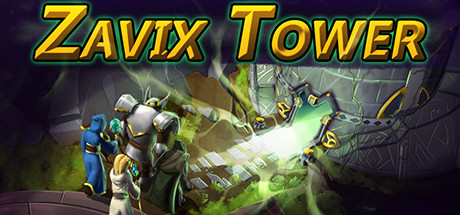

Legend of Grimrock
Use the Dungeon Editor to build entirely new adventures and challenges for other players to solve.
Dungeon Of Dragon Knight
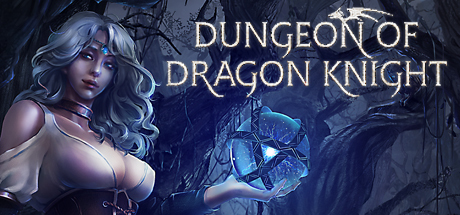
Dungeon of Dragon Knight is a retro dungeon crawler RPG in modern visual design. Pointed by a mysterious witch, your party will descend into a dungeon with traps and monsters in search of the evil Dragon Knight and his treasure weapon. Or, are you fooled by the witch?

Operencia: The Stolen Sun
Operencia: The Stolen Sun embraces everything you love about classic first-person dungeon-crawlers, enhancing the old-school turn-based RPG experience with modern sensibilities. Guide a team of memorable characters through a world inspired by Central European mythology.
Heroes of the Monkey Tavern
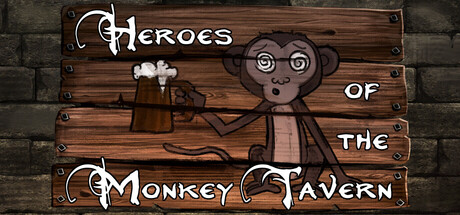
Heroes of the Monkey Tavern is a first-person dungeon-crawling game designed as an introduction to the genre : simplified rules, balanced puzzles and challenges. An independent project developed solo.

Legend of Grimrock 2
Legend of Grimrock 2 is a dungeon crawling role playing game with a modern execution but an oldschool heart. A group of four prisoners have shipwrecked on the secluded Isle of Nex. The island is filled with ancient crumbled ruins, mysterious shrines and a vast underground network of dungeons.

Potato Flowers in Full Bloom
Explore an underground labyrinth in search of mythical seeds in this 3D dungeon crawler RPG! Leaving things to chance will prove fatal🌱Explore underground labyrinths, expanding your range of actions as you go🌿Light up the path, defeat those in front of you, grow stronger, and unravel the mysteries

Archaelund
Explore a vast open world and crawl through dungeons in first person, then fight tactical turn-based battles from a top-down perspective. Guide your adventuring party through Archaelund, mankind's last frontier, and uncover its many secrets.
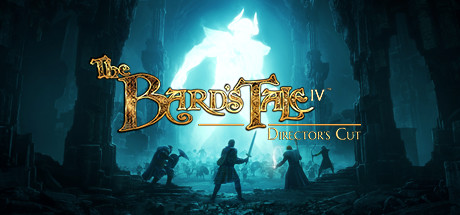
The Bard's Tale IV: Director's Cut
The Bard's Tale IV: Director's Cut is the triumphant return of one of the most iconic RPG series of all-time. Delve into a tactically rich combat system that rewards creativity, solve puzzles to gain treasure and advantages, and discover a beautifully crafted world.

Wizardry 8
A New Wizardry for a New GenerationThe universe is in the throes of violent upheaval and change. Vast and mysterious forces are preparing for the final confrontation. A small group of heroes from distant lands must plunge into the heart of the maelstrom, to uncover long-forgotten secrets, and bring about a new era.

Might & Magic X - Legacy
After a decade, a Might & Magic® RPG is back with both the unique core formula and a new set of improved and fine-tuned features. The best RPG of its class!In the wake of the spectacular events in Might & Magic® Heroes® VI, you will play in a party of four adventurers entangled in intrigue and political machinations unfolding in...

Avernum: Escape From the Pit
Avernum is a land underground, a subterranean nation full of rogues, misfits, and brigands, struggling for survival in the monster-infested darkness. Hunt for glory, treasure, and justice in the underworld. Fight for survival, freedom, and even vengeance in the epic indie cult-classic.
Frequently Asked Questions
Grimoire : Heralds of the Winged Exemplar (V2) is currently priced at 8.19€ on Steam.
No, Grimoire : Heralds of the Winged Exemplar (V2) is currently not on sale. You can purchase it for 8.19€ on Steam.
Yes, Grimoire : Heralds of the Winged Exemplar (V2) received 424 positive votes out of a total of 612 achieving a rating of 6.65.
😐
Grimoire : Heralds of the Winged Exemplar (V2) was developed by Cleveland Mark Blakemore and published by Golden Era Games.
Yes, Grimoire : Heralds of the Winged Exemplar (V2) is playable and fully supported on Windows.
No, Grimoire : Heralds of the Winged Exemplar (V2) is not playable on MacOS.
No, Grimoire : Heralds of the Winged Exemplar (V2) is not playable on Linux.
This information about Grimoire : Heralds of the Winged Exemplar (V2) is not available yet.
This information about Grimoire : Heralds of the Winged Exemplar (V2) is not available yet.
No, Grimoire : Heralds of the Winged Exemplar (V2) does not support VR.
Grimoire : Heralds of the Winged Exemplar (V2) is a single-player game.
No, Grimoire : Heralds of the Winged Exemplar (V2) does not currently offer any DLC.
No, Grimoire : Heralds of the Winged Exemplar (V2) does not support mods via Steam Workshop.
No, Grimoire : Heralds of the Winged Exemplar (V2) does not support Steam Remote Play.
Yes, Grimoire : Heralds of the Winged Exemplar (V2) is enabled for Steam Family Sharing. This means you can share the game with authorized users from your Steam Library, allowing them to play it on their own accounts. For more details on how the feature works, you can read the original Steam Family Sharing announcement or visit the Steam Family Sharing user guide and FAQ page.
You can find solutions or submit a support ticket by visiting the Steam Support page for Grimoire : Heralds of the Winged Exemplar (V2).
Data sources
The information presented on this page is sourced from reliable APIs to ensure accuracy and relevance. We utilize the Steam API to gather data on game details, including titles, descriptions, prices, and user reviews. This allows us to provide you with the most up-to-date information directly from the Steam platform.
Additionally, we incorporate data from the SteamSpy API, which offers insights into game sales and player statistics. This helps us present a comprehensive view of each game's popularity and performance within the gaming community.
Last Updates| Steam data | 19 September 2026 06:11 UTC |
|---|---|
| SteamSpy data | 23 October 2026 14:07 UTC |
| Steam price | 26 October 2026 20:00 UTC |
| Steam reviews | 20 October 2026 16:09 UTC |
If you'd like to dive deeper into the details about Grimoire : Heralds of the Winged Exemplar (V2), we invite you to check out a few dedicated websites that offer extensive information and insights. These platforms provide valuable data, analysis, and user-generated reports to enhance your understanding of the game and its performance.
- SteamDB - A comprehensive database of everything on Steam about Grimoire : Heralds of the Winged Exemplar (V2)
- SteamCharts - Analysis of Grimoire : Heralds of the Winged Exemplar (V2) concurrent players on Steam
- ProtonDB - Crowdsourced reports on Linux and Steam Deck Grimoire : Heralds of the Winged Exemplar (V2) compatibility

Game modes
Features
Online players
2
Developer
Cleveland Mark Blakemore
Publisher
Golden Era Games
Release
04 Aug 2017
Platforms