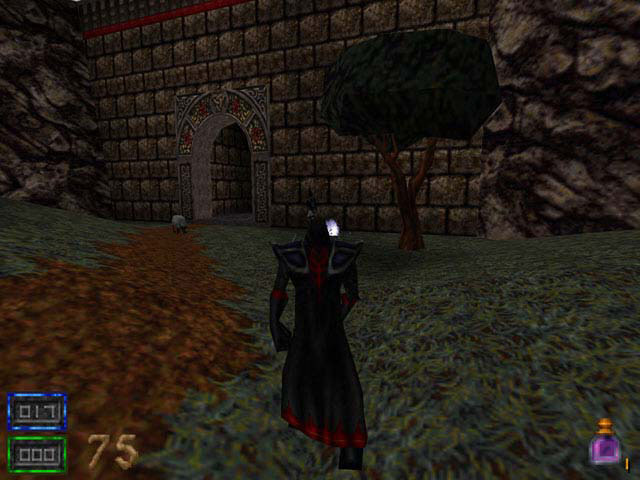
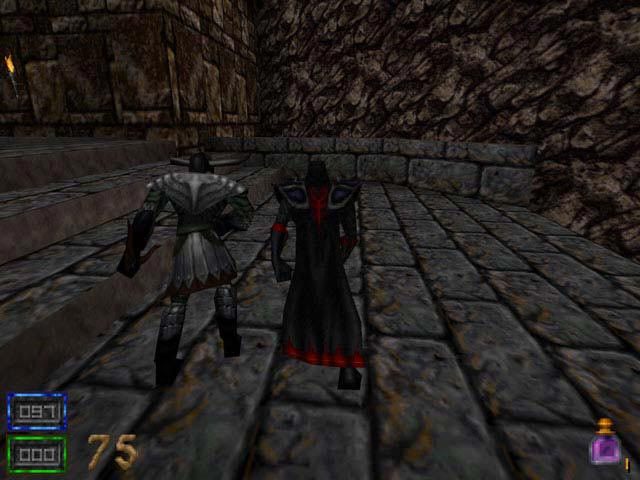
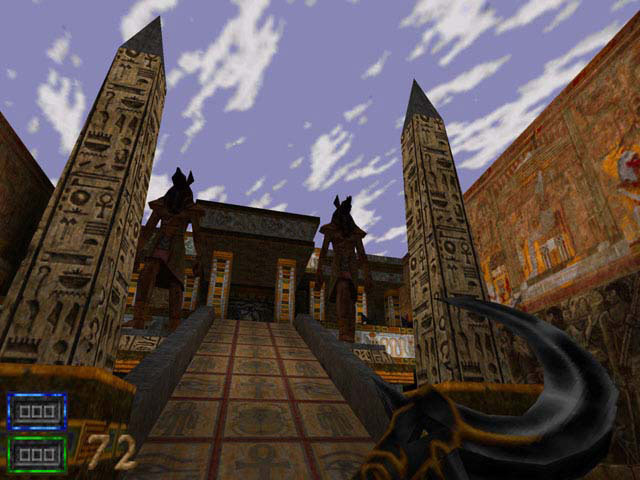
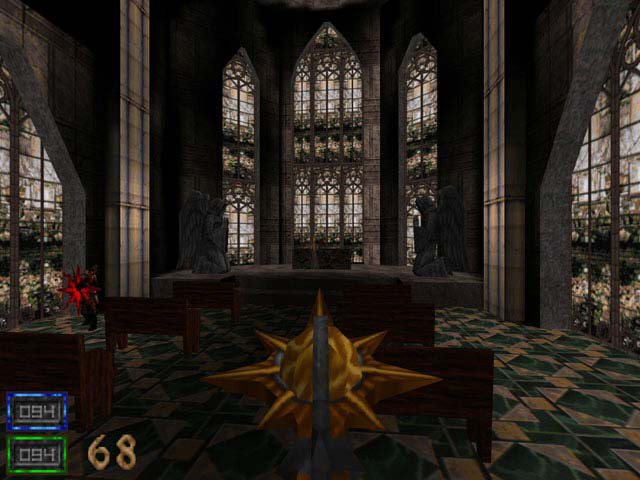
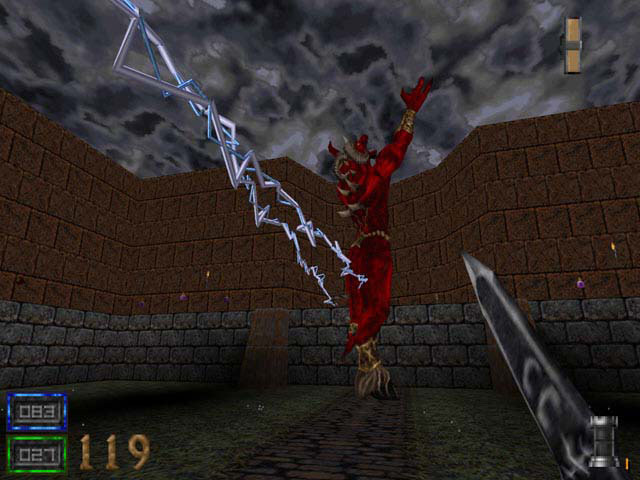
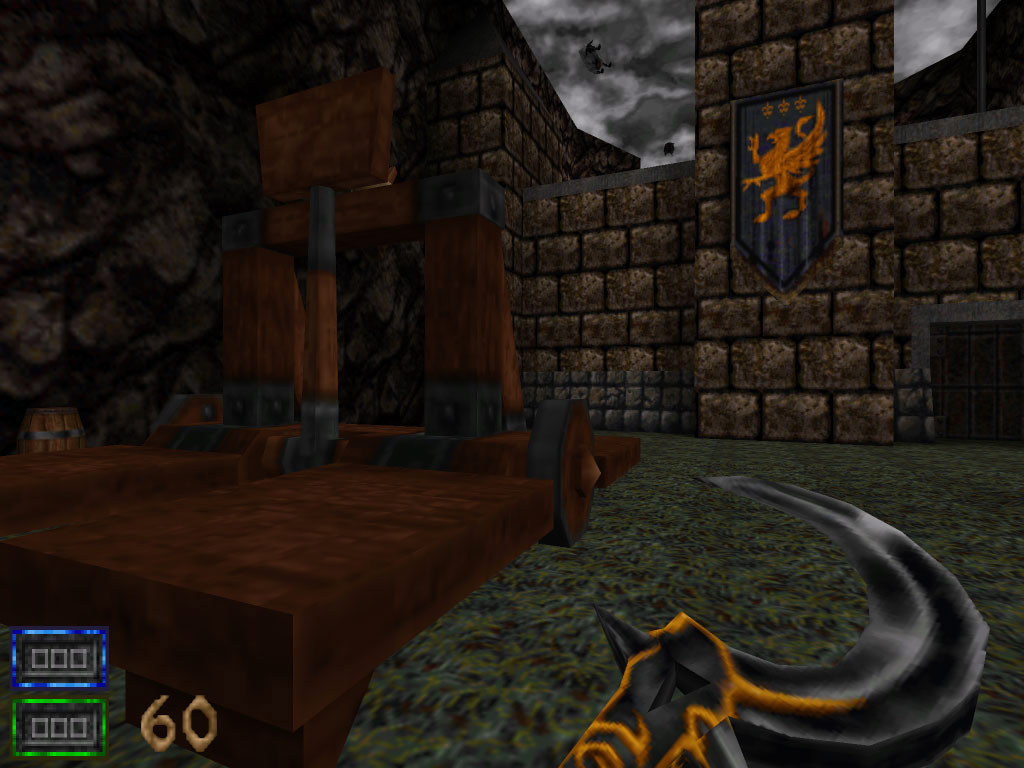
After checking out the recent remasters of Heretic + Hexen by Nightdive, I decided to move on with the series without waiting for Hexen II remaster, which we may not see because Activision owns the rights to part of the game. Particularly, to its only add-on – Portal of Praevus – and that company is known for dumping most of its legacy (though as both Activision and Bethesda (hence id Software) are now owned by Microsoft, maybe the latter one can push buying/transfering the rights through the new owners and we may see forgotten games like Wolfenstein 2009 back on digital shelves but that’s an entirely different topic). The game was originally meant to be called Hecatomb: Beyond Hexen signifying that it is, yet again set, in another universe but once the edgelord John Romero left id Software, just as with Quake, the sequel was simply titled Hexen II. The main question though, is the game as irritating and tedious as its predecessor or have Raven Software learnt from their mistakes and revised the core gameplay? Source ports . First things first, Hexen II runs on the modified version of Quake I engine, so making it work it on modern systems can be difficult. There are a few mods and source ports out there but I personally used UQE Hexen II for the main campaign and Hammer of Thyrion for the addon (because it simply refused to work on the former one). Both are not perfect: the first has some missing textures and lighting is unrendered in some places; the second has poorly rendered blocky lighting, projectiles are not transparent, and standard HUD breaks if you play in anything higher than 640x480. Hexen II . Now about Hexen II itself… As a standalone game it’s just ok, however, in comparison to Hexen I it is a HUGE step forward. Firstly, because of the new 3D engine the maps are relatively small and it’s hard to get lost in them. Secondly, because of the same 3D engine and PC limits of the time, monsters no longer respawn (except for very few places like traps) giving you time and space to explore the levels in detail. Thirdly, the game is no longer about hunting for obscure switches but about finding artifacts and solving puzzles; while there are still some unobvious solutions and confusing moments, it is still not as close as the first game. Finally, in each hub there are notes and tablets that provide useful tips, so the game does feel like a quest to solve and not a copulation to have with every wall in search of a switch. Nonetheless, as I’ve said, Hexen II is still far from being perfect. Some of the puzzles are still unobvious (especially if you don’t pay attention to unusual textures and write down all the tips) and there are some hardly noticeable breakable walls which are mandatory pathways, so I would highly recommend having a text walkthrough at hand. While there are now four different classes, each character still has only four weapons; the new RPG system is very barebone with passive increase of stats and unlocking abilities as you kill enemies. I personally played as a necromancer, and, honestly, it is the most pathetic necromancer I’ve ever seen in a video game. He cannot resurrect dead enemies or simply invoke a corpse minion, his starting weapon is close range (and that’s also true for every class), so once you are out of mana you have to tank all the damage with your face (and the game is very scarce on mana in the first two hubs). The only somewhat necromancer-ish feature is randomly sucking life essence from killed enemies. If the developers couldn’t implement proper necromancer features, why they simply couldn’t name the class “black mage” or something like that? Finally, a bit more about the only official expansion pack - Portal of Praevus. The Steam version of Hexen II doesn’t have it due to the reasons explained above but there are some sites which I cannot name…Unlike the main game, it is much more linear and you will hardly ever have to backtrack to previous locations for artifacts or newly opened passages. It’s not better or worse than the main campaign – it’s just different. The addon still has some unobvious pathways and solutions, so I still recommend having a playthrough tab pinned. There are some new enemies (and some old retextured ones) but the major addition is a new fifth class – demoness. Unlike other classes, all her weapons are ranged which makes the gameplay much smoother even when you run out of mana. Conclusion . So, should you play Hexen II? Well, if you somehow liked Hexen I or hated it but is willing to give the concept another chance – you may enjoy Hexen II. Should you play it now or wait for a potential remaster? Well, if you are an old games fan and used to tinkering with source ports and making the titles run properly through trial and error – you can check out the game now. Otherwise, if you are not in a hurry, I would recommend waiting for a potential remaster – maybe id and Nightdive will bend Activision over and we will actually get it on the next QuakeCon. P.S. If you don’t know, there is actually another game adjacent to the series – Heretic II, which is a direct sequel to Heretic I with the same protagonist. Raven decided to make another radical design change and it is now a 3rd person action-adventure with hack-and-slash and platforming mechanics. Heretic II is also unavailable on Steam, so if id and Nightdive get the rights for the entire Hexen II, I do really hope this game also will be revived as it looks pretty interesting (much more interesting than Hexen I).
Expand the review