


Pixel Dungeon
Pixel Dungeon is an exciting and extremely popular roguelike (more than 2 million mobile installs!). Explore the depths of Pixel Dungeon, collect useful items and fight fierce monsters to find the Amulet of Yendor - the ultimate artefact of this game world!
Sync your Steam wishlist to find the lowest game prices instantly. No login required, just paste your Steam profile URL!
⚡ Try Wishlist Radar!
Sync your Steam wishlist to find the lowest game prices instantly. No login required!
⚡ Try Wishlist Radar!
Close

Kingsway on Steam
Quick menu
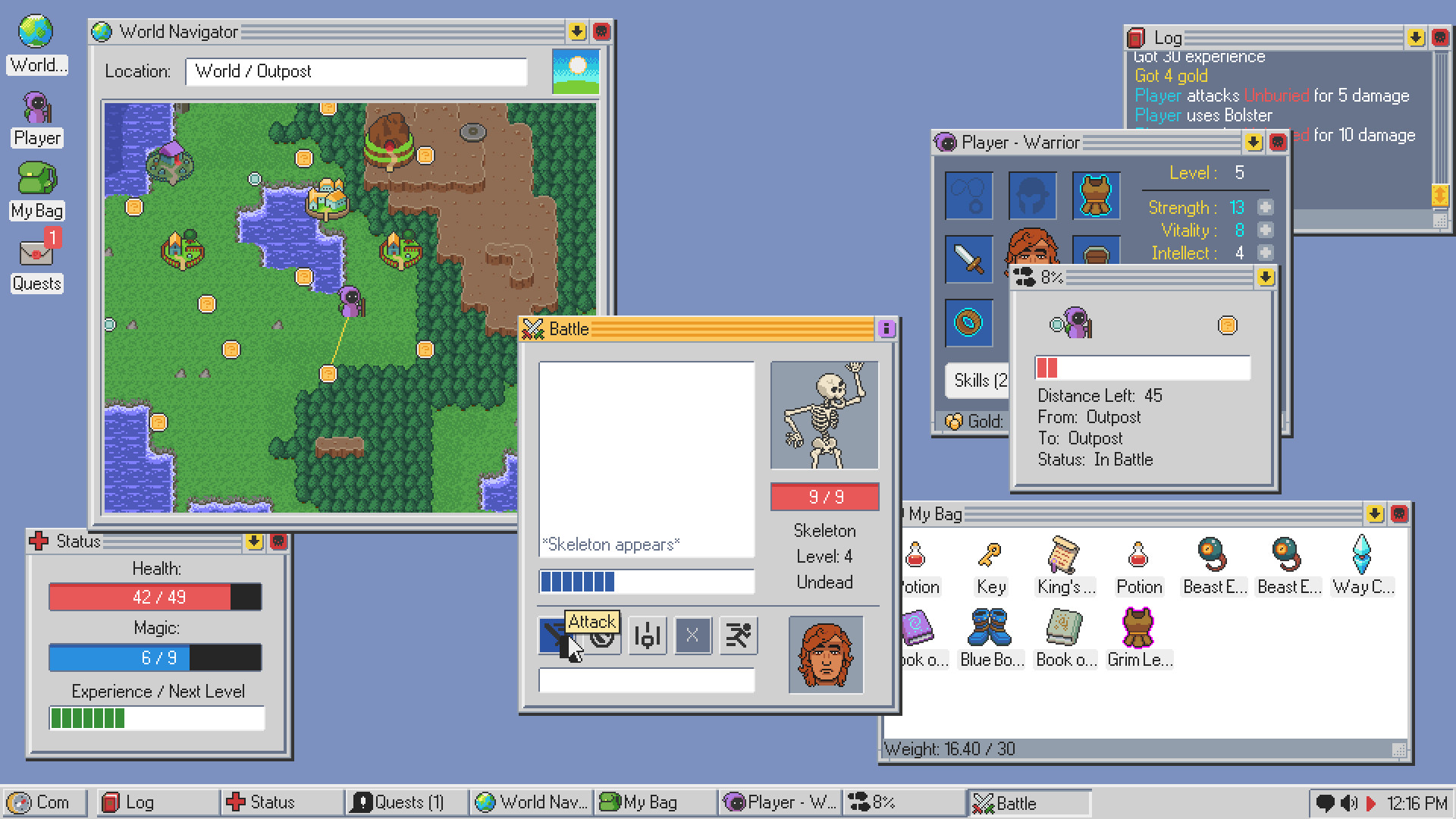
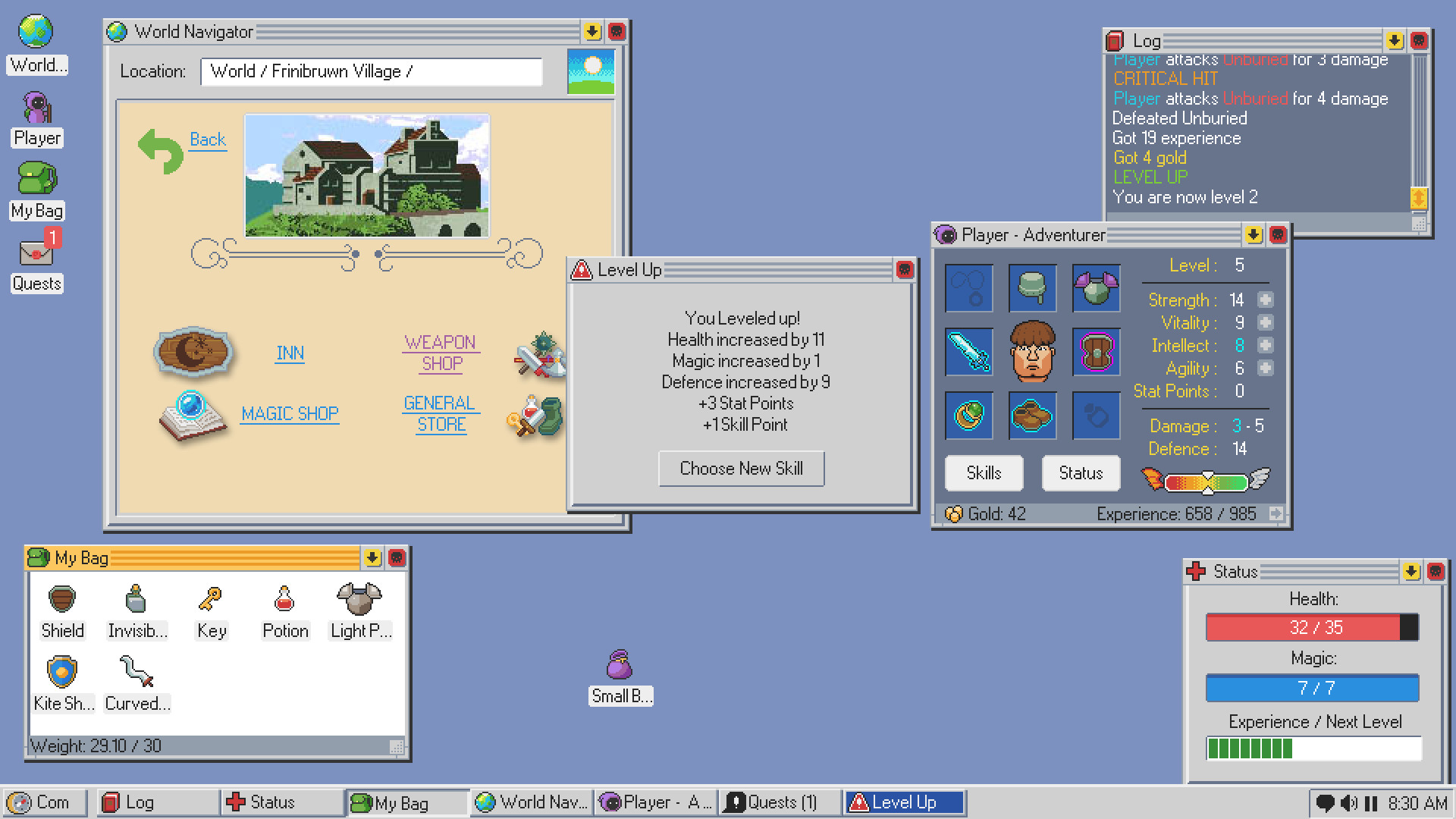
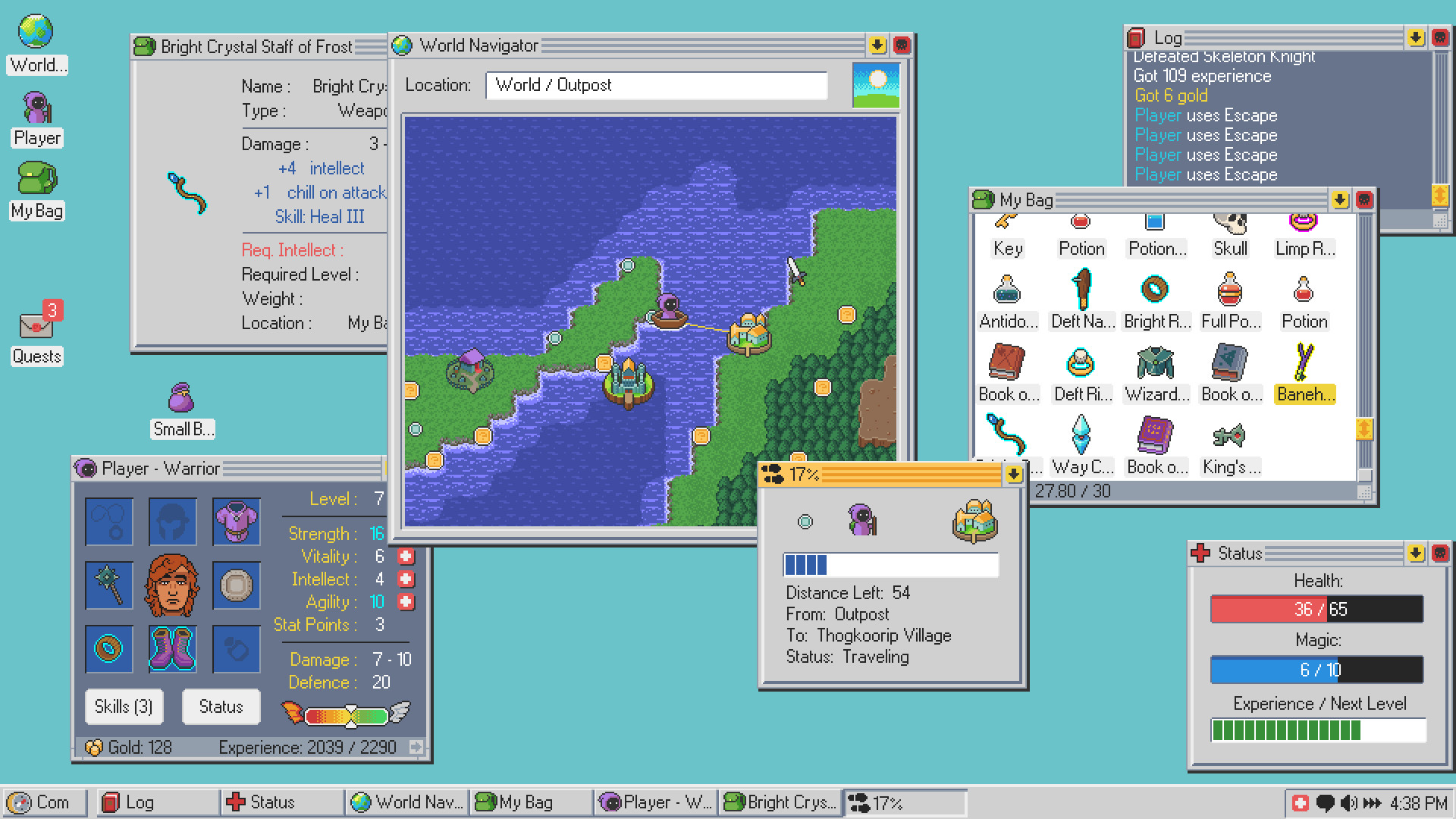
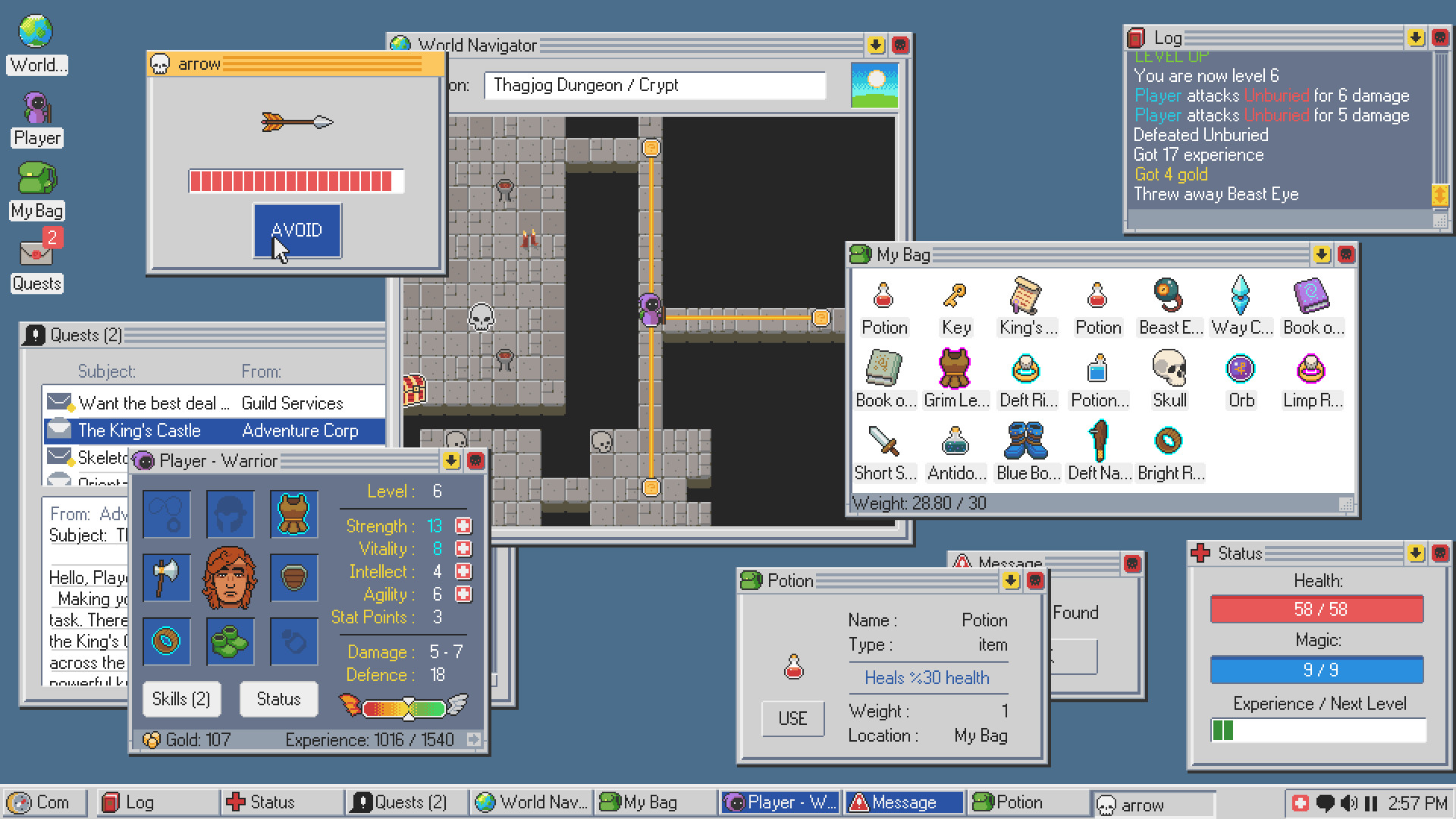
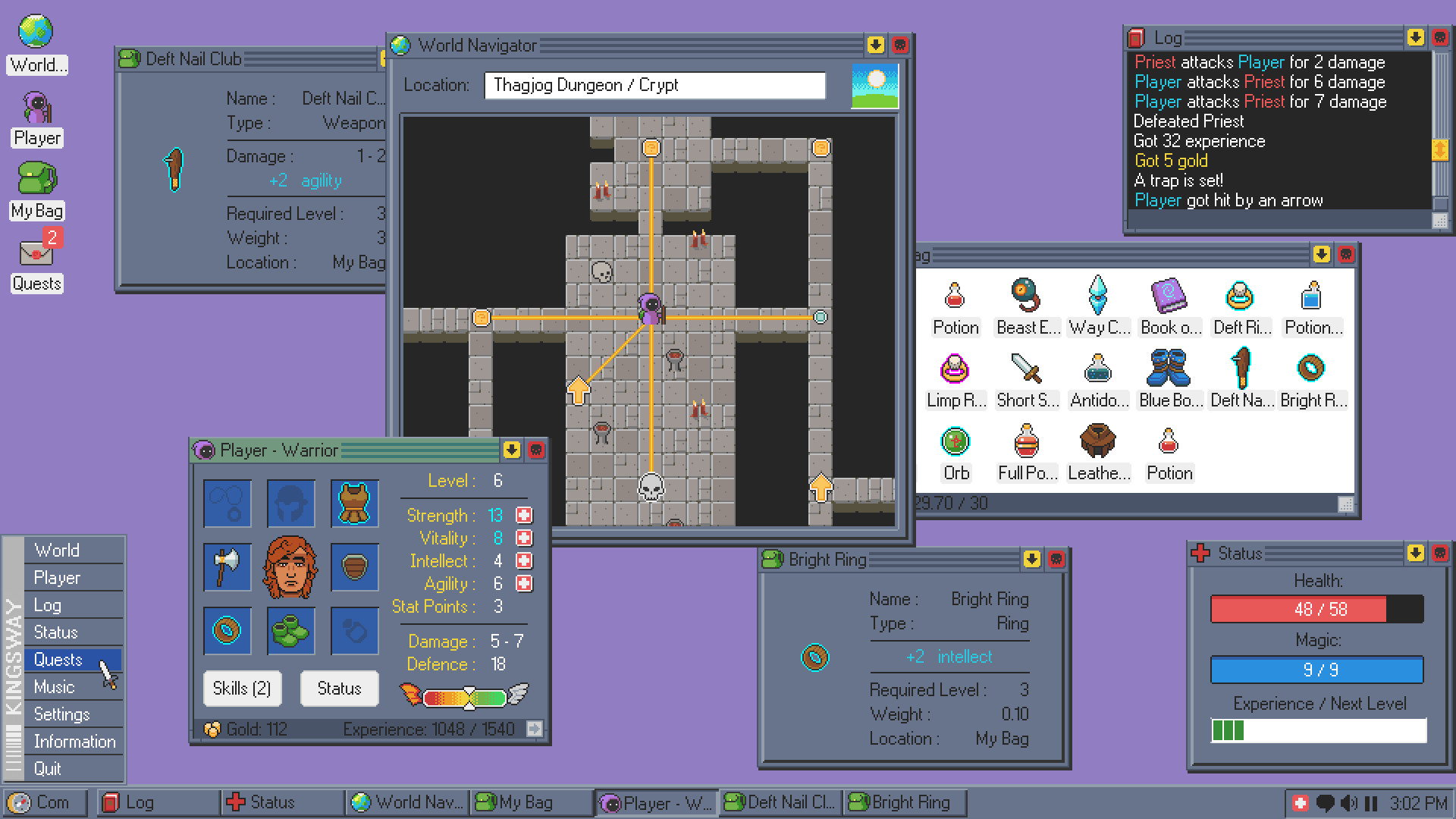
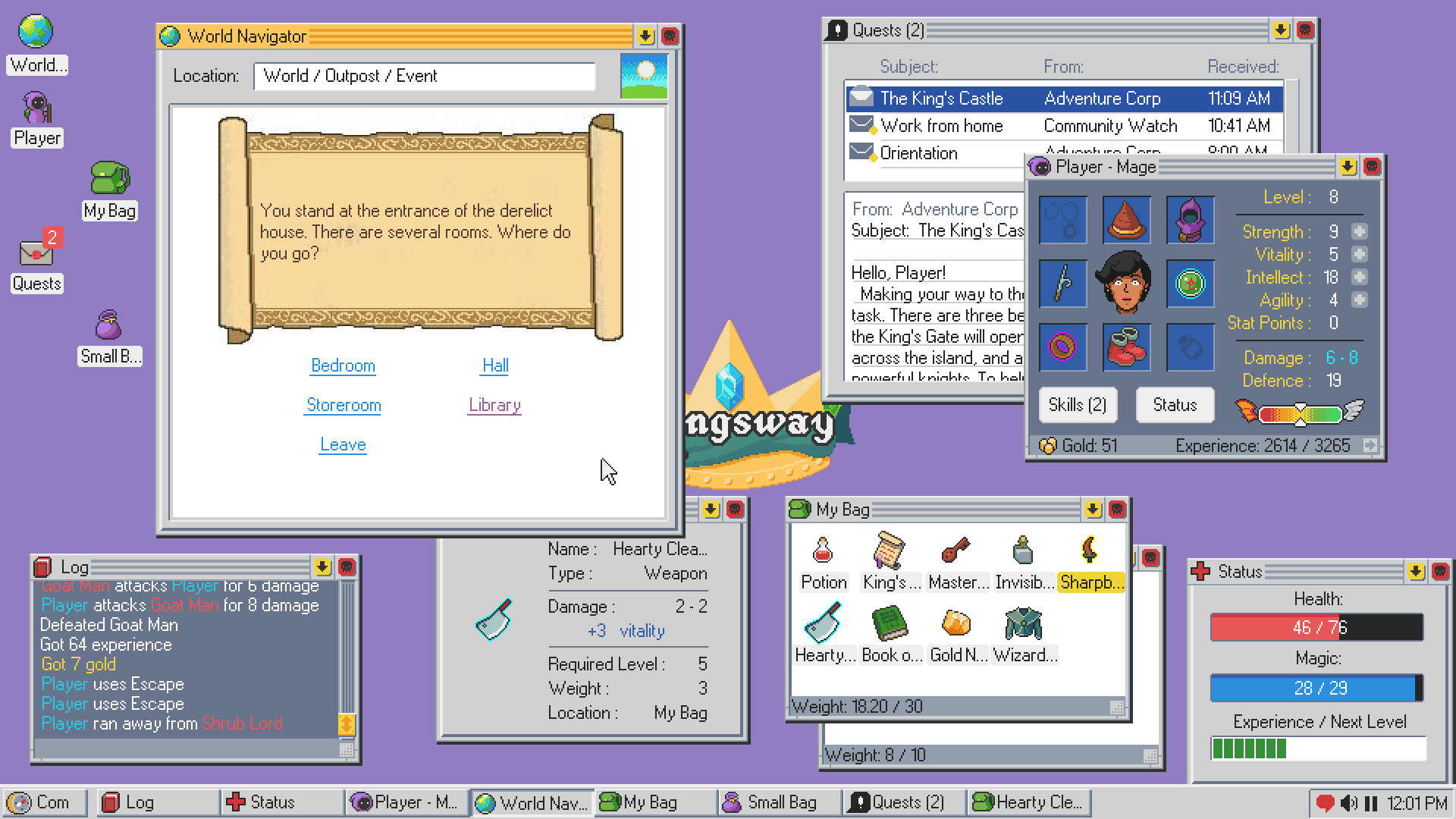
Kingsway is the #1 operating system for daily tasks such as skeleton smashing and loot-organizing. Trouble sorting through all your potions and swords? Don't worry! Kingsway can help you manage, and with an easy to use interface you'll have time leftover for a peaceful stroll through the underworld.
Kingsway is a rpg, adventure and simulation game
developed and published by Andrew Morrish.
Released on July 18th 2017 is available on Windows, Steam Deck and Steam Machine.
It has received 1,646 reviews of which 1,518 were positive and 128 were negative resulting in a rating of 8.8 out of 10. 😎
The game is currently priced at 9.99€ on Steam, but you can find it for 5.26€ on G2A.
The Steam community has classified Kingsway into these genres:
Media & Screenshots
Get an in-depth look at Kingsway through various videos and screenshots.
System requirements
These are the minimum specifications needed to play the game. For the best experience, we recommend that you verify them.
Windows
- OS *: Windows XP, Vista, 7, 8, or 10
- Processor: 2GHz
- Memory: 3 GB RAM
- Graphics: 256MB
- Storage: 100 MB available space
- Additional Notes: Minimum screen resolution of 1024 x 720
Steam Price & Best Deals
User reviews & Ratings
Explore reviews from Steam users sharing their experiences and what they love about the game.
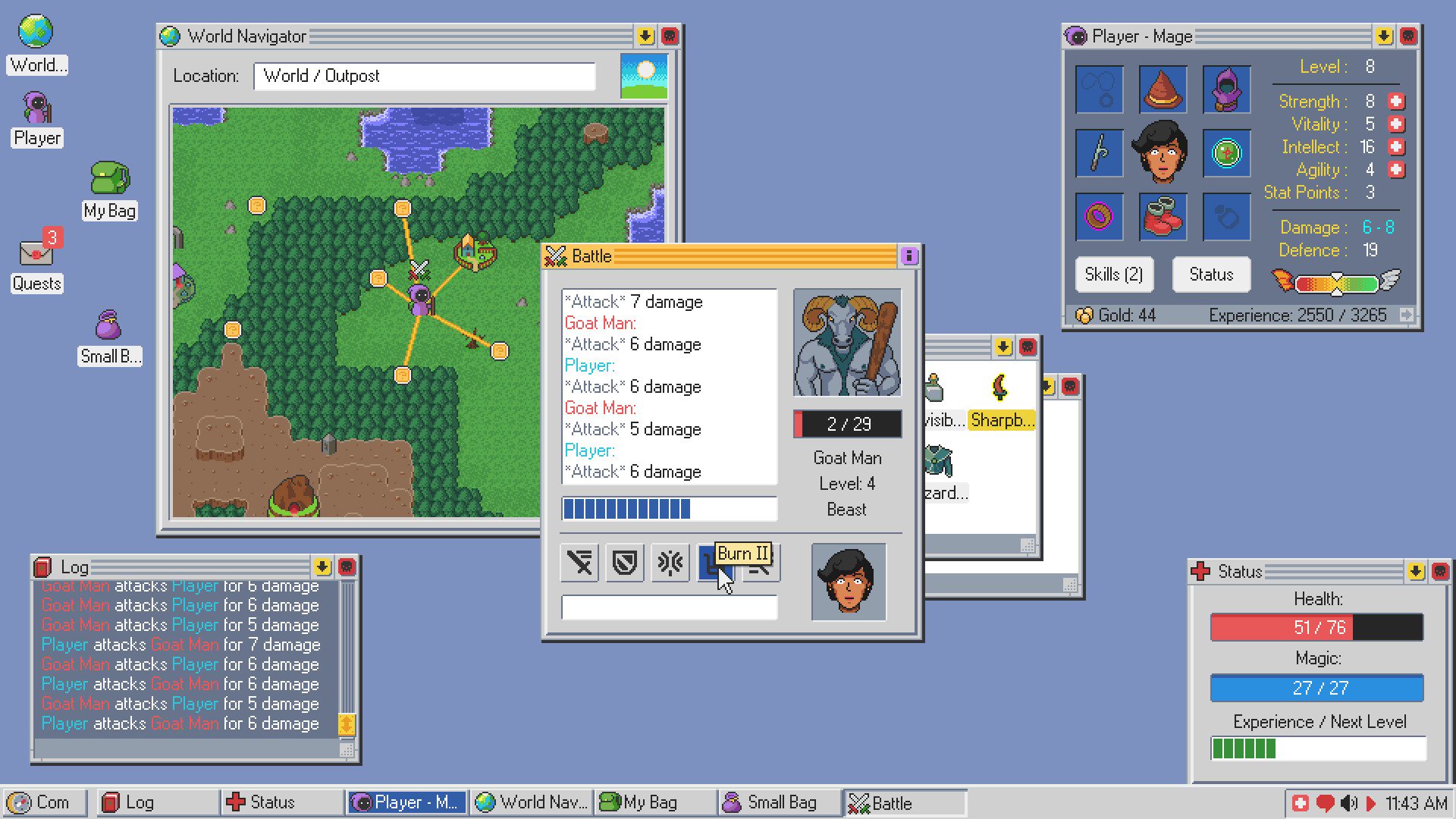
Kingsway takes the familiar ingredients of a fantasy roguelike and presents them through one of the strangest interfaces imaginable: a fictional desktop operating system. Developed and published by Andrew Morrish, the game turns windows, folders, icons, messages, and pop-ups into essential parts of the adventure. Instead of controlling a hero directly across a traditional fantasy landscape, you interact with the world through this simulated computer environment. It sounds like a novelty at first, but the concept is integrated deeply enough into exploration, combat, inventory management, and quests that the interface becomes an actual gameplay mechanic. At its core, Kingsway is still recognizable as a roguelike RPG. Each adventure sends a character into a procedurally generated world filled with roads, settlements, caves, crypts, enemies, treasure, and unpredictable encounters. Permanent death creates meaningful tension because a successful journey can disappear after one disastrous confrontation. Different character options and abilities encourage experimentation, while weapons, armor, useful items, and other discoveries gradually shape each run. There is always a temptation to explore one more dangerous location in search of better equipment, even when retreating would be the safer decision. Combat is where the unusual desktop presentation becomes particularly clever. Enemies effectively appear as windows on the screen, and encounters require players to interact with commands while responding to whatever the opponent is doing. Windows can move around, notifications can demand attention, and the screen can become increasingly busy when danger escalates. Something as mundane as managing applications on a computer suddenly becomes part of surviving a fantasy battle. It gives combat a slightly frantic quality that would be difficult to reproduce through conventional RPG menus. Organization is therefore surprisingly important. Players can reposition windows and arrange information to create a workspace that suits their habits. Inventory management resembles dealing with folders and files, while quests and other information are delivered in ways that reinforce the operating-system illusion. The result is a game where learning how to control the interface efficiently becomes almost as important as understanding character statistics and equipment. The system can deliberately feel inconvenient at times, but that inconvenience is frequently part of the challenge rather than simply poor menu design. There is also freedom in deciding what sort of adventurer to become. Kingsway does not insist that every character behave heroically. Helping people, completing quests, exploring dangerous areas, and fighting hostile creatures are obvious options, but less honorable actions are possible as well. This freedom works especially well with the roguelike structure because every new character can develop differently. Combined with randomized worlds and changing equipment, it gives repeated playthroughs enough unpredictability to make starting over after death more appealing than it might initially seem. Visually, Kingsway commits completely to its retro-computer identity. Pixel artwork, primitive-looking windows, icons, desktop elements, and deliberately dated interface design make it resemble software discovered on an old computer. The presentation is simple, but simplicity works in its favor. Fantasy imagery appearing inside an imitation operating system creates a charming contrast, while quests arriving like computer messages and enemies behaving like troublesome pop-ups give the adventure an understated sense of humor. The game understands its central joke without relying entirely on that joke for entertainment. The roguelike structure provides the substance underneath the presentation. Procedural generation keeps individual journeys unpredictable, equipment discoveries provide meaningful improvements, and permanent death makes survival important. Some runs inevitably feel more favorable than others, and losing a developed character can be frustrating. The interface can also become intentionally awkward during stressful encounters. Players who prefer polished modern menus, persistent progression, or elaborate storytelling may struggle with these aspects. Kingsway is much more interested in experimentation, systems, and replayability than cinematic spectacle. Steam Deck compatibility is officially categorized as Playable rather than fully Verified. Performance with the default graphics configuration is considered suitable, and the game can run successfully on SteamOS. However, handheld players should expect compromises. Some functionality is not fully accessible through the default controller configuration, touchscreen interaction or a community controller layout may occasionally be useful, and text entry can require manually opening the virtual keyboard. Some interface text may also appear small, while certain prompts can display keyboard, mouse, or non-Steam Deck controller icons. It is therefore functional on the Deck, but the experience is less seamless than a fully optimized handheld release. Kingsway ultimately succeeds because its presentation and mechanics are inseparable. Remove the fake operating system and there would still be a functional roguelike underneath, but much of its identity would disappear. The constant juggling of windows, equipment, messages, encounters, and resources transforms familiar RPG ideas into something genuinely distinctive. It can be awkward, unforgiving, and occasionally chaotic, yet those qualities contribute to its character. For players who appreciate unconventional indie games, retro computer aesthetics, procedural RPGs, and permanent-death adventures, this is an inventive interpretation of the genre that remains memorable long after its desktop has been closed. Rating: 8/10
Really awesome, comfy RPG roguelike - but MAN I wish it had more content. A run is ~2 hours long, and once you've finished 2-3 runs you've basically seen everything this game has to offer aside from some alternate endings. (note: I've played way more than 6 hours on someone else's account) Quests are repeated between each run, dungeons have basically no variance, the bosses are all the same, etc. Also, once you understand the "meta", it's basically impossible to lose and the game isn't that tough at all. Kingsway is basically a 10/10, it's just short. The experience of playing on an old OS is superb and really well designed. Praying for a sequel some day, but it's looking unlikely because it's been 9 years since Kingsway came out. I might end up making a game similar to this myself some day.
TLDR: 7/10. Decent enough, but has too many weak points for what it is trying to be. I wouldn't call it bad, but beating a roguelike on my first run is a bit of a bruh moment. You do get to unlock some challenge mode stuff and extra starting bonuses after beating it, based on your character's level, but I guess the transience of it all is the core point, because your character ceases to be no matter the ending you get. You can see it in the character picking list, but the only option you get is to bury it. Gameplay wise, it really doesn't evolve. The first bandit you fight is the same as the last boss you fight, and if you have even the most basic reading comprehension, you can become insanely overpowered very easily, even with the time limit the game presents you with. I was around level 19 on my first run with an adventurer that would permanently stunlock everything, and my second run was as a rogue who, you guessed right, would stunlock everything with the critical stun skill and just constantly critting. It becomes even easier after you get the crown as a starter item, but whatever class you get, just stunlock the hell out of your opponent. It is the most effective method. I am on my 3rd run and spoilers: beat the demon lord and am waiting for Skyeater to cover the entire world just to give it an ass whooping end of spoilers. Overall, the game is repetitive even for a roguelike. You get the exact same quests in the exact same order with the exact same rewards every playthrough no matter your character. Reputation hardly matters because shops are useless 99% of the time. Combat can pose some difficulty only in the early game; once you're past the first 6 levels, I'd say you're almost guaranteed to complete that run. While I wouldn't call it bad by any means, you're just doing the same things on all your repeat runs. The class variety doesn't change anything because of the gameplay nature of it. Think of it like a turn based RPG but based on speed, so if your attacks are fast enough you take 2 turns per 1 turn your enemy takes, and vice versa can happen. Now you get why stunlocks are so powerful: no matter the class you pick, you're simply pressing a button and their HP is lowering, whether that button is called attack, strong attack, astral storm, fire, etc. It barely makes a difference, you just upgrade different numbers. Not a bad game per se, but it lacks replayability for a game that's focused so heavily on replayability and transience.
Similar games
View all

Home Behind 2
Home Behind 2 is a Roguelike RPG which set in Scaria, a country engulfed in a ten-year civil war. Lead a patchwork group of revolutionary fighters into the depths of the government's territory as you struggle to overthrow a brutal authoritarian regime!

Pixel Privateers
Pixel Privateers is a Squad Based Tactical RPG “Loot ‘Em Up” that will send your team of mercenaries through a mysterious wormhole on a quest to gather technology for your employer. An entire galaxy awaits - full of worlds to explore, factions to encounter, and epic gear to collect!
Deep Dungeons of Doom
This game is only for the brave. Dungeons await, each one deeper, each one more perilous and each one more challenging than the last.

幻想三國誌5/Fantasia Sango 5
Fantasia Sango 5 is based on the post era of the Three Kingdoms. At the time, hosts like Cao Cao and Liu Bei are all gone. Cao Pi, son of Cao Cao, at the northern territory proclaims himself emperor, and uses Sima Yi to start his expansion proactively.
Knights of Pen and Paper 2
Prepare to inhabit a world of chivalry, class warfare and off-beat pop references. Knights of Pen & Paper 2 is a turn-based, retro style, pixel-art adventure full of danger, intrigue, death, and saving throws!

Rogue Heroes: Ruins of Tasos
Rogue Heroes is a topdown, roguelite adventure game inspired by the Zelda franchise. Play solo or team up with your friends to combat procedurally generated dungeons and take down the evil Titans that threaten to overwhelm the land of Tasos!
bit Dungeon II
bitDungeon II is fast action-adventure game with a giant overworld to explore. You are a spirit in an undead world of demons. Your "loved one's " grave has been desecrated. Fight through these corrupted lands, and bring peace to her soul.

DRAPLINE
"DRAPLINE" is a roguelite training game where you raise a dragon girl who eats anything and train her to become the strongest in one year. Feed her a variety of things to increase her abilities, combine various skills to build your own strategy, and defeat the impending catastrophe!

Weapon Shop Fantasy
A shop game with RPG? Or is it RPG with a shop? Collect materials, Craft weapons, Train your staff and defeat your enemy! This is Weapon Shop Fantasy!
Frequently Asked Questions
Kingsway is currently priced at 9.99€ on Steam.
No, Kingsway is currently not on sale. You can purchase it for 9.99€ on Steam.
Yes, Kingsway received 1,518 positive votes out of a total of 1,646 achieving a rating of 8.77.
😎
Kingsway was developed and published by Andrew Morrish.
Yes, Kingsway is playable and fully supported on Windows.
No, Kingsway is not playable on MacOS.
No, Kingsway is not playable on Linux.
Yes, Kingsway is playable on Steam Deck, though it might require a few minor tweaks. Make sure to check the Steam store page and community feedback on ProtonDB for exact compatibility details.
Yes, Kingsway is playable on Steam Machine, though it might require a few minor tweaks. Make sure to check the Steam store page and community feedback on ProtonDB for exact compatibility details.
No, Kingsway does not support VR.
Kingsway is a single-player game.
No, Kingsway does not currently offer any DLC.
No, Kingsway does not support mods via Steam Workshop.
No, Kingsway does not support Steam Remote Play.
Yes, Kingsway is enabled for Steam Family Sharing. This means you can share the game with authorized users from your Steam Library, allowing them to play it on their own accounts. For more details on how the feature works, you can read the original Steam Family Sharing announcement or visit the Steam Family Sharing user guide and FAQ page.
You can find solutions or submit a support ticket by visiting the Steam Support page for Kingsway.
Data sources
The information presented on this page is sourced from reliable APIs to ensure accuracy and relevance. We utilize the Steam API to gather data on game details, including titles, descriptions, prices, and user reviews. This allows us to provide you with the most up-to-date information directly from the Steam platform.
Additionally, we incorporate data from the SteamSpy API, which offers insights into game sales and player statistics. This helps us present a comprehensive view of each game's popularity and performance within the gaming community.
Last Updates| Steam data | 03 October 2026 22:03 UTC |
|---|---|
| SteamSpy data | 22 October 2026 14:31 UTC |
| Steam price | 26 October 2026 19:58 UTC |
| Steam reviews | 20 October 2026 10:08 UTC |
If you'd like to dive deeper into the details about Kingsway, we invite you to check out a few dedicated websites that offer extensive information and insights. These platforms provide valuable data, analysis, and user-generated reports to enhance your understanding of the game and its performance.
- SteamDB - A comprehensive database of everything on Steam about Kingsway
- SteamCharts - Analysis of Kingsway concurrent players on Steam
- ProtonDB - Crowdsourced reports on Linux and Steam Deck Kingsway compatibility

Game modes
Features
Online players
6
Developer
Andrew Morrish
Publisher
Andrew Morrish
Release
18 Jul 2017
Platforms
Clicking and buying through these links helps us earn a commission to maintain our services.