
Deep Dungeons of Doom
This game is only for the brave. Dungeons await, each one deeper, each one more perilous and each one more challenging than the last.
Sync your Steam wishlist to find the lowest game prices instantly. No login required, just paste your Steam profile URL!
⚡ Try Wishlist Radar!
Sync your Steam wishlist to find the lowest game prices instantly. No login required!
⚡ Try Wishlist Radar!
Close

Pixel Dungeon on Steam
Quick menu
Pixel Dungeon is an exciting and extremely popular roguelike (more than 2 million mobile installs!). Explore the depths of Pixel Dungeon, collect useful items and fight fierce monsters to find the Amulet of Yendor - the ultimate artefact of this game world!
Pixel Dungeon is a pixel graphics, rpg and dungeon crawler game
developed and published by Retronic Games.
Released on May 29th 2015 is available on Windows, MacOS and Linux.
It has received 432 reviews of which 387 were positive and 45 were negative resulting in a rating of 8.3 out of 10. 😎
The game is currently priced at 4.50€ on Steam.
The Steam community has classified Pixel Dungeon into these genres:
Media & Screenshots
Get an in-depth look at Pixel Dungeon through various videos and screenshots.


Load More


System requirements
These are the minimum specifications needed to play the game. For the best experience, we recommend that you verify them.
Windows
- OS: XP / Vista / 7 / 8
- Processor: 1.7+ GHz or better
- Memory: 1 GB RAM
- Graphics: OpenGL 3.0, 256Mb RAM
- Storage: 120 MB available space
MacOS
- OS: 10.8
- Processor: 1.7+ GHz or better
- Memory: 1 GB RAM
- Graphics: OpenGL 3.0, 256Mb RAM
- Storage: 120 MB available space
Linux
- Processor: 1.7+ GHz or better
- Memory: 1 GB RAM
- Graphics: OpenGL 3.0, 256Mb RAM
- Storage: 120 MB available space
Steam Price & Best Deals
User reviews & Ratings
Explore reviews from Steam users sharing their experiences and what they love about the game.
Pixel Dungeon is a roguelike adventure developed and published by Retronic Games that successfully captures the spirit of old-school dungeon exploration while offering enough modern refinements to remain engaging for today's players. Inspired by classic turn-based dungeon crawlers, the game challenges players to venture ever deeper into a dangerous labyrinth in pursuit of the legendary Amulet of Yendor. Every descent is filled with uncertainty, as randomly generated environments, unpredictable enemy encounters, and scarce resources ensure that each playthrough unfolds differently. Rather than relying on flashy visuals or cinematic storytelling, Pixel Dungeon places its emphasis on meaningful gameplay decisions, rewarding careful planning and adaptability above all else. The game's procedural generation is one of its defining strengths. Every expedition presents a newly constructed dungeon with unique room layouts, hidden pathways, dangerous traps, valuable treasure, and unpredictable monster placements. This constantly changing structure gives the adventure exceptional replay value, as memorization is never enough to guarantee success. Instead, players must continuously evaluate their surroundings and adjust their strategies based on whatever challenges the dungeon presents. The permanent death mechanic further raises the stakes, making every battle and every item choice feel significant. Losing a well-developed character can be frustrating, but it also encourages players to learn from mistakes and improve with each new attempt. Pixel Dungeon offers multiple character classes that encourage varied playstyles. Whether choosing the heavily armored Warrior, the spell-focused Mage, the stealthy Rogue, or the ranged Huntress, each class provides unique advantages and tactical opportunities. As players advance through the dungeon, additional specialization options allow each run to develop its own identity. This flexibility keeps repeated playthroughs fresh, as experimenting with different class combinations and strategies often leads to entirely different experiences. The progression system remains straightforward while still offering enough depth for experienced roguelike fans to refine their preferred builds. Exploration consistently rewards curiosity, but it also demands caution. The dungeon is packed with weapons, armor, magical wands, enchanted equipment, potions, scrolls, rings, artifacts, and countless other collectible items that can dramatically influence survival. Many consumables remain unidentified until used, introducing an element of calculated risk whenever players decide whether to experiment or preserve valuable resources. Inventory management also plays an important role, forcing players to prioritize which items deserve limited carrying space. Every decision, from equipping a newly discovered weapon to spending precious gold at merchants, has meaningful consequences throughout the journey. Combat emphasizes thoughtful tactics instead of fast-paced action. Every turn presents opportunities to reposition, conserve health, lure enemies into favorable situations, or utilize magical items to overcome stronger opponents. Enemy variety ensures that encounters rarely become repetitive, as different creatures possess unique behaviors and abilities that require players to adapt their approach. Powerful bosses serve as memorable milestones, demanding mastery of both combat mechanics and resource management before allowing further progress. Victory rarely comes from brute force alone, making strategic thinking the game's greatest asset. Beyond combat, Pixel Dungeon incorporates several additional mechanics that deepen the overall experience. Players can complete quests for non-player characters, experiment with alchemy systems to craft useful mixtures, upgrade equipment through enchantments, and carefully balance exploration against survival. These interconnected systems create an experience where nearly every mechanic contributes to long-term success. Instead of overwhelming players with unnecessary complexity, the game introduces its systems naturally through repeated play, making gradual mastery both satisfying and rewarding. Visually, Pixel Dungeon embraces a retro pixel-art presentation that perfectly complements its traditional gameplay philosophy. The environments are simple yet atmospheric, allowing players to easily distinguish enemies, items, and environmental hazards without visual clutter. While the graphics are intentionally minimalist, they effectively establish the dungeon's mysterious and dangerous atmosphere. The soundtrack and sound effects further reinforce the sense of isolation and tension, ensuring that every floor feels like another step into an increasingly hostile world. The game's uncompromising difficulty will likely divide players. Randomized item distribution and enemy placement occasionally result in particularly harsh situations, and newcomers may find the learning curve intimidating. However, the difficulty generally feels fair because success depends largely on understanding game mechanics, making smart tactical decisions, and managing limited resources effectively. Over time, repeated failures become valuable lessons that steadily improve player skill, making eventual victories especially rewarding. Overall, Pixel Dungeon stands as an excellent example of how a straightforward concept can evolve into a remarkably deep and addictive roguelike. Its procedurally generated dungeons, meaningful class variety, rewarding exploration, strategic combat, and extensive item system combine to create an adventure with tremendous replayability. Although its unforgiving nature and permanent death mechanics may discourage players seeking a more relaxed experience, fans of challenging dungeon crawlers will discover a thoughtfully designed game that consistently rewards patience, experimentation, and perseverance. Even years after its original release, Pixel Dungeon remains an enjoyable and highly replayable title that demonstrates why classic roguelike design continues to attract dedicated audiences. Rating: 8/10
Similar games
View all

The Enchanted Cave 2
Uncover the dark secrets of a cave with an endless supply of monsters and loot!

bit Dungeon II
bitDungeon II is fast action-adventure game with a giant overworld to explore. You are a spirit in an undead world of demons. Your "loved one's " grave has been desecrated. Fight through these corrupted lands, and bring peace to her soul.
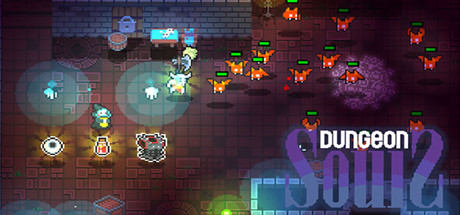
Dungeon Souls
Dungeon Souls is an action-adventure roguelike dungeon crawler which draws heavy inspiration from Nuclear Throne, Risk of Rain, and Overture. Explore vast procedurally generated dungeons, collect loot, and slay hordes of challenging enemies!

Kingsway
Kingsway is the #1 operating system for daily tasks such as skeleton smashing and loot-organizing. Trouble sorting through all your potions and swords? Don't worry! Kingsway can help you manage, and with an easy to use interface you'll have time leftover for a peaceful stroll through the underworld.

Unforgiving Trials: The Darkest Crusade
Embark on an epic adventure to save the lands. Form a party by selecting 4 different adventurers from a pool of over 12 unique classes. Battle your way through the cursed lands scaling the highest mountains and exploring the darkest dungeons. Face more than 30 unique challenging bosses in order to reach the capital of the kingdom.
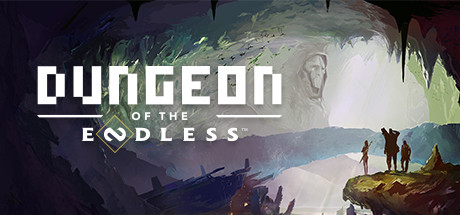
Dungeon of the ENDLESS
Dungeon of the ENDLESS™ is a Rogue-Like Dungeon-Defense game, in which the player and their team of heroes must protect the generator of their crashed ship while exploring an ever-expanding dungeon, all while facing waves of monsters and special events as they try to find their way out...
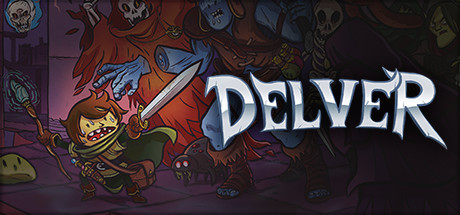
Delver
Delve into the shifting dungeons on your hunt for the Yithidian orb, but getting it might just be the easy part. Delver is a single player first-person action roguelike dungeon crawler, just like you wished they used to make.
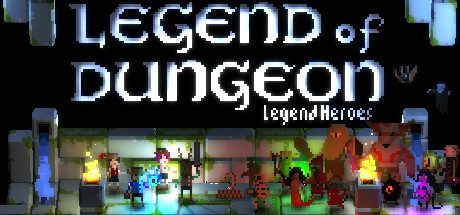
Legend of Dungeon
Legend of Dungeon is a randomly generated action RPG Beat'em'up with heavy Rogue-like elements, striking visuals, and dynamic music.


Famaze
FAMAZE is a retro themed roguelike puzzle adventure game. Choose the the dashing Knight, the cunning Thief, or the mystical Wizard each with unique special powers. Delve into The Mad King's ever changing dungeon to rescue the rutabagas! Never the same game twice! Music by Disasterpeace and Art by Oryx.

One More Dungeon
One More Dungeon is a first person shooter roguelike with procedurally generated levels and pixel-art graphics.
Frequently Asked Questions
Pixel Dungeon is currently priced at 4.50€ on Steam.
No, Pixel Dungeon is currently not on sale. You can purchase it for 4.50€ on Steam.
Yes, Pixel Dungeon received 387 positive votes out of a total of 432 achieving a rating of 8.32.
😎
Pixel Dungeon was developed and published by Retronic Games.
Yes, Pixel Dungeon is playable and fully supported on Windows.
Yes, Pixel Dungeon is playable and fully supported on MacOS.
Yes, Pixel Dungeon is playable and fully supported on Linux.
This information about Pixel Dungeon is not available yet.
This information about Pixel Dungeon is not available yet.
No, Pixel Dungeon does not support VR.
Pixel Dungeon is a single-player game.
No, Pixel Dungeon does not currently offer any DLC.
No, Pixel Dungeon does not support mods via Steam Workshop.
No, Pixel Dungeon does not support Steam Remote Play.
Yes, Pixel Dungeon is enabled for Steam Family Sharing. This means you can share the game with authorized users from your Steam Library, allowing them to play it on their own accounts. For more details on how the feature works, you can read the original Steam Family Sharing announcement or visit the Steam Family Sharing user guide and FAQ page.
You can find solutions or submit a support ticket by visiting the Steam Support page for Pixel Dungeon.
Data sources
The information presented on this page is sourced from reliable APIs to ensure accuracy and relevance. We utilize the Steam API to gather data on game details, including titles, descriptions, prices, and user reviews. This allows us to provide you with the most up-to-date information directly from the Steam platform.
Additionally, we incorporate data from the SteamSpy API, which offers insights into game sales and player statistics. This helps us present a comprehensive view of each game's popularity and performance within the gaming community.
Last Updates| Steam data | 19 September 2026 17:01 UTC |
|---|---|
| SteamSpy data | 14 October 2026 21:00 UTC |
| Steam price | 26 October 2026 20:06 UTC |
| Steam reviews | 22 October 2026 09:47 UTC |
If you'd like to dive deeper into the details about Pixel Dungeon, we invite you to check out a few dedicated websites that offer extensive information and insights. These platforms provide valuable data, analysis, and user-generated reports to enhance your understanding of the game and its performance.
- SteamDB - A comprehensive database of everything on Steam about Pixel Dungeon
- SteamCharts - Analysis of Pixel Dungeon concurrent players on Steam
- ProtonDB - Crowdsourced reports on Linux and Steam Deck Pixel Dungeon compatibility

Game modes
Features
Online players
0
Developer
Retronic Games
Publisher
Retronic Games
Release
29 May 2015
Platforms