
The Outer Worlds 2
The Outer Worlds 2 is the sequel to the award-winning first-person sci-fi RPG from Obsidian Entertainment.
Sync your Steam wishlist to find the lowest game prices instantly. No login required, just paste your Steam profile URL!
⚡ Try Wishlist Radar!
Sync your Steam wishlist to find the lowest game prices instantly. No login required!
⚡ Try Wishlist Radar!
Close

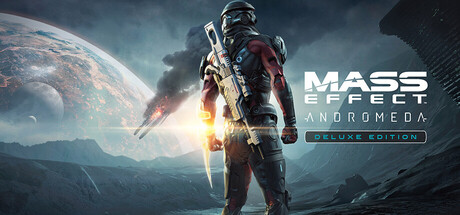
Mass Effect™: Andromeda Deluxe Edition on Steam
Quick menu
Return to the Mass Effect universe & lead the first humans in Andromeda on a desperate search for our new home.
Mass Effect™: Andromeda Deluxe Edition is a character customization, sci-fi and rpg game
developed by BioWare
and published by Electronic Arts.
Released on June 11th 2020 is available on Windows, Steam Deck and Steam Machine.
It has received 16,576 reviews of which 12,344 were positive and 4,232 were negative resulting in a rating of 7.3 out of 10. 😊
The game is currently priced at 39.99€ on Steam.
The Steam community has classified Mass Effect™: Andromeda Deluxe Edition into these genres:
Media & Screenshots
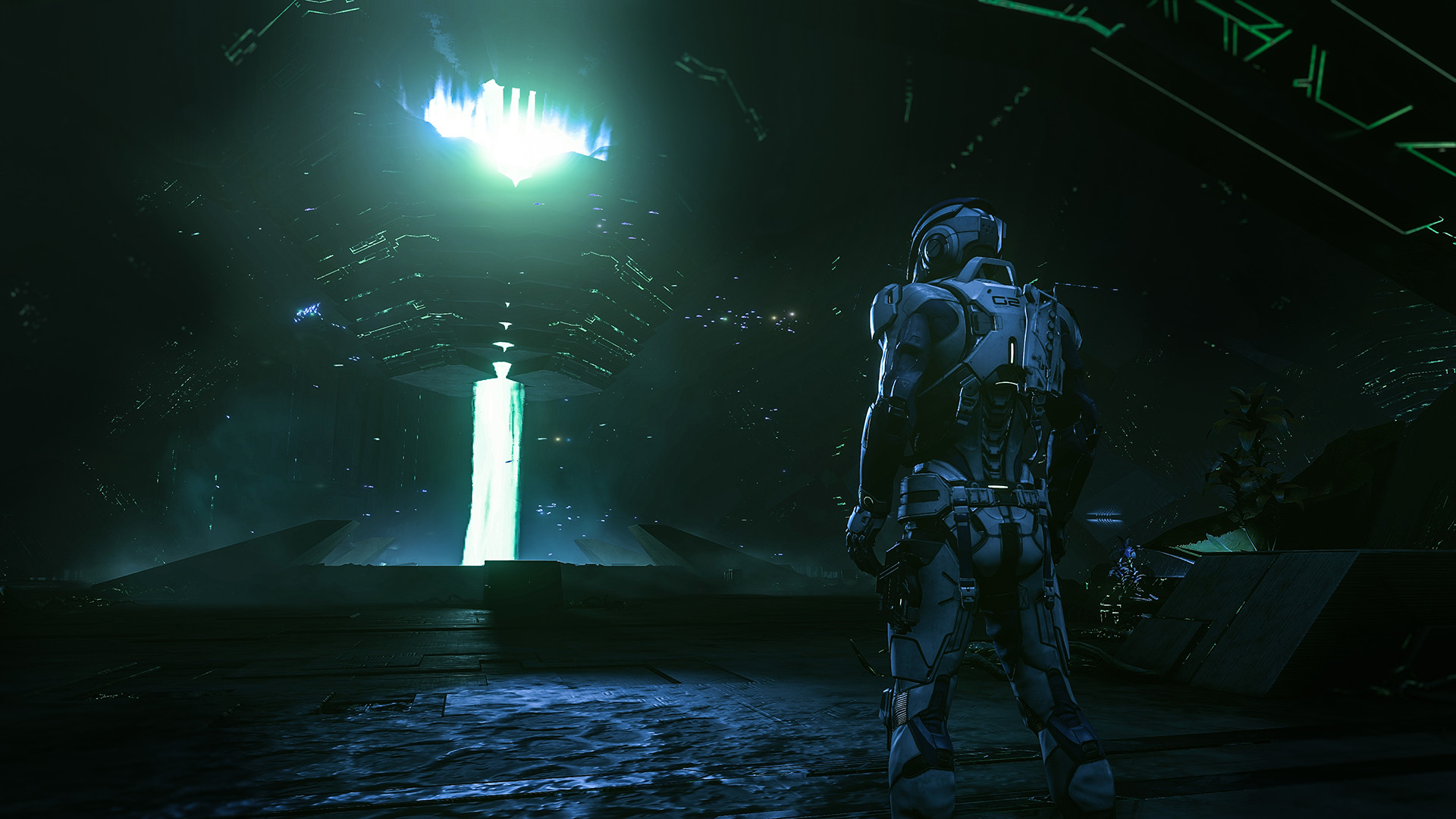
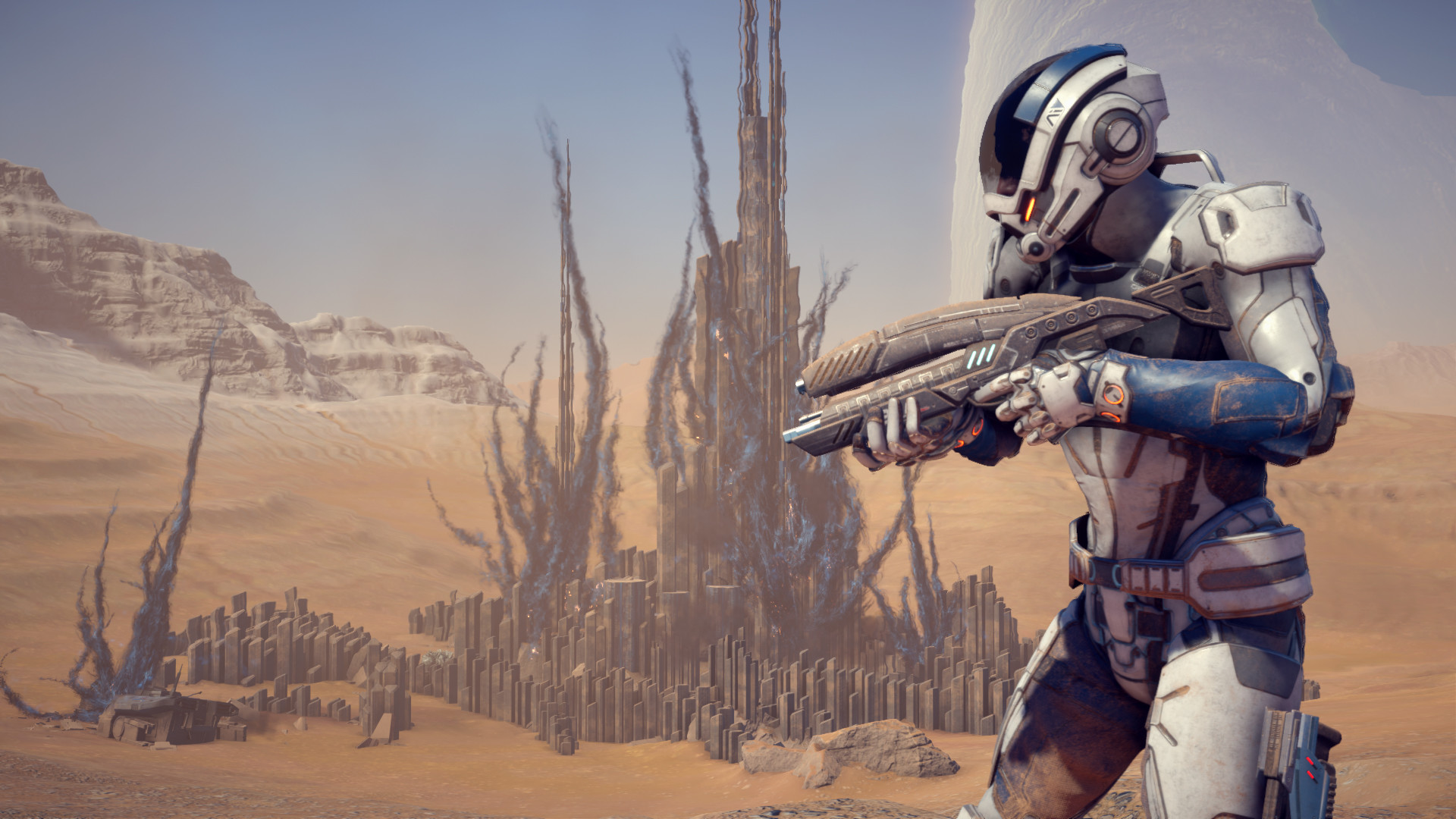
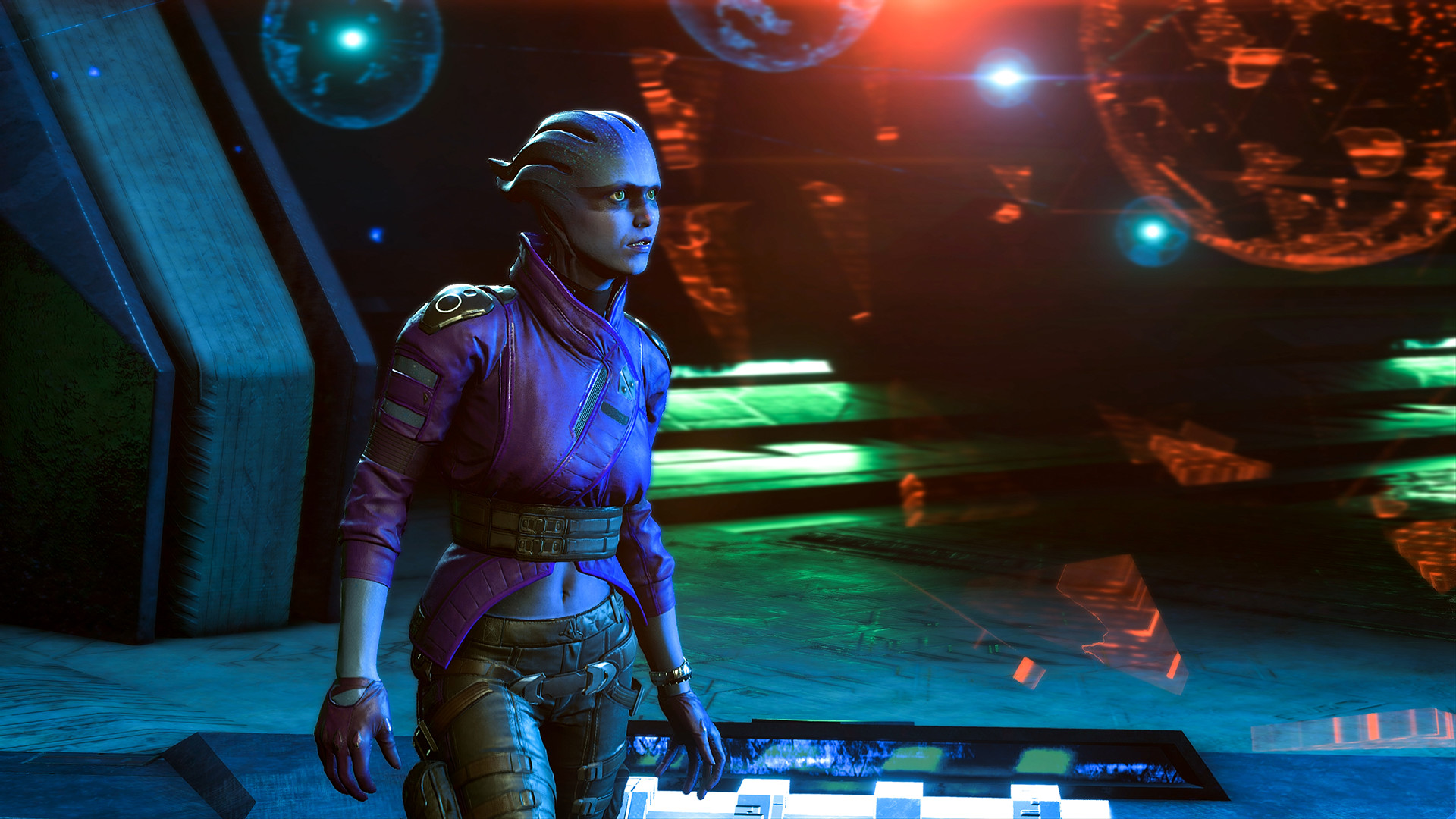
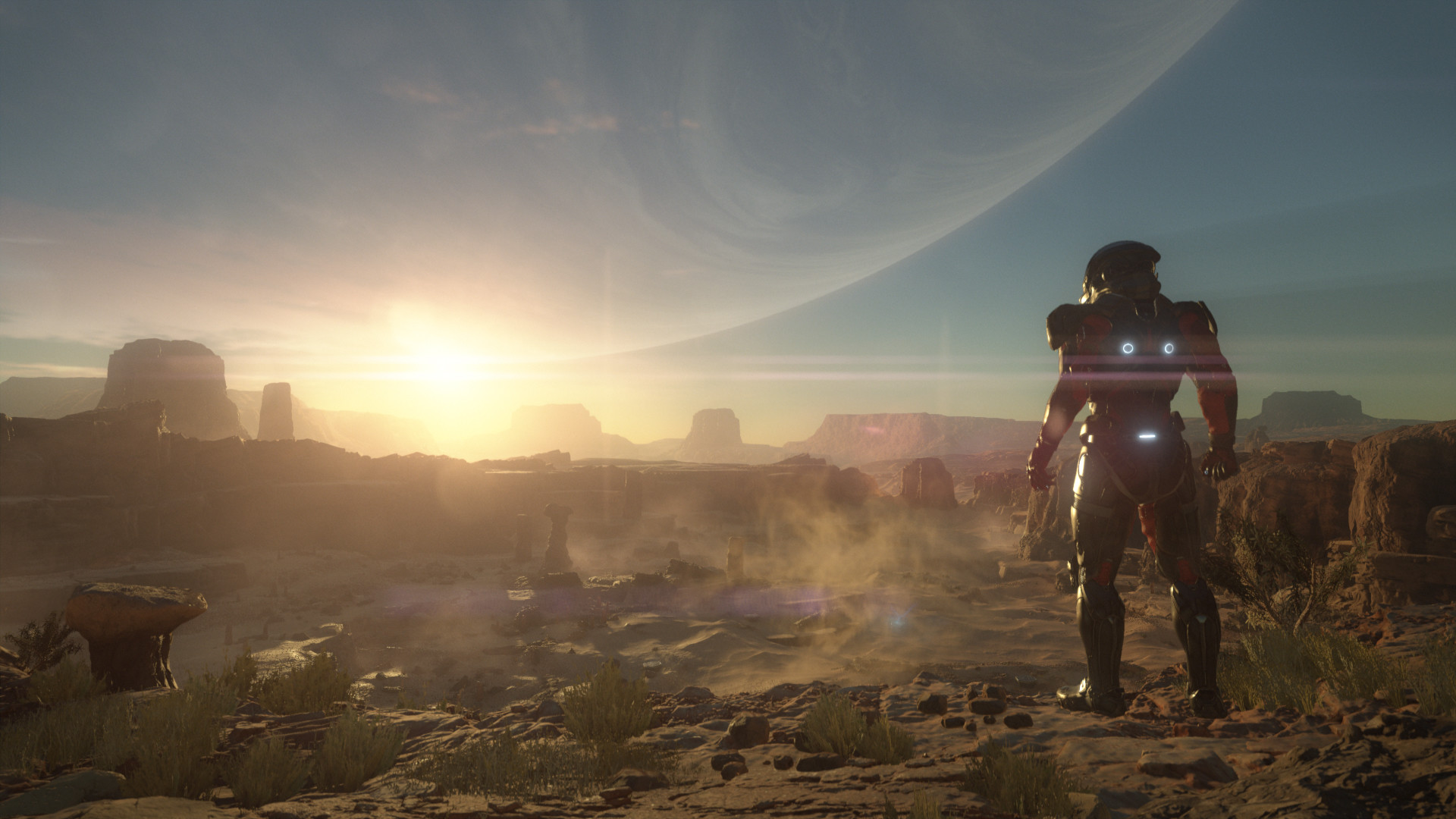
Get an in-depth look at Mass Effect™: Andromeda Deluxe Edition through various videos and screenshots.
Load More
System requirements
These are the minimum specifications needed to play the game. For the best experience, we recommend that you verify them.
Windows
- Requires a 64-bit processor and operating system
- OS *: 64-bit Windows 7, Windows 8.1 and Windows 10
- Processor: Intel Core i5 3570 or AMD FX-6350
- Memory: 8 GB RAM
- Graphics: NVIDIA GTX 660 2GB, AMD Radeon 7850 2GB
- DirectX: Version 11
- Storage: 55 GB available space
Steam Price & Best Deals
User reviews & Ratings
Explore reviews from Steam users sharing their experiences and what they love about the game.
Action role-playing game in which you take on the role of a Pathfinder and, together with your crew, search for a new home for humanity in the Andromeda Galaxy. You explore planets, fight from a third-person perspective, develop your character, and make decisions that shape the story The time has come to share my thoughts on Mass Effect: Andromeda. In my personal opinion, this is the weakest entry in the Mass Effect series, mainly because it lacks the companions who fought alongside Shepard, and I didn’t find the characters nearly as charismatic as those from the original trilogy. I spent over 130 hours playing the previous three games and thoroughly enjoyed them. Nevertheless, I also had a good time with Mass Effect: Andromeda, and I believe there are several aspects of the game that deserve praise, as well as some that deserve criticism ✅First and foremost, the game’s biggest strength is its combat system and everything built around it. From the very beginning, we have access to a jetpack, which allows us to perform quick mid-air dodges, jump over obstacles, and launch aerial attacks. This gives us much greater freedom of movement and offensive capabilities, whereas in the original trilogy, combat was largely focused on taking cover and fighting from behind shields. Another feature I really liked is the ability to change Ryder’s profile at any time, Soldier, Engineer, Adept, and so on. There was nothing quite like this in the original trilogy, where we had to choose our class at the beginning and decide whether we wanted to focus primarily on combat, biotics, or technology.I also really liked the ability to combine and develop a wide range of skills and then use different combinations of them in combat. We also have access to several new abilities that weren’t present in the original trilogy, such as Lance, Annihilation, and Remnant VI ✅Wide selection of weapons and the ability to craft them The game features a large variety of weapons, including assault rifles, pistols, sniper rifles, and shotguns, as well as weapons used by the Remnant and the Kett.The ability to craft your own weapons using the appropriate materials is also worth praising. You can collect resources while travelling across the planets, but the game also requires you to scan research objects, which provide the data needed for crafting weapons and other equipment. We can carry up to four weapon sets in our inventory. However, it’s important to remember that carrying more weapons increases our weight, which in turn reduces the rate at which our energy regenerates ✅When it comes to graphics, the game looks very good overall, apart from one issue, which I’ll mention in the cons section. Each planet has its own distinct character from the desert like Eos, through the frozen landscape of Voeld, to the lush vegetation of Havarl. The vast open spaces, varied colour palettes, and diverse environments effectively enhance the feeling that we are exploring a completely new galaxy. The biotic powers, explosions, fire, electrical discharges, and Remnant technology also look very impressive ✅Dialogue choices and relationships with the crew.As in the previous instalments, our decisions can influence conversations and the course of certain missions. It’s also worth regularly checking in with our crew aboard the ship and developing relationships with them. You can also pursue romantic relationships, although I have some reservations about this, which I’ll discuss in the cons section ✅Large, open locations The game offers plenty of planets and locations to explore. Andromeda takes a much more open-world approach compared with the previous games. There are five main planets that we can freely explore: Eos, Voeld, Havarl, Kadara, and Elaaden. In addition to these, there is the Nexus our main base as well as Aya, the home of a new alien race. What I particularly like about the planets is the variety of challenges created by their different environmental conditions. We have to deal with things such as radiation, contaminated water, freezing temperatures, and extreme heat. The game also introduces a “planet viability” system, which allows us to establish and develop outposts ✅Extensive character customisation.We can customise Ryder’s appearance by choosing their gender, facial features, hairstyle, and various other characteristics. We can also choose their background and determine certain elements of their backstory ✅As for the story, it’s quite good, but it still doesn’t measure up to the story in the Mass Effect trilogy. There are conflicts, death and difficult choices, but the main theme is hope, discovering a new world and building a future for humanity ✅As for the sound design, it’s of a good standard, and the sounds of weapons, explosions, vehicles and abilities really emphasise the dynamism of combat. The soundtrack also suits the game well when things are happening, but on the planets, while freely exploring, there is no music at all. In my opinion, this is a good thing, as driving in silence across various terrains suits this kind of exploration better than being accompanied by a soundtrack the whole time ✅Plenty of in-game content. addition to the main storyline, there are numerous side quests, crew missions, planetary exploration, colony development, Remnant vaults to discover, resources to collect, environmental objects to scan, and weapons and armour to craft.For the most part, I found the missions interesting and varied ✅The trading system allows you to sell items you’ve found and buy the materials and equipment you need ✅The price is good ✅5 difficulty levels (Narrative, Easy, Normal, Hard, Insanity). ❌One of the main reasons I came to like the Mass Effect trilogy was Commander Shepard himself, as we had a significant influence on his character. Unfortunately, in Andromeda, this turned out to be a complete failure. Despite choosing different dialogue options, Ryder often comes across as flippant, sarcastic or frivolous, even in serious situations ❌The romance storylines in Andromeda are definitely less developed than in previous instalments of the series. Relationships with the chosen characters have fewer meaningful moments and often develop mainly through successive conversations and isolated scenes ❌I’ve praised the graphics, but I must unfortunately criticise the facial animations. Facial expressions often look artificial, and the movements of the eyes and mouth do not always match the lines being spoken. This is particularly noticeable during serious and emotional scenes, which can lose their atmosphere due to the poor facial expressions ❌ In my opinion, the Mass Effect trilogy stood out because many choices were crucial to the main plot or to important characters. Unfortunately, things are different in Andromeda. The decisions made by the player dontt always have a significant impact on the course of the story, and many choices result only in changes to dialogue or minor consequences. Despite the numerous choices, the plot ultimately leads to a similar ending ❌I’ve sometimes had to wait 1–2 minutes for the game to load ❌ Compared to the wealth of species seen in the original trilogy, Andromeda offers very few new species only two ✅✅ Verdict: Terrible , Bad , Mediocre , Decent , Good , Very Good , Excellent , Masterpiece If you'd like to see more of my reviews, you can find them on my curator page: [url=https://store.steampowered.com/curator/45994324/admin/reviews_manage/]CuratorKingViking and on my group: [url=https://steamcommunity.com/groups/CuratorKingViking]GroupKingViking If you have any questions about my reviews, feel free to ask. I’m happy to answer them. All reviews are my own!! Best regards, King Viking Bezimienny, Polish Game Reviewer.
I've finally played enough Andromeda and I'm finally far enough away from its launch that I feel like my thoughts on it all are pretty set. It's a good game and there's a lot of it even without much post-launch support. The story is definitely different from the Original Trilogy, but it's good. I even like the characters. Jaal is top tier OT quality. Could've been much much better with sequels, but "fans" saw to that. The hate for this was blown so forking far out of proportion that it'd have been comical had it not so badly damaged the brand. I think my takeaway from it all is that I'm liking other gamers less and less and letting their nonsense color my own opinions is folly.
Buying this game for $4 in 2026 is sort of like picking up a hot & ready pizza when you're hungry. You know it's not the best pizza you're ever going to have, but it's here right now, it's cheap, and there is a lot of it. There simply aren't a lot of RPG/cover shooter hybrids with deep lore being made, so when you want to scratch that itch this game will do just fine, even tough it was a disappointment when we were all still expecting every Bioware game to be better than the last.
When I first played Andromeda, I was taking on too much emotional investment and baggage from the original trilogy. That threw me off from the game, because there are quite a few differences between Andromeda and ME1-3. Not just in gameplay, but in style. The tone. The script. What it pushes the player to become. That made me dislike this game, initially. I gave it a rest for over a year!! I picked it up again just this last week. And I am glad that I did. This is an objectively good game. There's genuinely little wrong with it. There are places for improvement, of course (crafting mechanisms can be smoother and less daunty, music isn't AS memorable, the storyline could be a little better), but the core of the game is incredibly solid. It's fun. It's light-hearted. You're not Shepherd. You're Ryder. Please remember that. You're not playing a continuation of the original trilogy. You're playing as a different, flawed, person who wasn't really ever trained for the role they got - not like the larger-than-life figure that was the legendary Commander Shepherd, who was the very best of humanity. At it's heart, ME:Andromeda is a game about human exploration. About beating the odds. About trying to do the right thing. That makes it a lot more human, almost. It's meant to be messy, and the characters are MEANT to be flawed. I think that's an important distinction. In the original trilogy, sometimes the characters were so brilliant. They were so soulful. Every single one of them. In this story, you're not gonna like some of them. And that's okay. I think that's part of the design and the charm of this iteration of the franchise. I'm sorry my review doesn't dive into more technical elements of the game. But as a hardcore fan of Mass Effect, as I am sure many of those reading this are, remember it's not the same. And that's for the best. Play it with an open mind. I promise you that you WILL enjoy it.
Similar games
View all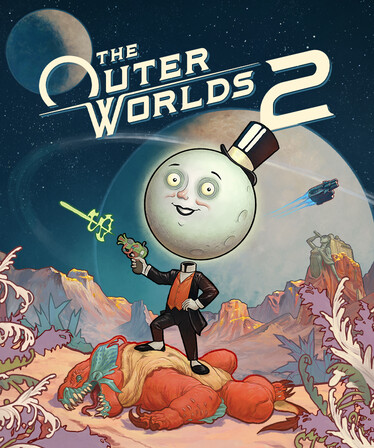

The Technomancer
The Technomancer is a sci-fi RPG that offers players plenty of dynamic combat action based on 4 skill trees dedicated to 3 combat styles and the destructive electrical powers of the Technomancers.
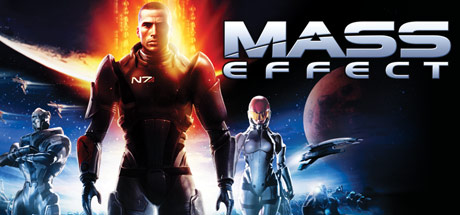
Mass Effect (2007)
As Commander Shepard, you lead an elite squad on a heroic, action-packed adventure throughout the galaxy.
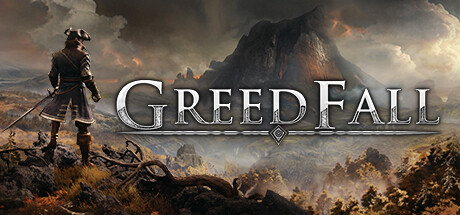
GreedFall
Engage in a core roleplaying experience, and forge the destiny of a new world seeping with magic, and filled with riches, lost secrets, and fantastic creatures. With diplomacy, deception and force, become part of a living, evolving world - influence its course and shape your story.

Mass Effect Legendary Edition
The Mass Effect™ Legendary Edition includes single-player base content and over 40 DLC from the highly acclaimed Mass Effect, Mass Effect 2, and Mass Effect 3 games, including promo weapons, armors, and packs — remastered and optimized for 4K Ultra HD.
Dragon's Dogma: Dark Arisen
Set in a huge open world, Dragon’s Dogma: Dark Arisen presents a rewarding action combat experience.

The Surge 2
In a bid to survive, explore the sprawling, devastated Jericho City. Fight ferocious threats in brutal, unforgiving combat, slashing and tearing the limbs off your opponents to steal their equipment.
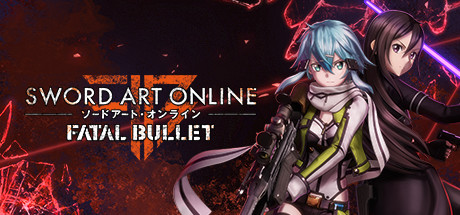
Sword Art Online: Fatal Bullet
Experience an original story where you are the protagonist in the world of Gun Gale Online. Create your own avatar and explore devastated lands while experiencing exciting third person shooting in this action RPG.
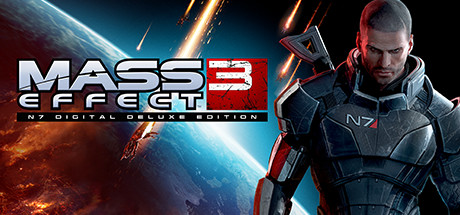
Mass Effect 3 N7 Digital Deluxe Edition (2012)
Earth is burning. The Reapers have taken over and other civilizations are falling like dominoes. Lead the final fight to save humanity and take back Earth from these terrifying machines, Commander Shepard.

A.I.M.2 Clan Wars
A.I.M. 2 is the sequel to the epic science fiction first-person action RPG developed by SkyRiver Studios. Its compelling story and unique look lift off exactly where the original ended. New clans led by Mechminds of the Fifth Generation are powerful and well-organized formations with far-reaching plans.
Rebel Galaxy
Rebel Galaxy is a swashbuckling space adventure, with action-packed combat, exploration, discovery, trade, and “negotiation” with the outlandish denizens at the edge of the known universe.
Frequently Asked Questions
Mass Effect™: Andromeda Deluxe Edition is currently priced at 39.99€ on Steam.
No, Mass Effect™: Andromeda Deluxe Edition is currently not on sale. You can purchase it for 39.99€ on Steam.
Yes, Mass Effect™: Andromeda Deluxe Edition received 12,344 positive votes out of a total of 16,576 achieving a rating of 7.32.
😊
Mass Effect™: Andromeda Deluxe Edition was developed by BioWare and published by Electronic Arts.
Yes, Mass Effect™: Andromeda Deluxe Edition is playable and fully supported on Windows.
No, Mass Effect™: Andromeda Deluxe Edition is not playable on MacOS.
No, Mass Effect™: Andromeda Deluxe Edition is not playable on Linux.
Yes, Mass Effect™: Andromeda Deluxe Edition is playable on Steam Deck, though it might require a few minor tweaks. Make sure to check the Steam store page and community feedback on ProtonDB for exact compatibility details.
Yes, Mass Effect™: Andromeda Deluxe Edition is playable on Steam Machine, though it might require a few minor tweaks. Make sure to check the Steam store page and community feedback on ProtonDB for exact compatibility details.
No, Mass Effect™: Andromeda Deluxe Edition does not support VR.
Mass Effect™: Andromeda Deluxe Edition offers both single-player and multi-player modes.
Mass Effect™: Andromeda Deluxe Edition includes Co-op mode where you can team up with friends.
Yes, there are 2 DLCs available for Mass Effect™: Andromeda Deluxe Edition. Explore additional content available for Mass Effect™: Andromeda Deluxe Edition on Steam.
No, Mass Effect™: Andromeda Deluxe Edition does not support mods via Steam Workshop.
No, Mass Effect™: Andromeda Deluxe Edition does not support Steam Remote Play.
No, Mass Effect™: Andromeda Deluxe Edition does not currently support Steam Family Sharing.
You can find solutions or submit a support ticket by visiting the Steam Support page for Mass Effect™: Andromeda Deluxe Edition.
Data sources
The information presented on this page is sourced from reliable APIs to ensure accuracy and relevance. We utilize the Steam API to gather data on game details, including titles, descriptions, prices, and user reviews. This allows us to provide you with the most up-to-date information directly from the Steam platform.
Additionally, we incorporate data from the SteamSpy API, which offers insights into game sales and player statistics. This helps us present a comprehensive view of each game's popularity and performance within the gaming community.
Last Updates| Steam data | 01 October 2026 06:29 UTC |
|---|---|
| SteamSpy data | 23 October 2026 05:41 UTC |
| Steam price | 26 October 2026 19:32 UTC |
| Steam reviews | 19 October 2026 06:02 UTC |
If you'd like to dive deeper into the details about Mass Effect™: Andromeda Deluxe Edition, we invite you to check out a few dedicated websites that offer extensive information and insights. These platforms provide valuable data, analysis, and user-generated reports to enhance your understanding of the game and its performance.
- SteamDB - A comprehensive database of everything on Steam about Mass Effect™: Andromeda Deluxe Edition
- SteamCharts - Analysis of Mass Effect™: Andromeda Deluxe Edition concurrent players on Steam
- ProtonDB - Crowdsourced reports on Linux and Steam Deck Mass Effect™: Andromeda Deluxe Edition compatibility

Game modes
Multiplayer
Online players
285
Developer
BioWare
Publisher
Electronic Arts
Release
11 Jun 2020
Platforms