
The Elder Scrolls IV: Oblivion Remastered
Explore Cyrodiil like never before with stunning new visuals and refined gameplay in The Elder Scrolls IV: Oblivion™ Remastered.
Sync your Steam wishlist to track the lowest game prices instantly. No login required, just paste your Steam profile URL!
⚡ Try Wishlist Radar!
Sync your Steam wishlist to track the lowest game prices instantly. No login required!
⚡ Try Wishlist Radar!
Close

The Outer Worlds 2 on Steam - User reviews, Price & Information
Quick menu
The Outer Worlds 2 is the sequel to the award-winning first-person sci-fi RPG from Obsidian Entertainment.
The Outer Worlds 2 is a rpg, singleplayer and action rpg game
developed by Obsidian Entertainment
and published by Xbox Game Studios.
Released on October 29th 2025 is available on Windows, Steam Deck and Steam Machine
in 12 languages: English, French, Italian, German, Spanish - Spain, Japanese, Korean, Polish, Portuguese - Brazil, Russian, Simplified Chinese and Spanish - Latin America.
It has received 8,907 reviews of which 6,560 were positive and 2,347 were negative resulting in a rating of 7.2 out of 10. 😊
The game is currently priced at 69.99€ on Steam.
The Steam community has classified The Outer Worlds 2 into these genres:
Media & Screenshots
Get an in-depth look at The Outer Worlds 2 through various videos and screenshots.


Load More


System requirements
These are the minimum specifications needed to play the game. For the best experience, we recommend that you verify them.
Windows
- Requires a 64-bit processor and operating system
- OS: Windows 10/11 with updates
- Processor: AMD Ryzen 5 2600 / Intel i5-8400
- Memory: 16 GB RAM
- Graphics: AMD RX 5700 / Nvidia GTX 1070 / Intel Arc A580
- DirectX: Version 12
- Storage: 110 GB available space
- Additional Notes: SSD required. Performance scales with higher-end systems.
Steam Price & Best Deals
User reviews & Ratings
Explore reviews from Steam users sharing their experiences and what they love about the game.
This game is far over-hated online, and I would say in most cases this game is better than the first, however there are some surprising regressions in quality and implementation compared to the first game, and that's what I want to focus on in this review, as they were somewhat unexpected for me since I was a big fan of the first game. The first and most frustrating to me, is that the most compelling faction in the game, The Protectorate, who are telegraphed early as being the "bad guys", or the "evil" faction, are not joinable for the player. They have the most interesting lore and worldbuilding out of any faction in both games, the best art and aesthetics, and interesting internal conflicts and strife, yet the player cannot align themselves with them through to the end of the game. This is such a major disappointment to me because they are much preferable as a hypothetical player-joinable evil faction compared to something like Caesar's Legion; they are much more redeemable (whilst still clearly being overtly evil and fascists), and more interesting. The second major regression is a lack of plurality in the number of quest outcomes for side quests . To be clear, there are usually MANY ways to leverage different skills to solve the majority of side and companion quests in this game, depending on how you've built your character, and the game does a really good job of rewarding unconventional player builds. However, most side quests have only one outcome. Other than killing the questgiver or NPC's that are part of the quest. But that isn't very interesting, other than to give player agency to kill people they find annoying or something. Your "choice" with most quest outcomes are: do I do the quest or not. You can't really tilt the resolution of a quest towards different factions or groups of people, or deliberately solve it in an inferior way, or botch it. Contrast this with Avowed, where almost every single side quest in that game, while starting out as fetch quests, always have some moral complication that necessitates resolving the quest in one of at least two ways, usually. Avowed lacks the systemic depth (i.e. skills, etc.) that TOW2 has, especially different ways and skills to solve quests, but Avowed was much better in this regard, generally. Another criticism is that the structure of the game's factions, and how their presence is distributed across the planets is too inconsistent and uneven. Auntie's Choice, the mega-conglomerate colonizing faction, you have the MOST capacity to aid and do quests for, as they have a presence on basically all of the planets, and have a separate gigantic flagship in space as well. As a sidebar, I found myself doing many more Board playthroughs in the first game, compared to Phineas, and I think a major reason for that, was due to the somewhat obscure, or enigmatic presence of The Board; they weren't really in your face a lot of the time. AC on the other hand, is probably the most obnoxious faction I have seen in a game. Their aesthetics and design are so extra, the NPC's in the faction feel strikingly similar to each other, as they are all a riff on that 50's hyper-corporatized, advertising-everywhere sort of aesthetic. This is made worse by their flagship where you go later in the game, The Undisputed Claim, one of the worst levels ever made, simply due to the constant bombardment of advertising and rote news announcements that you CANNOT ESCAPE or turn the volume down on! I legitimately HATE being there, and do my best to avoid it, even in my pro-AC playthroughs. April Stewart's portrayal of Auntie Cleo is superb , but can get unbelievably grating when you listen to her long enough on the Undisputed Claim via the news and ads. The Order of the Ascendant, an offshoot of the OSI of the first game, are probably the most altruistic out of the 3. Their writing is decent; their angle of satire is primarily on how out of touch those mired in academic pursuits and life are compared to the average person, and the wastefulness of requiring basic and obvious-to-solve humanitarian or structural issues be addressed with overly-sophisticated algorithms and literal planet-cooled computing. They also feel the most lopsided in terms of their distribution across the game, as they only are really present on 2 of the 4 planets, and even then, they don't have a ton of side content to flesh them out. But like with AC, people belonging to this faction don't really feel "real", and are almost always riffing on some sort of joke pertaining to multivariable calculus or computing. The character writing for AC and the OA just doesn't feel strong with respects to portray their people as real human beings with hopes and dreams, or even idiosyncratic or unconventional characteristics to make them feel unique. The Protectorate is at least internally consistent as to why all their citizens (err, "subjects") all behave and act the same due to Mental Refreshment. The Protectorate is present on 3 out of the 4 planets, but like I said earlier, you cannot join or aid them in substantial ways, and after approximately the halfway point in the story, due to what transpires, they are pigeonholed into being cannon fodder enemies that end up being the main antagonists. The last criticism I have for is companions. Even ignoring the absolute outlier in terms of quality that was Parvati Holcomb, the companions here, whilst interesting, are just not as memorable compared to the first game. And it's apparent that the writing team was not given a large enough budget to truly flesh out their general, "ask me about life and philosophy and stuff" type of chit-chat-y "mundane" dialogue. They all have basic boilerplate "tell me about yourself" dialogue that exhausts its content quite quickly, and there is no capacity for the player character to ask them in-depth or philosophical questions, a la KOTOR 2. Even the robot companion is worse; V.A.L.E.R.I.E. doesn't hold a candle compared to SAM. SAM from the first game was the result of a cut companion, and as a result, didn't have a large budget for dialogue compared to the other companions. But they leaned into that limitation to make almost every single line written for SAM an absolute banger. The new robot is so generic, that I stopped adventuring around with her after two playthroughs even though her combat and gameplay abilities are quite useful. Their quest resolutions now branch more in terms of outcomes, but they are almost entirely predictable, and are almost either resolved by: "do I push this person to be a better person and more compassionate, etc." or "do I push this person to be anti-social, evil, etc." There's almost no morally-grey outcomes that contrast well against the other. Contrast this with Avowed, and TOW2 feels very much "quantity over quality" in comparison to Avowed's companions, whom all were well fleshed out. I want to close this out by saying I love this game, but clearly it's just not finished in certain respects. And we know now from information that's been made public, is that Obsidian didn't have the budget or funding for certain things, namely to flesh out The Protectorate to be a player-joinable faction. I hope the DLC packs they release do something to flesh out this game, because it is very fun, and this game more than the first does so much to give the IP distinct aspects and quirks that has me and other fans quite invested now. P.S. Check out the soundtrack! Each faction gets its own radio station that Obsidian commissioned real musicians to write, perform, and record for to add essential worldbuilding to the game for the factions. There are many legitimately good, catchy, or interesting songs on there!
It's not bad, it's not great, it's just ok. Obsidian seems to have inhereted the old Bethesda mantra of "a mile wide but only an inch deep". There are multiple worlds to visit, many large areas to explore, countless characters to interact with, lots of weapons and armour... but much of it feels generic, repetitive, and forgettable. It doesn't help that most of the NPC dialogue is, depending on faction, either: 1) stilted and wooden (the Protectorate) 2) Pedantic and technical (the Order) or 3) full of buzzwords and coorperate jargon (Aunty's Choice). It's midly entertaining the first few times, but after several hours it becomes tedious and makes everyone come across as more than a little thick-headed. The gunplay, like everything else, is serviceable but unremarkable. Though it all feels reasonably well polished, it also seems to lack any real ambition - or even a particularly engaging vision. I don't regret buying it, nor do I miss the hours I spent playing it. I had fun... but I doubt I'll ever think about it again after posting this review.
SO. I will start by saying I enjoyed the first Outer Worlds despite the shortcomings. I didn't consider it nearly on the level of FNV, and I considered it a neat AA experience It's impossible to talk about this sequel without comparing it to the first game and/or FNV. I mean if you're reading reviews that's probably what you're trying to find out so here's my thoughts after like 20 hours: ---------------- 1) RPG Mechanics // The RPG mechanics are miles better than TOW1, and honestly even FNV. You actually have to choose specializations in your skills. You CANNOT be a jack of all trades, and you cannot max every skill so that you pass every skillcheck, especially late game skillchecks which require really high points in specific skills THAT BEING SAID, there are also traits (and even flaws and backgrounds) which come up in speech often. So even if you can't pass a skillcheck, sometimes you can just use your lucky trait, or dumb/sickly flaw, or your background as an ex convict or professor or whatever to pass those checks instead. So yeah. Hot take but it's better than FNV in this area. ---------------- 2) World(s) and Worldbuilding // I like space. I like sci-fi. I like space sci-fi. If you don't like these things.. well why are you even considering this game lol. I liked the charm of TOW1 but it felt like the areas were way too small, uninteresting, or just otherwise streamlined. This game is a complete upgrade on all of those aspects. The scope is huge, the factions are actually interesting, and the areas are cool. ---------------- 3) Gameplay, Gunplay, Writing, and Dialogue // Absolutely amazing. It plays smooth, the guns are FUN. The writing is fun. The dialogue is hilarious. TOW1 had some funny moments in dialogue and writing, but honestly this is 1000% better. Some of these scenarios and characters you come across will just have you laughing -- and I really have no idea how they came up with some of them but it's great and I'm totally here for it lmao. I would give details but it's better to just go in blind and experience it firsthand for yourself. ---------------- 4) WHAT ELSE?? // I don't know what else to put in this review. Do you really care about graphics if you're considering a bethesda/obsidian RPG? If so they're better than any of the others I've played. Are they cyberpunk77 graphics, or KCD2? No. But they're good. And honestly some of the dialogue facial animations are on the level of those games and feel way less stiff than TOW1 Did I mention this game is fun?? Now be a good consumer and buy it.
Similar games
View all
Fallout 3
Vault-Tec engineers have worked around the clock on an interactive reproduction of Wasteland life for you to enjoy from the comfort of your own vault. Included is an expansive world, unique combat, shockingly realistic visuals, tons of player choice, and an incredible cast of dynamic characters.

Tainted Grail: The Fall of Avalon
Step into a dark reimagination of Arthurian legends in this first person, open world RPG. Explore a world stuck in everlasting autumn, witness falling legends and make meaningful choices woven into a complex, branching storyline.
Dragon's Dogma 2
Dragon’s Dogma 2 is a single player, narrative driven action-RPG that challenges the players to choose their own experience – from the appearance of their Arisen, their vocation, their party, how to approach different situations and more - in a truly immersive fantasy world.
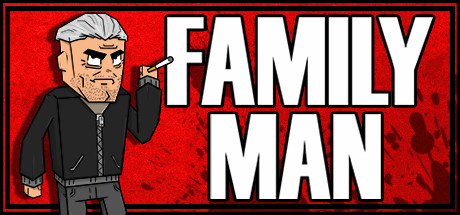
Family Man
You owe us money, Joe, and we plan to collect. We don't care where it comes from, but you'd better not skip town on us. Otherwise your family will be searching the river for your body.

Fallout 3: Game of the Year Edition
Prepare for the Future™ With Fallout 3: Game of the Year Edition, experience the most acclaimed game of 2008 like never before. Create a character of your choosing and descend into an awe-inspiring, post-apocalyptic world where every minute is a fight for survival.

Mass Effect : Andromeda Deluxe Edition
Return to the Mass Effect universe & lead the first humans in Andromeda on a desperate search for our new home.

The Elder Scrolls IV: Oblivion Game of the Year Edition Deluxe (2009)
PUBLISHER UPDATE - This is the product page for The Elder Scrolls IV: Oblivion Game of the Year Deluxe Edition, released in 2009.---The Elder Scrolls IV: Oblivion® Game of the Year Edition presents one of the best RPGs of all time like never before. Step inside the most richly detailed and vibrant game-world ever created.
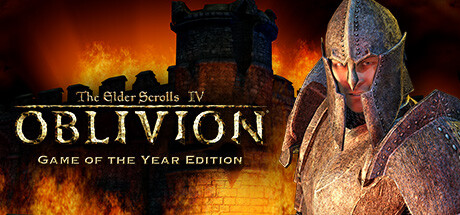
The Elder Scrolls IV: Oblivion Game of the Year Edition (2009)
PUBLISHER UPDATE - This is the product page for The Elder Scrolls IV: Oblivion Game of the Year Edition, released in 2009. ---The Elder Scrolls IV: Oblivion® Game of the Year Edition presents one of the best RPGs of all time like never before. Step inside the most richly detailed and vibrant game-world ever created.
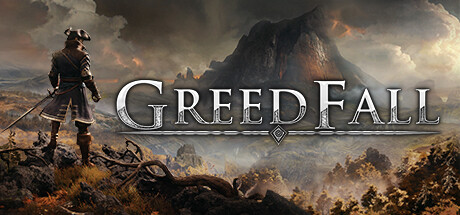
GreedFall
Engage in a core roleplaying experience, and forge the destiny of a new world seeping with magic, and filled with riches, lost secrets, and fantastic creatures. With diplomacy, deception and force, become part of a living, evolving world - influence its course and shape your story.
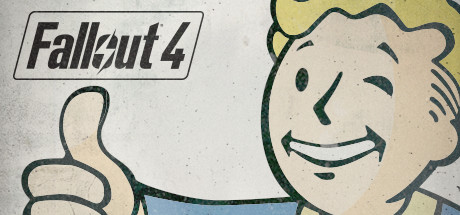
Fallout 4
From Bethesda Game Studios, the award-winning creators of Starfield and The Elder Scrolls V: Skyrim, comes Fallout 4. A landmark in open-world RPG design and winner of over 200 ‘Best Of’ honors, including the DICE and BAFTA Game of the Year.
Frequently Asked Questions
The Outer Worlds 2 is currently priced at 69.99€ on Steam.
No, The Outer Worlds 2 is currently not on sale. You can purchase it for 69.99€ on Steam.
Yes, The Outer Worlds 2 received 6,560 positive votes out of a total of 8,907 achieving a rating of 7.21.
😊
The Outer Worlds 2 was developed by Obsidian Entertainment and published by Xbox Game Studios.
Yes, The Outer Worlds 2 is playable and fully supported on Windows.
No, The Outer Worlds 2 is not playable on MacOS.
No, The Outer Worlds 2 is not playable on Linux.
Yes, The Outer Worlds 2 is playable and fully supported on Steam Deck.
Yes, The Outer Worlds 2 is playable and fully supported on Steam Machine.
No, The Outer Worlds 2 does not support VR.
The Outer Worlds 2 is a single-player game.
No, The Outer Worlds 2 does not currently offer any DLC.
No, The Outer Worlds 2 does not support mods via Steam Workshop.
No, The Outer Worlds 2 does not support Steam Remote Play.
Yes, The Outer Worlds 2 is enabled for Steam Family Sharing. This means you can share the game with authorized users from your Steam Library, allowing them to play it on their own accounts. For more details on how the feature works, you can read the original Steam Family Sharing announcement or visit the Steam Family Sharing user guide and FAQ page.
You can find solutions or submit a support ticket by visiting the Steam Support page for The Outer Worlds 2.
Data sources
The information presented on this page is sourced from reliable APIs to ensure accuracy and relevance. We utilize the Steam API to gather data on game details, including titles, descriptions, prices, and user reviews. This allows us to provide you with the most up-to-date information directly from the Steam platform.
Additionally, we incorporate data from the SteamSpy API, which offers insights into game sales and player statistics. This helps us present a comprehensive view of each game's popularity and performance within the gaming community.
Last Updates| Steam data | 14 September 2026 01:31 UTC |
|---|---|
| SteamSpy data | 12 September 2026 06:44 UTC |
| Steam price | 14 September 2026 18:54 UTC |
| Steam reviews | 13 September 2026 03:58 UTC |
If you'd like to dive deeper into the details about The Outer Worlds 2, we invite you to check out a few dedicated websites that offer extensive information and insights. These platforms provide valuable data, analysis, and user-generated reports to enhance your understanding of the game and its performance.
- SteamDB - A comprehensive database of everything on Steam about The Outer Worlds 2
- SteamCharts - Analysis of The Outer Worlds 2 concurrent players on Steam
- ProtonDB - Crowdsourced reports on Linux and Steam Deck The Outer Worlds 2 compatibility

Game modes
Features
Online players
298
Developer
Obsidian Entertainment
Publisher
Xbox Game Studios
Release
29 Oct 2025
Platforms