

Grand Theft Auto III The Definitive Edition
It all starts in Liberty City. With revolutionary freedom to go anywhere and jack anyone, Grand Theft Auto III puts the center of the criminal underworld at your fingertips, if you have enough guts to take it.
Sync your Steam wishlist to find the lowest game prices instantly. No login required, just paste your Steam profile URL!
⚡ Try Wishlist Radar!
Sync your Steam wishlist to find the lowest game prices instantly. No login required!
⚡ Try Wishlist Radar!
Close

Outcast - A New Beginning on Steam
Quick menu
Explore the breathtaking alien world of Adelpha, support the local Talans in their struggles and fight your way through fast-paced battles against invading robot forces in this 3rd-person, open world, action adventure sequel to the 1999 cult classic.
Outcast - A New Beginning is a action, open world and third-person shooter game
developed by Appeal Studios
and published by THQ Nordic.
Released on March 15th 2024 is available on Windows, Steam Deck and Steam Machine.
It has received 1,292 reviews of which 1,033 were positive and 259 were negative resulting in a rating of 7.7 out of 10. 😊
The game is currently priced at 39.99€ on Steam, but you can find it for 7.50€ on Instant Gaming.
The Steam community has classified Outcast - A New Beginning into these genres:
Media & Screenshots
Get an in-depth look at Outcast - A New Beginning through various videos and screenshots.


Load More


System requirements
These are the minimum specifications needed to play the game. For the best experience, we recommend that you verify them.
Windows
- Requires a 64-bit processor and operating system
- OS: Windows 10, 64 Bit
- Processor: Ryzen 3 1300X / Intel Core i3-7530K
- Memory: 8 GB RAM
- Graphics: GeForce GTX 980 Ti / Radeon RX 5600 XT
- DirectX: Version 11
- Storage: 40 GB available space
Steam Price & Best Deals
User reviews & Ratings
Explore reviews from Steam users sharing their experiences and what they love about the game.
Outcast – a new beginning is an adventure game. It is a soft reboot of the original Outcast game, set a few decades after that. The environment was changed quite a bit, the society is rebooted as a different one. But I liked this new approach. At 48+ hours it was much longer than I expected. The game has a large area to explore. In fact doubly so, as verticality is used to great extents, sometimes to very excessive scale. Even the starting village has a lot of vertical expanse, and a lot of locations will have (sometimes very large) vertical expanse. Jetpack jumps will be used a lot, even for just exploring around. To make this vertical segments less annoying, there will be bouncing mushrooms, that can propel great distances up, and act as fixed transports between various spots. Gliding will also have an important role in the game. A lot of optional puzzles will be based on it, but even some main story related segments will require it. The collecting of the pistils main story part was what pushed me away from full keyboard and mouse play. I first tried it with the keyboard, but that was very cumbersome. That precise gliding was much more easier with an analog input from a controller, compared to the digital nature of keypresses. In fact from then on, I played mostly with the controller, resorting to keyboard and mouse only for the fighting segments. But those fighting segments were awkward with the controller, so I had to use keyboard and mouse for efficient play. Ideally I would have been playing it with a Steam controller, but no such luck for me. You can freely save outside of combat – and outside of challenges. So if you make past some hard phases of a challenge, you cannot just save that and retry from that part, the save will be from before the start of the challenge. On the bright side, should you fail the challenge, or see that it goes wrong, you can restart it anytime almost instantaneously. The graphics of the game is surprisingly good. There are a lot of lavish locations, with various biomes. The starting zone is jungle like, with great trees, and later there will be a lot of variations. There were a lot of complaints about the stuttery graphics in the forums. Initially there might have been some stutters for me, but several hours into the game they largely disappeared, the gameplay was smooth for me. The voice acting of the game is excellent. And there is actually tons of it, much more than I expected. The protagonist is fully voice acted, with a lot of lines. And the natives are voice acted by skilled actors, conveying their out of common way attitude. Not only the voice acting is great, but the background music too. The original game was praised for its exceptional music, and that carried to the sequel. Honestly, I’m not sure whether the original music was reused, or similar tracks were composed for this game, but the quality is there. The game has a non linear approach to the story. You can try to solve the problems in one place, but eventually the quests will require you to visit other places first in order to progress. The story of the game is good for most of the game, feeling like an organic development. Then towards the end of the game there will be a time-skip, leading to a situation of radicalization of the natives. Their relation towards the protagonists shifts in a jarring way. The conclusion of the game feels disjointed. It feels as if you skipped an episode in a series, or more realistically a team running out of budget with the end events already finished, missing a linking up to that part. The very final climatic part will be literally deus ex machina. As you travel, there will be plenty of occasions for side activities. The most straightforward activity in the game will be just destroying enemy bases. Some of those is required for the story, but there are a lot of optional ones. You can unlock some weapon upgrades there, and generally just farm some talent tree related currencies. The enemies will respawn in them after a while, should you want to farm some more. The base size varies from small to some quite large, sprawling setups. Also several important base will have entirely unique setup, like a late one set on a volcano, or another one in the middle of the sea. Some late game bases are protected by a force field, and will be accessible only as the mains story progresses. A variation of the killing activity is the clearing of gork eruptions. You will have to defeat all the planet native animals related to the node, and collect the seed of corruption. These won’t respawn, but there will be a lot of them. Doing them is a great way to farm some animal related drops, which can be used to craft various potions. There are two variations of gliding challenges. One of them is merely to collect white seeds on an aerial path. The challenge is to not deviate too far from the path, as then the challenge will reset. For a very long time I thought that I have to go through some blue energy blobs too, but as I found out very late, they are not a requirement, only the white seeds has to be collected. Actually, you can solve most of them just with jumping and walking, without much need for gliding. The reward is some gliding related upgrade currency. The second variation is a time limited one. You will have to follow an energy orb, and most of the times gliding will be required. For simpler ones the time limit is generous, but harder ones have much less room for error. The reward is permanent health increase. The main quests are somewhat time gated. After gathering everything needed to proceed, there will be an undisclosed amount of delay before they progress on. When the quest progresses forward you will get a notification. In fact, the game will auto propose some quests periodically. You can safely ignore them, but a lot of times I just accepted them, and processed along. A lot of quests require gathering certain ingredients. There is a minimal required amount, gathering that much will allow the quest to progress. Your inventory can be upgraded. As far as I know, sellable items will stack indefinitely, but useable items, like crafting materials, ammo, potions will be limited. Eventually those limits can be increased. The two main skill trees are for your jetpack, and for your weapon skills. There is sorta a third skill three, consisting of weapon upgrades. Unlocking some key jetpack skills will be mandatory for progress, but there will be plenty of story related rewards to unlock those. Some weapon skills makes encounters much more easier. In special, once you manage to unlock tackle, dealing with smaller robotic enemies becomes much easier, and fun. It makes shield bash basically obsolete. Late in the game you can oneshot even the heavy robots (with a sufficiently charged up shot, that is). You will have access to a few extra skills, like one that freezes the enemies for a short time around you, but its recharge was so slow that I basically never used them. Through the storyline you will unlock an alternative weapon too. While infinite in ammo, after each type of shot there is a few minute recharge. The acid bee attack for example can take out even the large spider tank in a short amount of time. Soon enough you can travel freely to already unlocked teleport gates from anywhere. I found out fairly late that the mid-field teleport gates don’t require a collected energy source, and can be activated simply with interacting with them. They make moving across the map that much faster. As far as I know only the village teleport gates require an energy source retrieved from an enemy base. This is clearly an AA budget and value game – without the sales number that it should merit. The game was stable for me, it didn’t crash (except when I tried the experimental DirectX12 mode).
There are many things that can be and have been criticized about this game - but it's simply just great fun to play. Not much to find while exploring? True - but using the glider is great fun and the views are beautiful and absolutely worth it. Combat repetitive? No more than in other games. Story? Not mindblowing, but alright; towards the end it might get slightly confusing for people who don't know the (very old) first game. Dialogues? Many of them are unnecessary annoying babble, which is a shame, because skipping all the dialogues will also make you miss the occasional gem. But every time I found something I thought wasn't so perfect I also immediately thought, "yes, but it's so much fun to play!! " Which, in my opinion, is the whole point of playing a game. So yes: recommend!
The original Outcast is a perfect example of the jank of its time - imperfect controls, obtuse quests, janky interface etc. It is therefore very funny that this second Outcast is a perfect example of the jank of our time - you have done x of y challenges, collected x of y collectibles, done x of y quests. If you have vaguely paid attention to game design over the last decade, you know the score. In another two decades, there will be an Outcast 3, which will also serve as the perfect example of the jank of the future. In the meantime, this is a perfectly acceptable romp and a welcome return to Adelpha. And a perfect oppostunity to tell my friends why I have consistently said yods instead of gods for all this time.
Hi There; I really am enjoying this game. It has action, plot and humor. Although to get the humor, you most likely have to enjoy 1990s - 2000s action movie humor. There is a lot of language play humor (The differences between different worlds languages, and the use of our earthling slang.) Which I found very humorous. . . But I am a older person, so I appreciated that type of humor. The game is sometimes cryptic in some of it's quests. So just think about how the game leads you to different spots, then figure out what they are trying to tell and give to you. Most quests are well enough documented, but they don't just baby you by telling you everything. Which I enjoy. The skill trees are fun and creative. The writing is well done, considering that they are dealing with 2 different worlds cultures. It isn't a mysterious deep plot, but deep enough to keep my attention. And the game kept calling me back to play it. Which I think is a big plus. Disclaimer: I am a glass half full kind of person. I can go to movies without bios and let the movie be what it is, and not have so many expectations on it that I would not be able to enjoy it because of my expectations. There was another previous game and I did play that so I don't know if that helped me like this one, since I barely remember it. So if you give this a shot, I hope you enjoy the game!
Similar games
View all

Grand Theft Auto: Vice City The Definitive Edition
Welcome to the 1980s. From the decade of big hair and pastel suits comes the story of one man's rise to the top of the criminal pile. Grand Theft Auto returns with Tommy Vercetti’s tale of betrayal and revenge in a neon-soaked tropical town full of excess and brimming with possibilities.
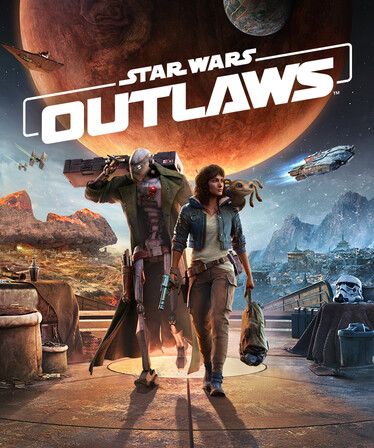
Star Wars Outlaws
Experience the first-ever open world Star Wars™ game and explore distinct locations across the galaxy, both iconic and new. Risk it all as scoundrel Kay Vess, seeking freedom and the means to start a new life.
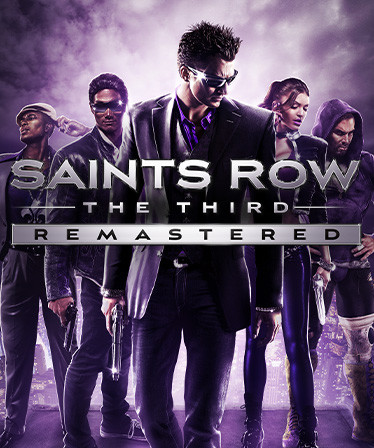
Saints Row : The Third Remastered
The Full Package, Remastered – With enhanced graphics, improved lighting, reworked environments, and visual effects, Steelport and The Third Street Saints have never looked so good.

Just Cause 3
With over 1000 km² of complete freedom from sky to seabed, Rico Rodriguez returns to unleash chaos in the most creative and explosive ways imaginable.
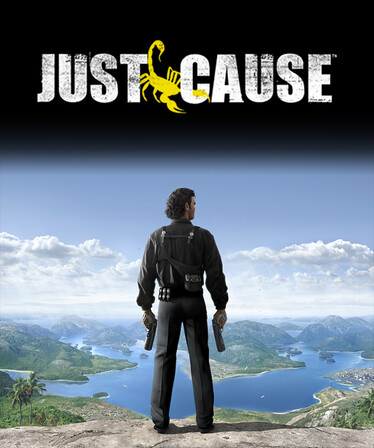
Just Cause
Your world...Your rules!

GUN
When life robs Colton White of all that matters, the only thing left he can trust is his GUN. From award-winning developer, Neversoft, and accomplished screenwriter, Randall Jahnson (The Mask of Zorro, The Doors), GUN follows Colton on his quest for discovery as he seeks to exact vengeful justice on those who have wronged him.

Sniper Elite: Resistance
Offering unparalleled sniping mechanics, stealth and tactical third-person combat, Sniper Elite: Resistance turns the attention of the award-winning series towards a hidden war, far from the front lines, deep within the heart of occupied France.

Ghostbusters: The Video Game Remastered
The beloved and critically acclaimed Ghostbusters video game is back! Strap on your proton pack once again and join the Ghostbusters on the adventure with the voice and likeness of the original crew as you battle to save New York!
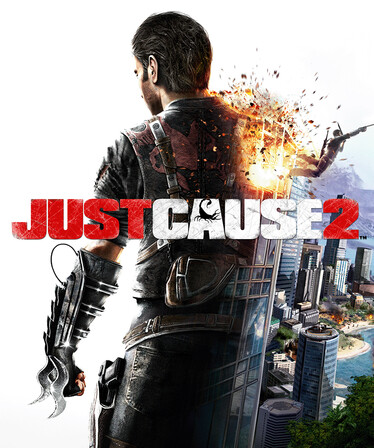
Just Cause 2
Dive into an adrenaline-fuelled free-roaming adventure with 400 square miles of rugged terrain and hundreds of weapons and vehicles.
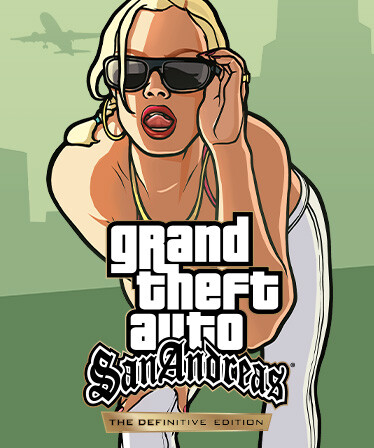
Grand Theft Auto: San Andreas The Definitive Edition
Grand Theft Auto: San Andreas: It’s the early ’90s. After a couple of cops frame him for homicide, Carl ‘CJ’ Johnson is forced on a journey that takes him across the entire state of San Andreas, to save his family and to take control of the streets.

Marvel's Spider-Man 2
Be Greater. Together. The incredible power of the symbiote forces Peter Parker and Miles Morales into a desperate fight as they balance their lives, friendships, and their duty to protect in an exciting chapter of the critically acclaimed Spider-Man franchise on PC.
Frequently Asked Questions
Outcast - A New Beginning is currently priced at 39.99€ on Steam.
No, Outcast - A New Beginning is currently not on sale. You can purchase it for 39.99€ on Steam.
Yes, Outcast - A New Beginning received 1,033 positive votes out of a total of 1,292 achieving a rating of 7.65.
😊
Outcast - A New Beginning was developed by Appeal Studios and published by THQ Nordic.
Yes, Outcast - A New Beginning is playable and fully supported on Windows.
No, Outcast - A New Beginning is not playable on MacOS.
No, Outcast - A New Beginning is not playable on Linux.
Yes, Outcast - A New Beginning is playable on Steam Deck, though it might require a few minor tweaks. Make sure to check the Steam store page and community feedback on ProtonDB for exact compatibility details.
Yes, Outcast - A New Beginning is playable and fully supported on Steam Machine.
No, Outcast - A New Beginning does not support VR.
Outcast - A New Beginning is a single-player game.
Yes, there is a DLC available for Outcast - A New Beginning. Explore additional content available for Outcast - A New Beginning on Steam.
No, Outcast - A New Beginning does not support mods via Steam Workshop.
No, Outcast - A New Beginning does not support Steam Remote Play.
Yes, Outcast - A New Beginning is enabled for Steam Family Sharing. This means you can share the game with authorized users from your Steam Library, allowing them to play it on their own accounts. For more details on how the feature works, you can read the original Steam Family Sharing announcement or visit the Steam Family Sharing user guide and FAQ page.
You can find solutions or submit a support ticket by visiting the Steam Support page for Outcast - A New Beginning.
Data sources
The information presented on this page is sourced from reliable APIs to ensure accuracy and relevance. We utilize the Steam API to gather data on game details, including titles, descriptions, prices, and user reviews. This allows us to provide you with the most up-to-date information directly from the Steam platform.
Additionally, we incorporate data from the SteamSpy API, which offers insights into game sales and player statistics. This helps us present a comprehensive view of each game's popularity and performance within the gaming community.
Last Updates| Steam data | 23 September 2026 12:12 UTC |
|---|---|
| SteamSpy data | 16 October 2026 12:40 UTC |
| Steam price | 26 October 2026 20:12 UTC |
| Steam reviews | 18 October 2026 15:51 UTC |
If you'd like to dive deeper into the details about Outcast - A New Beginning, we invite you to check out a few dedicated websites that offer extensive information and insights. These platforms provide valuable data, analysis, and user-generated reports to enhance your understanding of the game and its performance.
- SteamDB - A comprehensive database of everything on Steam about Outcast - A New Beginning
- SteamCharts - Analysis of Outcast - A New Beginning concurrent players on Steam
- ProtonDB - Crowdsourced reports on Linux and Steam Deck Outcast - A New Beginning compatibility


Game modes
Features
Online players
15
Developer
Appeal Studios
Publisher
THQ Nordic
Release
15 Mar 2024
Platforms
Clicking and buying through these links helps us earn a commission to maintain our services.