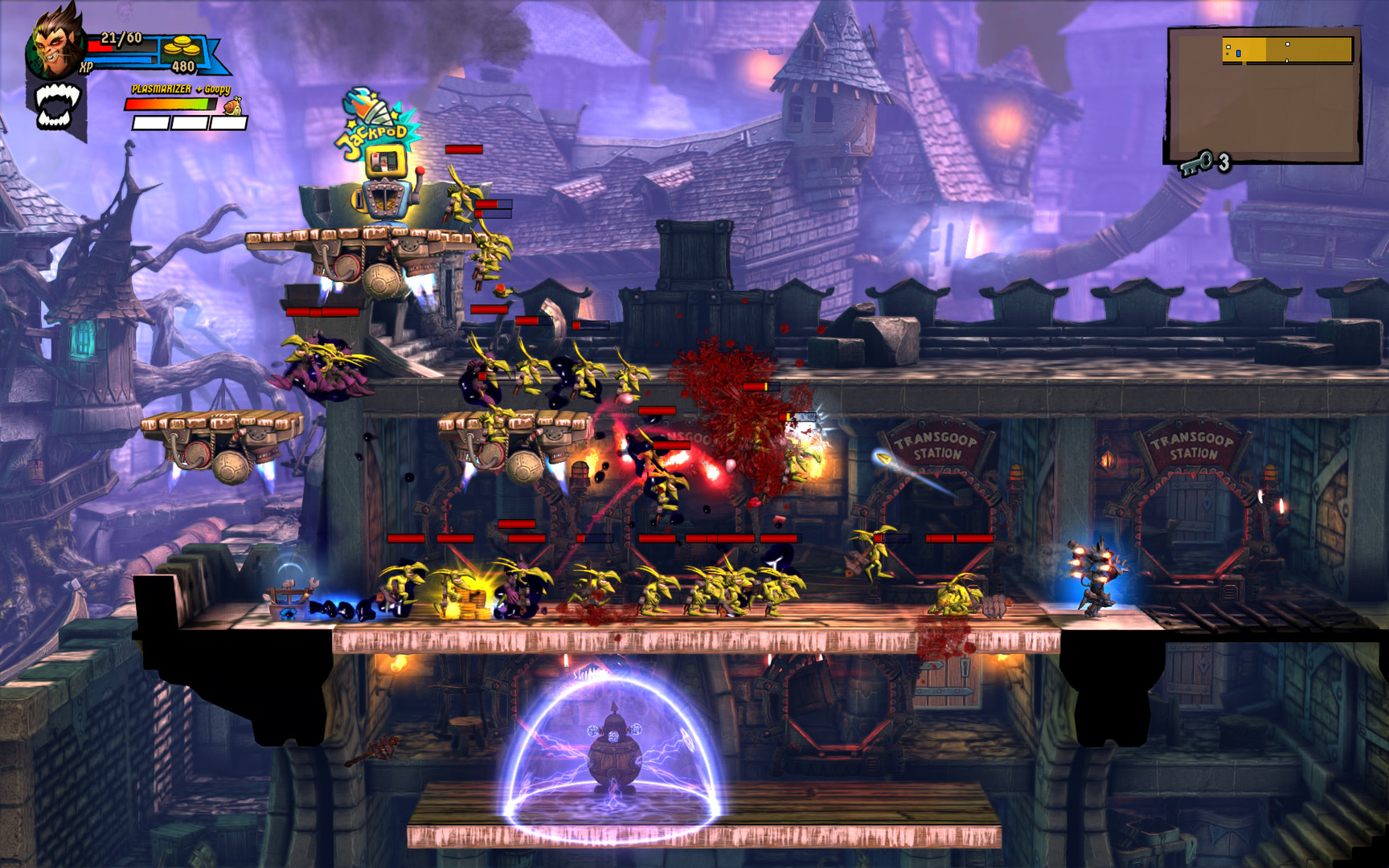
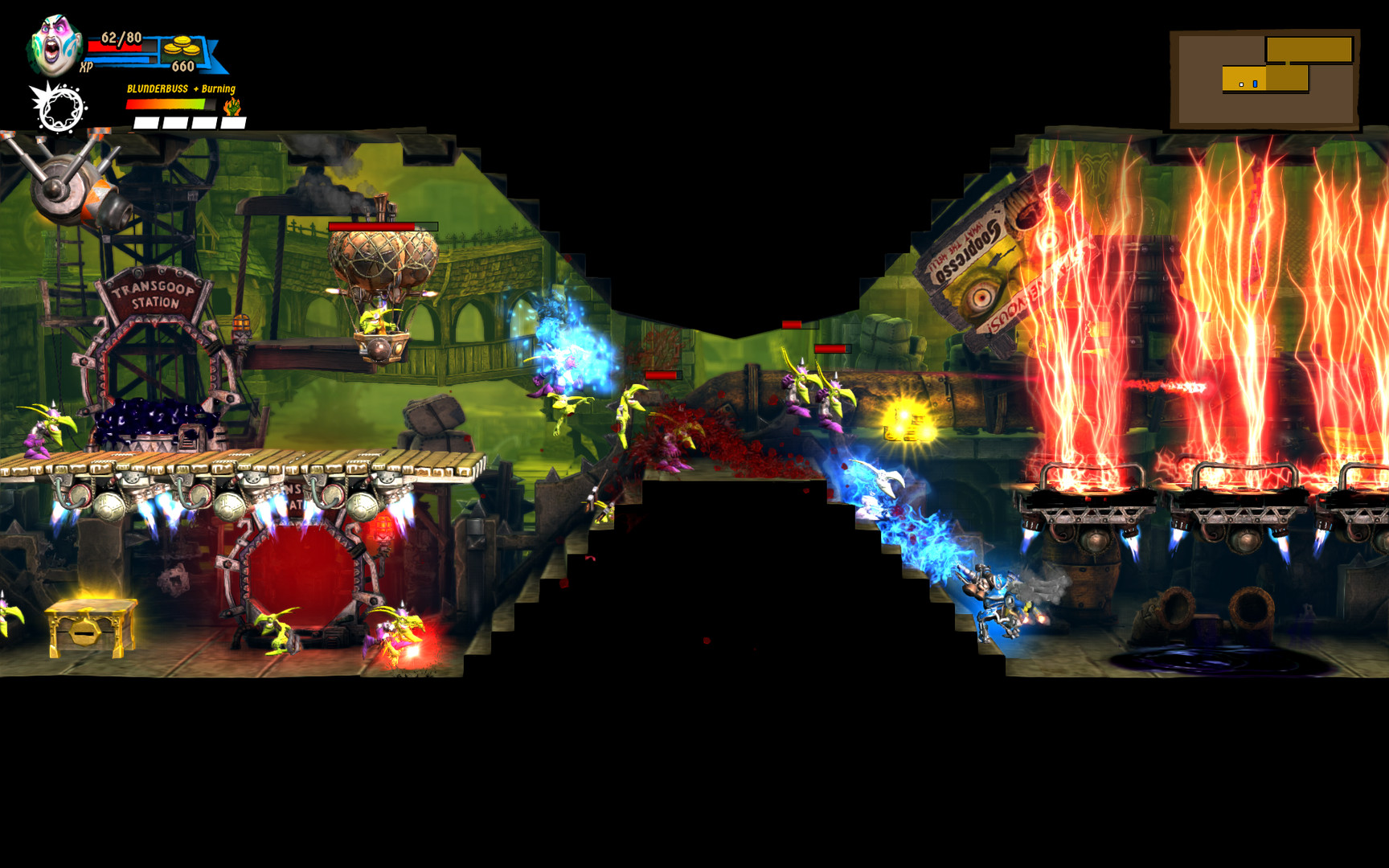
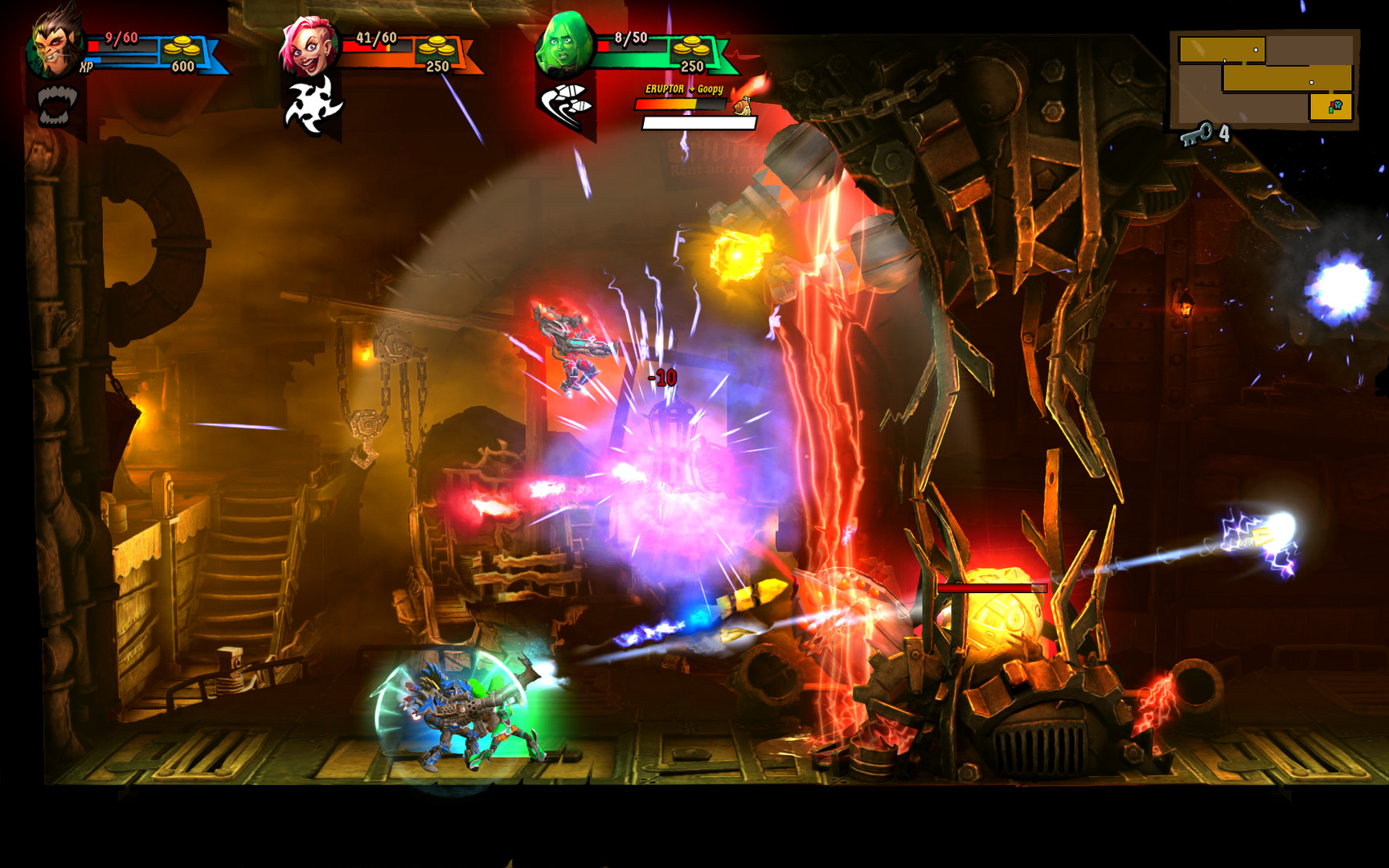
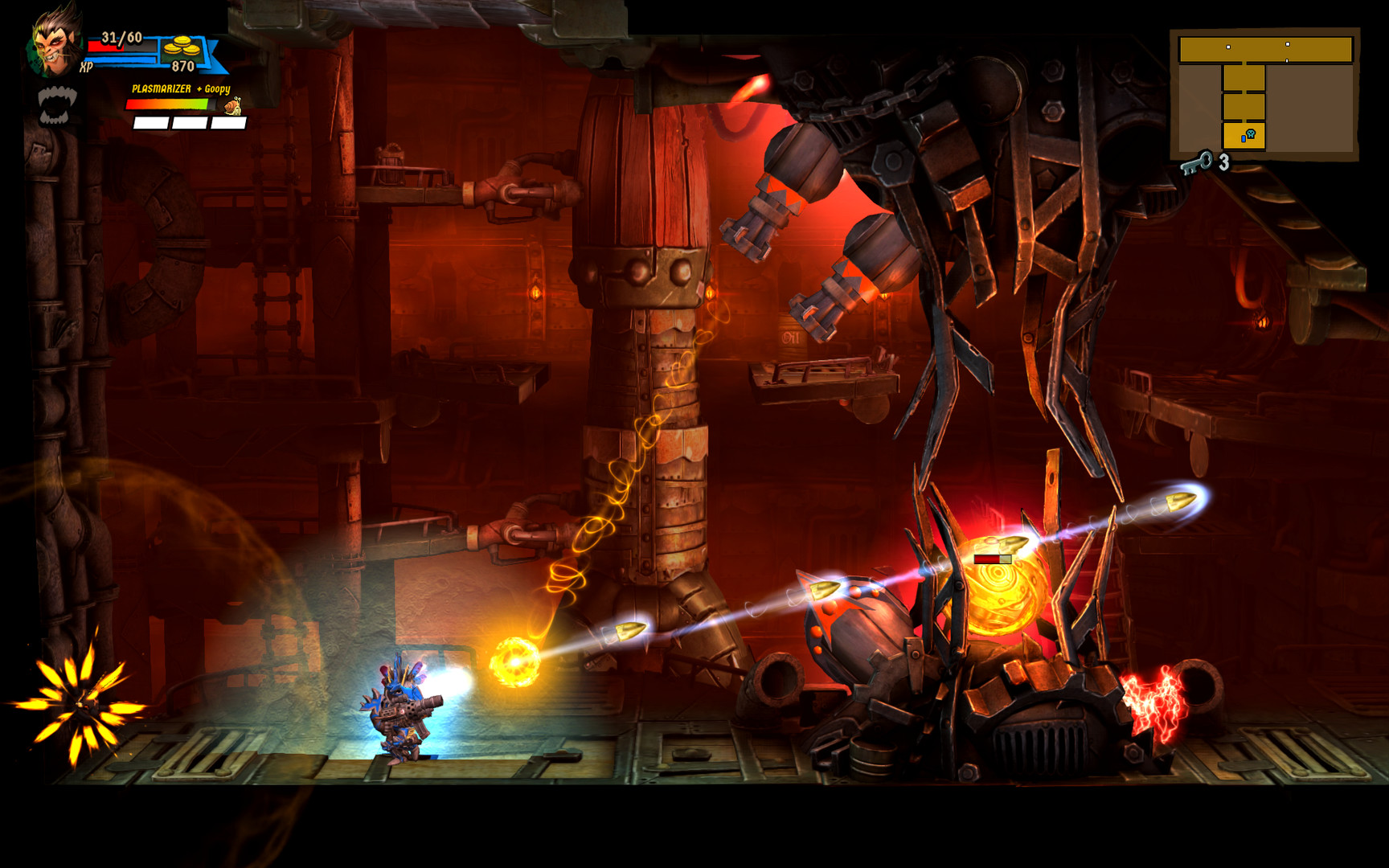
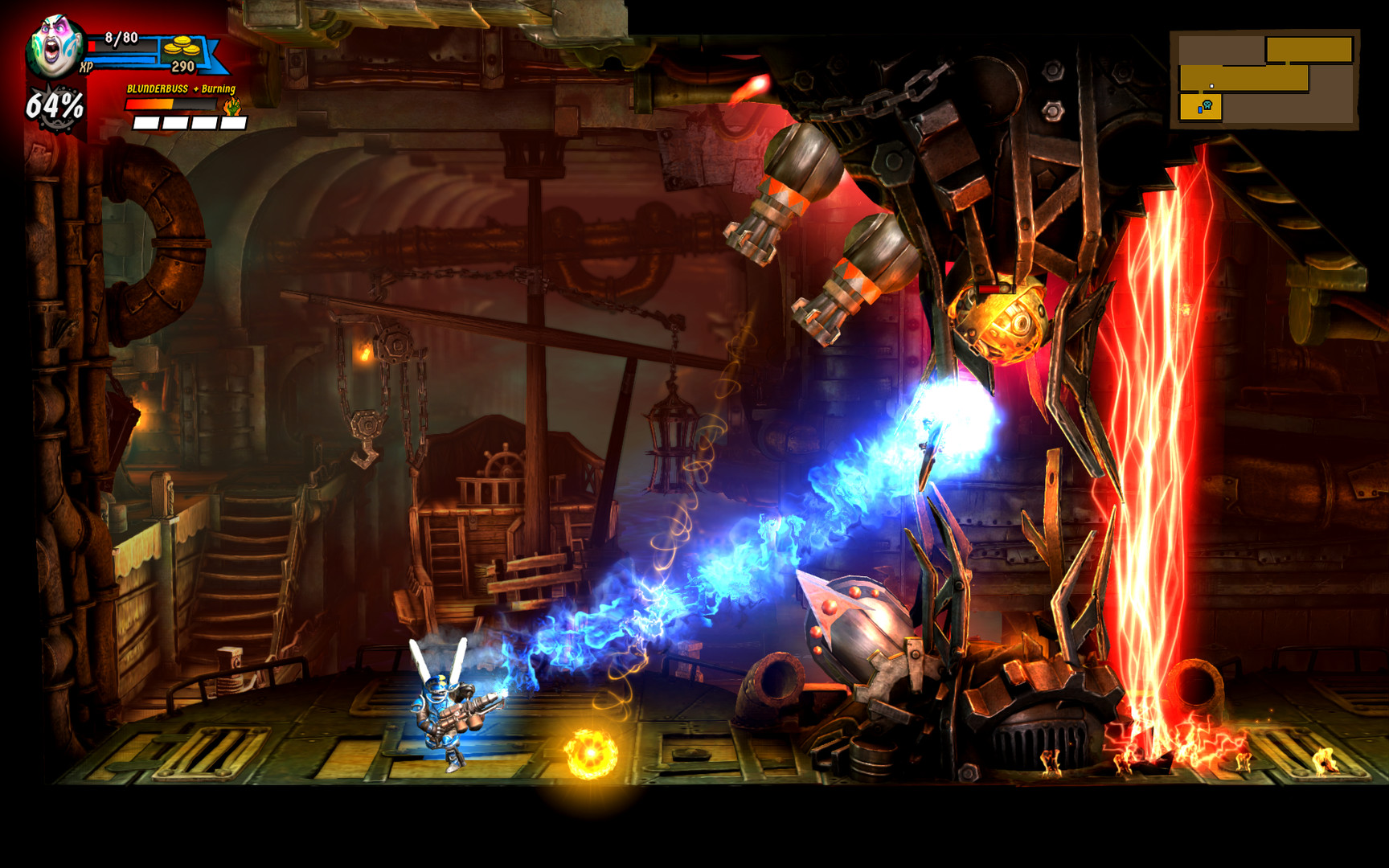
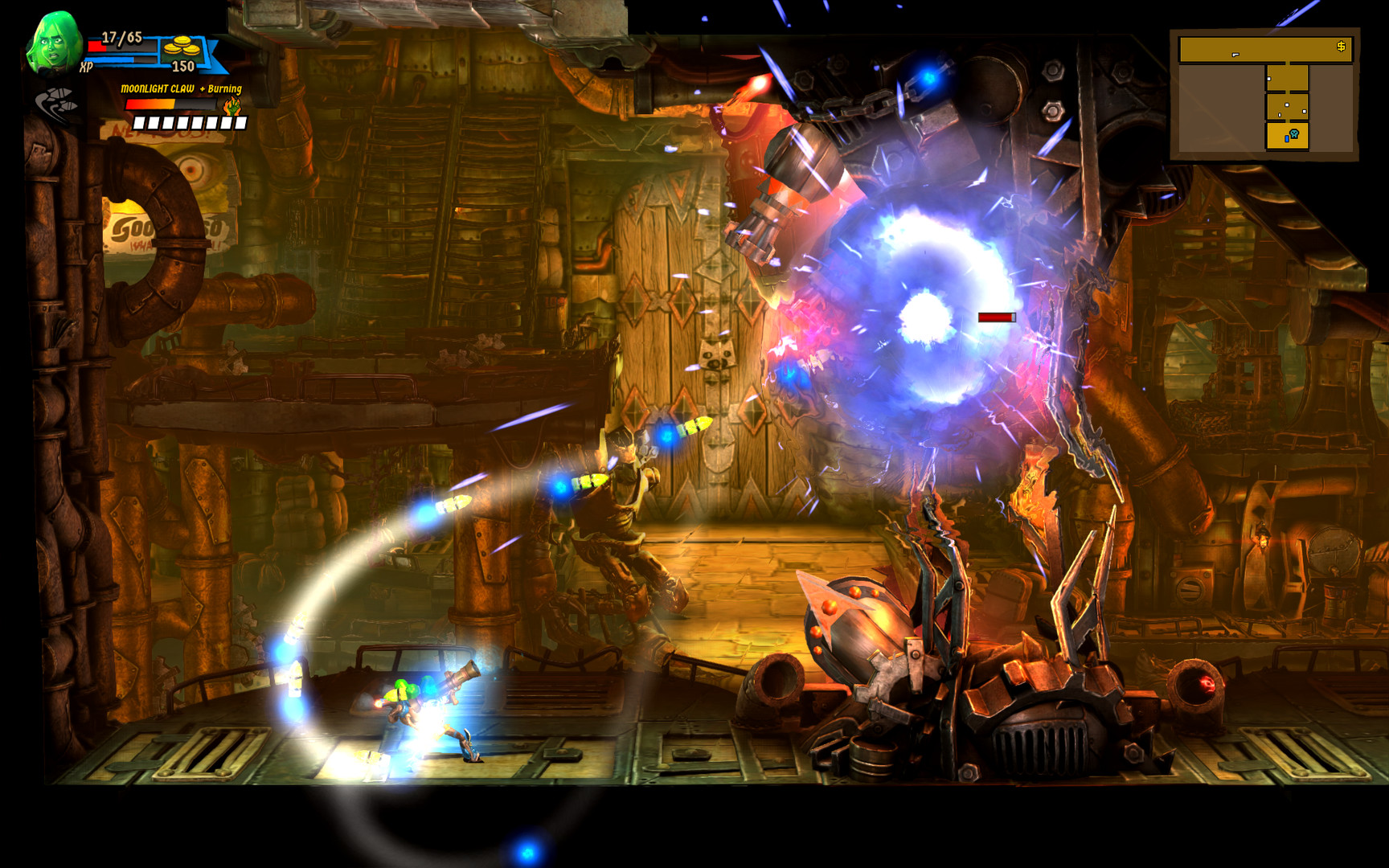
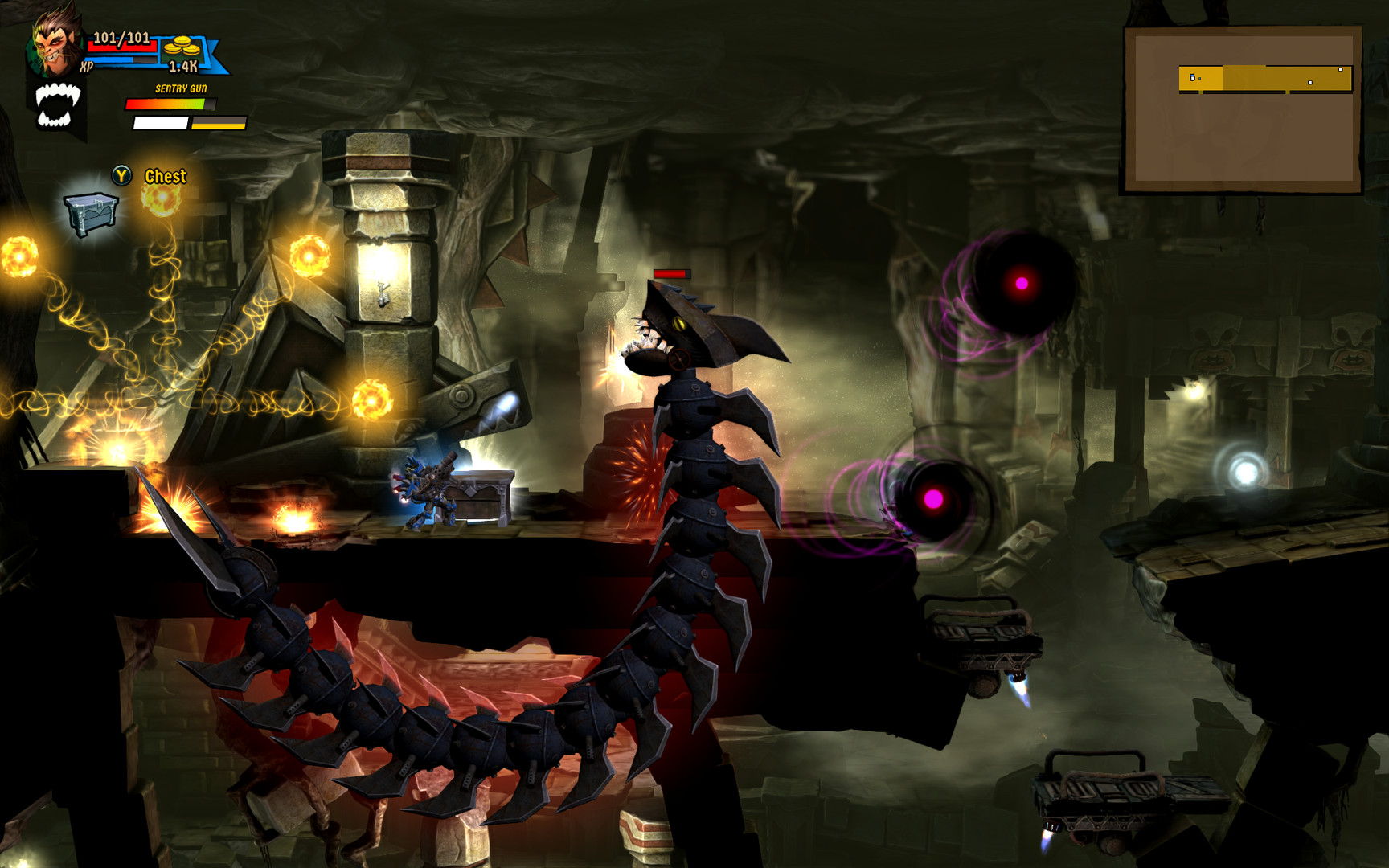
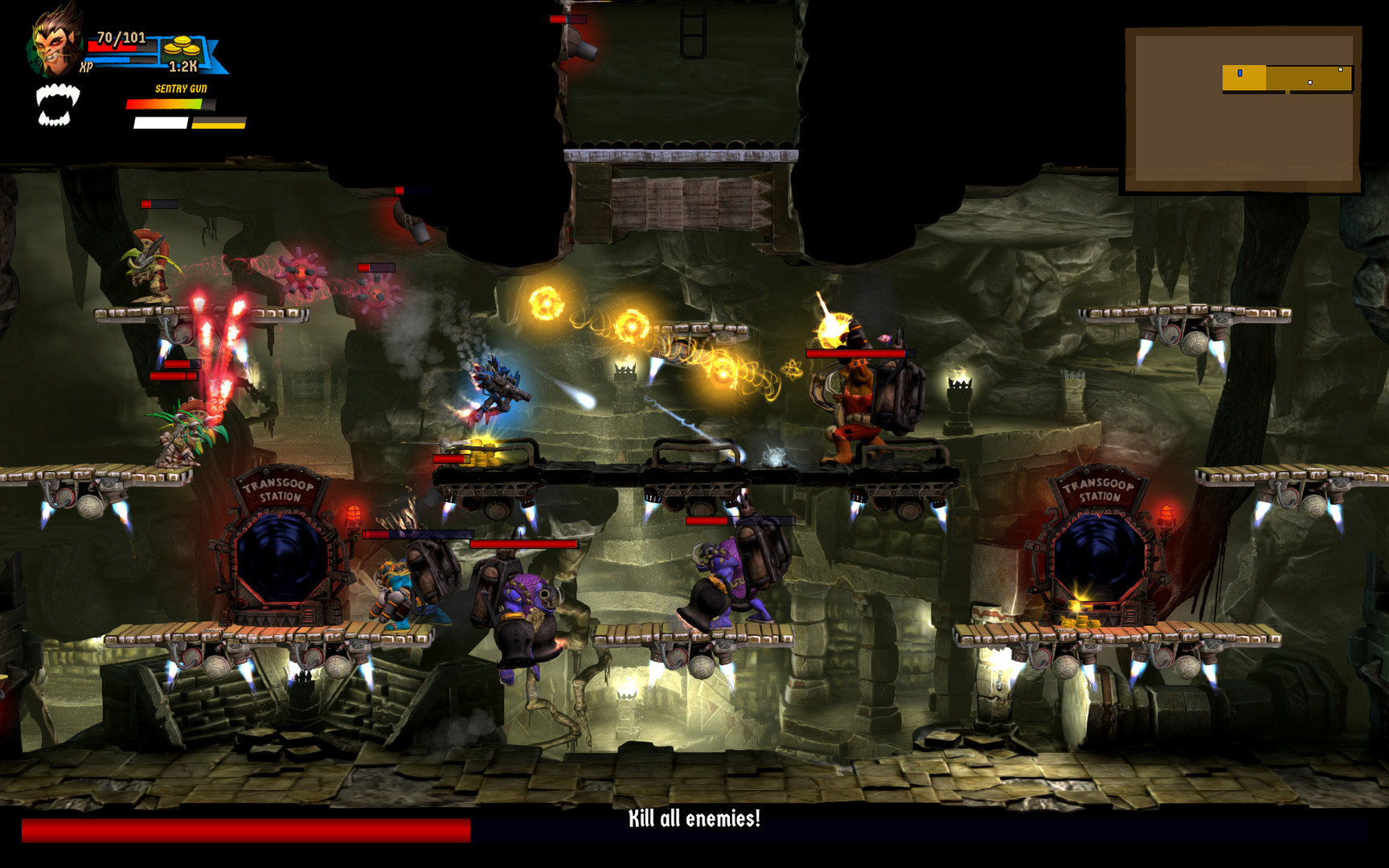
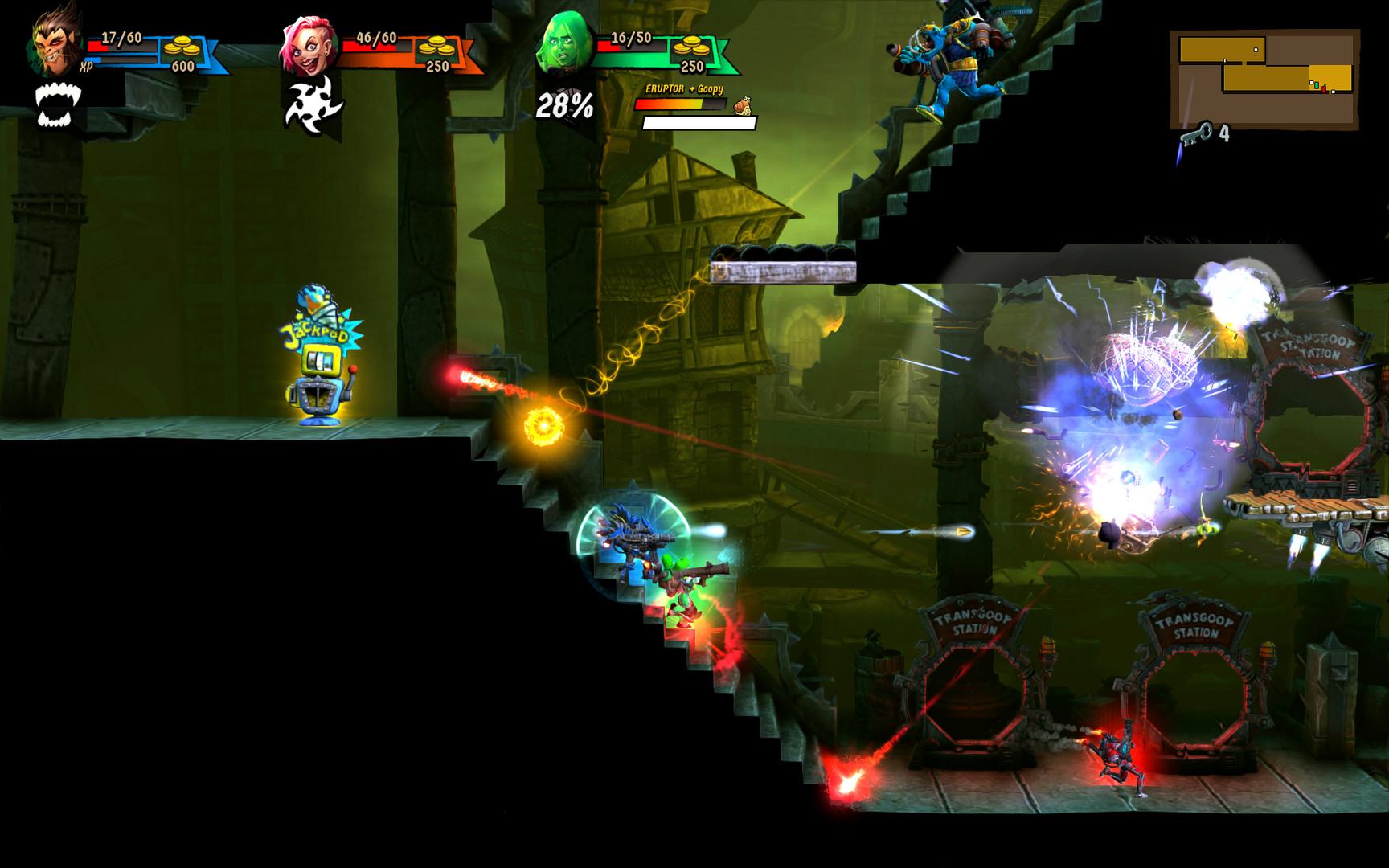
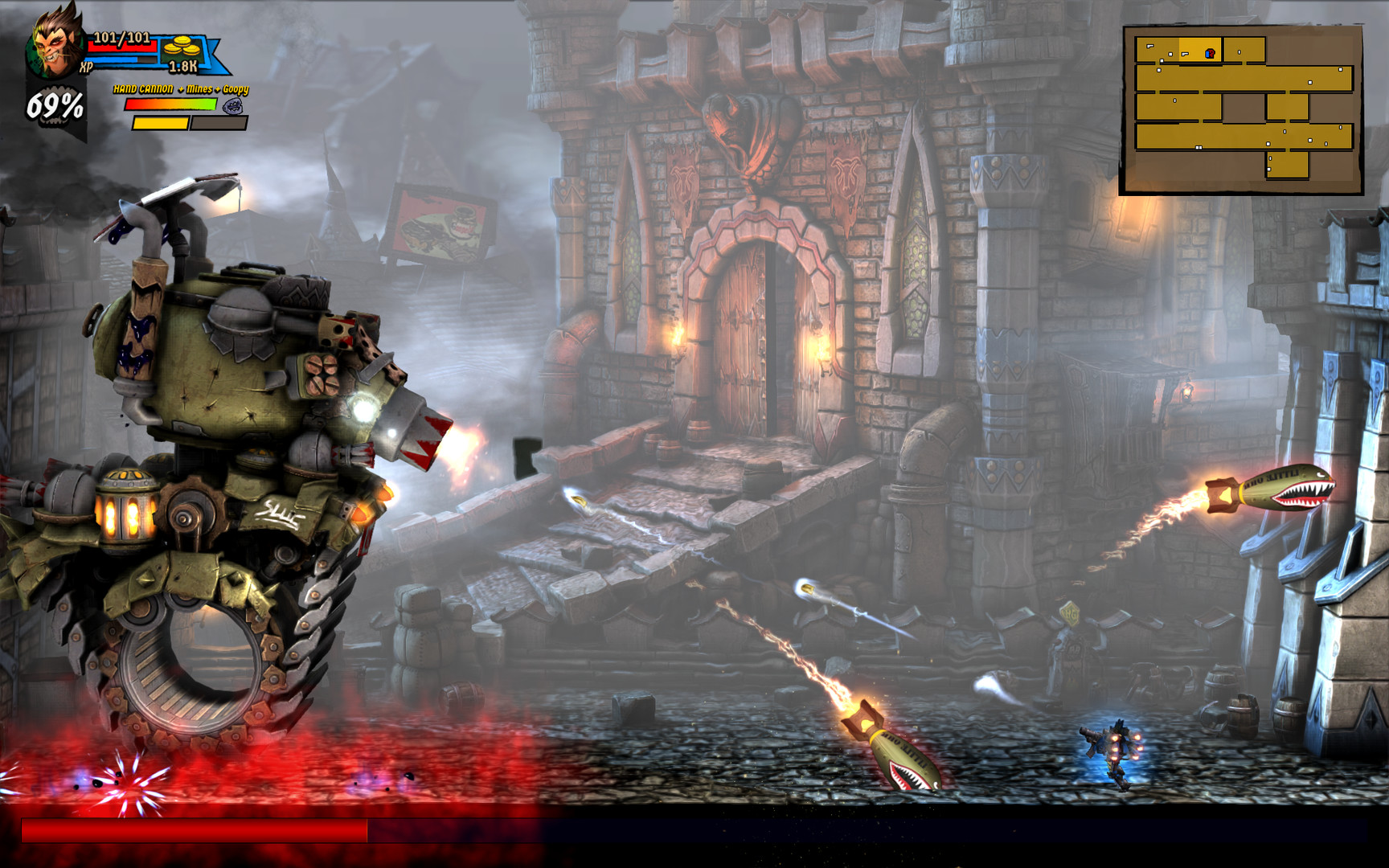
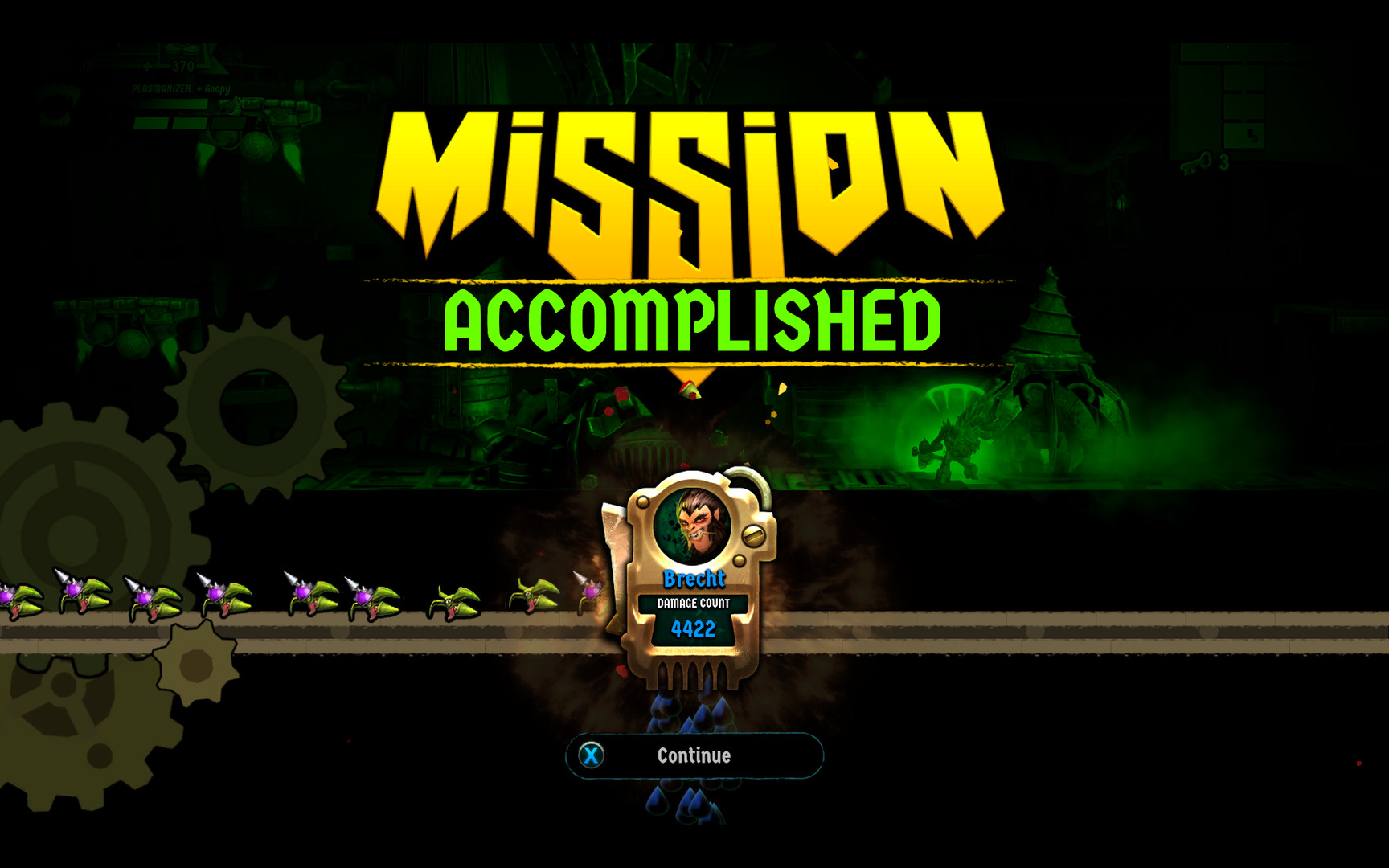
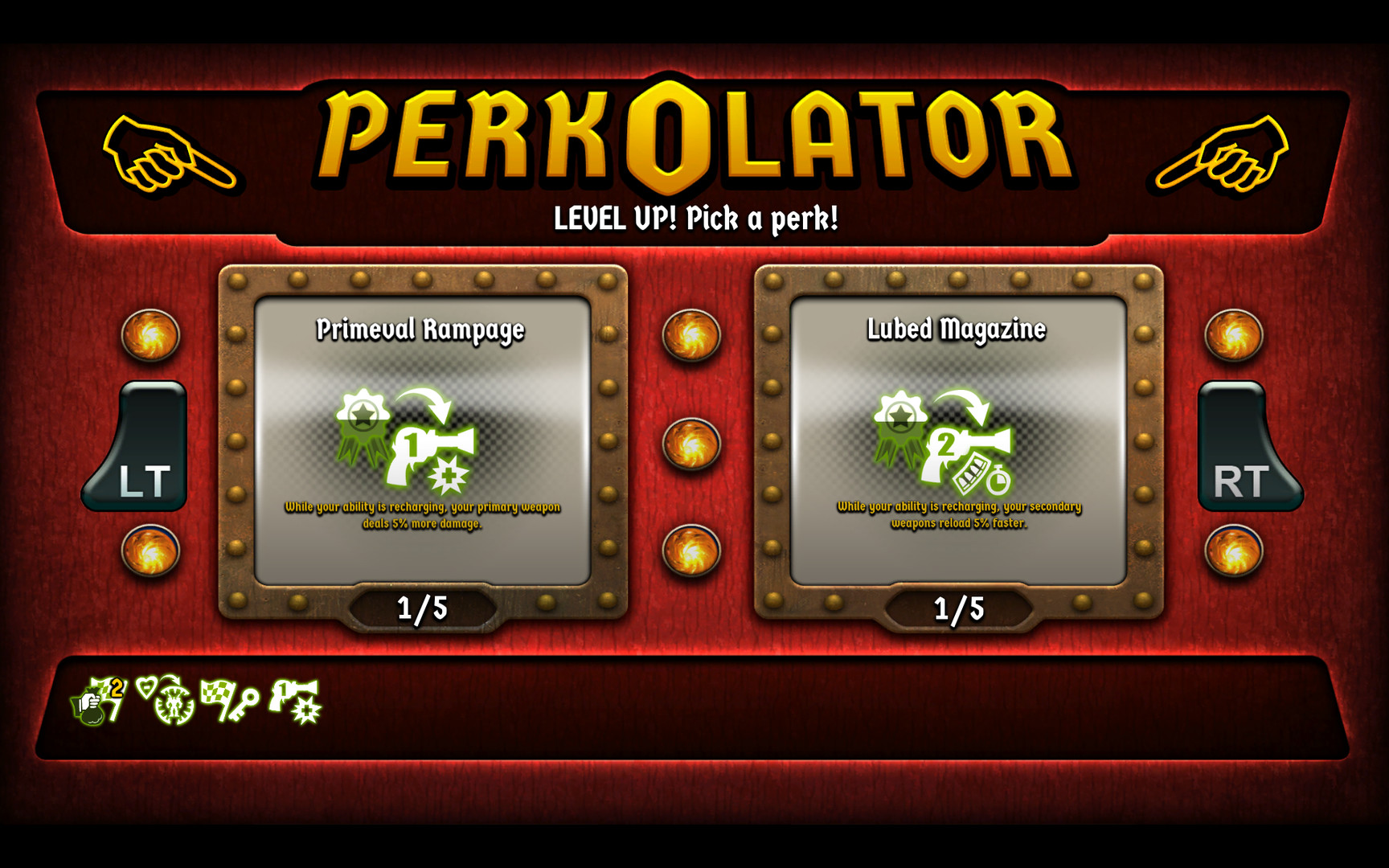
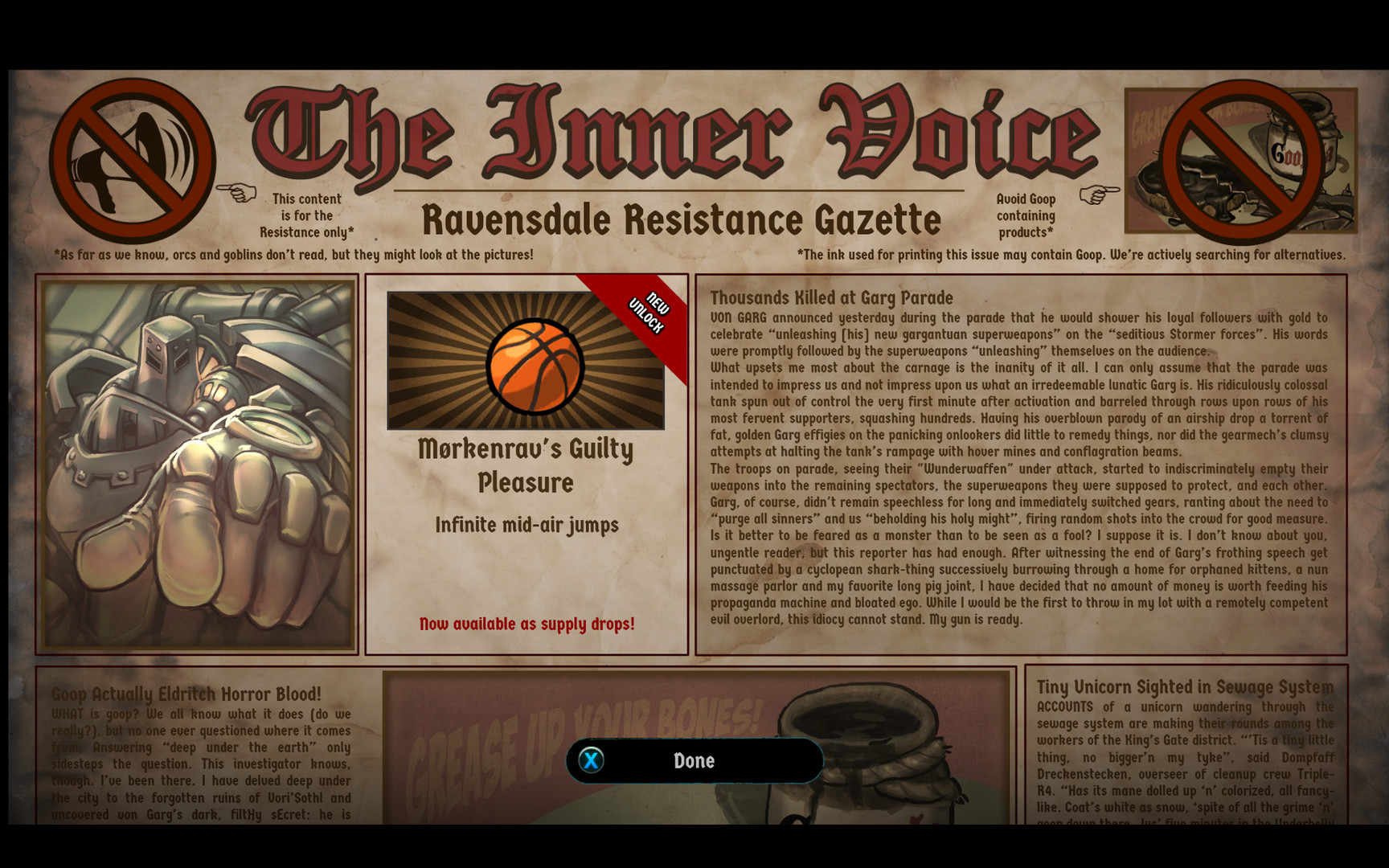
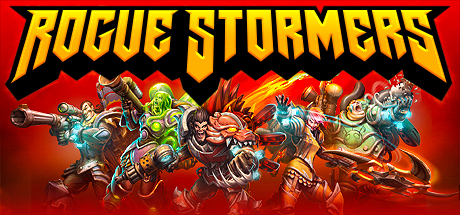
Rogue Stormers, developed by Black Forest Games and published by HandyGames, is a high-energy fusion of run-and-gun action and roguelike progression that reimagines the classic platform shooter through the lens of modern design. It is a chaotic, colorful, and punishingly difficult experience that blends the kinetic pace of games like Metal Slug with the procedural unpredictability of roguelikes. Set in a world that marries dieselpunk machinery with twisted fantasy aesthetics, the game delivers an action-packed romp through mechanical fortresses, grotesque dungeons, and industrial ruins filled with orcs, goblins, and bizarre machinery. It’s an ambitious effort that seeks to combine tight gunplay, co-op mayhem, and procedural variety, succeeding in energy and style even if it occasionally falters in balance and polish. The world of Rogue Stormers is bursting with personality. The city of Ravensdale, a grim industrial metropolis plagued by corruption and insanity, sets the stage for the player’s relentless assault through hordes of mutated enemies. The art direction strikes a unique balance between gritty and cartoonish, filled with exaggerated character designs, molten metal, and flickering neon lights. Each of the playable heroes—ranging from the all-round soldier Brecht to the flame-spewing Eryk or the agile gunslinger Stabbygale—has distinct abilities that drastically alter playstyle. These heroes are unlocked progressively as the player completes levels or meets certain in-game conditions, giving each run a tangible sense of progression. While the overarching story is minimal and often told through environmental cues rather than dialogue, the visual storytelling gives the world a surprising amount of charm, presenting Ravensdale as a place teetering between dark comedy and industrial apocalypse. The gameplay loop is where Rogue Stormers reveals its dual identity. On one hand, it’s a classic run-and-gun platformer—fast-paced, frantic, and heavily reliant on precise movement and shooting. On the other, it’s a roguelike that thrives on repetition, randomness, and gradual mastery. Each run consists of a series of procedurally generated levels, filled with enemies, traps, and environmental hazards. Defeating enemies and collecting loot allows players to acquire upgrades, weapons, and passive buffs, but death wipes most progress, sending you back to the start. This structure forces players to strike a delicate balance between risk and reward—whether to push deeper into enemy territory for better loot or play cautiously to ensure survival. The addition of random modifiers keeps things unpredictable, ensuring that no two runs feel exactly alike, though this same randomness can sometimes make progress feel more dependent on luck than on player skill. Where Rogue Stormers truly shines is in its cooperative play. Up to four players can join forces, either locally or online, to take on the game’s increasingly brutal levels. In co-op, the frenetic chaos becomes part of the fun as screens fill with explosions, ricocheting bullets, and power-ups. The synergy between characters adds tactical depth, as players combine abilities to overcome tougher enemies or bosses. When played with friends, the game’s difficulty transforms from punishing to exhilarating, with revives and teamwork softening the harshness of its roguelike mechanics. Solo play, on the other hand, can be significantly more demanding. Without the support of teammates, the challenge level spikes sharply, and certain enemies or level configurations can feel nearly insurmountable. The game’s design clearly favors cooperative play, and while it remains playable solo, it loses some of its chaotic charm and rhythm. Visually, Rogue Stormers is vibrant and detailed, filled with explosive effects and layered backgrounds that make each stage feel alive. The art direction combines mechanical and organic elements, creating a distinct aesthetic that feels simultaneously grotesque and lively. The soundtrack complements this energy with pounding industrial beats and fast-paced electronic rhythms that match the on-screen chaos. However, the game’s technical performance doesn’t always keep pace with its visual ambition. Frame rate drops, clipping issues, and occasional physics glitches can break immersion during intense firefights. These technical hiccups aren’t deal-breaking, but they do remind you that beneath its loud exterior lies a game that could have benefited from a bit more refinement. Despite this, the core combat and movement remain fluid, and the gunplay—supported by satisfying recoil, impactful sound design, and responsive controls—feels consistently rewarding. Rogue Stormers also integrates a light progression system that gives the roguelike structure a sense of permanence. Completing runs unlocks new heroes, weapons, and abilities, while certain perks carry over between attempts. This design ensures that even failed runs contribute to long-term progress, offering small but meaningful rewards that encourage continued play. However, the sense of progression is limited by the game’s repetitive structure. The variety of weapons and enemies, though solid at first, begins to feel familiar after extended play. The procedural level generation helps maintain freshness to an extent, but the game’s core encounters and environments tend to recycle patterns. It’s an issue shared by many roguelikes, but here it’s particularly noticeable given the intensity of the gameplay loop and the relatively small pool of stage variations. In its best moments, Rogue Stormers captures the thrill of arcade shooters at their most explosive. Its blend of roguelike unpredictability, cooperative chaos, and heavy weapon feedback creates a visceral sense of action that’s hard to replicate. It’s a game that thrives on momentum—on the feeling of narrowly dodging a barrage of bullets, coordinating with teammates, and watching the screen erupt in a spectacle of destruction. When everything clicks, it’s immensely satisfying. But the experience can also be uneven, especially in solo mode, where difficulty spikes, luck-based progression, and occasional technical issues dull the edge of its otherwise sharp design. Ultimately, Rogue Stormers is an ambitious experiment that succeeds in spirit even if it stumbles in execution. It’s a game that knows exactly what kind of experience it wants to deliver—a fast, frenetic, and replayable shooter that rewards persistence and teamwork. For players who enjoy cooperative chaos, unpredictable challenges, and stylishly grim worlds, it’s a hidden gem worth exploring. For those seeking tight balance, polished pacing, or a deep single-player experience, it may prove too uneven. But when approached as a shared adventure filled with gunfire, laughter, and last-second revivals, Rogue Stormers delivers a wild and memorable ride that stands out in the crowded landscape of roguelike shooters. Rating: 6/10
Expand the review