
Stiff Neck
A story about the self—and about others. A toy factory, several cursed dolls, and a horror novel… This quiet seaside town throws Noele's love life into chaos and dredges up the old wounds she has tried for years to forget.
Sync your Steam wishlist to find the lowest game prices instantly. No login required, just paste your Steam profile URL!
⚡ Try Wishlist Radar!
Sync your Steam wishlist to find the lowest game prices instantly. No login required!
⚡ Try Wishlist Radar!
Close

Sweet Home on Steam
Quick menu
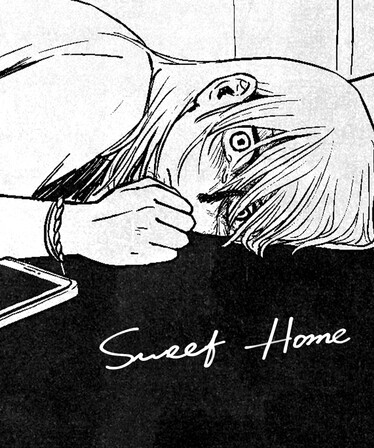
Sweet Home is a visual novel set in a Chinese high school. Parted friendships, ambiguous romances, tangled relationships, and flawed families... Are these just the pangs of adolescence—or something heavier? Step into the shoes of Zhao Ying, shape her choices, and uncover every possible path.
Sweet Home is a lgbtq+, female protagonist and rpg game
developed by 开心茶房
and published by 开心茶房 and Tailtone Games.
Released on August 18th 2025 is available on Windows, MacOS, Steam Deck and Steam Machine
in 5 languages: Simplified Chinese, English, Japanese, Traditional Chinese and Korean.
It has received 10,073 reviews of which 9,469 were positive and 604 were negative resulting in an impressive rating of 9.1 out of 10. 😍
The game is currently priced at 7.79€ on Steam.
The Steam community has classified Sweet Home into these genres:
LGBTQ+
Female Protagonist
RPG
Visual Novel
Interactive Fiction
Dating Sim
Word Game
Emotional
Multiple Endings
Simulation
Singleplayer
Indie
Anime
Casual
First-Person
Psychological Horror
Here is the detailed breakdown of supported languages for Sweet Home:
| UI | Subtitle | Audio | |
|---|---|---|---|
| English | |||
| Korean | |||
| Simplified Chinese | |||
| Traditional Chinese | |||
| Japanese |
Media & Screenshots
Get an in-depth look at Sweet Home through various videos and screenshots.


Load More


System requirements
These are the minimum specifications needed to play the game. For the best experience, we recommend that you verify them.
Windows
- OS: win7
- Processor: Intel Core i3
- Memory: 8 GB RAM
- Graphics: intel HD Graphics 4400
- Storage: 5 GB available space
MacOS
- OS: macOS 11.0+
- Processor: Apple M1 or Intel Core i5
- Memory: 8 GB RAM
- Graphics: Apple M1 Integrated Graphics or Intel Iris Plus Graphics
- Storage: 5 GB available space
Steam Price & Best Deals
User reviews & Ratings
Explore reviews from Steam users sharing their experiences and what they love about the game.
Another lesbian VN, another coin flip between horrendously toxic, unhealthy relationships and the fluffiest piece of media in existence. Jokes aside, take the content warnings seriously. This game isn't throwing them around for childish reasons, there's plenty of abuse of all kinds. Oh, and let me tell you this now, this game isn't for you if you're searching for a game with an explicitly stated 'happy ending'. Every ending in this game is either bad, horrible or questionable. Anyway, moving on, I spent probably 90% of my playtime unlocking all the achievements and the rest admiring the absolutely GORGEOUS art, it's not anything super detailed or complicated, but there's so much beauty in the simplicity. The art, combined with the huge amount of facial expressions and 'states' of the characters (although primarily the protagonist) only amplifies the.. emotionally raw..? aspect of the art? I can't even begin to explain it, it's wonderful. The writing is much of the same aspect as the art, it's genius in its own way. It isn't anything super groundbreaking but it carries emotion which honestly has felt less and less common with newer and newer VNs, so huge bonus in that regard. And I have to put emphasis on this, but the choices feel like they're lying to you, and I mean that in the best way ever. I can't just take it at face value, I have to actually consider what my character is feeling in the moment, I can't just.. read the option and click.. no that's too easy, and I like my life difficult. I can't say much more, it's an absolutely fantastic VN. It is worth the money. On other games I'd argue for price per hour of playtime and all that jumbo, but no, not for this game. Hell I'd pay twice the price. And I kinda did. I gifted it to my friend.
The art in this game is gorgeous, and the music really fits the atmosphere well. This isn't a voiced VN, but there are a few times the protagonist makes a sound. This contrast makes it much more striking. Mechanics wise, I think there's some issues with the coding occasionally. When you play the game multiple times, you'll notice that the skip read text doesn't work as intended all the time, there's quite a few lines it's never going to skip over, even though you've already read them. This isn't a major issue though. Story wise, and for a VN, this is the thing that's truly going to matter, I have to say that it's not going to be for everyone. I looked over some of the negative comments, and the general complaints seemed to be that the VN is seen as too angsty, the story is quite set, there's not enough depth, some people even though that this is unrealistic. Quite a few also complained that there's no good or redemption ending. Generally, I either disagree with those sentiments, or think they're just a little off. It feels like they missed the point. Let me explain. I'll start off by saying that I have a fairly extensive knowledge of abuse and trauma, both from a personal and a professional standpoint. That doesn't make me a ruling authority on the topic, of course, but that is to say I know a thing or two. The game is sort of labled as teenage drama or angst, but I don't think that's really accurate. In the protagonist's case, she's been experiencing abuse and has built up a lot of trauma by the time the VN begins. For complex PTSD specifically, which there are multiple signs of (e.g., recurrent dissociation, and for long periods of time), notably the victims usually either fall into the category that they can fly off the handle at seemingly small things or seemingly nothing moves them at all. It's a constant battle for survival, and the brain will do what it feels it has to in order to keep you alive. I want to highlight that according to our current knowledge, C-PTSD is a type of brain damage, precisely because the brain needed to alter itself to ensure your survival in the environment you couldn't get out of. This type of trauma permanently and physically changes the brain in a way that cannot be altered, at the very least, we don't know how yet. That is to say, the problem has been building up for years. The reason why it's "suddenly" bursting forth at this point in time is probably because as children, we lack the understanding of a lot of things, and we're fully reliant on our parents. We need them in order to survive, although, of course, kids also crave to be loved and accepted by their parents, too. It's a fairly complicated matter that's rooted in survival, at the very core of things. The older you get, the more you see other families aren't like that, the more you realise nothing you do is ever going to win you your parents' favour, and the more things are going to spill over. It stops feeling more like a given, like that's just life is, and more that things are unfair. Of course, as a teenager, on top of those things, you're also going to be dealing with a lot of hormonal changes, the impulsivity starts to come out more. As a rule, most teenagers will already have some issues, this is a normal part of adolescene, but this is 100% not that. I will admit that the story is quite set. To be honest, as far as I can tell, it feels like you have to make a very specific set of choices in a very specific order for your outcome to change at all. It's not at all intuitive. However, I think that's probably intentional, I think that's the point. When you're in a bad situation, you're made to feel like none of the choices you make are right. Even when things are very clearly not your fault, you'll still get blamed. The point is that bad things happen despite the choices you make, the point is that it's unfair, unjust, and that you have very little control over things. Ultimately, to someone who's in a bad situation, it'll feel like there's no way out. Especially children, they genuinely often don't have a way out. There may be some options nowadays, but those are typically not great either, orphanages tend to lead to their own type of trauma, too. Let me tell you, to people who've been stuck in these situations, it's very, very common to fantasise about drastic measures to make it stop. To get revenge. The question is really whether you have enough reason or enough discipline to hold back, and not everyone does. That's reality, no matter how much some want to look away from it, thinking it's unrealistic. To that end, I want to touch on the notion that there's no good endings or no redemption endings. While I hear that, I also have to ask; does every story need to have a conventionally happy ending? Isn't that more unrealistic than anything? There are people in drastic situations who take drastic measures, we know most people have a line that cannot and should not be crossed, however, most people will also not be extensively tested on this. Having talked to multiple people with extensive trauma, almost all of them disclosed that had they been able to get away with it, they would've gladly taken matters into their own hands. To them, in the cases where the abusers passed away, typically quite a few years down the line where they weren't even stuck in their situations anymore, they celebrated. Full course meals at high end restaurants. One did not, but only because she didn't get the satisfaction of endig the abuser herself. That may be the ugly truth, a horrible reality, but it is what it is. Mind you, most of these people would also never tell these things to people who've not had similar experiences. In fact, most if not all avoid talking about their experiences with people with normal lives at all because the normal ones just never get it. At best, they show pity, at worst, they turn around and accuse you of being childish for not talking it out. From that point of view, I'll also say that some of the endings, in fact, are very happy endings to people who've grown in these types of situations. Finally, the depth. From a psychological standpoint, specifically focusing on the psychology of trauma, this game is very rich. There are subtleties that will most likely fly under the radar of a lot of normal people. Then there's that you really need to do every route with every character to get the full story because they each add a bit of the psychological background that paints the whole picture. You'll mostly find that all of the characters in the game are deeply flawed characters with their own trauma, and you may find this unrealistic as well. However, unfortunately, this is actually a very well-documented phenomenon. People who suffer trauma will always and forever draw in others like them, they form deep bonds very quickly; this is known as trauma bonding. However, they will also and forever draw in abusers. Suffering abuse once makes you statistically more likely to become a victim again in the future. This happens for multiple reasons, but one notable one, for sure, is that people who grew without real love and proper care will typically spend the rest of their lives searching for it, desperately, and someone like that is just very easy to manipulate. I think the TLDR is that for people who've experienced abuse or are knowledgable on it, they're going to get a lot out of this game. If you have a loved one who's experienced abuse, this game may help you understand how they feel or felt a little bit. But you have to know that this VN isn't going to be a good or a comfortable experience, probably for a lot of people who haven't experienced trauma. If you're expecting a conventionally happy ending, this game isn't going to be for you, and that's ok.
I finished Wang Yihan's route back in Nov 9 2025 with a friend translating for me. I very much enjoyed the setting, story, and tidbits my friend had to offer while assisting me. None of the routes topped Wang Yihan's routes, but that's due to me liking the idea of their life in the future together. Everyone else had fantastic routes though. This game is so depressing. Zhao Ying is so relatable... Artwork is fantastic and the soundtrack is impressive which gives a feeling of being there while you read. The english translation done by chinese speakers who are not native english speakers. The team said no MTL was utilized, so despite issues, there are no worries there.
Sweet Home actually broke me, I'm never going to be the same in my life ever. My mind has been permanently altered, past the point of no recovery. Words cannot express how horribly distraught I am right now, and this game WILL be written on my grave. Currently, I've only finished two routes and I already feel like I'm genuinely losing my ♥♥♥♥♥♥♥ ♥♥♥♥♥♥♥ mind. I haven't even touched the tip of the iceberg and I need to go back and torture myself more to get the full story. I can't wait to finish the rest and ruin my life forever. I'll probably come back and add more but for now this is my current pain and suffering. I MORE than recommend sweet home, this game was a formative moment in my life I'm actually so cooked yo play the game or else I'm going to explode the universe 10000000000000000000003.14159265358979323/10
Similar games
View all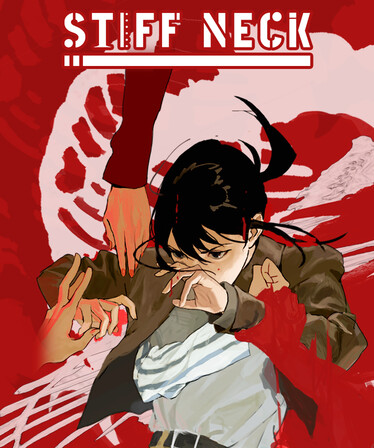

风岬-The Everlasting lovestory at the Windcap
I was abandoned by the world, and she was forgotten by time. Attracted by loneliness, we cling to each other because of misfortune. The happy fairy tale woven by the two eventually turned into a curse of despair.

Love Curse: Find Your Soulmate
Love Curse is a GL visual novel. You’ve fallen under a curse, and the only way to break it is to find your soulmate! The clock is ticking… Will you find true love? And what secrets will you uncover along the way?
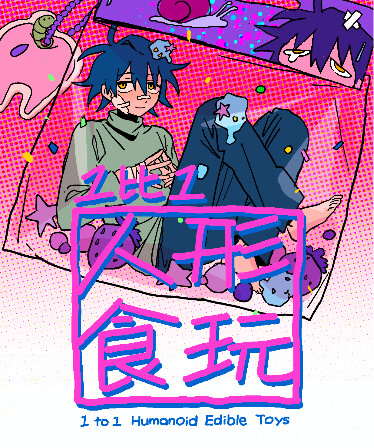
1 to 1 humanoid edible toys
A story about Ambiguous Affection, Appetite, and Tantalizing Desires.

S-mail
After the death of your lover May, you suddenly receive a new email: she is back, in the form of AI "M". The lover who "lives" in the mailbox, who is strong and eternal, always online, and always loves you. You just need to send letters to her: your choices will affect her and the story.

Only You
"Problem Child" me, Class Heartthrob her—two lines that should never cross collided through a series of coincidences, shattering my monochrome world. Crave her eyes on me alone, crave her world with me alone. The once-pure admiration begins to twist...
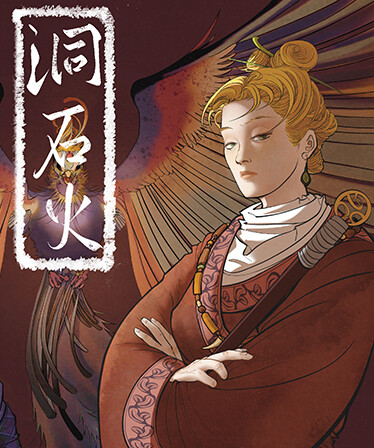
Ignited in Cavern
In the waning years of the Northern Wei Dynasty, a rumor circulates about a stone statue that bestows blessings in the mortal realm. Lured by the rumor, Anu and Chu Qingqing, a Xianbei General and her Han captive, are led to Dunhuang to face their fates.
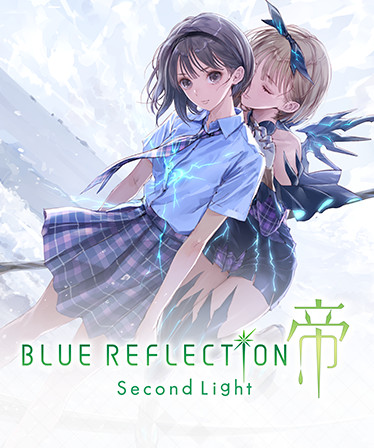
BLUE REFLECTION: Second Light
“As the last summer day fades, all is illuminated.” With gorgeous translucent designs by Mel Kishida, as well as a story that depicts the youth of lifelike girls, based on a theme of human identity and bonding, a new title in the BLUE REFLECTION series is here!

Fatal Twelve
Shishimai Rinka was a high schooler who ran a small café named Lion House in place of her grandmother. She lived her life much like any other person her age, but one day, she was caught up in an explosion while returning home on the train alongside her friend, Hitsuji Naomi.

Vampires' Melody 2
Emerald seas! Blue skies! Sandy beaches! An island adventure in the ocean sounds like a trip to paradise. However, the place is a nightmare with no one to provide any blood for Raylan to feed on after he turned into a vampire by accident, especially since he has another hungry vampire at his side.

目盲/Blind
「Sometimes what the eye can't tell, the heart can.」 《Blind》 is a light fantasy game for girls set in a modern city. After a childhood accident that left me with a strange face blindness, I was introduced to a profession called "watchman" and since then, the world has taken on a whole new dimension.

蔚蓝月下的回忆~SAPPHIRE MOON-FOREVER MEMORIES
The story will be accompanied by three heroines, and everyone will find their own love in this real and imaginary world. Is it the dark-skinned school girl who is available, the cold and mysterious girl, or the afterimage that I have been unable to reach in my memory?
Frequently Asked Questions
Sweet Home is currently priced at 7.79€ on Steam.
No, Sweet Home is currently not on sale. You can purchase it for 7.79€ on Steam.
Yes, Sweet Home received 9,469 positive votes out of a total of 10,073 achieving an impressive rating of 9.13.
😍
Sweet Home was developed by 开心茶房 and published by 开心茶房 and Tailtone Games.
Yes, Sweet Home is playable and fully supported on Windows.
Yes, Sweet Home is playable and fully supported on MacOS.
No, Sweet Home is not playable on Linux.
Yes, Sweet Home is playable on Steam Deck, though it might require a few minor tweaks. Make sure to check the Steam store page and community feedback on ProtonDB for exact compatibility details.
Yes, Sweet Home is playable on Steam Machine, though it might require a few minor tweaks. Make sure to check the Steam store page and community feedback on ProtonDB for exact compatibility details.
No, Sweet Home does not support VR.
Sweet Home is a single-player game.
No, Sweet Home does not currently offer any DLC.
No, Sweet Home does not support mods via Steam Workshop.
No, Sweet Home does not support Steam Remote Play.
Yes, Sweet Home is enabled for Steam Family Sharing. This means you can share the game with authorized users from your Steam Library, allowing them to play it on their own accounts. For more details on how the feature works, you can read the original Steam Family Sharing announcement or visit the Steam Family Sharing user guide and FAQ page.
You can find solutions or submit a support ticket by visiting the Steam Support page for Sweet Home.
Data sources
The information presented on this page is sourced from reliable APIs to ensure accuracy and relevance. We utilize the Steam API to gather data on game details, including titles, descriptions, prices, and user reviews. This allows us to provide you with the most up-to-date information directly from the Steam platform.
Additionally, we incorporate data from the SteamSpy API, which offers insights into game sales and player statistics. This helps us present a comprehensive view of each game's popularity and performance within the gaming community.
Last Updates| Steam data | 05 October 2026 05:30 UTC |
|---|---|
| SteamSpy data | 24 October 2026 01:13 UTC |
| Steam price | 27 October 2026 04:27 UTC |
| Steam reviews | 18 October 2026 09:59 UTC |
If you'd like to dive deeper into the details about Sweet Home, we invite you to check out a few dedicated websites that offer extensive information and insights. These platforms provide valuable data, analysis, and user-generated reports to enhance your understanding of the game and its performance.
- SteamDB - A comprehensive database of everything on Steam about Sweet Home
- SteamCharts - Analysis of Sweet Home concurrent players on Steam
- ProtonDB - Crowdsourced reports on Linux and Steam Deck Sweet Home compatibility
Game modes
Features
Online players
57
Developer
开心茶房
Publisher
开心茶房,
Tailtone Games
Release
18 Aug 2025
Platforms