
Cyanotype Daydream -The Girl Who Dreamed the World-
Kaito wakes to find himself in a strange room, with no memories, and a taciturn girl named Yonagi by his side. Upon learning of his role, he immerses himself into three wondrous dream worlds with her. When all three stories meet a bitter end, Kaito recovers his memories, and the true story unfolds.
Sync your Steam wishlist to find the lowest game prices instantly. No login required, just paste your Steam profile URL!
⚡ Try Wishlist Radar!
Sync your Steam wishlist to find the lowest game prices instantly. No login required!
⚡ Try Wishlist Radar!
Close

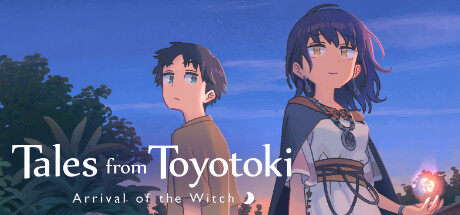
Tales from Toyotoki: Arrival of the Witch (The witch of the Ihanashi) on Steam
Quick menu
The English version of the heartwarming story that was highly acclaimed in Japan. Enjoy the meticulously crafted narrative. Set in Okinawa, Japan, it is also a story that unravels the mysteries hidden within its history and fantasy.
Tales from Toyotoki: Arrival of the Witch (The witch of the Ihanashi) is a visual novel, story rich and emotional game
developed by Fragaria
and published by Fragaria, Seikei Production and Mayflower Entertainment.
Released on August 19th 2022 is available only on Windows.
It has received 671 reviews of which 646 were positive and 25 were negative resulting in a rating of 9.0 out of 10. 😎
The game is currently priced at 24.50€ on Steam.
The Steam community has classified Tales from Toyotoki: Arrival of the Witch (The witch of the Ihanashi) into these genres:
Media & Screenshots
Get an in-depth look at Tales from Toyotoki: Arrival of the Witch (The witch of the Ihanashi) through various videos and screenshots.


System requirements
These are the minimum specifications needed to play the game. For the best experience, we recommend that you verify them.
Windows
- OS: Windows 10/11
- Processor: Intel Core 2 DUO 相当以上
- Memory: 2 GB RAM
- Graphics: 1280x720
- Network: Broadband Internet connection
- Storage: 4 GB available space
Steam Price & Best Deals
User reviews & Ratings
Explore reviews from Steam users sharing their experiences and what they love about the game.
Very good VN, it takes around 15-20hr to beat. The story mainly revolved around the five principle characters and these are the only ones who got character designs and voice acting. But it's a nice story, with more than a few emotional moments. I'm not really into the romantic genre, but I still enjoyed this quite a lot. Positives are the story, voice acting and the music. Also the character designs are great, but there are only the five. Negatives would be only the main cast have any visual representation, the back-grounds are real photos and the whole game takes place through the same three-four setting.
Short ans: If you like weathering with you, you will love this VN. For me, I like this VN and had a great time (I will buy the dlc to support the dev and get more toyotoki side stories) but I'm aware it has flaws, though keep in mind that it an indie developer and thus has limited time and budget. The writing is engaging, the artstyle and characters are very cute and I still enjoy the clique despite how late and infrequent they hang. Essentially, they did well in the comedic, light tone mystery in the first 3/4 of the story. Did well in the complex mature themes, friendship bonding and the emotional stakes were engaging for the final 1/4. The problem is the midpoint. They couldn't transition well from that 3/4 to 1/4 without abrupt changes to the character's relationship and personality. In other words, the VN needed more story length, writing & stories to gradually transition that lighthearted enjoyment to close comradery to past scars and losses to emotional struggles against life. Objectively, Ill give it 7/10. It need more funding & time to flesh out the vn via more art and story. Despite that, what they have is great. Go read and have fun. Hope the author draft another story, it's clear they are great at writing mildly subtle complex characters (E.g. MC having a cowardly personality consistently which is a major flaw he has to overcome, Princess being a gag rival, but also a straightman leader, childhood friend having dreams, desires and personality (and will probably be the fan fav), clumsy adult having emotional and mature intelligence. House Head being pragmatic and is willing to bear the burden of villain. Doctor being logical, yet making mature complex decision when faced with illogical occurance etc etc) The best scene was clearly the Typhoon Sleepover Arc. They just need to add MORE content/write so that the audience can bond and empathise with the characters more and thus be more hooked during the climax. They should also be confident in their world building and overarching plot, instead of hiding them in the Extra sections. These lore are crucial in world building & plot and could also tie back to the themes of unfair suffering and abandonment. Vague spoilers: It has a lot of flaws, all of them due to the short 10hr content and thus not having the time to flesh out or fix these plot holes: It's not a slow burner romance, quite the opposite, it felt very fast paced. I would ideally like more chapters and more mysteries. E.g. are the quick development from mc and fmc, esp when fmc barely appears or interacts in the 2 side character's chapters. Memory recovery moment (iykyk) was very random n abrupt n was only there for lore exposition as the personality got reset back Fmc backstory was revealed to side char but later on MC alr knew everything. No foreshadowing of MC's illness. Quite the opposite, he stumbled into a lot of teen romance and lustful scenes yet never suffered. Tho it could be argued that his illness could only be affected by genuine infatuation to the girl and thus the previous moments were lust and little/no romantic interests Side male jumping from enemy to bromance off screen, tho I can believe it considering their shared interest and his bury the hatchet attitude ^ same for princess who only starts being a friend during typhoon. Prior to that scene, her limited appearance meant she was more of childhood friend's frenemy than mc's friend Wish the overall themes of abuse, abandonment, betrayal was hammered more. It never felt like an obstacle or meaningful learning point in the story, except that the harsh reality of how young abandoned kids need to grow up fast in an unfair adult world, but to never abandon the fantasy and romance (kinda Like Weathering with you) Finally, limited art. It really does hurt when a few scenes are needed to visualize different moments in the story. There even limited facial expression and poses for the characters too.
generally solid for what it is, easy recommend, especially on sale. the art is surprisingly good, simple and coherent with a totally original style. it is easily my favourite aspect of this game. i would have greatly appreciated more than one pose/outfit per character, some situations really would have benefitted. the music is great too, fits well and is catchy. the writing is hit or miss, it fluctuates between not taking itself seriously enough and being a bit too personal - that is to say that if the story is for you i think you will really like it, if not, it may be a struggle to trudge through some sections. some parts later on are genuinely quite sweet and well worth the slog. i think the main story is overall a bit weak and overdone, and some of the character choices are odd or disappointing. higa quickly goes from perhaps the most interesting character to my least favourite in a matter of about 10 minutes, and kaneshiro is always forced and never fits into any scenes. (he should have just been cut out completely if you ask me. his voice is really annoying too) lilun, on the other hand, is always great, and gets better as you go. i haven't gone through for a second readthrough yet, but i imagine lilun would only get better on subsequent reads. akari is also very good, though she could have been utilised better. the side characters are generally okay, kiriko is great, yoshii? (i think is her name) is cute, and, uh.. that's about it. every other side character is kind of boring, but they are side characters, so who really cares. overall there is enough novelty here for me to consider this visual novel worth reading for pretty much anybody. it is interesting enough and handled well for the most part, and, like i said above, i am certain that some people will truly love this story. its hard to explain without spoiling anything, so just read it yourself. akari and kiriko are great character wise, but their stories lack any real consequences, literally, in the case of kiriko as she doesnt even stay bald. the first arc feels utterly meaningless until much much later on, and even then it still doesnt really matter. everything is just sort of swept under the rug and treated as if it didnt even happen, then akari's parents just wave her off as if its totally fine for her to go. i get what they were going for, but it just doesnt work. its the same with the stuff near the end of lilun's arc where the osatos are just seemingly okay with lilun destroying the world because.. they dont want to hurt her feelings by kidnapping her..? am i missing something? she is going to DESTROY THE WORLD is she not? anyway, akari never calls hikaru from tokyo and that is thoroughly disappointing. like i mentioned above, higa is very cute at first, but her story unfolds in a really lame way. the idol stuff is silly and way too convenient and coincidental, and the fake grandma stuff being used to mask the real grandma stuff (why does it need to be masked anyway?) is just weird. there is just too much going on in higa's story, it could have used some editing. the part i really dislike is how higa is revealed to be a paladin (?????????why????) and then literally nothing comes of it. higa doesnt need to be from the other world, it doesnt add anything to the story, all it does is ruin her character. lilun's story is where the best stuff is (thankfully, as it is the main route) but it is also the route where you have to slog through the most exposition, world building lore dumps, nobuko/shinji stuff, etc.. it can be a real drag just to have hikaru ♥♥♥♥ everything up once again. hikaru is a serious loser, by the way. can we stop it with the visual novels where the main guy is a loser? i like the blindness stuff, im fine with that, but the fact that he hides in the bathroom and stuff like that is just pathetic. i know that you're planning to reverse it by having him break the curse, yeah yeah, whatever.. there are other ways to write a story, you dont always have to have a garbage protagonist that FINALLY pulls through at the very end, then BOOM cut to credits. anyway, since i guess im ranting now, the magic system is also disappointing. it just isn't interesting, and it sucks that lilun just happens to have cleaning spells and stuff like that. again, things are so wishywashy that i cant tell if the writer is taking things seriously or is trying to add some levity. the end result is me rolling my eyes as lilun drycleans her clothes with magic and then goes to her 9-5 as a receptionist. again, same problem, why does lilun get a job? isnt she on a mission? i get that it gets clouded as she falls for hikaru, but her motivation early on feels empty. instead of hunting the demon she works in the sugarcane field or sits at a desk all day? i dont buy it. if i have to suspend my disbelief for simple things like this it takes away a lot of the potential magic of the story. it winds up feeling oddly mundane like hikaru is rooming with an international student or something, but the author doesnt lean into that side of things either so lilun just winds up completely sidelined for all of akari & higa's routes, it sucks. you have to wait until a good 60% through lilun's route until the author actually gives her some nice scenes with hikaru. thankfully they are in fact pretty good, its just such a slog man.. so disappointing. lilun just completely gives up on her family out of nowhere too! it makes no sense. why dont they try to find the cave again or something? there are so many threads that dont get a fulfilling end.. lilun: A (would be S if hikaru wasnt a ♥♥♥♥♥ and she was actually permitted to be cute) akari: A early higa: S paladin higa: F kiriko: B
Similar games
View all
AMANATSU ~Perfect Edition~
Japanese coming-of-age VN from hit developer AZARASHI SOFTWARE. After moving to a sleepy seaside town, Haruto befriends three unforgettable heroines, each with unique traits—and a surprise confession. Navigate your own summer of love on this sugar-sweet journey of romance and discovery.

Aokana - Four Rhythms Across the Blue - EXTRA2
Aokana - EXTRA2 is the official Misaki after story for Aokana.
Clover Day's Plus
Bottled-up emotions... An everlasting oath... Heartfelt desires... An enduring regret... And a childhood promise. Yuuto was abandoned by his parents and raised in an orphanage in Britain before a trading merchant by the name of Takakura Yoshiomi adopted him and brought him to Japan.

Love, Elections, and Chocolate
Love, Elections, and Chocolate is a romantic visual novel developed by the Japanese game studio Sprite. Upon its release in Japan, it garnered numerous awards for its exceptional art, captivating music, and well-crafted characters.
Mashiroiro Symphony HD -Love is Pure White-
A winter-themed romcom visual novel with four main heroines and one mysterious cat-like creature! In a town where tradition and modernity meet, protagonist Shingo Uryu's whole life changes when he begins attending the prestigious Yuihime Girls Private Academy...

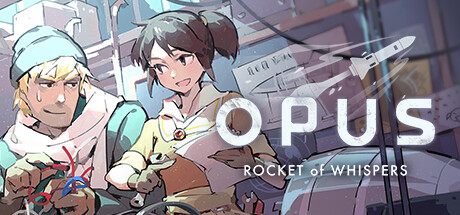
OPUS: Rocket of Whispers
Rocket of Whispers is an award-winning post-apocalyptic adventure that follows two survivors on a journey to launch a space burial for the lost souls of their desolate world. Help them search the snowy wasteland for supplies and the courage to say goodbye.

Kakenuke Forward to Our Sparking Youth!
What does "youth" mean to you? Is it a time in your life meant for having fun? For devoting yourself to a cause? For Yuu Tono, it's meant earning money and studying to build a brighter future for him and his family. But maybe the new (or maybe old?) friend who's come into his life will change that.
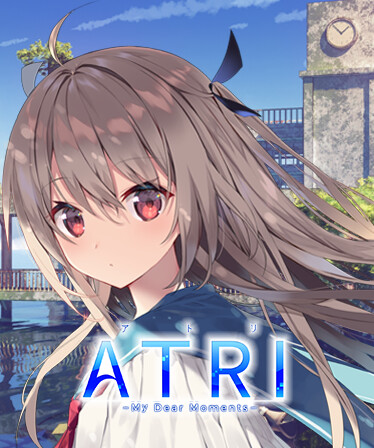
ATRI -My Dear Moments-
"As the world sank, I found you." In the near future, a sudden and unexplained sea rise has left much of human civilization underwater. In a little town slowly being enveloped by the ocean, an unforgettable summer is about to begin for a boy and a mysterious robot girl...
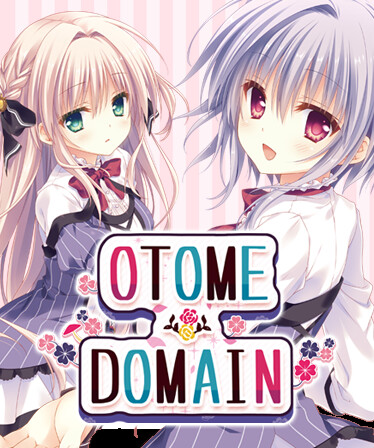
Otome * Domain
An inconveniently orphaned young man must attend an all-girls school just to survive in this comedy visual novel. His housemates took him in when he was in trouble, but now he doesn't know who's taking care of who...!
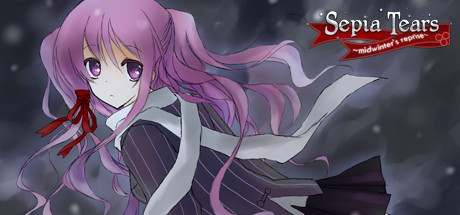
Sepia Tears
A visual novel about a memory that a boy named Mark tries very hard to forget, and a girl named Myra who unearths it.
Frequently Asked Questions
Tales from Toyotoki: Arrival of the Witch (The witch of the Ihanashi) is currently priced at 24.50€ on Steam.
No, Tales from Toyotoki: Arrival of the Witch (The witch of the Ihanashi) is currently not on sale. You can purchase it for 24.50€ on Steam.
Yes, Tales from Toyotoki: Arrival of the Witch (The witch of the Ihanashi) received 646 positive votes out of a total of 671 achieving a rating of 8.98.
😎
Tales from Toyotoki: Arrival of the Witch (The witch of the Ihanashi) was developed by Fragaria and published by Fragaria, Seikei Production and Mayflower Entertainment.
Yes, Tales from Toyotoki: Arrival of the Witch (The witch of the Ihanashi) is playable and fully supported on Windows.
No, Tales from Toyotoki: Arrival of the Witch (The witch of the Ihanashi) is not playable on MacOS.
No, Tales from Toyotoki: Arrival of the Witch (The witch of the Ihanashi) is not playable on Linux.
This information about Tales from Toyotoki: Arrival of the Witch (The witch of the Ihanashi) is not available yet.
This information about Tales from Toyotoki: Arrival of the Witch (The witch of the Ihanashi) is not available yet.
No, Tales from Toyotoki: Arrival of the Witch (The witch of the Ihanashi) does not support VR.
Tales from Toyotoki: Arrival of the Witch (The witch of the Ihanashi) is a single-player game.
Yes, there is a DLC available for Tales from Toyotoki: Arrival of the Witch (The witch of the Ihanashi). Explore additional content available for Tales from Toyotoki: Arrival of the Witch (The witch of the Ihanashi) on Steam.
No, Tales from Toyotoki: Arrival of the Witch (The witch of the Ihanashi) does not support mods via Steam Workshop.
No, Tales from Toyotoki: Arrival of the Witch (The witch of the Ihanashi) does not support Steam Remote Play.
Yes, Tales from Toyotoki: Arrival of the Witch (The witch of the Ihanashi) is enabled for Steam Family Sharing. This means you can share the game with authorized users from your Steam Library, allowing them to play it on their own accounts. For more details on how the feature works, you can read the original Steam Family Sharing announcement or visit the Steam Family Sharing user guide and FAQ page.
You can find solutions or submit a support ticket by visiting the Steam Support page for Tales from Toyotoki: Arrival of the Witch (The witch of the Ihanashi).
Data sources
The information presented on this page is sourced from reliable APIs to ensure accuracy and relevance. We utilize the Steam API to gather data on game details, including titles, descriptions, prices, and user reviews. This allows us to provide you with the most up-to-date information directly from the Steam platform.
Additionally, we incorporate data from the SteamSpy API, which offers insights into game sales and player statistics. This helps us present a comprehensive view of each game's popularity and performance within the gaming community.
Last Updates| Steam data | 18 September 2026 22:24 UTC |
|---|---|
| SteamSpy data | 17 October 2026 05:11 UTC |
| Steam price | 26 October 2026 19:40 UTC |
| Steam reviews | 19 October 2026 17:47 UTC |
If you'd like to dive deeper into the details about Tales from Toyotoki: Arrival of the Witch (The witch of the Ihanashi), we invite you to check out a few dedicated websites that offer extensive information and insights. These platforms provide valuable data, analysis, and user-generated reports to enhance your understanding of the game and its performance.
- SteamDB - A comprehensive database of everything on Steam about Tales from Toyotoki: Arrival of the Witch (The witch of the Ihanashi)
- SteamCharts - Analysis of Tales from Toyotoki: Arrival of the Witch (The witch of the Ihanashi) concurrent players on Steam
- ProtonDB - Crowdsourced reports on Linux and Steam Deck Tales from Toyotoki: Arrival of the Witch (The witch of the Ihanashi) compatibility
Game modes
Features
Online players
3
Developer
Fragaria
Publisher
Fragaria,
Seikei Production,
Mayflower Entertainment
Release
19 Aug 2022
Platforms