
I'm on Observation Duty
As an employee of a mysterious organization your job is to monitor live surveillance camera footage and spot anomalies using your sharp eyes and good memory. Can you survive the entire night shift or will you succumb into paranoia?
Sync your Steam wishlist to find the lowest game prices instantly. No login required, just paste your Steam profile URL!
⚡ Try Wishlist Radar!
Sync your Steam wishlist to find the lowest game prices instantly. No login required!
⚡ Try Wishlist Radar!
Close

TAMASHII on Steam
Quick menu
An ancient entity seeking help, a Witch, an unnamed soul and a Twisted Temple. A dark tale about inner discoveries set in a distorted and perverted world.
TAMASHII is a indie, horror and psychedelic game
developed and published by Vikintor.
Released on March 05th 2019 is available on Windows, Steam Deck and Steam Machine
in 2 languages: English and Portuguese - Brazil.
It has received 318 reviews of which 299 were positive and 19 were negative resulting in a rating of 8.6 out of 10. 😎
The game is currently priced at 2.49€ on Steam with a 50% discount.
The Steam community has classified TAMASHII into these genres:
Indie
Horror
Psychedelic
Puzzle
Singleplayer
Dark
Retro
Pixel Graphics
Supernatural
2D
Platformer
Lovecraftian
Puzzle Platformer
Psychological Horror
Here is the detailed breakdown of supported languages for TAMASHII:
| UI | Subtitle | Audio | |
|---|---|---|---|
| English | |||
| Portuguese - Brazil |
Media & Screenshots
Get an in-depth look at TAMASHII through various videos and screenshots.


System requirements
These are the minimum specifications needed to play the game. For the best experience, we recommend that you verify them.
Windows
- OS *: Windows 7 or later
- Processor: 64bit Intel compatible Dual Core CPU
- Memory: 1 GB RAM
- Graphics: 512MB
- DirectX: Version 11
- Storage: 200 MB available space
Steam Price & Best Deals
User reviews & Ratings
Explore reviews from Steam users sharing their experiences and what they love about the game.
TAMASHII is an experimental horror puzzle-platformer that makes a lasting impression through disturbing imagery, cryptic storytelling, and an atmosphere that constantly feels hostile and unnatural. Developed and published by Vikintor, the game takes noticeable inspiration from obscure Japanese titles from the late 1980s and 1990s, but it does much more than simply imitate retro aesthetics. Its pixel-art environments become a canvas for grotesque creatures, religious symbolism, distorted bodies, psychedelic effects, and surreal events. Instead of building horror around conventional jump scares, it creates discomfort by making the player uncertain about what might appear next and whether anything on the screen can truly be trusted. The premise begins with an unnamed soul being summoned by an ancient entity whose mysterious temple has been invaded by a malicious presence. The player's objective is to enter this strange place, investigate the corruption, and confront whatever is responsible. A mysterious Witch and other unusual figures gradually complicate the situation, although the narrative deliberately avoids providing straightforward explanations. Much of the story must be interpreted through encounters, environments, symbolism, and hidden details. This ambiguity suits the game's dreamlike personality, making the journey feel less like a traditional adventure and more like exploring a corrupted spiritual realm where logic has started to collapse. At its core, the gameplay combines platforming with environmental puzzles. The controls and fundamental movement are relatively easy to understand, allowing the puzzles themselves to become the primary challenge. Rooms contain hazards, switches, obstacles, and mechanisms that require careful observation and appropriate timing. One of the most interesting abilities allows the protagonist to create copies of itself. These duplicates can remain in particular positions and become essential components of puzzle solutions. A room that initially appears impossible can therefore become manageable once the player understands where duplicates need to stand and when each action must occur. The puzzle design generally favors experimentation over complicated rules. Players learn through observation and repeated attempts, and the game steadily finds new ways to use its established mechanics. Certain situations demand precise movement or timing, which can occasionally produce frustration when the intended solution has already been understood but execution remains difficult. A useful slow-motion feature helps alleviate this issue by making demanding sequences more manageable. Autosaving also prevents failures from becoming excessively punishing. Together, these features allow the challenge to remain meaningful without turning every mistake into unnecessary repetition. Exploration offers additional rewards beyond simply completing the main path. Secrets and Easter eggs are hidden throughout the game, fitting naturally into environments where almost every unusual detail seems suspicious. There are also score-attack and time-trial elements for players interested in revisiting stages and improving their performance. Achievement hunters have 25 Steam achievements to pursue. These additions provide some replay value and encourage players to investigate areas more carefully rather than rushing directly toward the conclusion. The visual presentation is the defining element. Its retro pixel graphics can initially appear simple, but they are repeatedly transformed through unsettling animations, grotesque figures, disturbing faces, strange creatures, nudity, supernatural imagery, and explicit religious themes. The contrast between old-fashioned graphics and aggressive horror imagery gives the game a personality that is difficult to confuse with a conventional pixel platformer. Some scenes are intentionally uncomfortable, and the imagery can become considerably more disturbing than the graphical style might initially suggest. Sound design reinforces this oppressive atmosphere effectively. Rather than depending on elaborate cinematic presentation, the game combines disturbing sounds, eerie ambience, sudden audiovisual changes, and unsettling environmental details to maintain tension. The player frequently expects something abnormal to happen even when a room appears relatively safe. This sustained uncertainty demonstrates how effectively horror can work without realistic graphics or enormous production values. There are several important considerations for sensitive players. Flashing imagery and psychedelic effects are prominent enough that people susceptible to photosensitive reactions should exercise caution. The game also contains mature material involving nudity and religious themes. Another unusual feature can involve displaying the name registered on the player's computer as part of its fourth-wall-breaking presentation. This can make the experience feel unexpectedly personal, but anyone planning to stream or record gameplay should be aware of the potential privacy concern. Steam Deck compatibility is excellent because TAMASHII is Steam Deck Verified. The game functions with the handheld's built-in controls, displays appropriate controller icons, provides readable interface text, and performs properly with its default graphical configuration. Its relatively straightforward controls and room-focused puzzle design also translate naturally to portable play. Players connecting certain external Bluetooth or USB controllers may occasionally need to select the appropriate active controller manually, but ordinary handheld play should present few complications. Overall, the Deck is a particularly suitable way to experience the game. Its greatest limitation is also part of its identity. Players who need clearly explained storytelling may find the narrative excessively obscure, while those expecting combat-heavy horror or a large adventure may consider the mechanical scope modest. Some puzzles can require trial and error, and the disturbing imagery will inevitably alienate players who dislike grotesque or provocative material. The experience is therefore designed for a relatively specific audience rather than attempting universal appeal. TAMASHII ultimately works because its puzzles, retro presentation, surreal narrative, and horror imagery all support the same uncomfortable vision. It offers approachable mechanics while surrounding them with an increasingly bizarre world that encourages curiosity even when exploring it feels unpleasant. The combination of clone-based puzzles, hidden secrets, optional performance challenges, accessibility features, strong controller support, and memorable audiovisual horror gives this compact experience considerable personality. For fans of experimental psychological horror and unconventional puzzle-platformers, it is a strange and confidently designed journey worth investigating. Rating: 8/10
A genuinely excellent puzzle platformer with very easy-to-grasp mechanics, a distinct visual style and memorable soundscape (provided you don't mind the sound of dentist drills). I know some people have called the writing unsubtle and on-the-nose, but honestly I have no problem with a game that just goes straight for the jugular with its message. Even if I found the story a bit difficult to follow, I definitely still got the gist and it tied into the actual gameplay quite well. My minor issues are mainly that a) the difficulty of the bosses feel a bit all over the place (the first one felt like the most intense of the lot and the second one felt like the easiest) and b) the hard puzzle option to get the Water Stone felt pretty unintuitive compared to the rest of the game, and the Achievement percentages back me up on that. Still, I had a great time with this overall: would highly recommend it! It is definitely worth the price of admission, and I can't wait to see the rest of Vikintor's oeuvre!
Similar games
View all

Feed The Pit
JOIN THE SOCIETY in this story-driven, investigative horror game. Hunt down wealthy humans in a deadly forest in order to Feed The Pit. Act 1 is available at launch. Acts 2 & 3 will release as free updates in the coming months!


Pony Island
Pony Island is a suspense puzzle game in disguise. You are in limbo, trapped in a malevolent and malfunctioning arcade machine devised by the devil himself. It is not a game about ponies.

Silence of the Sleep
You play as a man called Jacob Reeves. A man who has lost his reason to live. He throws himself into a blackness to end his misery, but instead of it being the end he wakes up without a memory of his life before.

Unforgiving - A Northern Hymn
Unforgiving - A Northern Hymn is a first person horror game heavily inspired by Swedish folklore and the Nordic mythology to create the nightmares that's been haunting Swedish children for many generations.

eversion
The Princess of the Flower Kingdom has vanished! She was taken by the Ghulibas of the north, and it is up to brave Zee Tee to rescue her. On his quest, he - and you - will discover the hidden lands behind the peaceful kingdom, and come face to face with secrets that will set you on edge!

DISTRAINT: Deluxe Edition
DISTRAINT is a 2D psychological horror adventure game for PC. In order to secure a partnership in a famous company, Price seizes the property of an elderly woman. In that very moment, he finds out the price of his humanity.

I'm on Observation Duty 2
Your job is to monitor live surveillance camera footage and spot anomalies in the monitored rooms. Anomalies range from furniture movement to otherworldly intruders. When you spot an anomaly you have to file a report to fix it. You will need sharp eyes and good memory to survive the entire night.

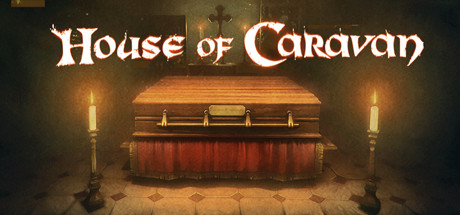
House of Caravan
Taking place in a single mansion in Candlewood, northeast USA, in the early 20th Century, House of Caravan is a sinister adventure filled with dark secrets and vexing puzzles.

Happy Game
A little boy falls asleep to a horrible nightmare. Can you make him happy again?
Frequently Asked Questions
TAMASHII is currently priced at 2.49€ on Steam.
Yes, TAMASHII is currently available at a 50% discount. You can purchase it for 2.49€ on Steam.
Yes, TAMASHII received 299 positive votes out of a total of 318 achieving a rating of 8.63.
😎
TAMASHII was developed and published by Vikintor.
Yes, TAMASHII is playable and fully supported on Windows.
No, TAMASHII is not playable on MacOS.
No, TAMASHII is not playable on Linux.
Yes, TAMASHII is playable and fully supported on Steam Deck.
Yes, TAMASHII is playable and fully supported on Steam Machine.
No, TAMASHII does not support VR.
TAMASHII is a single-player game.
No, TAMASHII does not currently offer any DLC.
No, TAMASHII does not support mods via Steam Workshop.
No, TAMASHII does not support Steam Remote Play.
Yes, TAMASHII is enabled for Steam Family Sharing. This means you can share the game with authorized users from your Steam Library, allowing them to play it on their own accounts. For more details on how the feature works, you can read the original Steam Family Sharing announcement or visit the Steam Family Sharing user guide and FAQ page.
You can find solutions or submit a support ticket by visiting the Steam Support page for TAMASHII.
Data sources
The information presented on this page is sourced from reliable APIs to ensure accuracy and relevance. We utilize the Steam API to gather data on game details, including titles, descriptions, prices, and user reviews. This allows us to provide you with the most up-to-date information directly from the Steam platform.
Additionally, we incorporate data from the SteamSpy API, which offers insights into game sales and player statistics. This helps us present a comprehensive view of each game's popularity and performance within the gaming community.
Last Updates| Steam data | 20 October 2026 06:46 UTC |
|---|---|
| SteamSpy data | 13 October 2026 19:00 UTC |
| Steam price | 27 October 2026 03:37 UTC |
| Steam reviews | 19 October 2026 10:05 UTC |
If you'd like to dive deeper into the details about TAMASHII, we invite you to check out a few dedicated websites that offer extensive information and insights. These platforms provide valuable data, analysis, and user-generated reports to enhance your understanding of the game and its performance.
- SteamDB - A comprehensive database of everything on Steam about TAMASHII
- SteamCharts - Analysis of TAMASHII concurrent players on Steam
- ProtonDB - Crowdsourced reports on Linux and Steam Deck TAMASHII compatibility

Game modes
Features
Online players
0
Developer
Vikintor
Publisher
Vikintor
Release
05 Mar 2019
Platforms