
The Legend of Heroes: Trails beyond the Horizon
The future of an entire continent is at stake in this milestone entry in the Trails series! Explore the vast Calvard Republic with three different protagonists, nurture connections, and master powerful skills in both real-time and turn-based battles as you uncover the secrets at the core of Zemuria!
Sync your Steam wishlist to find the lowest game prices instantly. No login required, just paste your Steam profile URL!
⚡ Try Wishlist Radar!
Sync your Steam wishlist to find the lowest game prices instantly. No login required!
⚡ Try Wishlist Radar!
Close

The Legend of Heroes: Trails through Daybreak II on Steam
Quick menu
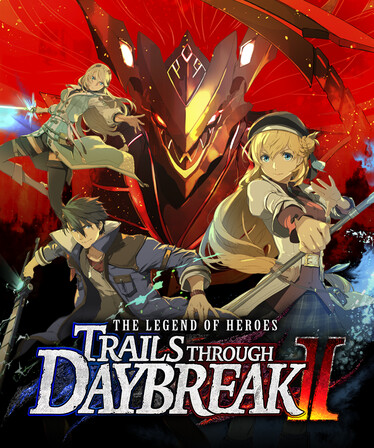
Return to the Calvard Republic and unravel the mystery of the crimson beast! One day, a shocking series of murders set the wheels of fate into motion once again. Chaos looming on the horizon, the spriggan Van Arkride receives an unexpected visitor. Who is behind the murders, and what is their goal?
The Legend of Heroes: Trails through Daybreak II is a rpg, action and adventure game
developed by Nihon Falcom and PH3 GmbH
and published by NIS America and Inc..
Released on February 14th 2025 is available on Windows, Steam Deck and Steam Machine
in 2 languages: English and Japanese.
It has received 677 reviews of which 562 were positive and 115 were negative resulting in a rating of 7.8 out of 10. 😊
The game is currently priced at 59.99€ on Steam.
The Steam community has classified The Legend of Heroes: Trails through Daybreak II into these genres:
RPG
Action
Adventure
JRPG
Action RPG
Party-Based RPG
3D
Anime
Third Person
Fantasy
Magic
Mechs
Robots
Sci-fi
Combat
Controller
PvE
Time Manipulation
Turn-Based Combat
Singleplayer
Here is the detailed breakdown of supported languages for The Legend of Heroes: Trails through Daybreak II:
| UI | Subtitle | Audio | |
|---|---|---|---|
| English | |||
| Japanese |
Media & Screenshots
Get an in-depth look at The Legend of Heroes: Trails through Daybreak II through various videos and screenshots.


Load More


System requirements
These are the minimum specifications needed to play the game. For the best experience, we recommend that you verify them.
Windows
- Requires a 64-bit processor and operating system
- OS: Windows 10/11
- Processor: AMD Ryzen 5 1600
- Memory: 8 GB RAM
- Graphics: NVIDIA GeForce GTX 1050
- DirectX: Version 11
- Storage: 22 GB available space
- Additional Notes: Settings: 1080p, 30 FPS, Performance Graphics Profile
Steam Price & Best Deals
User reviews & Ratings
Explore reviews from Steam users sharing their experiences and what they love about the game.
this is the first Trails game i'd suggest getting on sale. for a series that so heavily invests in its own world and story, this is the first entry where i was disappointed by the storytelling. i did not enjoy the story until the very end of Act 3 and the Finale. The Prologue introduces a plot device used throughout the game for cheap shocks. i also did not like the primary villain. everything else was great: the gameplay, characters, music, new systems, etc. so, i still recommend it. likes [*]music felt better than the first game [*]the active battle system continues to evolve. i didn't use the new additions very much but i do like field<>command battles swapping. [*]loved the backstories that the game goes into for various characters [*]the game introduces a something similar to the True Reverie Corridor. it isn't particularly engaging, but it's a massive boon for progressing your characters. dislikes [*]the game continues pushing Agnes as a potential love interest for Van, though she recognizes her feeling are likely unrequited. it's frustrating because Van's relationship with Elaine is far more compelling, and they both have shown consideration for pursuing their feelings for each other. [*]about the plot device: the time loops are lazily used over and over for cheap shock deaths. the cast always suddenly lose their survival instincts that have always warned them of danger, so the just walk into numerous traps leading to their deaths. additionally, there is seemingly no phycological trauma to any of the cast by repeatedly being kill. in the first game, Agnes showed far more lasting emotional effects of Giacomo's death. list of bums [*]Judith: continues to show she has the most tenuous bond with the main cast. she always has nothing to add with her dialogue and so little to offer with her abilities. she is a waste of a main cast member slot. [*]the primary villain [*]Shizuna: lore-wise, completely overpowered to be a playable character in the group, on the level of Kasim. in cutscenes, seeing her bent over in exhaustion after a boss fight is nonsensical.
紅黎い最高点、時空の奇跡 Played both in 英語と日本語。It's wonderful and outstanding le game in all aspects, from general view of games and as part of 軌跡 altogether. For all self-claimed "critics" with expertise of all fields and "significance" of ivory towers, special set phrase: "(Grim)cat doesn't give a fuque, what mice ♥♥♥♥♥♥♥♥ behind Her (juicy) back" For all fellow gaymers, ラブ&ピース、子猫たち
Basically a filler game to shorten the wait for Beyond the Horizon, but there is some very important snippets from past games in here that you don't want to miss! TL;DR Pros Cons ✔️ The battle system is really innovative, thanks to the live-action and turn-based switching mechanic. It is fleshed out even more in Daybreak II. ❌ It's filler stuff that doesn't really drive Calvard's main plot forward. Particularly after Crossbell Arc and Trails in the Sky's third chapter, there are some crucial plot points though. ✔️ Numerous nice enhancements to the engine. Cutscenes and visuals look and feel better overall, and Durante's work has improved QoL in numerous ways. ❌ Märchen Garten is simply uninteresting. Ten stages of the same corridors with changing foes and loot (16 if you want the real ending!) followed by a boss fight. It's just so mind-numbingly boring. ✔️ Whether you play in English or Japanese, the voice acting, narrative, and subtle environmental details significantly improve the entire gaming experience. Since NISA did not translate the spoken announcements in cities and retail malls, I would advise playing in English.. Additional Info: Content & Value It took me 64.7 hours to complete Daybreak and earn 79% of all the achievements with the true ending unlocked (complete Märchen Garten after the main story ending). For those interested in achievements: You have to play through this game twice in order to unlock 100% Is it worth buying? Yes In-Depth Background, Story, Gameplay, Mini-Games & Downside By now, most people should be well aware of how the Trails series works. But for those who are not yet familiar with it, this series tells a single, ongoing story that spans multiple story arcs, each focusing on a different part of the Zemurian continent and introducing a new playable group. So, if you want to get into the series, do not start here, but instead with the Trails in the Sky Remake: https://store.steampowered.com/app/3375780/Trails_in_the_Sky_1st_Chapter/ Several months after the events of Trails through Daybreak, Van continues to work as the head of the Arkride Solutions Office as we move into the year 1209. In February, childhood friend Elaine Auclair asks him for help investigating a mysterious red Grendel that was caught on video massacring a unit of the Calvardian special forces unit Hercules. !SPOILER AHEAD BE AWARE! As befits a direct sequel, Van and his companions face new puzzles and threats. But unlike in previous Trails games, this time there are situations that are simply too much for them to handle – and that is precisely the core idea behind Daybreak II. Throughout the story, various events and crises repeatedly lead to (often gruesome) deaths within the group or among innocent civilians. In such cases, the Genesis devices frm the first Daybreak trigger a new phenomenon: time is rewinded, with those involved retaining vague memories of the impending disaster in order to prevent it the next time around. Although these trips through time prevent many potential deaths, Daybreak II remains extremely dark in tone. The pacing is also significantly faster than in most previous instalments, so it sometimes feels as if Van and his friends hardly have time to catch their breath. Apart from that, I have a few criticisms of the plot. First, some of the "game over" scenarios averted by time travel seem a little forced or contrived. In one case, the game relies on the characters suddenly acting less competently or with less foresight than would be expected of professionals like Van. Furthermore, while the rewind mechanics make sense narratively, they are rather superficial in terms of gameplay. Only in a few cases do you actually have the opportunity to avoid disaster altogether by making proactive decisions, but that is something I hate in every single game that uses "time rewind" mechanics. Other than that: you get exactly what you expect from a Trails game: great character writing, a captivating story full of twists and turns, and emotional moments that tug at your heartstrings. And even if the Calvard arc (and Zemuria as a whole) hardly provides any definitive answers here – that's probably reserved for Kai no Kiseki – Daybreak II is an absolute must, especially for the further development of established characters and lore, particularly with regard to Renne. In terms of gameplay, Daybreak II builds on the combat system of its direct predecessor. Battles continue to take place either in real time or turn-based, but with a few new features. The first art in each Arts Driver can now be cast directly on the field as a Quick Art, offering new area and distance options. Quick Arts are also used to activate some dungeon mechanics, although this feature is not particularly prominent. Perfectly timed evasive manoeuvres allow you to switch directly to another character, who can then immediately perform a charged attack. These innovations don't necessarily add more depth to the real-time combat system, but they are a lot of fun, and so I spent a lot of time in some dungeons on the field with real-time combat, but turn-based combat remains the heart of Daybreak II, of course. There are improvements in usability and balance, for example, casters benefit from Dual Arts, which combine two elements and thus offer more flexibility. Away from the battles, exploring and completing quests proceeds as usual. We also have story stealth missions in which you discreetly follow people – unfortunately just as cumbersome and boring as you would expect. Hacking mini-games, which are surprisingly quite fun and are used for doors and locked chests, and "Detective Mode", called Shard Search here, which you use to uncover clues, find shards that can then be used for costumes and items, or find fishing spots. Another major new feature is the "Märchen Garten", a procedurally generated dungeon similar to the True Reverie Corridor from Reverie. Here you can train your characters, collect resources and even improve their crafts directly. On the floors of the garden itself, there are always changing smaller tasks and a boss at the end, but unfortunately the corridors themselves are relatively bland and offer little variety overall. However, it's great for letting off steam with crazy combos of group members and is always fun especially if you want to check out the true ending of floor 16. Visually and technically, Daybreak II remains on par with its predecessor, with solid performance and excellent voice acting. Unfortunately, as in the first part, there are strange transitions from voiced dialogue to text boxes, which I find annoying. Despite some criticisms, Trails through Daybreak II is an absolute must for fans of the series and a strong second chapter in the Calvard arc surrounding Van Arkride. Conclusion Trails Through Daybreak II picks up exactly where its predecessor left off, but somewhat neglects the overarching narrative, focusing instead on the characters and their fates as well as past relations from previous games and characters. The overarching narrative stagnates and the focus shifts to the characters and their fates. However, new mechanics and improved features make this middle section, which leads up to the grand finale, an absolute must for fans. There is definitely no shortage of content, although I would have liked to see the main story develop a little more than just one Genesis suddenly split into three parts. Final Verdict: 7/10 - Expect little progress for the main plot since this is a worthy filler into the new Calvard Arc.
You know, I haven’t really left a review for any Trails game before even though I absolutely love them, but I just had for this one. Before I got to it (I was really behind on the releases and just now catching up) I heard a lot of negative opinions, claiming this one to be THE worst Kiseki entry so far, some people even recommended skipping it entirely and just looking up important moments before jumping into Horizons. I really hoped that game is not *that* bad and boy, was I right. Sure, it has some vulnerabilities open for nitpicking, but on the other hand it had so much heartwarming moments with characters from this and previous story arcs that I am inclined to forgive anything. More than that, the gameplay is much better than the first daybreak, and the whole game itself has ton of QOL features. Loved it, thanks Falcom
Similar games
View all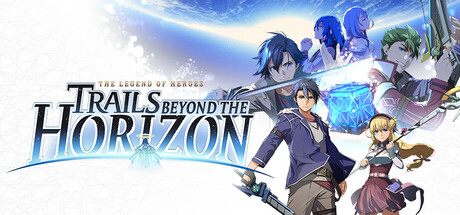

Tales of Graces f Remastered
Tales of Graces f is back with a beautiful and easier-to-play version! The game also includes Lineage and Legacies, an after-story to the main scenario!

CRISIS CORE FINAL FANTASY VII REUNION
CRISIS CORE -FINAL FANTASY VII- REUNION is a remaster of CRISIS CORE featuring updated graphics, combat systems and soundtrack. Follow the tale of SOLDIER operative Zack Fair, as he discovers the secrets of Shinra's dark experiments.

The Legend of Heroes: Trails through Daybreak
The spriggan known as Van Arkride, an underground professional, accepts any job, acting as detective, negotiator, or bounty hunter. Dive into the Trails series' latest chapter with intense combat, beautiful visuals, and a new alignment system in Calvard!

Sudeki
Sudeki, a world torn apart into light, shadow and dark. Rent asunder by deceit and betrayal, the land cries out for a peace that only four united heroes can bring. Beyond the protective walls of Illumina Castle lie miles of pastoral, rolling countryside, though once a serene landscape, the Aklorian forces have transformed the countryside...

CRYMACHINA
CRYMACHINA is an action RPG where mechanical girls strive to survive in a post-apocalyptic world to become “Real Humans''. But what does it mean to be a “Real Human”?

Ys VI: The Ark of Napishtim
Adventurer Adol Christin has washed ashore in yet another mysterious, isolated new land, inhabited by a people who sport long ears and bushy tails...and are none too fond of humans. Experience the very first 3D Ys game as never before, with a whole new gameplay mode unique to this release!

Ys X: Proud Nordics
Embark on a new adventure with pride in your heart! The action RPG Ys X:Nordics returns to Steam® with a massive upgrade—introducing new story content, new adventure areas, and a host of new features in Ys X: Proud Nordics!
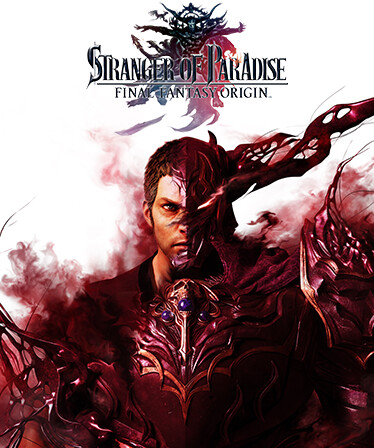
STRANGER OF PARADISE FINAL FANTASY ORIGIN
Developed in cooperation between Square Enix and Team NINJA (Koei Tecmo Games), STRANGER OF PARADISE FINAL FANTASY ORIGIN is a hard-core action RPG that takes the FINAL FANTASY series in a new direction. Experience the boldest and most merciless battles in FINAL FANTASY history.

Tales of Xillia Remastered
Experience Tales of Xillia, remastered for the first time ever. Dive into the magnificent world of Rieze Maxia as either Jude Mathis, an aspiring medical student from the capital, or Milla Maxwell, a mysterious woman accompanied by four powerful spirits.

Ys IX -Monstrum NOX-
Ys IX, the high-speed action RPG known for its exhilarating battles and adventure powered by special abilities, is now available on Steam®!
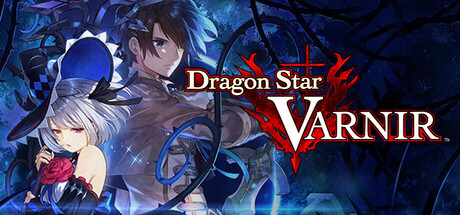
Dragon Star Varnir
Fight in 3-tiered battles, devour your enemies, and customize your characters in this epic RPG to end the dragon's curse!
Frequently Asked Questions
The Legend of Heroes: Trails through Daybreak II is currently priced at 59.99€ on Steam.
No, The Legend of Heroes: Trails through Daybreak II is currently not on sale. You can purchase it for 59.99€ on Steam.
Yes, The Legend of Heroes: Trails through Daybreak II received 562 positive votes out of a total of 677 achieving a rating of 7.84.
😊
The Legend of Heroes: Trails through Daybreak II was developed by Nihon Falcom and PH3 GmbH and published by NIS America and Inc..
Yes, The Legend of Heroes: Trails through Daybreak II is playable and fully supported on Windows.
No, The Legend of Heroes: Trails through Daybreak II is not playable on MacOS.
No, The Legend of Heroes: Trails through Daybreak II is not playable on Linux.
Yes, The Legend of Heroes: Trails through Daybreak II is playable on Steam Deck, though it might require a few minor tweaks. Make sure to check the Steam store page and community feedback on ProtonDB for exact compatibility details.
Yes, The Legend of Heroes: Trails through Daybreak II is playable and fully supported on Steam Machine.
No, The Legend of Heroes: Trails through Daybreak II does not support VR.
The Legend of Heroes: Trails through Daybreak II is a single-player game.
Yes, there are 10 DLCs available for The Legend of Heroes: Trails through Daybreak II. Explore additional content available for The Legend of Heroes: Trails through Daybreak II on Steam.
No, The Legend of Heroes: Trails through Daybreak II does not support mods via Steam Workshop.
No, The Legend of Heroes: Trails through Daybreak II does not support Steam Remote Play.
Yes, The Legend of Heroes: Trails through Daybreak II is enabled for Steam Family Sharing. This means you can share the game with authorized users from your Steam Library, allowing them to play it on their own accounts. For more details on how the feature works, you can read the original Steam Family Sharing announcement or visit the Steam Family Sharing user guide and FAQ page.
You can find solutions or submit a support ticket by visiting the Steam Support page for The Legend of Heroes: Trails through Daybreak II.
Data sources
The information presented on this page is sourced from reliable APIs to ensure accuracy and relevance. We utilize the Steam API to gather data on game details, including titles, descriptions, prices, and user reviews. This allows us to provide you with the most up-to-date information directly from the Steam platform.
Additionally, we incorporate data from the SteamSpy API, which offers insights into game sales and player statistics. This helps us present a comprehensive view of each game's popularity and performance within the gaming community.
Last Updates| Steam data | 16 October 2026 09:01 UTC |
|---|---|
| SteamSpy data | 22 October 2026 11:50 UTC |
| Steam price | 28 October 2026 04:15 UTC |
| Steam reviews | 22 October 2026 05:50 UTC |
If you'd like to dive deeper into the details about The Legend of Heroes: Trails through Daybreak II, we invite you to check out a few dedicated websites that offer extensive information and insights. These platforms provide valuable data, analysis, and user-generated reports to enhance your understanding of the game and its performance.
- SteamDB - A comprehensive database of everything on Steam about The Legend of Heroes: Trails through Daybreak II
- SteamCharts - Analysis of The Legend of Heroes: Trails through Daybreak II concurrent players on Steam
- ProtonDB - Crowdsourced reports on Linux and Steam Deck The Legend of Heroes: Trails through Daybreak II compatibility
Game modes
Features
Online players
39
Developer
Nihon Falcom,
PH3 GmbH
Publisher
NIS America, Inc.
Release
14 Feb 2025
Platforms