Word Factori
Word Factori is a word-building game where your only resource is the letter "i". Build a chain of factories to bend, rotate, reflect, and merge "i" into more complex letters. Discover secret letter recipes, unlock hidden word art, and optimize your factory chains for high scores.
Sync your Steam wishlist to find the lowest game prices instantly. No login required, just paste your Steam profile URL!
⚡ Try Wishlist Radar!
Sync your Steam wishlist to find the lowest game prices instantly. No login required!
⚡ Try Wishlist Radar!
Close

The Signal State on Steam
Quick menu
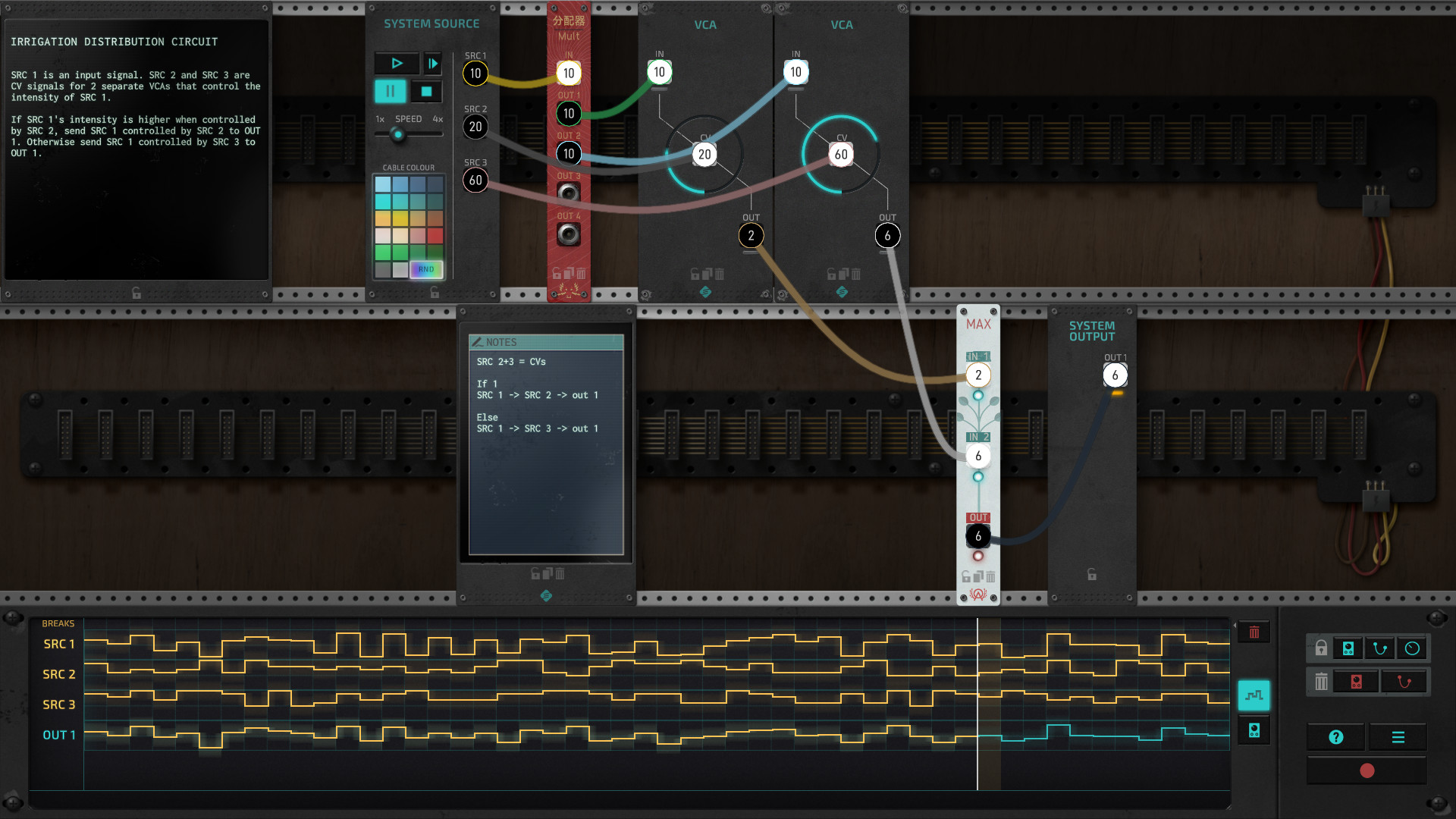
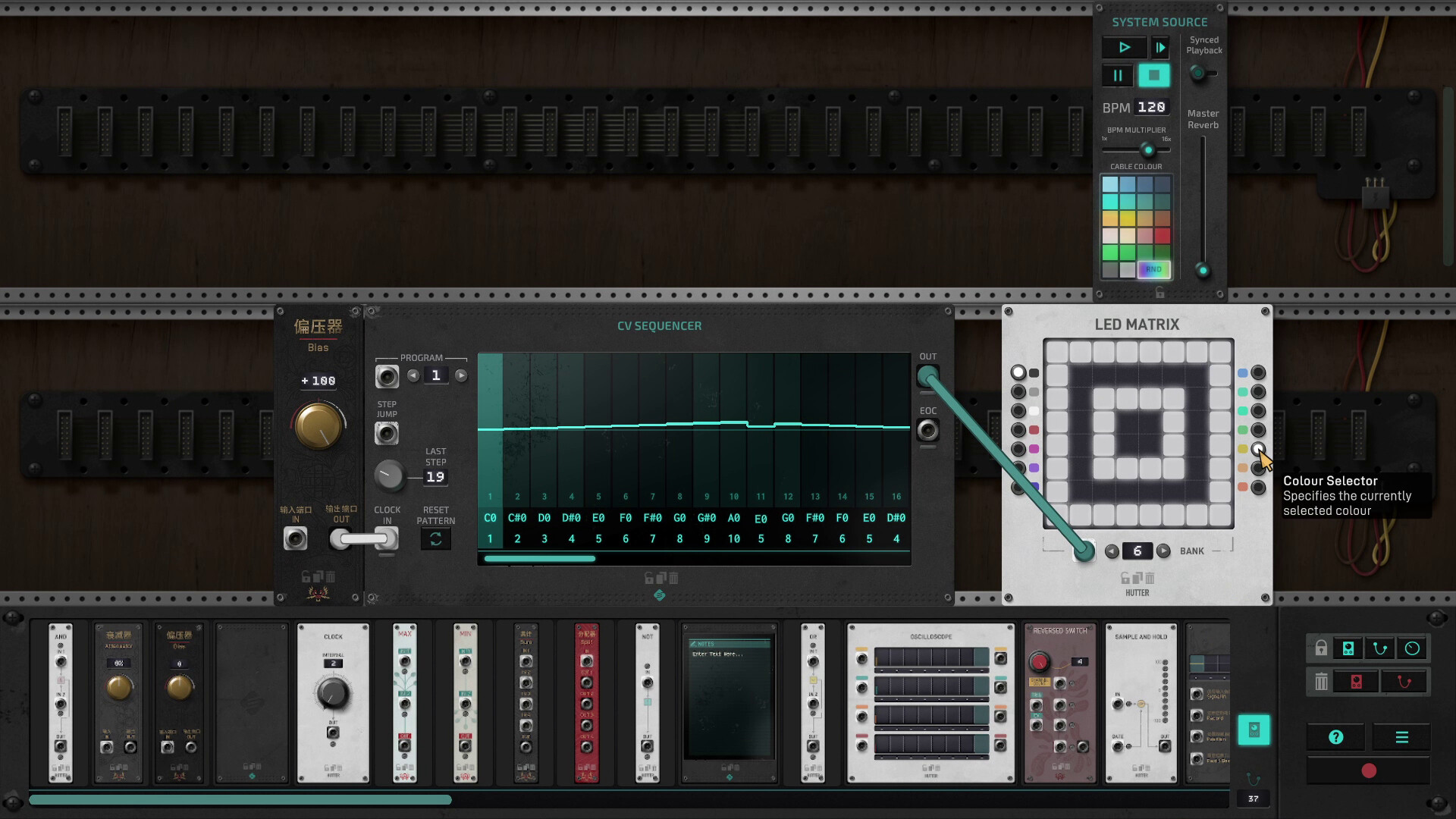
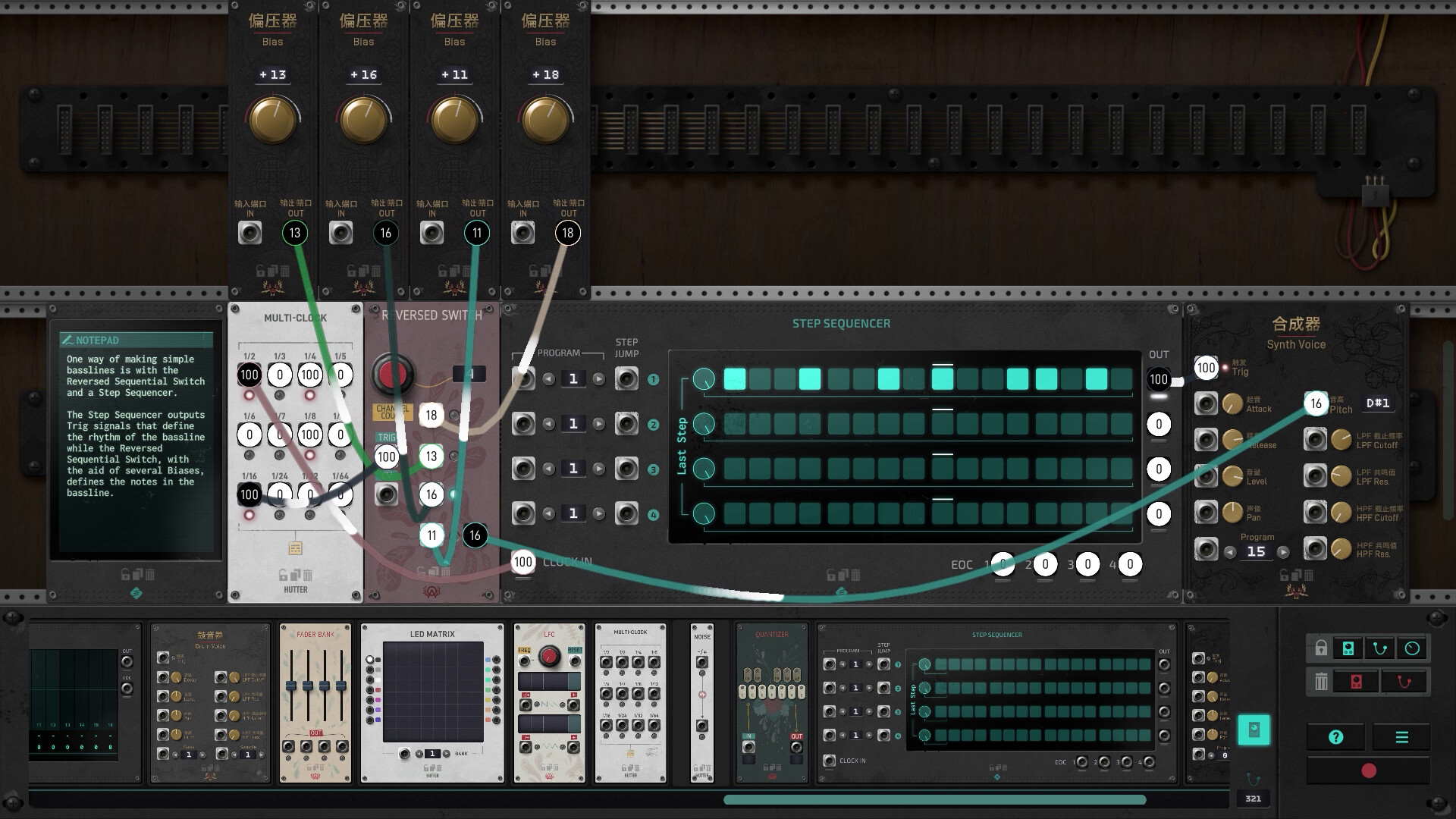
Set in a post-apocalyptic future, The Signal State puts your logic skills to the test with complex puzzles inspired by modular synthesizers. Repair machines, rebuild an abandoned farm, and be part of a revolution that will change the fate of agriculture once and for all.
The Signal State is a puzzle, logic and simulation game
developed by Reckoner Industries
and published by indienova and iterco.
Released on September 23rd 2021 is available on Windows, MacOS, Steam Deck and Steam Machine
in 9 languages: English, Spanish - Spain, Korean, Russian, Simplified Chinese, Spanish - Latin America, Traditional Chinese, German and Japanese.
It has received 655 reviews of which 563 were positive and 92 were negative resulting in a rating of 8.1 out of 10. 😎
The game is currently priced at 16.99€ on Steam, but you can find it for 1.87€ on Eneba.
The Steam community has classified The Signal State into these genres:
Puzzle
Logic
Simulation
Automation
Programming
Indie
Sandbox
Level Editor
Moddable
Tutorial
Dystopian
Futuristic
Hacking
Singleplayer
Robots
2D
Post-apocalyptic
Cyberpunk
Sci-fi
Agriculture
Here is the detailed breakdown of supported languages for The Signal State:
| UI | Subtitle | Audio | |
|---|---|---|---|
| English | |||
| German | |||
| Korean | |||
| Spanish - Spain | |||
| Simplified Chinese | |||
| Traditional Chinese | |||
| Russian | |||
| Japanese | |||
| Spanish - Latin America |
Media & Screenshots
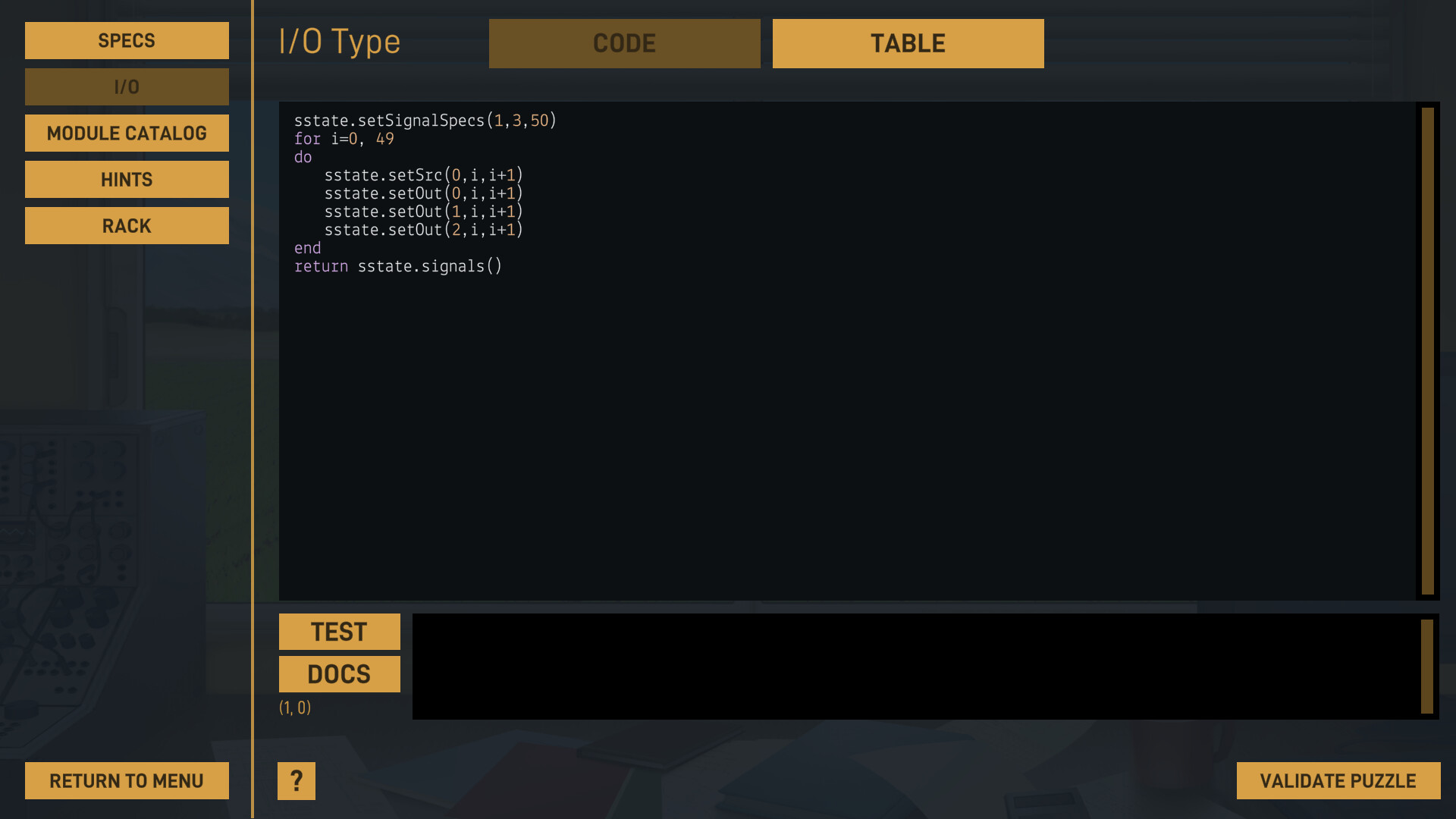
Get an in-depth look at The Signal State through various videos and screenshots.



Load More



System requirements
These are the minimum specifications needed to play the game. For the best experience, we recommend that you verify them.
Windows
- OS *: Windows 7 / 8 / 10
- Processor: 2.0 GHz
- Memory: 2 GB RAM
- Graphics: 1366 x 768
- DirectX: Version 10
- Storage: 500 MB available space
MacOS
- OS: macOS 10.9+
- Processor: 2.0 GHz
- Memory: 4 GB RAM
- Graphics: 1366 x 768
- Storage: 500 MB available space
Steam Price & Best Deals
User reviews & Ratings
Explore reviews from Steam users sharing their experiences and what they love about the game.
It's a pretty neat zach-like, though a bit on the shorter side, even including the optional puzzles. It's also not that hard, I finished it in one sitting. There were like two or three optional puzzles that took me 30-60 minutes, but those were outliers, with most of non-trivial puzzles taking me around 15 minutes. In the game, you manipulate analog signals with various modules connected with cables. You have an input signal (or signals) and a target output, kinda like in Shenzhen I/O. Each of the modules does a specific "thing" with the signal, and you have to combine their effects to reach your goal. At the beginning, the game spends a pretty long time teaching you its mechanics and basic modules. It's probably a good thing, though it can be a bit tedious if you're a quick learner, or have some prior knowledge about logic gates and such. On the other hand, I feel like the game only tutorializes how the modules work on a pretty basic level. To give an early example, when the basic logic modules are introduced, you're only shown how they interact with binary signals, but knowing how they work with analog signals is essential to progress further in the game. Now, I do like figuring things out on my own, but i also think that a game's tutorials should spend more time on things that are harder to understand, rather than very basic ones. One thing that was left mostly unexplained, and the source of a lot of my confusion, was the way that the game's tick/timing system works. I kind of dislike it. On the surface, it looks like all of the modules work concurrently, you might even think that one module can do one "action" per tick, since that's kind of what it looks like when playing back your solution, but that's not really the case, If you make a feedback loop in some way, you'll see that a module will keep performing actions, until its input stabilizes. My main problem with it is that it's really hard to debug your solutions in that case, since you can only step forwards one "tick" and not one "action". It also leads to situations where a display on a module can show wrong information, which for me, caused a lot of confusion. The game has a hint system if you ever get stuck. They're a mixed bag. Sometimes you get something helpful, sometimes its an annoying "you can use the module that does X thing to do X thing" I really like the visuals. The modules look really stylish. A really nice touch is that each one of them has a manufacturer with a distinct visual style, it adds a bit of personality to the modules. It's also really fun to sometimes take a step back and look at the mess you've made with all the cables and stuff, though admittedly it rarely gets to that point. You usually have plenty of space for your solution, and dont need that many modules to solve a puzzle. The ending of the game was pretty abrupt. I don't mean the ending of the story, mostly I mean that the game ends on a relatively simple puzzle, there's no difficult end-game puzzle that tests your complete understanding of the game. There's also no extra optional puzzles after you beat the game. You just unlock the ability to use every module in previous puzzles. I feel like the last optional puzzle of the game would work better as a "capstone" puzzle, if it was unlocked after the ending. On the level select screen it sits right before the comparatively easier final puzzle, and that doesn't really sit right with me. All that being said, it's still a fun game and I liked playing it, though i'd probably recommend grabbing it during a sale.
(no spoilers in review) This game is... shall we say... "heavily inspired" by Shenzhen I/O. Quite a few things are maybe too on-the-nose, from the music to the conversations. That said, its hook is different enough that this is worth playing. Shenzhen I/O, despite being "board design" and somewhat mixed signal still relies heavily on writing firmware. There's none of that here, it's a lot more on the analog side of mixed-signal design and has some interesting hardware that works totally differently. There are some minor annoyances, the dialog/plot is too intrusive and isn't smart enough to realize that you're leading it into loops so if you choose some of the more interesting options you might repeat some lines. You also may force yourself to redo dialog if you continue the game to a problem you haven't solved (I think this is avoidable by going to the level select directly, but I don't always remember to do that). The biggest thing I think that's lacking is that in Shenzhen (and other Zachtronics games) you often have to choose a different solution because the most obvious one is somehow precluded by limited resources. You can't fit all your code into one microcontroller so you have to split it across two. Or maybe the board just isn't big enough for the components you want. I didn't really run into that in The Signal State. There's obviously no code, so that's one set of constraints you're never up against. And at least as far as I've gotten, there's always vastly more rack space than you need. Contrast that with running into resource limits almost from the first stages in Zachtronics games. Whether that's interesting to you is probably a personal preference, but it is a noticeable difference in approach. You still get the leaderboards to compare your solutions to the world, and while I think that wire length is not that interesting of a thing to optimize, it is always nice to see how your solution stacks up. It might hint that there's a completely different approach for you to find. The other minor thing I have is that I think component cost (Shenzhen) is a more interesting optimization metric than rack space (Signal State), this is also down to preference. If you like the Zachtronics puzzle solving games, this is likely to be right up your alley. The comparisons do more to reinforce how good Zachtronics is rather than to take anything away from The Signal State, which is a great game in its own right.
(Обзор на русском [url=https://dtf.ru/id590518/4739149]> тут < ) A puzzle game about programming by combining analog modules. 29 required and 12 optional levels. + It feels very tactile to move and connect modules. + Levels introduce new modules and increase task complexity. + Some levels require to think, but never stuck. + In-game multistep help. + Sandbox with more modules. + Achievement-friendly: you can earn all achievements after completing the campaign. = Community puzzles — if you want more. = ~7 hours of gameplay. – The story is not why you will play this game. If you like to play some non-hard game about programming, it's here. Don't be afraid, it looks much more complex than it is.
Similar games
View all
SHENZHEN I/O
BUILD CIRCUITS. WRITE CODE. RTFM.
Opus Magnum
Opus Magnum is the latest open-ended puzzle game from Zachtronics, the creators of SpaceChem, Infinifactory, and SHENZHEN I/O. Design and build machines that assemble potions, poisons, and more using the alchemical engineer’s most advanced tool: the transmutation engine!


TIS-100
TIS-100 is an open-ended programming game by Zachtronics, the creators of SpaceChem and Infinifactory, in which you rewrite corrupted code segments to repair the TIS-100 and unlock its secrets. It’s the assembly language programming game you never asked for!
JOY OF PROGRAMMING - Software Engineering Simulator
Use real Python code to automate machines, robots, drones and more: Program self-driving vehicles; crack passwords; apply machine learning; automate logistics; use image processing to guide missiles. Gain real coding skills and solve exciting bite-sized programming challenges.

Infinifactory
Infinifactory is a sandbox puzzle game by Zachtronics, the creators of SpaceChem and Infiniminer. Build factories that assemble products for your alien overlords, and try not to die in the process.

MOLEK-SYNTEZ
Use the MOLEK-SYNTEZ to create small molecules with various pharmacological effects from the comfort of your small Romanian apartment.
Virtual Circuit Board
Virtual Circuit Board is the sandbox drawing-based logic simulator where you can build, program, decorate, and simulate anything from simple monochrome circuits to complex and colorful computers. Play with digital logic in this sandbox-only experience.

Automachef
Welcome to Automachef, a resource management puzzler where you design kitchens, program machinery and watch your genius come to life! It’s time to engineer tomorrow’s kitchen, today!
Turing Complete
Learn CPU architecture with puzzles
Frequently Asked Questions
The Signal State is currently priced at 16.99€ on Steam.
No, The Signal State is currently not on sale. You can purchase it for 16.99€ on Steam.
Yes, The Signal State received 563 positive votes out of a total of 655 achieving a rating of 8.09.
😎
The Signal State was developed by Reckoner Industries and published by indienova and iterco.
Yes, The Signal State is playable and fully supported on Windows.
Yes, The Signal State is playable and fully supported on MacOS.
No, The Signal State is not playable on Linux.
Yes, The Signal State is playable on Steam Deck, though it might require a few minor tweaks. Make sure to check the Steam store page and community feedback on ProtonDB for exact compatibility details.
Yes, The Signal State is playable on Steam Machine, though it might require a few minor tweaks. Make sure to check the Steam store page and community feedback on ProtonDB for exact compatibility details.
No, The Signal State does not support VR.
The Signal State is a single-player game.
No, The Signal State does not currently offer any DLC.
Yes, The Signal State is fully integrated with Steam Workshop. Visit Steam Workshop.
No, The Signal State does not support Steam Remote Play.
Yes, The Signal State is enabled for Steam Family Sharing. This means you can share the game with authorized users from your Steam Library, allowing them to play it on their own accounts. For more details on how the feature works, you can read the original Steam Family Sharing announcement or visit the Steam Family Sharing user guide and FAQ page.
You can find solutions or submit a support ticket by visiting the Steam Support page for The Signal State.
Data sources
The information presented on this page is sourced from reliable APIs to ensure accuracy and relevance. We utilize the Steam API to gather data on game details, including titles, descriptions, prices, and user reviews. This allows us to provide you with the most up-to-date information directly from the Steam platform.
Additionally, we incorporate data from the SteamSpy API, which offers insights into game sales and player statistics. This helps us present a comprehensive view of each game's popularity and performance within the gaming community.
Last Updates| Steam data | 15 October 2026 16:55 UTC |
|---|---|
| SteamSpy data | 17 October 2026 14:04 UTC |
| Steam price | 26 October 2026 19:44 UTC |
| Steam reviews | 19 October 2026 18:04 UTC |
If you'd like to dive deeper into the details about The Signal State, we invite you to check out a few dedicated websites that offer extensive information and insights. These platforms provide valuable data, analysis, and user-generated reports to enhance your understanding of the game and its performance.
- SteamDB - A comprehensive database of everything on Steam about The Signal State
- SteamCharts - Analysis of The Signal State concurrent players on Steam
- ProtonDB - Crowdsourced reports on Linux and Steam Deck The Signal State compatibility
 16.99€
Visit Store
 🔥 Deal
-89%
16.99€
1.87€
Buy Now
 -86%
16.99€
2.39€
Visit Store
 -83%
16.99€
2.95€
Visit Store
 -30%
16.99€
11.99€
Visit Store
Game modes
Features
Online players
6
Developer
Reckoner Industries
Publisher
indienova,
iterco
Release
23 Sep 2021
Platforms
Clicking and buying through these links helps us earn a commission to maintain our services.