
Kelvin and the Infamous Machine
Kelvin and the Infamous Machine is a hilarious point-and-click adventure in which you stumble irresponsibly through history to help legendary geniuses complete their masterworks!
Sync your Steam wishlist to find the lowest game prices instantly. No login required, just paste your Steam profile URL!
⚡ Try Wishlist Radar!
Sync your Steam wishlist to find the lowest game prices instantly. No login required!
⚡ Try Wishlist Radar!
Close

Time Gentlemen, Please! and Ben There, Dan That! Special Edition Double Pack on Steam
Quick menu
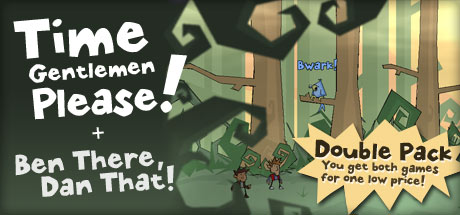
Ben There, Dan That! and Time Gentlemen, Please! are a couple of rip-roaring point-and-click adventure games . With tongue firmly in cheek, sit back, relax, and put your mind to work solving puzzles, and reading some very funny dialogue. It's like a book, only good!
Time Gentlemen, Please! and Ben There, Dan That! Special Edition Double Pack is a point & click, adventure and indie game
developed and published by Size Five Games.
Released on August 25th 2009 is available only on Windows.
It has received 689 reviews of which 556 were positive and 133 were negative resulting in a rating of 7.6 out of 10. 😊
The game is currently priced at 3.99€ on Steam.
The Steam community has classified Time Gentlemen, Please! and Ben There, Dan That! Special Edition Double Pack into these genres:
Media & Screenshots
Get an in-depth look at Time Gentlemen, Please! and Ben There, Dan That! Special Edition Double Pack through various videos and screenshots.


Load More


System requirements
These are the minimum specifications needed to play the game. For the best experience, we recommend that you verify them.
Windows
- OS: Windows
- Processor: Pretty much anything post-millennial, anything that runs DirectX 9.0c for particle effects.
- Memory: Anything over 256MB should do, anything that runs DirectX 9.0c for particle effects.
- Graphics:Any DirectDraw compatible. PixelShader 1.4/ DirectX 9.0c capable card required for particle effects.
- DirectX®: 9.0c required for particle effects
- Hard Drive: 150 MB
- Sound: Any Windows-compatible soundcard
Steam Price & Best Deals
User reviews & Ratings
Explore reviews from Steam users sharing their experiences and what they love about the game.
Time Gentlemen, Please! and Ben There, Dan That! Special Edition Double Pack is a wildly chaotic collection of point-and-click adventure games that proudly celebrates classic adventure game design while constantly mocking it at the same time. Developed by Size Five Games, the collection combines two absurd comedy adventures built around ridiculous puzzles, bizarre science fiction scenarios, nonstop sarcasm, and a style of humor that feels heavily inspired by classic LucasArts games. Rather than focusing on emotional storytelling or serious narratives, both games commit fully to outrageous comedy and self-aware parody, creating an experience that feels intentionally ridiculous from beginning to end. The collection follows Ben and Dan, two hopelessly incompetent roommates whose ordinary lives spiral into complete madness involving time travel disasters, alternate dimensions, alien invasions, Nazi dinosaurs, and collapsing timelines. The stories become increasingly absurd with every chapter, constantly escalating situations far beyond anything remotely logical. What makes the narrative entertaining is not realism or coherence, but the complete willingness to embrace nonsense for the sake of comedy. The games rarely take themselves seriously for even a moment, and nearly every scene exists mainly to deliver another joke, parody, or bizarre situation. Humor is unquestionably the heart of the experience. Nearly every line of dialogue, environmental interaction, and inventory item contains some form of joke or sarcastic commentary. Ben and Dan constantly break the fourth wall by openly discussing point-and-click adventure mechanics, mocking puzzle logic, and arguing about genre conventions directly with the player. The games frequently make fun of the absurd inventory combinations and strange puzzle solutions that define classic adventure games while still fully embracing those same mechanics themselves. This self-awareness gives the collection a distinct personality that feels both nostalgic and modern at the same time. Ben There, Dan That! serves as the shorter and simpler introduction to the series. Originally released as freeware before receiving the Special Edition upgrade, the game quickly establishes the chaotic dynamic between the protagonists while throwing them into increasingly bizarre science fiction scenarios. The pacing remains extremely fast, constantly moving players between strange locations and absurd situations without spending much time on serious worldbuilding. Although mechanically simpler than its sequel, the game succeeds because of its energetic writing and nonstop comedic momentum. Time Gentlemen, Please! expands the formula significantly and feels far more ambitious overall. The sequel revolves around time travel and the catastrophic consequences caused almost entirely by Ben and Dan’s terrible decisions. This setup allows the story to spiral into increasingly ridiculous territory involving paradoxes, alternate timelines, historical disasters, and universe-ending chaos. The larger scope gives the writers far more opportunities for elaborate jokes, genre satire, and creative puzzle situations, making the sequel feel more polished and confident than the original game. The puzzle design follows the traditional point-and-click structure involving item collection, inventory combinations, environmental interactions, and dialogue-based progression. Most puzzles are intentionally accessible and designed to maintain pacing rather than frustrate players with impossibly obscure solutions. While some classic adventure game logic still appears occasionally, the games generally avoid becoming excessively punishing. The developers clearly wanted players to continue experiencing the humor and story instead of spending hours trapped on individual puzzles. One of the strongest aspects of the collection is how much optional dialogue and interaction content exists throughout both games. Examining random objects, combining unusual inventory items, or attempting obviously incorrect solutions often produces unique joke responses and sarcastic commentary. The games constantly reward curiosity and experimentation because even failed actions usually result in entertaining dialogue. This makes exploration consistently enjoyable even during slower moments or puzzle-solving sequences. The writing style leans heavily into British humor, absurdity, and crude comedy. Pop culture references, gaming jokes, science fiction parodies, and intentionally immature humor appear constantly throughout both adventures. Some jokes are clever genre deconstructions while others rely entirely on randomness and shock value. The collection rarely attempts subtle comedy, instead overwhelming players with a constant stream of sarcasm, ridiculous situations, and self-aware nonsense. Visually, the games intentionally embrace a low-budget retro presentation inspired by older point-and-click adventures from the early 1990s. The pixel art and animations are simple but expressive enough to support the exaggerated tone and bizarre scenarios. While the graphics are undeniably rough compared to larger commercial adventure titles, the intentionally primitive style eventually becomes part of the charm. The visual simplicity complements the comedic atmosphere and reinforces the feeling of playing an exaggerated parody of classic adventure games. The soundtrack and sound design are relatively modest but effective enough for the style of game being presented. Music tracks support the comedic pacing without becoming repetitive too quickly, while the absence of full voice acting gives the collection an old-school adventure game feeling. Since the experience relies heavily on reading dialogue, players who dislike text-heavy games may struggle with the pacing, but the writing remains energetic enough to keep conversations entertaining. The collection’s greatest accomplishment is how well it understands the appeal of classic point-and-click adventures. Instead of simply copying old LucasArts formulas directly, the games actively parody and deconstruct adventure game conventions while still functioning as legitimate adventure titles themselves. Fans of older games in the genre will recognize countless references to puzzle design clichés, inventory logic, and classic adventure storytelling techniques hidden throughout the dialogue and gameplay. However, the humor will not appeal to everyone. Much of the comedy relies on profanity, immature jokes, surreal randomness, and specifically British comedic sensibilities that may feel exhausting or repetitive for some players. Certain jokes intentionally push toward offensive territory purely for shock value, and the constant sarcasm can occasionally become overwhelming during longer play sessions. The puzzle design, while generally entertaining, also lacks the complexity and brilliance of the classic games that inspired it. Some puzzles are relatively simple item combinations without particularly creative twists, and experienced adventure game players may occasionally progress through sections too easily. The interface and movement systems also feel somewhat outdated by modern standards. For fans of old-school adventure games, bizarre science fiction comedy, and self-aware genre parody, the collection delivers a consistently entertaining experience filled with ridiculous situations and memorable dialogue. Ben and Dan’s disastrous adventures remain chaotic, immature, and intentionally nonsensical, but that complete dedication to absurdity is exactly what makes the games so enjoyable. Rating: 8/10
"Time Gentlemen, Please!" is the sequel to "Ben There, Dan That!" and while latter was as far as I am concerned 90/10 funny/crass, this one makes it to maybe 60/40, or even anywhere from 40/60 to 10/90 if just not in the mood. It is also a lot harder and longer; while BTDT takes probably 3 or 4 hours to run through, less than double that for TGP would be fast. But that's to say that the puzzling is in fact often pretty good (even if equally often silly) and most genre fans should at least together with BTDT enjoy this. Yet my 36 hours of playtime here says this to be one of those games where I was for 75% or more alt-tabbed to the desktop due to being too tired of it. Laughed once or twice but will remember the many more cringes more. Still a recommend -- but it wouldn't have been without BTDT.
Similar games
View all
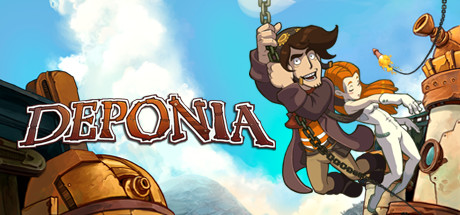
Deponia Doomsday
Can you change Deponia's fate? Do you have what it takes to change Rufus' past, present and future without accidently destroying the whole planet? Fight time itself in this action-packed, platypus-tastic and insanely hilarious story.
The Wardrobe - Even Better Edition
Inspired by the great ‘90s classics such as 'Monkey Island', 'Day of the Tentacle', 'Tony Tough' and 'Sam & Max: Hit the Road', "The Wardrobe" has a strong sense of humour, but isn't shy about dealing with mature and non-politically correct themes.
Chaos on Deponia
With this long-expected sequel to the critically highly acclaimed and lavishly praised Deponia, the player enters round two. Chaos on Deponia turns out to be even wackier than its predecessor and instantly puts the player under its spell.
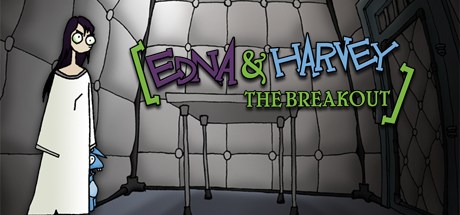
Edna & Harvey: The Breakout
The award-winning debut adventure game from the creators of Deponia and The Whispered World now on Steam. Accompany young Edna and her talking stuffed bunny Harvey on a whacky attempt to escape from her padded cell. Experience a bizarre journey all across the insane asylum and far beyond its brick walls.

Paradigm
Paradigm is a surreal adventure game set in the strange and post apocalyptic Eastern European country of Krusz. Play as the handsome mutant, Paradigm, whose past comes back to haunt him in the form of a genetically engineered sloth that vomits candy.
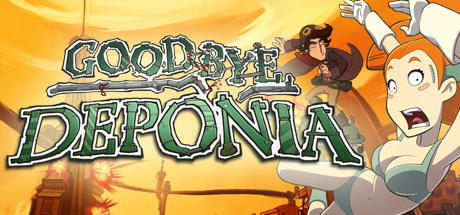
Goodbye Deponia
More chaos, more destruction, more Rufus. Not one, not two, but three Rufuses cause all kinds of crazy mayhem in the long-awaited adventure comedy Goodbye Deponia!
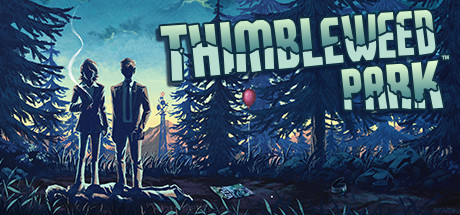
Thimbleweed Park
In Thimbleweed Park, a dead body is the least of your problems. Switch between five playable characters to uncover the surreal secrets of this strange town in a modern mystery adventure game from the creators of Monkey Island and Maniac Mansion. The deeper you go, the weirder it gets.

Irony Curtain: From Matryoshka with Love
Irony Curtain: From Matryoshka with Love is a satirical point and click inspired by the classic adventure games. It smuggles you out of your comfort zone and throws you into the middle of a Cold War spy intrigue - where there’s an even bigger game being played …

Adventures of Bertram Fiddle 1: A Dreadly Business
A classic point and click adventure game, featuring weird and wonderful characters, beautiful animation and a fantastic soundtrack. "It is quite possibly one of the finest point-and-click comedy murder mystery adventure games set in Victorian London you will play today" - Bertram Fiddle
Four Last Things
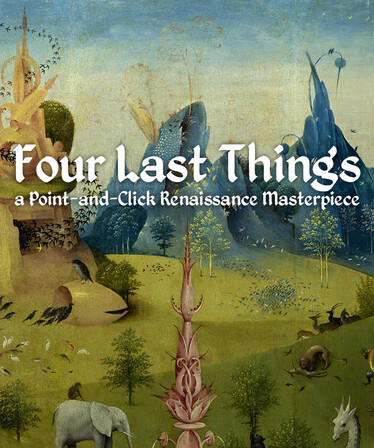
Four Last Things is a very silly pythonesque adventure made from Renaissance-era paintings and public domain recordings of classical music. It is about sin, and the Four Last Things – Death, Judgement, Heaven and Hell – and strives to be intelligent and ridiculous in equal measures.
Frequently Asked Questions
Time Gentlemen, Please! and Ben There, Dan That! Special Edition Double Pack is currently priced at 3.99€ on Steam.
No, Time Gentlemen, Please! and Ben There, Dan That! Special Edition Double Pack is currently not on sale. You can purchase it for 3.99€ on Steam.
Yes, Time Gentlemen, Please! and Ben There, Dan That! Special Edition Double Pack received 556 positive votes out of a total of 689 achieving a rating of 7.64.
😊
Time Gentlemen, Please! and Ben There, Dan That! Special Edition Double Pack was developed and published by Size Five Games.
Yes, Time Gentlemen, Please! and Ben There, Dan That! Special Edition Double Pack is playable and fully supported on Windows.
No, Time Gentlemen, Please! and Ben There, Dan That! Special Edition Double Pack is not playable on MacOS.
No, Time Gentlemen, Please! and Ben There, Dan That! Special Edition Double Pack is not playable on Linux.
This information about Time Gentlemen, Please! and Ben There, Dan That! Special Edition Double Pack is not available yet.
This information about Time Gentlemen, Please! and Ben There, Dan That! Special Edition Double Pack is not available yet.
No, Time Gentlemen, Please! and Ben There, Dan That! Special Edition Double Pack does not support VR.
Time Gentlemen, Please! and Ben There, Dan That! Special Edition Double Pack is a single-player game.
No, Time Gentlemen, Please! and Ben There, Dan That! Special Edition Double Pack does not currently offer any DLC.
No, Time Gentlemen, Please! and Ben There, Dan That! Special Edition Double Pack does not support mods via Steam Workshop.
No, Time Gentlemen, Please! and Ben There, Dan That! Special Edition Double Pack does not support Steam Remote Play.
Yes, Time Gentlemen, Please! and Ben There, Dan That! Special Edition Double Pack is enabled for Steam Family Sharing. This means you can share the game with authorized users from your Steam Library, allowing them to play it on their own accounts. For more details on how the feature works, you can read the original Steam Family Sharing announcement or visit the Steam Family Sharing user guide and FAQ page.
You can find solutions or submit a support ticket by visiting the Steam Support page for Time Gentlemen, Please! and Ben There, Dan That! Special Edition Double Pack.
Data sources
The information presented on this page is sourced from reliable APIs to ensure accuracy and relevance. We utilize the Steam API to gather data on game details, including titles, descriptions, prices, and user reviews. This allows us to provide you with the most up-to-date information directly from the Steam platform.
Additionally, we incorporate data from the SteamSpy API, which offers insights into game sales and player statistics. This helps us present a comprehensive view of each game's popularity and performance within the gaming community.
Last Updates| Steam data | 18 September 2026 14:00 UTC |
|---|---|
| SteamSpy data | 13 October 2026 20:00 UTC |
| Steam price | 26 October 2026 20:04 UTC |
| Steam reviews | 21 October 2026 18:09 UTC |
If you'd like to dive deeper into the details about Time Gentlemen, Please! and Ben There, Dan That! Special Edition Double Pack, we invite you to check out a few dedicated websites that offer extensive information and insights. These platforms provide valuable data, analysis, and user-generated reports to enhance your understanding of the game and its performance.
- SteamDB - A comprehensive database of everything on Steam about Time Gentlemen, Please! and Ben There, Dan That! Special Edition Double Pack
- SteamCharts - Analysis of Time Gentlemen, Please! and Ben There, Dan That! Special Edition Double Pack concurrent players on Steam
- ProtonDB - Crowdsourced reports on Linux and Steam Deck Time Gentlemen, Please! and Ben There, Dan That! Special Edition Double Pack compatibility
Game modes
Features
Online players
0
Developer
Size Five Games
Publisher
Size Five Games
Release
25 Aug 2009
Platforms