
Retro Rewind - Video Store Simulator
Manage your very own video store in the early 90s! Rent, sell, decorate and expand your business from the ground up and relive the golden ages of video rentals!
Sync your Steam wishlist to find the lowest game prices instantly. No login required, just paste your Steam profile URL!
⚡ Try Wishlist Radar!
Sync your Steam wishlist to find the lowest game prices instantly. No login required!
⚡ Try Wishlist Radar!
Close

BakeryDiary on Steam
Quick menu
This isn’t a bread-making game. Listen carefully to customers’ strange requests, discover many kinds of bread, and satisfy even the most picky tastes — from strawberry to chocolate, whole wheat to nuts.
BakeryDiary is a casual, simulation and shop keeper game
developed and published by DanDanNi.
Released on March 06th 2026 is available on Windows, MacOS, Steam Deck and Steam Machine.
It has received 505 reviews of which 469 were positive and 36 were negative resulting in a rating of 8.6 out of 10. 😎
The game is currently priced at 7.79€ on Steam.
The Steam community has classified BakeryDiary into these genres:
Media & Screenshots
Get an in-depth look at BakeryDiary through various videos and screenshots.


Load More


System requirements
These are the minimum specifications needed to play the game. For the best experience, we recommend that you verify them.
Windows
- OS: win7+
- Processor: Intel Core i3
- Memory: 2 GB RAM
- Graphics: DirectX 9 compatible with at least 500MB of memory
- Storage: 500 MB available space
MacOS
- OS: macOS 11.0+
- Processor: Apple M1 或 Intel Core i3
- Memory: 1 GB RAM
- Graphics: 支持 Metal,显存至少 500MB
Steam Price & Best Deals
User reviews & Ratings
Explore reviews from Steam users sharing their experiences and what they love about the game.
Fun game, but only story system is confusing to understand and how exactly to unlock customers stories. Also it is confusing to understand bread types, when in community help list sayed one thing, but when u give customer, then it is wrong one. Also sometimes it dont give that bread what customer or driver ask, when they same time and u used it on one and then when not gave customer, then it will not come again sometimes, what she or he asked. But that is mostly for me, dont know about other game players and still alot fun and love game, even when takes alot more do to, to finish full 100% achievement and mostly stuck behind customer stories atm, other are easyer to finish.
Nice cozy organization game centered around owning a bakery and serving customers. There is a difficulty setting so you can change each day between being more laid back, normal, or chaotic so it can appeal to all levels of cozy organization gamers. Haven't tried the recent update yet but it seems to have addressed some of the more confusing customer requests/bread descriptions.
I picked Bakery Diary up because I was after a cute, cozy puzzle game to relax with, and somehow ended up spending hours saying "just one more round". The art style is really cozy, the bread designs are adorable and there's something really satisfying about figuring out what each customer is asking for. Customers describe what they want through clues rather than direct labels, which adds a fun puzzle element to the gameplay. The game includes a manual with information on all the bread types and you can also check each bread's details by hovering your mouse over it, making it easy to learn as you play. My only minor criticism is that occasionally a customer will describe a bread using characteristics that are not in its in-game description, which can make a few orders feel more like guesswork than deduction and can be a little frustrating. Personally, I don't think it happens often enough to ruin the experience, but clearer descriptions would make the puzzle-solving even more enjoyable. I will also say that once you've unlocked a large variety of breads, it can feel a bit overwhelming at times. On the positive side, you can add custom tags to breads to help keep everything organized and make them easier to identify. The game has a cozy atmosphere, relaxing music and plenty to unlock, from new breads and stickers to customer stories. Being able to decorate the bakery is a nice addition, and watching your small shop gradually grow over time feels very rewarding. If you enjoy cozy puzzle and organization games with light management elements, I recommend giving this game a try 🥐⋆ ˚🥖 ~(๑ᵔ⤙ᵔ๑) https://steamcommunity.com/sharedfiles/filedetails/?id=3738220334
Similar games
View all

Thrifty Business
Run your very own thrift shop in this laid-back management sim! Sort through boxes to find hidden treasures and arrange nostalgic displays of clothes, antiques, toys & more. Befriend the regulars, help with their requests and expand your store into a hub for the local community!

My Suika Kyo’s Fruit Merge
A fun watermelon merge puzzle game! Combine various matching fruits to help Kyo gather watermelons in four different game modes!
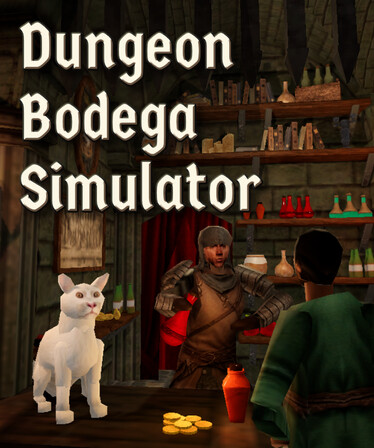
Dungeon Bodega Simulator
Dungeon Bodega Simulator is a retro styled fantasy shop game where you can grow crops, brew potions, sell items and raise slimes as pets! Can you build up your bodega into a one stop adventuring shop while solving the mysteries of the dungeon beneath you?

Lemon Cake
Restore an abandoned bakery and prepare pastries from farm to table! Grow fresh ingredients in the greenhouse, cook pastries & sweets in the kitchen and serve your baked goods to hungry customers in your own shop!

Budgie's Bug Shop
A short incremental game about catching bugs and running a shop filled with parakeets. Upgrade equipment, purchase game-breaking abilities, and maximize the profits of your Budgie-powered empire!

Wilmot's Warehouse
Wilmot's Warehouse is a puzzle game about keeping a warehouse running in tip-top shape. Just remember where you put everything, because when the service hatch opens, you'll need to find the things people want quickly, in order to earn the coveted Performance Stars.

Bomb Squad Academy
Save the world one wire at a time with Bomb Squad Academy, a puzzle game where you have to defuse bombs under a time constraint.

Tube Tycoon
The only game of its kind where you can feel like a real internet celebrity! Record videos, interact with your subscribers, buy better equipment and gain fame!

Cinnabunny
Cinnabunny is a cozy life simulator game where you play as a bunny who runs a bakery. Unlock new recipes, go birdwatching, collect mushrooms, and charm your community. Save up enough carrots to help your family move.

Art Reborn: Painting Connoisseur
Dear curator, you are about to embark on a journey to captivate the audience! You will be in charge of an art gallery.Impress the museum curators around the world with these masterpieces, collect badges, apply for support funds, and learn the value of art!

The NOexistenceN of Lilith
Lilith has returned from the fantasy world to become your desktop companion. Watch her wander freely across your screen with lively animations and dynamic real-time behaviors. Spend cozy everyday moments together as she keeps you company and eases the stress of daily life.
Frequently Asked Questions
BakeryDiary is currently priced at 7.79€ on Steam.
No, BakeryDiary is currently not on sale. You can purchase it for 7.79€ on Steam.
Yes, BakeryDiary received 469 positive votes out of a total of 505 achieving a rating of 8.63.
😎
BakeryDiary was developed and published by DanDanNi.
Yes, BakeryDiary is playable and fully supported on Windows.
Yes, BakeryDiary is playable and fully supported on MacOS.
No, BakeryDiary is not playable on Linux.
Yes, BakeryDiary is playable on Steam Deck, though it might require a few minor tweaks. Make sure to check the Steam store page and community feedback on ProtonDB for exact compatibility details.
Yes, BakeryDiary is playable on Steam Machine, though it might require a few minor tweaks. Make sure to check the Steam store page and community feedback on ProtonDB for exact compatibility details.
No, BakeryDiary does not support VR.
BakeryDiary is a single-player game.
No, BakeryDiary does not currently offer any DLC.
No, BakeryDiary does not support mods via Steam Workshop.
No, BakeryDiary does not support Steam Remote Play.
Yes, BakeryDiary is enabled for Steam Family Sharing. This means you can share the game with authorized users from your Steam Library, allowing them to play it on their own accounts. For more details on how the feature works, you can read the original Steam Family Sharing announcement or visit the Steam Family Sharing user guide and FAQ page.
You can find solutions or submit a support ticket by visiting the Steam Support page for BakeryDiary.
Data sources
The information presented on this page is sourced from reliable APIs to ensure accuracy and relevance. We utilize the Steam API to gather data on game details, including titles, descriptions, prices, and user reviews. This allows us to provide you with the most up-to-date information directly from the Steam platform.
Additionally, we incorporate data from the SteamSpy API, which offers insights into game sales and player statistics. This helps us present a comprehensive view of each game's popularity and performance within the gaming community.
Last Updates| Steam data | 22 October 2026 12:22 UTC |
|---|---|
| SteamSpy data | 22 October 2026 08:18 UTC |
| Steam price | 26 October 2026 20:32 UTC |
| Steam reviews | 22 October 2026 15:45 UTC |
If you'd like to dive deeper into the details about BakeryDiary, we invite you to check out a few dedicated websites that offer extensive information and insights. These platforms provide valuable data, analysis, and user-generated reports to enhance your understanding of the game and its performance.
- SteamDB - A comprehensive database of everything on Steam about BakeryDiary
- SteamCharts - Analysis of BakeryDiary concurrent players on Steam
- ProtonDB - Crowdsourced reports on Linux and Steam Deck BakeryDiary compatibility

Game modes
Features
Online players
43
Developer
DanDanNi
Publisher
DanDanNi
Release
06 Mar 2026
Platforms