


Dragon Traveler
Love x Comedy x Isekai = The Ultimate Bishoujo RPG! Welcome to the wild world of Dragon Traveler!
Sync your Steam wishlist to find the lowest game prices instantly. No login required, just paste your Steam profile URL!
⚡ Try Wishlist Radar!
Sync your Steam wishlist to find the lowest game prices instantly. No login required!
⚡ Try Wishlist Radar!
Close

Capote on Steam
Quick menu
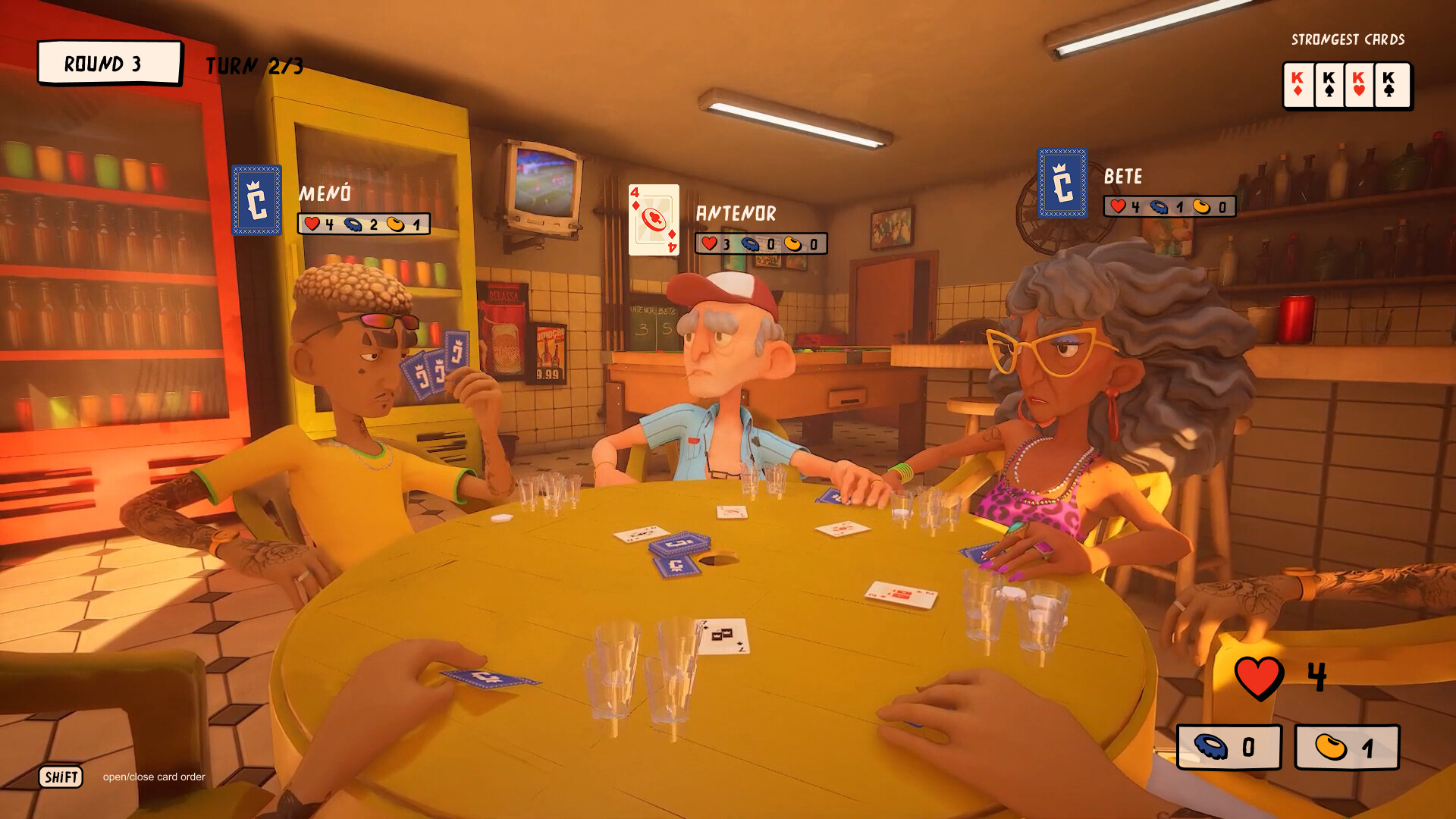
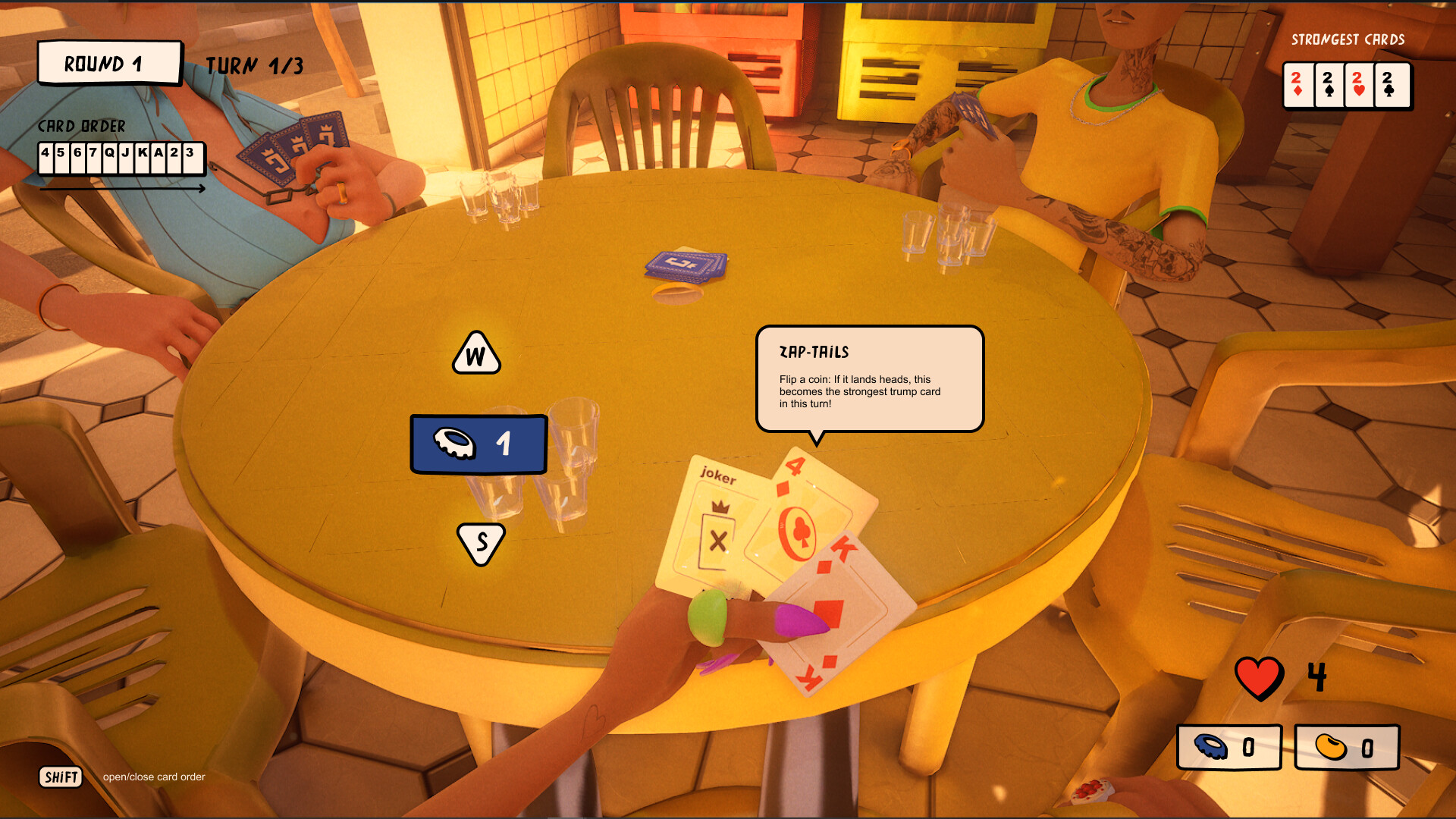
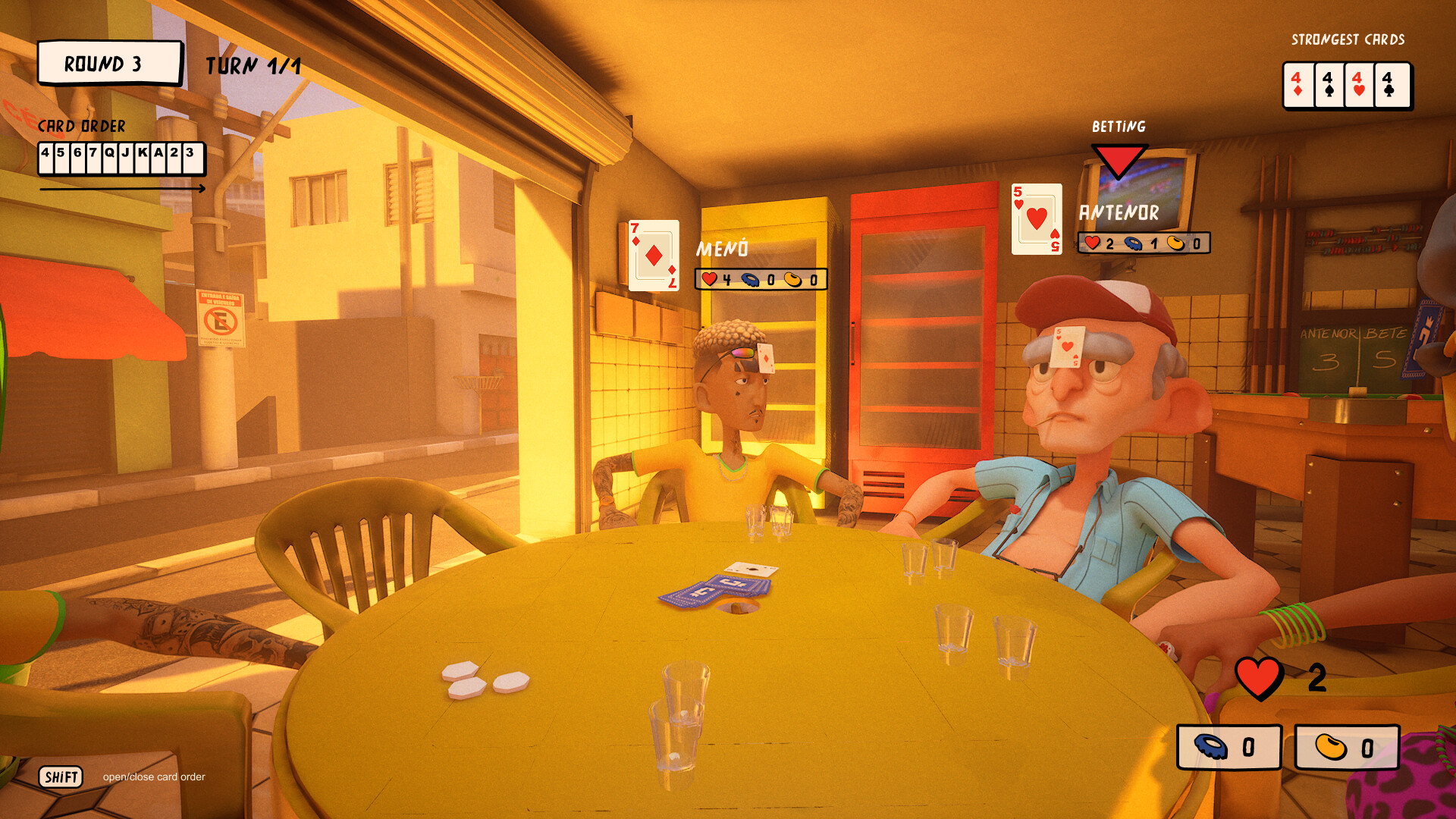
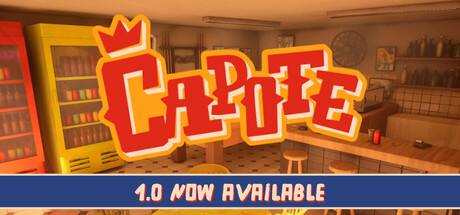
Play cards with your friends or meet new opponents at a local bar where every match is a brand-new challenge! Test your strategy across 3 different game modes, each with their own unique rules and systems! Victory is never guaranteed, and there's always one card that can flip everything.
Capote is a card game, funny and party game game
developed by Luski Game Studio
and published by CriticalLeap.
Released on August 20th 2026 is available on Windows, Steam Deck and Steam Machine.
It has received 486 reviews of which 474 were positive and 12 were negative resulting in an impressive rating of 9.0 out of 10. 😍
The game is currently priced at 5.89€ on Steam, but you can find it for 2.54€ on Eneba.
The Steam community has classified Capote into these genres:
Media & Screenshots
Get an in-depth look at Capote through various videos and screenshots.
Load More

System requirements
These are the minimum specifications needed to play the game. For the best experience, we recommend that you verify them.
Windows
- OS: Windows 10 64 Bits
- Processor: 7th generation i5 or AMD equivalent
- Memory: 8 GB RAM
- Graphics: NVIDIA GTX 880 or AMD equivalent
- Network: Broadband Internet connection
- Storage: 1270 MB available space
Steam Price & Best Deals
User reviews & Ratings
Explore reviews from Steam users sharing their experiences and what they love about the game.
Meu amigo, a anos eu me pego pensando qual era a razão para que nenhum jogo de Truco online bem feito existisse, a resposta está clara: tudo precisava se alinhar para que Capote fosse criado. Uma partida foi o suficiente pra me convencer de que isso aqui vai me divertir por horas, em meio a uma mesa de bar aleatória e um bando de desocupados ouvindo um sertanejo raiz, eu vivi a experiência de um Truco Role-Play em que os ânimos estavam exaltados na medida certa, foi como voltar 10 anos no tempo. Como se não bastasse, ainda tem um roadmap planejado com uma série de novos jogos e updates a serem inseridos, aguardando ansiosamente pela sinuca.
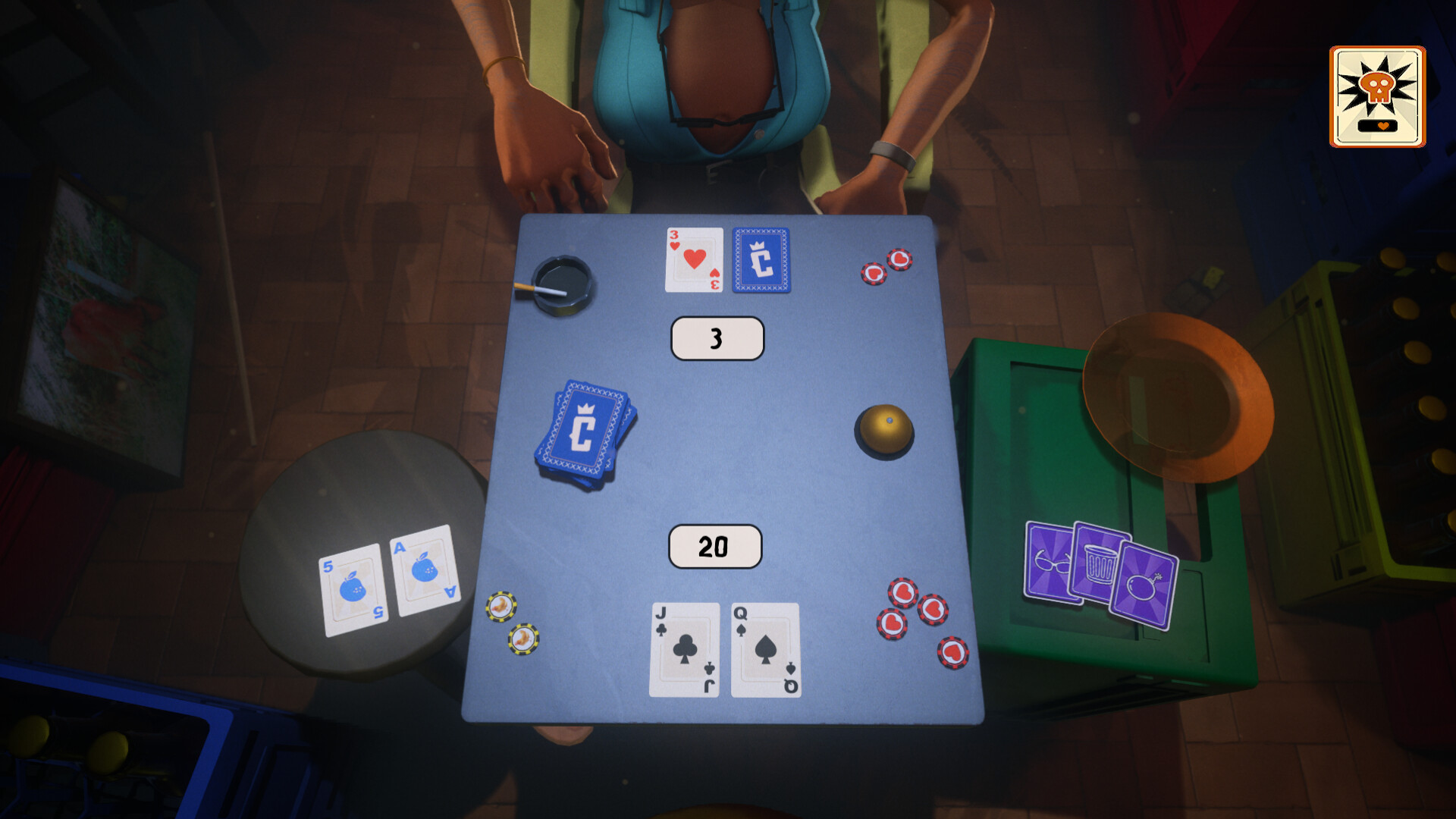
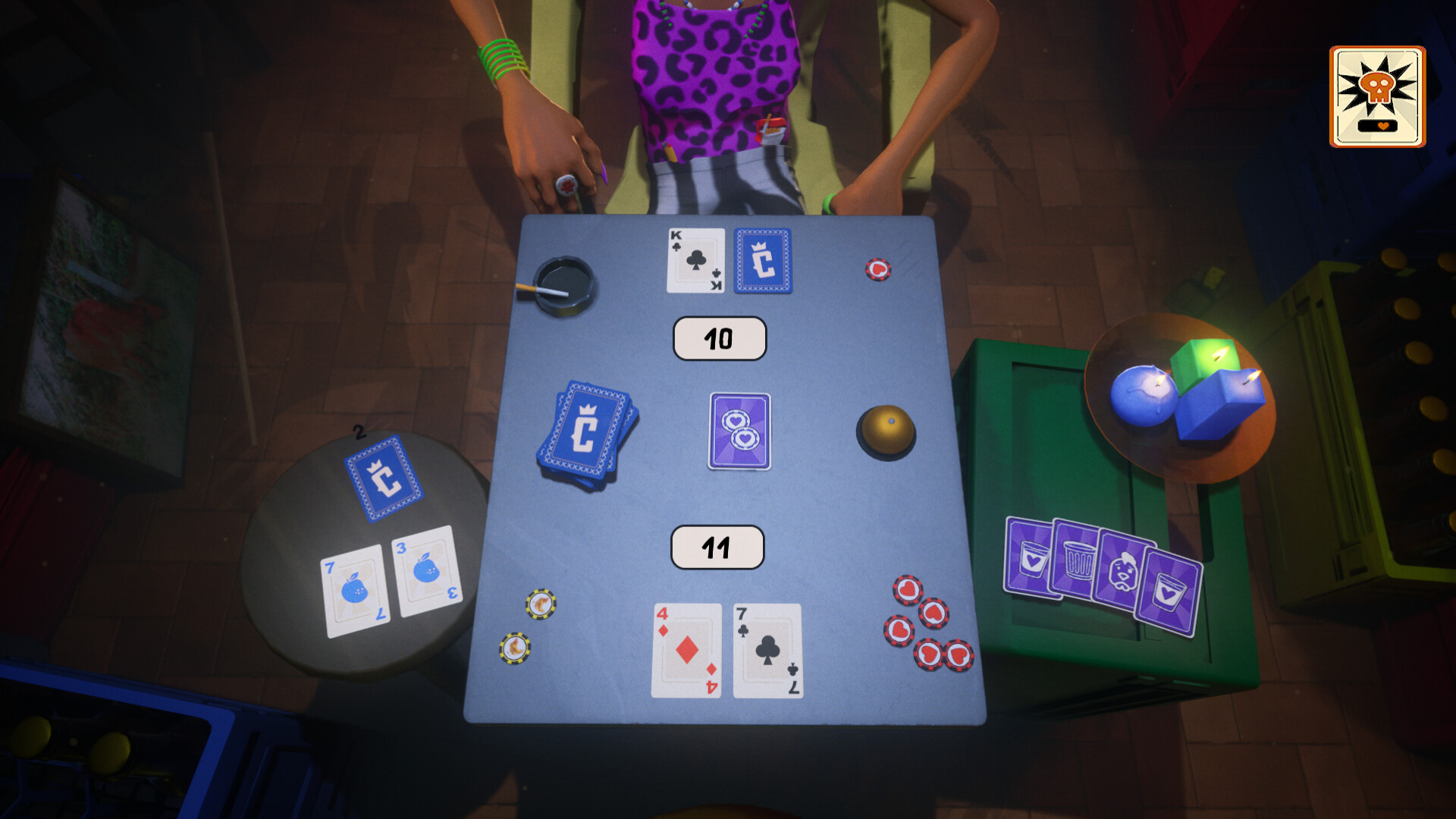
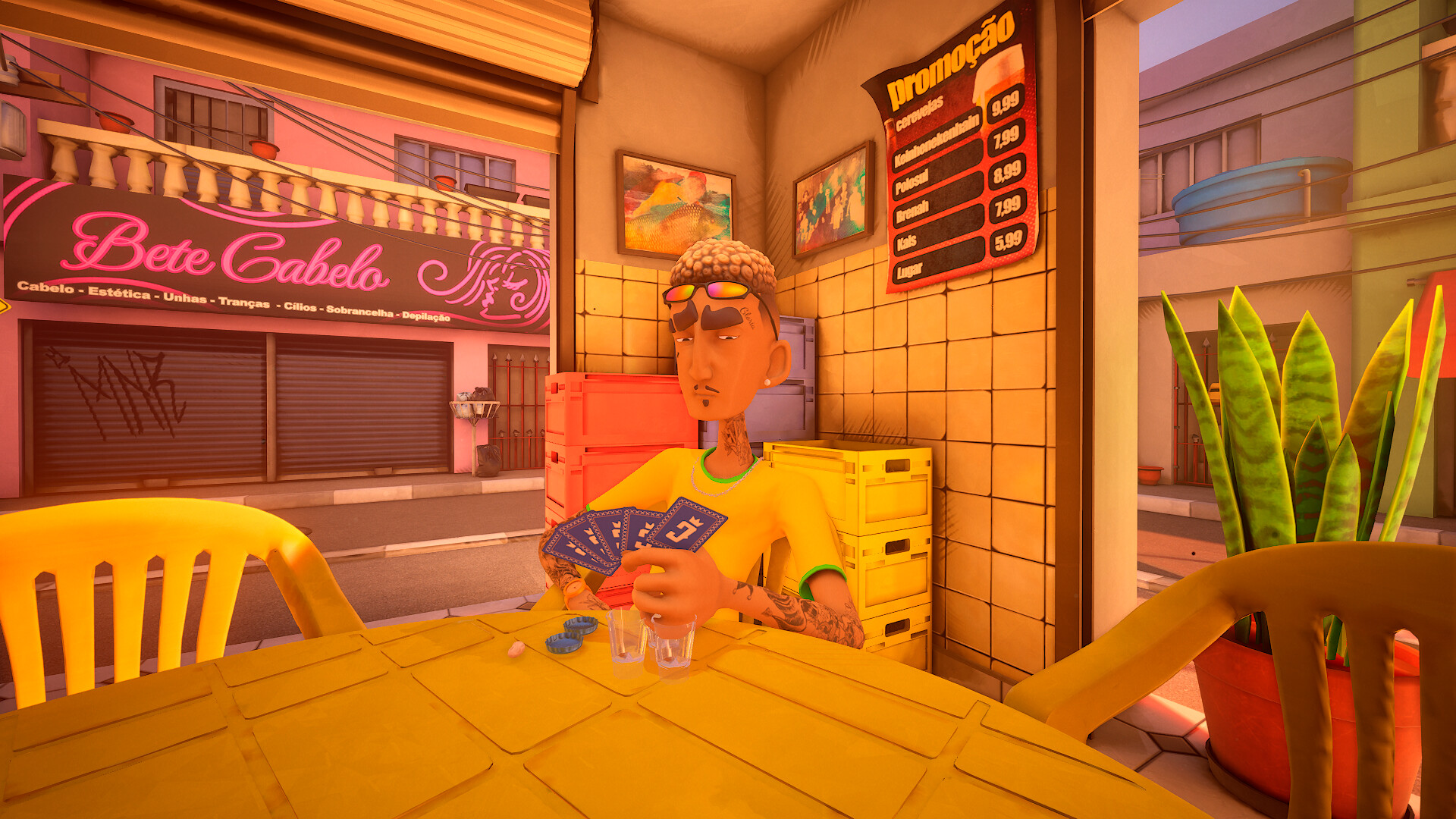
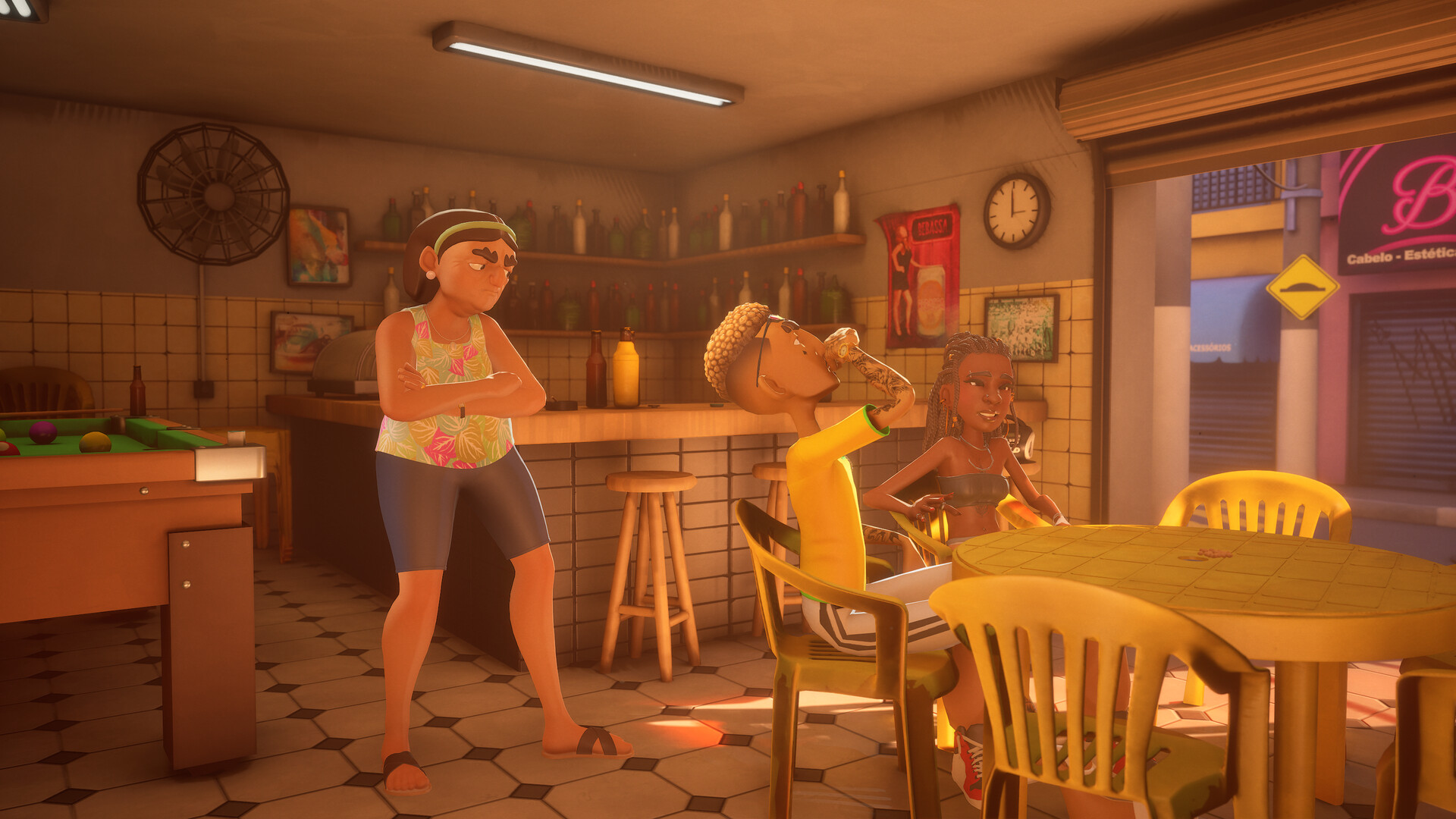
Capote takes the familiar pleasure of sitting around a table with friends and turns it into a colorful digital card-game experience where strategy, luck, bluffing, and social chaos constantly collide. Developed by Luski Game Studio and published by CriticalLeap, the game is set inside a Brazilian street-corner bar populated by an eccentric cast of characters. Rather than presenting card games through sterile menus and flat tables, it tries to recreate the personality of an informal gathering where jokes, risky decisions, unexpected reversals, and friendly competition are as important as actually winning. The result is a casual strategy game with a strong cultural identity and enough mechanical variety to appeal to both groups of friends and solo players. The main attraction is Classic Capote, designed for one to six players. Its central mechanic combines trick-taking with bidding: before playing, participants predict how many tricks they expect to win and then attempt to finish the round with exactly that number. Simply winning as many tricks as possible is therefore not always desirable. A player who has already reached the predicted total may suddenly need to avoid taking another trick, while someone falling behind must find a way to recover. This creates an entertaining tension where strong cards can become liabilities and deliberately losing a trick can be as strategically important as winning one. Failure to match the prediction introduces the game's humorous punishment system. Players receive a virtual shot for every trick separating their prediction from their actual result, and accumulating four results in becoming "Capotado." This mechanic fits perfectly with the bar setting and gives mistakes a clear consequence without making the game overly serious. Match customization further increases the potential for unpredictable sessions, while bots allow players to practice without assembling a complete online group. The rules are approachable enough for casual play but contain enough uncertainty to keep repeated matches from becoming completely predictable. Special cards add another layer of disruption. The Early Access description identifies 11 special cards alongside six playable characters, creating opportunities for sudden effects that can interfere with otherwise sensible plans. This is where the experience becomes less about perfectly calculating every outcome and more about adapting when someone unexpectedly changes the state of the match. Players who prefer card games based almost entirely on deterministic strategy may find the randomness frustrating, but groups that enjoy playful sabotage and dramatic reversals are much more likely to appreciate the design. Betejack provides a substantially different experience for solo players. Located in the back of the bar, this mode reinterprets 21, or Blackjack, through roguelike mechanics. Players select powers and modifiers before facing the game's characters in head-to-head duels. Losing means ending the current run and starting over, encouraging experimentation with different combinations and choices. The objective is ultimately to survive long enough to confront Bete. This structure gives the package more value than it would have as a purely multiplayer card game and provides something meaningful to play when friends are unavailable. The contrast between Classic Capote and Betejack is particularly welcome. One is primarily about reading a table, predicting tricks, responding to opponents, and surviving unpredictable multiplayer situations, while the other introduces run-based progression and experimentation. A third mode, Truco, is also planned. Its description promises team-based matches incorporating strategic play, emote-based signaling, and regional customization. Because Truco is still listed as coming soon, it should be viewed as part of the game's future potential rather than content already available in its complete intended form. Presentation is one of the project's most distinctive qualities. The Brazilian bar is not merely decorative scenery but a central part of its identity. The developers are clearly interested in capturing the atmosphere of an ordinary neighborhood establishment, complete with recognizable personalities and the informal energy associated with friends gathering around a table. Its stylized, colorful characters reinforce the comedic tone, and each playable personality is designed with an individual story and style. This makes the experience feel considerably more personable than a conventional digital card-game interface. The social dimension is equally important. Online PvP allows players to meet opponents beyond their immediate friend groups, and matches naturally encourage bluffing, laughter, rivalry, and opportunistic decision-making. The game includes in-game chat and online interaction, reinforcing its emphasis on multiplayer communication. Steam also lists single-player functionality, achievements, statistics, and Family Sharing, with 59 achievements offering additional goals for players who enjoy completion-oriented progression. Its Early Access status is important when evaluating the overall package. The developers describe the current build as a functional foundation that they intend to expand using community feedback, particularly regarding multiplayer behavior, bluffing mechanics, special cards, characters, and the overall atmosphere. Additional playable characters have been confirmed for the planned full version, while more special-card variations are intended to broaden the range of gameplay effects. This means the underlying concept is already clearly established, but some areas naturally feel like foundations for a larger game rather than a completely finalized feature set. The greatest potential weakness comes from the same qualities that make it entertaining. Randomness and disruptive cards can undermine carefully constructed plans, so highly competitive players seeking absolute strategic control may occasionally feel cheated by circumstances. Its strongest multiplayer moments also depend heavily on the people around the virtual table. Playing with an energetic group of friends can turn an ordinary round into something hilarious, whereas quieter matches may not showcase the social design quite as effectively. Even with those limitations, the combination of traditional card-game concepts and Brazilian personality makes the experience stand out. Classic Capote creates an entertaining risk-and-prediction system, Betejack offers a worthwhile solo alternative with roguelike ideas, and the planned Truco mode has the potential to broaden the package further. More importantly, the game understands that memorable card sessions are rarely just about cards. They are about personalities, bad decisions, lucky escapes, teasing friends, calculated risks, and the stories that emerge when everything goes wrong at exactly the right moment. As an Early Access title, there is still room for more content, balancing, characters, special cards, and refinement, but the central idea is already compelling. Luski Game Studio has created something that feels culturally specific without making its underlying card mechanics inaccessible, while CriticalLeap's publishing involvement supports a package with a clear direction. For players who enjoy casual competitive games where strategic planning shares the table with unpredictable chaos, it offers a charming and surprisingly distinctive night at the virtual bar. Rating: 8/10
Irmão, esse jogo é o equivalente digital de ir no bar "só pra tomar uma saideira" na terça-feira e sair de lá 5 da manhã devendo a alma, amigo de infância do dono e sem saber como voltou pra casa. Baixei Capote achando que ia ser só mais um jogo pra passar o tempo, e quando fui ver, já tava jogando há 6 horas seguidas, de cueca, escorrendo suor no calor e esquecendo completamente que no dia seguinte eu tinha que acordar cedo pra trabalhar. A jogabilidade te pega de um jeito que parece feitiçaria. O bagulho é tão bom que se o criador desse jogo me pedir um Pix de 20 reais agora pra comprar uma coxinha e uma Guaraná Antárctica, eu mando com o maior prazer do mundo. 10/10
Similar games
View all

Demonic Mahjong
Demonic Mahjong is a Roguelike deckbuilding game inspired by the timeless mechanics of Mahjong. Masterfully use the tiles in your hand to craft powerful combinations, reach staggering high scores, and develop strategies that are uniquely your own!
Exploding Kittens 2
Download Exploding Kittens® 2 and live your best and most chaotic kitty life! Take a deep whiff of burning furballs, draw a card and pray for victory (and look stylish all the while, thanks to oodles of customisation options for your own adorable avatar).

Smack Talk
Say your moves out loud, trash-talk your friends, and fight to win. Smack Talk is a 1–8 player online PvP platform fighter where your voice controls your attacks. Call moves, land one-liners, and finish foes with wild ultimates.


Let's Patiti!
"Let's Patiti!" is a multiplayer party game that supports 2-4 players and can be played online or locally. In the game, you take on the role of an adorable little cat, engaging in a game of chase and cunning competition with your "Meow Meow" friends or AI in the "Meow Meow Forest".


Walk of Life
Lead a better life than your friends in this competitive life simulator! Walk of Life offers unique roles and quirky playstyles to come out ahead! Duke it out with up to 6 players, or by yourself, in this hilarious party game!

The Jackbox Party Pack 11
The pack is back! The Jackbox Party Pack 11 transports your game night with 5 new games! Destroy wholesome jokes in Doominate, record your voice in Hear Say, create kookiness in Cookie Haus, sleuth through social clues in Suspectives, and collaborate with your crew in Legends of Trivia!

Poker Night at the Inventory
Seven years after the Inventory closed its doors, this underground social club has reopened for business. Play No Limit Texas Hold’em with four video game icons in a high-stakes battle of cards, bets, and trash talk.

Cards and Castles 2
Collectible cards spring to life in this wacky Tactical CCG. Assemble a deck to challenge your friends and rivals, and engage in glorious CARD BATTLES! Will you choose fearsome dragons, or the deadly squirrels?
Frequently Asked Questions
Capote is currently priced at 5.89€ on Steam.
No, Capote is currently not on sale. You can purchase it for 5.89€ on Steam.
Yes, Capote received 474 positive votes out of a total of 486 achieving an impressive rating of 9.02.
😍
Capote was developed by Luski Game Studio and published by CriticalLeap.
Yes, Capote is playable and fully supported on Windows.
No, Capote is not playable on MacOS.
No, Capote is not playable on Linux.
Yes, Capote is playable on Steam Deck, though it might require a few minor tweaks. Make sure to check the Steam store page and community feedback on ProtonDB for exact compatibility details.
Yes, Capote is playable on Steam Machine, though it might require a few minor tweaks. Make sure to check the Steam store page and community feedback on ProtonDB for exact compatibility details.
No, Capote does not support VR.
Capote offers both single-player and multi-player modes.
Capote offers both Co-op and PvP modes.
No, Capote does not currently offer any DLC.
No, Capote does not support mods via Steam Workshop.
No, Capote does not support Steam Remote Play.
Yes, Capote is enabled for Steam Family Sharing. This means you can share the game with authorized users from your Steam Library, allowing them to play it on their own accounts. For more details on how the feature works, you can read the original Steam Family Sharing announcement or visit the Steam Family Sharing user guide and FAQ page.
You can find solutions or submit a support ticket by visiting the Steam Support page for Capote.
Data sources
The information presented on this page is sourced from reliable APIs to ensure accuracy and relevance. We utilize the Steam API to gather data on game details, including titles, descriptions, prices, and user reviews. This allows us to provide you with the most up-to-date information directly from the Steam platform.
Additionally, we incorporate data from the SteamSpy API, which offers insights into game sales and player statistics. This helps us present a comprehensive view of each game's popularity and performance within the gaming community.
Last Updates| Steam data | 18 September 2026 14:25 UTC |
|---|---|
| SteamSpy data | 14 October 2026 11:41 UTC |
| Steam price | 22 October 2026 19:27 UTC |
| Steam reviews | 18 October 2026 10:04 UTC |
If you'd like to dive deeper into the details about Capote, we invite you to check out a few dedicated websites that offer extensive information and insights. These platforms provide valuable data, analysis, and user-generated reports to enhance your understanding of the game and its performance.
- SteamDB - A comprehensive database of everything on Steam about Capote
- SteamCharts - Analysis of Capote concurrent players on Steam
- ProtonDB - Crowdsourced reports on Linux and Steam Deck Capote compatibility
Game modes
Multiplayer
Features
Online players
63
Developer
Luski Game Studio
Publisher
CriticalLeap
Release
20 Aug 2026
Platforms
Clicking and buying through these links helps us earn a commission to maintain our services.