

DYSTHANASIA
You awaken in a cold unfamiliar building crawling with grotesque creatures. Stave off terror using your wits and anything you can find, then try to make it out alive in this highly atmospheric environmental horror game.
Sync your Steam wishlist to find the lowest game prices instantly. No login required, just paste your Steam profile URL!
⚡ Try Wishlist Radar!
Sync your Steam wishlist to find the lowest game prices instantly. No login required!
⚡ Try Wishlist Radar!
Close

Clea on Steam
Quick menu
Clea is a jump scare free, skill-based survival horror adventure.
Clea is a anime, survival horror and stealth game
developed and published by InvertMouse.
Released on July 10th 2019 is available on Windows, MacOS, Linux, Steam Deck and Steam Machine
in 12 languages: English, Spanish - Spain, Spanish - Latin America, Portuguese - Brazil, Simplified Chinese, Japanese, French, German, Russian, Traditional Chinese, Korean and Italian.
It has received 371 reviews of which 360 were positive and 11 were negative resulting in a rating of 8.9 out of 10. 😎
The game is currently priced at 8.69€ on Steam with a 25% discount.
The Steam community has classified Clea into these genres:
Anime
Survival Horror
Stealth
Female Protagonist
Cute
Psychological Horror
Horror
Puzzle
Multiple Endings
Psychological
Side Scroller
Mystery
Singleplayer
Adventure
Action
2D
Controller
Indie
Casual
Retro
Here is the detailed breakdown of supported languages for Clea:
| UI | Subtitle | Audio | |
|---|---|---|---|
| English | |||
| German | |||
| French | |||
| Italian | |||
| Korean | |||
| Spanish - Spain | |||
| Simplified Chinese | |||
| Traditional Chinese | |||
| Russian | |||
| Japanese | |||
| Portuguese - Brazil | |||
| Spanish - Latin America |
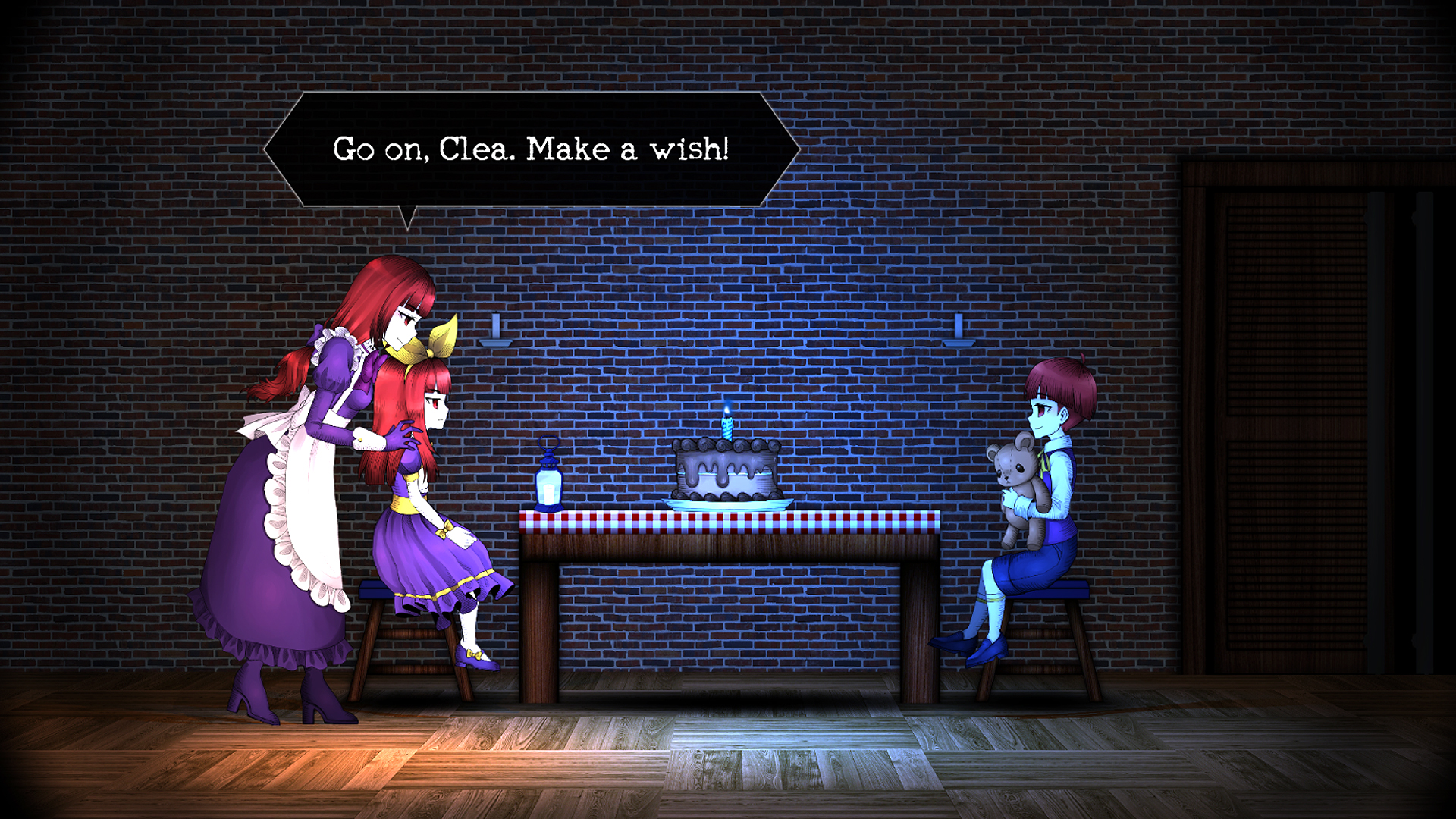
Media & Screenshots
Get an in-depth look at Clea through various videos and screenshots.



Load More


System requirements
These are the minimum specifications needed to play the game. For the best experience, we recommend that you verify them.
Windows
- Requires a 64-bit processor and operating system
- OS *: Windows 7 or above
- Processor: 1.2 GHz Pentium 4 (x86–64 CPU)
- Memory: 4 GB RAM
- Graphics: 1366 x 768
- DirectX: Version 10
- Storage: 1400 MB available space
MacOS
- OS: OS X 10.6 or above
- Processor: Any 64 bit processor
- Memory: 4 GB RAM
- Graphics: 1366 x 768
- Storage: 1400 MB available space
Linux
- OS: 1.2 GHz Pentium 4
- Processor: Any 64 bit processor (x86–64 CPU)
- Memory: 4 GB RAM
- Graphics: 1366 x 768
- Storage: 1400 MB available space
Steam Price & Best Deals
User reviews & Ratings
Explore reviews from Steam users sharing their experiences and what they love about the game.
Clea is a tightly designed 2D survival horror game that proves fear does not have to depend on sudden jump scares or elaborate cinematic sequences. Developed and published by InvertMouse, it focuses on stealth, observation, careful movement, and understanding enemy behavior. Rather than constantly interrupting exploration with scripted scares, the game creates tension by making the player responsible for surviving each encounter. This approach gives Clea a more skill-driven identity than many horror games and makes learning its mechanics an important part of overcoming the fear. The story follows Clea and her younger brother Edmond inside Whitlock Mansion, where experiments conducted by their parents have gone terribly wrong. Dangerous creatures known as Chaos Servants have escaped, turning the mansion into a hostile environment. Clea must protect Edmond while searching for a route to safety and uncovering disturbing information surrounding her family. What begins as a seemingly straightforward escape gradually develops into a darker mystery involving the Whitlock family and the circumstances behind the disaster. Gameplay is where Clea establishes its strongest personality. Combat is not the main answer to danger. Instead, survival revolves around knowing where enemies are, predicting their movements, hiding when necessary, and choosing the correct moment to move between rooms. Sound is especially important because enemies can react to noise, while their own movements can provide clues about their positions. This creates situations where stopping and listening can be more valuable than immediately running toward the next objective. The ability to check areas before entering them makes exploration more tactical. Carelessly walking through a door can place Clea directly in danger, while patient players can gather information and plan safer routes. Once a Chaos Servant begins pursuing you, the atmosphere can quickly shift from cautious exploration into frantic survival. Because these threats are tied to actual gameplay systems rather than predetermined scare triggers, repeated play does not completely eliminate the tension. Puzzle solving provides another layer to the experience. Whitlock Mansion contains items, locked locations, environmental obstacles, and secrets that require exploration. The puzzles are generally integrated into progression rather than existing as isolated challenges. Their biggest contribution is forcing the player to continue moving through dangerous territory. Hiding indefinitely accomplishes nothing, so eventually you must leave safety behind and risk another encounter. Clea also rewards mastery more than its relatively simple appearance might suggest. Early attempts can feel intimidating because players are still learning the mansion layout and understanding how enemies respond. With experience, previously dangerous situations become easier to control. Routes can be optimized, threats can be anticipated, and mistakes become less frequent. This gradual transition from frightened newcomer to knowledgeable survivor is one of the game's most satisfying qualities. Replayability is supported through multiple endings, secret content, unlockable material, additional difficulty options, and modes aimed at experienced players. Chaos Mode provides a tougher challenge after the initial journey, while other advanced content further emphasizes mechanical knowledge. Collectibles and optional discoveries provide additional reasons to investigate the mansion instead of simply following the fastest path to the conclusion. Unlockable costumes and gallery material are smaller rewards, but they complement the broader emphasis on repeated play. The visual presentation uses an anime-inspired 2D style that contrasts interestingly with the darker themes. Clea and Edmond have appealing character designs, while the mansion and its inhabitants create an appropriately unsettling atmosphere. It is not attempting photorealistic horror, and that works to its advantage. The illustrated aesthetic gives the game a recognizable identity while keeping rooms and characters visually readable during tense encounters. Voice acting also adds more personality to the cast and helps important story sequences carry greater weight. The narrative touches on grim subjects, including death, suicide, dangerous experimentation, and troubled family history, so the charming artwork should not be mistaken for an entirely lighthearted adventure. The contrast between cute character presentation and disturbing circumstances becomes an important element of its atmosphere. The game does have limitations. Players seeking extensive combat, elaborate cinematics, or a large and constantly changing world may find its scope modest. Repeating sections after mistakes can become frustrating, especially while learning enemy patterns. The emphasis on stealth also means that impatience is frequently punished. However, these characteristics are largely intentional consequences of a game built around precision and awareness rather than action-heavy confrontation. Steam Deck compatibility is an especially strong point. Clea is Steam Deck Verified. Its functionality works with the default controller configuration, appropriate controller icons are displayed, interface text is considered legible, and the default graphical settings perform properly on the handheld. Its side-scrolling structure and full controller support also make it naturally suited to portable play. One limitation worth noting is the lack of cross-platform saved-game support. Clea ultimately succeeds by turning knowledge into the player's greatest weapon. The frightening part is not merely seeing a monster but knowing that careless movement, poor timing, or failure to listen could put Clea in its path. Once the mechanics are understood, the experience becomes a satisfying contest of awareness and execution without completely losing its threatening atmosphere. As an independent survival horror game, it offers a focused combination of stealth, puzzles, exploration, multiple endings, secrets, challenging modes, and replay-oriented progression. Its scale may be smaller than major horror productions, but the deliberate enemy systems and rejection of cheap scripted scares give it a memorable identity. For players who enjoy horror where patience and mechanical skill matter as much as atmosphere, Clea remains an engaging and unusually thoughtful experience. Rating: 8/10
I fell in love with this game a long, long time ago. At the time, I saw it online and later found out that it was an unauthorized port of the original game. Back then, I was timid and didn’t have much time, so I never finished it. Later, I almost forgot about the game and couldn’t even remember its name, I misremembered Clea's name and thought it was Mary XD. I searched for it for a very long time but couldn’t find it, until I happened to see a promotional image of the game online, which brought us together once again. I feel truly lucky. Now I’ve purchased the official version to support the first indie horror game I truly loved.Compared to the game Clea, I also really appreciate the serious attitude of this indie game developer in attentively listening to player feedback. I believe this developer can create even better works in the future.Oh right, Clea is really cute. I've always liked this character.
Similar games
View all

Sense - 不祥的预感: A Cyberpunk Ghost Story
A 2.5D horror game inspired by Clock Tower and Fatal Frame, mixing cyberpunk with traditional Cantonese folklore. With careful attention to pacing, atmosphere and storytelling, Sense hopes to return the horror genre to its roots by celebrating visceral horror and the slow, fearful creep of dread.

A Quiet Place: The Road Ahead
A Quiet Place: The Road Ahead is a single-player horror adventure game inspired by the critically acclaimed blockbuster movie franchise. Survive in silence.

Granny Remake
Live or die in silence. Granny Remake is a tense first-person survival horror in a reimagined, trap-filled house. Search for keys and tools, stay quiet while Granny reacts to noise, and escape by car, police rescue, the front door — or the hidden UFO route.

Never Again
Never Again - Horror/first-person Quest. The main essence of the game is research locations and puzzles, plunging in the dramatic story of a little girl suffering from asthma.

SILENT HILL f
Hinako's hometown is engulfed in fog, driving her to fight grotesque monsters and solve eerie puzzles. Uncover the disturbing beauty hidden in terror.

Tormented Souls
Classic survival horror is back! Inspired by the original Resident Evil and Alone in the Dark series, Tormented Souls modernises with a fresh twist on the fixed perspective adventure - as Caroline Walker investigates the mysterious disappearance of twin girls in a terrifying mansion-turned-hospital.

Livestream: Escape from Hotel Izanami
In this side-scrolling action-adventure game, you'll need to scour the inside of an abandoned hotel, looking for clues to solve the mystery of the hotel and ensure your escape from a mysterious, murderous mascot intent to kill.

Psychopomp GOLD
Psychopomp is BACK. The catacombs stretch down farther than ever before. Your entire life has been a lie. Delve into the depths, and discover the horrors that lie below. More realms, more modes, more secrets. An ancient voice calls to you from the center of the earth. Will you answer it?

Evil Nun: The Broken Mask
Enter Evil Nun's nightmare. Trapped in a cursed school, escape from Sister Madeline. She's cunning, searching every corner, luring and talking to you depending on your actions. Solve puzzles, craft items, and uncover the mystery in this horror game with different escape routes.
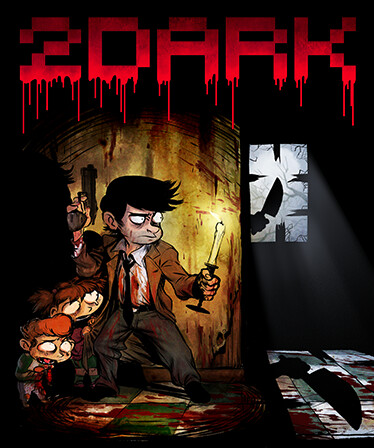
2Dark
2Dark is a stealth adventure game developed by Frédérick Raynal, the pioneer of survival horror games and creator of Alone in the Dark®. Make your way through the lairs of psychopaths, unravel intrigue where madness mingles with horror, and, above all, save the kids!

Yunyun Syndrome!? Rhythm Psychosis
“Yunyun Syndrome!? Rhythm Psychosis” is a rhythm adventure game about a psychotic hikikomori girl - also an avid anonymous poster - who corrupts the world with her severe brain rot from listening to too many denpa songs. Yunyun all over this ♡♡♡♡ world with your degen otaku-posting.
Frequently Asked Questions
Clea is currently priced at 8.69€ on Steam.
Yes, Clea is currently available at a 25% discount. You can purchase it for 8.69€ on Steam.
Yes, Clea received 360 positive votes out of a total of 371 achieving a rating of 8.91.
😎
Clea was developed and published by InvertMouse.
Yes, Clea is playable and fully supported on Windows.
Yes, Clea is playable and fully supported on MacOS.
Yes, Clea is playable and fully supported on Linux.
Yes, Clea is playable and fully supported on Steam Deck.
Yes, Clea is playable and fully supported on Steam Machine.
No, Clea does not support VR.
Clea is a single-player game.
Yes, there is a DLC available for Clea. Explore additional content available for Clea on Steam.
No, Clea does not support mods via Steam Workshop.
No, Clea does not support Steam Remote Play.
Yes, Clea is enabled for Steam Family Sharing. This means you can share the game with authorized users from your Steam Library, allowing them to play it on their own accounts. For more details on how the feature works, you can read the original Steam Family Sharing announcement or visit the Steam Family Sharing user guide and FAQ page.
You can find solutions or submit a support ticket by visiting the Steam Support page for Clea.
Data sources
The information presented on this page is sourced from reliable APIs to ensure accuracy and relevance. We utilize the Steam API to gather data on game details, including titles, descriptions, prices, and user reviews. This allows us to provide you with the most up-to-date information directly from the Steam platform.
Additionally, we incorporate data from the SteamSpy API, which offers insights into game sales and player statistics. This helps us present a comprehensive view of each game's popularity and performance within the gaming community.
Last Updates| Steam data | 26 September 2026 05:19 UTC |
|---|---|
| SteamSpy data | 15 October 2026 03:07 UTC |
| Steam price | 26 October 2026 19:37 UTC |
| Steam reviews | 21 October 2026 09:50 UTC |
If you'd like to dive deeper into the details about Clea, we invite you to check out a few dedicated websites that offer extensive information and insights. These platforms provide valuable data, analysis, and user-generated reports to enhance your understanding of the game and its performance.
- SteamDB - A comprehensive database of everything on Steam about Clea
- SteamCharts - Analysis of Clea concurrent players on Steam
- ProtonDB - Crowdsourced reports on Linux and Steam Deck Clea compatibility

Game modes
Features
Online players
0
Developer
InvertMouse
Publisher
InvertMouse
Release
10 Jul 2019
Platforms
Clicking and buying through these links helps us earn a commission to maintain our services.