


Dungeons & Degenerate Gamblers
Battle your way through a seedy tavern filled with gambling addicted townspeople in this Blackjack Roguelike Adventure. From aces and face cards to tarot cards, business cards and more, create your unique deck to beat the house.
Sync your Steam wishlist to find the lowest game prices instantly. No login required, just paste your Steam profile URL!
⚡ Try Wishlist Radar!
Sync your Steam wishlist to find the lowest game prices instantly. No login required!
⚡ Try Wishlist Radar!
Close

DOG WITCH on Steam
Quick menu
Dog Witch is a roguelike deckbuilder where your spells are fueled by enchanted dice. Combine over 150 unique items to forge ever-evolving strategies, perfect synergy combos, summon minions, and tackle an endless range of foes so bizarre, they’ll leave your tail wagging in disbelief!
DOG WITCH is a roguelike deckbuilder, dice and card game game
developed by Heckmouse
and published by Mystic Forge.
Released on November 05th 2025 is available on Windows and MacOS.
It has received 423 reviews of which 384 were positive and 39 were negative resulting in a rating of 8.4 out of 10. 😎
The game is currently priced at 9.75€ on Steam, but you can find it for 4.11€ on Eneba.
The Steam community has classified DOG WITCH into these genres:
Media & Screenshots
Get an in-depth look at DOG WITCH through various videos and screenshots.


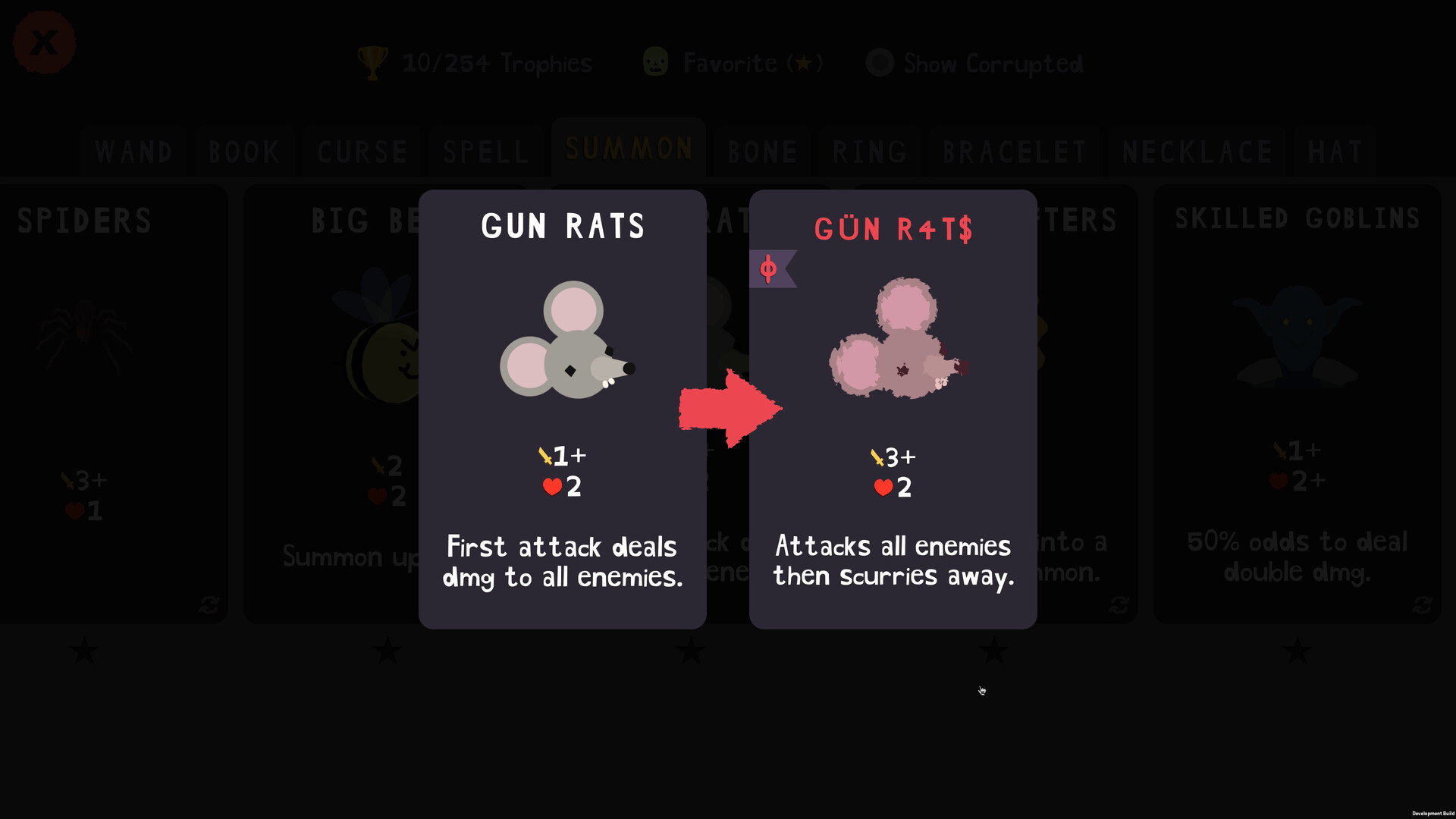

Load More


System requirements
These are the minimum specifications needed to play the game. For the best experience, we recommend that you verify them.
Windows
- Requires a 64-bit processor and operating system
- OS *: Windows 7, 8, 10
- Processor: Intel Core i3 3.0 GHz
- Memory: 4 GB RAM
- Graphics: GTX 1030
- DirectX: Version 10
- Storage: 1 GB available space
MacOS
- OS: Mac OSX 10.7 and above
- Processor: 1,3GHz
- Memory: 1 GB RAM
- Graphics: 1GB Video Memory
- Storage: 1 GB available space
Steam Price & Best Deals
User reviews & Ratings
Explore reviews from Steam users sharing their experiences and what they love about the game.
DOG WITCH is a roguelike deckbuilding game that takes a ridiculous premise and transforms it into an unexpectedly clever and highly addictive strategy experience. Developed by Heckmouse and published by Mystic Forge, the game follows a magical dog battling bizarre enemies and dangerous bosses using enchanted dice, wands, summons, and strange magical artifacts. At first glance, the colorful visuals and absurd humor make the game look like a lightweight comedy project, but underneath the goofy presentation is a surprisingly well-designed roguelike filled with meaningful tactical choices, satisfying build experimentation, and fast-paced combat that constantly encourages “just one more run.” The gameplay revolves around turn-based encounters powered by dice rolls and randomized abilities. Each turn, players roll magical dice that determine what actions can be performed, including attacks, defensive spells, summons, shield generation, status effects, and wand abilities. The dice mechanics create a constant balance between luck and strategy because players must decide whether to keep their current rolls or reroll in hopes of creating stronger combinations. Unlike some roguelikes that overwhelm players with endless layers of complicated systems, DOG WITCH keeps its mechanics straightforward and easy to understand while still offering enough depth to support creative and powerful builds. One of the game’s greatest strengths is how satisfying its build variety becomes over time. Every run introduces new relics, magical items, cursed equipment, summons, and wand upgrades capable of completely changing how combat plays out. Some builds revolve around overwhelming enemies with summoned allies, while others focus on stacking defensive shields, abusing status effects, or creating devastating burst-damage combinations through powerful wand synergies. The game constantly rewards experimentation because even seemingly weak items can become extremely powerful when combined with the right abilities and modifiers. The item system plays a huge role in maintaining replayability. With a large pool of magical artifacts and corrupted equipment available, no two runs feel exactly the same. Corrupted items are especially interesting because they provide major advantages while introducing dangerous drawbacks that force players to adapt their strategy. Some cursed relics create high-risk, high-reward builds capable of becoming absurdly overpowered if managed correctly. Discovering unexpected synergies between items becomes one of the game’s most enjoyable aspects because successful runs often evolve in unpredictable ways. Combat pacing is another area where DOG WITCH succeeds remarkably well. Battles are quick, responsive, and easy to restart after failure, which keeps momentum high throughout long sessions. The game wastes very little time between encounters, allowing players to focus almost entirely on strategic decision-making and build progression. Runs generally remain compact enough to finish in shorter play sessions, making the game ideal for quick bursts of gameplay without sacrificing the rewarding progression systems that define strong roguelikes. The reroll mechanics also help reduce frustration caused by bad luck. While randomness is still a major part of the experience, players usually have opportunities to salvage poor turns through smart resource management and reroll decisions. This system creates a more engaging form of randomness where players are constantly adapting rather than simply accepting defeat because of unlucky outcomes. Managing limited rerolls becomes an important tactical layer on its own, especially during difficult boss fights. Visually, DOG WITCH embraces a deliberately silly and chaotic art style that gives the game a huge amount of personality. The colorful environments, cartoon enemies, and exaggerated animations reinforce the game’s absurd sense of humor without interfering with gameplay readability. Enemy designs are especially memorable, ranging from strange magical creatures and aggressive insects to bizarre fantasy machines and heavily armed nesting dolls. The game fully commits to its weird atmosphere, and that commitment helps it stand out strongly from more generic fantasy roguelikes. The soundtrack contributes heavily to the overall charm as well. Relaxed lo-fi-inspired music blends surprisingly well with the frantic tactical gameplay, creating a tone that feels cozy and energetic at the same time. The sound effects are playful and satisfying, giving attacks, spells, and summons enough impact without overwhelming the experience. Combined with the game’s humor and visual style, the audio design helps maintain a consistently enjoyable atmosphere even during repeated runs. Another enjoyable feature is the cosmetic customization system. Players can unlock hats, visual upgrades, and modifiers that not only personalize the Dog Witch but sometimes alter gameplay conditions as well. These additions help reinforce the game’s playful personality while giving experienced players additional ways to challenge themselves through modified runs and alternate strategies. However, DOG WITCH is not completely without flaws. Randomness can occasionally become frustrating despite the reroll systems designed to soften bad luck. Some runs still depend heavily on favorable item drops or strong dice outcomes, especially during difficult boss encounters where poor rolls can quickly destroy an otherwise promising build. While strategy and adaptation remain important, there are moments where the game leans too heavily on RNG. The game’s relatively compact structure may also reduce long-term appeal for some players. Although the build variety creates strong replayability, experienced players will eventually begin recognizing familiar enemy patterns, dominant strategies, and recurring item combinations. Compared to larger roguelike deckbuilders with massive content pools and extensive progression systems, DOG WITCH feels somewhat smaller in scale. It remains highly entertaining, but it is probably best enjoyed in shorter sessions rather than endless marathon playthroughs. The simplistic visual style may also divide players. The intentionally rough and exaggerated presentation lacks the technical polish of larger roguelikes, and some players may initially dismiss the game because of its childish appearance. However, the humor, creativity, and strong gameplay systems behind the visuals help compensate for the lack of graphical sophistication. Despite these issues, DOG WITCH succeeds because its core gameplay loop is consistently fun and rewarding. The combination of dice-based combat, fast-paced progression, bizarre humor, and highly flexible build experimentation creates an experience that feels approachable while still offering meaningful strategic depth. The game understands how to make roguelike progression addictive without burying players under unnecessary complexity. For fans of deckbuilders, dice-based strategy games, and roguelikes built around experimentation and replayability, DOG WITCH delivers a charming and highly entertaining experience filled with creative item combinations and memorable encounters. It may not rival the largest games in the genre in terms of content volume, but its personality, clever mechanics, and satisfying combat systems make it one of the more enjoyable indie roguelikes available. Rating: 8/10
One of the best roguelikes on the market. Some roguelikes get to complicated with maps and a billion different things contributing to your score, attack or defense but this streamlines everything while also making you feel like you are in control of your own unique build. Each run feels different and attacking the different hats feel fun, fresh and a challenge. Highly reccommend if you like roguelikes or if you are new to the genre its super simple so a great one to get your foot in the door!
as a huge fan of dicey dungeons, games like slay the spire don't really capture my attention; the dice are what really make it fun for me. for a long time i've been looking for something that scratches a similar itch. nothing else has really done it for me until dog witch. the dice add the perfect amount of randomness without having to read and learn tons of different card effects and getting bogged down in lots of math. everything is simple to understand but there is still plenty of depth. there are so many items which can have interesting interactions with each other, and the hats (which can be mixed and matched) add an additional layer of variety and challenge. i also really love the art direction and style. it's cute and silly, with all kinds of strange creatures that somehow all work together in the world being presented. the music is nice and relaxing, too. it helps that i am both a dog and a witch irl, so i can deeply relate to the main character. being called a "bad dog" makes me crave vengeance! i am NOT a bad dog!!
Similar games
View all

Dice A Million
Have you ever tried to roll 1,000,000 on a set of dice? No? Build the right bag of die, and you might just pull it off.

Poker Quest: Swords and Spades
Poker Quest is a fantasy roguelike where players use a standard 52-card deck to take on fierce enemies in epic battles. Featuring over 20 unique heroes, thousands of items, and deep gameplay that will test even the most experienced players.
Black Jacket
Gamble your way out of hell in this blackjack-inspired rogue-lite deckbuilder. Play powerful card combos or cheat to outwit your opponents and earn your freedom. Win their Soul coins! Bribe the ferryman! And uncover the story of those who stand in your way.

Zoominoes
Build the ultimate Zoo in this number-go-up roguelike deckbuilder. Find powerful mythical animals, boost them with snacks, and even manipulate the board itself. Break the game by scoring millions (and more) with insane combos.

Yao-Guai Hunter
Yao-Guai Hunter is a Wuxia roguelike deck-building game. In a world where Yao-Guai roam free, player battles with various evil beings, collecting cards and learn inner skills. Encountering various adventures in the martial world.

My Card Is Better Than Your Card!
Become the coolest kid of the playground in this playful roguelike deckbuilder. Craft every card yourself with adorable stickers and wow your rivals in tug-of-war card battles full of wonder!

RACCOIN: Coin Pusher Roguelike
A coin-pushing dopamine machine. RACCOIN is a roguelike deckbuilder where you combine special coins with powerful items to trigger wildly satisfying combos. Stack shiny towers, spin the lucky wheel, and shake the machine until all the coins drop.

Blood Card
This card game combines elements of roguelike and deckbuilding. During the game, you shall strive ahead, gathering cards to build a unique deck and use it to defeat the enemies getting in your way. You will have to choose between escaping or try to defeat Death, who is relentlessly pursuing you.

RUNGORE: Beginner Experience
Card game mechanics - check. Real time battles - check. Silly humor - check. If this isn't the game of your dreams i don't know what is (Also we have hidden memes everywhere lol)
Die in the Dungeon: Origins
Fight your way through a mysterious dungeon in this deck-building, turn-based roguelike game where you don't use cards, but DICE! Deal with enemies by combining dice on your board, boost their effects with magical relics, and discover the story behind Die in the Dungeon!

LuckLand
LuckLand is a strategy casual game that combines elements such as card building and Roguelike. To achieve ultimate victory, all you need to do is rotate the chessboard. This game does not include any real world currency gambling or micro trading.
Frequently Asked Questions
DOG WITCH is currently priced at 9.75€ on Steam.
No, DOG WITCH is currently not on sale. You can purchase it for 9.75€ on Steam.
Yes, DOG WITCH received 384 positive votes out of a total of 423 achieving a rating of 8.42.
😎
DOG WITCH was developed by Heckmouse and published by Mystic Forge.
Yes, DOG WITCH is playable and fully supported on Windows.
Yes, DOG WITCH is playable and fully supported on MacOS.
No, DOG WITCH is not playable on Linux.
This information about DOG WITCH is not available yet.
This information about DOG WITCH is not available yet.
No, DOG WITCH does not support VR.
DOG WITCH is a single-player game.
Yes, there is a DLC available for DOG WITCH. Explore additional content available for DOG WITCH on Steam.
No, DOG WITCH does not support mods via Steam Workshop.
No, DOG WITCH does not support Steam Remote Play.
Yes, DOG WITCH is enabled for Steam Family Sharing. This means you can share the game with authorized users from your Steam Library, allowing them to play it on their own accounts. For more details on how the feature works, you can read the original Steam Family Sharing announcement or visit the Steam Family Sharing user guide and FAQ page.
You can find solutions or submit a support ticket by visiting the Steam Support page for DOG WITCH.
Data sources
The information presented on this page is sourced from reliable APIs to ensure accuracy and relevance. We utilize the Steam API to gather data on game details, including titles, descriptions, prices, and user reviews. This allows us to provide you with the most up-to-date information directly from the Steam platform.
Additionally, we incorporate data from the SteamSpy API, which offers insights into game sales and player statistics. This helps us present a comprehensive view of each game's popularity and performance within the gaming community.
Last Updates| Steam data | 02 October 2026 14:15 UTC |
|---|---|
| SteamSpy data | 17 October 2026 03:03 UTC |
| Steam price | 27 October 2026 04:29 UTC |
| Steam reviews | 22 October 2026 17:57 UTC |
If you'd like to dive deeper into the details about DOG WITCH, we invite you to check out a few dedicated websites that offer extensive information and insights. These platforms provide valuable data, analysis, and user-generated reports to enhance your understanding of the game and its performance.
- SteamDB - A comprehensive database of everything on Steam about DOG WITCH
- SteamCharts - Analysis of DOG WITCH concurrent players on Steam
- ProtonDB - Crowdsourced reports on Linux and Steam Deck DOG WITCH compatibility

Game modes
Features
Online players
4
Developer
Heckmouse
Publisher
Mystic Forge
Release
05 Nov 2025
Platforms
Clicking and buying through these links helps us earn a commission to maintain our services.