
Endoparasitic 2
Three limbs ripped off, infected with a deadly parasite, you must survive. Drag yourself through the hallways of an infested arcship, fight off twisted eldritch creatures, craft vaccines and ammunition, and escape to civilization.
Sync your Steam wishlist to find the lowest game prices instantly. No login required, just paste your Steam profile URL!
⚡ Try Wishlist Radar!
Sync your Steam wishlist to find the lowest game prices instantly. No login required!
⚡ Try Wishlist Radar!
Close

Endoparasitic on Steam
Quick menu
Three limbs ripped off, infected with a deadly parasite, you must save your research. Drag yourself through the corridors of a secret research lab on a remote asteroid, fight off horribly mutated monsters, inject countless syringes of vaccines, and survive at all costs.
Endoparasitic is a survival horror, horror and minimalist game
developed by Miziziziz
and published by Deep Root Interactive.
Released on October 24th 2022 is available on Windows, MacOS and Linux.
It has received 2,674 reviews of which 2,497 were positive and 177 were negative resulting in a rating of 8.9 out of 10. 😎
The game is currently priced at 4.09€ on Steam with a 50% discount.
The Steam community has classified Endoparasitic into these genres:
Media & Screenshots
Get an in-depth look at Endoparasitic through various videos and screenshots.


System requirements
These are the minimum specifications needed to play the game. For the best experience, we recommend that you verify them.
Windows
- OS: Windows 10
- Processor: Intel i7 2.6 Ghz
- Memory: 8 GB RAM
- Graphics: Geforce 1650 Ti
- Storage: 200 MB available space
MacOS
- OS: MacOS 10.12 or later
- Processor: 2.6 Ghz
- Memory: 8 GB RAM
Linux
- OS: Ubuntu 21.04
- Processor: 2.6 Ghz
- Memory: 8 GB RAM
- Storage: 200 MB available space
Steam Price & Best Deals
User reviews & Ratings
Explore reviews from Steam users sharing their experiences and what they love about the game.
TLDR: 7/10 I'm writing this long of a review because the concept of this game is amazing. Now onto the gameplay. The first 2/3rds of the game are very fun, having to juggle between reloading manually and shooting, adjusting your arm due to recoil, unequipping you revolver quickly to make a quick dodge due to the fact you can't move holding something. The corpses that only detect movement so you have to go slow when under pressure. The blind escaped lab chimps that constantly sound like they are choking on their own lungs and detect sound. However, when the biomass balls and the teleporting enemy is introduced it nosedives, the teleporting enemy, hereon referred to as slenderman, is difficult but not impossible to fight on his own, he teleports and slashes at you about every 5 seconds but it gives you enough time to reload your guns, due to the fact you can't move with something equipped it makes it very fun and nerve racking wondering if he's gonna appear while your occupied reloading. However, the levels slenderman is designed around do NOT suit him at ALL. The levels are filled with balls of infected tissue that once destroyed have a chance to spawn the worst enemy combo in the game. The rat and slenderman. The rat is a very quick but low HP infected that is basically a reaction time test to how fast you can holster your gun and stop it from biting you, however, slendermans dash attack can destroy the biomass balls, forcing you to split your attention between two enemies that demand the entirety of your attention. Now this on it's own is bad, but at least you can reposition right? No. The fact the rooms are basically composed of the biomass balls, and the fact the rooms weren't that spacious to begin with basically leaves you to either have a godlike reaction time or tank damage, but the straw that broke the camels back is the only way to heal in that area is by destroying biomass balls since they have a chance to drop healing items. (Or by lockpicking a chest while the slenderman is already having a temper tantrum.) I damn near quit the game out of boredom due to the fact there was no progression, i couldn't even get past the little cubicle i was spawning in for like 30 minutes. Only the fact the lore extremely intrigued me kept me playing. (The lore ended on a disappointing cliffhanger.) Now, the final boss arena has some really cool ideas for this type of game, the fact the floor is coated in slippery blood allows you to have some momentum left after moving and allows you to open your inventory even when slenderman is attacking, allowing you to have an epic showdown with him as you collect his 8 pages. Now it is only natural for one to be reading this and their verdict be skill issue, but that's the thing, i only died on about 7 rooms, if i wasn't actively looking for lore secrets i probably would've finished this game in 2 and a half hours. It feels like this game was just not playtested by an outside party and the last third of the game suffered heavily as a result.
Endoparasitic is a survival horror experience developed by Miziziziz and published by Deep Root Interactive that builds its identity around vulnerability, tension, and an unusual gameplay concept that immediately separates it from conventional horror games. While many survival horror titles create fear by limiting ammunition or surrounding players with danger, Endoparasitic goes much further by forcing players to survive under extreme physical limitations. The result is a brutal and memorable horror experience where every movement feels difficult, every encounter feels dangerous, and survival itself becomes the central challenge. The story begins inside a remote research facility located on an asteroid where a catastrophic biological disaster has transformed the environment into a nightmare. Players assume the role of a scientist who survives the outbreak but suffers horrific injuries in the process. With only one functional arm remaining and a deadly infection spreading through the body, the mission becomes more than simple escape. Survival depends on uncovering answers, preserving valuable research, and finding a way to stay alive long enough to outrun a horrifying fate. The game’s defining mechanic revolves around movement and physical limitation. Rather than controlling a capable protagonist equipped to handle danger efficiently, players must drag themselves through the environment while managing every action manually. Reloading weapons becomes a stressful process instead of an automatic animation. Every bullet inserted into a firearm matters. Positioning becomes critical because retreating from danger requires effort and planning. Something as simple as crossing a hallway can become tense when hostile creatures close in and movement remains painfully slow. Combat creates some of the game’s strongest moments because it constantly pressures players to multitask under extreme stress. Firing weapons, moving across rooms, reloading ammunition, and monitoring threats happen simultaneously, creating encounters that feel chaotic without becoming unfair. The unusual control design forces players to adapt to the protagonist’s limitations rather than overcoming them through traditional action game instincts. Panic becomes part of the gameplay loop, and that design choice gives combat encounters an intensity rarely found in standard survival horror experiences. Enemy design strengthens the atmosphere considerably. The research station becomes populated by grotesque biological horrors that reflect the consequences of the outbreak. Creature encounters remain threatening throughout the experience because enemies are built to exploit hesitation and punish poor decisions. The game avoids turning players into unstoppable action heroes. Instead, every confrontation reinforces vulnerability, keeping tension consistently high even as players become more familiar with mechanics. The infection system adds another layer of pressure beyond combat itself. The parasite inside the protagonist acts as a constant reminder that survival comes with limited time. Medical resources become essential rather than optional. Managing treatment supplies becomes part of long-term planning, forcing players to think carefully about resource usage while balancing exploration and combat demands. The infection mechanic integrates story and gameplay effectively, ensuring narrative tension remains directly connected to player actions. Exploration offers moments of relief from combat while strengthening the game’s world-building. Environmental storytelling gradually reveals the circumstances behind the disaster, encouraging players to investigate abandoned areas and uncover information hidden throughout the station. Narrative details emerge naturally rather than relying heavily on lengthy exposition. The isolated asteroid setting reinforces feelings of loneliness and desperation while creating a strong science-fiction horror atmosphere. Visually, Endoparasitic favors clarity and function while maintaining an unsettling tone throughout the experience. The art direction avoids unnecessary excess and instead focuses on supporting gameplay readability during high-pressure encounters. Creature designs stand out particularly well, delivering disturbing biological horror that fits the game’s themes perfectly. Combined with effective audio design and oppressive environmental atmosphere, the presentation succeeds at creating a world that feels hostile and deeply uncomfortable. One of the game’s biggest strengths lies in how completely it commits to its core concept. The unusual control structure may initially feel awkward or demanding, but that discomfort exists intentionally. The design forces players to experience weakness directly rather than merely observing it through narrative. Success becomes satisfying because overcoming danger requires adaptation rather than raw skill alone. Its shorter runtime ultimately works in its favor. The experience remains tightly focused without relying on repetitive encounters or unnecessary filler. Every mechanic exists to reinforce survival under impossible conditions. Players looking for fast action without experimentation may struggle with the deliberate limitations, but those willing to embrace the game’s design philosophy will discover one of the more creative survival horror concepts released in recent years. Endoparasitic succeeds because it transforms limitation into tension and vulnerability into meaningful gameplay. Miziziziz created a horror experience that understands fear often comes not from overwhelming enemies, but from feeling physically unequipped to face them. Through intelligent design choices, memorable mechanics, and relentless atmosphere, Endoparasitic delivers an experience that remains disturbing, challenging, and remarkably original from beginning to end. Rating: 9/10
Got it on sale for $5. Beat the story in 3 hours, which looks to be about average. Was fun. Scare factor for me is best described as 'comfortably uncomfortable'. On edge enough to get me nervous, but never too much. Controls feel better than expected. Had a few moments of jank when panic trying to put a weapon away, but it felt like it belonged, cumbersome in a way that makes sense in-universe. Its only **really** an issue if you're trying to holster a weapon while against a wall at a weird angle that makes the hitbox slightly in the wall, which is such a niche situation (and also it'd be realistically difficult to holster it like that anyway). Also obligatory "I'M BACK IN THE BUILDING AGAIN" when hearing the VA for your guy.
Similar games
View all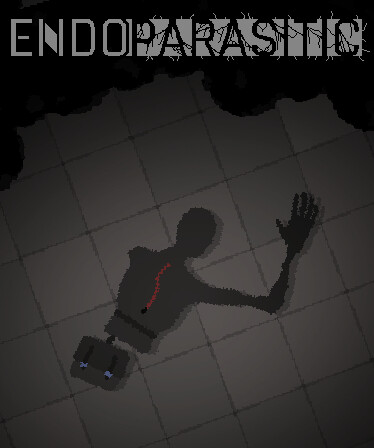

The Coma 3: Bloodlines
Welcome to the world of The Coma 3: Bloodlines. In this realm of shadows rumors and urban legends become reality, and danger lurks around every corner. If a living intruder dies here, their body will be severed from their spirit and never wake again ...

Flesh Made Fear
Tank controls. Fixed cameras. Pure Terror. Set in a haunting world of twisted experiments and occult nightmares, this game brings back the survival horror mechanics you know and love while pushing the genre into terrifying new depths.

Livestream: Escape from Hotel Izanami
In this side-scrolling action-adventure game, you'll need to scour the inside of an abandoned hotel, looking for clues to solve the mystery of the hotel and ensure your escape from a mysterious, murderous mascot intent to kill.

Daymare: 1998
DAYMARE: 1998 is a third-person survival horror game that recreates the mood of iconic titles from the '90s, with a fresh storyline. An incident that turns a small town into a deadly zone, three characters to play with and little time to find the truth, before its mutated citizens abruptly end your mission.

Resident Evil Revelations
Resident Evil® Revelations returns redefined for PC complete with high quality HD visuals, enhanced lighting effects and an immersive sound experience.

EBOLA VILLAGE
EBOLA VILLAGE - this is a classic survival horror game from the 90s with a focus on atmosphere and player immersion. Solve puzzles, follow the story carefully and use various weapons in a brutal fight for survival. Danger lurks at every turn.

Nightmare of Decay
A first-person action horror game set in a nightmarish manor infested with zombies, psychotic cultists, and a horde of other horrors. Utilize an assortment of different weapons in a brutal fight for survival as you try to escape from the Nightmare of Decay.

Resident Evil Requiem
Requiem for the dead. Nightmare for the living. Prepare to escape death in a heart-stopping experience that will chill you to your core.

Granny Remake
Live or die in silence. Granny Remake is a tense first-person survival horror in a reimagined, trap-filled house. Search for keys and tools, stay quiet while Granny reacts to noise, and escape by car, police rescue, the front door — or the hidden UFO route.

Silly's Gameshow
Silly's Gameshow is a short co-op animatronic horror game

2Dark
2Dark is a stealth adventure game developed by Frédérick Raynal, the pioneer of survival horror games and creator of Alone in the Dark®. Make your way through the lairs of psychopaths, unravel intrigue where madness mingles with horror, and, above all, save the kids!
Frequently Asked Questions
Endoparasitic is currently priced at 4.09€ on Steam.
Yes, Endoparasitic is currently available at a 50% discount. You can purchase it for 4.09€ on Steam.
Yes, Endoparasitic received 2,497 positive votes out of a total of 2,674 achieving a rating of 8.93.
😎
Endoparasitic was developed by Miziziziz and published by Deep Root Interactive.
Yes, Endoparasitic is playable and fully supported on Windows.
Yes, Endoparasitic is playable and fully supported on MacOS.
Yes, Endoparasitic is playable and fully supported on Linux.
This information about Endoparasitic is not available yet.
This information about Endoparasitic is not available yet.
No, Endoparasitic does not support VR.
Endoparasitic is a single-player game.
No, Endoparasitic does not currently offer any DLC.
No, Endoparasitic does not support mods via Steam Workshop.
No, Endoparasitic does not support Steam Remote Play.
Yes, Endoparasitic is enabled for Steam Family Sharing. This means you can share the game with authorized users from your Steam Library, allowing them to play it on their own accounts. For more details on how the feature works, you can read the original Steam Family Sharing announcement or visit the Steam Family Sharing user guide and FAQ page.
You can find solutions or submit a support ticket by visiting the Steam Support page for Endoparasitic.
Data sources
The information presented on this page is sourced from reliable APIs to ensure accuracy and relevance. We utilize the Steam API to gather data on game details, including titles, descriptions, prices, and user reviews. This allows us to provide you with the most up-to-date information directly from the Steam platform.
Additionally, we incorporate data from the SteamSpy API, which offers insights into game sales and player statistics. This helps us present a comprehensive view of each game's popularity and performance within the gaming community.
Last Updates| Steam data | 22 September 2026 22:19 UTC |
|---|---|
| SteamSpy data | 18 October 2026 05:38 UTC |
| Steam price | 27 October 2026 19:44 UTC |
| Steam reviews | 19 October 2026 18:10 UTC |
If you'd like to dive deeper into the details about Endoparasitic, we invite you to check out a few dedicated websites that offer extensive information and insights. These platforms provide valuable data, analysis, and user-generated reports to enhance your understanding of the game and its performance.
- SteamDB - A comprehensive database of everything on Steam about Endoparasitic
- SteamCharts - Analysis of Endoparasitic concurrent players on Steam
- ProtonDB - Crowdsourced reports on Linux and Steam Deck Endoparasitic compatibility

Game modes
Features
Online players
6
Developer
Miziziziz
Publisher
Deep Root Interactive
Release
24 Oct 2022
Platforms