
Dungeons & Degenerate Gamblers
Battle your way through a seedy tavern filled with gambling addicted townspeople in this Blackjack Roguelike Adventure. From aces and face cards to tarot cards, business cards and more, create your unique deck to beat the house.
Sync your Steam wishlist to find the lowest game prices instantly. No login required, just paste your Steam profile URL!
⚡ Try Wishlist Radar!
Sync your Steam wishlist to find the lowest game prices instantly. No login required!
⚡ Try Wishlist Radar!
Close

Feng Shui Meowjong on Steam
Quick menu
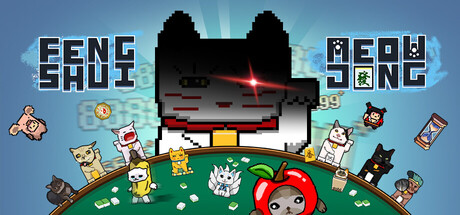
Looks matter? Fun doesn’t?When cat memes collide with roguelike mahjong, a brand-new Meowjong is born! Feng Shui Meowjong is a fresh, lightweight roguelike puzzle game that blends classic mahjong strategy with quirky cat memes and feng shui elements.
Feng Shui Meowjong is a roguelike deckbuilder, mahjong and card game game
developed by Wavebreak Studio
and published by HARRISONWORLD CO. and LTD.
Released on February 03rd 2026 is available on Windows, Steam Deck and Steam Machine.
It has received 316 reviews of which 304 were positive and 12 were negative resulting in a rating of 8.8 out of 10. 😎
The game is currently priced at 4.99€ on Steam.
The Steam community has classified Feng Shui Meowjong into these genres:
Media & Screenshots
Get an in-depth look at Feng Shui Meowjong through various videos and screenshots.


Load More


System requirements
These are the minimum specifications needed to play the game. For the best experience, we recommend that you verify them.
Windows
- OS: Windows 10
- Processor: 2.0 GHz
- Memory: 4 GB RAM
- Graphics: Nvidia GTX 750
- Storage: 1 GB available space
Steam Price & Best Deals
User reviews & Ratings
Explore reviews from Steam users sharing their experiences and what they love about the game.
Feng Shui Meowjong is one of the strangest combinations of ideas to come out of the indie roguelike scene, yet somehow it works surprisingly well. Developed by Wavebreak Studio and published by HARRISONWORLD CO.,LTD, the game blends mahjong-inspired tile mechanics, roguelike progression, puzzle strategy, feng shui positioning systems, and an endless supply of cat-themed humor into a highly addictive experience. On paper, it sounds like complete chaos, but beneath the goofy presentation is a genuinely clever strategy game built around synergy management, score optimization, and long-term planning. What could have easily been a shallow joke game instead becomes a surprisingly deep and rewarding roguelike puzzle experience. The gameplay revolves around building powerful mahjong-style tile combinations while using treasures, skills, and directional bonuses to maximize score output and survive increasingly difficult encounters. Unlike traditional mahjong simulators focused strictly on authentic rulesets, Feng Shui Meowjong transforms tile matching into a roguelike combo-building system where players constantly chase larger multipliers and stronger synergies. Players work with a fixed set of fourteen tiles and create combinations such as pairs, sequences, and matching groups while simultaneously managing buffs and modifiers tied to treasure placement. One of the game’s biggest accomplishments is how approachable it feels even for players with little or no knowledge of mahjong. The mechanics are introduced gradually, and the game avoids overwhelming newcomers with complicated terminology or excessive rules. Early runs focus on teaching the importance of tile patterns, combo building, and basic score management before slowly introducing the more advanced systems involving feng shui positioning and treasure interactions. This creates a learning curve that feels manageable while still leaving plenty of room for deeper mastery later on. The feng shui mechanics are easily the most unique part of the game. Treasures and artifacts must be positioned carefully across directional grids, with certain placements creating beneficial effects while others introduce penalties or weaker synergies. Some items strengthen nearby treasures, while others trigger powerful chain reactions depending on their orientation. This system adds a surprisingly tactical layer to every run because players are not only thinking about immediate tile combinations but also long-term build efficiency and spatial optimization. Once these systems fully click together, runs become incredibly satisfying because a well-designed setup can generate massive scoring chains and absurdly overpowered combos. Replayability is another major strength. Randomized treasure offerings, tile distributions, enemy encounters, and skill upgrades ensure that no two runs unfold exactly the same way. Some runs naturally evolve into aggressive score-focused builds designed around huge combo explosions, while others reward defensive or utility-focused strategies that emphasize consistency and survival. The game constantly encourages experimentation because unexpected item combinations often create bizarre but highly effective synergies. Discovering broken setups and watching complicated treasure interactions trigger huge score bursts becomes one of the most addictive parts of the experience. The roguelike progression systems are also handled well. New treasures, modifiers, and upgrades unlock steadily over time, giving players a constant sense of growth without overwhelming them too quickly. Runs are short enough to remain approachable for casual sessions, but the strategic depth is strong enough to support long-term experimentation and mastery. Even failed runs usually feel productive because players leave with a better understanding of how different systems interact. Visually, Feng Shui Meowjong embraces complete absurdity. The colorful pixel-art presentation is filled with internet cat memes, exaggerated animations, and ridiculous visual effects that constantly reinforce the game’s playful personality. Fortunately, the humor rarely becomes distracting enough to damage the strategic gameplay. Instead, the over-the-top presentation gives the game a memorable identity that helps it stand out from more generic roguelike puzzle games. The balance between silliness and strategy is surprisingly effective because the game fully commits to its bizarre concept without losing focus on mechanical depth. The soundtrack complements the atmosphere nicely with calm background music mixed with playful sound effects and endless cat noises. The audio helps create a cozy and lighthearted mood even during difficult runs where players are carefully calculating score multipliers and treasure interactions. Some of the repeated meowing and exaggerated sound effects may eventually become repetitive during very long sessions, but overall the sound design supports the game’s quirky identity effectively. One of the most impressive things about Feng Shui Meowjong is how well it balances accessibility with complexity. New players can enjoy basic runs fairly quickly, while experienced players gradually discover far more advanced optimization strategies hidden underneath the simple mechanics. The game constantly rewards careful planning, experimentation, and efficient synergy management, making it easy to fall into the familiar roguelike cycle of constantly wanting to attempt “just one more run.” However, the game is not without flaws. Randomness occasionally plays too large a role in determining the quality of a run. Some attempts feel significantly easier simply because powerful treasures or favorable tile combinations appear early, while unlucky item offerings can leave players struggling to build effective synergies. Although adaptation is clearly part of the intended design, certain builds feel dramatically stronger than others once players discover the most efficient combinations. The visual presentation may also divide players. While the cat meme humor gives the game personality, players looking for a more serious or elegant puzzle experience may find the constant silliness distracting over time. The interface can occasionally become visually crowded as multiple treasure effects, bonuses, and score modifiers begin stacking together during later stages of a run. Long-term variety is another minor weakness. Although the randomized systems help maintain replayability for quite a while, experienced players will eventually begin identifying dominant strategies and recurring gameplay patterns. Additional enemy types, alternate modes, or more advanced progression systems could have helped extend the game’s lifespan further for highly dedicated players. Despite these shortcomings, Feng Shui Meowjong succeeds because its core systems are genuinely creative and extremely satisfying once fully understood. The combination of mahjong-inspired logic, roguelike progression, puzzle optimization, and feng shui positioning mechanics creates a strategy experience that feels surprisingly fresh in a genre crowded with repetitive concepts. It transforms what initially appears to be a joke into a highly engaging and cleverly designed puzzle roguelike filled with experimentation and rewarding combo-building. For fans of roguelikes, puzzle strategy games, or unconventional indie experiments, Feng Shui Meowjong offers a charming and highly replayable experience with far more depth than its goofy presentation initially suggests. It may occasionally lean too heavily on randomness and chaotic humor, but its creativity, strategic complexity, and addictive progression systems make it one of the more memorable indie roguelikes released recently. Rating: 8/10
I'm giving this a positive review, but with some constructive feedback for others who were looking for another game that would scratch the Balatro mental itch (which is how I found the game). Feng Shui Meowong is a colorful and mechanically busy roguelite built around Mahjong hands and treasure synergies. While it offers a lot of systems—elements, tile types, treasure placement, skill cards—the strategic pressure is lighter than it initially appears. Once a strong engine forms, runs often feel more like executing a cascade than making hard decisions. Players who enjoy the spectacle of builds triggering automatically will likely enjoy it, but players drawn to the tight strategic puzzles of games like Balatro may find the decision space less engaging overall. What the game does well: Charming presentation Lots of mechanical knobs (treasures, elements, tiles) Approachable run success Satisfying visual scoring cascades Easy to pick up (even if Mahjong is not a game you know, and especially if you map your Balatro knowledge to the game's scoring patterns) Where the game fell a bit flat for me: Decision density Engine fragility Player agency In all, Meow Jong has more surface complexity, but Balatro has more systemic clarity with fewer moving pieces. Overall, I do LIKE the game. For some, it might be the right fit for your gaming style. However, I beat the game on a brand new deck I had not played before and never needed to pivot away from my starting 6 Treasures. The end felt inevitable from probably round 4 of 16 and I was right. The scoring, as I said before, feels like a cascade of relatively unearned points (kind of like what happens in longer sessions of Bejeweled). For some, this may be what you love about a game. Is it worth the price I paid? Sure. But I've got 100 hours on Balatro, with only a handful of hard-earned wins, and not quite 10 hours here with an easy win already. I know which one I will be playing for years to come.
Charmingly scrungly cat memes, tactile stims (I can scratch up the table when a hand is going poorly AND bat the broken wall around on the main menu when that run comes to an end? How has messing with tiles not become the normal main menu for the Mahjong genre already??) - and a unique take on the Mahjong Balatrolike formula for only $5, with a pretty full-featured demo to boot...if you're looking for a TL;DR: it's worth the pickup. I find it fascinating the number of different takes that're out there at this point- Aotenjo hews a little more towards the traditional Balatro-like if you prefer upgrading your favorite patterns and having to make choices about when to play tiles, Demonic Mahjong replaces the arbitrary score targets with the very real possibility of simply foiling your opponent out of even managing to score a chicken hand (to speak nothing of outdoing their busted combos if htey do score), and Ultimahjong makes for a really sleek (and free!) take on singleplayer Riichi, but Meowjong stands out in that crowd with the positional nature of Treasures and the hybrid way you assemble hands, alongside the occasionally *busted* character cards. Having a run go from a struggle to *cruising* off a single card use changing like 10% of your Wall into the likes of winds or dragons is deeply satisfying, and having to finagle your collection of Treasures to best make use of any positional elements (or simply try to clear out space for a better option, which can itself be a challenge given how limited the viable slots are) is fun, and I'll readily admit: I like the cat memes! A legally distinct Nyan Cat helping me make a winning build out of what would normally be very poorly-scoring hands puts a smile on my face. Realistically, my only complaint is probably in the number of winning patterns- compared to the likes of Aotenjo taking basically every major *and* regional Riichi pattern before sprinkling a couple dozen (or possibly a couple *hundred*) more on top, or the interesting extension of patterns and play from Demonic Mahjong, only having a dozen or so patterns here, alongside missing some iconic ones like All Green...definitely shows some room for expansion in future updates. I'm waiting for the day I can build a run around Hu + All Honors + All Green + All Triplets (14 green dragons), but until then I'm still going to be having a lot of fun, and for the price of a large fountain drink or so, I've got no regrets.
The game is often talked about as Balatro for Mahjong, and I guess it is that! It offers the peculiarities of some traditionnal mahjong hands, but do not expect the complex variations of some of the currently popular rules of the game. In that way, it is probably more beginner friendly than most mahjong games around basing themselves around the overcomplicated richi mahjong variant. But all this doesn't matter next to the presentation! This game got the best title screen I have ever seen, and I am now shocked no mahjong game seems to offer messing with the tiles during the pre-game meddling around. Oh it is so beautiful. And that mouse cursor! And then you notice you are indeed a cat and can scratch stuff. Finally, at first, you will probably be annoyed by the way of moving tiles around, but then it will start to make sense and become a fun way to interact with the game itself. So, while the collection, unlocks and some other aspects are rough and a bit tough to navigate, the game also got plenty of attention and souls in the way you interact with it. Ah, also it is addictive as hell. Thankfully you can quit and resume at any point your current game. And it even has cloud support! Also, it works in Wine. What a mess of an opinion. I should drink coffee in the morning instead of rambling on. in short: BIYF!
Similar games
View all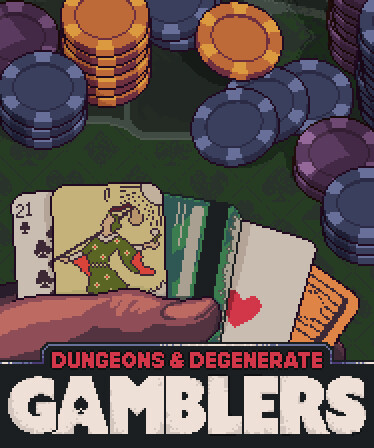
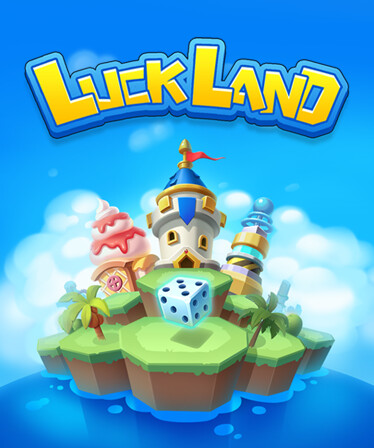
LuckLand
LuckLand is a strategy casual game that combines elements such as card building and Roguelike. To achieve ultimate victory, all you need to do is rotate the chessboard. This game does not include any real world currency gambling or micro trading.

Zoominoes
Build the ultimate Zoo in this number-go-up roguelike deckbuilder. Find powerful mythical animals, boost them with snacks, and even manipulate the board itself. Break the game by scoring millions (and more) with insane combos.

Fogpiercer
Fight through the fog in this sci-fi roguelike deckbuilder where clever positioning, explosive chain-reactions, and the environment itself can make the difference between life and death.
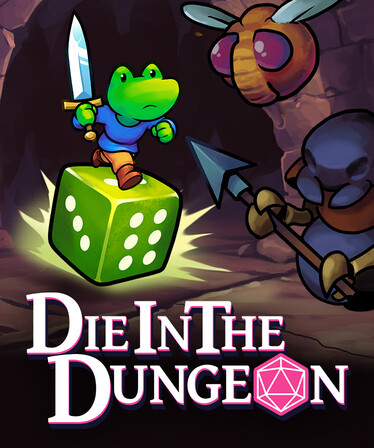
Die in the Dungeon
Fight your way through a mysterious dungeon in this deck-building, turn-based roguelike game where you don't use cards, but dice! Deal with enemies by combining powerful dice on your board, boost their effects with magical relics, and risk it all hoping for a good roll on unexpected encounters.

RUNGORE: Beginner Experience
Card game mechanics - check. Real time battles - check. Silly humor - check. If this isn't the game of your dreams i don't know what is (Also we have hidden memes everywhere lol)

Fate Hunters
Fate Hunters is a hardcore mix of strategy card battles and a roguelike adventure. Build your deck, explore the dangerous dark fantasy world and face fearsome foes! Risk your life to get powerful treasures!
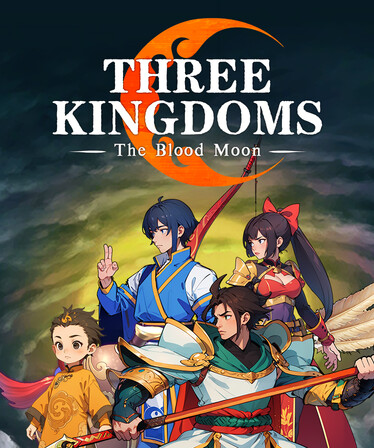
Three Kingdoms: The Blood Moon
Three Kingdoms: The Blood Moon is a turn-based Roguelike card game where you assume the role of a Shu general. Explore dungeons, gather relics, and amass a collection of cards. In each round, you can assemble a unique combination of cards and treasures to defeat your enemies and rewrite history!
Die in the Dungeon: Origins
Fight your way through a mysterious dungeon in this deck-building, turn-based roguelike game where you don't use cards, but DICE! Deal with enemies by combining dice on your board, boost their effects with magical relics, and discover the story behind Die in the Dungeon!
Aotenjo: Infinite Hands
The Mahjong Roguelike. Aotenjo: Infinite Hands is an deckbuilder where you will use Mahjong styles all over the world to beat innate threats, play different Patterns and combos, reach the "bottom" of Aotenjo, and discover ancient secrets....

Poker Quest: Swords and Spades
Poker Quest is a fantasy roguelike where players use a standard 52-card deck to take on fierce enemies in epic battles. Featuring over 20 unique heroes, thousands of items, and deep gameplay that will test even the most experienced players.

My Card Is Better Than Your Card!
Become the coolest kid of the playground in this playful roguelike deckbuilder. Craft every card yourself with adorable stickers and wow your rivals in tug-of-war card battles full of wonder!
Frequently Asked Questions
Feng Shui Meowjong is currently priced at 4.99€ on Steam.
No, Feng Shui Meowjong is currently not on sale. You can purchase it for 4.99€ on Steam.
Yes, Feng Shui Meowjong received 304 positive votes out of a total of 316 achieving a rating of 8.80.
😎
Feng Shui Meowjong was developed by Wavebreak Studio and published by HARRISONWORLD CO. and LTD.
Yes, Feng Shui Meowjong is playable and fully supported on Windows.
No, Feng Shui Meowjong is not playable on MacOS.
No, Feng Shui Meowjong is not playable on Linux.
Yes, Feng Shui Meowjong is playable on Steam Deck, though it might require a few minor tweaks. Make sure to check the Steam store page and community feedback on ProtonDB for exact compatibility details.
Yes, Feng Shui Meowjong is playable on Steam Machine, though it might require a few minor tweaks. Make sure to check the Steam store page and community feedback on ProtonDB for exact compatibility details.
No, Feng Shui Meowjong does not support VR.
Feng Shui Meowjong is a single-player game.
No, Feng Shui Meowjong does not currently offer any DLC.
No, Feng Shui Meowjong does not support mods via Steam Workshop.
No, Feng Shui Meowjong does not support Steam Remote Play.
Yes, Feng Shui Meowjong is enabled for Steam Family Sharing. This means you can share the game with authorized users from your Steam Library, allowing them to play it on their own accounts. For more details on how the feature works, you can read the original Steam Family Sharing announcement or visit the Steam Family Sharing user guide and FAQ page.
You can find solutions or submit a support ticket by visiting the Steam Support page for Feng Shui Meowjong.
Data sources
The information presented on this page is sourced from reliable APIs to ensure accuracy and relevance. We utilize the Steam API to gather data on game details, including titles, descriptions, prices, and user reviews. This allows us to provide you with the most up-to-date information directly from the Steam platform.
Additionally, we incorporate data from the SteamSpy API, which offers insights into game sales and player statistics. This helps us present a comprehensive view of each game's popularity and performance within the gaming community.
Last Updates| Steam data | 19 September 2026 09:10 UTC |
|---|---|
| SteamSpy data | 17 October 2026 00:36 UTC |
| Steam price | 26 October 2026 20:30 UTC |
| Steam reviews | 18 October 2026 16:09 UTC |
If you'd like to dive deeper into the details about Feng Shui Meowjong, we invite you to check out a few dedicated websites that offer extensive information and insights. These platforms provide valuable data, analysis, and user-generated reports to enhance your understanding of the game and its performance.
- SteamDB - A comprehensive database of everything on Steam about Feng Shui Meowjong
- SteamCharts - Analysis of Feng Shui Meowjong concurrent players on Steam
- ProtonDB - Crowdsourced reports on Linux and Steam Deck Feng Shui Meowjong compatibility
Game modes
Features
Online players
1
Developer
Wavebreak Studio
Publisher
HARRISONWORLD CO.,LTD
Release
03 Feb 2026
Platforms