


AUDICA: Rhythm Shooter
AUDICA™ is a VR “rhythm shooter” that combines Harmonix’s award-winning music gameplay with precision shooting mechanics and a 33-song soundtrack, all set in a mesmerizing cosmic arena.
Sync your Steam wishlist to find the lowest game prices instantly. No login required, just paste your Steam profile URL!
⚡ Try Wishlist Radar!
Sync your Steam wishlist to find the lowest game prices instantly. No login required!
⚡ Try Wishlist Radar!
Close

Hatsune Miku VR on Steam
Quick menu
World-famous virtual singer Hatsune Miku invites you to join her on stage in in this VR music game! Aim for a perfect score as she sings and dances to some of her most iconic songs.
Hatsune Miku VR is a action, anime and vr game
developed by Crypton Future Media
and published by KOMODO.
Released on March 08th 2018 is available on Windows and VR.
It has received 643 reviews of which 460 were positive and 183 were negative resulting in a rating of 6.9 out of 10. 😐
The game is currently priced at 24.50€ on Steam, but you can find it for 17.20€ on G2A.
The Steam community has classified Hatsune Miku VR into these genres:
Media & Screenshots
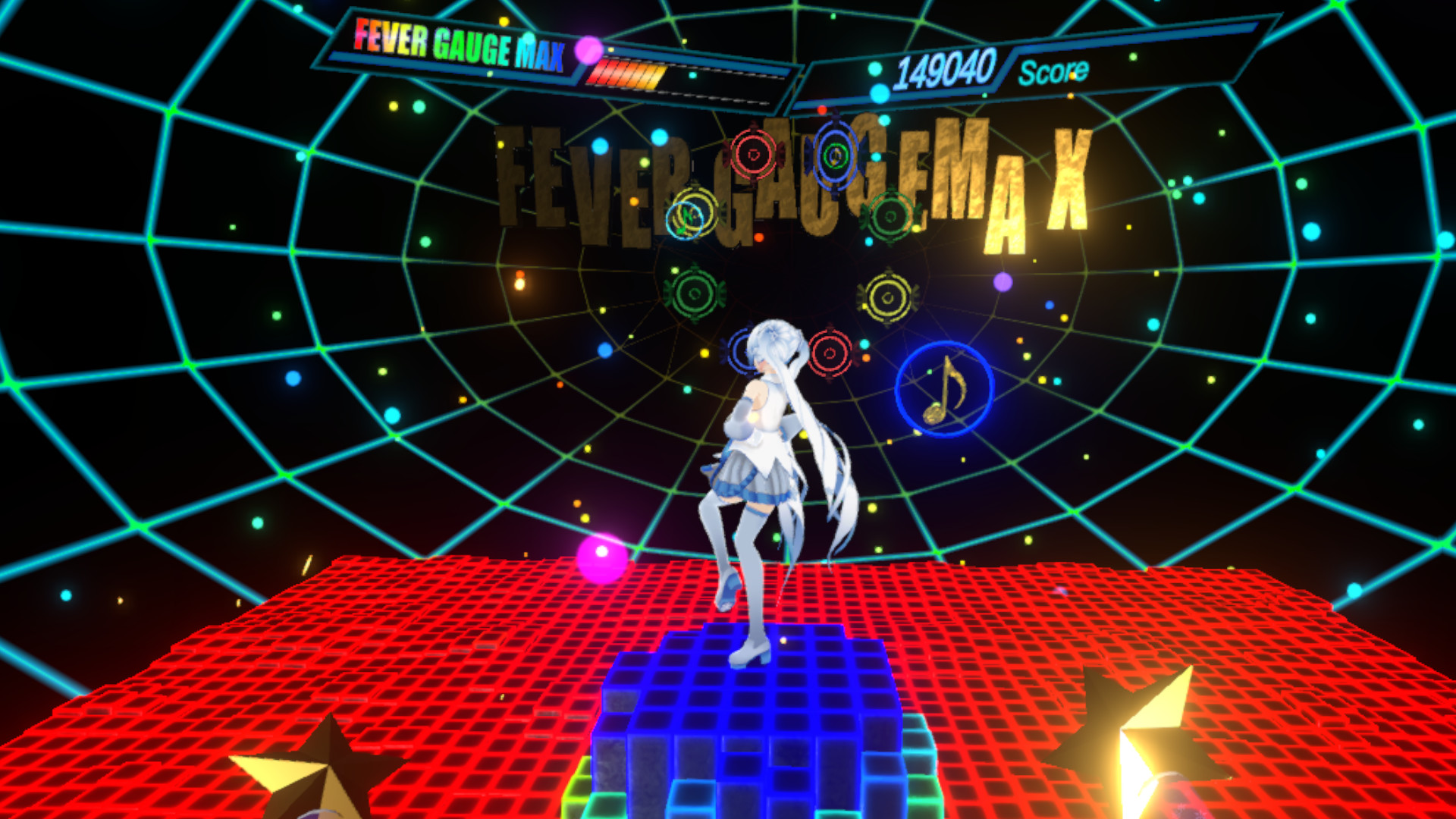
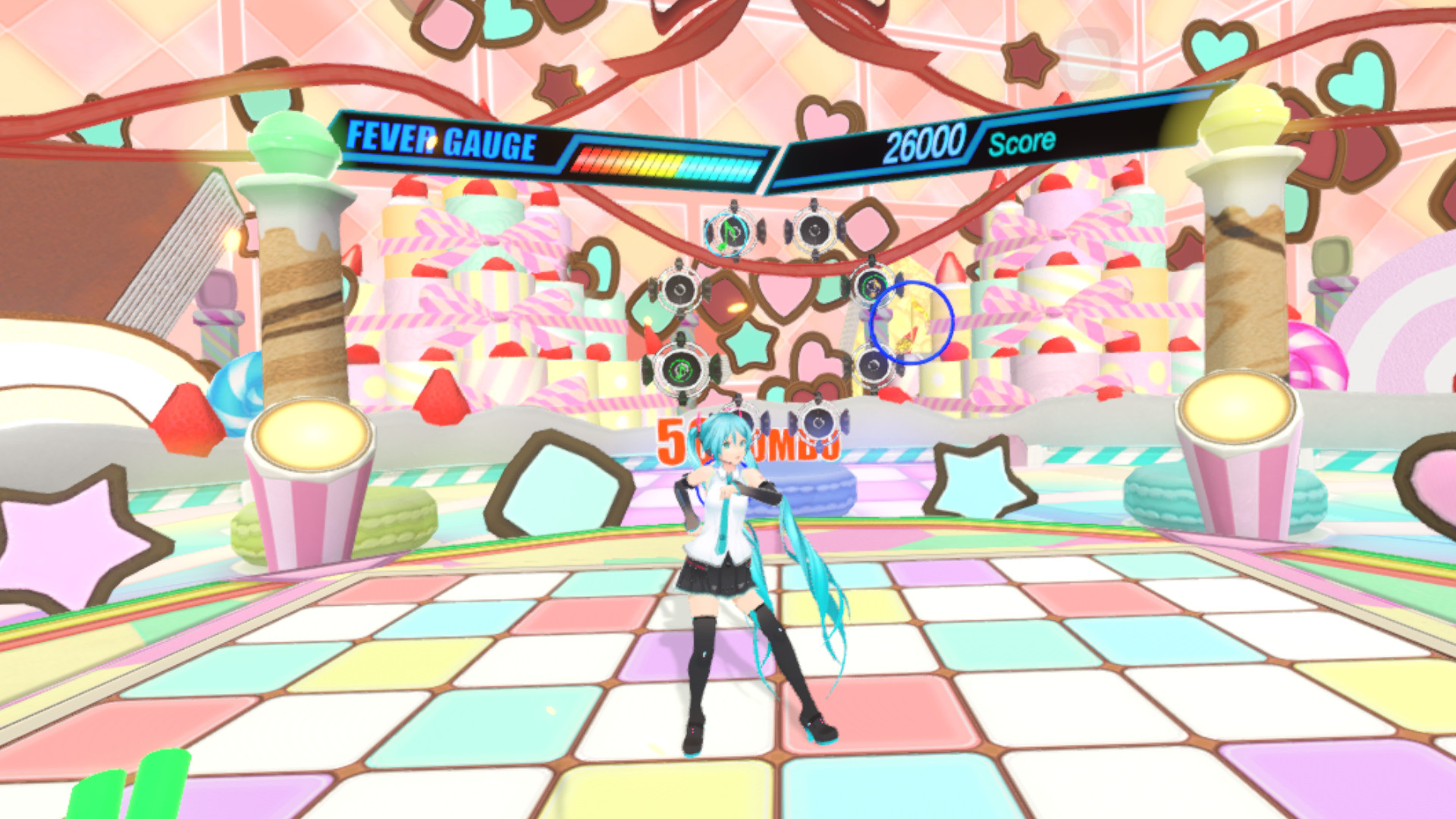
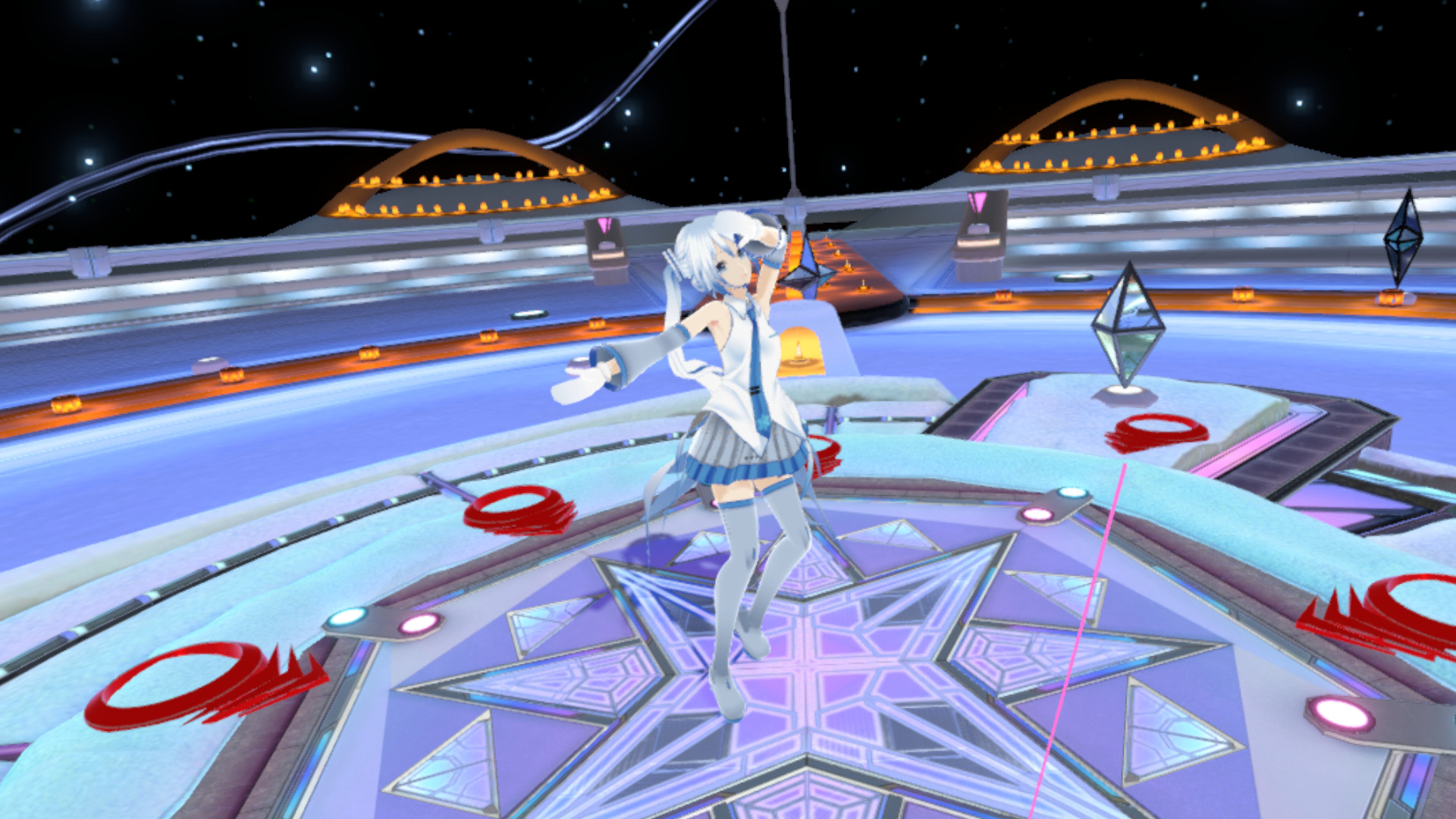
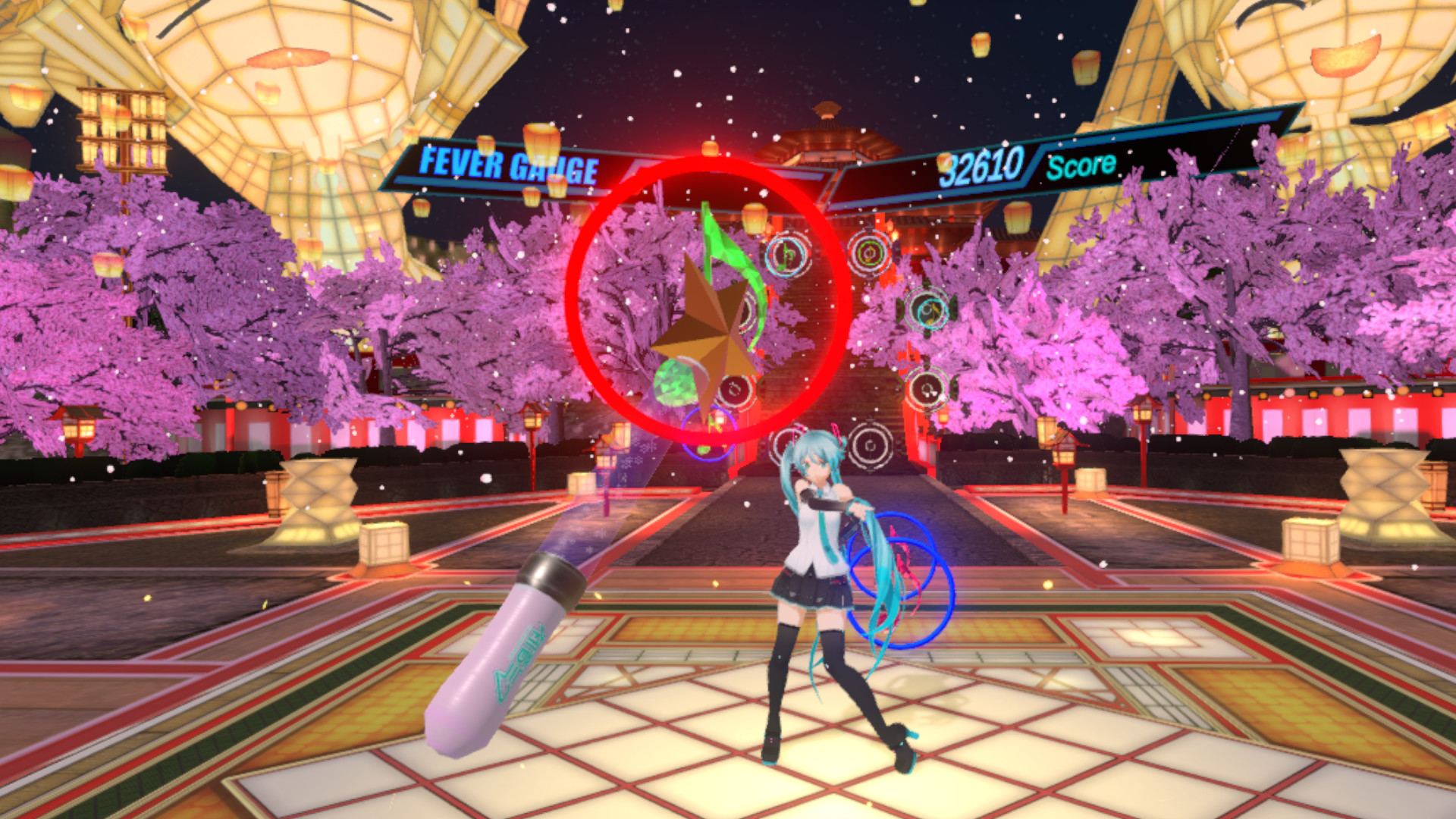
Get an in-depth look at Hatsune Miku VR through various videos and screenshots.




Load More

System requirements
These are the minimum specifications needed to play the game. For the best experience, we recommend that you verify them.
Windows
- OS *: Windows 8.1 - 64-bit
- Processor: Intel Core i5-4670
- Memory: 8 GB RAM
- Graphics: Nvidia GeForce GTX 970 or better
- DirectX: Version 11
- Storage: 3 GB available space
- VR Support: SteamVR. Standing or Room Scale
Steam Price & Best Deals
User reviews & Ratings
Explore reviews from Steam users sharing their experiences and what they love about the game.
Hatsune Miku VR is a compact rhythm experience that understands exactly where its strongest appeal lies: putting players physically close to a virtual concert performance rather than simply presenting another conventional music game on a flat screen. Developed by Crypton Future Media and published by KOMODO, it transforms Hatsune Miku's music into an interactive VR stage show where rhythm, motion controls, choreography, and fan service work together. Its scope is relatively modest, but the feeling of standing in front of the stage while Miku performs gives the experience a distinctive character that would be difficult to reproduce without virtual reality. The core gameplay is easy to understand. Musical symbols travel toward the player while Miku sings and dances on stage, and the objective is to strike or catch them with tracked motion controllers at the correct moment. Longer riff patterns add variation by requiring more continuous movement rather than a single accurately timed gesture. This physical approach makes rhythm participation feel more active than simply pressing buttons according to prompts. There is a satisfying connection between hearing the beat, seeing an incoming symbol, and physically responding to it, particularly once a song becomes familiar enough that the player can concentrate on the music instead of constantly anticipating the next instruction. Scoring provides the main incentive for mastering the mechanics. The pursuit of a perfect performance encourages repeated attempts, while two difficulty options give less experienced players an approachable starting point before tackling more demanding patterns. The mechanics are deliberately uncomplicated, however, and players accustomed to rhythm games with elaborate note systems or extensive progression may find the design somewhat basic. Its challenge comes primarily from improving accuracy and learning patterns rather than discovering increasingly complex systems. The included music selection is an important part of the appeal. The base package contains ten songs, including recognizable tracks such as Ievan Polkka, SenbonZakura, Ghost Rule, Hibikase, Sharing The World, SLoWMoTIoN, Singularity, Stella, Amagoi Miseinen, and Lucky Orb. This collection provides a reasonable mixture of musical styles and energetic performances, although ten tracks can feel restrictive for a game built heavily around replayability. Additional music is available through separate content, but anyone evaluating only the base experience should understand that repetition becomes an important part of its longevity. Presentation does much of the heavy lifting. Miku performs choreographed dances during songs rather than functioning as a static background attraction, and VR gives these performances a convincing sense of scale. Watching a character normally seen through a monitor suddenly occupying a life-sized virtual stage can be surprisingly effective. The visual design does not depend on extreme graphical realism; instead, colorful environments, recognizable character styling, animation, music, and spatial presence create the atmosphere. Fan-oriented additions such as costumes and the familiar Negi glow stick strengthen the feeling that this is as much a virtual Miku attraction as it is a score-driven rhythm game. The music video mode is one of the more worthwhile supplementary features because it allows players to appreciate performances without concentrating entirely on rhythm prompts. Different viewing positions, stages, and outfit selections provide a more relaxed way to experience the songs. This mode complements the main game nicely, especially for players whose interest is divided between rhythm gameplay and simply watching virtual performances. It also demonstrates how VR can make even passive viewing more engaging by giving the audience control over perspective and creating a stronger impression of occupying the same space as the performer. Beyond the individual songs, the structure remains intentionally straightforward. Steam achievements and leaderboards provide additional reasons to return, especially for completionists and competitive players interested in improving scores. There is no elaborate campaign or extensive progression system connecting everything together, so enjoyment largely depends on whether replaying tracks for better performances remains satisfying. Players wanting a large adventure surrounding the music will find little of that here, while those comfortable with an arcade-like choose-a-song-and-play structure will have an easier time appreciating its simplicity. The VR requirement is simultaneously its defining strength and biggest restriction. Motion-controlled interaction creates the physical involvement that separates the experience from traditional rhythm games, but it also means the title has essentially no value to someone without appropriate VR equipment. The standing and room-scale nature of play works well with the mechanics because reaching for notes naturally encourages body movement. Sessions can therefore feel more energetic than the simple rules initially suggest. Steam Deck compatibility is especially important to clarify. The game is officially categorized as Unsupported for Steam Deck because the handheld does not support the VR functionality the title requires. This is not merely a situation where controller mappings need adjustment or performance needs tweaking. VR is fundamental to the game, making normal standalone Steam Deck play impractical. Anyone specifically seeking a portable Hatsune Miku rhythm experience should therefore consider another title rather than purchasing this one for Deck use. Ultimately, this is best regarded as a specialized VR rhythm attraction for existing Hatsune Miku enthusiasts rather than an enormous, content-heavy rhythm platform. Its accessible controls, physical note interaction, lively choreography, recognizable music, score chasing, leaderboards, achievements, viewing options, costumes, and virtual stage presence create an enjoyable package when approached with appropriate expectations. The limited base soundtrack and relatively simple mechanics keep it from offering exceptional depth, but the sensation of participating in a Miku performance provides an identity that compensates for some of those shortcomings. For a player with compatible VR equipment and enthusiasm for Vocaloid music, it can be charming and memorable, while rhythm enthusiasts seeking a much deeper mechanical challenge may find its appeal considerably shorter-lived. Rating: 7/10
Similar games
View all

Touhou Danmaku Kagura Phantasia Lost
"The collapse of Gensokyo... it was all you - " To rebuild the now barren phantasia, Reimu's journey begins. A Touhou Project officially approved derivative rhythm action game.


KAMITSUBAKI CITY ENSEMBLE
"KAMITSUBAKI CITY ENSEMBLE" is a rhythm game in which AI girls who were awoken after the apocalypse use special song magic to create melodies with you, in an effort to restart the world. How did the destruction happen? Why do these girls exist? All answers will be revealed...when the music stops.
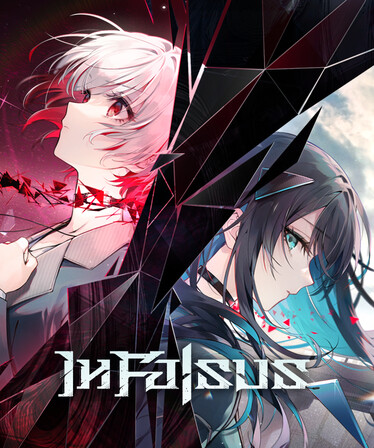
In Falsus
In a world bound by truths: connect. In Falsus is a mesmerizing rhythm game tied to an intricate card system brought together through a layered narrative. Taking place in a near-future world, traverse an atmospheric soundscape through the eyes of 5 interconnected protagonists.

Groove Coaster
Riding the rhythmic rails of success from smart phone, into the arcades, now GROOVE COASTER arrives on Steam! Are you ready to ride a roller coaster of sound and light through a universe of music?
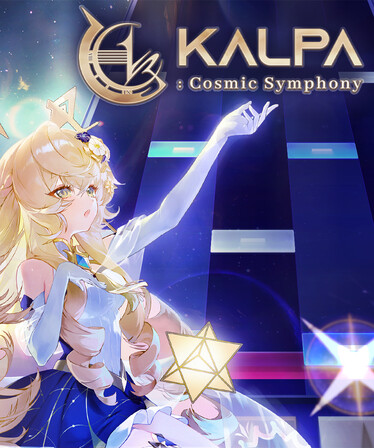
KALPA: Cosmic Symphony
A next-generation rhythm game where story and music intertwine. Enjoy a tracklist filled with famous licensed songs and exclusive original songs made by renowned composers Discover an immersive story, and face endless challenges. Your performance will dictate the fate of the world.

MASH VP! Re:VISION
[Fusion, Synthesis, Coalescence]"MASH VP! Re:VISION" is a revolutionary rhythm game that “fuses” two lanes and music into a completely new experience.With a variety of tracks, game modes, and a creativity-driven mashup system, it invites you into a new world of music!

DJMAX RESPECT V
DJMAX RESPECT V is the latest installment from the creators of the critically acclaimed rhythm game franchise ‘DJMAX.’ Experience tracks from popular artists such as Marshmello, Porter Robinson, and Yukika, exclusive Full HD Music Videos, online multiplayer, new game modes, and more!

Hatsune Miku: Project DIVA Mega Mix+
Take center stage in Hatsune Miku’s premier rhythm game starring the world’s #1 virtual pop star! With a stunner setlist and enormous wardrobe to style, it’s Miku’s ultimate tour—all it needs is you.

SMASHING THE BATTLE
In the year 2085, a huge multiplex construction site becomes a victim of a massive-scale hacking incident. Due to the hack, the construction robots start to attack the workers onsite.

Frequently Asked Questions
Hatsune Miku VR is currently priced at 24.50€ on Steam.
No, Hatsune Miku VR is currently not on sale. You can purchase it for 24.50€ on Steam.
Yes, Hatsune Miku VR received 460 positive votes out of a total of 643 achieving a rating of 6.85.
😐
Hatsune Miku VR was developed by Crypton Future Media and published by KOMODO.
Yes, Hatsune Miku VR is playable and fully supported on Windows.
No, Hatsune Miku VR is not playable on MacOS.
No, Hatsune Miku VR is not playable on Linux.
No, Hatsune Miku VR is not playable on Steam Deck.
This information about Hatsune Miku VR is not available yet.
Yes, Hatsune Miku VR is a VR-only title. A compatible VR headset is required to play the game.
Hatsune Miku VR is a single-player game.
Yes, there are 3 DLCs available for Hatsune Miku VR. Explore additional content available for Hatsune Miku VR on Steam.
No, Hatsune Miku VR does not support mods via Steam Workshop.
No, Hatsune Miku VR does not support Steam Remote Play.
Yes, Hatsune Miku VR is enabled for Steam Family Sharing. This means you can share the game with authorized users from your Steam Library, allowing them to play it on their own accounts. For more details on how the feature works, you can read the original Steam Family Sharing announcement or visit the Steam Family Sharing user guide and FAQ page.
You can find solutions or submit a support ticket by visiting the Steam Support page for Hatsune Miku VR.
Data sources
The information presented on this page is sourced from reliable APIs to ensure accuracy and relevance. We utilize the Steam API to gather data on game details, including titles, descriptions, prices, and user reviews. This allows us to provide you with the most up-to-date information directly from the Steam platform.
Additionally, we incorporate data from the SteamSpy API, which offers insights into game sales and player statistics. This helps us present a comprehensive view of each game's popularity and performance within the gaming community.
Last Updates| Steam data | 17 September 2026 04:16 UTC |
|---|---|
| SteamSpy data | 21 October 2026 17:38 UTC |
| Steam price | 26 October 2026 19:55 UTC |
| Steam reviews | 20 October 2026 07:49 UTC |
If you'd like to dive deeper into the details about Hatsune Miku VR, we invite you to check out a few dedicated websites that offer extensive information and insights. These platforms provide valuable data, analysis, and user-generated reports to enhance your understanding of the game and its performance.
- SteamDB - A comprehensive database of everything on Steam about Hatsune Miku VR
- SteamCharts - Analysis of Hatsune Miku VR concurrent players on Steam
- ProtonDB - Crowdsourced reports on Linux and Steam Deck Hatsune Miku VR compatibility

Game modes
Features
Online players
0
Developer
Crypton Future Media
Publisher
KOMODO
Release
08 Mar 2018
Platforms
Clicking and buying through these links helps us earn a commission to maintain our services.