

Invisible Mind
Go on a trip around the worlds created by your own mind and learn yourself.
Sync your Steam wishlist to find the lowest game prices instantly. No login required, just paste your Steam profile URL!
⚡ Try Wishlist Radar!
Sync your Steam wishlist to find the lowest game prices instantly. No login required!
⚡ Try Wishlist Radar!
Close

Mindless Running on Steam
Quick menu
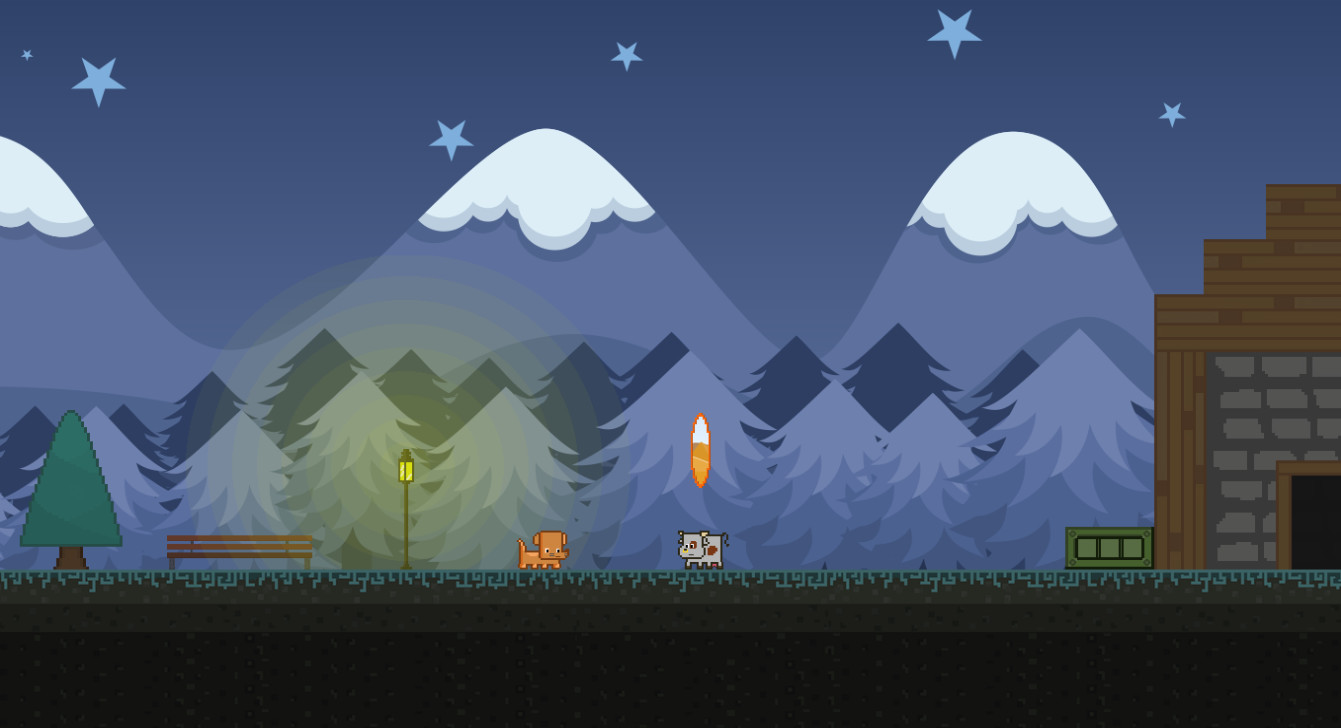
Mindless Running - it's a classic runner with story mode. Explore a randomly-generated world while listening to a unique soundtrack!
Mindless Running is a indie, adventure and comedy game
developed and published by Quiet River.
Released on February 18th 2016 is available only on Windows.
It has received 417 reviews of which 262 were positive and 155 were negative resulting in a rating of 6.1 out of 10. 😐
The game is currently priced at 0.99€ on Steam.
The Steam community has classified Mindless Running into these genres:
Media & Screenshots
Get an in-depth look at Mindless Running through various videos and screenshots.




Load More


System requirements
These are the minimum specifications needed to play the game. For the best experience, we recommend that you verify them.
Windows
- OS *: Windows XP, 7, Vista, 8, 8.1, 10
- Memory: 512 MB RAM
- DirectX: Version 9.0
- Storage: 150 MB available space
Steam Price & Best Deals
User reviews & Ratings
Explore reviews from Steam users sharing their experiences and what they love about the game.
Mindless Running is a minimalist indie endless runner developed and published by Quiet River that embraces simplicity as both its theme and its core design philosophy. As the title suggests, the game leans into a straightforward, almost deliberately unembellished gameplay loop built around constant forward motion and reflex-based obstacle avoidance. Rather than attempting to reinvent the runner genre with layered mechanics or expansive systems, it focuses on accessibility and immediate engagement. Players are dropped into a continuously scrolling environment where survival depends on well-timed jumps and quick reactions, creating a pick-up-and-play experience that requires little onboarding. At its foundation, the gameplay follows the traditional endless runner formula. Your character moves forward automatically, and your primary interaction is jumping to avoid obstacles that appear in randomized patterns. The procedurally generated layouts ensure that no two runs are exactly identical, which adds a degree of unpredictability to each attempt. However, while the randomization keeps the experience from becoming completely scripted, the fundamental loop remains consistent: run, react, survive, repeat. There are no complex power-up systems, branching paths, or skill trees to manage. This stripped-down structure makes the game immediately approachable but also inherently limited in scope. One of the more distinctive elements Mindless Running attempts to incorporate is a light narrative framing. The story revolves around the protagonist’s journey to reach their grandmother’s house, presented with tongue-in-cheek humor and playful dialogue that occasionally references RPG-style storytelling conventions. These narrative snippets add personality and give the game a thematic backdrop, though they do not significantly alter the gameplay itself. The story functions more as flavor text than as a driving force behind progression. While some players may appreciate the quirky tone, others may find that the narrative layer feels detached from the core mechanics. Visually, the game adopts a simple aesthetic that prioritizes clarity over detail. The environments are functional and easy to read, ensuring that obstacles stand out clearly against the background. However, the graphical presentation is modest, with limited animation variety and minimal environmental complexity. This design choice keeps the game lightweight and easy to run on a wide range of systems, but it also reinforces the perception that the experience is closer to a casual or mobile-style runner than a feature-rich PC title. The sound design, including the background music, plays a more prominent role in shaping the atmosphere, providing rhythmic accompaniment that supports the forward momentum of the gameplay. The pacing of Mindless Running is consistent and uninterrupted. There are no elaborate transitions between stages or dramatic shifts in environment; instead, the experience unfolds as a continuous test of endurance and reaction speed. Because there are few additional systems layered onto the core mechanic, long sessions can begin to feel repetitive. The challenge lies primarily in extending your run for as long as possible and improving your reaction timing rather than mastering new mechanics. For players who enjoy chasing high scores or refining muscle memory, this format can be engaging. For those seeking evolving gameplay or meaningful progression, the simplicity may limit long-term appeal. Steam achievements and trading card integration provide external incentives for continued play. Unlocking achievements or collecting cards can extend engagement beyond pure score-chasing, especially for players who enjoy completionist goals. However, these features operate outside the core gameplay loop rather than enhancing it directly. As a result, they supplement the experience without fundamentally deepening it. Mindless Running occupies a niche within the broader runner genre. It does not compete with more elaborate titles that introduce diverse mechanics, multiplayer competition, or expansive customization. Instead, it offers a compact, focused experience built around immediate accessibility and straightforward design. Its appeal depends largely on player expectations. Those looking for a lightweight, reflex-driven distraction that can be played in short bursts may find it adequate and occasionally enjoyable. Players searching for depth, narrative complexity, or evolving systems may find it lacking in substance. Ultimately, Mindless Running is a game that understands its modest ambitions. It delivers a functional endless runner with a touch of humor and a consistent mechanical loop. While it does not break new ground or introduce significant innovation, it provides a simple and accessible experience for players who appreciate uncomplicated arcade-style gameplay. Its strengths lie in its clarity and ease of entry, while its limitations stem from its narrow focus and repetitive structure. For the right audience, it serves as a brief, low-commitment diversion; for others, it may feel too minimal to sustain extended interest. Rating: 6/10
Similar games
View all

The Spiral Scouts
Join Remae, the newest member of the Spiral Scouts, on her slap-tastic puzzle solving adventure through a world of crazy characters and redonkulous realms. Experience a fartwarming tale of personal growth, self discovery, poop, wieners and butts.

The Journey Down: Chapter Three
The final chapter of The Journey Down, a classic point-and-click saga with an Afro-Caribbean vibe. Get ready to embark on an epic journey of brain-teasing adventure!

Draw a Stickman: EPIC
Draw a stickman, then guide him through a fantastic world of adventure! Using an assortment of pencils, draw elements, tools, and weapons to solve puzzles and overcome obstacles.

The Walking Fish 2: Final Frontier
The Walking Fish returns, this time in space, in an all-new fish comedy horror experience. Stuck on a space station, you have to solve the mystery of the Walking Fish, and escape its terror.

Paradigm
Paradigm is a surreal adventure game set in the strange and post apocalyptic Eastern European country of Krusz. Play as the handsome mutant, Paradigm, whose past comes back to haunt him in the form of a genetically engineered sloth that vomits candy.

Accounting (Legacy)
The modern field of Accountancy is a serious and honorable profession. Many human beings have spent their lives toiling over the hard science of numbers. Thousands have died so that we may get to the level of understanding that we have today. Thousands have died.

Stick it to The Man!
Hard hat tester, Ray, has a bizarre accident and wakes up with a giant pink spaghetti arm sticking out of his brain! With his awesome new powers he can read minds and change the world with stickers but he’s on the run for a crime he didn’t commit. Can you help Ray out of this sticky situation?

Wandersong
A musical platforming adventure with an emotional story. Play as a silly bard and use music to interact with everything on a journey around the world. Along the way you'll explore, solve puzzles, and meet a huge cast of characters!

Gathering Sky
Guide a flock of birds on a playful journey across the sky.

Edna & Harvey: The Breakout - Anniversary Edition
Edna & Harvey are back! The award-winning adventure with high resolution visuals, new technology, intuitive controls – Experience this quirky cult classic with Edna & Harvey anew, but better than ever before!

Pesterquest
Embark on a quest of epic importance in Pesterquest, a grimsical episodic visual novel adventure set in the darkly funny Homestuck / Hiveswap universe, created by American author and artist Andrew Hussie.
Frequently Asked Questions
Mindless Running is currently priced at 0.99€ on Steam.
No, Mindless Running is currently not on sale. You can purchase it for 0.99€ on Steam.
Yes, Mindless Running received 262 positive votes out of a total of 417 achieving a rating of 6.07.
😐
Mindless Running was developed and published by Quiet River.
Yes, Mindless Running is playable and fully supported on Windows.
No, Mindless Running is not playable on MacOS.
No, Mindless Running is not playable on Linux.
This information about Mindless Running is not available yet.
This information about Mindless Running is not available yet.
No, Mindless Running does not support VR.
Mindless Running is a single-player game.
No, Mindless Running does not currently offer any DLC.
No, Mindless Running does not support mods via Steam Workshop.
No, Mindless Running does not support Steam Remote Play.
Yes, Mindless Running is enabled for Steam Family Sharing. This means you can share the game with authorized users from your Steam Library, allowing them to play it on their own accounts. For more details on how the feature works, you can read the original Steam Family Sharing announcement or visit the Steam Family Sharing user guide and FAQ page.
You can find solutions or submit a support ticket by visiting the Steam Support page for Mindless Running.
Data sources
The information presented on this page is sourced from reliable APIs to ensure accuracy and relevance. We utilize the Steam API to gather data on game details, including titles, descriptions, prices, and user reviews. This allows us to provide you with the most up-to-date information directly from the Steam platform.
Additionally, we incorporate data from the SteamSpy API, which offers insights into game sales and player statistics. This helps us present a comprehensive view of each game's popularity and performance within the gaming community.
Last Updates| Steam data | 19 September 2026 10:04 UTC |
|---|---|
| SteamSpy data | 14 October 2026 11:01 UTC |
| Steam price | 26 October 2026 20:05 UTC |
| Steam reviews | 22 October 2026 05:55 UTC |
If you'd like to dive deeper into the details about Mindless Running, we invite you to check out a few dedicated websites that offer extensive information and insights. These platforms provide valuable data, analysis, and user-generated reports to enhance your understanding of the game and its performance.
- SteamDB - A comprehensive database of everything on Steam about Mindless Running
- SteamCharts - Analysis of Mindless Running concurrent players on Steam
- ProtonDB - Crowdsourced reports on Linux and Steam Deck Mindless Running compatibility

Game modes
Features
Online players
0
Developer
Quiet River
Publisher
Quiet River
Release
18 Feb 2016
Platforms
Clicking and buying through these links helps us earn a commission to maintain our services.