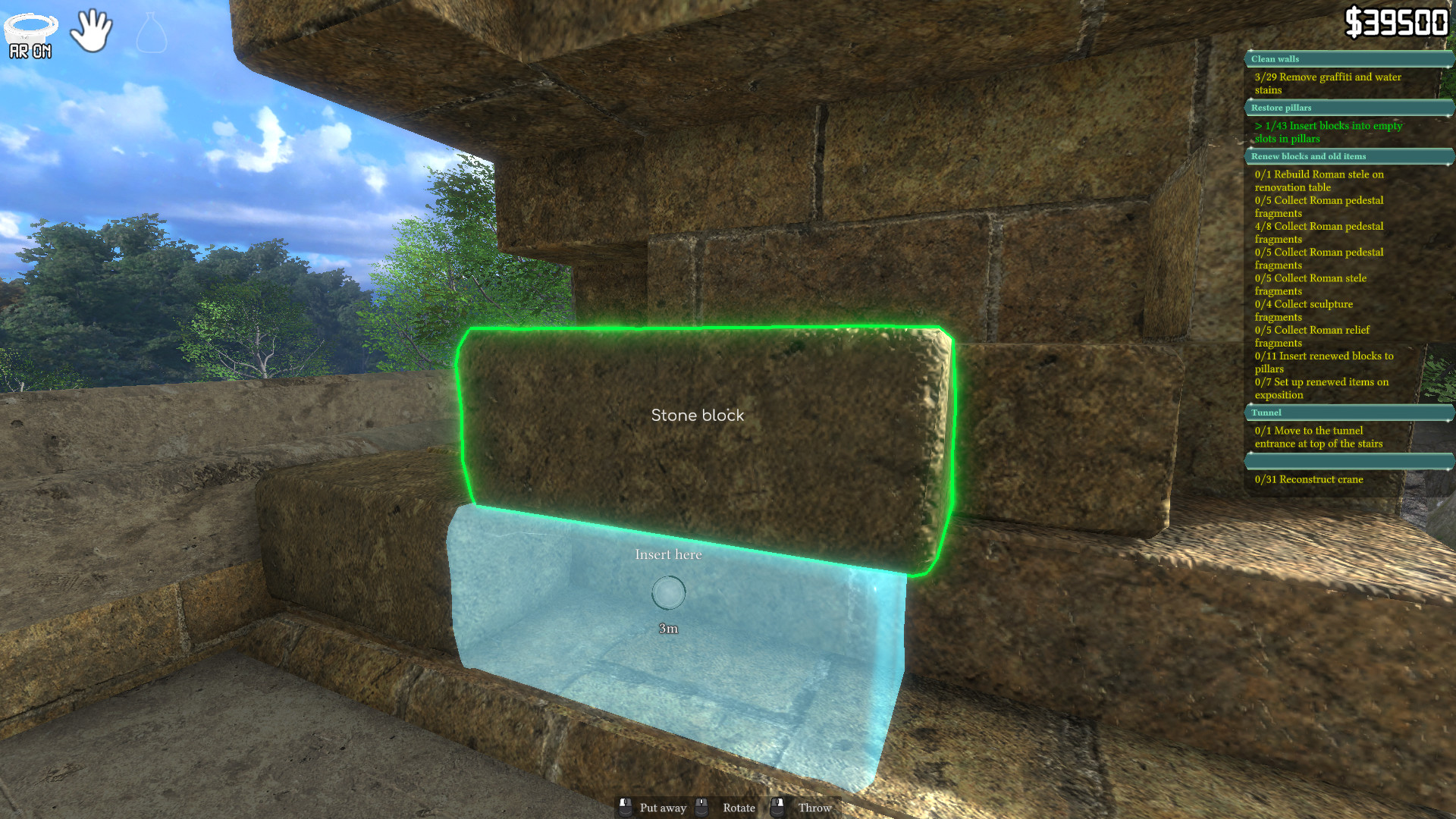
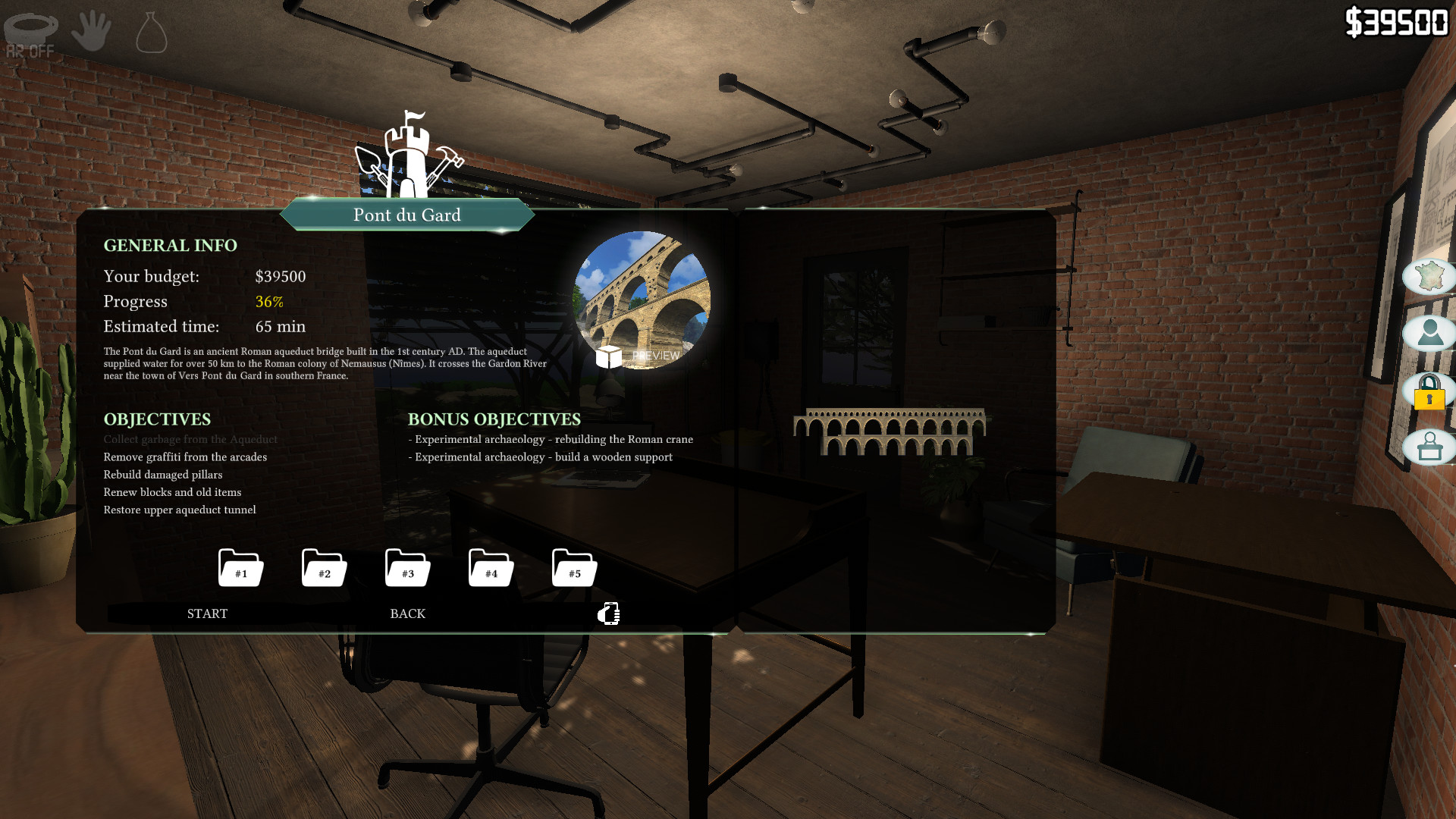
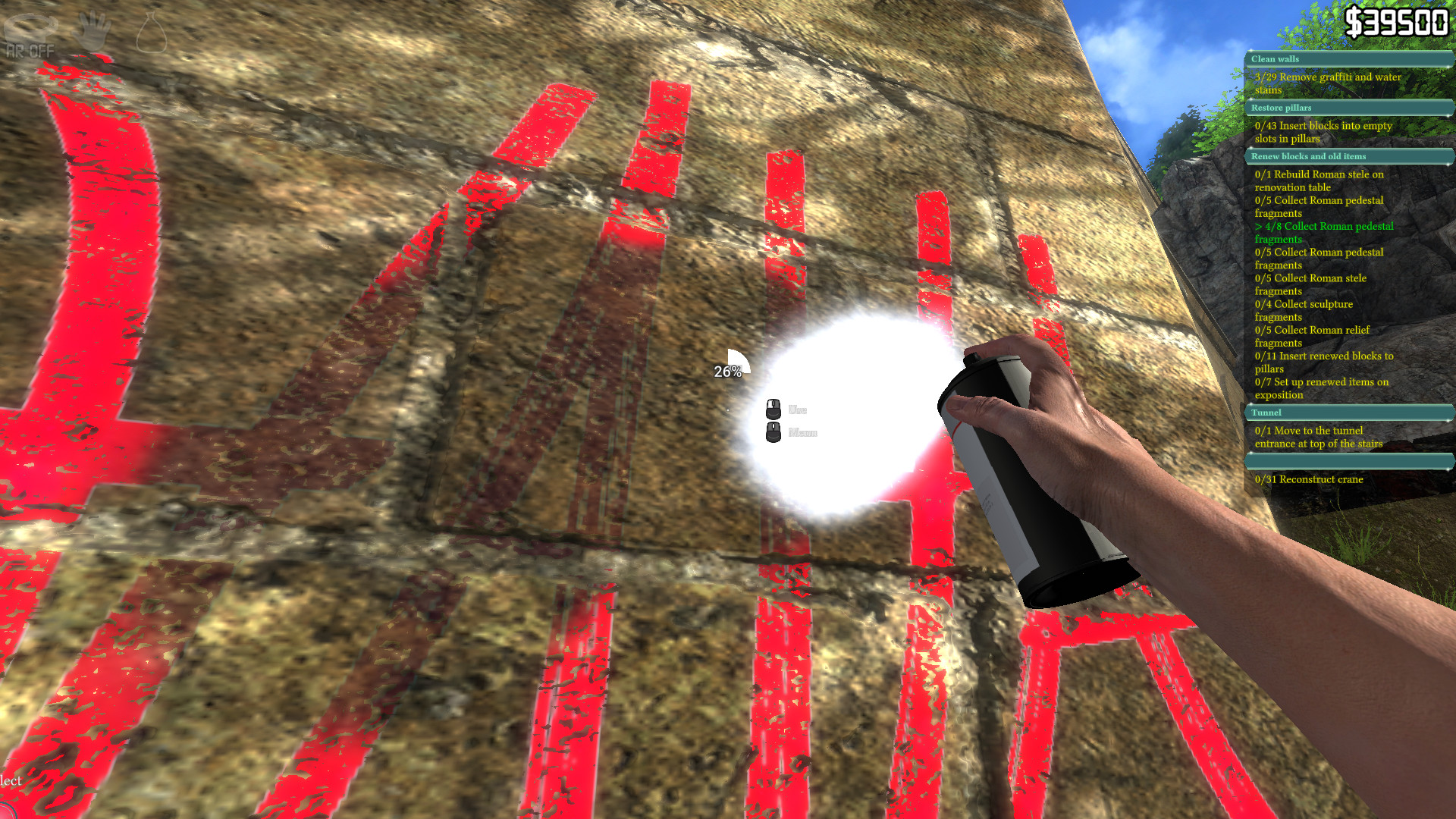
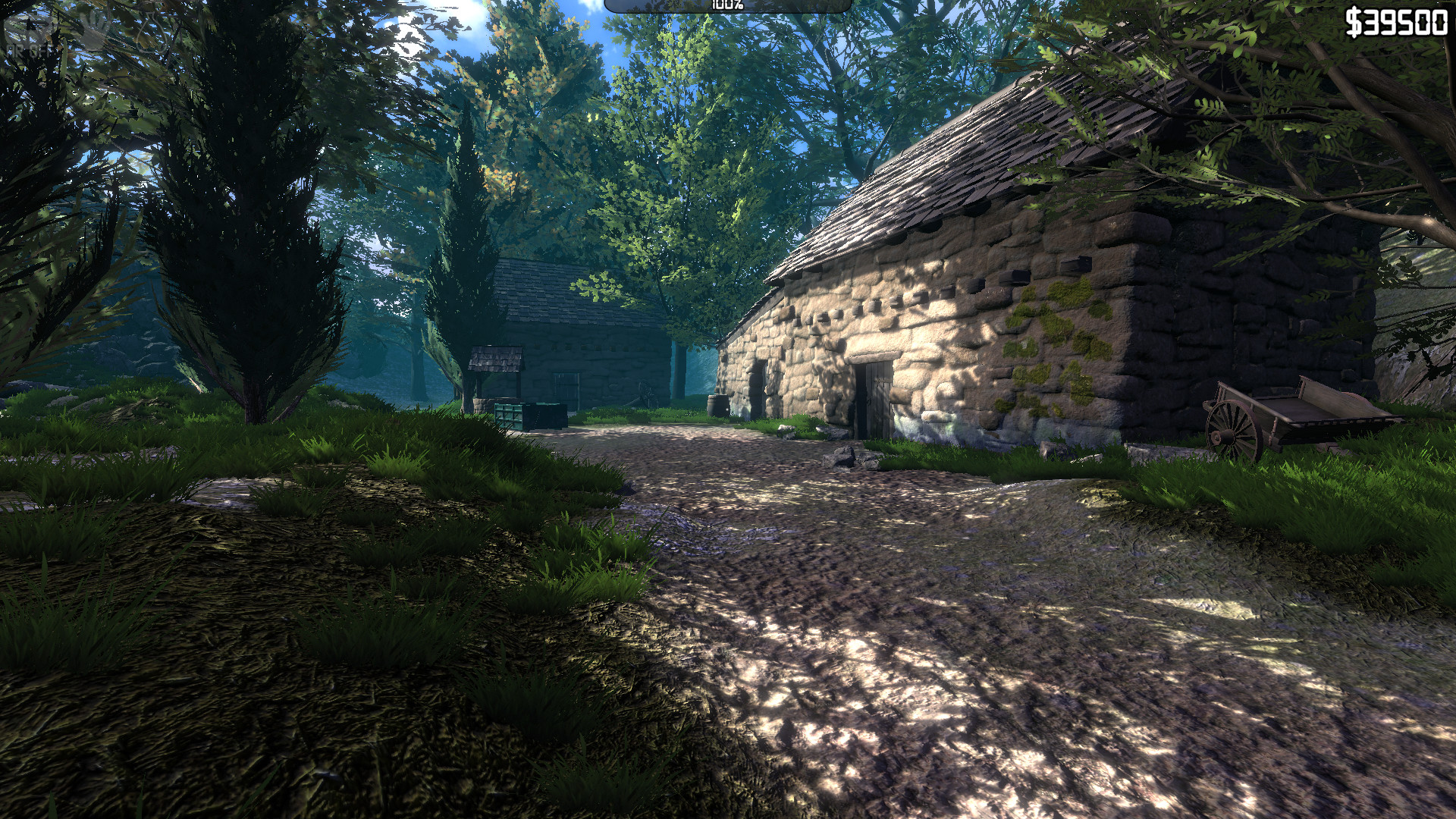
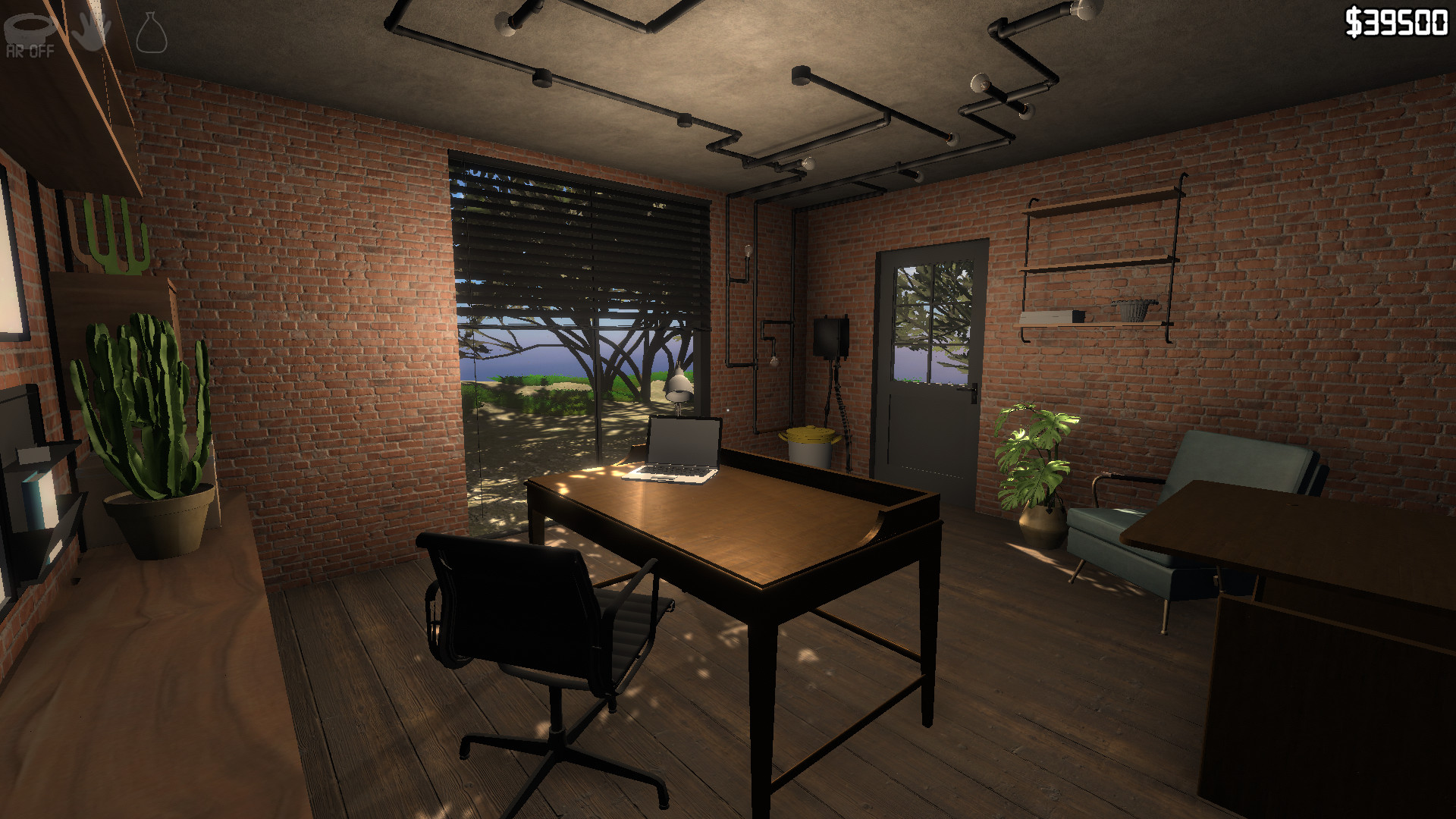
Monuments Renovator is a first-person simulation game that turns historical preservation into a hands-on profession, giving players responsibility for repairing structures that have deteriorated over time. Developed by Games Incubator and North Wind and published by Games Incubator and PlayWay S.A., the game approaches renovation from a different perspective than typical construction simulators. Instead of designing buildings from scratch, the objective is to preserve existing monuments, carefully repair their damaged sections, and gradually return them to a condition that reflects their original importance. The historical theme gives otherwise familiar cleaning, building, and crafting mechanics a stronger sense of purpose. The basic gameplay revolves around inspecting a monument and completing the numerous jobs required to restore it. Damaged areas must be organized and repaired, holes and deteriorated surfaces need attention, and sections can require repainting or reconstruction. Collapsed walls are rebuilt while aging frescoes receive restoration work. The process is intentionally methodical, making each monument feel like a large project composed of many smaller assignments. What makes the formula satisfying is the visible transformation. A neglected structure slowly becomes cleaner, more complete, and more impressive, creating a straightforward but effective sense of accomplishment. Tools and materials are important parts of the renovation process. Players develop their ability to work with different equipment, with progression intended to make future restoration work more efficient. Having several types of activities prevents the experience from becoming entirely focused on one mechanic, although most tasks share the same patient, work-oriented philosophy. Monuments Renovator is therefore at its best for players who enjoy completing objectives one piece at a time. There is little emphasis on speed or intense action. Satisfaction instead comes from finishing a job correctly and observing the cumulative results of many small improvements. Attention to detail is one of the more interesting aspects of the concept. Renovation is not presented as unrestricted decoration because players are expected to consult plans and make sure their work corresponds with the intended project. This provides an appropriate distinction between historical restoration and ordinary remodeling. The player is theoretically preserving something with an established identity rather than simply redesigning it according to personal taste. It gives the simulation an element of responsibility and encourages closer inspection of the environment. The renovation process also extends beyond structural repairs. After the larger restoration jobs are finished, interior furnishings become another stage of the project. This helps create a more complete progression from damaged landmark to functional building. Reconstructing walls establishes the physical structure, restoring surfaces improves its appearance, and furnishing the interior provides a finishing stage. The different phases work well conceptually because they make the restoration feel like a complete undertaking instead of a collection of isolated cleaning jobs. History and architecture provide additional character. The premise revolves around restoring significant monuments while learning something about their backgrounds and architectural qualities. The educational component is relatively accessible rather than academically detailed, but it gives context to the player's work. Architecture becomes interactive as the player examines walls, decorative features, interiors, frescoes, and structural components from close range. This makes the historical setting more than simple scenery and gives Monuments Renovator an identity that separates it from more generic repair simulators. The first-person perspective suits this approach because restoration requires close interaction with individual surfaces and objects. Walking through deteriorated spaces before beginning work also strengthens the contrast between their initial and completed conditions. The environments effectively function as enormous visual progress indicators. As debris disappears, surfaces improve, walls are reconstructed, and interiors become furnished, the location itself demonstrates how much work has been accomplished. However, the game's greatest strength also produces its biggest weakness. Restoration involves repetitive labor, and Monuments Renovator does not completely escape the monotony associated with repeatedly cleaning, filling, painting, repairing, and arranging objects. Players who enjoy deliberately repetitive simulators may find this relaxing, but anyone expecting every restoration activity to introduce substantial mechanical complexity could become fatigued. The historical subject matter sounds ambitious, yet the actual interactions necessarily simplify the enormous technical challenge involved in real monument conservation. The experience is therefore better understood as an accessible simulation inspired by monument restoration rather than an exhaustive representation of professional conservation. Its strongest qualities are the unusual subject, satisfying environmental transformations, varied restoration stages, historical atmosphere, and steady progression through increasingly complete projects. Its weaker qualities emerge when routine actions begin to overshadow the excitement of working on remarkable structures. Greater mechanical depth and variety could have elevated the underlying concept considerably. Despite these shortcomings, Monuments Renovator offers something distinctive within the crowded simulation genre. Games Incubator and North Wind successfully build the experience around the pleasure of repairing rather than destroying, while publishers Games Incubator and PlayWay S.A. position it comfortably within the hands-on job simulation category. Players interested in restoration, architecture, history, construction, cleaning, crafting, and slow-paced objective completion are the audience most likely to appreciate what it offers. It may not capture every complexity of historical preservation, but watching a deteriorated monument gradually regain its appearance can be genuinely rewarding. Rating: 7/10