
Chippy
Chip destructible bosses apart pixel-by-pixel in this twin-stick bullet-hell shooter.
Sync your Steam wishlist to find the lowest game prices instantly. No login required, just paste your Steam profile URL!
⚡ Try Wishlist Radar!
Sync your Steam wishlist to find the lowest game prices instantly. No login required!
⚡ Try Wishlist Radar!
Close

Nebulock on Steam
Quick menu
Nebulock is a short bullet-hell game with intense gameplay, where the player must destroy bosses made of blocks, collect resources and upgrade his spaceship.
Nebulock is a bullet hell, twin stick shooter and 2d game
developed and published by LostVolBytes.
Released on March 05th 2025 is available on Windows, Steam Deck and Steam Machine.
It has received 322 reviews of which 281 were positive and 41 were negative resulting in a rating of 8.1 out of 10. 😎
The game is currently priced at 2.99€ on Steam.
The Steam community has classified Nebulock into these genres:
Media & Screenshots
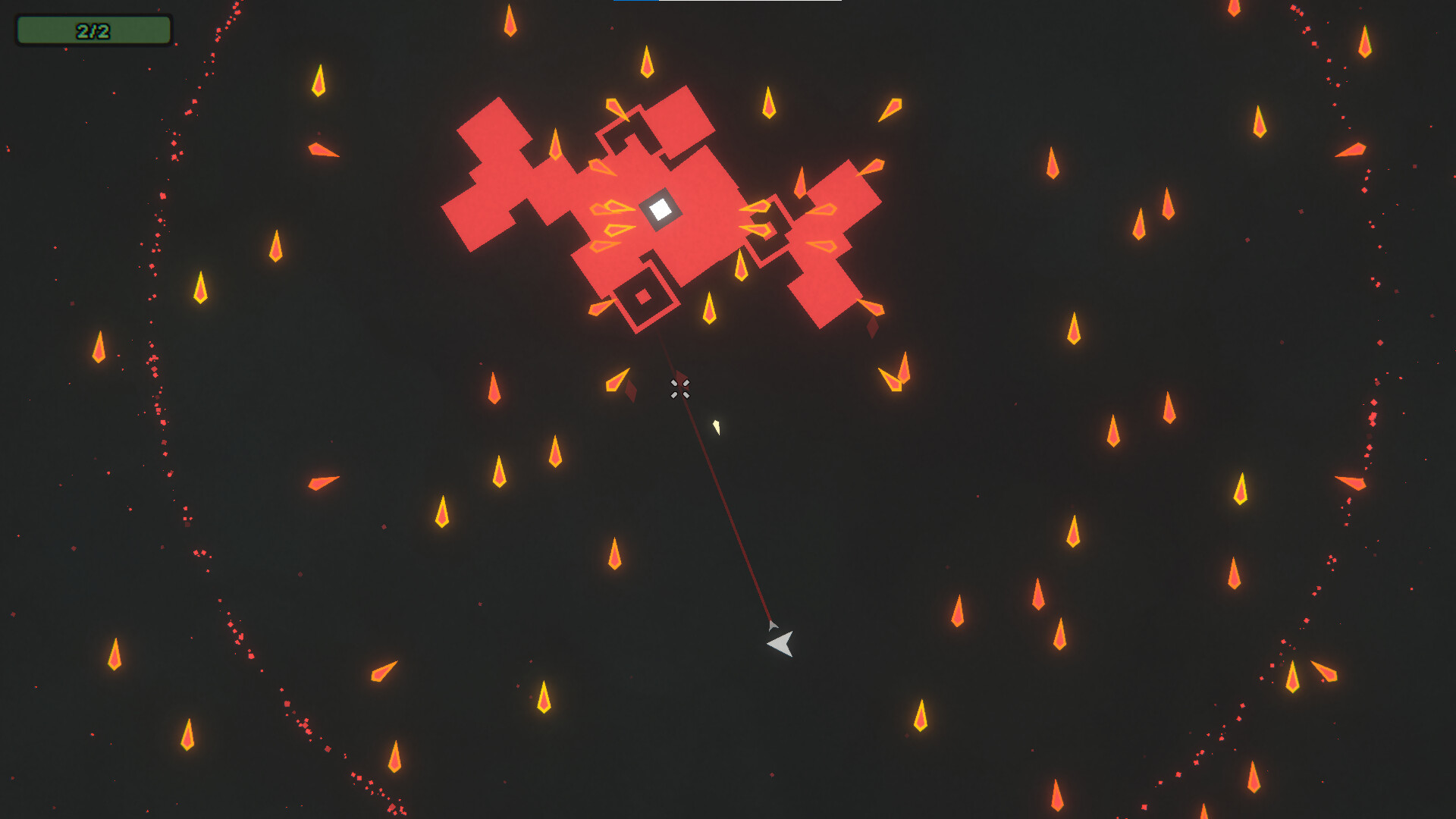
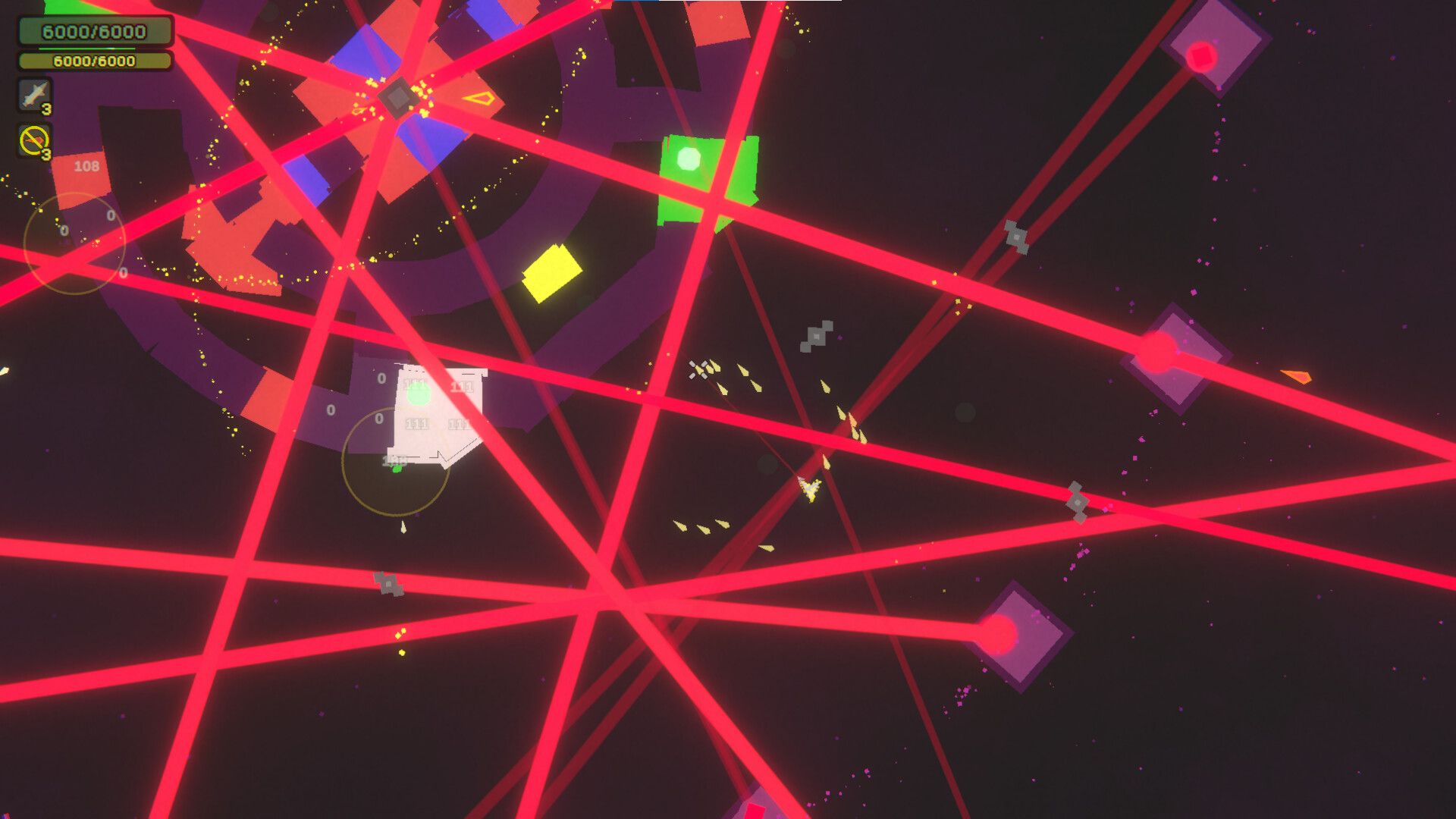
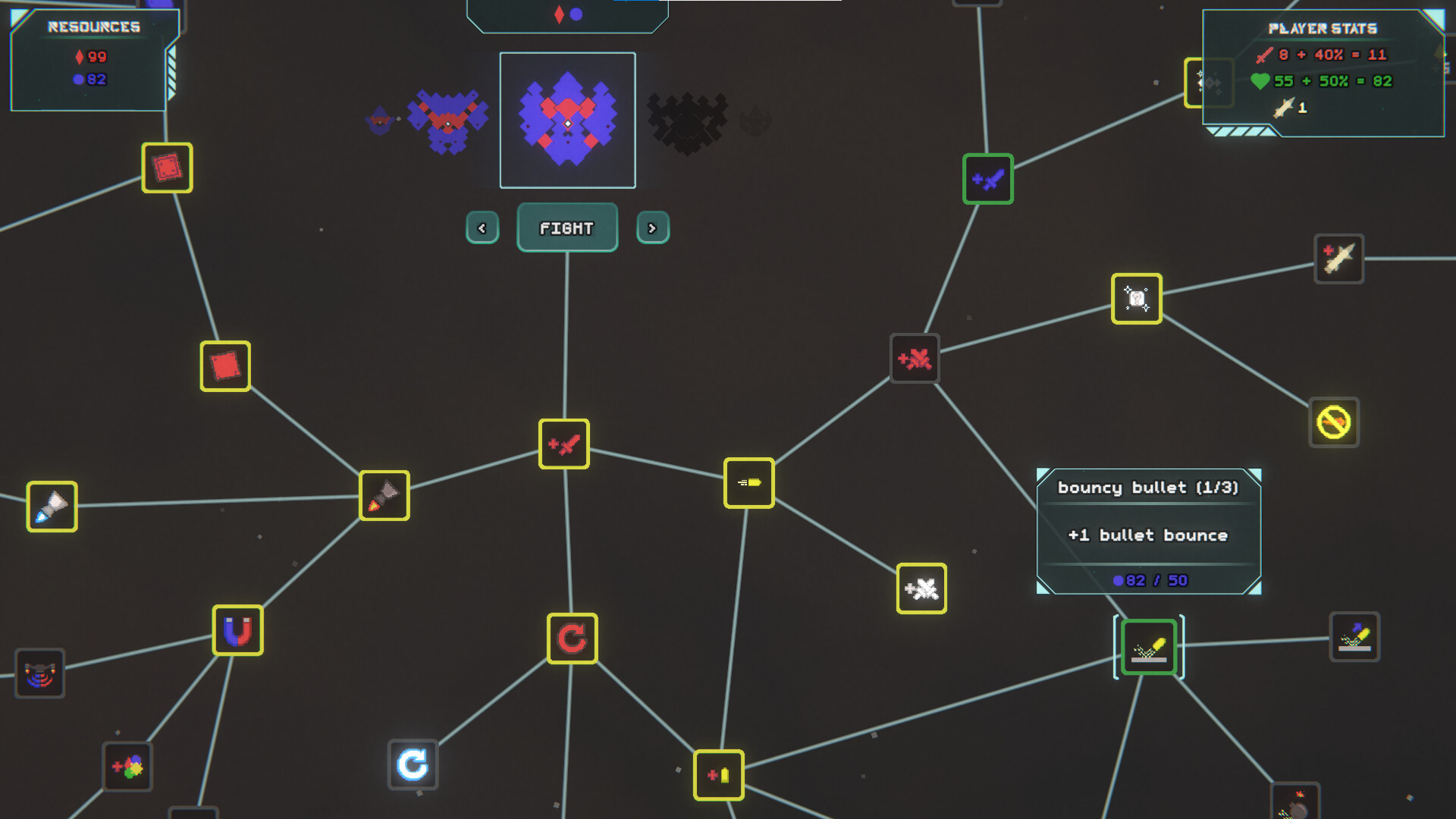
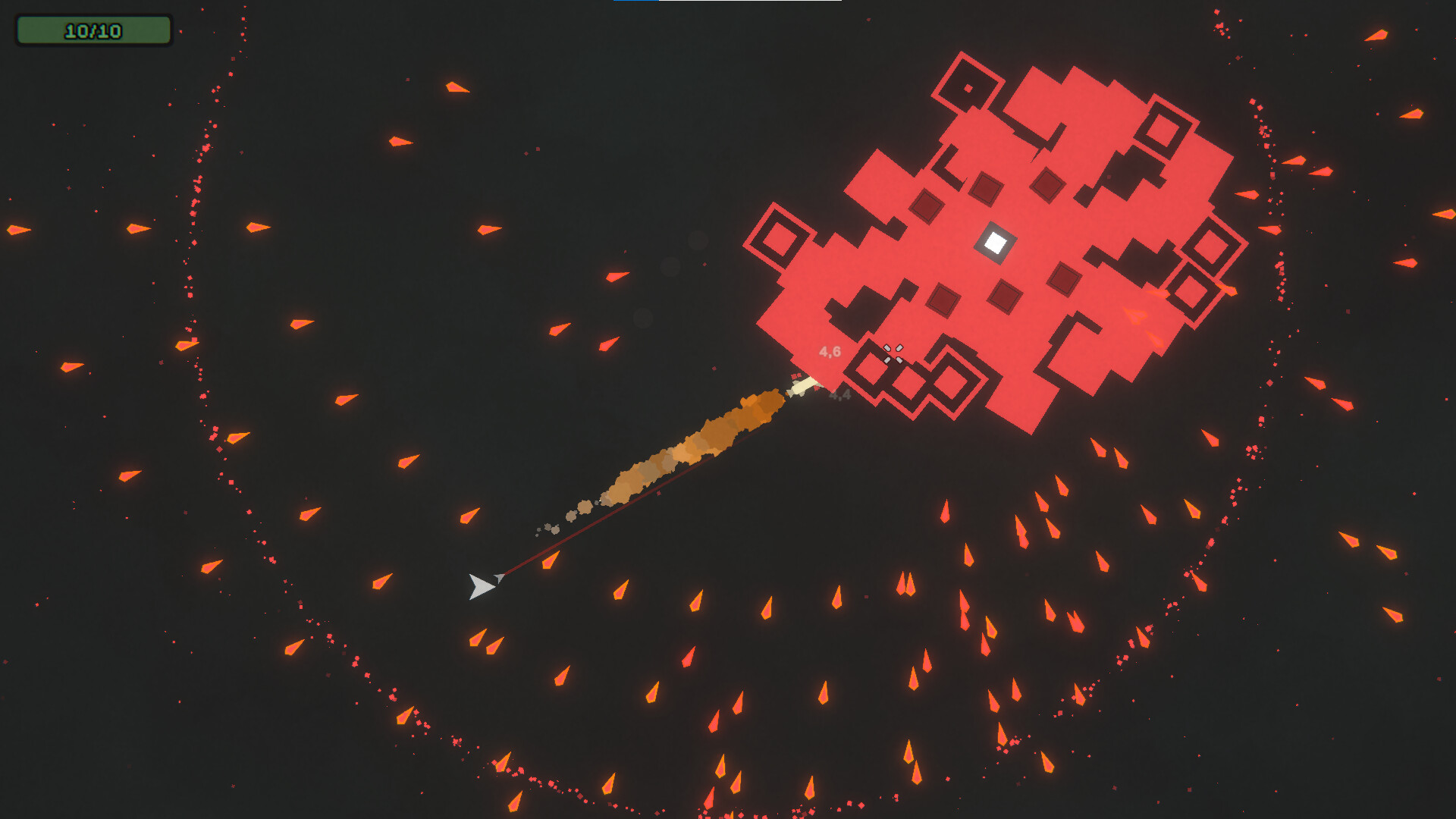
Get an in-depth look at Nebulock through various videos and screenshots.


System requirements
These are the minimum specifications needed to play the game. For the best experience, we recommend that you verify them.
Windows
- OS: Windows 10
- Processor: 2 Ghz
- Memory: 2 GB RAM
- Graphics: 1 GB VRAM
- Storage: 256 MB available space
Steam Price & Best Deals
User reviews & Ratings
Explore reviews from Steam users sharing their experiences and what they love about the game.
Super fun game with plenty of content for the 2.99 price. I played this a while back, but I'm coming to write this review because I just found a game on Roblox that is straight up a copy of this. Don't play the Roblox rip-off, the real thing is much better and worth buying. Dev if you see this, I'm not sure you can do anything about the Roblox copy, but I hope to make you aware of it at least.
Short and very sweet, Nebulock shares many similarities with the young(ish) genre of short incrementals, which is also why it caught my eye. It feels kind of like a cousin to the genre, although it is definitely NOT an incremental game. Despite this, the game has more than enough merit on its own though, and it occupies a similar enough space to short incrementals that I would encourage anyone who is into them (or at least, the more active ones) to give this game a try. Nebulock truly subscribes to the ideal of "Here for a good time, not a long time" and man is it a good time. As is evident by the trailer and description, Nebulock is a bullet hell game, and one that isn't exactly afraid to pull its punches either. Especially early on, when you lack many of the later defensive upgrades. You can expect a real (if still pretty brief overall) challenge on the harder difficulties. If you are fighting bosses on the same tier of upgrades that you have, you generally are only able to take 1~4 hits at most before you unlock any of the regeneration upgrades later in the game, and the bullet patterns can be pretty tight. While the bullet hell gameplay is the foundation that Nebulock is built on, its main claim to fame actually comes in the form of its destructible enemy system. Every enemy you fight is ultimately made up of many individual blocks that combine to take the shape of an enemy. Each of these blocks has its own health, and potentially also houses a weapon too. These blocks must also have a direct connection back down the chain that leads to the core of the enemy, and if this connection is severed then all unconnected blocks die out regardless of their remaining health. This leads to some interesting design where enemies have weakpoints that you can shoot to destroy large chunks at once, or for the player to be able to make decisions on trying to destroy weapons to make the fight easier, or to focus on the core to try and end the fight faster. That sounds great, but unfortunately, the execution on either of those two ideas wasn't exactly perfect, and so it doesn't really work out every time. Regardless of that, the enemy design is often still pretty creative, and it is still quite fun and satisfying to see your enemies start to shrink over time as you slowly wear them down. The game is divided into 5 different sections, and in each section you fight about 5 normal enemies and then a "guardian" who acts as the section's main boss. After you beat the guardian you unlock the next section of the game, which introduces a new type of block to fight and unlocks a new kind of currency to buy more powerful upgrades with. Each section of the game also follows a general theme when it comes to the enemy design and upgrades you get. For example, the defining feature of the blue blocks/enemies of section 2 is that they have much more health than the red blocks. This doesn't sound very special on its on, but it leads to the enemies now having armor in the form of chunks of blue blocks, which are then connected by weakpoints made out of a handful of red blocks, leading to you being able to shoot the weakpoints to avoid having to grind through the tough blue armor. The section 2 enemies also use different weapons to attack, preferring to use a combination of bombs and ramming compared to the more basic bullet attacks from section 1. Finally, the signature upgrades bought with the blue currency are the bouncing bullet upgrades (to help reach further into the gaps of the armor to hit weakpoints), explosive bullet upgrades (general damage and also for weakpoints), missile upgrades (likewise also primarily used for weakpoints), and drones (general DPS and provides more angles to hit weakpoints) Each section also has its own music, which helps build onto the theming they were going for with each section, and I found all the tracks to be both pleasant to listen to, and appropriate for the section. Lastly we have the upgrade tree, which alongside the graphics of the game is where it is most related to the short incremental genre. It is pretty small and compact overall, owing to the short nature of the game in general, but I think that in this case it works in the game's favor. For the majority of the game, you actually have quite a few options as to what you spend your currency on, and it offers a nice balance between offensive, defensive, and economy upgrades. Beyond the number of options you have at your disposal, and perhaps just as important, it offers you great variety when it comes to the different ways to increase your power. Offensively, you have straight damage, damage multipliers, attack speed, more bullets per attack, and then later on more indirect things like explosion damage and drones. There is a little less variety when it comes to the defensive upgrades, but you also don't need as much variety there either, and there is still a very reasonable amount. To add onto the choice you have in the upgrade tree, most upgrade paths have a "core" upgrade at the end of them. These upgrades tend to be more powerful on average, either offering a bigger stat increase compared to a standard upgrade, acting as a way to get even more of certain premium stats like movespeed, or having a powerful and unique effect in general. You get a core every time you beat a boss for the first time, and you will not have enough of them to max out every core upgrade until the endgame. This means that you have to pick and choose which ones you want, and much like an incremental game, there is no "un-buying" any upgrade. Depending on your choices, you could have an easier or harder time with some parts of the game. This is most noticeable early on, as you are able to correct past mistakes later once you kill more bosses. However, actually getting to that point could be a little difficult if you skimp out on some of the defensive core upgrades. The movement speed core upgrade in particular is one that I really would advise not skipping out on. I don't think that missing the defensive upgrades would make any boss impossible, but on the whole the defensive ones are more impactful compared to the offensive ones, and some of those early game bosses are pretty hard to begin with. Really the only sad part is that there isn't more of the game. You will pretty reasonably be able to complete it on the hard difficulty in under 2 hours, and even faster in the subsequent times. There is some added challenge with the permadeath difficulty, but that gives you a large resource multiplier to reduce the grinding, and as long as you play it safe it really isn't too bad either. I have already played through the entire game 4 times, + a few failed permadeath runs, and while it is certainly a replayable game to be sure, once you know the tricks the game just goes by really fast. I think that there is still much to be explored with the current gameplay mechanics, and that the game still has a lot of potential for a good sequel or even DLC. Frankly, they could probably reuse the entire skilltree and just make new enemies and it would still be good. I really have to stress again that for how short the game is, it is REALLY fun to play. If you think you will like it, definitely pick it up. Even if you don't like it, you will probably be able to beat it before 2 hours and refund it if you want . . . You will probably like it though.
Similar games
View all

Beat Hazard
Experience your music collection like never before with this intense music driven arcade shooter. Each of your songs will have its own unique ebb and flow based on the music.

Geometry Wars: Retro Evolved
Geometry Wars: Retro Evolved is a old school style shooter, but remixed for the 21st century with next generation graphics and deep, modern gameplay. Playing is simple: you are a geometric "ship" trapped in a grid world, facing off against waves of deadly wanderers, snakes, and repulsars.

Titan Attacks!
As the last surviving tank commander on Earth, single-handedly turn back the evil invading alien army, drive back the Titans across the Solar System, and defeat them on their homeworld... Titan Attacks has the same easy-to-learn and addictive gameplay of the classic arcade shoot 'em up, but is packed full of extras - new features, new...

Assault Android Cactus+
Assault Android Cactus is an intense arcade style twin stick shooter - pick from one of nine unique synthetic heroines and blast your way through overwhelming robots hordes to save the ship from its own workforce. Supports single player and local co-op game modes.

Rise & Shine
Welcome to Gamearth, a once peaceful planet now threatened by the warmongering Space grunts of Nexgen. In the aftermath of their devastating first strike a child named Rise is forced to take on the sacred gun Shine - and with it the fate of his world.
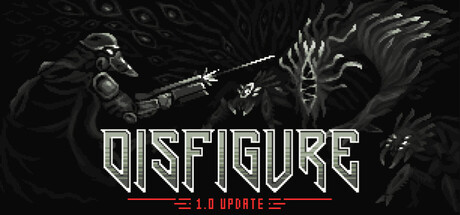
Disfigure
Disfigure is a grim-dark action rogue-like where you battle relentless hordes of monsters lurking in the shadows. Unlock powerful weapons, craft god-like builds with hundreds of upgrades, slay colossal bosses, and push your limits in intense 20–30 minute survival runs!
Nex Machina
Nex Machina is an intense arcade style twin-stick shooter from Housemarque. Taking hints from both Robotron and Smash TV, Nex Machina focuses on pure action, voxel destruction and competition in the distant, cablepunk themed future.

Star Saviors
Saviors brings the best bullet hell experience you can find on Steam. Play through 18 challenging stages in this ultimate test of tactics and reflexes.
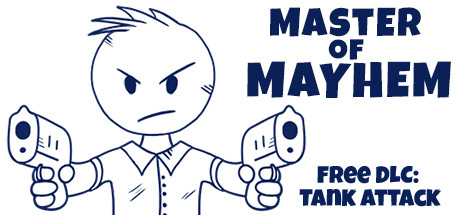
State of Anarchy: Master of Mayhem
Prepare for bullet hell action and crazy driving! Your town is on fire, anarchy reigns the streets, aliens rampage in the sky! Grab your gun and join the fun!

Frequently Asked Questions
Nebulock is currently priced at 2.99€ on Steam.
No, Nebulock is currently not on sale. You can purchase it for 2.99€ on Steam.
Yes, Nebulock received 281 positive votes out of a total of 322 achieving a rating of 8.07.
😎
Nebulock was developed and published by LostVolBytes.
Yes, Nebulock is playable and fully supported on Windows.
No, Nebulock is not playable on MacOS.
No, Nebulock is not playable on Linux.
Yes, Nebulock is playable on Steam Deck, though it might require a few minor tweaks. Make sure to check the Steam store page and community feedback on ProtonDB for exact compatibility details.
Yes, Nebulock is playable and fully supported on Steam Machine.
No, Nebulock does not support VR.
Nebulock is a single-player game.
No, Nebulock does not currently offer any DLC.
No, Nebulock does not support mods via Steam Workshop.
No, Nebulock does not support Steam Remote Play.
Yes, Nebulock is enabled for Steam Family Sharing. This means you can share the game with authorized users from your Steam Library, allowing them to play it on their own accounts. For more details on how the feature works, you can read the original Steam Family Sharing announcement or visit the Steam Family Sharing user guide and FAQ page.
You can find solutions or submit a support ticket by visiting the Steam Support page for Nebulock.
Data sources
The information presented on this page is sourced from reliable APIs to ensure accuracy and relevance. We utilize the Steam API to gather data on game details, including titles, descriptions, prices, and user reviews. This allows us to provide you with the most up-to-date information directly from the Steam platform.
Additionally, we incorporate data from the SteamSpy API, which offers insights into game sales and player statistics. This helps us present a comprehensive view of each game's popularity and performance within the gaming community.
Last Updates| Steam data | 03 October 2026 06:16 UTC |
|---|---|
| SteamSpy data | 14 October 2026 05:32 UTC |
| Steam price | 27 October 2026 20:22 UTC |
| Steam reviews | 19 October 2026 18:02 UTC |
If you'd like to dive deeper into the details about Nebulock, we invite you to check out a few dedicated websites that offer extensive information and insights. These platforms provide valuable data, analysis, and user-generated reports to enhance your understanding of the game and its performance.
- SteamDB - A comprehensive database of everything on Steam about Nebulock
- SteamCharts - Analysis of Nebulock concurrent players on Steam
- ProtonDB - Crowdsourced reports on Linux and Steam Deck Nebulock compatibility

Game modes
Features
Online players
2
Developer
LostVolBytes
Publisher
LostVolBytes
Release
05 Mar 2025
Platforms