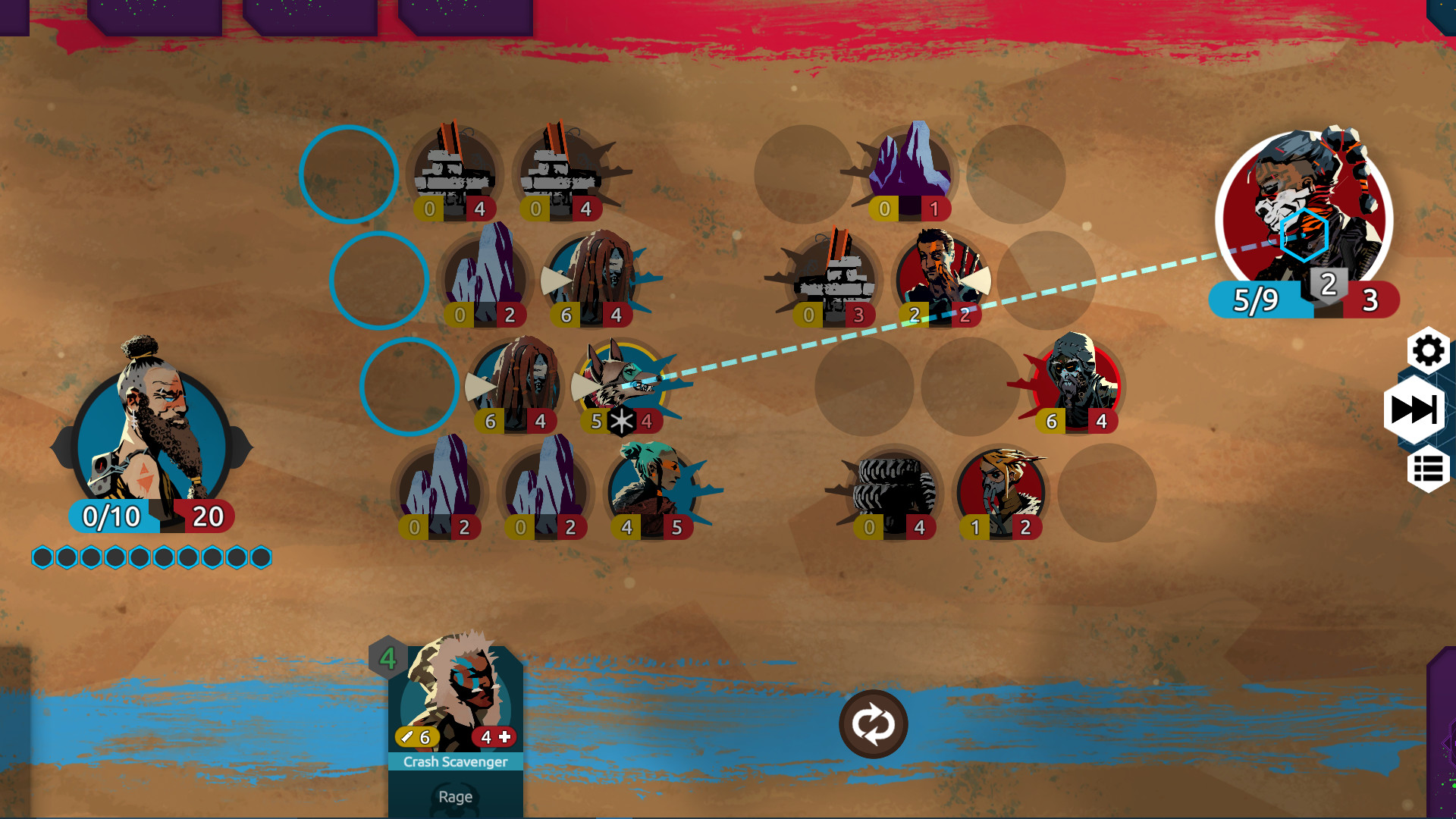
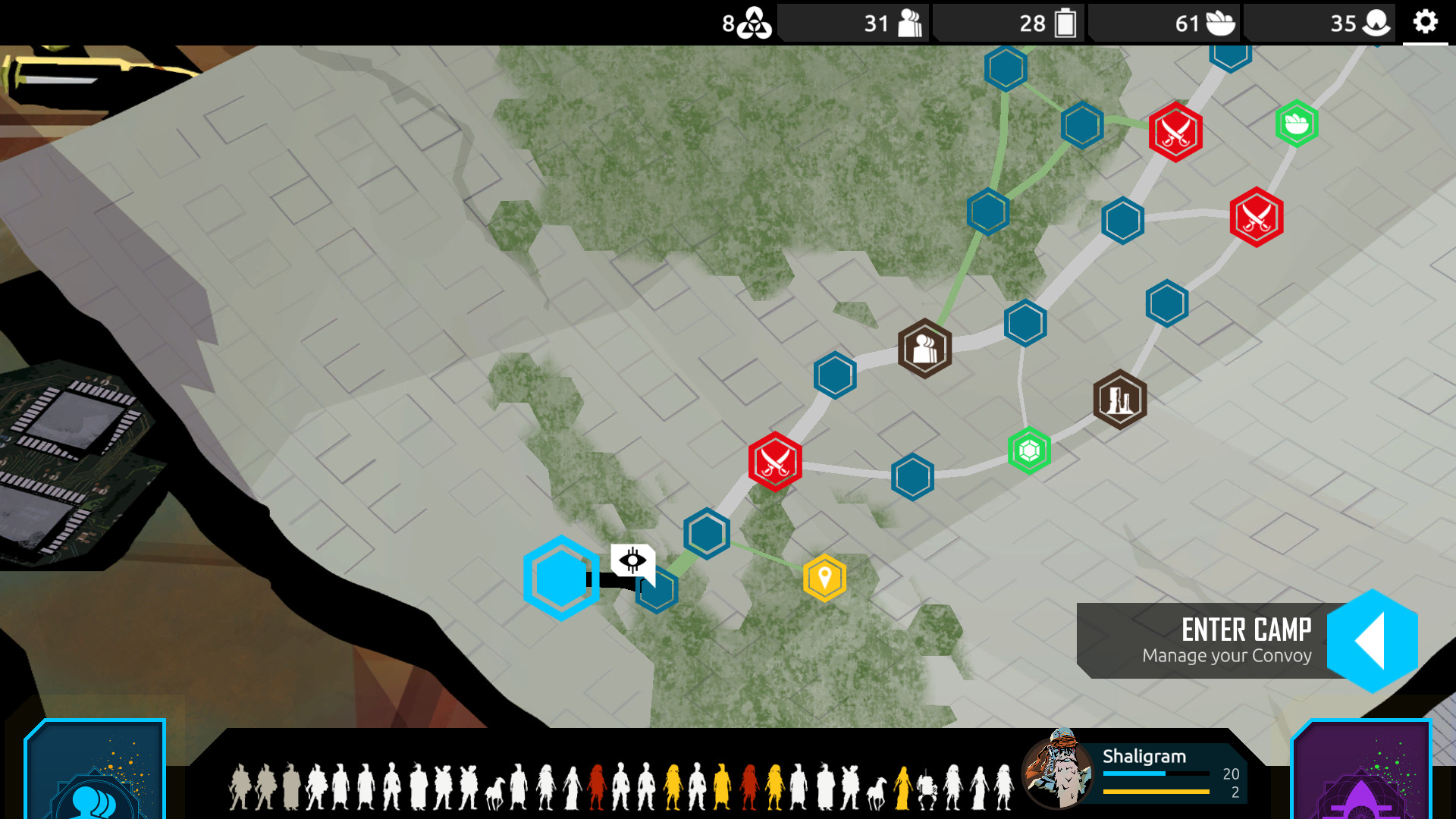
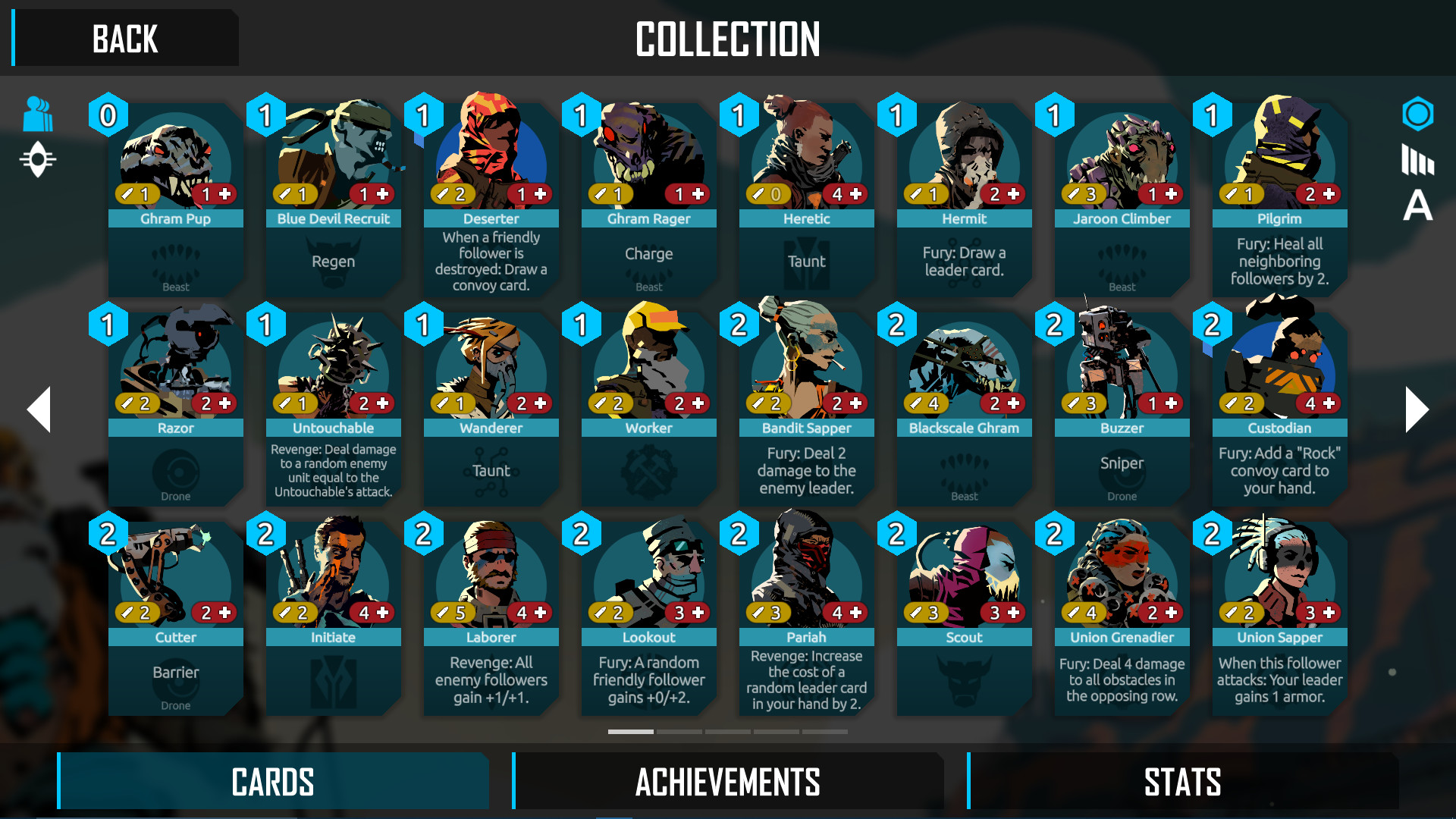
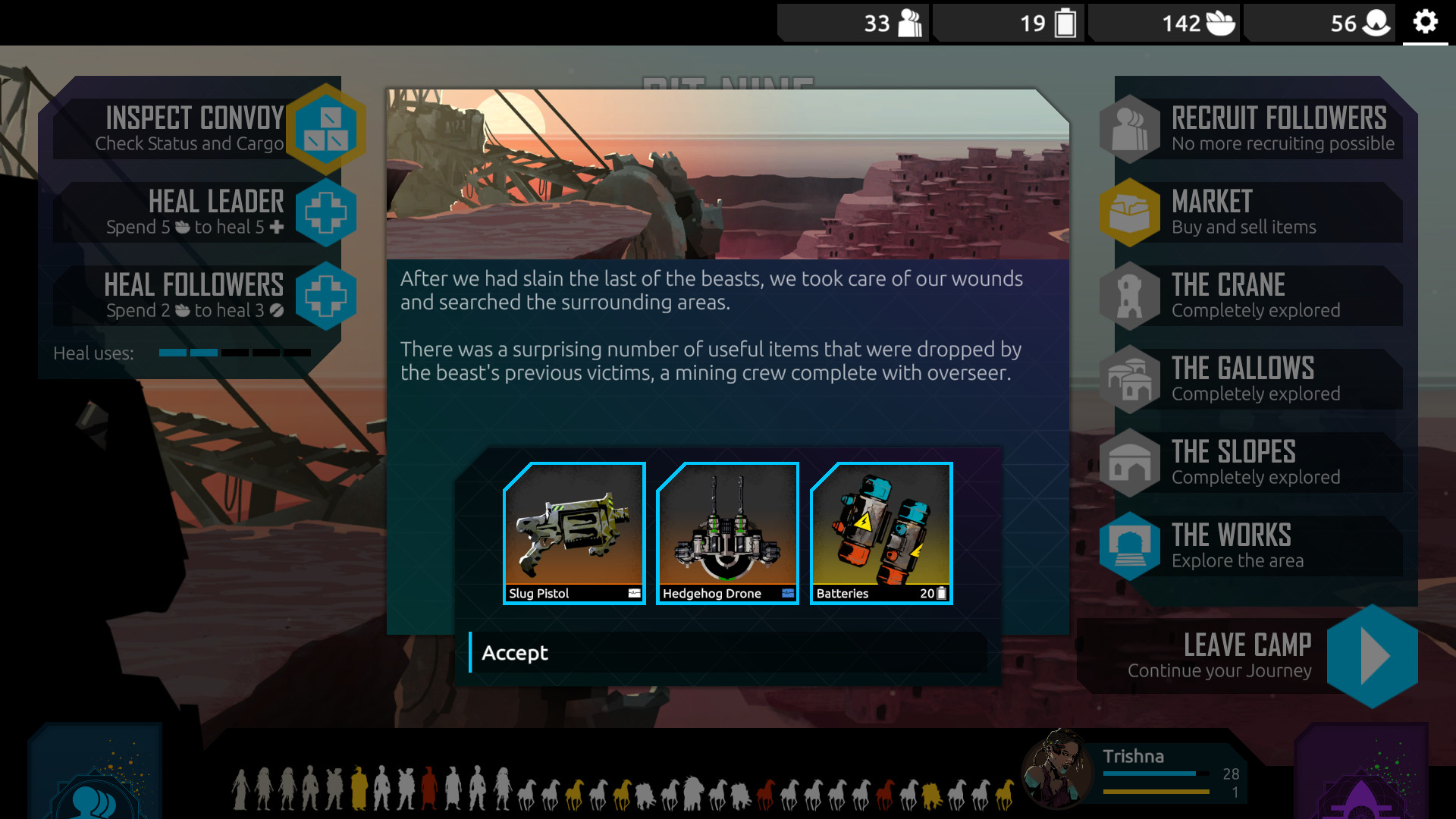
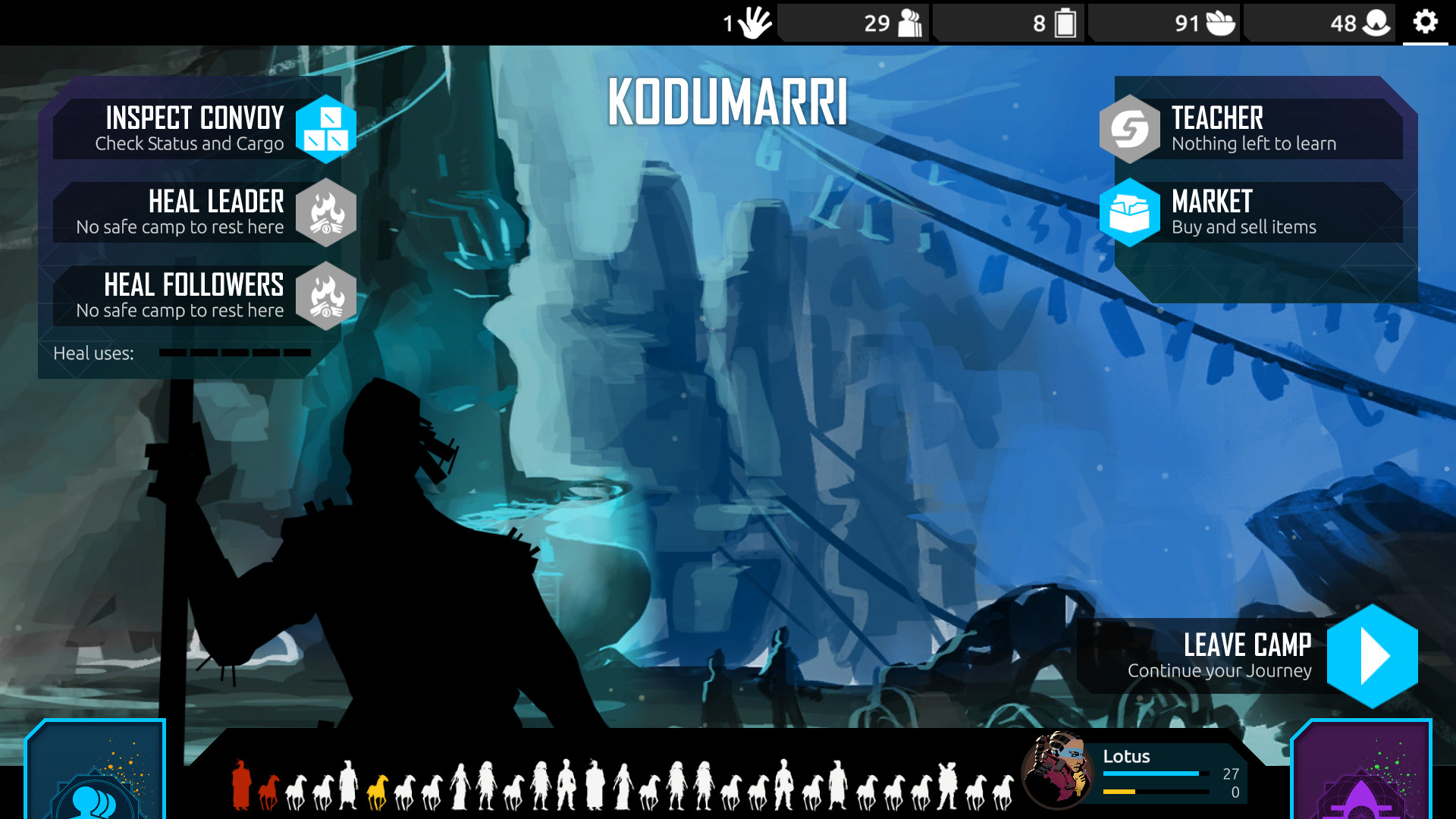
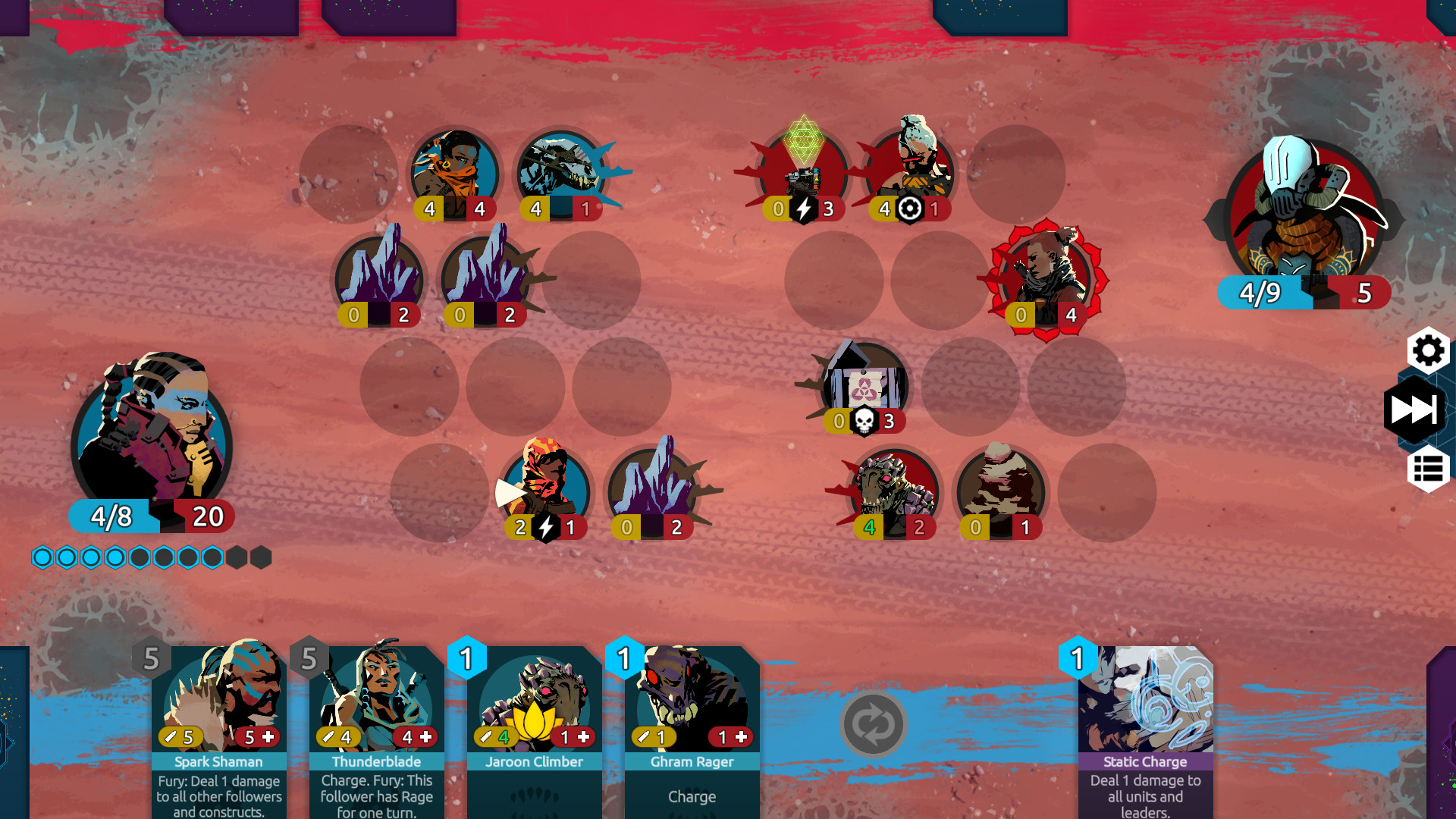
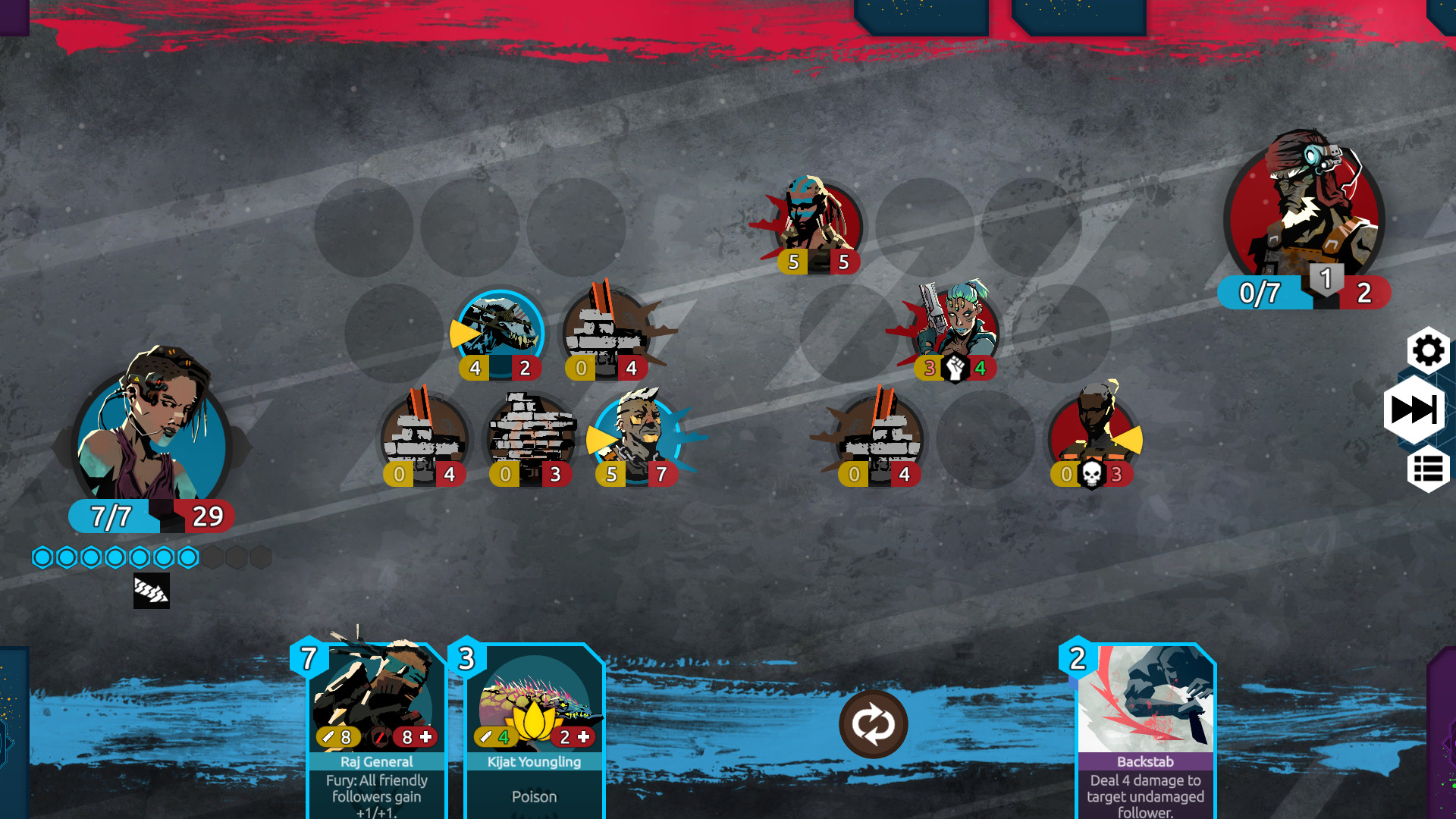
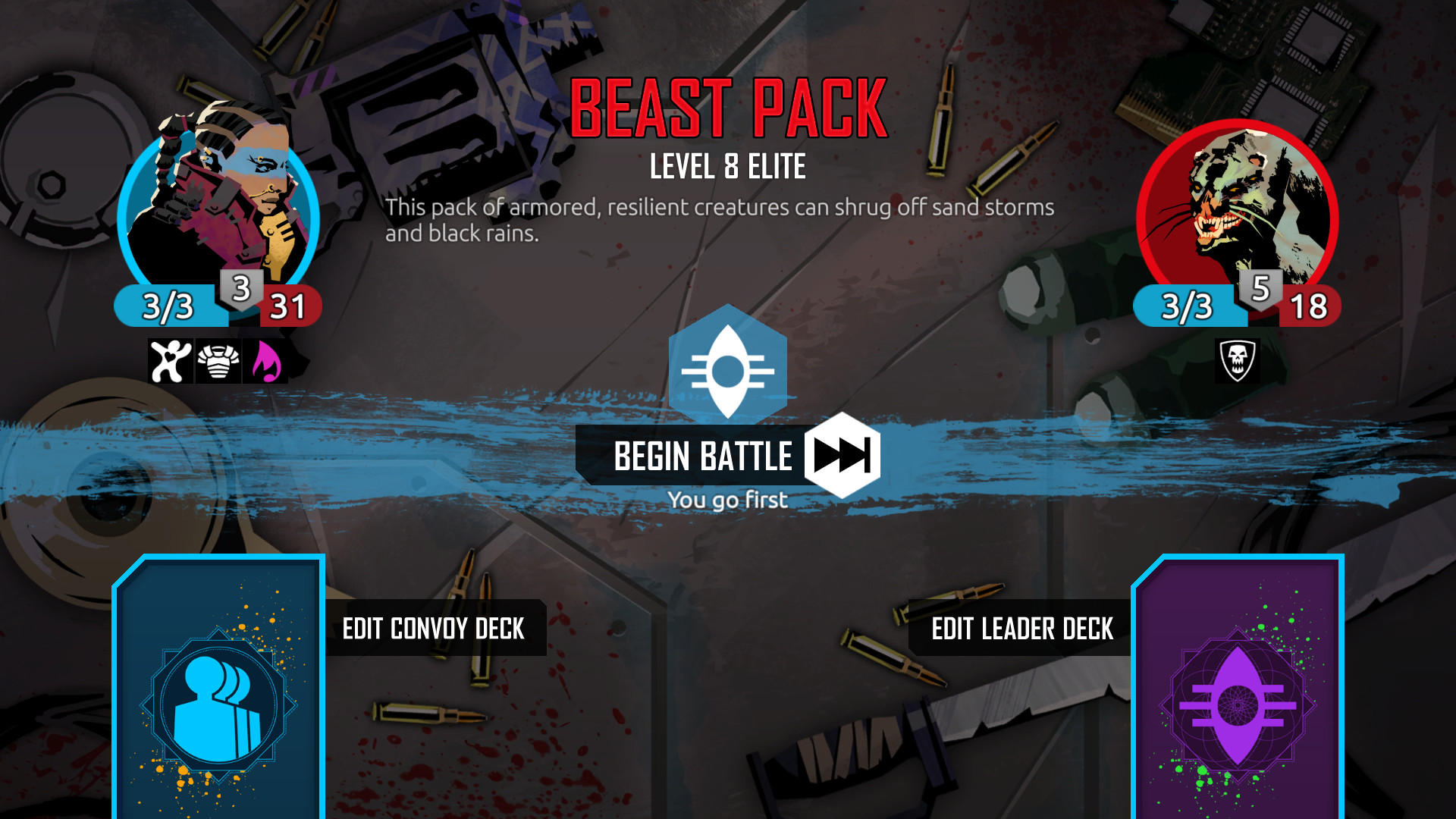
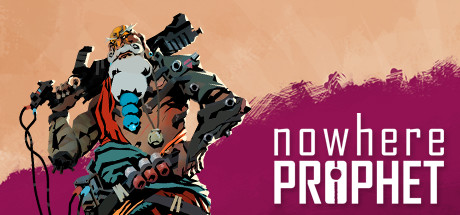
Nowhere Prophet dared to ask the question that no one else would ask: What if we made Hearthstone fun? The game is set on the post-apocalyptic world of Soma, a planet that was once home a highly technological cililization but an event only called "the Crash" has rendered most technology unusable. This led to a collapse of society and now the different factions fight over what little resources and usable technology the planet has left. You play as a technopath, someone who can communicate with machines. Your ability allows you to locate a fallen satellite which gives you the location of an old bunker that supposedly contains a vast amount of resources but more importantely, old technology that is still working fine. Together with a convoy of followers you start the dangerous journey to that location as the new prophet. The gameplay of Nowhere Prophet is a mix between survival management and a roguelike-deckbuilder. You lead your convoy through different regions, each having their own map with various paths, locations and dangers. On the map you have to decide which paths to navigate, selecting a node to move to. Moving on the map consumes food and hope, iof you lack either of those you start to lose followers. Nodes can contain fights, resources or markets. Some nodes, especially markets, are revealed during the start of a region but others stay obscured so you don't know what you will find there. As long as you have rations you can move around the map as you like, there is no strict "only go up" like in other deckbuilders. This is useful if you see a node with important resources that you want go back to. In markets you can buy new followers, equipment for your prophet or luxury items that can be shared with your convoy to increase hope and provide a temporary buff for your next battle. The currency for buying things are batteries which are useful since they can power up old machines and gadgets. You get those from battles but also when you sell trade goods that you often find during your travels. I mentioned followers and battles but haven't addressed the combat yet. Combat in Nowhere Prophet is a card game with positioning. Each leader has a fieled with multiple rows and columns and you can place followers on the field to fight for you. Followers have health and attack power and can attack either enemy followers or the enemy leader directly unless they have a follower with taunt which has to be attacked first. What is interesting here is that both leaders have actually two decks, the follower deck for your units and the leader deck for your spells. This is one of the best parts of the game. Because you have two seperate decks from which you draw cards each turn, you always have a unit and a spell on your hand. The hand limit is also seperate for the two decks, so being full on followers does not mean you cannot draw spells anymore. Both of these decks can be managed individually between combat, the follower deck can be filled with any follower from your convoy and you can freeely exchange cards between combat. The leader deck contains cards that your leader leanrs once he levels up, each level upo allows you to put anew card in your deck but unlike your follower deck you cannot simply remove cards, instead you have to spend points that you get when you level up. This means you have to be more careful what you put in your leader deck because you might not be able to remove it later. Followers that get destroyed during battle something called " a wound". That follower now has permanently -1 health but also costs one energy less to play. Losing a wounded follower in battle will kill them which removes them permanently from your convoy. This is best avoided or you will eventually run out of followers for your deck. This means you will have a more fluid deck in which you move followers in and out of the deck depending on who is wounded and who is healthy. If a follower manages to finish off the enemy leader and win you the battle they gain a blessing instead. This increases their attack damage by 1 and will also remove the wound if they had one. Wounded followers and any damage your prophet has sustained during basttles can be healed in camp sites, usually at markets but some camp sites can be found on the map. This costs food however and you onmly have a limited amount of usages for healing, so management is key again. Some battles will drop equipment or alternatively you can buy it from markets. Your prophet can equip weapons and various other goods. Weapons unlock an attack action for your prophet that he can use once per battle while other goods provide passive bonuses like armor or special effects. Higher levels of your prophet allow you to equipo more and the right equipment can turn a battle in your favour. Alternatively you can dismantle equipment which gives you a new leader card for your leader deck. In some occassions you will have events, either on the map or inside markets. These events have random chances to have a positive outcome. In some events a follower can be used to increase the chances in your favour but you take the risk that you could wound or even lose the follower. In other cases youj may instead use one of the different convoy stats to get a positive result. Your convoy can gain various stats depending on their actions. Altruism is rewarded if you help other people even in desperate times and high altruism will inspire others to help you. Scholar means your convoy seeks knowledge and helps you to discover secrets and other stuff. Believer signifies a more spiritual convoy that can be used to persuade other religious people. There can be other traits and stats achieved for your convoy depending on various secret actions like the cannibal trait which gives you food when followers die. I won't spoil how you get this trait. The game has a variety of different convoys and prophets to choose from. Teh Outcastes, your starting convoy, is a mix of different followers with allrounders that are useful through the entire game and very flexible to play. The Firebrand, one of the playable prophets, focuses on buffs and dealing damage. You can freely combine any convoy with any prophet. Unlocking new convoys and prophets takes however a lot of effort Each convoy also has four passive powers that need to be unlocked first by grinding various tasks. These passive bonuses are meant to gfive you an easier time in various situations, for example the outcastes will start with 10 altruism whioch allows them to get more favourable outcomes in some events. One thing I want to mention is how well designed the game world and lore is. The world of Soma houses various factions which you will meet during your travels. The Blue Devils for example are a group of infected people that work as mercenaries. They are more resilent thanks to their infection but will eventually die to it. The aesthetic of the game world is inspired by indian culture, somethign that is very rare in the gaming world and a welcome change to the usual depiction of western culture. That being said, while I love thi sgame, I have to say that it's extremely hard. Because you can permanently lose cards from your deck by just doing battles, you can brick yourself and lose a run. A single battle could be devastating because you lost too many followers. The concept promotes a playstyle in which you would play carefully and save your followers but in reality the best strategy is to play aggressive and finish fights as fast as possible and just replace followers that died. Because this isn't clear to the player, they will most likely try to keep their units allive and dance around the enemy but then lose more because they get overwhelmed. That being said, give this game atry if you want to play a deckbuilder that forces you to take risks and does not hold your hand.
Expand the review