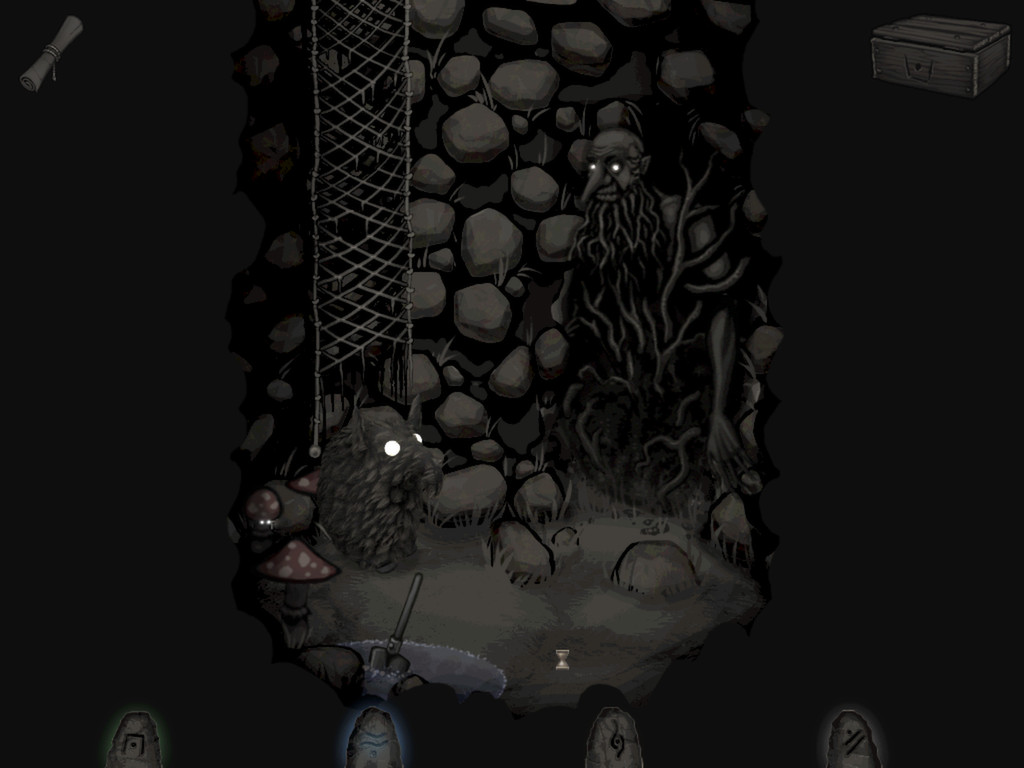
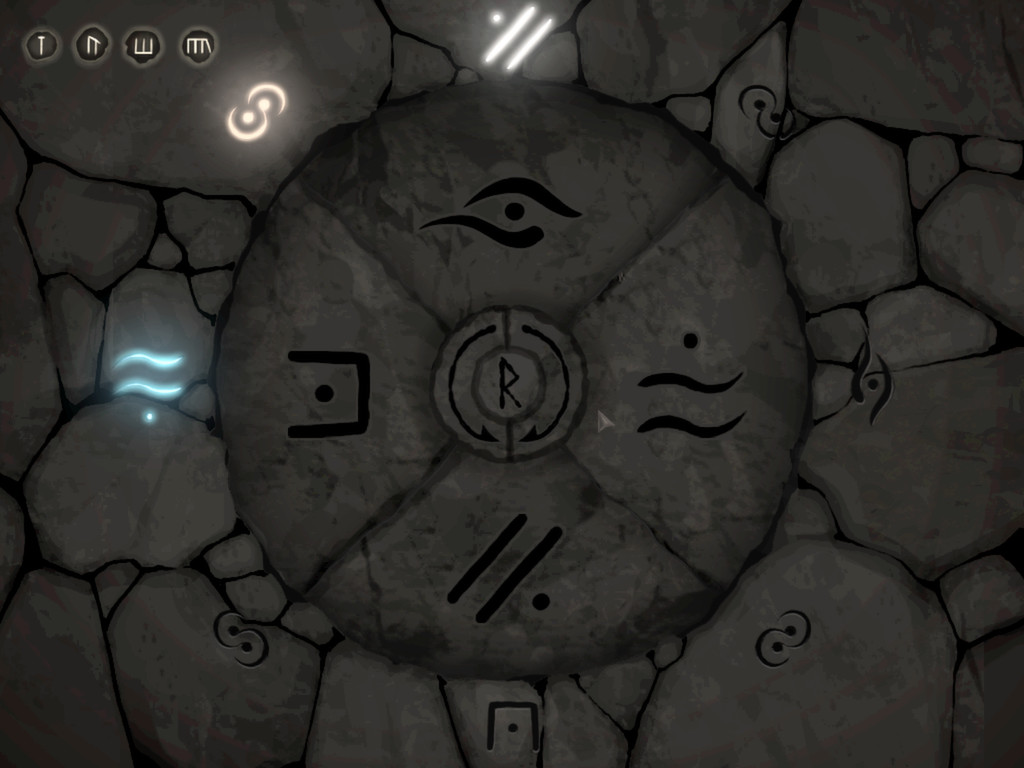
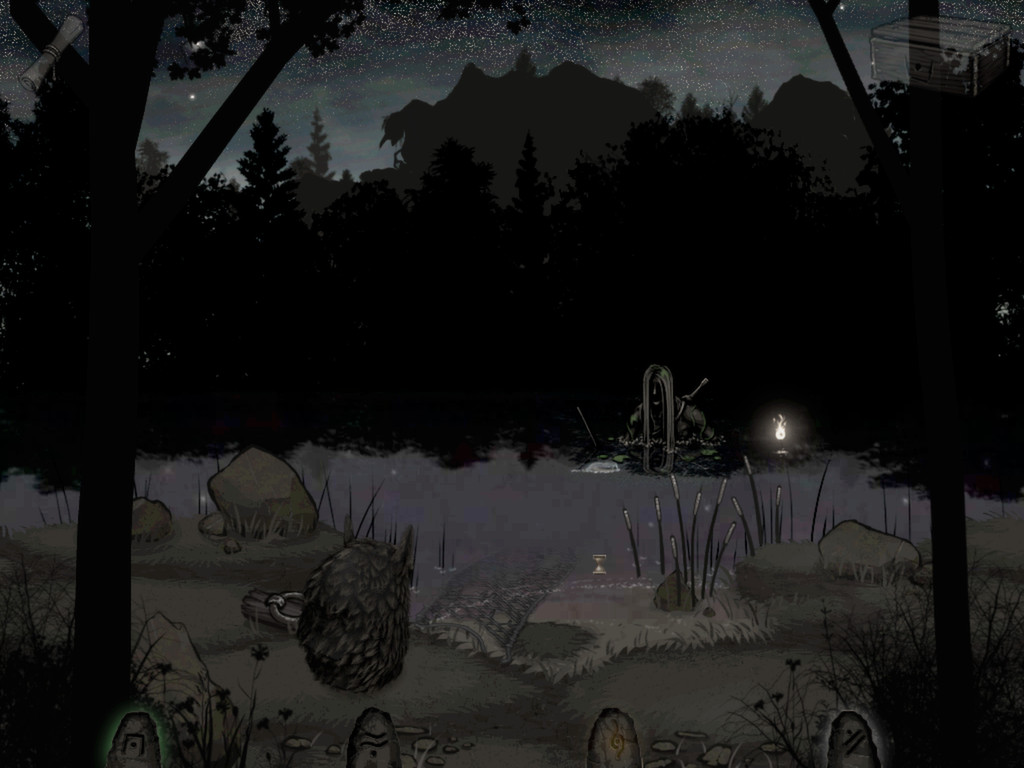
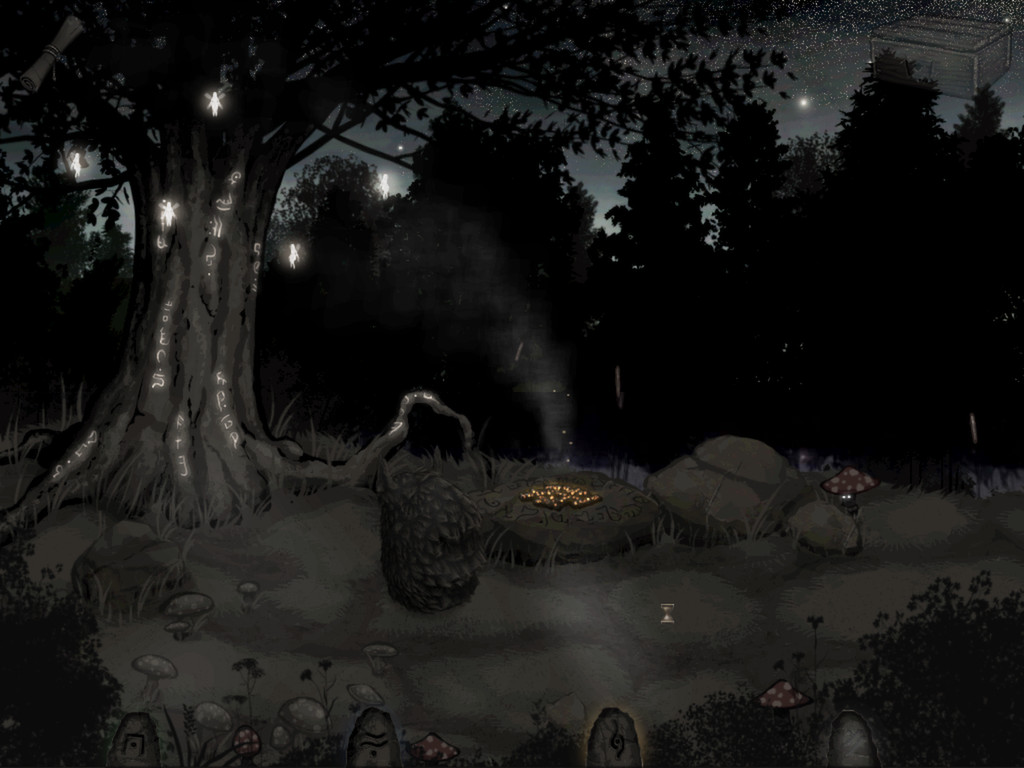
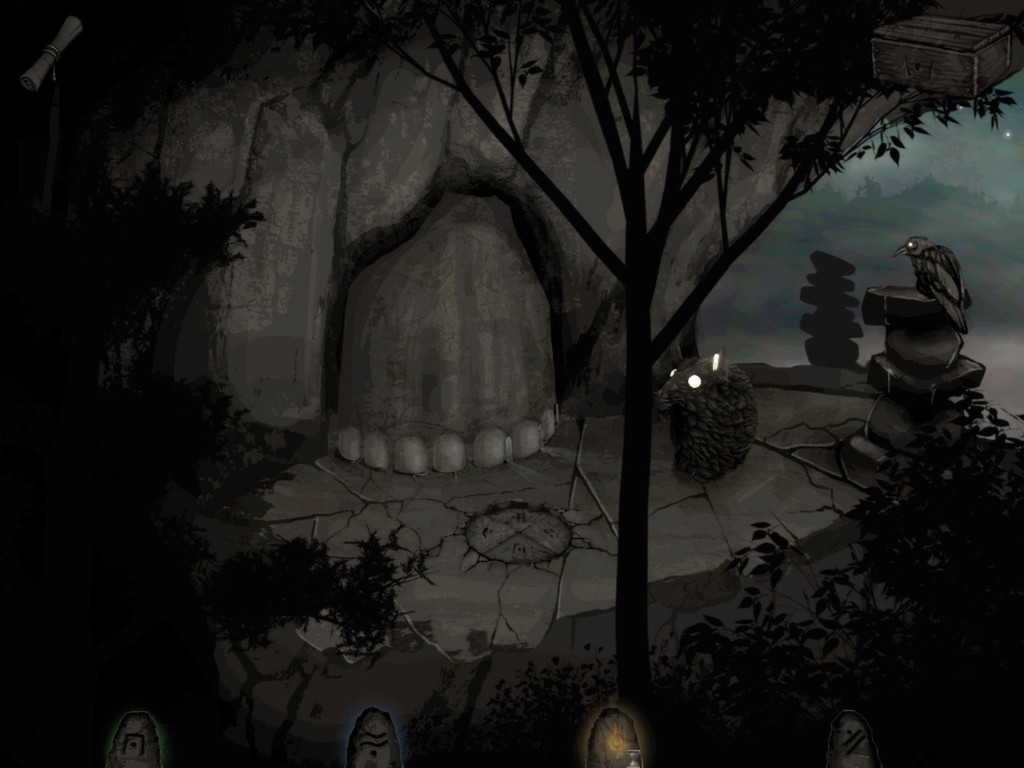
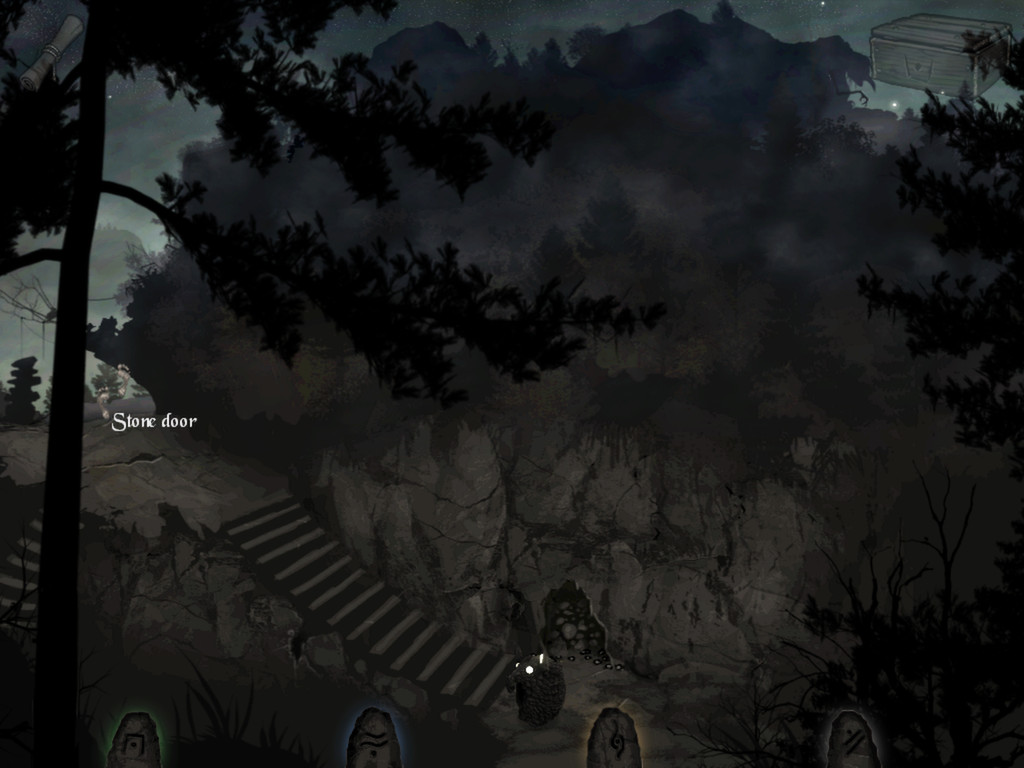
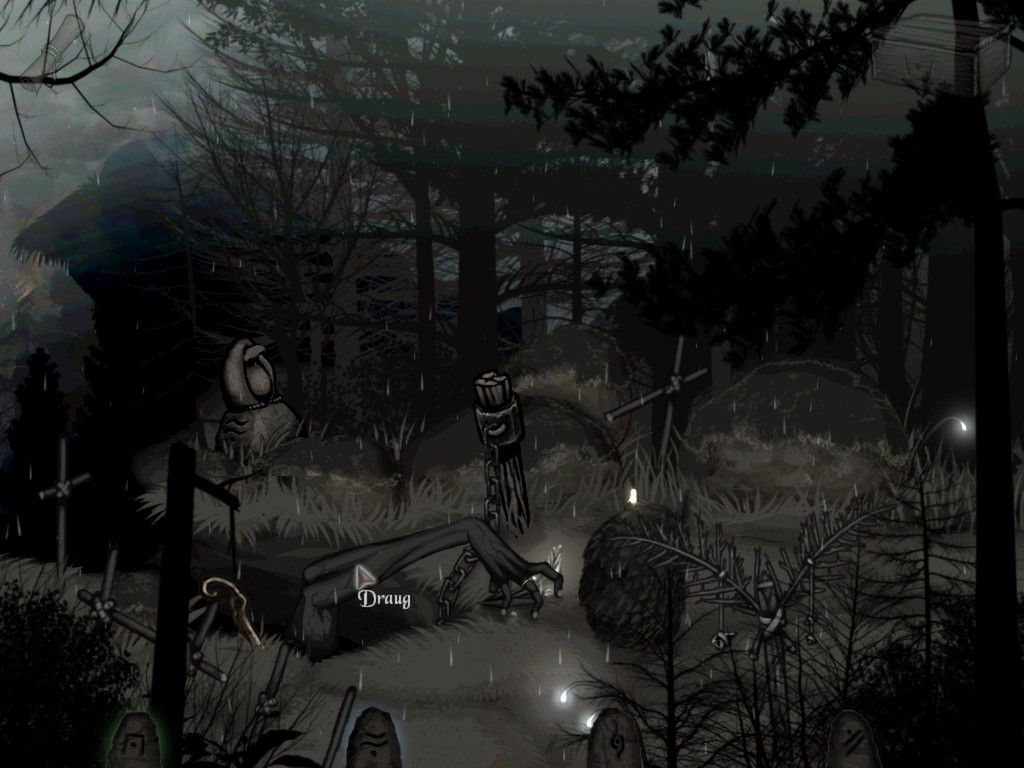
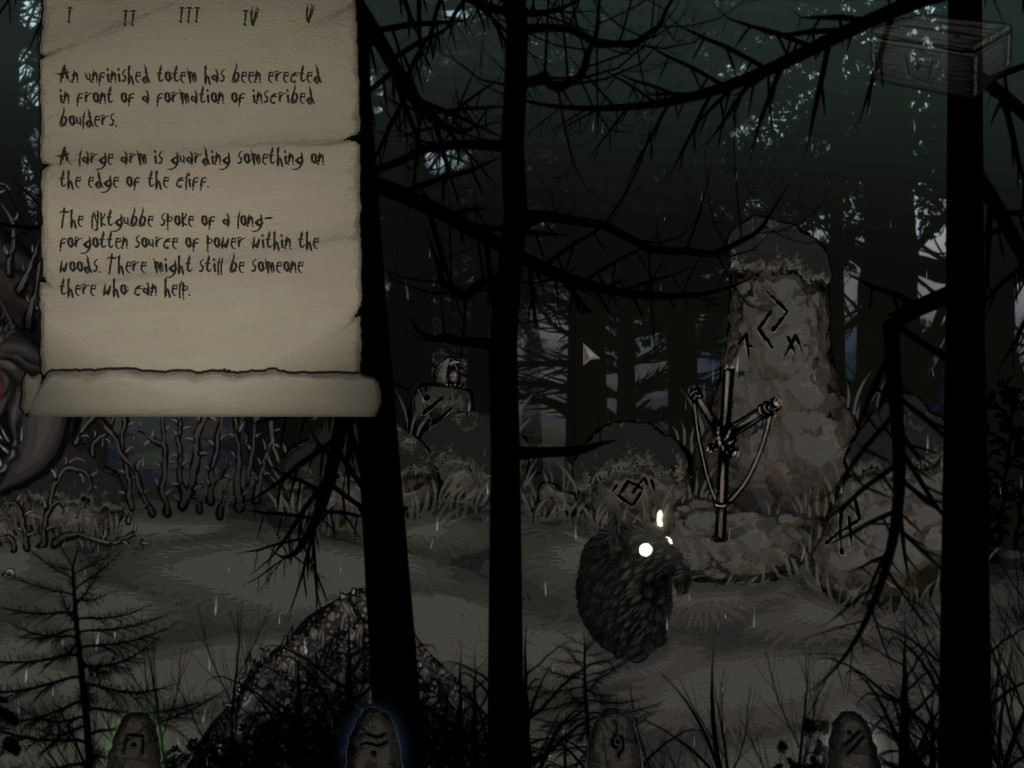
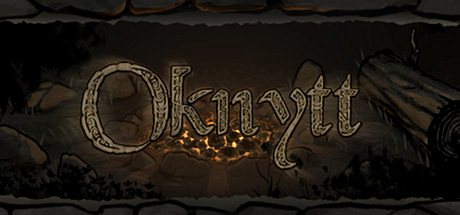
Oknytt, developed and published by Nemoria Entertainment, is a dark, meditative point-and-click adventure that draws deeply from Scandinavian folklore and the quiet melancholy of nature at night. Set in a somber world where strange creatures whisper beneath the moonlight, the game follows a small, nameless being who awakens in a mysterious landscape and sets out on a journey of discovery and belonging. From its first moments, Oknytt sets a tone of eerie stillness and introspection, relying on atmosphere and symbolism rather than exposition or dialogue. It is a game less about grand events and more about subtle emotion, where every leaf, shadow, and whisper seems to carry meaning. The title itself, derived from the Swedish word for “night creature” or “thing that thrives in darkness,” encapsulates its central theme: finding light and purpose within the gloom. The game’s greatest strength lies in its visual and auditory presentation. Every scene is hand-painted with muted tones that evoke the look of an illustrated folklore book, blending earthy textures with delicate, dreamlike imagery. The environments feel timeless and organic, portraying moss-covered stones, murky swamps, and ancient ruins bathed in moonlight. Despite the darkness that dominates its palette, there’s a warmth in the way light and shadow are used to guide the player’s attention. The art direction carries an unmistakably Nordic sensibility—natural, restrained, and quietly beautiful. Complementing this visual design is a haunting soundscape filled with distant animal calls, rustling leaves, and melancholic music. Together, they create an immersive atmosphere that feels less like a conventional game setting and more like stepping into a folktale whispered over a campfire. Oknytt’s storytelling is intentionally minimalistic, unfolding through environmental cues and the introspective narration of a single voice actor. The game’s narrator doesn’t merely describe events but serves as a constant companion, offering commentary on the creature’s thoughts and the world’s mysteries. The delivery is calm, intimate, and slightly eerie, enhancing the game’s ethereal tone. This narrative approach, where every moment is filtered through the narrator’s poetic observations, lends the experience a theatrical quality, as though the player is listening to an old storyteller weave a myth in real time. The writing itself is subtle and melancholy, focusing on isolation, curiosity, and the fragile bond between living beings and the natural world. Rather than relying on dialogue exchanges or elaborate lore dumps, the game invites interpretation—every creature encountered and every object discovered feels symbolic, as if part of a larger fable hidden beneath the surface. Mechanically, Oknytt adheres to the traditions of classic point-and-click adventures but introduces a small twist in the form of elemental runes. Throughout the game, players collect and use four runes representing fire, water, air, and earth, each capable of influencing the environment in subtle ways. These runes add a touch of magical realism to the puzzle-solving, allowing for interactions that go beyond standard inventory combinations. For example, players might use the rune of water to make plants grow or the rune of air to stir a forgotten object. While not groundbreaking in complexity, this mechanic reinforces the game’s theme of natural forces and ancient magic, giving a sense of connection to the world’s unseen rhythms. The puzzles themselves are moderate in difficulty, leaning more toward exploration and observation than cerebral challenge. This design choice suits the game’s pace and tone, encouraging contemplation rather than frustration. Each area in Oknytt feels distinct, inhabited by creatures drawn from Scandinavian mythology—trolls, spirits, and strange beings that live in the shadows between dreams and death. These encounters often oscillate between the unsettling and the endearing, capturing the ambiguity of folklore where monsters and helpers are sometimes one and the same. The player’s journey through these lands feels cyclical, like wandering through different aspects of the same mythic realm. There’s a subtle emotional undercurrent that runs through these interactions, hinting at loneliness, transformation, and rebirth. Even though the protagonist never speaks, its curiosity and persistence create a quiet empathy that resonates with the player. The pacing of Oknytt is deliberately slow, rewarding patience and immersion. It does not rush to deliver revelations or twists, but instead asks the player to linger, observe, and interpret. Some may find this meditative pacing refreshing—a welcome departure from games that demand constant activity—while others may feel that it borders on lethargic. The same could be said for the puzzles, which, while thematically fitting, can occasionally feel straightforward or underdeveloped. The interface is functional and intuitive, though a few moments require careful pixel-hunting to locate specific items in the dimly lit environments. Despite these minor shortcomings, the overall experience remains coherent and elegantly designed. Every design choice, from the subdued color palette to the sparse interactivity, serves the same artistic vision: to create a story that feels like an old myth rediscovered. Technically, the game runs smoothly on modern systems and remains lightweight in performance demands. The art and animation blend 2D backgrounds with simple character movements, maintaining a consistent handmade feel. The soundtrack, a mix of ambient tones and soft melodies, complements the emotional progression of the story perfectly. The use of silence is equally effective—long stretches of near-quiet amplify the loneliness of the journey and make every sound meaningful. This attention to sonic detail underscores Nemoria Entertainment’s commitment to atmosphere over spectacle. Oknytt may not appeal to everyone. Those seeking intricate puzzles, branching narratives, or fast-paced adventure will find little of that here. But for players who value mood, folklore, and emotional subtlety, it offers something rare—a quiet, introspective experience that feels personal and hauntingly sincere. It’s the kind of game that lingers after it ends, less because of plot twists or challenge, and more because of the feelings it evokes: wonder, melancholy, and the faint comfort of finding light in darkness. Ultimately, Oknytt is a work of quiet beauty and artistic restraint. It celebrates the strange harmony between the natural and supernatural, and it succeeds in capturing the essence of myth not through grandeur, but through simplicity and sincerity. Its world feels alive yet fragile, its tone sad yet comforting. Few games manage to be both so understated and so evocative. Oknytt is not just an adventure—it’s an atmospheric poem rendered in shadow and light, a whispered tale about the small spark of hope that can flicker even in the loneliest night. Rating: 8/10
Expand the review