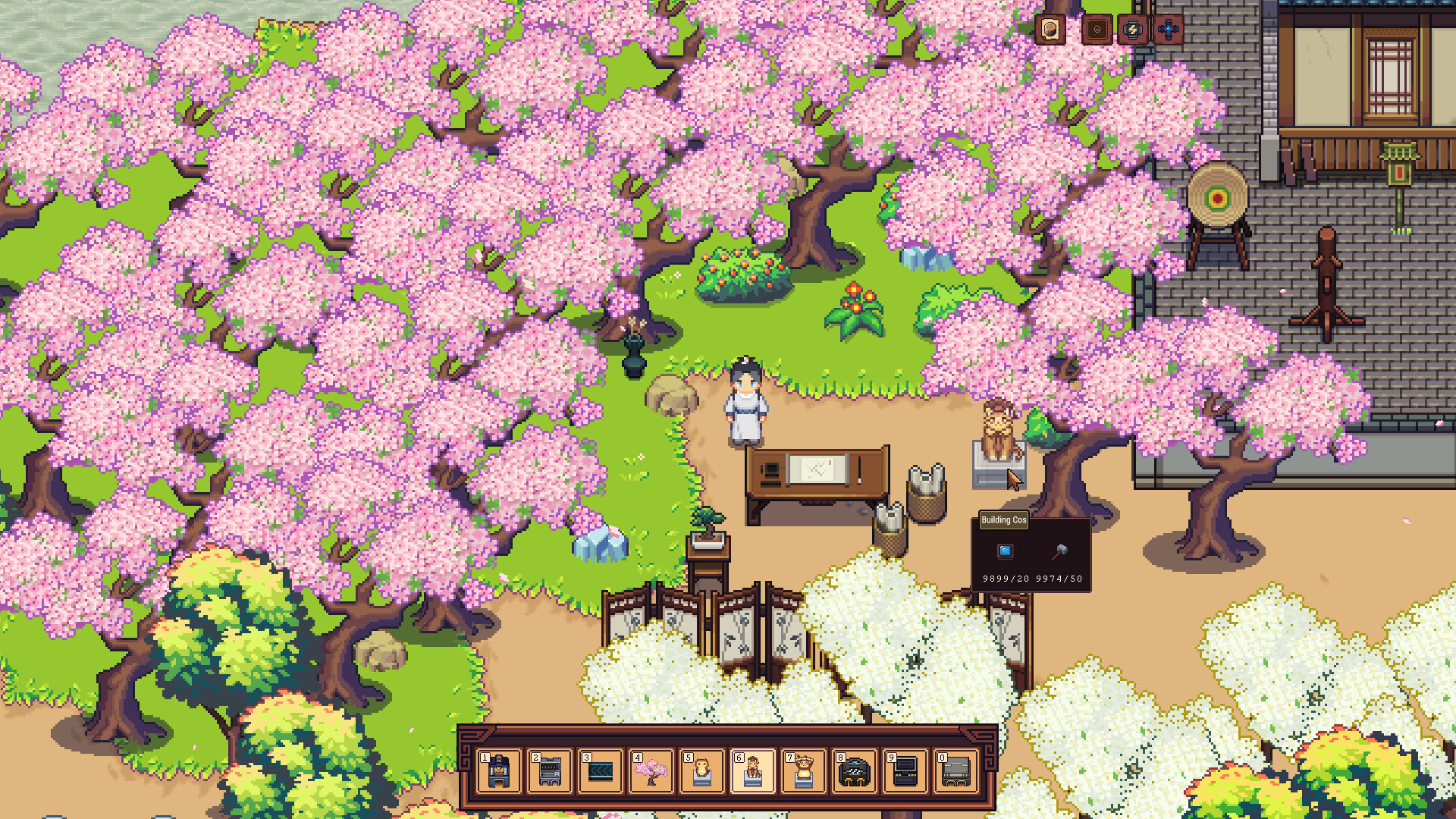
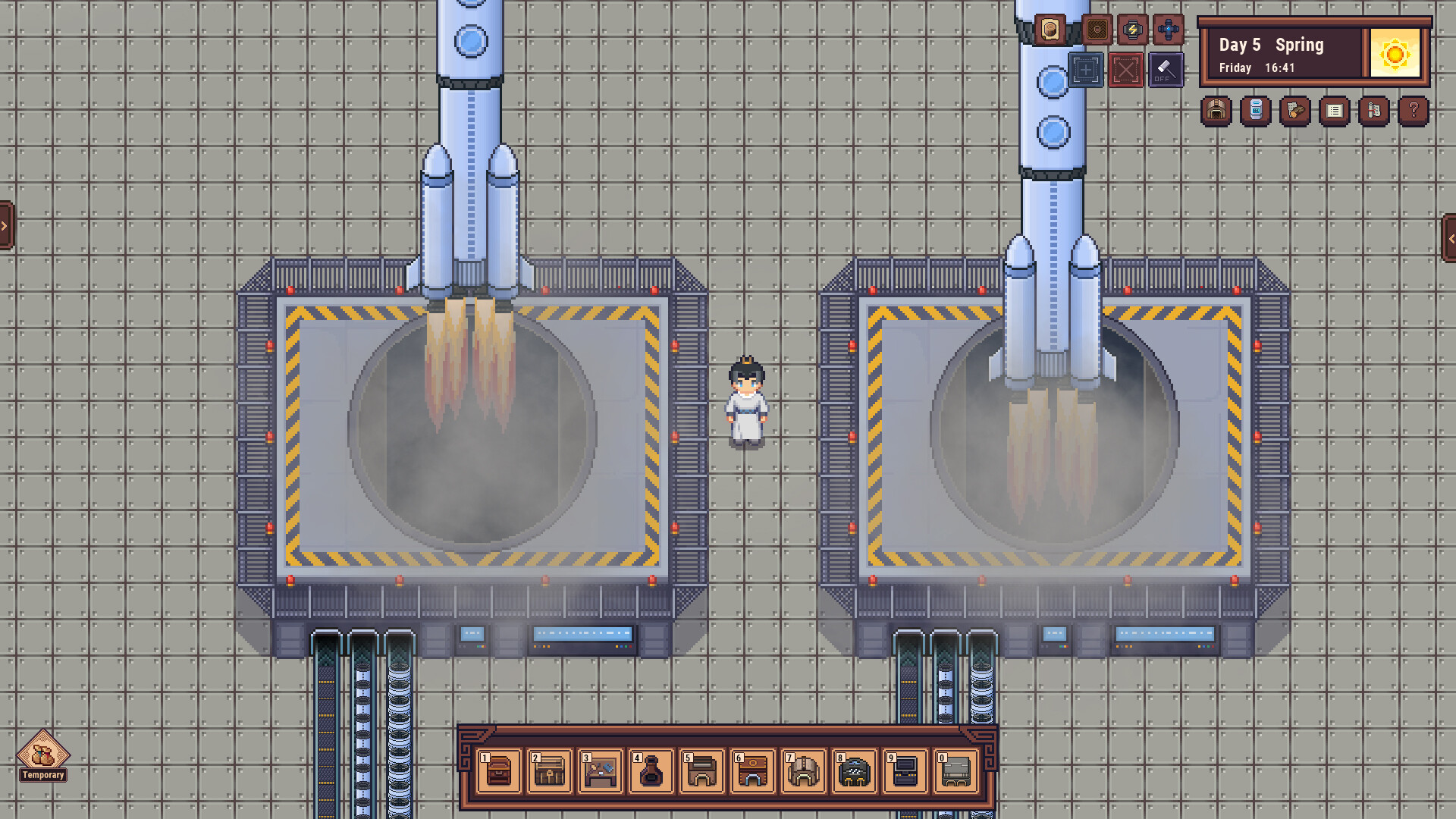
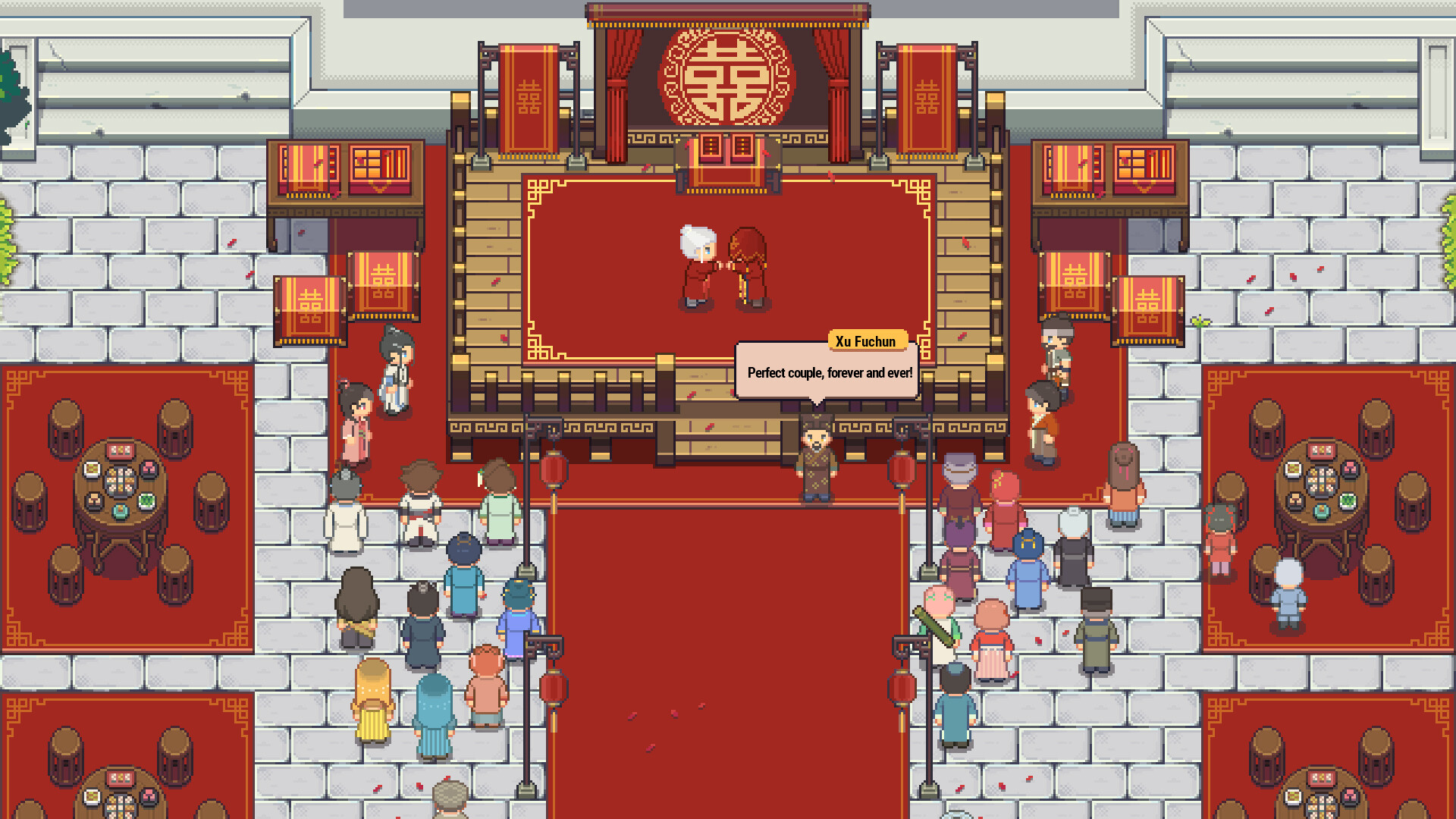
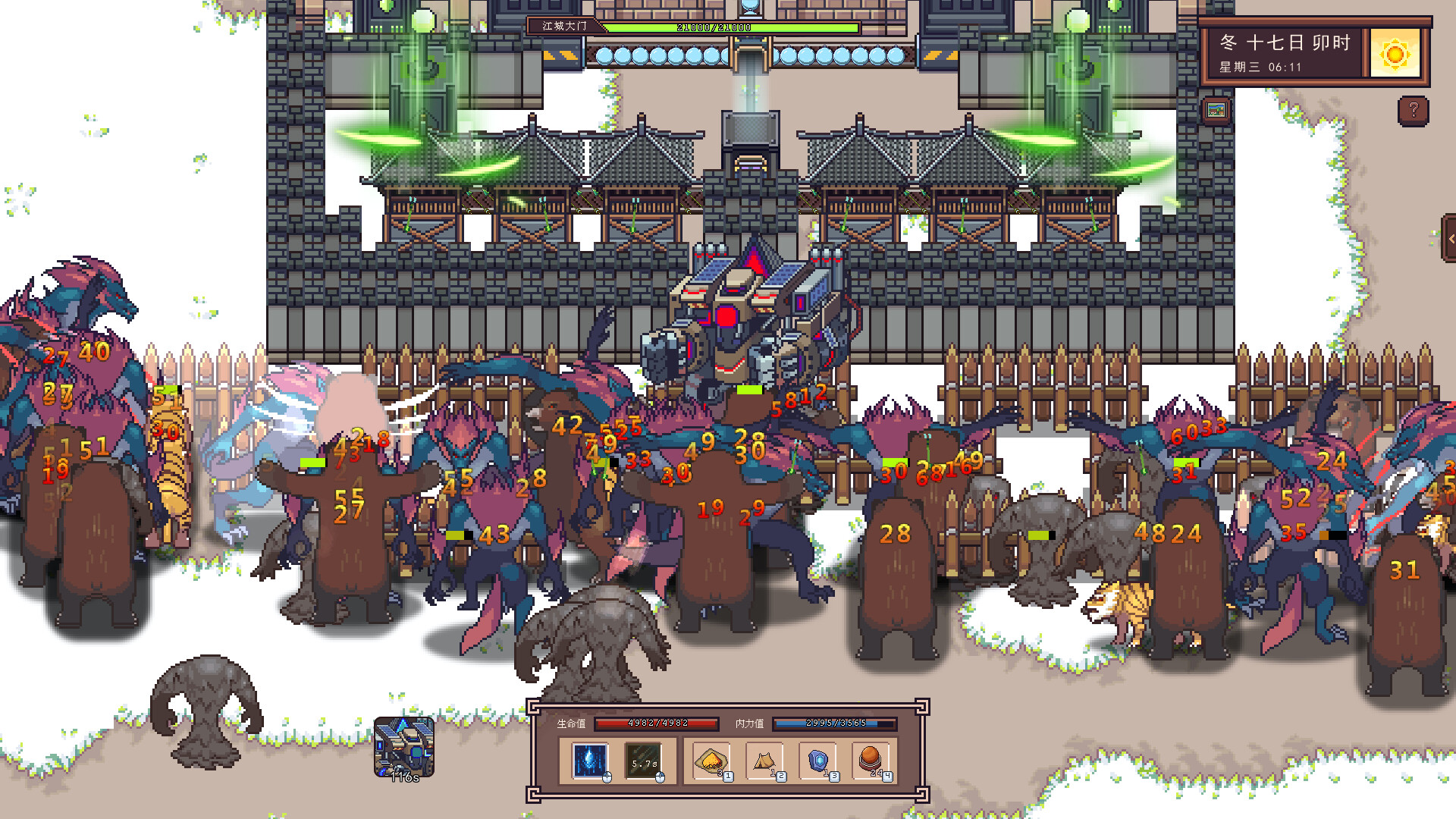
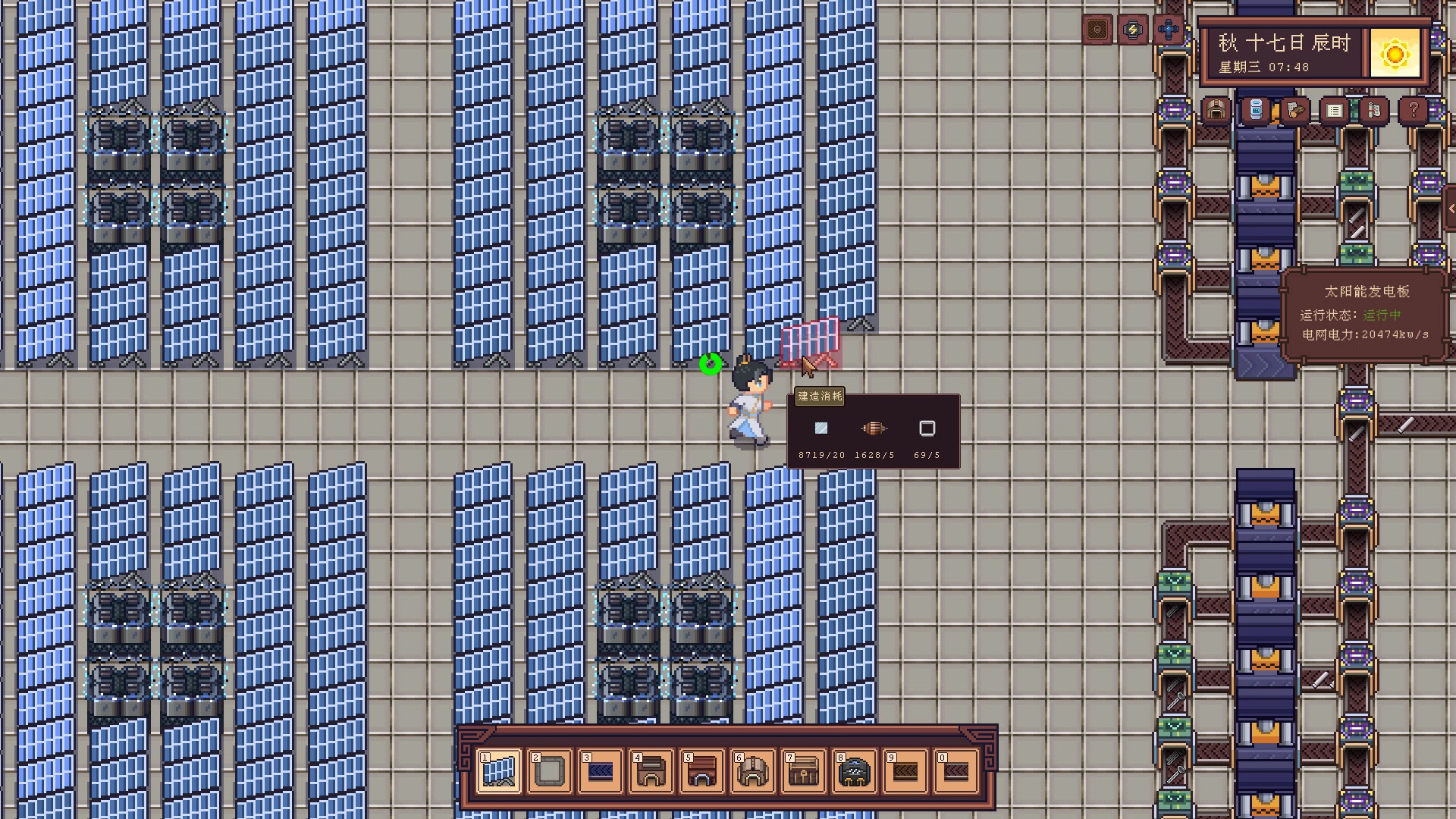
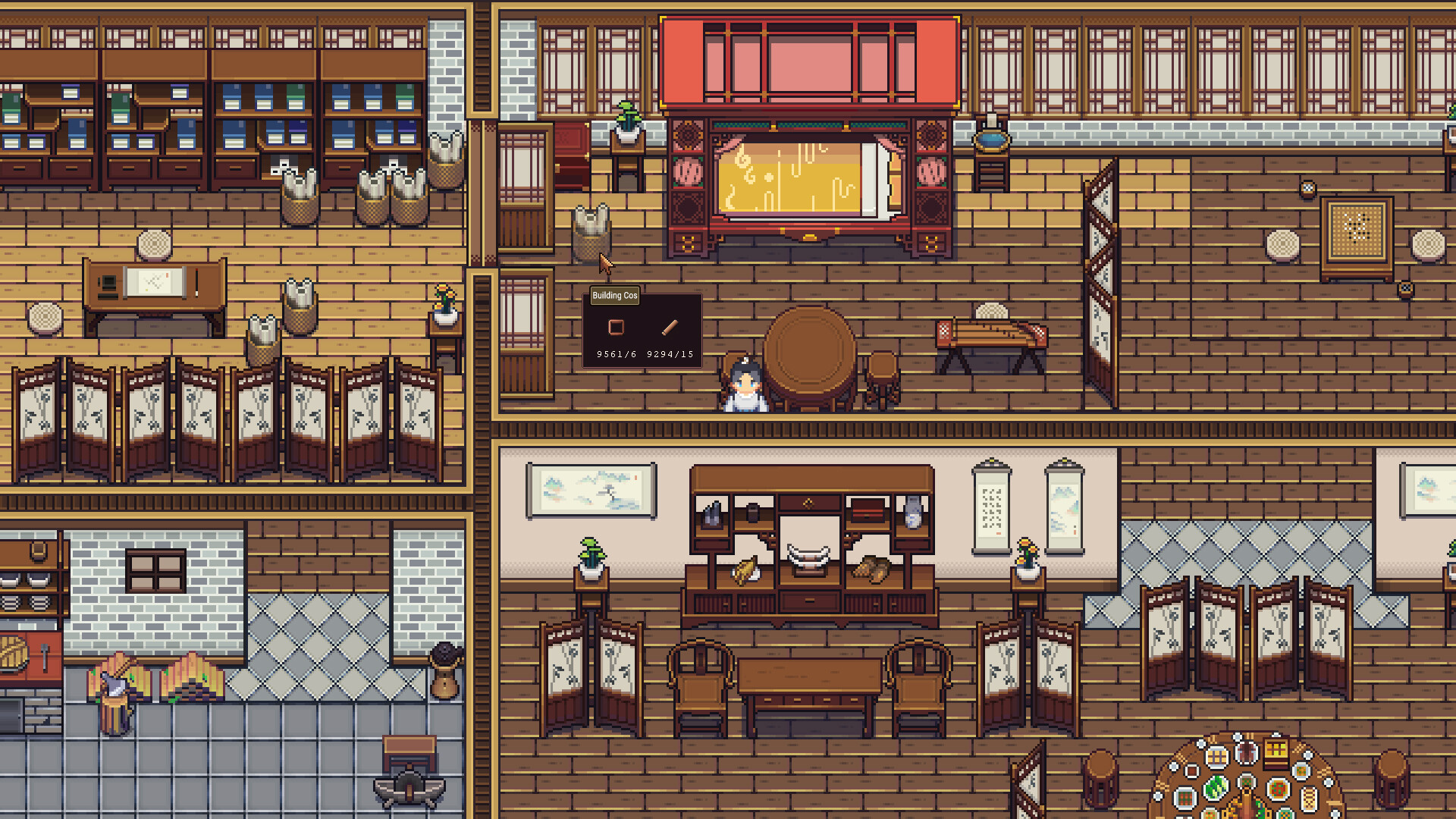
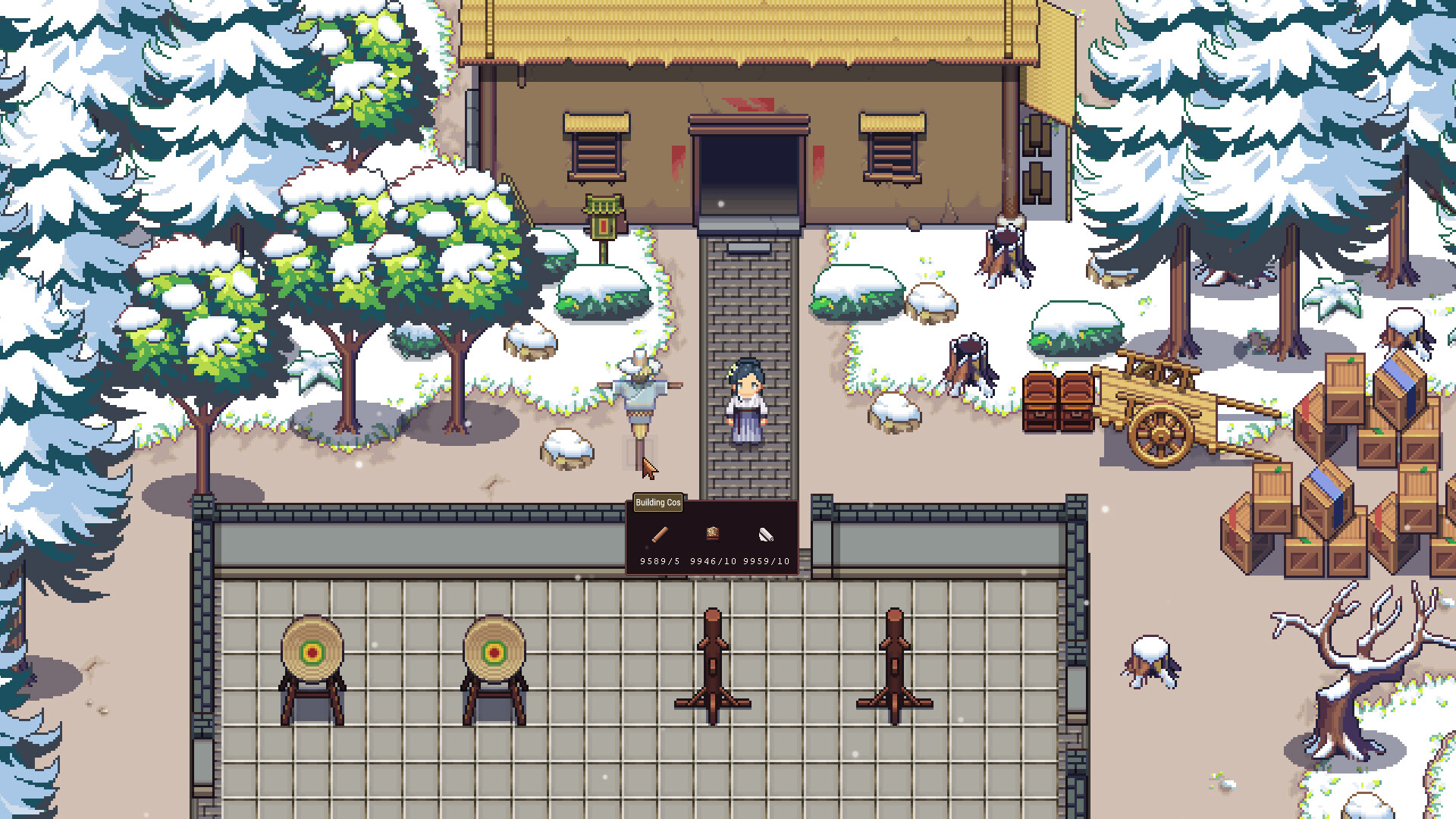
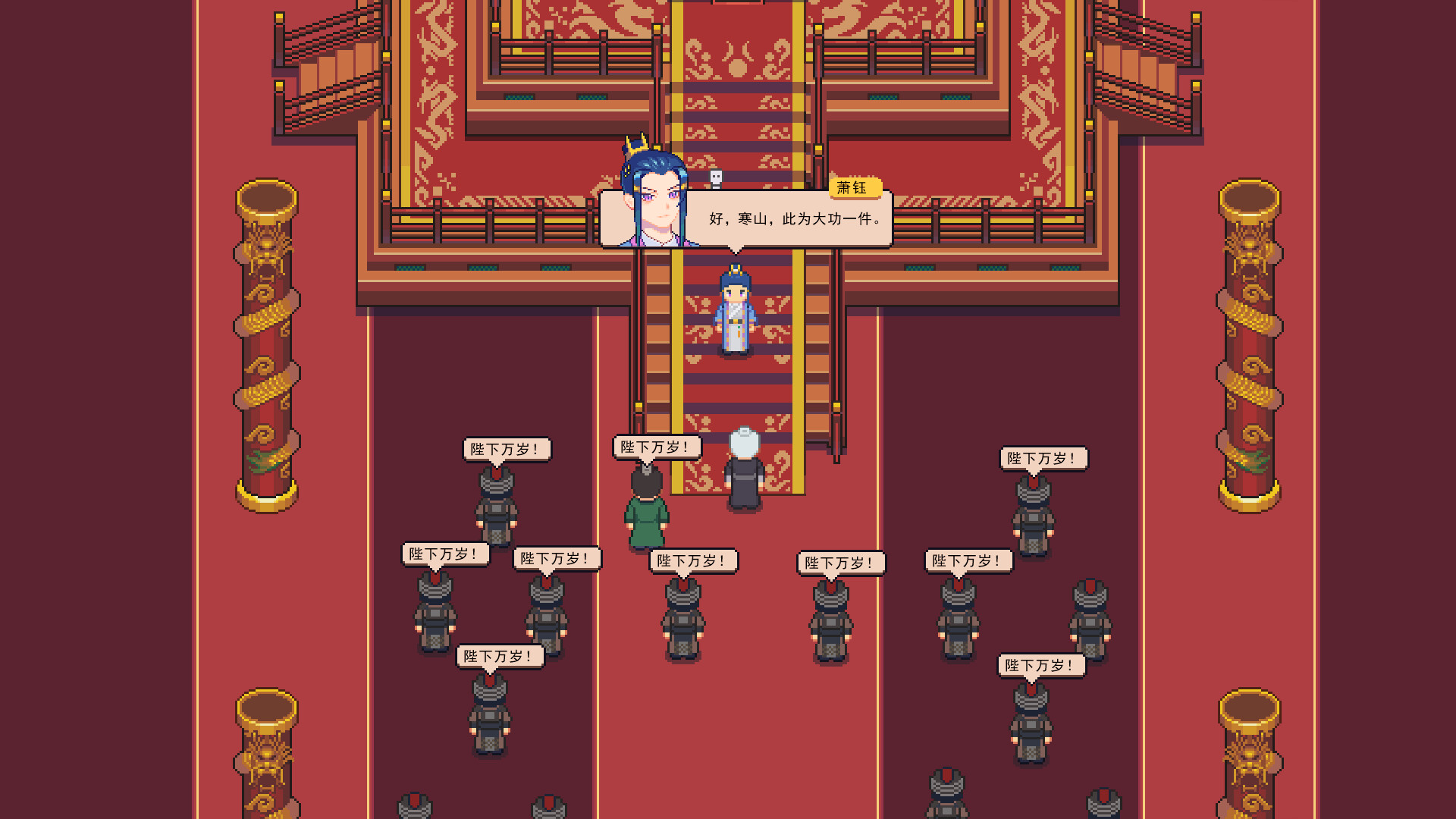
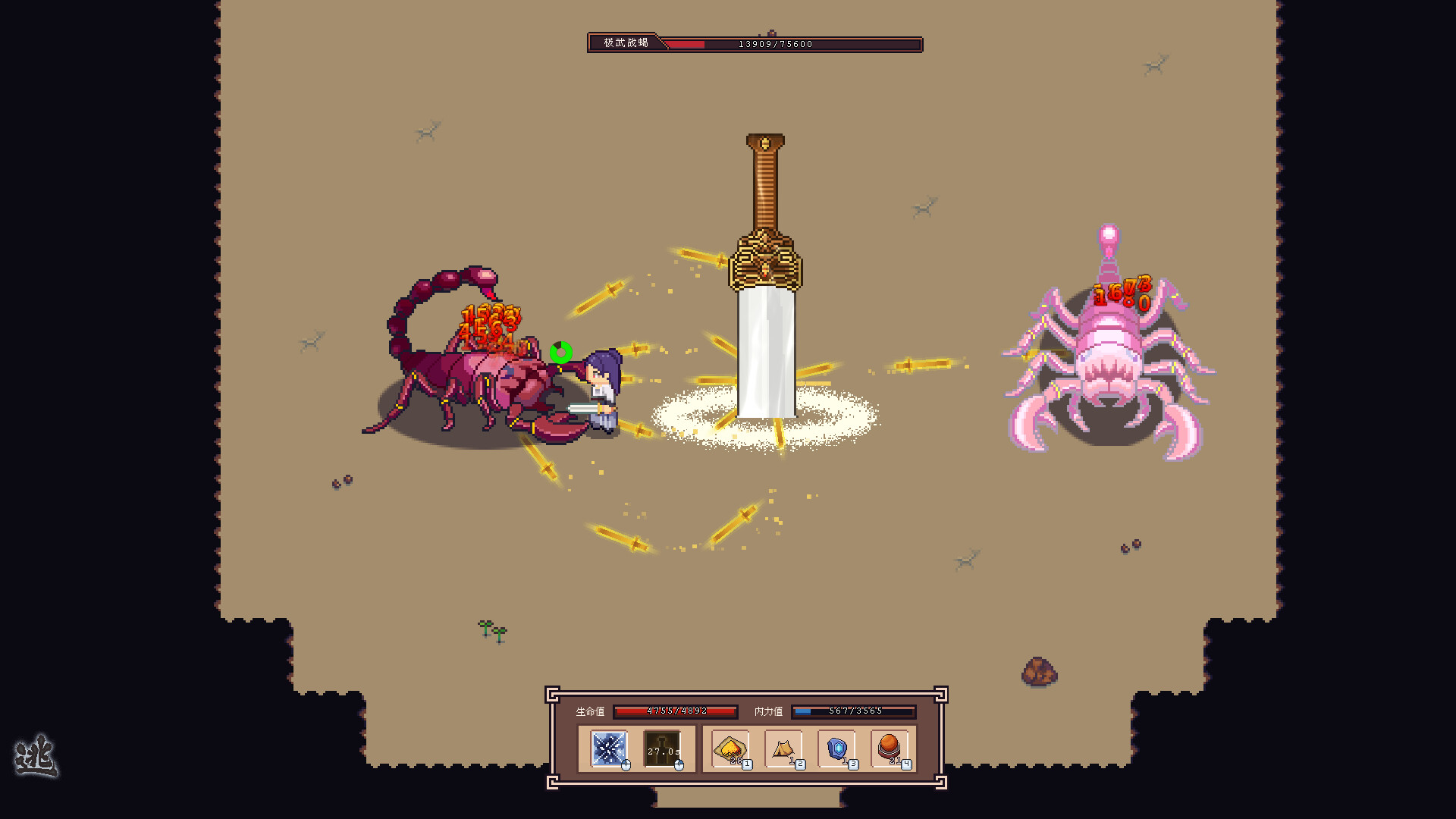
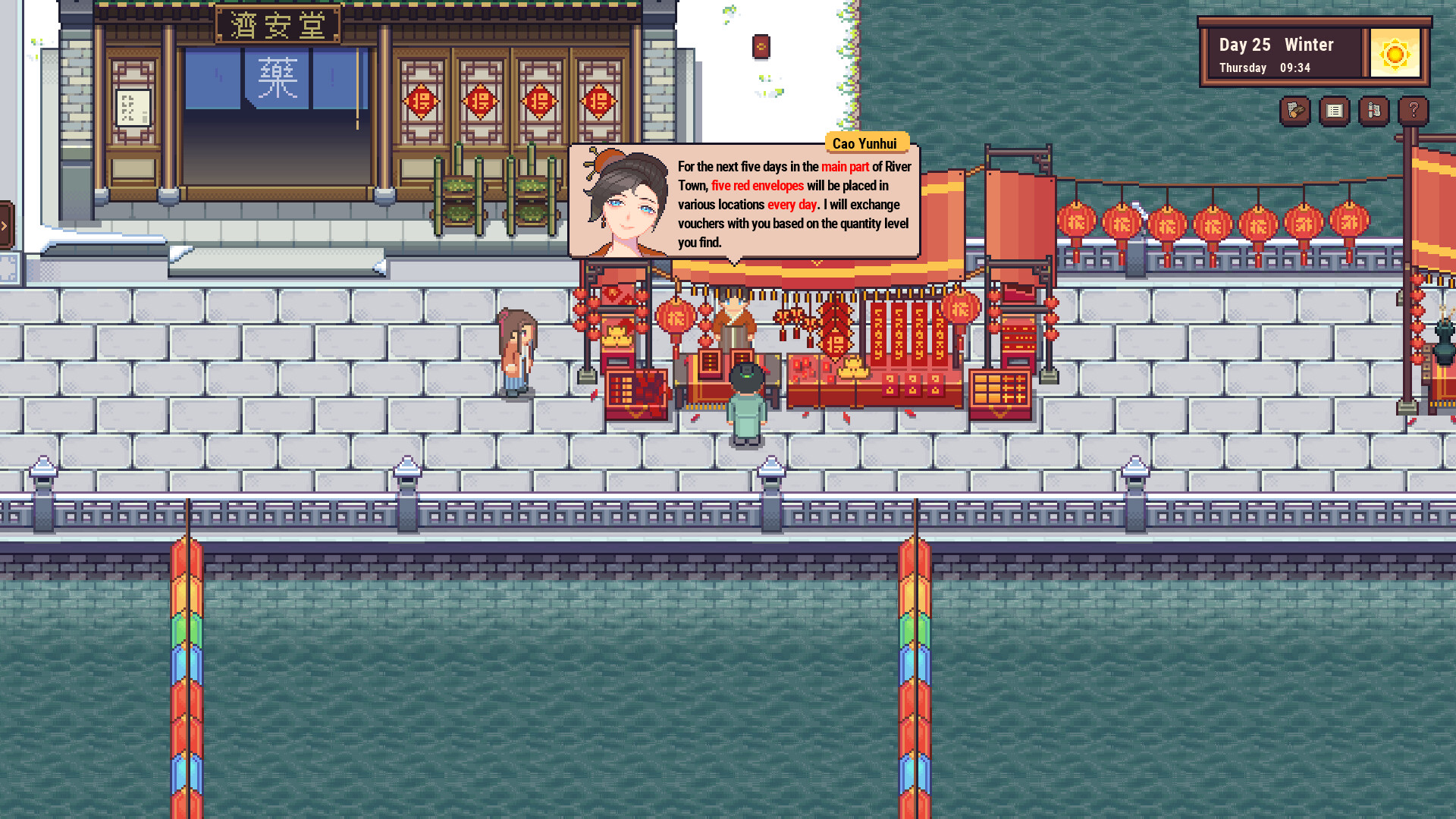
I came into this game with no expectations after having been bummed out by another Factorio + Stardew genre fusion. I left with nearly double the play hours that I expected and had a way more satisfying experience than I thought I would have. Art The game looks rather dated for a pixel art game made in 2024. However, that's only if you're looking at still screenshots of the game. The sprites for these pixels are super lively and while some NPC's use a pretty generic bounce up and down motion, it becomes part of the charm later on. The animations and key frames aren't perfect, but they don't have to be. They all play into the atmosphere the game provides really well. More than anything though, I'm more impressed by the set pieces than I am the character sprites. The set pieces are incredibly well crafted and the machines actually look like machines. Factory Gameplay The factory side of the game is what you would expect from a factory game: you get raw resources, put them on a conveyor belt, send them to various machines to change them into something else, and continue the process until they're ready for shipping. This game does very little to change up the formula and that's fine. I prefer it that way. However, something I was pleasantly surprised by was that the rawest resources aren't mined. Instead, you buy rights from mines, farms, tree choppers, and quarries. They ship them to your base at the start of each day. From there, you use supplier boxes to determine where the raw resources go, and they function as the start of your production chains. This is a pleasant change because number one, it means you won't ever run your resource nodes dry. Number two, it means you have to plan how many resources each supply box gets, thus, having full control of your bottlenecks. Number three, it rewards you for knowing your factory numbers better. I do think one thing the factory gameplay messed up on was the research system. You get research points for putting in certain combinations of items into the research machine, kinda just like any other factory game. However, this takes time to process points for with each pair of items you throw into it. Instead, you can put those items into your inventory, travel to the research temple, and directly convert the items into research points there. The conversion is instant and there seems to be no efficiency loss, too, meaning there's every bit of incentive to use the conversion machine rather than the automated one. What they probably should have done with the automated one is provide 2 research per pair instead of the 1 that you get through the conversion machine. Town Gameplay Way more pleasant than I expected. The NPC's certainly have personalities of their own. Some come off as very hostile to you, unafraid of hurting your feelings at all. But over time, they warm up to you if you allow them to. What amuses me though is that you're sometimes given options at certain friendship levels to either befriend them or remain frenemies with them. This is something you seldom see in life sim games. And seeing that here is very amusing, especially if you're familiar with Chinese Wuxia stories. The other interesting thing is that the some of the NPC's actually have a purpose in both their functions in town as well as the story. They're not just random marriage candidates for you to court because their pixels jiggle at you enticingly. This is one aspect that many life sims get wrong. River Town Factory does get it right. Unfortunately, the number of lines the NPC's have don't have much variation. However, this is an ongoing issue with most life sim games. At the very least, their dialogue remains in character and they're not just always making small talk. Combat Gameplay Yup, there's combat in this game. And it's the type of combat you would expect out of any life-sim, which is hack-n-slash. You run up to enemies, you smack them with your sword, and you tank their damage. That said, I think the combat in this game is handled very well. The combat allows you to equip a special move, often costing MP, and it lets you do things like shoot laser swords. The type of special move you can equip depends on what you've learned through Martial Arts books and scrolls. You don't get mega punished for face tanking. In fact, it's encouraged because that's how you level up one of your stats. The scaling is a bit all over the place at times and the special cooldowns are a little longer than needed, especially since they cost MP already. However, the fights rarely overstay their welcome if you've done your part of the combat training. Here, I'm wondering, "So what does this have to do with factory building?" Well, fear not! There's also a Tower Defense aspect. This is where it combines the factory bit with your Wuxia fighting techniques. The factory produces ammo, gets belted by your conveyors into the towers, and they shoot arrows or cannon balls at oncoming waves of enemies. All while you're on the front lines shooting your laser swords at the hordes of enemies coming your way, too. Gameplay Progression Progression comes in various forms for the game. There's the research system, which is what your typical factory game has (ie get enough Research Points and then unlock stuff with it). There's a few town major quest objectives to complete before continuing forward. And there's a temple with various objective nodes to complete. This is what I'll be talking about more since you're probably familiar with the other two. Most of these stages have 5 or so objectives to complete and you can complete them in any order. These unlock stuff that your research tree doesn't. And I swear, these progression nodes are probably reading my mind. As I'm playing the game, I'm thinking to myself, "This town is huge, would be nice if there was a quicker way to travel around town." Bam, a progression node to let you teleport to various parts of town. "Man, it sure would be nice to have a way to mass deconstruct my factories", bam, a research node to let you mass deconstruct. "Man, it sure would be nice to have blueprints to stamp down," you've guessed it, blueprints ahoy. "I want more land", game goes it's time to buy more land. Needless to say, the temple progression nodes are all very satisfying to complete because of the rewards. Controls Sadly, this is where I need to dock points. The controls are rather clunky and some of the decisions behind them aren't things I'm very fond about. Rotating belts is my number one complaint about the game. Instead of rotating belt directions in a clockwise or counter-clockwise fashion, it goes between left, right, up, down. And it's hard to remember which follows which even after 70-ish hours of playing. I do wish the light step (the burst dash move) would allow you to just hold down the button rather than constantly spam the key, too. Especially at the beginning of the game where the dash distance is very short. Having this as a toggle would have been the ideal. There's control rebinds, but not everything can be rebinded sadly. I find this unfortunate because there's some keybinds that I'm used to from other factory games, but this one has them quite different. Some hotkeys are hard-coded in and maintained. These control issues are not game breaking, but it does slow down how fast I can build and it remains a constant struggle even after a long time playing. Overall Overall, if you're looking for a Factorio + Stardew experience and getting the most out of it, while having a bit of a Wuxia side dish, this is the game for you. The factory aspect is great, the townies are fun to interact with, and progression always feels ultra rewarding. The controls are a bit clunky, but it's not enough to change the review from a very positive one to a negative one. For a $15 price point, this game is definitely worth the money.
Expand the review