
Atonement: Scourge of Time
The last king was killed over 400 years ago and the global rule of the land ceased to exist. The Vindicator is coming. ~a decadent, dark fantasy world with a new take on the concepts of Angels and Demons!
Sync your Steam wishlist to find the lowest game prices instantly. No login required, just paste your Steam profile URL!
⚡ Try Wishlist Radar!
Sync your Steam wishlist to find the lowest game prices instantly. No login required!
⚡ Try Wishlist Radar!
Close

The Albino Hunter (Original) on Steam
Quick menu
Kalymn Nox is the Albino Hunter; even his pretentious and slightly racist title can keep him from waking up broke after a night of drinking.
The Albino Hunter (Original) is a rpg, indie and adventure game
developed and published by Cherry Co. Studios.
Released on March 11th 2015 is available only on Windows.
It has received 337 reviews of which 250 were positive and 87 were negative resulting in a rating of 7 out of 10. 😊
The game is currently priced at 4.99€ on Steam.
The Steam community has classified The Albino Hunter (Original) into these genres:
Media & Screenshots
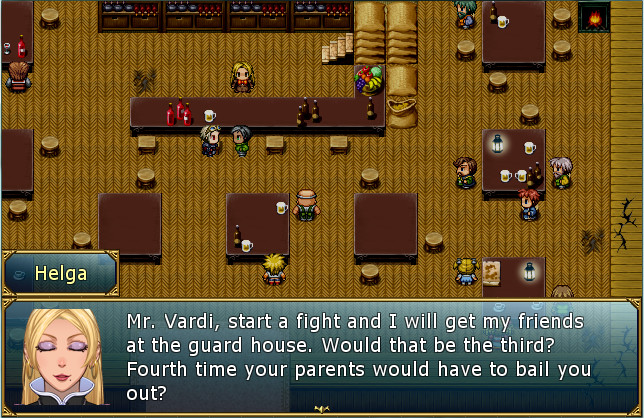
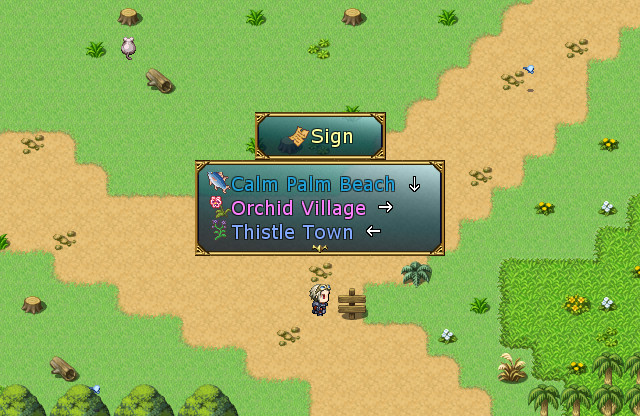
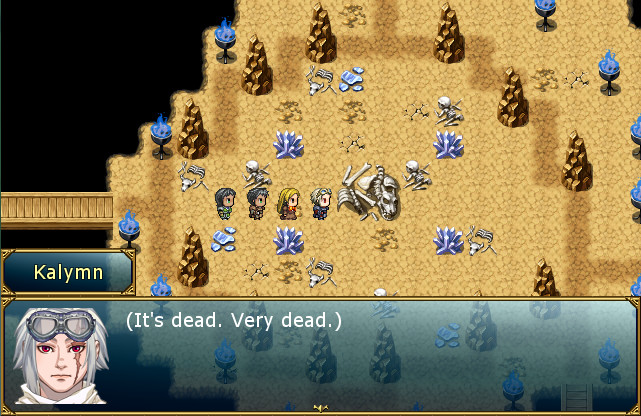
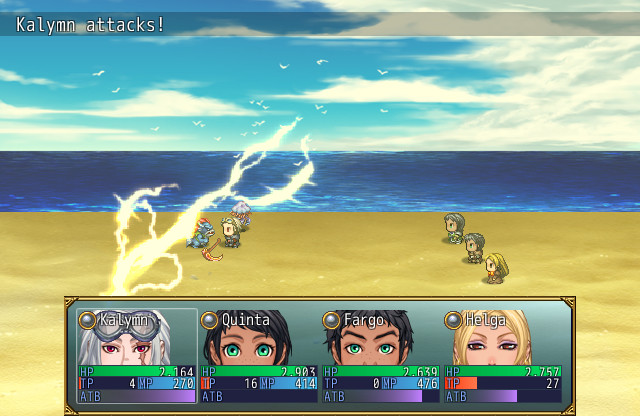
Get an in-depth look at The Albino Hunter (Original) through various videos and screenshots.


System requirements
These are the minimum specifications needed to play the game. For the best experience, we recommend that you verify them.
Windows
- OS *: Windows XP/Vista/7/8
- Processor: Intel Pentium 4 1.5GHz or better
- Memory: 128 MB RAM
- Graphics: Onboard graphics card will be plenty
- Storage: 750 MB available space
- Sound Card: DirectX 9.0 Compatible Sound
Steam Price & Best Deals
User reviews & Ratings
Explore reviews from Steam users sharing their experiences and what they love about the game.
The Albino Hunter (Original) is a compact fantasy RPG that favors eccentric humor and unusual characters over grand spectacle. Developed and published by Cherry Co. Studios, it embraces the recognizable structure of an RPG Maker adventure while giving its world a deliberately odd personality. Instead of presenting another noble hero destined to save civilization, the story follows Kalymn Nox, the self-proclaimed Albino Hunter, whose adventure begins after waking up broke following a night of drinking. His immediate solution is straightforward: find work, earn money, and take whatever hunting assignments are available. Predictably, those supposedly ordinary jobs become increasingly bizarre. The writing is where much of the game's identity comes from. Kalymn encounters witches, strange creatures, unexpected relationships, telepathic lizards, and plenty of situations that playfully undermine traditional fantasy conventions. The adventure rarely seems interested in taking itself completely seriously. Character conversations and absurd circumstances provide much of the entertainment, creating an episodic journey in which discovering what ridiculous situation comes next can be as important as completing the actual quest. The comedy will naturally depend on personal taste, but players who appreciate deliberately silly indie RPGs should find the tone easy to embrace. Gameplay follows familiar traditional role-playing foundations. Players explore different locations, talk with characters, complete quests, recruit companions, and participate in turn-based battles. The mechanics are relatively accessible and avoid becoming overwhelmingly complicated. Party members add some variety to encounters while also expanding the opportunities for character interactions. There are additional diversions scattered throughout the adventure, including an unusual interdimensional mini-game, helping break up the standard rhythm of exploration, dialogue, and combat. Its relatively short length works in its favor. Rather than stretching a straightforward concept across dozens upon dozens of hours, the campaign maintains a brisker pace. New characters and strange scenarios appear regularly, giving the adventure enough variety without requiring excessive grinding. Players interested in seeing everything can also investigate optional content and revisit the game to discover elements they may have overlooked. The inclusion of 46 Steam achievements provides another incentive for completionists to explore beyond simply reaching the ending. Visually, this is clearly a modest RPG Maker production from the mid-2010s. Environments, character sprites, menus, and battle presentation are functional but understandably dated compared with larger or newer role-playing games. Anyone expecting elaborate animation or detailed modern graphics will find little of that here. However, the straightforward presentation complements the retro-inspired experience reasonably well. Its technical simplicity also means the game is extremely lightweight, making it suitable for older or lower-powered computers. The most significant consideration is that this is specifically the original version. A revamped edition was subsequently produced with additional features, improvements, and more achievements. As a result, this release has greater appeal as a preserved version of the earlier experience than as the obvious starting point for every newcomer. Players interested in seeing how the project originally appeared, returning for nostalgia, or comparing it with the revamped edition have stronger reasons to choose it. Judged independently, however, it remains a complete and playable adventure rather than merely a historical curiosity. Steam Deck compatibility is officially listed as Unknown/Unverified rather than carrying a confirmed Verified or Playable rating. The lightweight RPG Maker foundation means the hardware requirements themselves should not be particularly demanding, but an absence of an official compatibility rating means players should not assume that every aspect of controller input, text readability, configuration, or general operation will be seamless. Partial controller support is available, which may help with portable play, although some manual configuration could potentially be necessary. Ultimately, The Albino Hunter (Original) succeeds because it understands its modest scope and fills that space with personality. Its RPG systems are conventional rather than revolutionary, and its presentation unmistakably shows its indie origins, but the peculiar protagonist, humorous dialogue, strange quests, party interactions, and unpredictable situations give the adventure its own recognizable character. The relatively concise campaign also makes it approachable for players who enjoy old-school RPG experiences without wanting another enormous time commitment. For fans of quirky RPG Maker adventures, retro role-playing mechanics, comedy-driven storytelling, and deliberately unconventional fantasy worlds, there is an enjoyable experience underneath the rough edges. Players primarily interested in sophisticated combat, cutting-edge presentation, or serious dramatic storytelling may find it too simplistic. As an original version preserved alongside a more developed successor, however, it remains an interesting and charming example of a small indie RPG built around humor and personality rather than technical ambition. Rating: 7/10
Similar games
View all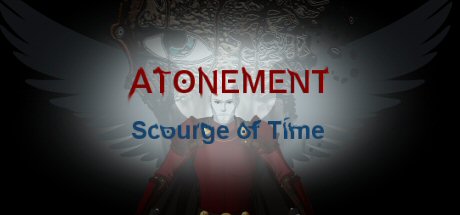

Wolf & Rabbit
Our hero, an injured wolf boy, encountered a rabbit in red picking up flowers on his way escaping from a forest. The kind rabbit girl invited the wolf boy to her grandma's house for a treatment, yet... Standing in front of the house, the wolf boy felt... somehow, uneasy.

Memories of a Vagabond
You play as a young mercenary and travel from soul to soul to avenge your fiance and her family. While finding a way to change the flow of past events, you will encounter many obstacles and meet new allies. Will you be brave enough?


Märchen Forest: Mylne and the Forest Gift [Legacy ver.]
Freely roam a fully 3D-rendered mystical forest together with Mylne, a young girl employed at a magical apothecary shop!

The Adventures of Tree
The Adventures of Tree takes you on an open-ended adventure to save your species from the evil invaders; Florps! Explore the vast open world to discover its many secrets while completing quests, enjoying quirky dialogue, and upgrading your abilities and gear along the way.

HorrorVale
HorrorVale: A grand Spooktacular adventure about a girl, her dog, and her long journey to save him in a strange and horrifying Underworld.
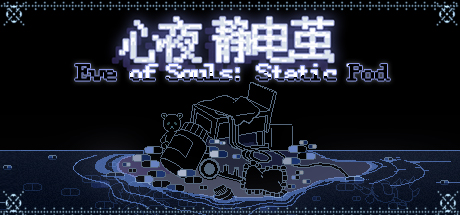
Eve of Souls: Static Pod
[The pod will break soon. Will she survive the nightmare or find the truth?]

Learn Japanese To Survive! Kanji Combat
Learn Japanese kanji in this interactive role-playing game! No experience needed – start reading and writing in Japanese!

Fantasia of the Wind - 风之幻想曲
It is an adventure story about a girl named Sandra who lived in a small village. One day, she got a magic gem of life in a relic of goddess. But when she returned to the village, she found all villagers were brutally killed.
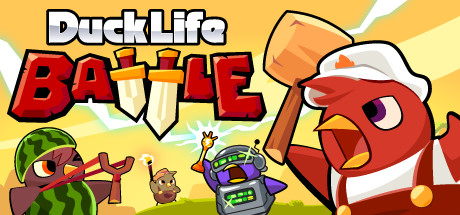
Duck Life 7: Battle
The ducks are back, but this time they're angrier. Forget racing, now it's time to battle! Train your duck's power, health, defence, speed, and special attack abilities in 25 brand new mini games. Explore the world battling other ducks, entering tournaments and completing quests to become the greatest duck battler of all time.

Souls of Blades
Famous sword, spiritual realm after the death of the awakening. Where is the owner? How did Gorgeous architecture and The Mysterious Island become a ruin? What happened before the destruction?
Frequently Asked Questions
The Albino Hunter (Original) is currently priced at 4.99€ on Steam.
No, The Albino Hunter (Original) is currently not on sale. You can purchase it for 4.99€ on Steam.
Yes, The Albino Hunter (Original) received 250 positive votes out of a total of 337 achieving a rating of 7.00.
😊
The Albino Hunter (Original) was developed and published by Cherry Co. Studios.
Yes, The Albino Hunter (Original) is playable and fully supported on Windows.
No, The Albino Hunter (Original) is not playable on MacOS.
No, The Albino Hunter (Original) is not playable on Linux.
This information about The Albino Hunter (Original) is not available yet.
This information about The Albino Hunter (Original) is not available yet.
No, The Albino Hunter (Original) does not support VR.
The Albino Hunter (Original) is a single-player game.
No, The Albino Hunter (Original) does not currently offer any DLC.
No, The Albino Hunter (Original) does not support mods via Steam Workshop.
No, The Albino Hunter (Original) does not support Steam Remote Play.
Yes, The Albino Hunter (Original) is enabled for Steam Family Sharing. This means you can share the game with authorized users from your Steam Library, allowing them to play it on their own accounts. For more details on how the feature works, you can read the original Steam Family Sharing announcement or visit the Steam Family Sharing user guide and FAQ page.
You can find solutions or submit a support ticket by visiting the Steam Support page for The Albino Hunter (Original).
Data sources
The information presented on this page is sourced from reliable APIs to ensure accuracy and relevance. We utilize the Steam API to gather data on game details, including titles, descriptions, prices, and user reviews. This allows us to provide you with the most up-to-date information directly from the Steam platform.
Additionally, we incorporate data from the SteamSpy API, which offers insights into game sales and player statistics. This helps us present a comprehensive view of each game's popularity and performance within the gaming community.
Last Updates| Steam data | 01 October 2026 06:15 UTC |
|---|---|
| SteamSpy data | 15 October 2026 12:37 UTC |
| Steam price | 27 October 2026 20:05 UTC |
| Steam reviews | 22 October 2026 09:55 UTC |
If you'd like to dive deeper into the details about The Albino Hunter (Original), we invite you to check out a few dedicated websites that offer extensive information and insights. These platforms provide valuable data, analysis, and user-generated reports to enhance your understanding of the game and its performance.
- SteamDB - A comprehensive database of everything on Steam about The Albino Hunter (Original)
- SteamCharts - Analysis of The Albino Hunter (Original) concurrent players on Steam
- ProtonDB - Crowdsourced reports on Linux and Steam Deck The Albino Hunter (Original) compatibility

Game modes
Features
Online players
0
Developer
Cherry Co. Studios
Publisher
Cherry Co. Studios
Release
11 Mar 2015
Platforms