
Jackpot Crash Course
In a game show starring only criminals, you must gamble against rival players to prove yourself worthy of being pardoned for your wrong deeds— But is the show really about proving your innocence? Jackpot Crash Course is a death game visual novel about crime, luck and spectacle.
Sync your Steam wishlist to find the lowest game prices instantly. No login required, just paste your Steam profile URL!
⚡ Try Wishlist Radar!
Sync your Steam wishlist to find the lowest game prices instantly. No login required!
⚡ Try Wishlist Radar!
Close

The Coffin of Andy and Leyley on Steam
Quick menu
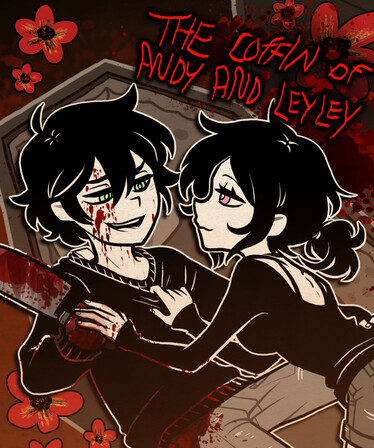
Walk-n-talk adventure with light puzzling. Brother and sister practice cannibalism after witnessing a botched satanic ritual.
The Coffin of Andy and Leyley is a psychological, dark comedy and story rich game
developed and published by Kit9 Studio.
Released on October 13th 2023 is available on Windows, Steam Deck and Steam Machine.
It has received 36,662 reviews of which 35,196 were positive and 1,466 were negative resulting in an impressive rating of 9.4 out of 10. 😍
The game is currently priced at 11.79€ on Steam.
The Steam community has classified The Coffin of Andy and Leyley into these genres:
Psychological
Dark Comedy
Story Rich
Multiple Endings
Visual Novel
Psychological Horror
Choices Matter
Singleplayer
Hand-drawn
Dark
Demons
Female Protagonist
Exploration
Cult
Horror
Early Access
Stylized
Adventure
Dark Humor
Puzzle
Here is the detailed breakdown of supported languages for The Coffin of Andy and Leyley:
| UI | Subtitle | Audio | |
|---|---|---|---|
| English |
Media & Screenshots
Get an in-depth look at The Coffin of Andy and Leyley through various videos and screenshots.


Load More


System requirements
These are the minimum specifications needed to play the game. For the best experience, we recommend that you verify them.
Windows
- OS *: Windows 7/8/8.1/10 (32bit/64bit)
- Processor: Intel Core 2 Duo or better
- Memory: 2 GB RAM
- Graphics: DirectX 9/OpenGL 4.1 capable GPU
- DirectX: Version 9.0
- Storage: 300 MB available space
Steam Price & Best Deals
User reviews & Ratings
Explore reviews from Steam users sharing their experiences and what they love about the game.
The Coffin of Andy and Leyley is one of those games that is incredibly easy to misunderstand if you judge it entirely by its surface. At first glance, it appears to be an intentionally provocative horror game built around two deeply dysfunctional siblings, cannibalism, murder, cults, demons, disturbing imagery, and deliberately uncomfortable implications. Because of that, it is extremely easy to dismiss it as nothing more than shock value. I think that interpretation misses what makes the game genuinely interesting. Beneath all of the controversy, gore, taboo subjects, and outrageous moments, The Coffin of Andy and Leyley is fundamentally a character study about codependency, isolation, resentment, trauma, abandonment, morality, dependency, and the terrifying possibility that two people can become so psychologically dependent on one another that the relationship which gives them comfort eventually becomes the very thing trapping them. That central relationship between Andrew and Ashley is easily the strongest part of the game, because neither character can be reduced to a simple role. It would have been incredibly easy to write Andrew as the innocent, rational brother trapped with an obviously unstable sister, but the game repeatedly complicates that interpretation. Andrew can resent Ashley while still being deeply attached to her, recognise that their relationship is unhealthy while continuing to participate in it, and desire independence while simultaneously being terrified of losing the person who has become such a fundamental part of his life. Ashley is similarly complicated. She is vulnerable, insecure, lonely, terrified of abandonment, and desperate for affection, but she is also manipulative, selfish, cruel, possessive, and capable of using her vulnerability to influence Andrew. What makes her interesting is that the game does not force you to choose between seeing her as a victim or a monster. She can genuinely suffer while also causing suffering. Her trauma can explain her behaviour without automatically excusing it, and that is a much more interesting approach to character writing than simply making her evil because she is mentally unstable. Her greatest fear seems to be abandonment, and that fear gradually becomes destructive because she wants something impossible: absolute certainty that Andrew will never leave her. The more frightened she becomes of losing him, the more controlling she can become, and the more controlling she becomes, the more unhealthy their relationship gets. That creates a cycle where both characters reinforce the worst aspects of each other. Andrew and Ashley are therefore not simply two bad people doing bad things together. They are two people who have become psychologically intertwined to such an extent that separating affection, fear, obligation, resentment, and dependency becomes almost impossible. This is where I think the concept of codependency becomes the central theme of the entire game. As their connection to the outside world deteriorates, their dependence on one another grows stronger. The less they have, the more important the other becomes. Eventually, the relationship starts functioning almost like an addiction. They can recognise that it is destroying them while still believing that losing it would be even worse. That contradiction is what makes their relationship genuinely disturbing. The horror is not simply that they care about each other in an unhealthy way. It is that their identities and survival have become so connected that the idea of existing separately becomes almost unimaginable. I also think the title itself has a surprisingly strong metaphorical interpretation. A coffin is something that encloses a person completely, leaving them unable to escape. Andrew and Ashley's relationship can be interpreted in exactly the same way. They protect one another from the outside world, but that protection also prevents them from escaping the environment they have created together. They are each other's shelter and each other's prison. The coffin can therefore represent more than physical death. It can represent emotional entombment, where a person is still alive but has become trapped inside a relationship, identity, or cycle that they no longer know how to escape. This interpretation makes the title much more meaningful than it initially appears. The game's treatment of morality is another one of its most interesting aspects. Andrew and Ashley repeatedly encounter situations where survival appears to require increasingly immoral decisions. This creates an obvious question about whether survival can justify crossing moral boundaries, but I think the more interesting question is what happens after the original justification disappears. Once someone crosses a boundary, crossing the next one can become easier. Eventually, a person may stop thinking of their behaviour as something terrible that they were forced to do and start accepting it as part of who they are. Cannibalism works particularly well as a symbol for this deterioration because it represents the destruction of one of the most fundamental boundaries between human beings. Another person becomes a resource for survival. The distinction between human and object, friend and enemy, or self and other begins to collapse. It is obviously intended to be horrifying, but it also works as a representation of the way Andrew and Ashley's morality gradually becomes distorted. The supernatural elements can be interpreted similarly. Demons, rituals, and other supernatural forces provide literal horror, but they can also function as external representations of psychological corruption. The characters' inner deterioration is reflected in the increasingly disturbing world around them. I do think the supernatural side of the story is somewhat weaker than the psychological side, though. Andrew and Ashley are already disturbing enough without needing supernatural explanations for everything. Whenever the story focuses on their relationship, it feels much more personal and unsettling. Whenever the supernatural elements become the primary source of horror, some of that psychological tension can disappear. However, the symbolism still gives those elements value, especially when they reflect the characters' loss of control over themselves. Another major strength is the game's willingness to make its protagonists genuinely unpleasant. A lot of stories want their protagonists to be easy to like, but The Coffin of Andy and Leyley does not seem particularly interested in doing that. Andrew and Ashley can be selfish, manipulative, pathetic, cruel, funny, vulnerable, and horrifying, sometimes within the same sequence. That makes them far more interesting to analyse than characters who can be neatly classified as heroes or villains. Importantly, understanding them does not require excusing them. You can understand why Ashley fears abandonment without defending what she does because of that fear. You can understand Andrew's dependency without pretending that he has no responsibility for his choices. That moral ambiguity is one of the game's greatest strengths because it makes the player think about responsibility instead of simply assigning blame. The game also uses dark comedy surprisingly effectively. Considering how disturbing the subject matter can become, constant seriousness would probably make the experience exhausting. The humour gives Andrew and Ashley personality and creates tonal contrast. Watching them casually joke or argue about ordinary things in the middle of horrific circumstances shows how completely their situation has become normal to them. That normalisation can actually make the horror worse. The game is at its best when its disturbing material serves its characters and themes instead of existing only to shock the player. That is why, despite its flaws, I think it deserves an 8.5/10: deeply flawed, provocative, memorable, and genuinely fascinating imo.
For the longest time I had zero intention of playing The Coffin of Andy and Leyley, I knew very little about it and just subscribed to the broad echochamber online saying it was just an "edgy incest game", however one day I would happen to have a 5-hour playthrough of the first 2 chapters reccomended to me on YouTube and decided to let curiosity get the better of me, and boy am I glad that I did. I was immediately hooked by the dialogue and character dynamics of Andrew and Ashley and had so many questions, so I bought the game the next day and 100%'ed it in a few days. To be clear: This is not a game I'd recommend if you aren't comfortable with Black Humor, messed-up people doing messed-up things (and getting progressively worse), mental health struggles, dysfunctional families, and general taboo subjects in art/media. However, if none of that is an immediate turn-off for you, then I would highly recommend this game. To address the elephant in the room (incest), the reputation is extremely overblown (as of writing, it only happens in one optional Bad Ending), this game has cannibalism less than 30 minutes in, which is not only objectively worse but also pretty clearly illustrates Andrew and Ashley are very messed up people who make horrible decisions right from the jump, so this critique is pretty clearly from people who haven't played the game. I'll censor this explanation for people who want to figure out the characters for themselves, but the "spoilers" are very minor. Andrew and Ashley's relationship leading into incestual actions is not unrealistic at all considering everything. Yes, It is disturbing, but it's not for "shock value". Andrew and Ashley have only had each other for their entire lives. And now they feel emotionally and mentally like they cannot leave each other nor find love elsewhere, this is how bad their codependency gets. If they do give-in to their darkest fantasies it causes many, MANY more issues in their relationship. The game makes it very clear that this is a bad outcome caused by their own horrible choices, and they've given up on becoming better. The game is definitely not glorifying incest . It's a touchy topic for a reason, and it requires sensitive exploration to be done "well" but the game DOES handle it properly. The writing (aka the main selling point) This is what drew me in; the writing of the dialogue and the characters in general is VERY well done. The dialogue is some of the most natural I've read in a game period, Andrew and Ashley's bickering and train of thought is very natural, funny, and engaging. Each has their own quirks, like Ashley talking with a very casual and crude vocabulary but inserting certain old terms like "floozy" and "harlot", or the way Andrew enunciates his words when he's exasperated but talks with a much broader, more articulate vocabulary because he's getting an English degree (which is honestly done so subtly that I didn't even fully realize this until I thought about it for this review). Subtle details like this make the characters feel real on a subconscious level in a way that isn't typical for games. And TCOAAL portrays all of this with just a basic textbox and character portraits. The dialogue itself is very realistic; it has a great balance of typical sibling bickering and enough toxicity to make almost any abusive relationship seem healthy in comparison. The dialogue is also quite funny; there are a lot of moments where a character is trying to intentionally be funny, which is usually pretty amusing, and there are many more moments where a character is so unaware of their own issues that they will do stuff that is otherwise absurd and yet act without a care in the world, and that's where some of the funniest moments in the game come from. Also, in general the 2nd person narrator provides a lot of mildly amusing quips. Additionally, the characterization of Ashley and Andrew is done very well. It's so interesting seeing how they react to situations, while minor situations like Andrew hiding food from Ashley may get her upset, but them murdering a loved one doesn't. All of the situations they find themselves in are nearly always a result of natural consequences of their own actions, and they respond in the ways they know how. In some scenarios, they try to change and break patterns, and in others, they just dig themselves into a deeper and deeper pit. And all of their responses, in one way or another, are very consistent with what real people in a similar scenario would do. I know, it's a visual novel, so writing is likely going to be its forte, and it is. But I do really want to emphasize that the writing of this game is not only interesting to analyze but very easy to enjoy and be entertained by. The art One of the biggest indicators of the quality of the art is just how recognizable it is. I didn't know anything about this game for years, yet every time I saw a character from it, I would instantly recognize them. And while this game isn't exactly unknown, a character being that recognizable from an indie game of this size goes to show how much the art style has carried this game and how unique it is. The lack of colour, while initially very noticeable, is very quickly forgotten. Some sections are colourful, but usually the colours are washed-out tints or very red. For the rest of the game, it's mostly a greyscale colour palette with extremely washed-out colours for certain environments. This, of course, makes the colour all the more impactful, bringing attention to the character's eyes, which are the only spot on them with colour, and parts of the landscape that are supposed to stick out usually stick out very well without it being "obvious". The Soundtrack The music in this game is not original and is all commercially licensed, but it definitely could've fooled me. Tracks like Cloud Chiptune sound like they could be in a Toby Fox game. While it's not the best game soundtrack I've heard, it's a very unique sounding playlist and I think it suits the game very well and sells the atmosphere. My Overall thoughts There's a lot to love about this game. The main characters are a mixture of the most horrible, unlikeable people you'd never want to meet, but at the same time, so entertaining to watch. The game is really absurd and self-aware; it doesn't take itself too seriously, and largely because of that, it's almost satisfying in a way to watch Andrew and Ashley make a mess of literally everything around them, and you're rooting for everything; rooting for Andrew and Ashley to succeed and escape the consequences of their horrible deeds, rooting for Andrew to grow some balls and stop letting Ashley walk all over him , rooting for law enforcement to catch them because they should not be roaming the streets. It's great! But at the same time, the game knows exactly when to take itself seriously, the slow moments where the puzzles explain through visual storytelling a character's trauma or insecurities, the moments in Andrew and Ashley's relationship where they're figuring out what to do with each other or how to get what they want, and expository sections giving backstory to Andrew and Ashley or their parents. TCOAAL balances all of this extremely well to the point where I wonder if Nemlei is either a renowned psychologist doing this as a side gig or very mentally unwell. Overall, The Coffin of Andy and Leyley is an incredible game that I would highly, highly recommend. Initially, I was more of a hater, but I'm so glad I gave this game a shot, because I cannot wait for more to release. I never knew watching such a toxic relationship could be so engrossing, and I've rarely seen abusive relationships depicted this well. Anyways the game is worth the money, you should buy it if you're considering it, and God bless all of you.
Great game overall, great writing, main characters are very interesting, got many layers of psyche to unpack for player. I built some of my own theories what went wrong in the Graves family and then compared it to what Internet had on it, I recommend such approach. Riddles are very simple, i'd consider it only timesink, but adding some narrative here and there was enough of compensation. The main complaint I'd have about the game is amount of dad jokes revolving around sexual things but it's mainly overdone in first chapter of the game. It gets better and haven't even annoyed me that much, personally. The key is to remember it's only video game and not take it too seriously. Also as a cool bonus - when you boot the game, your friends might start you asking if everything's alright and generally wtf are you doing. If you got a chance to play the game mostly blind it will enhance the experience a lot. Try not to search too much about it in the internet. People who haven't played the game, generally have really wrong and exaggerated opinion about what this game is. There is some occult stuff, cannibalism and brutality but it's not some, life-changing player's mind altering stuff - game doesn't take itself seriously in many ways. Cultists are dorks, demon summoning rituals are just parody of B-rated movies, but still - if you are under 16y/o, it might be the best to wait a bit with playing the game. Mainly because of a few brutal deeds not even incest - game is far away from being incest bait. The funny thing nowadays - a lot of people complain, that there is too much censorship and politically correct content in the Internet, but when they get exactly opposite, it's an issue anyway.
I really don't understand why people hate the game so much. i mean i get it Andrew's and Ashley's relationship is really toxic and disgusting. first you have to go out of your way to get the incest route and it's a psychological horror it's supposed to be uncomfortable and it's not like the creator of the game is romanticizing those types of relationships . the reason that I'm playing I'm really interested in the plot and choices and what will happen next i understand the hate but i feel like it's kind of excessive to a point.
I love this game, but I feel like it is very badly represented. Not even because of the whole incest thing, but just the overall context and style is totally different from how it is portrayed online. I added a few spoiler censors just in case you want to go in 100% blind, but they're all very general and early stuff that you'll see an hour or less into the game at most. Number 1; people describe this game as if you are going to feel like you're actually participating in a demon ritual the whole time. That couldn't be farther from the truth, at least in my opinion. The "rituals" are honestly so over the top and stereotypical horror that they aren't scary, more just goofy. The cultists are constantly and clearly presented as morons, and the demon is clearly presented as an evil manipulator. So if you're worried this is going to be one of those things that feels unironically occult and presents the literal devil as a great guy, this game is absolutely NOT that. Number 2; You've probably heard this game described as something along the lines of "brother and sister get trapped in their apartment after the parents abandon them, they start practicing cannibalism to survive." That might technically be a correct description, but it's quite misleading. This description makes it sound like the entire game is set in this apartment and the siblings like, literally hunt down dozens of neighbors for food. In reality, the games setting moves on from the apartment less than an hour in, and they only ever eat one human meal. The main emotional driver in the story is NOT all the bad things the siblings do, but the siblings' relationship with each other as they do it. I think the game is clearly written this way intentionally, take for example the fact that any crimes the siblings commit in the present are shown in a way that that they seem unimportant (or less important than they should) or routine to the two, but anytime you have a flashback to the siblings' childhood, or they have a long conversation in the present, emphasis is put on even some very small details. I don't consider this a horror game, or a crime game, I think it's more of an angsty-comedy. Of course this is just how I take it, you might feel totally different, but we're all welcome to our own opinions. I'm not even going to lie because I know 90% of people here did the same, I got this game because I have a slightly morbid sense of humor, and also because I thought certain characters were... attractive. But I stayed because of the story. Not even joking. I only have a few very minor issues. -you can't rename saves -things you can interact with sometimes aren't obvious until you're right by them, so you have to search a bit.
Similar games
View all

The Horrorscope: Fatal Awakening
You will answer a series of questions that will reveal your potential fate. These questions may make you uncomfortable, but with great knowledge comes great sacrifice. Can you make it all the way through The Horrorscope, and if you do, are you sure you want the answers you seek?

The Test
You will answer a series of questions that will reveal truths from deep within. These questions may make you uncomfortable, but with great knowledge comes great sacrifice. Can you make it all the way through The Test, and if you do, are you sure you want the answers you seek?

The NOexistenceN of you AND me
Use "game" as a medium to showcase the world of "you/girl". Explore the truth of "you/girl/world" through the form of a "visual novel".

Mojika - Truth Rears Its Ugly Head
Haunted by the ability to read minds, Suteru embarks on a journey of revenge against those who wronged him. Uncovering the secrets of his tormentors, he must confront his demons in a story that explores the depths and darkness of the human mind.

The Horrorscope
You will answer a series of questions that will reveal your potential fate. These questions may make you uncomfortable, but with great knowledge comes great sacrifice. Can you make it all the way through The Horrorscope, and if you do, are you sure you want the answers you seek?

Crimson Gray
John is a young man suffering from severe depression. As he loses his sense of purpose in life, he begins to see the world in unfocused gray. Just when he begins to lose all hope, John meets a girl... a very special girl.

7Days Origins
7Days Origins is a single-player story game where the storyline changes based on the player's choices. For 7 days, you will meet various characters in the world of the dead. You may become allies and embark on adventures together or become enemies and fight.

Static Dread: The Lighthouse
Lovecraft meets Papers, Please. Play as a lighthouse keeper and guide ships safely into the harbor using your radio. Survive the presence of something impossible, and don’t let the shadows consume you!
Slay the Princess The Pristine Cut
You're here to slay the princess. Don't believe her lies.

BAD END THEATER
select your protagonist and explore a variety of terrible fates!

The Test: Hypothesis Rising
The second chapter in The Test trilogy. Answer a series of in-depth questions to reveal hidden truths about yourself and unlock secrets to discover how your life can change drastically with just a few, slight modifications. ...But are you sure you want the answers you seek?
Frequently Asked Questions
The Coffin of Andy and Leyley is currently priced at 11.79€ on Steam.
No, The Coffin of Andy and Leyley is currently not on sale. You can purchase it for 11.79€ on Steam.
Yes, The Coffin of Andy and Leyley received 35,196 positive votes out of a total of 36,662 achieving an impressive rating of 9.41.
😍
The Coffin of Andy and Leyley was developed and published by Kit9 Studio.
Yes, The Coffin of Andy and Leyley is playable and fully supported on Windows.
No, The Coffin of Andy and Leyley is not playable on MacOS.
No, The Coffin of Andy and Leyley is not playable on Linux.
Yes, The Coffin of Andy and Leyley is playable and fully supported on Steam Deck.
Yes, The Coffin of Andy and Leyley is playable and fully supported on Steam Machine.
No, The Coffin of Andy and Leyley does not support VR.
The Coffin of Andy and Leyley is a single-player game.
No, The Coffin of Andy and Leyley does not currently offer any DLC.
No, The Coffin of Andy and Leyley does not support mods via Steam Workshop.
No, The Coffin of Andy and Leyley does not support Steam Remote Play.
Yes, The Coffin of Andy and Leyley is enabled for Steam Family Sharing. This means you can share the game with authorized users from your Steam Library, allowing them to play it on their own accounts. For more details on how the feature works, you can read the original Steam Family Sharing announcement or visit the Steam Family Sharing user guide and FAQ page.
You can find solutions or submit a support ticket by visiting the Steam Support page for The Coffin of Andy and Leyley.
Data sources
The information presented on this page is sourced from reliable APIs to ensure accuracy and relevance. We utilize the Steam API to gather data on game details, including titles, descriptions, prices, and user reviews. This allows us to provide you with the most up-to-date information directly from the Steam platform.
Additionally, we incorporate data from the SteamSpy API, which offers insights into game sales and player statistics. This helps us present a comprehensive view of each game's popularity and performance within the gaming community.
Last Updates| Steam data | 25 September 2026 13:23 UTC |
|---|---|
| SteamSpy data | 16 October 2026 11:39 UTC |
| Steam price | 28 October 2026 04:11 UTC |
| Steam reviews | 18 October 2026 15:49 UTC |
If you'd like to dive deeper into the details about The Coffin of Andy and Leyley, we invite you to check out a few dedicated websites that offer extensive information and insights. These platforms provide valuable data, analysis, and user-generated reports to enhance your understanding of the game and its performance.
- SteamDB - A comprehensive database of everything on Steam about The Coffin of Andy and Leyley
- SteamCharts - Analysis of The Coffin of Andy and Leyley concurrent players on Steam
- ProtonDB - Crowdsourced reports on Linux and Steam Deck The Coffin of Andy and Leyley compatibility
Game modes
Features
Online players
154
Developer
Kit9 Studio
Publisher
Kit9 Studio
Release
13 Oct 2023
Platforms